


|
LOUDSPEAKERS ⸜ stand-mounted XAVIAN
Manufacturer: XAVIAN ELECTRONICS s.r.o. |

 |
 |
 |
|
Review
text by WOJCIECH PACUŁA |

|
No 260 January 1, 2026 |
⌈ XAVIAN is a company specializing in the production of loudspeakers. It was founded by ROBERTO BARLETTA, originally from Italy, in Prague, Czech Republic, in 1997. Its name comes from Greek mythology – ‘Xavian’ is a sacred place for muses, considered a source of inspiration. We are testing the smallest and newest speakers in its range, the UNICA. ⌋ WHEN ROBERTO BARLETTA asked me by email if I would be interested in reviewing his latest speakers, he emphasized that his goal was to bring their price down to around €1,500 per pair. This was interesting in itself, as contrary to appearances, there are not many truly interesting designs in this price range, but that was not the most important thing. What I found more interesting was that the cabinets of the Unica speakers – as they were to be called – were made entirely of solid wood. 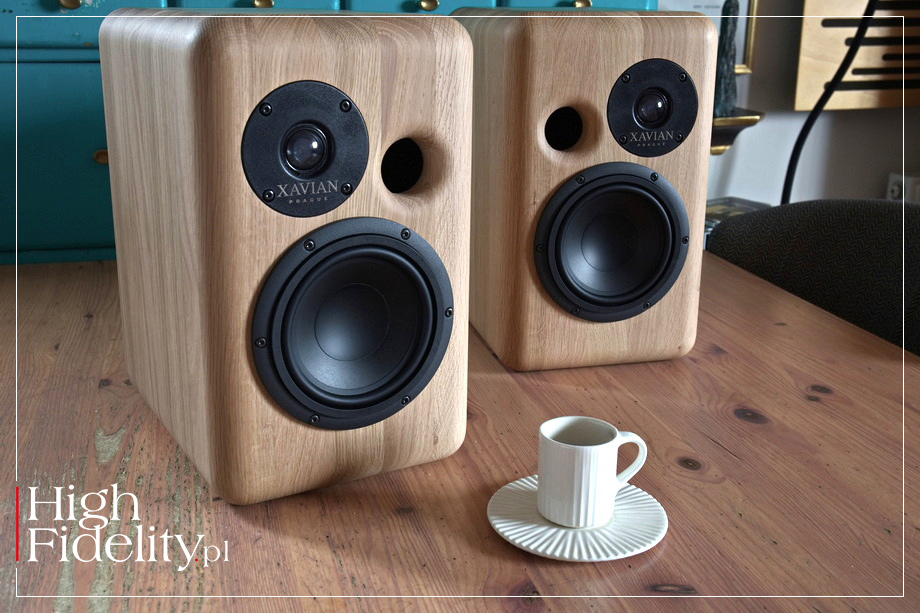
In response, I asked twice whether the price was indeed per pair and not per unit, to which the company founder replied “yes” twice. I found this interesting, so I asked for the speakers to be sent to Krakow. While they were on their way to me, I received another email from Xavian's office, which read:
Yes, a thousand euros per pair for speakers in the popular “Natura series”, as Mr. Barletta calls it, with solid wood cabinets and drivers previously used in the manufacturer's higher series. As you can see, it is possible. ▲ A few simple words… ROBERTO BARLETTA 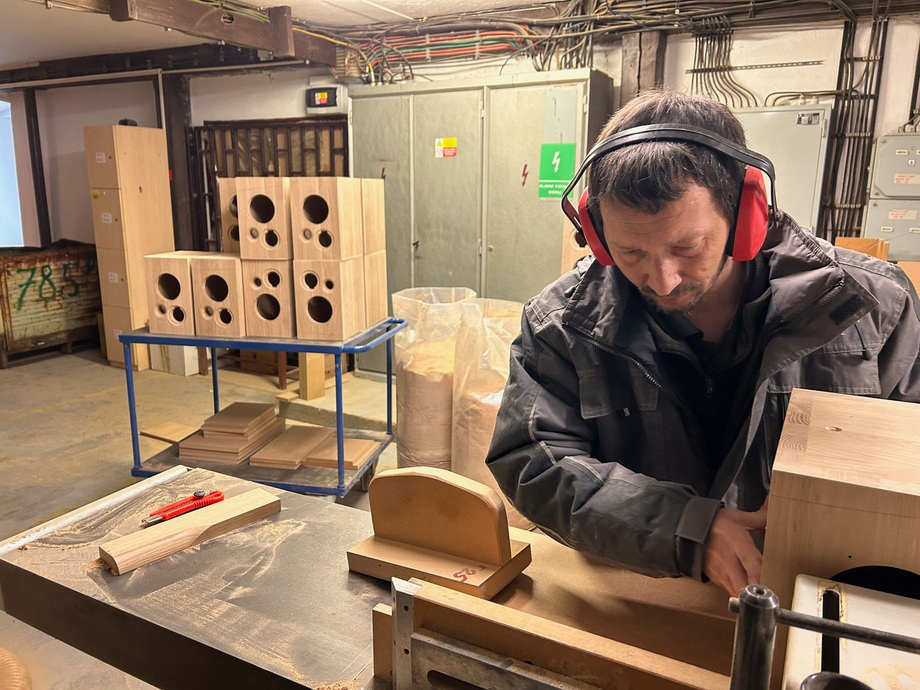
We started using solid wood as a material for cabinets for our speakers in 2015. Over the course of 10 years, we have created several models from this material and gained a great deal of experience. The idea behind the Unica model was to create something truly special, completely handmade, something unique, using our own Italian AudioBarletta drivers, custom-made for us. However, this does not mean that such a product has to be very expensive. Unica's uniqueness stems from its shape, the materials used, and the artisan approach. 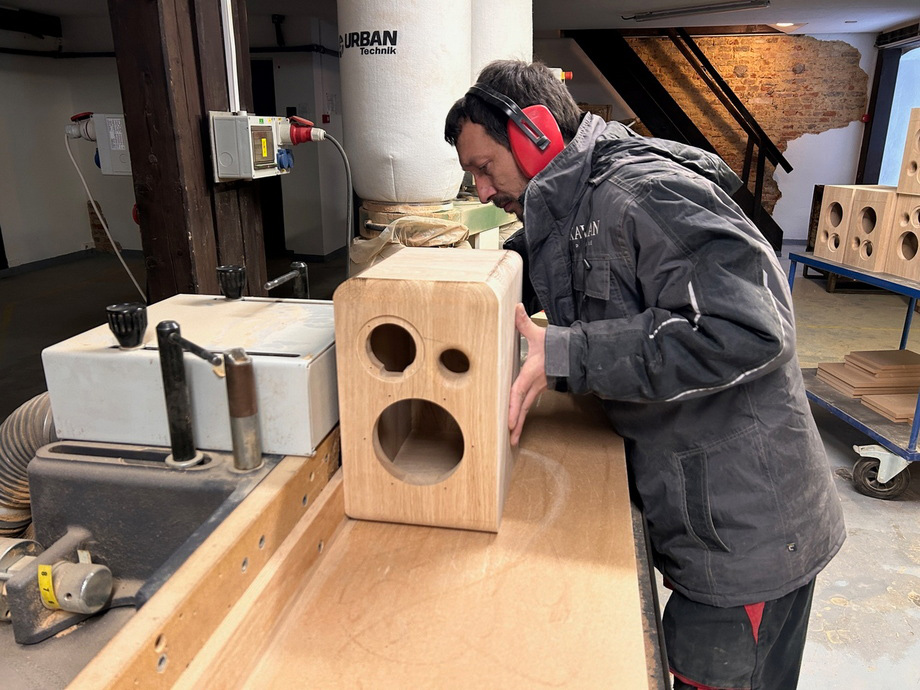
When developing these speakers, I used speakers from several different brands to ensure that the sound we obtained would be what we expected. Of course, the sound coming from the EverSolo amplifier will be significantly different from that of the Norma IPA80 amplifier, but the “spirit” of the speakers remains unchanged, and their musicality is also preserved. This is possible because the Unica is an undemanding 8-ohm load with a fairly simple 5-element second-order crossover. The front bass-reflex port makes its setup straightforward. 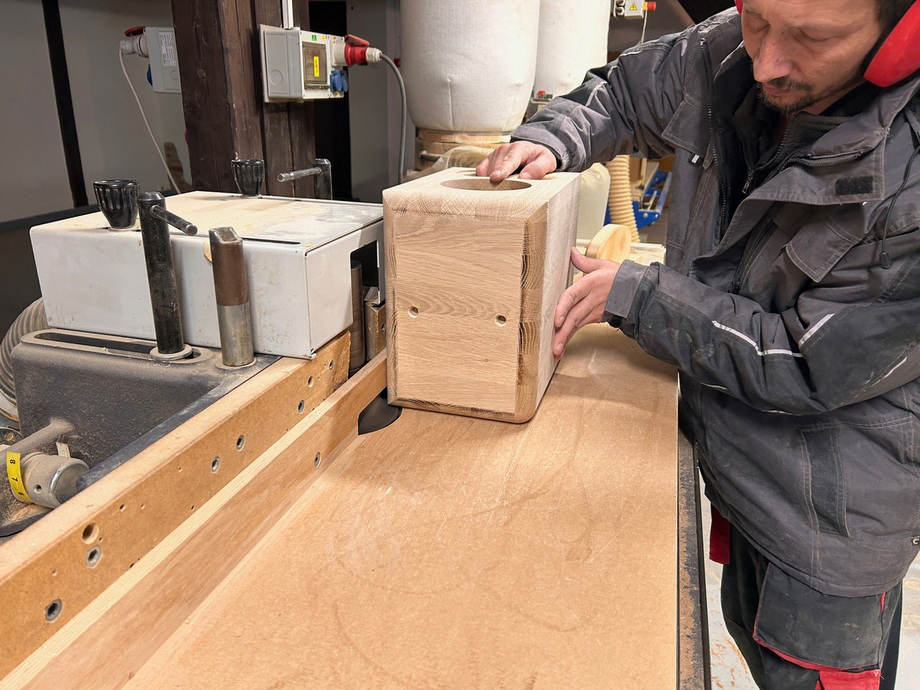
The cabinet is made of 23 mm thick solid oak wood, which makes it a “desired object”, one that enriches home space with its beauty. I began designing the UNICA model in December last year, and it has been playing in my home since May this year. We produced several different prototypes, with different sizes and crossovers. 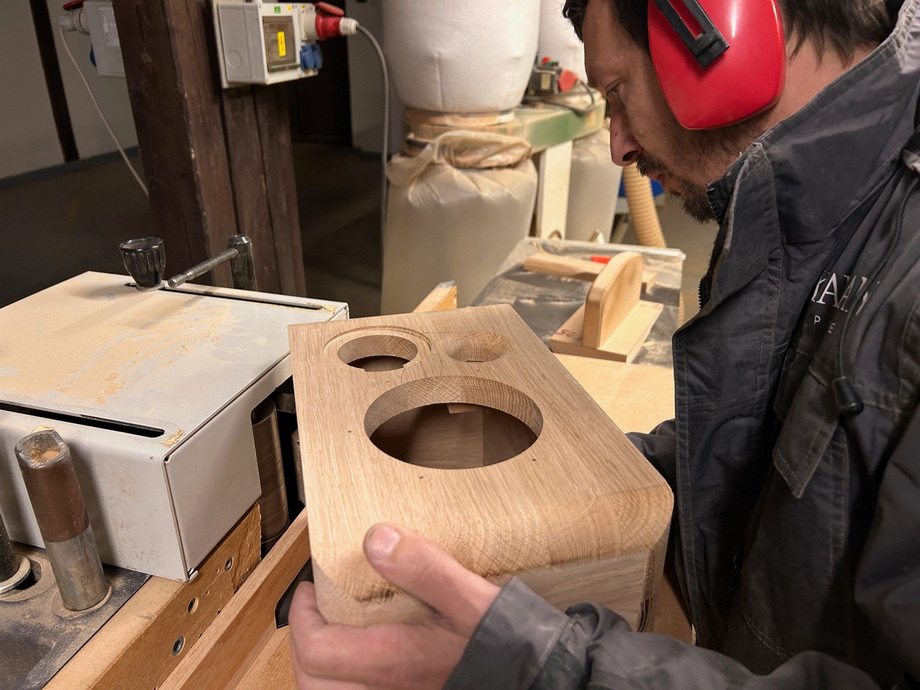
I still have them at home and listen to all kinds of music on them, from Brian Eno to Sade, Weather Report, Peter Nooten, This Mortal Coil, Edvard Grieg, Handel, Giacomo Puccini, Kronos Quartet, and Robert Fripp. On the other hand, I don't listen to hard rock, metal, or trash music. » RB ▌ Natura Unica AS WE READ IN THE COMPANY'S MATERIALS, the most affordable model in the Natura series got its name thanks to its “truly exceptional level of craftsmanship and attention to detail, which are completely unusual in this class”. Unica is supposed to draw on the experience gained in the design and production of the popular Perla and Joy models in all their generations, but “takes their vitality and organic nature to an even higher level”. We read about them:
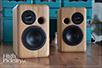
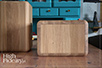
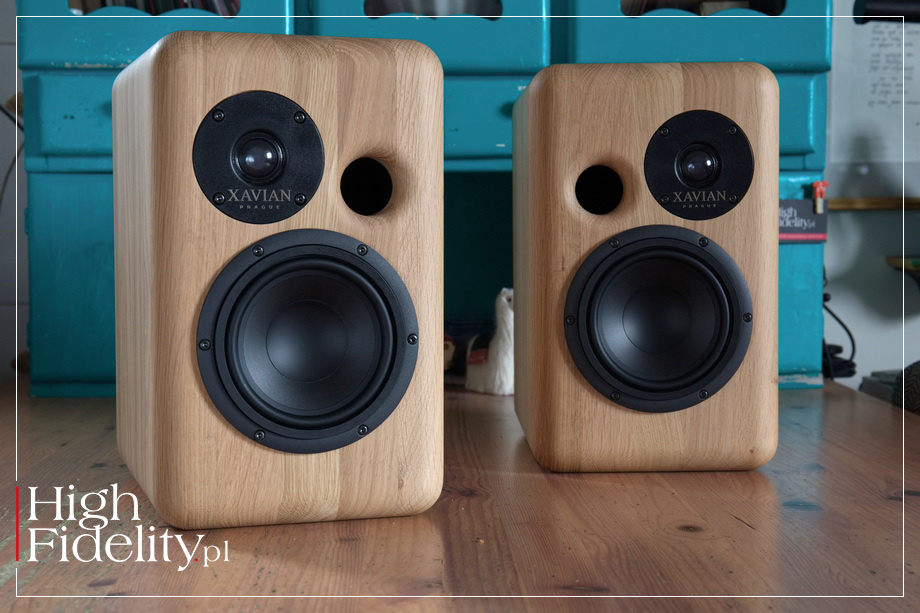
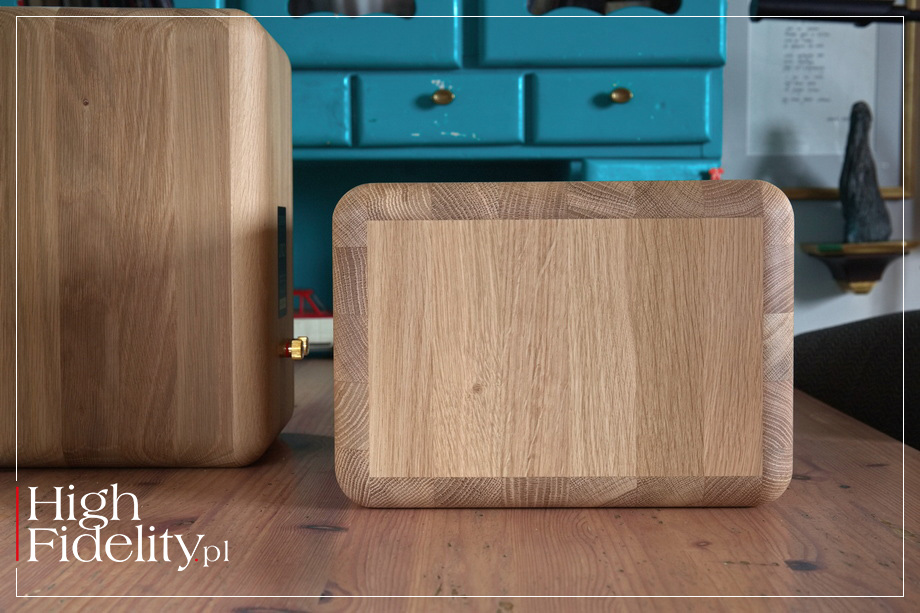
Unica are two-way bookshelf speakers with a bass reflex enclosure. They are really small, but solidly built. The most striking feature is the cabinet, which we have already discussed at length. It is made of solid oak and assembled from staves in such a way that its edges are rounded. We are very familiar with this solution from Xavian speakers (the Perla model, review → HERE), as well as products from other Italian masters, such as Sonus Faber (Minima Vintage, review → HERE), Chario (Nobile) and – in a more angular version – Diapason (Micra III Excell). According to the manufacturer, the cabinets, with their “beautiful, smooth shapes”, are created by a team of “exceptionally talented carpenters”. The finish chosen is modern bleached oak with a delicate varnish that is barely noticeable to the touch, giving the impression of completely raw wood. According to Mr. Barletta, such shapes can only be achieved “through patient manual work”. The durability of the cabinet is ensured by the thickness of the material, which is exceptional in this price range – as much as 23 mm. 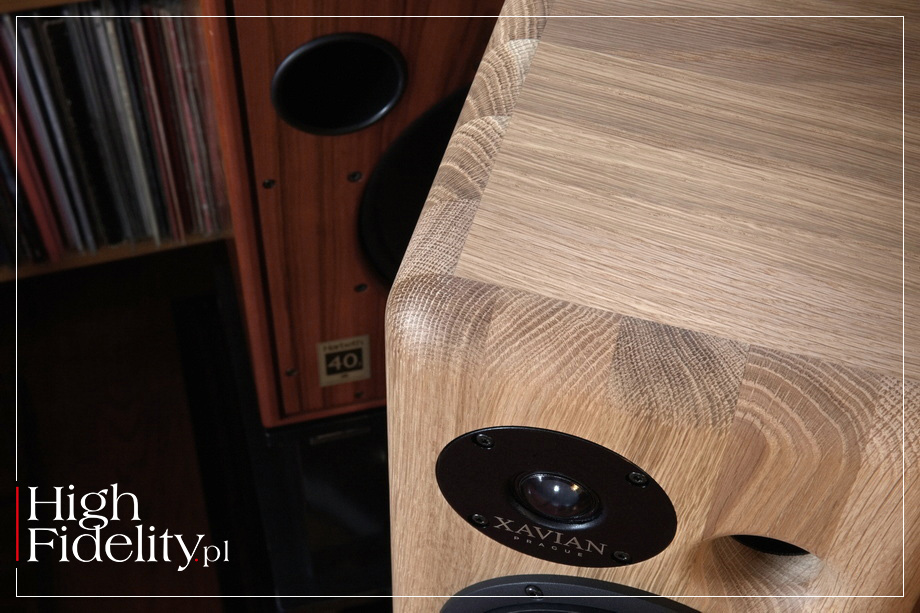
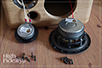
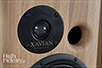
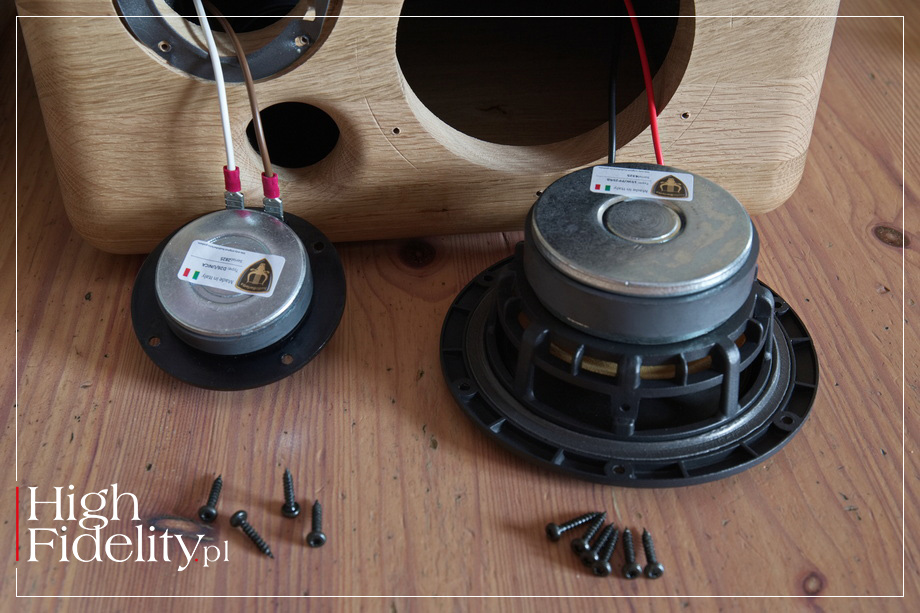
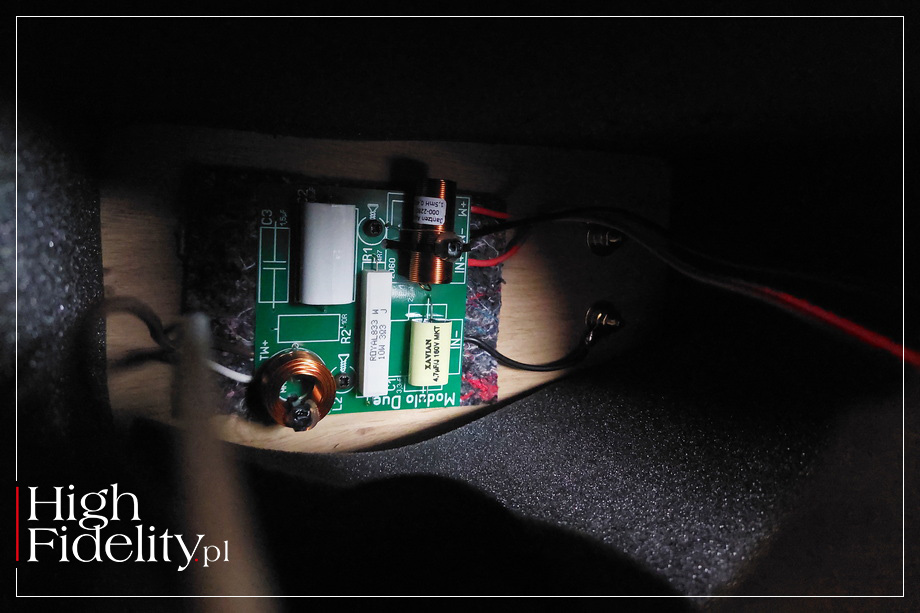
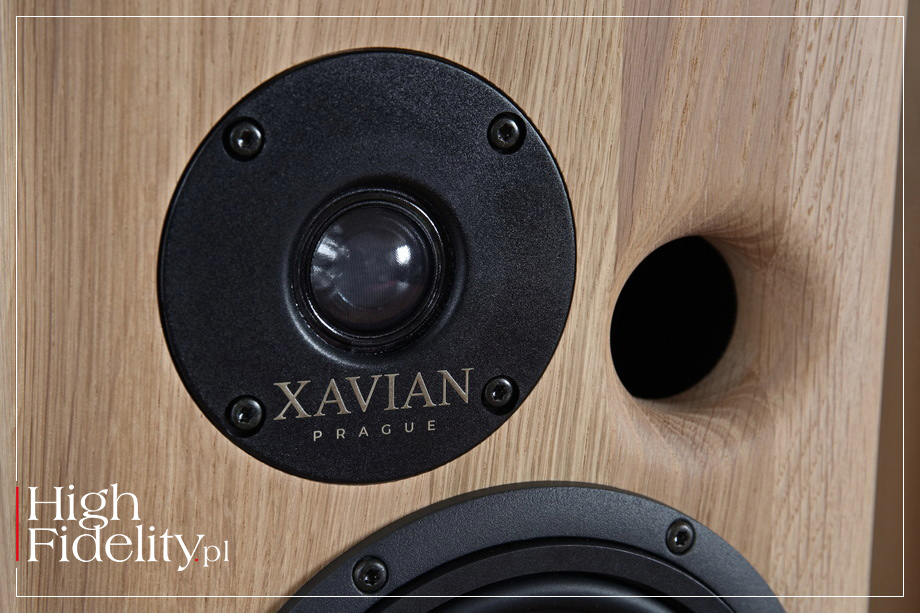
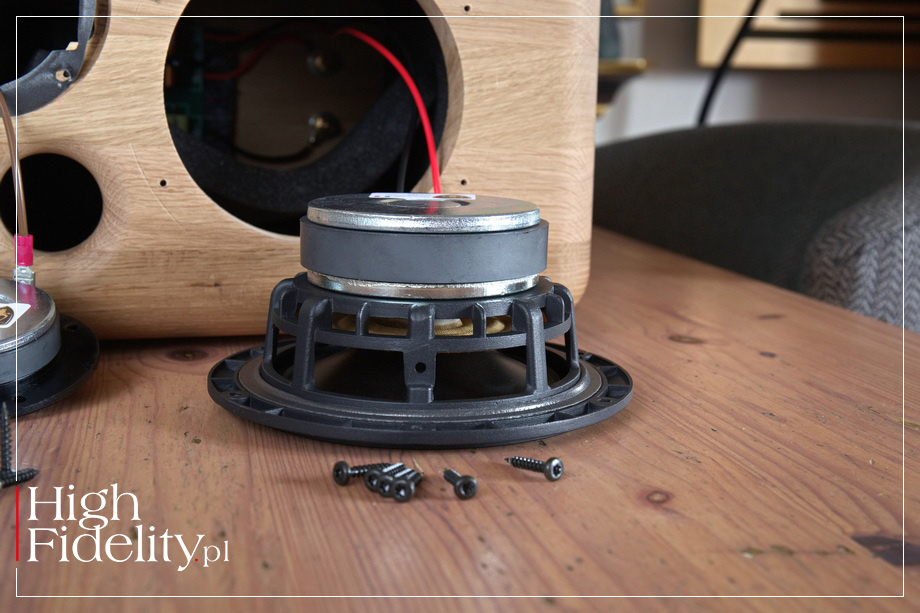
The drivers used here are just as important as the cabinets. In the “exclusive solutions” used in the Unica model, as listed on the manufacturer's website, they are placed at the top of the hierarchy. Both drivers bear the AudioBarletta logo and are manufactured for Xavian in Italy under an OEM agreement. They were developed jointly by Roberto Barletta and the factory. They use different suspensions, baskets, and diaphragms than Scan-Speak speakers, but they have common drive systems. Historically, Xavian has used different combinations of drivers depending on the speaker model. Some used Scan-Speak drivers, while others used drivers with the AudioBarletta logo. Scan-Speak was used in both classic models and speakers from higher series. AudioBarletta, on the other hand, was “reserved” for flagship models such as Orfeo and Ambra Esclusiva, but also for selected speakers from lower series. After the Danish manufacturer discontinued the production of some models, Xavian began to use its own solutions in almost all speaker models. The Unica model features a soft dome tweeter with a diameter of ø 26 mm and a low-midrange driver with a coated paper cone with a diameter of ø 150 mm. The dome has a coated silk cone and a neodymium magnet. Its front is made of rigid plastic. The basket of the larger driver is cast from an aluminum-magnesium alloy. It also has a robust magnetic system with a copper ring that improves linearity and reduces distortion. Both drivers are screwed directly to the front panel. The crossover divides the frequency range between them at 2490 Hz, which is close to 2500 Hz, which Mr. Barletta usually chooses for his two-way designs. The signal is divided in a small crossover, assembled on a printed circuit board and screwed to the rear panel using soft felt. It uses only five components, from Jantzen, with a polypropylene capacitor and an air coil for the tweeter. This is supposed to give a quick impulse response, which is also aided by the almost complete lack of damp-ing. Only the three side panels and the rear panel are covered with thin layers of foam. This arrangement is also intended to facilitate compatibility with a wide range of amplifiers. After listening, I can say that this is true, although it is worth ensuring that they are current-efficient, even though they do not need to be very powerful. 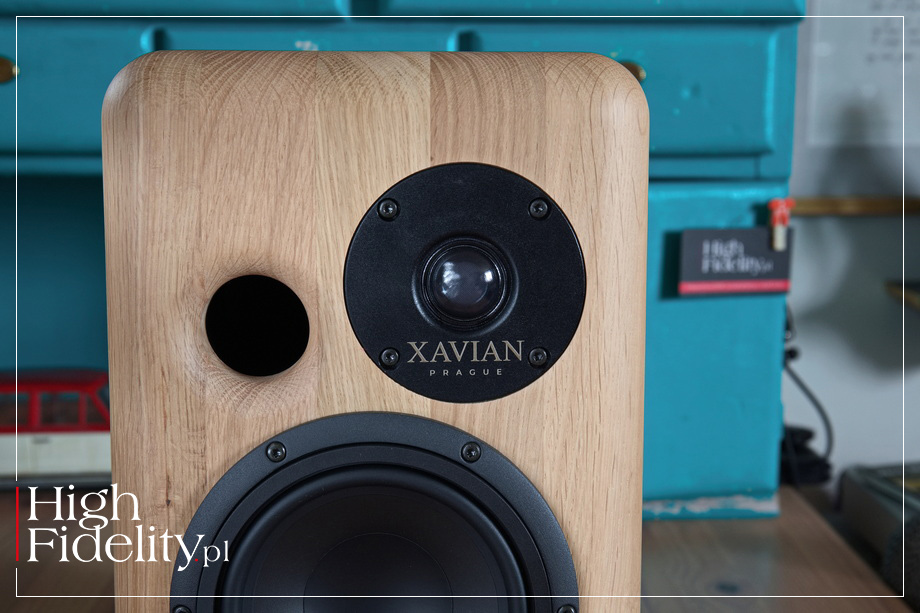
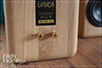
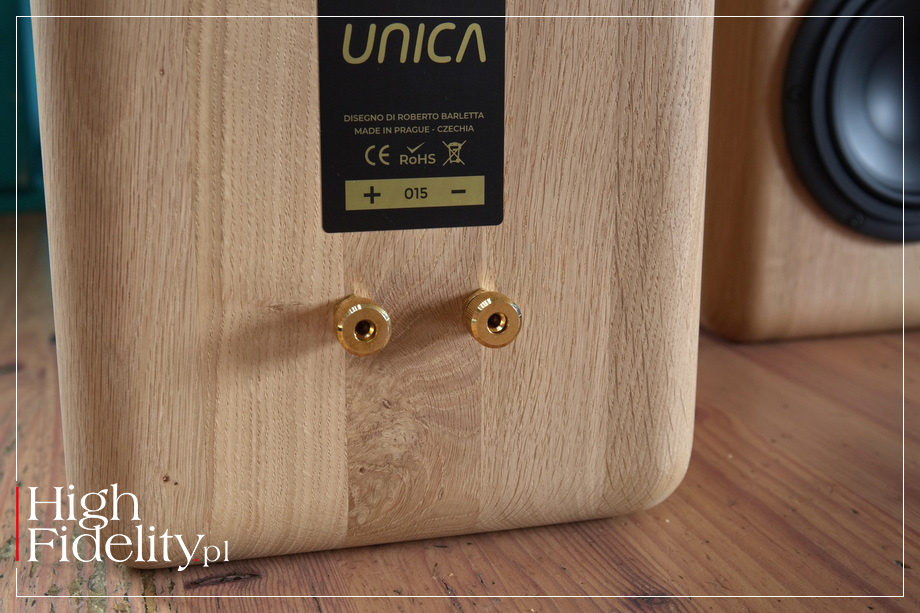
In his home system, Xavian's founder uses electronics from Italian company Norma Audio, which is a good lead. Another option is the Aura VA-40 Rebirth amplifier, review → HERE, or even the Norse Audio X1 power amplifier with the X5 power supply, which we reviewed last month; more → HERE. As for tube amplifiers, it could be the Fezz Audio Luna Evo, and in small rooms, the Luna Mini Evo (review → HERE). The price of Unica speakers may not be high, but their capabilities certainly are big. That is why I would see them in a system where the amplifier is more expensive than them, with really good cabling. Besides, they are exceptionally attractive designs, with a bass reflex port shaped in wood, and therefore unobtrusive, with single gold-plated terminals. The set does not include grilles. ▌ SOUND HOW WE LISTENED • Xavian Natura Unica speakers were tested in the HIGH FIDELITY reference system. The source was an Ayon Audio CD-35 HF Edition SACD player and a Rega P8 turntable with a Denon DL-103R cartridge and an RCM Audio Sensor Prelude IC preamplifier. 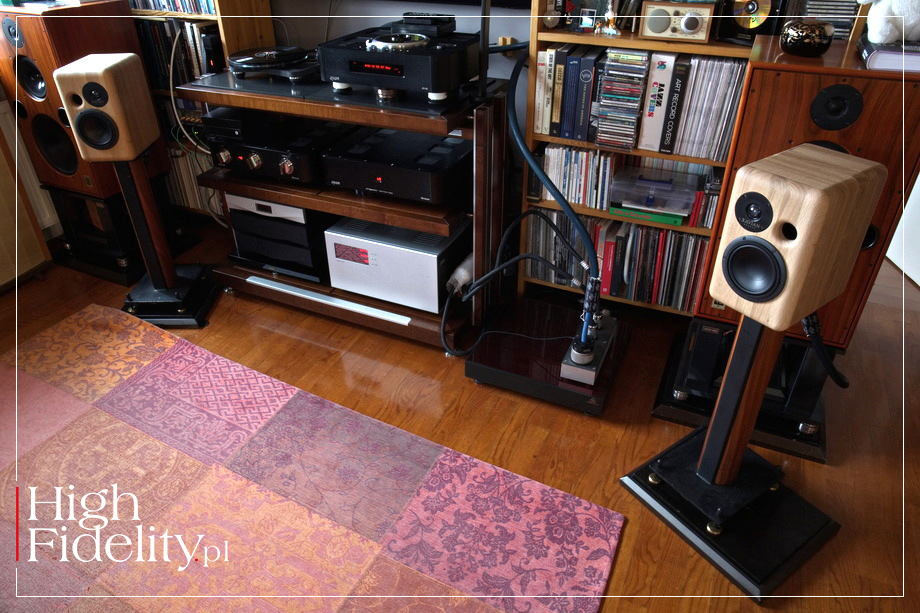
|
I placed the speakers on old Sonus Faber stands, which I have been using for many years. These were placed on Acoustic Revive RST-38H platforms, and I put Acoustic Revive SPU-8 pads under the spikes. This resulted in the tweeter being 95 cm above the floor. It should be added that Xavian has its own stands that match the style of its speakers. The tweeter has been placed off-axis rather than on-axis. This gives two options for positioning the speakers – with the tweeters facing outwards or inwards. Discussions about the superiority of one solution over the other have been going on for many, many years, mainly in connection with tests of ProAc and Castle speakers. Today, they are much less common. In my experience, well-designed speakers of this type sound better with the tweeters inside. 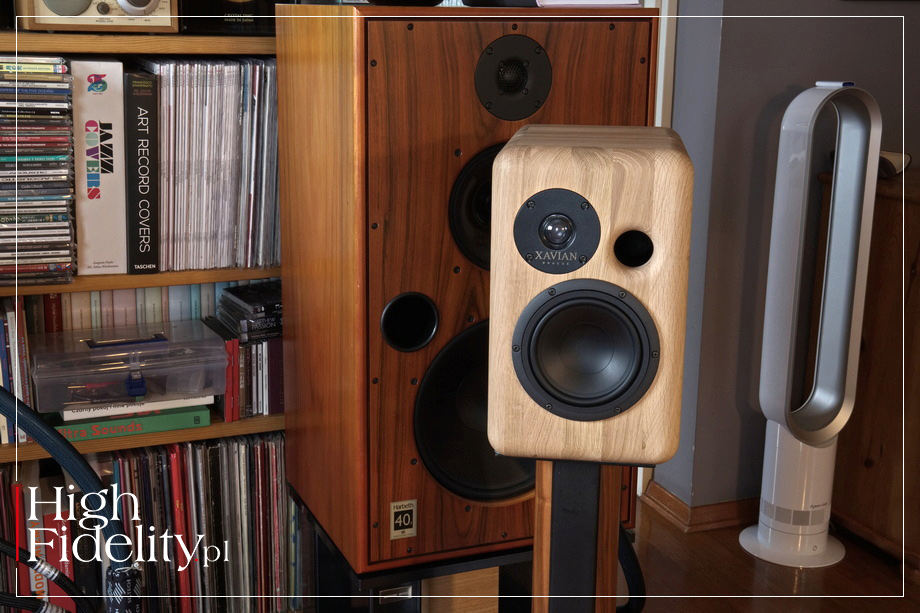
Xavians were positioned 245 cm from the listening position and 175 cm apart, measured from their vertical axis, where the Harbeth M40.1 speakers are normally located. They were 85 cm from the rear wall, also measured from their axis and top edge. The speakers were turned directly towards the listening position. They were powered by a Soulution 710 transistor amplifier, and the signal was fed to them via Siltech Triple Crown speaker cables. » RECORDINGS USED FOR THE TEST ⸜ a selection
⸜ MILES DAVIS QUINTET, Relaxin' With The Miles Davis Quintet, Prestige/Universal Music LLC (Japan) UCCO-40005, Platinum SHM-CD ⸜ 1958/2013. AN “ABSOLUTE ELEGANCE” – this is the phrase that kept running through my head while listening to the latest speakers from Xavian. Of course, I tried to throw them off balance with various types of music, such as Red Hot Chili Peppers, Slayer, and Oasis. Even if they showed the brighter, more aggressive or even shrill nature of these recordings, I still came back to what I wrote at the beginning. Mr. Barletta achieved this by tuning the Unica speakers in such a way that it was immediately clear that the midrange is the most important part. It is the king, the ruler, the emperor of this sound. An autocrat, it is worth adding. Because although the speakers from the Czech Republic have a wide spread of extremes, which was already audible on the first album by MILES DAVIS QUINTET Relaxin' With The Miles Davis Quintet, each subsequent album confirmed my initial intuition. 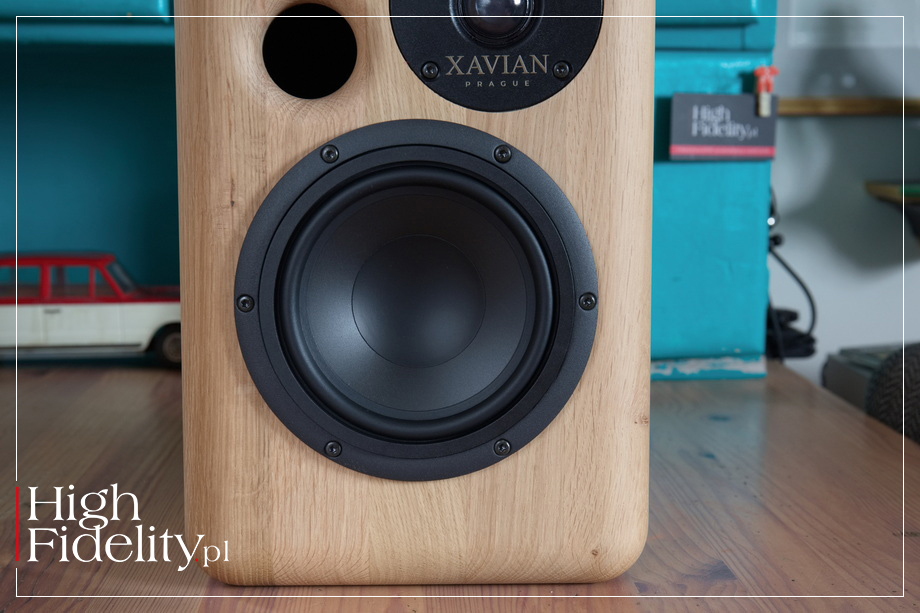
This approach, if I may say so, immediately brings to mind the “Italian school of sound” and Sonus Faber speakers from the days when Franco Serblin was the company's designer. Today, the company promotes a significantly different way of playing, which is also extremely attractive, but different. Meanwhile, the classic Sonus, as far as I remember, is a combination of resolution and saturation. With an emphasis on the latter. The higher up the hierarchy a given model was, the more of the former it offered. The Unica speakers seem to belong to the first category, I have no doubt about that. But in a more modern way. That is, without the coloration and embellishment that were once so tempting in Mr. Serblin's smaller models. That is why Davis's trumpet in the calm, ballad-like ˻ 2 ˺ You’re My Everything from the aforementioned album had great fullness, but also a clear attack. Similarly, Coltrane's saxophone dialogued with it. And yet, the first of these instruments seemed to be more “golden” than with the speakers, where the designers were primarily concerned with a balanced frequency response. I bet that the measured Czech speakers will show a truly even response. However, the impression is that it is not a dispassionate “pushing” of as much information as possible about the edges of the frequency response by the drivers. You can hear choices being made, among which naturalness seems to be the most important. So it was great to listen to. I haven't mentioned this yet, but I wanted to bring you to this point without any preconceptions: at no point during the listening sessions did I feel like I was listening to speakers worth a thousand euros. If the Unica speakers cost two and a half thousand, I wouldn't bat an eye and would say that they are “excellent speakers for the money”. And that's because, in my opinion, they are extremely communicative in all of this. I began the test by mentioning Franco Serblin and his company Sonus Faber, not because the owner of Xavian copies these solutions, because Serblin himself drew on his predecessors. Rather, it is about belonging to this particular trend in audio, where what counts is the aforementioned communicativeness combined with the also already mentioned naturalness. The former causes Scott Lafaro's double bass in ˻ 1 ˺ Waltz For Debby, a track played from the Hong Kong version released by Rock in Music on a gold CD-R, recorded from the master tape, expressive, big, powerful, but neither exaggerated nor standing out from the mix. It was “gutsy,” low-pitched playing, I have no doubt about that. And yet it was neither overly sweet nor dark. After all, the cymbals were expressive, dense, and powerful – just like I was used to hearing them when listening to this music on Harbeth M40.1 speakers. This is another aspect, after the elegance of the sound, its communicativeness and naturalness, that needs to be emphasized. The Unica speakers sound like large BBC monitors, with obvious limitations in bass response, but with a completely unexpected sound scale. These are small speakers, we're clear on that, right? With dimensions of 327 x 200 x 280 mm and a ø 150 mm woofer, they can't perform like large speakers. And yet, without trying to exaggerate anything, they create a big, expansive sound. I noticed this when I listened to the first album, and it was repeated with each subsequent one. Sometimes I had the impression that the Unica speakers were playing as if they were large floor-standing speakers. At the same time, there is no impression that they acquire this ability through coloring, for example from the cabinets. The latter seem absolutely neutral. Therefore, even if they contribute to the sound, it is a “silent contribution”, something like a silent partner in a company – often crucial, because it guarantees financial liquidity, but invisible to outsiders. This is the case here. The rigid, natural wood enclosures seem resistant to resonance. And yet, in some subliminal way, they influence the density, fullness, and volume we hear. Like when I listened to the double-disc reissue of THE MONTGOMERY BROTHERS' album entitled Groove Yard, released in 2004 by Analogue Productions. It is an exceptionally rich reissue, which the Xavians demonstrated immediately. It was due to their commitment to scale, tone, and space. Yes, space. Because that's another thing that Czech speakers use to combine Italian classics with audiophiles' ideas about small bookshelf speakers. 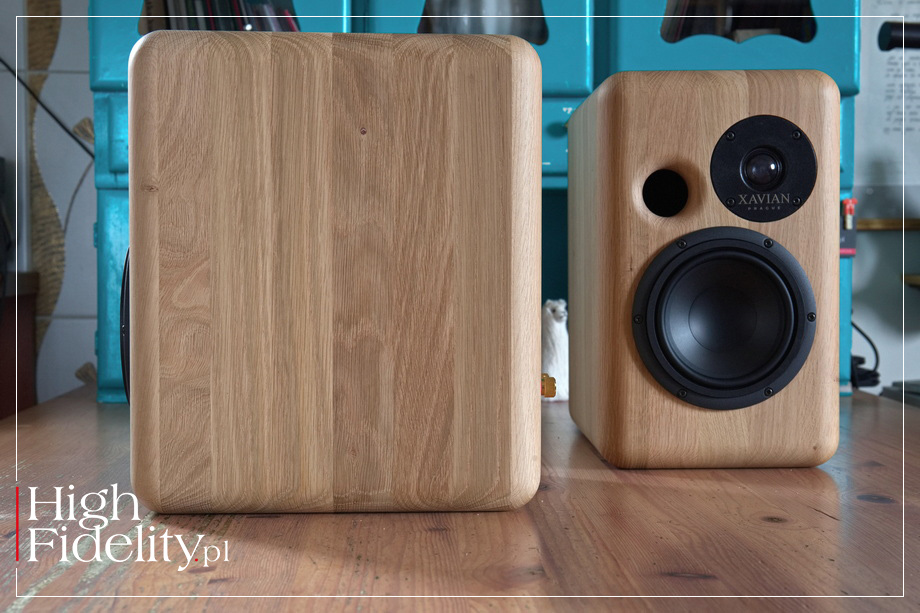
This concerns the claim, which has been circulating for many, many years, that only small designs of this type are able to properly reflect the space and “disappear” from the room. With all due respect to my predecessors, journalists, and music lovers who have also heard this, I disagree. Namely, I believe that a large proportion of floor-standing speakers were poorly designed, hence their problems with sound separation, imaging, etc. Just listen to speakers from the “BBC school”, i.e., with large front panels, and you will hear that “vast space” is not assigned to small bookshelf speakers. And yet... Well, Unicas are designs that, on the one hand, completely disappear from the room, while at the same time create large-scale sound in a wide and high sphere. I heard this with Evans in concert, with the Montgomery brothers in the studio, with Davis's studio chats, and with the gem among studio “prepared” recordings, namely Sgt. Pepper's Lonely Hearts Club by THE BEATLES in its original mix. These are speakers that create a very credible representation of recordings. And at the same time, they are resolving. That is why I heard not only the natural softness of the reissue from which I listened to The Beatles music, but also what makes it different from other releases. The thing is, the Gold Note version released in 2016 was cut from an analog tape, but most likely a production tape. The Italians did a great job, but it is not a particularly resolving version. And, interestingly, Mr. Barletta's speakers showed both. They played it as if they were studio monitors, preserving everything I wrote about above. It was a wonderful reproduction, because it was so “internal”, strong in tonality and harmonies. But also dynamically calmed down, smoothed out, darker than the original and digital remasters. Not because the speakers added anything, but because they correctly interpreted both the intention of the publishers of this reissue and showed the sound of the tape that was used. ▌ Summary I THINK YOU MAY BE SURPRISED when you listen to these speakers in good conditions, with a good amplifier and a rich signal source. Xavian Unica will deliver an expansive, powerful soundstage with full planes and layers, without any gaps between sounds. They will play music with full commitment. Because it is dense and low sound focused on the midrange. And they play any music in this way, from any release. They show their strengths and weaknesses, but they do not destroy the illusion of transferring sounds to our world. These appear in the room as if it were disappearing from the equation, because the speakers are not “visible”. There is also no impression that the sound is coming from them. It is as if it were generated by the entire space between us and the speakers. It is not a point in space that spreads throughout our room, but a large, coherent plane. Xavian play in a very elegant way, with a full band. That's why not only sophisticated jazz recordings, but also rock, such as my beloved album Electric by The Cult, produced by the same Rick Rubin who is responsible for the Red Hot Chili Peppers album Californication, as well as the electronic music from the maxi single Zero Gravity, sounded great. 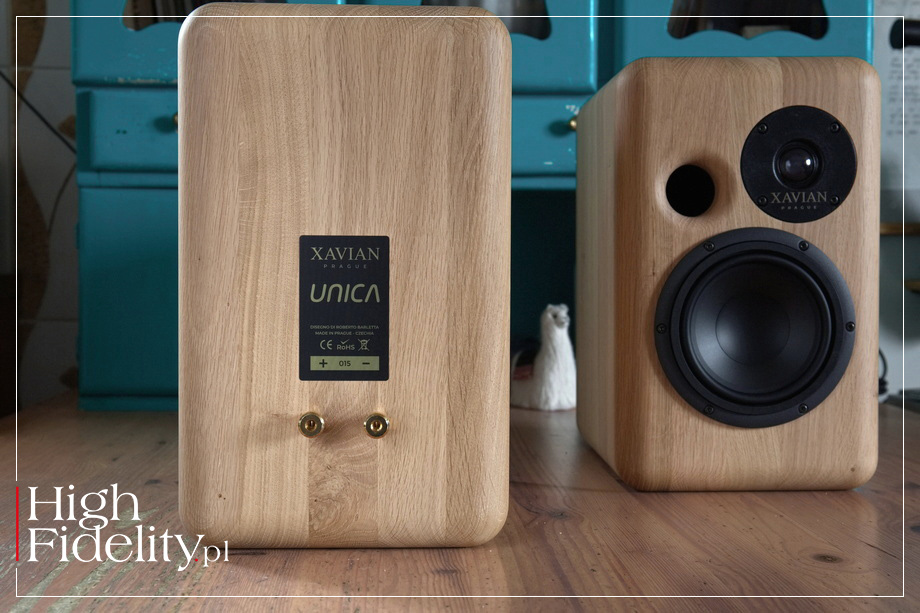
The 12" album, released by The Vinyl Factory, featured a single from JEAN-MICHEL JARRE's album Electronica Project, recorded with the band TANGERINE DREAM. And it sounded great! We are pleased to award these designs with our seal of approval, or the ˻ RED FINGERPRINT ˺. ● ▌ Technical specifications (according to the manufacturer)
Design: 2-way, bass-reflex 
THIS TEST HAS BEEN DESIGNED ACCORDING TO THE GUIDELINES adopted by the Association of International Audiophile Publications, an international audio press association concerned with ethical and professional standards in our industry, of which HIGH FIDELITY is a founding member. More about the association and its constituent titles → HERE. |

 |


|
Reference system 2025 |
|
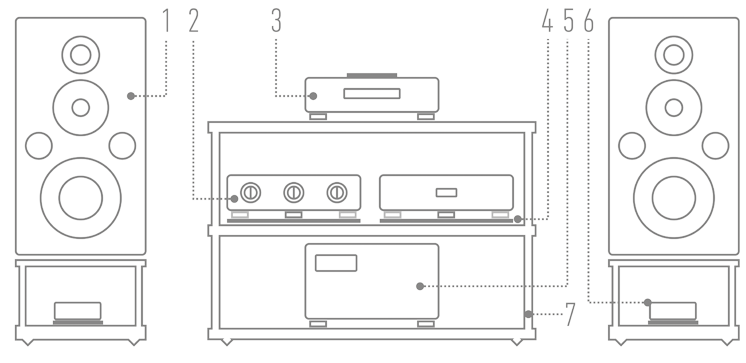 1) Loudspeakers: HARBETH M40.1 |REVIEW| 2) Line preamplifier: AYON AUDIO Spheris III Linestage |REVIEW| 3) Super Audio CD Player: AYON AUDIO CD-35 HF Edition No. 01/50 |REVIEW| 4) Stands (loudspeakers): ACOUSTIC REVIVE (custom) |ABOUT| 5) Power amplifier: SOULUTION 710 6) Loudspeaker filter: SPEC REAL-SOUND PROCESSOR RSP-AZ9EX (prototype) |REVIEW| 7) Hi-Fi rack: Hi-Fi rack: finite elemente MASTER REFERENCE PAGODE EDITION Mk II, more → HERE |
|

|
Cables Analog interconnect SACD Player - Line preamplifier: SILTECH Triple Crown (1 m) |ABOUT|» ANALOG INTERCONNECT Line preamplifier → Power amplifier: Siltech ROYAL SINLGE CROWN RCA; review → HERE Speaker cable: SILTECH Triple Crown (2.5 m) |ABOUT| |

|
AC Power Power cable | Mains Power Distribution Block - SACD Player: SILTECH Triple CrownPower (2 m) |ARTICLE| » POWER CABLE Mains Power Distribution Block → Line preamplifier: Acoustic Revive ABSOLUTE-POWER CORD, review → HERE » POWER CABLE Mains Power Distribution Block → Power amplifier: Acoustic Revive ABSOLUTE-POWER CORD, review → HERE Power cable | Power Receptacle - Mains Power Distribution Block: ACROLINK Mexcel 7N-PC9500 (2 m) |ARTICLE| Power Receptacle: Acoustic Revive RTP-4eu ULTIMATE |REVIEW| » ANTI-VIBRATION PLATFORM under Acoustic Revive RTP-4eu ULTIMATE: Graphite Audio CLASSIC 100 ULTRA, review → HERE Power Supply Conditioner: Acoustic Revive RPC-1 |REVIEW| Power Supply Conditioner: Acoustic Revive RAS-14 Triple-C |REVIEW| Passive filter EMI/RFI: VERICTUM Block |REVIEW| |

|
Anti-vibration Speaker stands: ACOUSTIC REVIVE (custom)Hi-Fi rack: finite elemente MASTER REFERENCE PAGODE EDITION Mk II, more → HERE Anti-vibration platforms: ACOUSTIC REVIVE RAF-48H |ARTICLE| » ANTI-VIBRATIONAL FEET: |

|
Analogue Phono preamplifier: Phono cartridges:
Clamp: PATHE WINGS Titanium PW-Ti 770 | Limited Edition Record mats:
|

|
Headphones » HEADPHONE AMPLIFIER: Leben CS-600X, review → HEREHeadphones: Headphone Cables: Forza AudioWorks NOIR HYBRID HPC |