


|
INTEGRATED AMPLIFIER FEZZ AUDIO
Manufacturer: TOROIDY.pl |

 |
 |
 |
|
Review
Text by WOJCIECH PACUŁA |

|
No 260 January 1, 2026 |
|
˻ FIRST REVIEW ˼ ⌈ > FEZZ AUDIO is a company specializing in tube amplifiers. It is the audiophile division of TOROIDY.pl, a manufacturer of toroidal transformers, also for audio applications. Fezz Audio was established in 2014, and its first product was the LAURA integrated amplifier. We are testing its latest and smallest tube amplifier, the LUNA MINI. This is its premiere test. ⌋ IT WOULD NOT BE AN EXAGGERATION to say that the Luna amplifier, and later the Luna Evo, were the most important products of Fezz Audio. They were not the largest, not the most powerful, and there-fore not the most expensive, but they were “iconic”, as the company sometimes described them in its press ma-terials. They were largely responsible for building the brand. I would add that they were also my favorite ampli-fiers from this manufacturer, because they were well-priced, sounded good, and were based on my favorite EL34 power tubes. 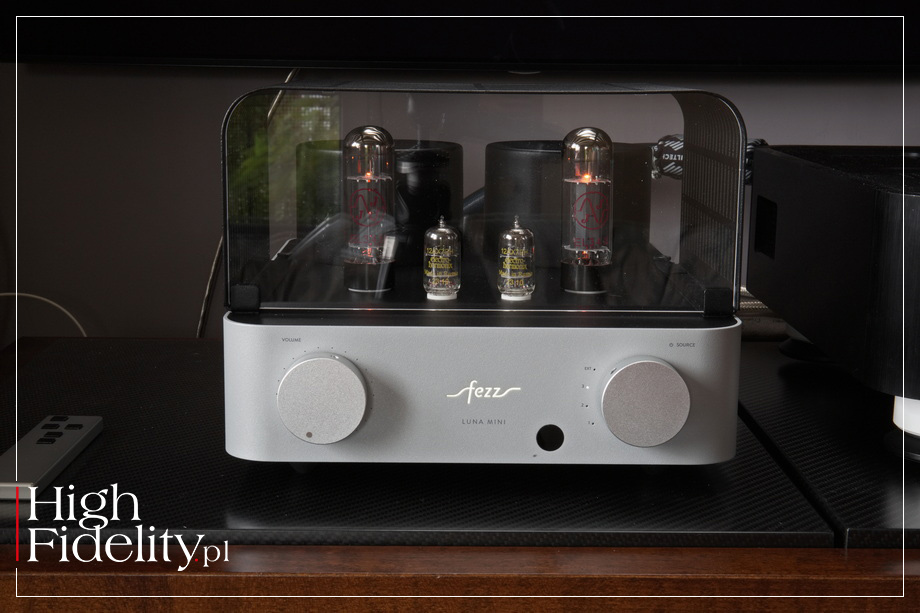
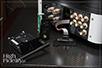
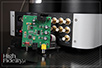
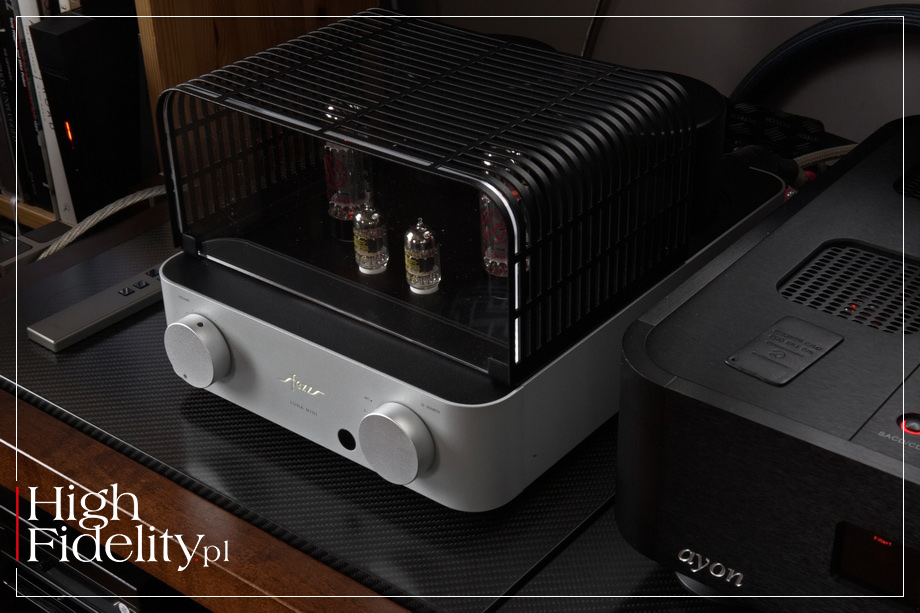
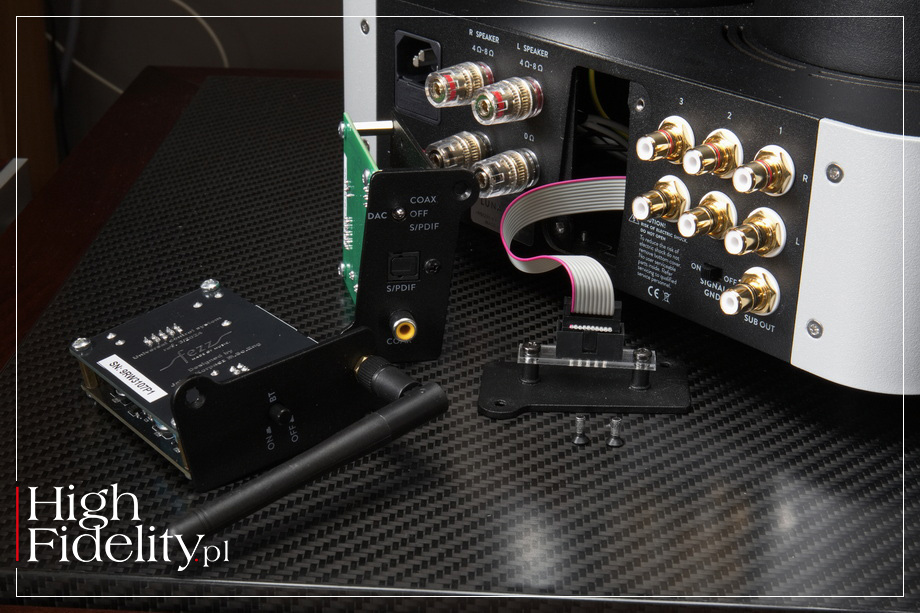
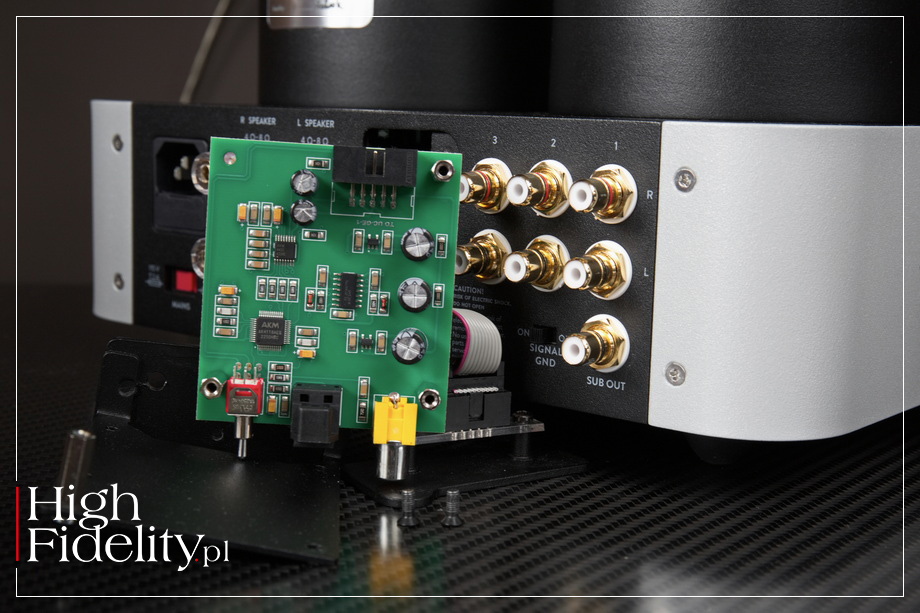
And “were” because word has already spread that on November 1st. this year, the company will discontinue production of this model in order to, as it wrote on its Facebook profile, “begin a new stage of development and introduce further innovations”. A bold move. However, Fezz is already an experienced manufacturer and has a good understanding of the market and customer needs, so it clearly saw something in its crystal ball. One of the changes will be the introduction of a smaller version of the Silver Luna model, the Luna Mini. ▌ Luna Mini Evo TUBE INTEGRATED AMPLIFIER The Luna Mini is a very nice-looking device. It offers three line inputs, a mono line output for an active subwoofer, as well as optional “expansion cards”, as they are referred to in the company's materials: a Bluetooth 5.0 receiver, a digital-to-analog converter, and an MM phono pre-amplifier. Only one of them can be used at a time. They are very easy to install: just unscrew the cap, plug the ribbon cable into the board, and screw the cap back on. Although the name suggests small dimensions, the new, smaller Luna is not that “mini” after all. While it looks like a smaller amplifier than the classic Luna Silver, this is mainly due to a 90⁰ rotation of the body. Now the front panel is narrower and the depth is greater. In addition, the weight has not decreased significantly – from 20.7 kg in the “large” Luna to 15 kg in the “mini”. However, the changes are visible at first glance. The Luna Mini is a low-power amplifier and a single-ended design, i.e., with a single tube in each chan-nel. By its very nature, it operates in class A, similar to the double triodes that control it. The designers decided to use the classic EL34 power pentode, which was also used in the Silver Luna model. These excellent audio tubes, designed in 1955 by Mullard, then part of the Philips group, are also used in guitar amplifiers. Their control and input buffering are handled by low-power 12AX7 dual triodes. These tubes were also designed from the outset as audio tubes and are widely used in both home and professional systems. In the test-ed amplifier, they were manufactured by the Russian company Electro-Harmonix, but the output tubes are “lo-cal”, so to speak, as they were supplied by the Slovak company JJ Electronics. The EL34 II is a new version of the classic, offering higher power, greater durability thanks to better internal components, according to the manufacturer, and greater resistance to micro-phoning. It is also said to feature “a more refined and balanced sound, with a particularly warmer midrange and better controlled lower end, while softening the high frequencies compared to the standard EL34 model”. The device can be controlled using two large, convenient knobs on the front panel or with a remote con-trol. The knobs are used to adjust the volume and select active input; the right knob is also used to turn the amplifier on from standby mode; the main switch is located under the front edge. The active input is indicated by a white micro-LED. The remote control allows you to adjust the volume, select the source, and turn the amplifier on and off. On the front panel of the amplifier, there is a “window” with a receiver for communication with the remote control. The remote control housing is made of milled aluminum, and the electronics are manufactured for Fezz. The buttons work reliably, although they are a bit loose in their holes. 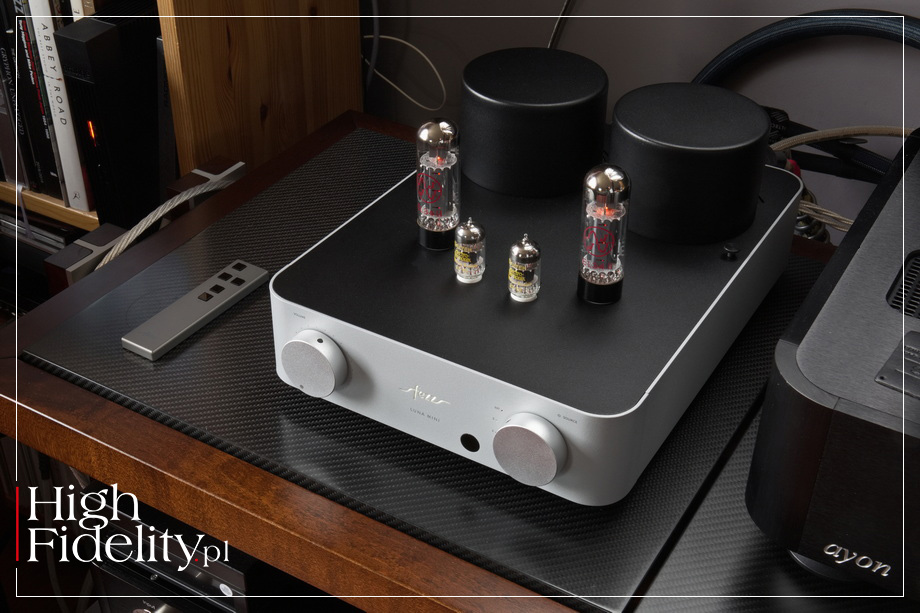
The set includes a protective cage for the tubes. You have to assemble it yourself by screwing the acryl-ic front to the metal element. It's not easy, but it can be done while avoiding losing the washers placed under the small nuts. What's more, Fezz amplifiers look quite neat with them. It is a well-equipped amplifier, attractive and solidly built, but I found one thing missing: a headphone output. After all, this amplifier format and this type of circuitry are ideal for headphones. It could be part of a system of this type, without having to work with speakers at all. Perhaps someday, in another version, or with another “expansion card”... ▌ SOUND HOW WE LISTENED • The Fezz Audio Luna Mini integrated amplifier was tested in the HIGH FIDELITY reference system and compared to a system consisting of an Ayon Audio Spheris Evo tube preamplifier and a Soulution 710 transistor power amplifier. 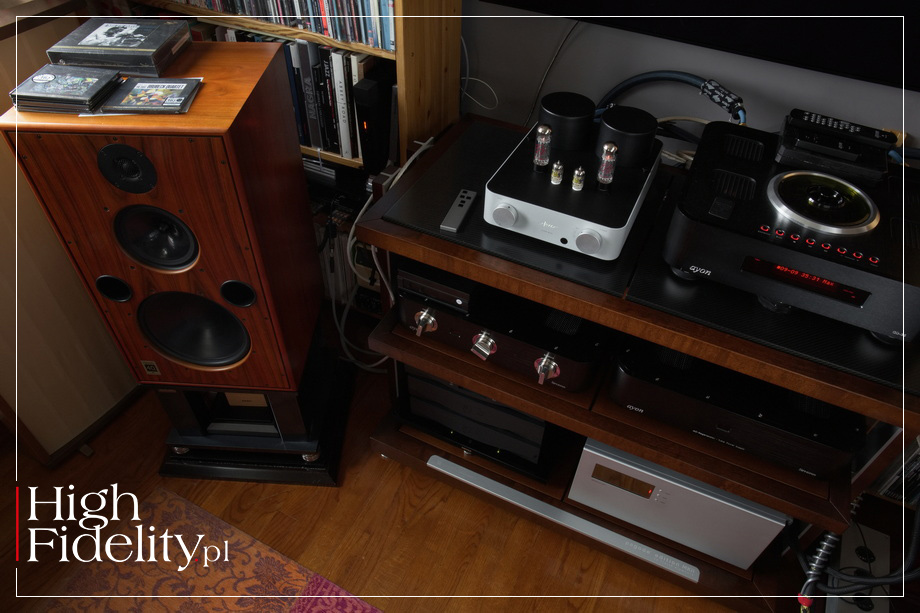
The tested device was placed on a Finite Elemente Master Reference Pagode Edition Mk II rack. The signal source was Sforzato DSP-05 EX file player with a PMC-05EX clock, and for testing the optional D/A card, an Ayon Audio CD-35 HF Edition SACD player. The Ayon Luna Mini was connected via Siltech Triple Crown RCA interconnects, and the Lumin via Siltech Master Crown interconnects. It was connected to Harbeth M40.1 speakers via Crystal Cable Art Series Da Vinci cables. The amplifier was powered by a Harmonix X-DC350M2R Improved-Version cable. It should be added that SPEC RSP-901EX speaker filters were connected to the speakers. The manufacturer writes about them: Real-Sound Processor (more → HERE). » RECORDINGS USED FOR THE TEST ⸜ a selection
⸜ TIGRAN HAMASYAN, Atmosphères, ECM Records/Tidal, FLAC 24/96 ⸜ 2016. Giving up the push-pull mode in an amplifier also means giving up high power, at least when it comes to single-ended circuits with a single output tube rather than several parallel ones. This is something we will also hear with the Luna Mini. You can't cheat physics. Although 300B tubes enter overdrive more gently and seem to tolerate higher currents better, and thus seem to play louder than other SE tubes, they also have their limitations. Just as EL34 pentodes do. 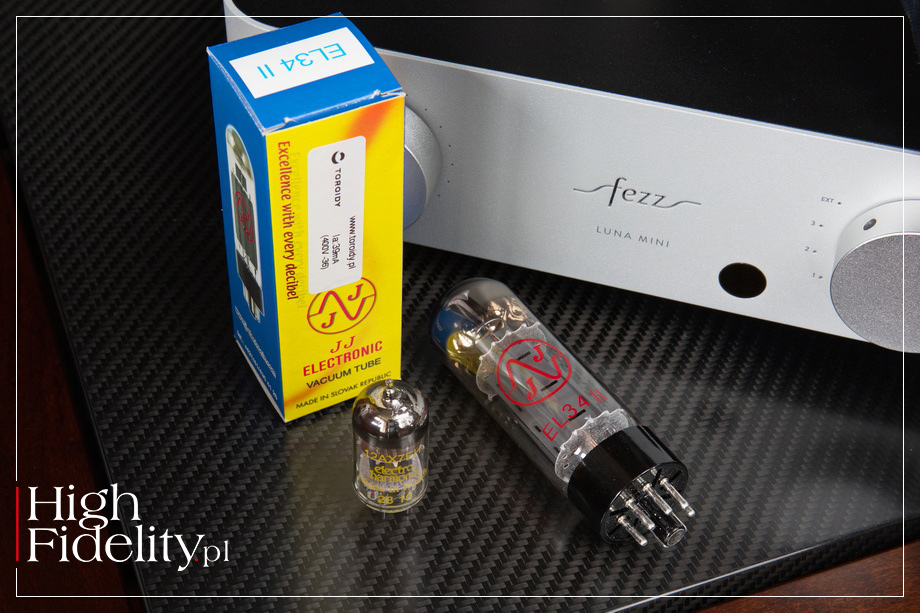
And yet... I started with the obvious, which there is no point in hiding or downplaying. It is a small amplifier, so you have to use it in harmony with it, not against it. But when we do that, folks, it will be really enjoyable! That's because this device produces a big, warm sound. And it's nicely saturated. The very first track on my playlist, TIGRAN HAMASYAN's 1 ˺ Tsirani Sar from Atmosphères, just released by ECM, sounded downright dazzling and convincing for the price. Arve Henriksen's trumpet blended nicely into the background created by the leader's piano and Jan Bang's sam-ples, yet it was also expressive, despite the soft, slightly muted playing we hear in this piece. It was a powerful, multidimensional space, stretching far into the depths and extending out to both sides of the speakers. The recording in question has little compression, so when turning up the volume, it was easy for me to reach the point where the sound began to distort. But then I realized that I was already playing really loud, much louder than I thought possible. |
The new Fezz Audio amplifier has something that encourages long listening sessions, loud and joyful listening. Like the track ˻ 1 ˺ Tiger is Coming from the album Sugungga by LEENALCHI. The surprising combination of K-Pop and traditional music, i.e., electronic percussion and synthetic bass, even at the end, where they are really powerful, playing low and dense with high vocals (you will be surprised by them!), did not impress the amplifier. In the sense that it played a nice, soft bass with quite good depth. Of course, it will not be a “shaking” bass, but energetic enough to make the presentation complete. 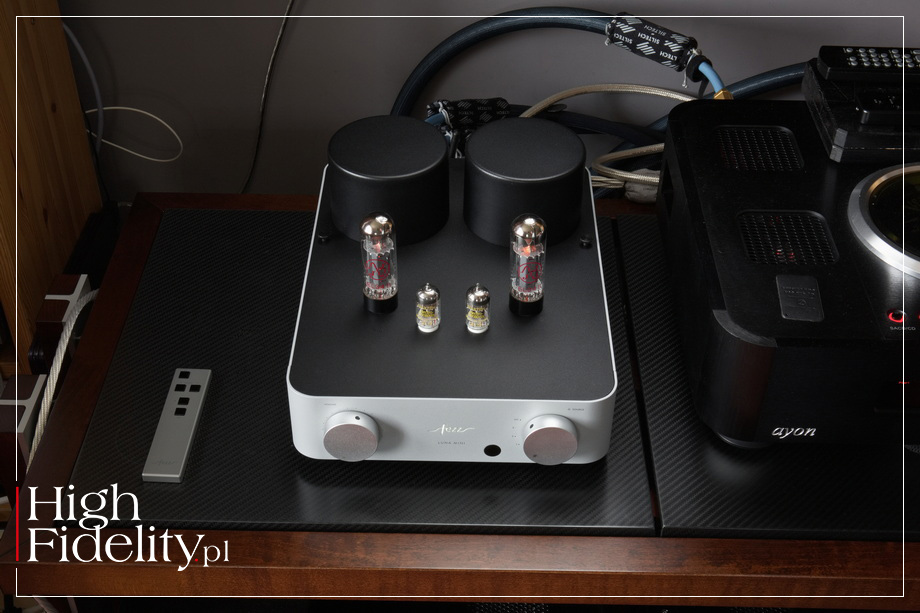
And when we return to melancholic, ethereal music, such as the extraordinary track by Irish duo Stace Gill and Maria Nilsson Waller, aka THE SIĘ, entitled Metroma, we congratulate ourselves on our choice and taste. The recording in question is beautiful. The song itself is a wonderful mix of ambient and downtempo electronica styles, reminiscent of 90s trip hop, as we read on Bandcamp. It is also a recording with very high mid-frequency energy, so let's not play it too loud, it's not necessary. With a Polish amplifier, we get a rich, dense, warm sound with excellent internal “viscosity”. And again, when we return to powerful rock sounds, the amplifier will play even louder. Compressed material seems to cause fewer problems with speaker control. In a well-matched system, in a small room, this will not matter much. Even with the very difficult Harbeth M40.1 speakers and in a large room, Punkrocker by the Swedish band TEDDYBEARS, featuring the fantastic IGGY POP on vocals, will not disturb this harmony. Because this is how this amplifier sounds – harmonious. Don't expect it to be as selective as the Silver Luna or as detailed as the company's even more expensive amplifiers, because you won't get that. And if you look for it, you will be disappointed. And that would be a shame, a real shame. Because this is a very suc-cessful device, a gem on par with the Leben CS300, Aurora Sound HFSA-01, and Aura VA40. You will feel it halfway through the third minute, when the powerful thumping gives way to an ambient interlude with low bass and vocals set to a long reverb – wonderful! This does not mean that the amplifier does not show details, my god, that's not the point at all. Let's play a well-produced album, for example, the excellent AVISHAY COHEN in the ˻ 1 ˺ About a Tree from the newly released album Litte Big Beat Studio (Live Session), and you will hear sparkling drumsticks, the leader's perfectly punctual double bass, and nice brass instruments. The piano underneath will also be clear, though it will not stand out with its brightness or excessive emphasis on the higher midrange. However, these will be details rather in the background, not some-thing “beside.” DAC & BLUETOOTH • The cards that expand the functionality of the Luna Mini amplifier are designed for those who want to have the entire system in one device, adding only the source. Understood in this way, the DAC will more than meet these expectations. It delivers clean, orderly sound, with nice bass response and clear highs. The center of gravity is set higher than in the reference player. However, it is not too high, which allows it to maintain consistency. The DAC plays without excessive resolution, but coherently. While the DAC sounded great, as I expected, the Bluetooth receiver surprised me. This is because it sounded low and dense. It had the characteristics typical of this connection, including the suppression of some of the higher midrange information and a slight equalization of the dynamics, but these were not the dominant features. ˻ 1 ˺ Her to the Earth by ELBOW had a nice bass re-sponse and characteristic low midrange bloat, while ART BLAKEY’S˻ 1 ˺ Moanin’ showed clear cymbals and overall coherence. It's a surprisingly cool option for background lis-tening. ▌ Summary LUNA MINI IS a small amplifier with a big heart, to use a well-worn description. But so what, let it be well-worn if it accurately describes what we get with this device. And what we get is a powerful, dense sound with a warm character, but also with open reverberations, without any veiling. The amplifier can play loud and pow-erful, but it must also be paired with the right speakers and used in a small room. 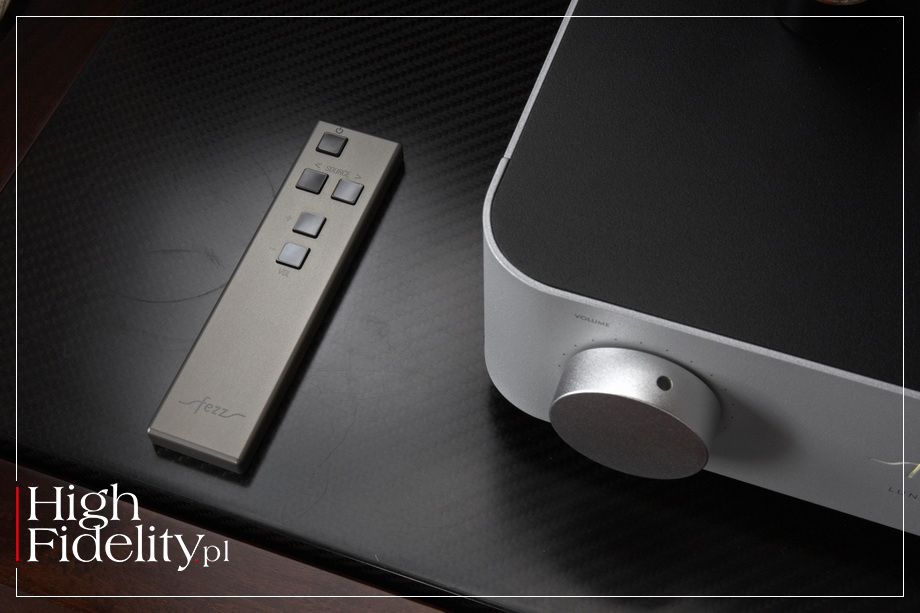
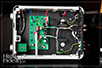
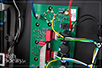
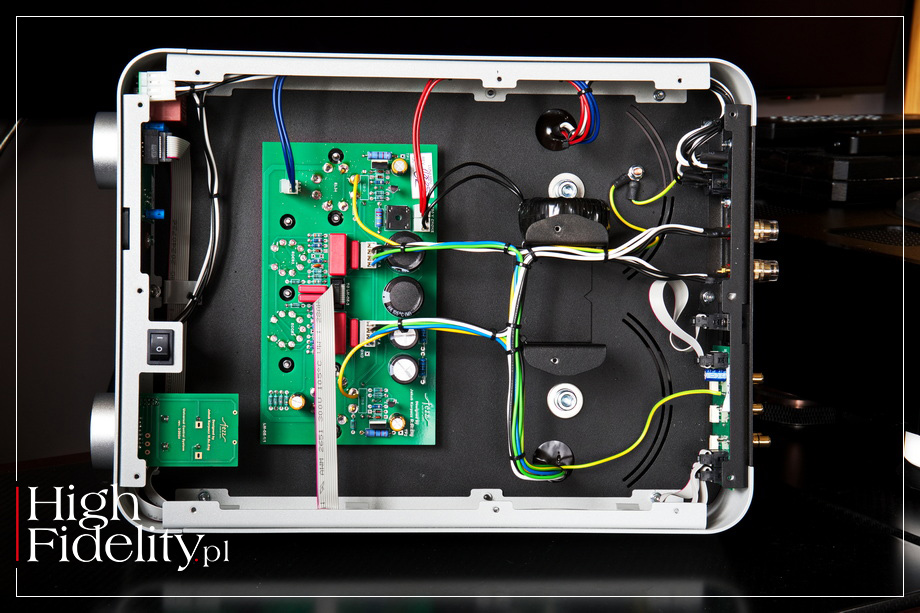
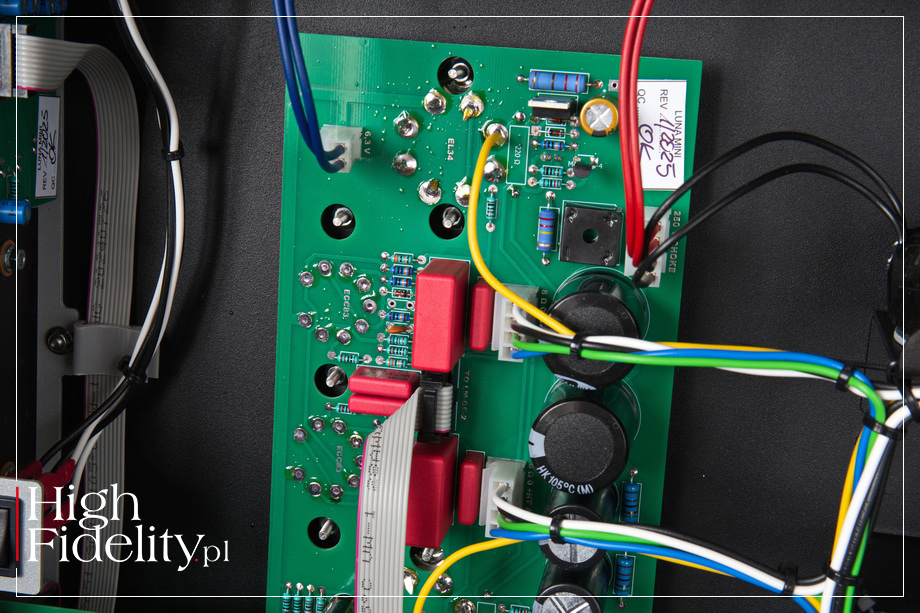
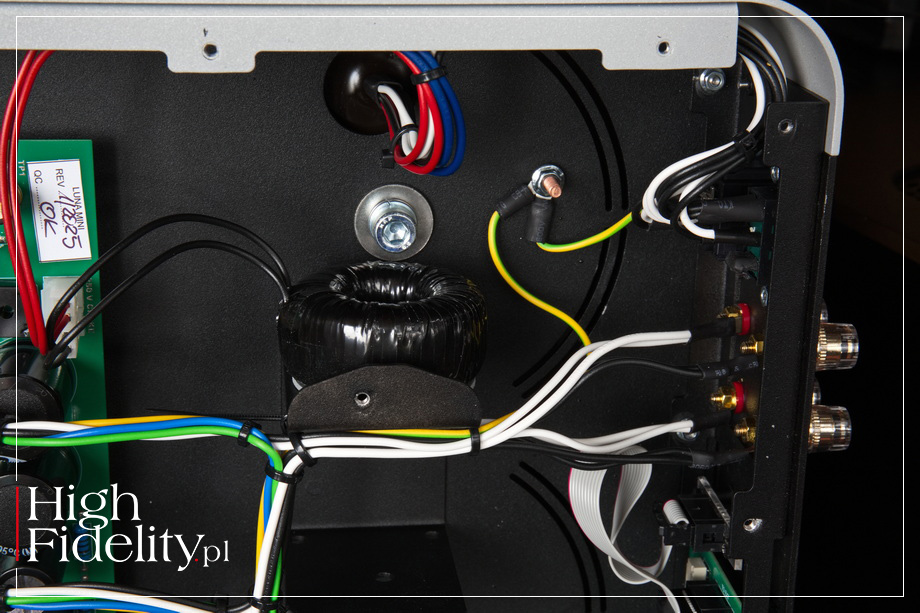
It surprises with its low bass, which is great for this power and blends in well with the rest of the range. This is based on a rich midrange and warm treble. However, it is not a closed and muddy sound – there is plenty of energy, power, and rhythm here. Let's add that the optional cards also do the job and will really come in handy, for example with inexpensive file or CD transport, and Bluetooth will surprise us with nice colors. It’s a really great product! ▌ DESIGN ALTHOUGH THE NAME LUNA MINI does not include the suffix Evo, as in all other new devices from this company, the mechanical construction and design are the same. It is a rigid, bent sheet metal casing with round-ed edges at the front and back. The device is available in several colors, and the silver version was tested. Regardless of the color of the side panels, the top, bottom, back, and transformer cans will be black. The remote control, on the other hand, will be titanium-colored. FRONT AND REAR • On the front of the device, there are two large knobs – the left one controls the volume, and the right one selects the active input. The first knob has a screen-printed scale, while the second knob's settings are indicated by white micro-LEDs. The laser-cut Fezz logo is also illuminated in white. It is red only during the sequence of switching on individual voltages at the very be-ginning. At the rear, there are RCA sockets, nice, gold-plated, screw-on, a mono output for a subwoofer, and two pairs of speaker sockets. These are small, gold-plated, and positioned close to each other. A narrow gap has al-so been left between them and the EIC socket and the slot for an additional module. I would therefore suggest using speaker cables with straight banana plugs. If you are not using an expansion card, the slot is closed with a metal plate. INSIDE • The device’s design is quite simple, although such simplicity requires skill, otherwise it ends badly. The entire amplifier circuit is located on a small printed circuit board. On one side, ceramic tube sockets with gold-plated contacts are soldered to it, and on the other side, pas-sive components and a power supply. The tubes are coupled with Wima polypropylene capacitors; a similar so-lution was used for the cathode circuits. The resistors have low tolerance. The same board also houses the power supply. It is shared by both channels. It is a “Pi” type circuit with a transformer choke. The power transformer is also toroidal and enclosed in one of the two boxes visible from above. It is filled with resin to dampen vibrations. The speaker transformers, stacked on top of each other and enclosed in the other box, have been treated in a similar manner. All of them are manufactured by Fezz's parent company, Toroidy.pl. 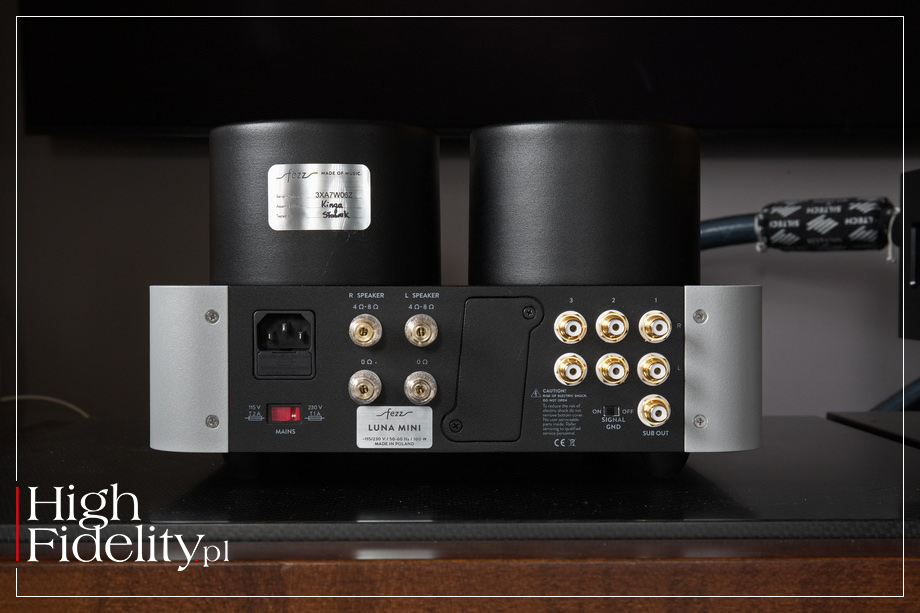
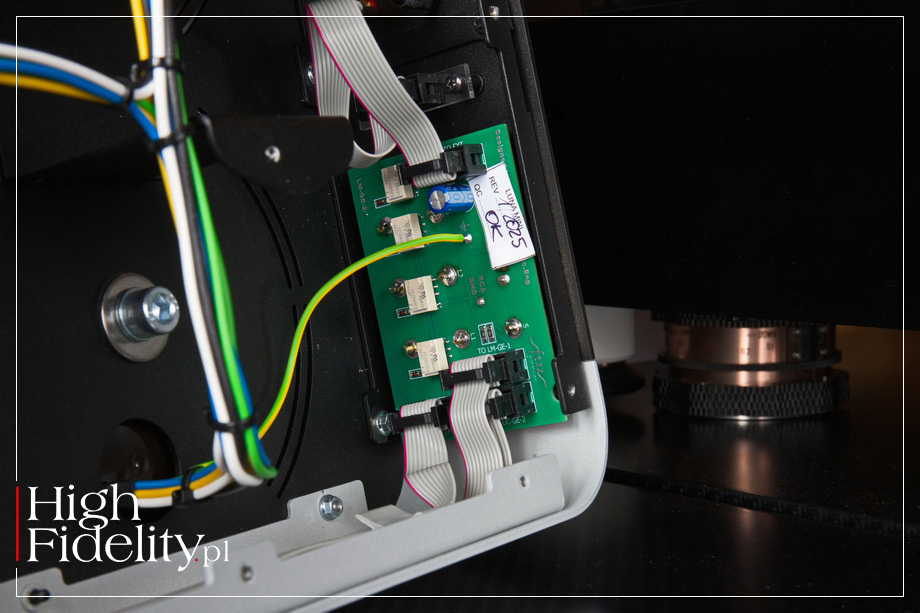
The inputs are switched by relays on a board located on the rear panel. The signal is then routed to the front panel, to a motorized rotary attenuator. It features its own small board. A similar board is located next to the input selection knob – this is the standby circuit board. Signals inside the device are mainly routed via FFC cables (Flexible Flat Cable), formerly referred to as “computer cables”. ● ▌ Technical specifications (according to the manufacturer)
Nominal output: 2 x 10 W 
THIS TEST HAS BEEN DESIGNED ACCORDING TO THE GUIDELINES adopted by the Association of International Audiophile Publications, an international audio press association concerned with ethical and professional standards in our industry, of which HIGH FIDELITY is a founding member. More about the association and its constituent titles → HERE. |
 |

|
Reference system 2025 |
|
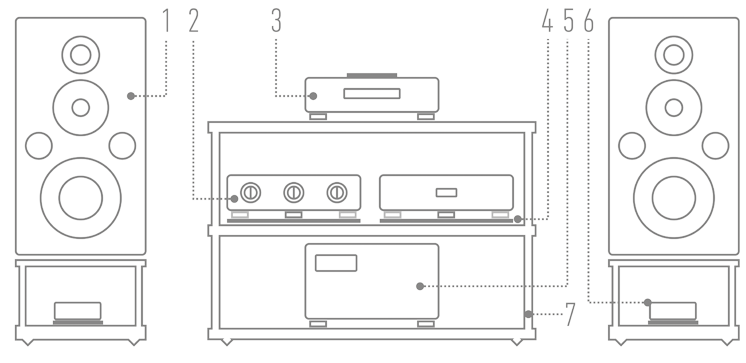 1) Loudspeakers: HARBETH M40.1 |REVIEW| 2) Line preamplifier: AYON AUDIO Spheris III Linestage |REVIEW| 3) Super Audio CD Player: AYON AUDIO CD-35 HF Edition No. 01/50 |REVIEW| 4) Stands (loudspeakers): ACOUSTIC REVIVE (custom) |ABOUT| 5) Power amplifier: SOULUTION 710 6) Loudspeaker filter: SPEC REAL-SOUND PROCESSOR RSP-AZ9EX (prototype) |REVIEW| 7) Hi-Fi rack: Hi-Fi rack: finite elemente MASTER REFERENCE PAGODE EDITION Mk II, more → HERE |
|

|
Cables Analog interconnect SACD Player - Line preamplifier: SILTECH Triple Crown (1 m) |ABOUT|» ANALOG INTERCONNECT Line preamplifier → Power amplifier: Siltech ROYAL SINLGE CROWN RCA; review → HERE Speaker cable: SILTECH Triple Crown (2.5 m) |ABOUT| |

|
AC Power Power cable | Mains Power Distribution Block - SACD Player: SILTECH Triple CrownPower (2 m) |ARTICLE| » POWER CABLE Mains Power Distribution Block → Line preamplifier: Acoustic Revive ABSOLUTE-POWER CORD, review → HERE » POWER CABLE Mains Power Distribution Block → Power amplifier: Acoustic Revive ABSOLUTE-POWER CORD, review → HERE Power cable | Power Receptacle - Mains Power Distribution Block: ACROLINK Mexcel 7N-PC9500 (2 m) |ARTICLE| Power Receptacle: Acoustic Revive RTP-4eu ULTIMATE |REVIEW| » ANTI-VIBRATION PLATFORM under Acoustic Revive RTP-4eu ULTIMATE: Graphite Audio CLASSIC 100 ULTRA, review → HERE Power Supply Conditioner: Acoustic Revive RPC-1 |REVIEW| Power Supply Conditioner: Acoustic Revive RAS-14 Triple-C |REVIEW| Passive filter EMI/RFI: VERICTUM Block |REVIEW| |

|
Anti-vibration Speaker stands: ACOUSTIC REVIVE (custom)Hi-Fi rack: finite elemente MASTER REFERENCE PAGODE EDITION Mk II, more → HERE Anti-vibration platforms: ACOUSTIC REVIVE RAF-48H |ARTICLE| » ANTI-VIBRATIONAL FEET: |

|
Analogue Phono preamplifier: Phono cartridges:
Clamp: PATHE WINGS Titanium PW-Ti 770 | Limited Edition Record mats:
|

|
Headphones » HEADPHONE AMPLIFIER: Leben CS-600X, review → HEREHeadphones: Headphone Cables: Forza AudioWorks NOIR HYBRID HPC |