

|
POWER AMPLIFIER & POWER SUPPLY DC NORSE
Manufacturer: BLADELIUS DESIGN GROUP |

 |
 |
 |
|
Review
text by WOJCIECH PACUŁA |
|
No 259 December 1, 2025 |
|
˻ PREMIERE REVIEW ˼ ⌈ The NORSE brand was established this year (2025), and its first products are the X1 power amplifier and the X5 DC power supply. It is a new brand from Mike Bladelius, part of the Bladelius Design Group, which aims to focus on affordable, compact products. This is their WORLD PREMIERE. ⌋ WE READ THE SLOGAN that opens the Norse brand website, repeated in its footer at the very bottom, and everything becomes clear: “Norse Audio - Powered by BLADELIUS.” This is Mike Bladelius' new brand, through which he wants to provide audiophiles with as much of his knowledge about amplifier circuits as possible in a small, affordable form. This is not the first project of this type by this designer, as we recall the Advantage brand, with which he began his independent career, SAT (Swedish Audio Technology) and – the main one – Bladelius. The idea is not new, but rather archetypal and cyclically repeated in audio (“small is beautiful”, “less is more”, etc.). For years, it has been upheld by companies such as Cyrus and Heed, perfected and refined in Japan by 47Laboratory, and presented to the mass market by the Austrian company Pro-Ject in its “Box Design” series. We read about it: 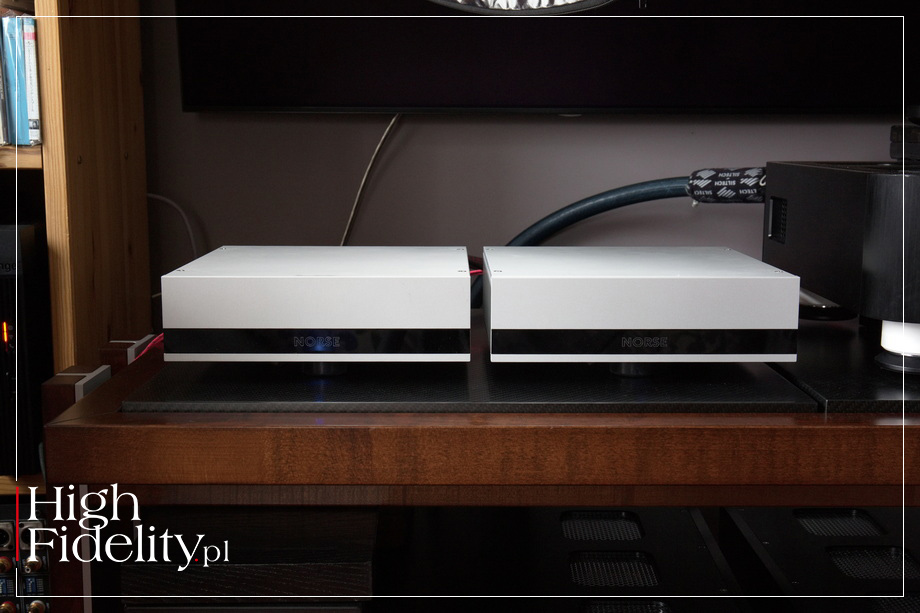
The fact that someone else has already come up with this idea and is successfully implementing it is no reason not to take advantage of it. By attributing this solution to a specific person, we would be like those who sanction certain types of creativity (art) or solutions (technology) only by their “forefathers”. This is not a case of an invention that actually belongs to the inventor, but rather a certain type or kind. It is as if, after the first symphony in history, no one else dared to write anything similar. OK, in the case of the Norse brand, a symphony may seem like an excessive comparison, and a suite, fugue, or most of all – a prelude would be more appropriate. To the point: in small, standardized enclosures, Mike has so far offered the X1 power amplifier and the X5 power supply that works with it (this is a set), and in January the X2 line preamplifier will be available; we are testing the X1 & X5 set. At first glance, it seems to be a repeat of already available solutions, but it turns out to be a modification of them. The X1 amplifier offers powerful output, up to 50 W at 8 ohms and 100 W at 4 ohms. And it works in class AB, not D. When we bridge it and reach for a second one, we get an incredible 200 and 390 watts, respectively! As it happens, we are testing the first working units of the X1 and X5, which are no longer prototypes but not yet mass-produced products. This limbo status and the early stage of development of the devices, which are not yet fully refined in terms of style and component assembly, is due to my desire to learn. During a dinner in Warsaw, where we were celebrating the Bladelius Oden II Class-A amplifier winning the STATEMENT in High Fidelity award, I sweet-talked him, kept pouring him wine and looked him in the eyes until he said “OK”. He did it with a smile on his face, so I assume it was a conscious decision... ▲ A few simple words… MIKE BLADELIUS 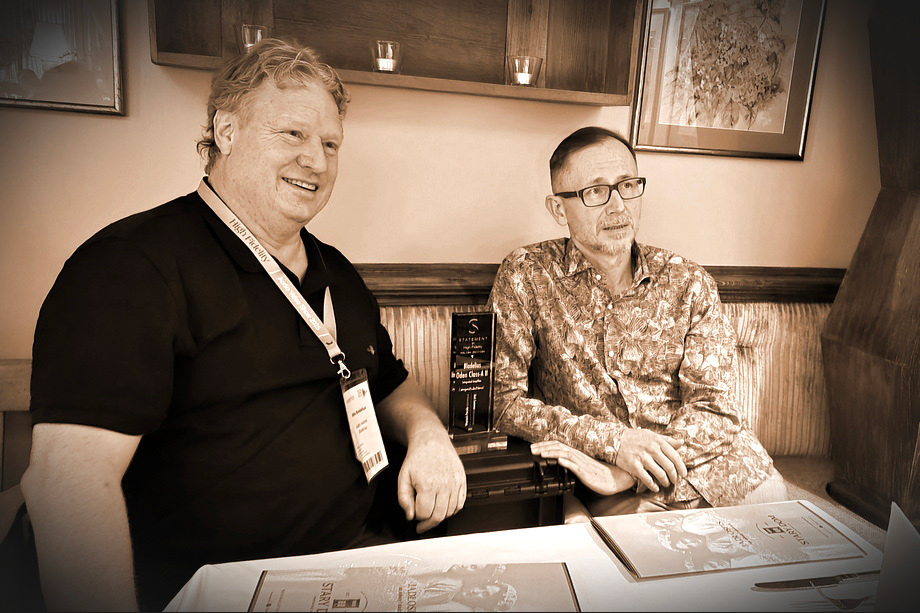
⸜ Mike Bladelius (on the left) with yours truly at the aforementioned dinner • photo by Bartosz Łuczak/Piksel Studio I HAD BEEN THINKING ABOUT THIS PROJECT for quite some time. It was supposed to be a compact and flexible system that would deliver exceptional sound at a much lower price than my previous designs. After careful consideration of the available options, we realized that these types of products did not quite fit the Bladelius brand. Therefore, we decided to launch them under a new, exciting brand. I believe that the Norse Audio system redefines high-fidelity sound while maintaining configuration flexibility, high-quality sound, and simplicity of design. This modular system was created for audiophiles and music enthusiasts and delivers exceptional sound at an affordable price. The Norse ecosystem includes: • X1 power amplifier, 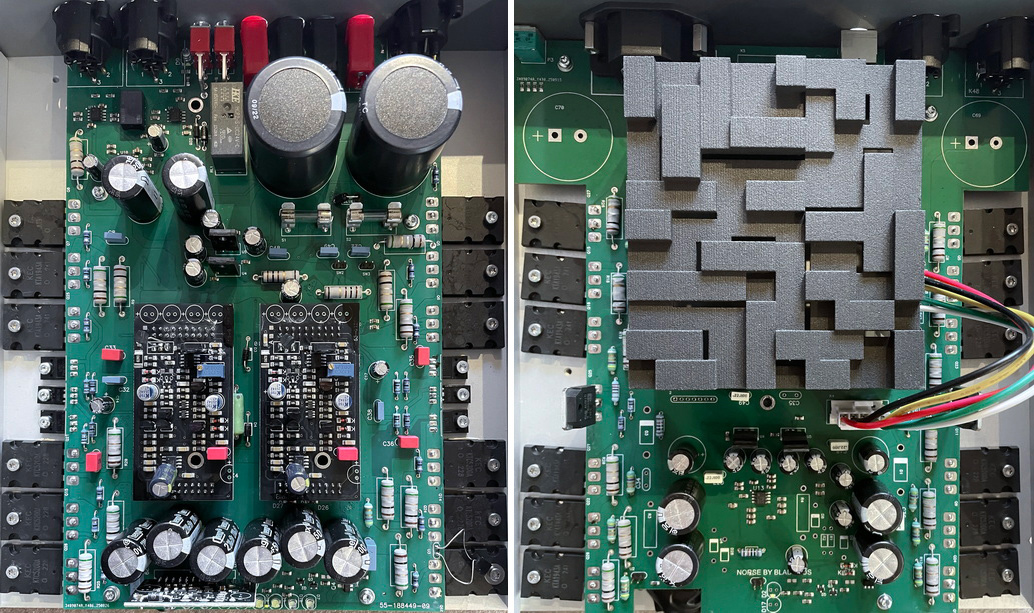
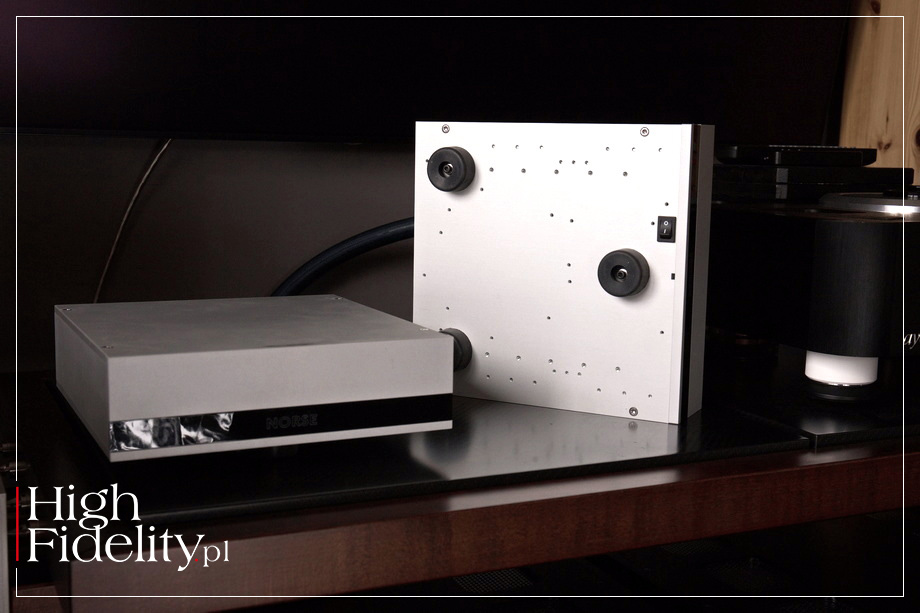
⸜ Insides of the final versions of the X1 (on the left) and X5 • photo by Bladelius Each of these components has been designed with seamless integration in mind, allowing you to tailor your setup to your listening preferences, room acoustics, and future system changes. Whether you are casual music listeners or audiophiles, the Norse system can deliver sound tailored to your needs. The housing, made of machined, non-magnetic materials, minimizes electromagnetic interference, ensuring excellent sound quality. This design also reduces the impact of vibration on electronic components, ensuring reliable and stable operation. 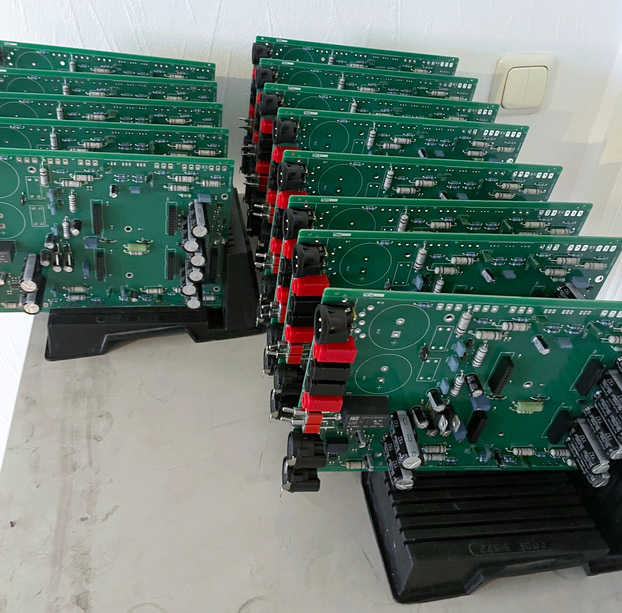
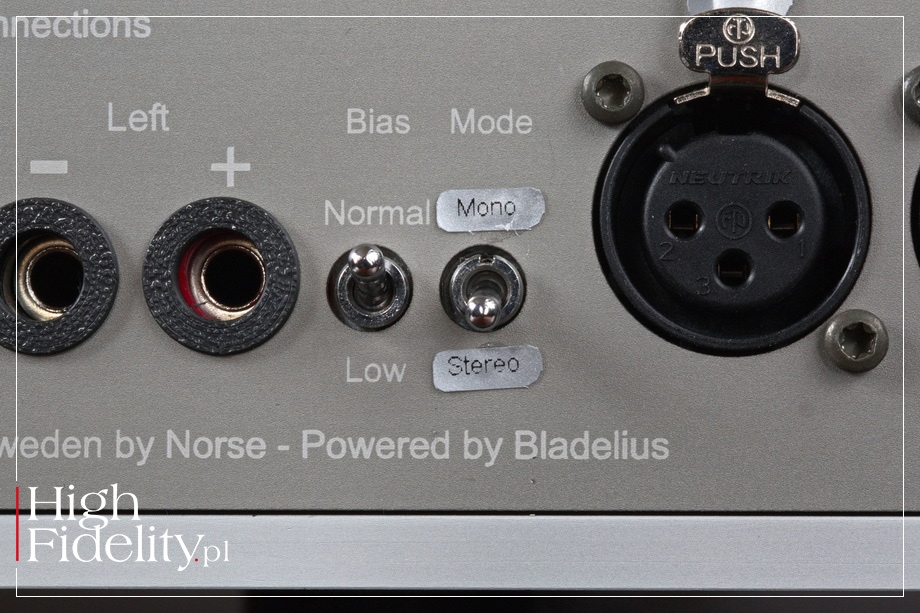
⸜ X5 power supply boards ready for installation in the enclosure • photo by Bladelius At the heart of the system is the X1 power amplifier. A switch on the rear panel allows you to effortlessly switch between stereo and mono modes, making it easy to start with a single amplifier and later expand to a dual-mono configuration. The X1 also features an adjustable bias switch with two modes: Normal Bias and Low Bias. The amplifier features a single stage voltage amplifier, which provides the shortest possible signal path. It is a fully balanced design with no reference to ground. » MB ▌ X1 & X5 » power amplifier X1 THE KEY TO THE SUCCESS of projects, of which Norse is a new incarnation, is repeatability across the entire series, mainly in terms of the housings. This is the most expensive component of most audio devices, right next to heat sinks and power supplies. That is why the enclosures of all the company's devices are the same and also serve as heat sinks. They are made of aluminum sheets and plates, and their front combines aluminum and acrylic. The latter also appears in the Polish More Audio amplifier, as well as in other devices, and it looks good. And, I repeat, it is repeatable, appearing in all three of the company's products. FEATURES • Power amplifiers are extremely boring when it comes to design and functionality. But not always and not all of them. The X1 is an exception. It was conceived by Bladelius as the heart of the system, providing “unmatched versatility”. On the rear panel, there are two switches that help achieve this. One of them allows switching between stereo and mono modes, “making it easier”, as we read, “to start with a single stereo amplifier and expand to a dual-mono configuration”. The second is related to the amplifier circuit. Class D amplifiers have one undeniable and indisputable advantage over all others: efficiency. They do not get hot, which means they consume much less energy, which makes them environmentally friendly. In times of global warming, this is something that cannot be overestimated. In order to move in this direction without compromising his ideals, the designer of the X1 equipped the amplifier with a bias switch with two modes. He writes about them:
Bias, or polarization current, is a direct current (DC) supplied to a transistor to ensure its proper operation at a specific operating point. It is a constant voltage or current component that allows the transistor to “open” so that it can correctly amplify the signal (AC) without distortion. In practice, the right bias is crucial for sound quality and amplifier stability. TECHNOLOGY • The amplifier circuit is assembled on a printed circuit board that occupies most of the enclosure space. Actually, it is assembled on one large and three smaller boards. The first one has additional power supply components, such as capacitors and fuses, as well as resistors and capacitors accompanying the output transistors. These are screwed directly to the bottom of the enclosure, so it's no surprise that it will heat up, and heat up a lot. 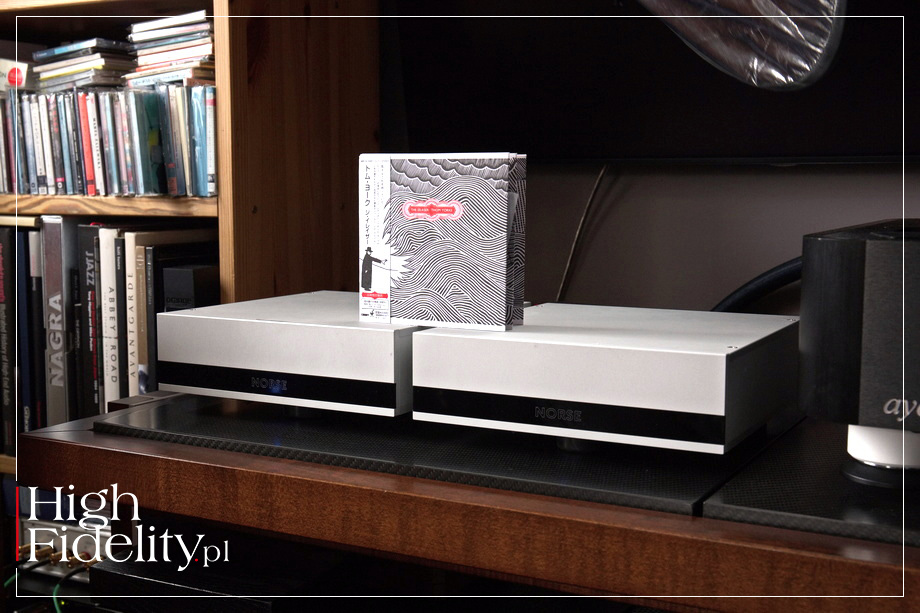
200 W in mono mode at 8 and as much as 390 at 4 Ω in a class AB design of this size is quite an achievement, you must admit. To make this possible, the amplifier uses as many as six pairs of bipolar transistors in a push-pull configuration (KTA1943 + KTC5200), three per channel. The signal for them is prepared in a preamplifier circuit located on the aforementioned smaller boards. They bear the Bladelius logo, so I assume they were designed for one of the company's amplifiers. The company's materials say the following about them:
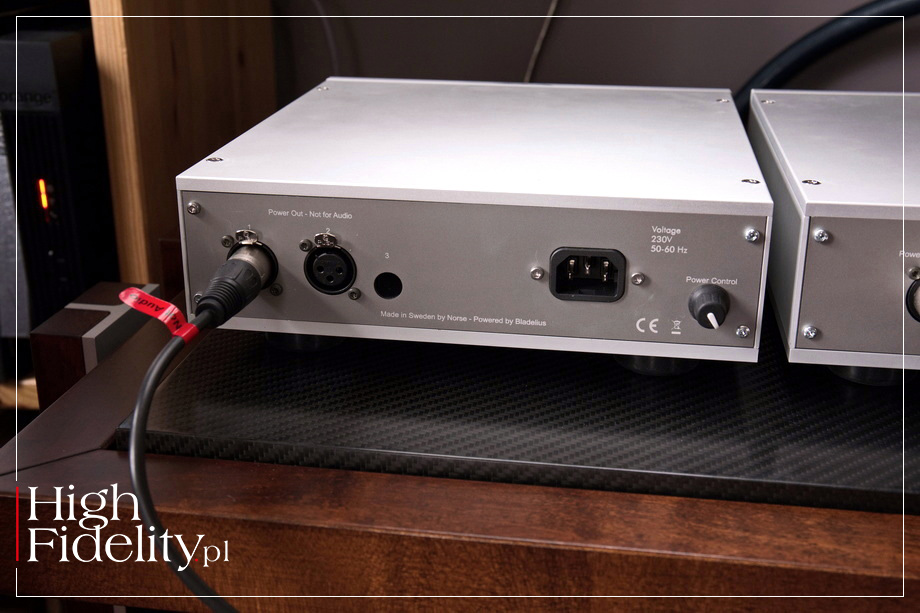
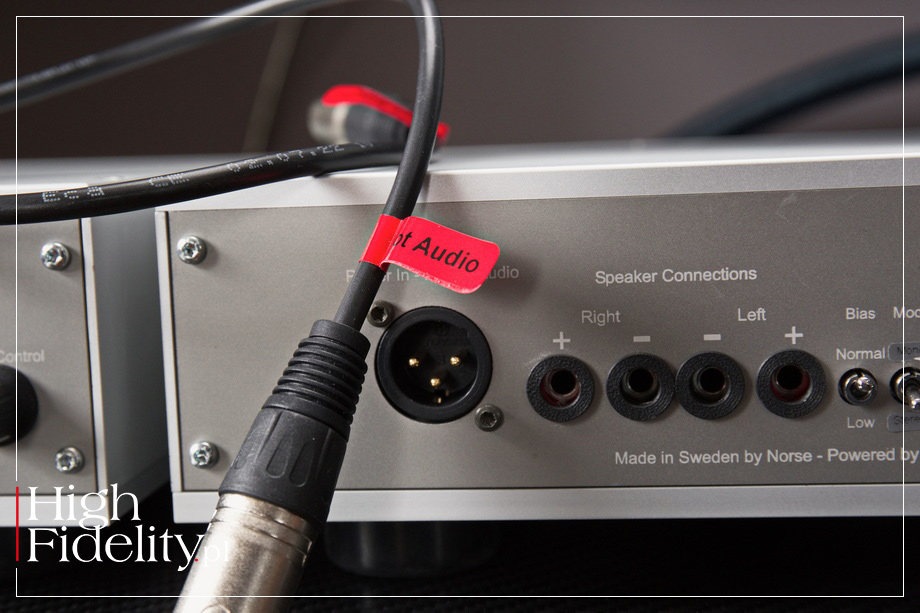
The signal is fed to the amplifier exclusively via balanced XLR inputs. This is Mike Bladelius's idée fixe and the reason for Dirk Sommer from hifistatement.net magazine to joke with me during the aforementioned dinner. This is because we have been arguing for years about which transmission method is better. My friend from Munich is of the opinion that balanced is better, while I prefer unbalanced. And here I have awarded an amplifier with fully symmetrical signal transmission, and that from a man who considers it the key to good sound. The speaker connectors may also come as a surprise. These are not terminals, but holes, identical to those found in measuring devices, which Naim has been using for years. They accept only banana plugs. There are also trigger and IEC sockets. There is no switch next to it, as it is located under the front edge of the front panel. When switched on, a blue LED lights up under the acrylic. It would look cooler if it illuminated the logo milled there in the right way. But this may be a case with those particular units, rather than an underdeveloped idea. » X5 power supply THE POWER SUPPLY is enclosed in the same housing as the X1, so it looks the same. Except for the rear panel. There, there are three sockets used to power Norse components – two X1 terminals and the X2 preamplifier. The former use solid XLRs, while the X2 is supposed to have different ones, which were not yet available in the tested unit (remember that these are pre-production units snatched from Mike's hands?). There is one thing on the rear panel that is surprising, as it requires a slightly different approach to the power supply than usual. It is a small knob, visible on the right side, right next to the IEC power socket. The fact is that the user can scale the power of the amplifier depending on their needs, i.e., the impedance and efficiency of the speakers and the size of the room. The X1 user manual states:
At the minimum setting, we get 2 x 25 watts at 8 Ω, doubled at 4 Ω, and at the maximum – 50 and 100 W, respectively. All intermediate settings are also available, as it is ultimately a potentiometer, not a switch. The tested unit was not labeled, and I believe that it should be carefully calibrated by the manufacturer so that we can consciously select the output power. The inside of the X5 power supply resembles that of the X1 amplifier. This is because the printed circuit board is similar in size, and there are also six transistors (three pairs) on the sides. And now – these are the same transistors as in the power amplifier, manufactured by KC Electronics. This is because the manufacturer designed them to work in amplifiers and power supplies. 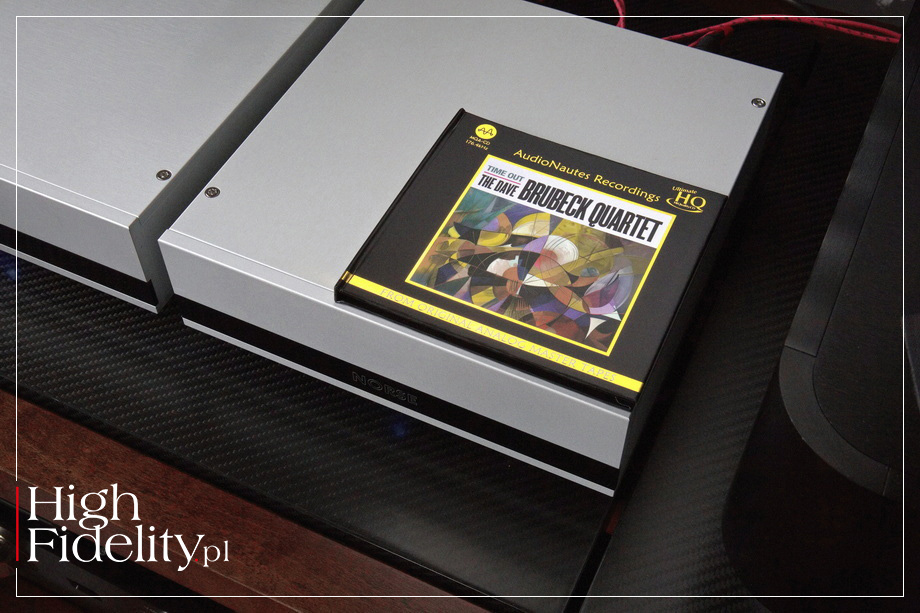
I think that the design of the X5 can be called hybrid, because the input voltage is converted in a switching power supply and only then stabilized (!) – for the power amplifiers and, separately, for the preamplifier. Mike emphasizes, on the other hand, that it is a linear circuit. Hence, there are quite a few voltage stabilizing circuits and nice capacitors visible on the boards. Otherwise, it would not fit in this enclosure. Let's add that the devices stand on three rubber feet, with one in the front, which can be replaced, for example, with Pro Audio Bono or Tiglon feet – their review can be found in the same issue of “High Fidelity” in which you are reading this review. ▌ SOUND HOW WE LISTENED • The Norse Audio X1 power amplifier with the X5 power supply were tested in the High Fidelity reference system. The signal to the amplifier was sent from the Ayon Audio Spheris Evo tube preamplifier; for comparison, I used the Soulution 710 transistor power amplifier. The amplifiers drove Harbeth M40.1 speakers. 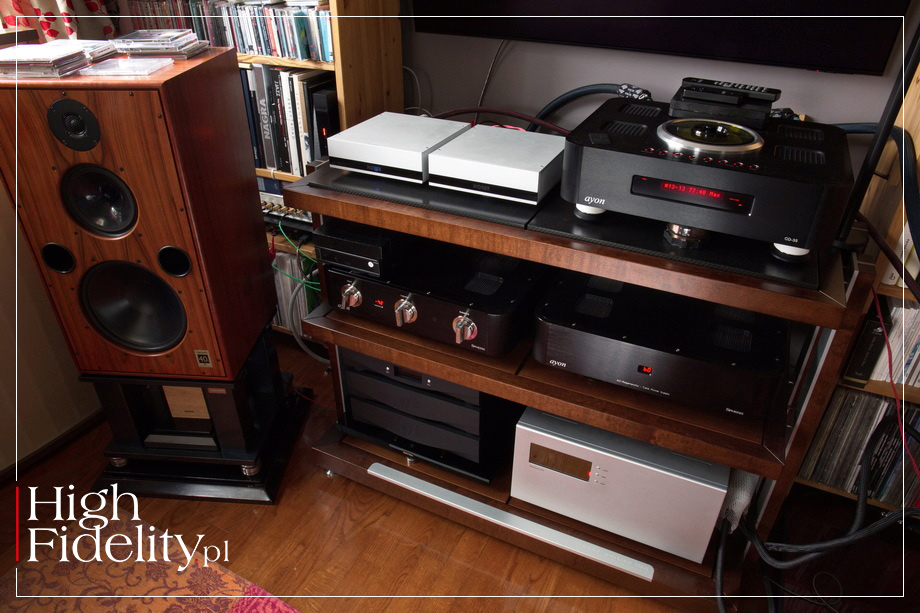
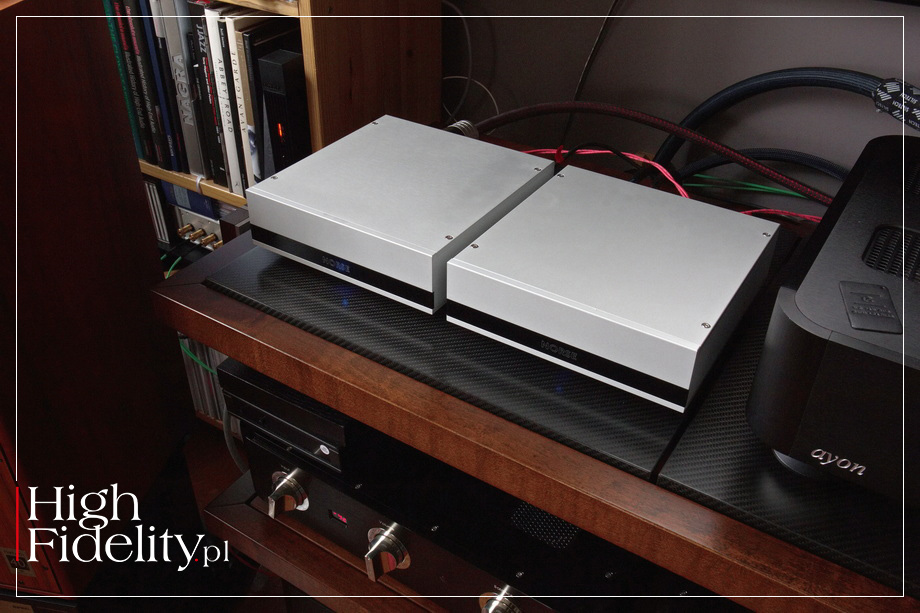
The Norse Audio components were placed on the top, carbon shelf of the Finite Elemente Pagode Edition II rack. The analog signal source was the Ayon Audio CD-35 HF Edition SACD player and the Sforzato DSP-05 EX file player with the PMC-05 EX clock. For connections, I used Acoustic Revive Triple-C balanced interconnects. The amplifier was powered by an Acrolink Mexcel 7N-PC9100 cable. |
For some time now, I have been using Crystal Cable Da Vinci speaker cables to connect the tested amplifiers to the speakers. However, they are terminated with WBT banana plugs, which prevented me from plugging them into the holes in the X1 amplifier. That is why I reached for the NOS cables I use to listen to tube amplifiers, the Western Electric WE16GA, dating back to the 1940s. » ALBUMS USED FOR THE TEST ⸜ a selection
⸜ ARNE DOMNÉRUS, Jazz in the Panwshop 1+2, AudioNautes Recordings, Master CD-R & MQA ⸜ 2025. YOU DON'T HAVE TO LISTEN TO THE Norse amplifier for long to quickly discover that it produces exactly the same sound for which the Bladelius brand is renowned. That is, warm, dense, low, and soft. Yes, it's a sound that fills the space in a dense way, without any gaps or wear and tear, where the walls “behind” the performers would show through. 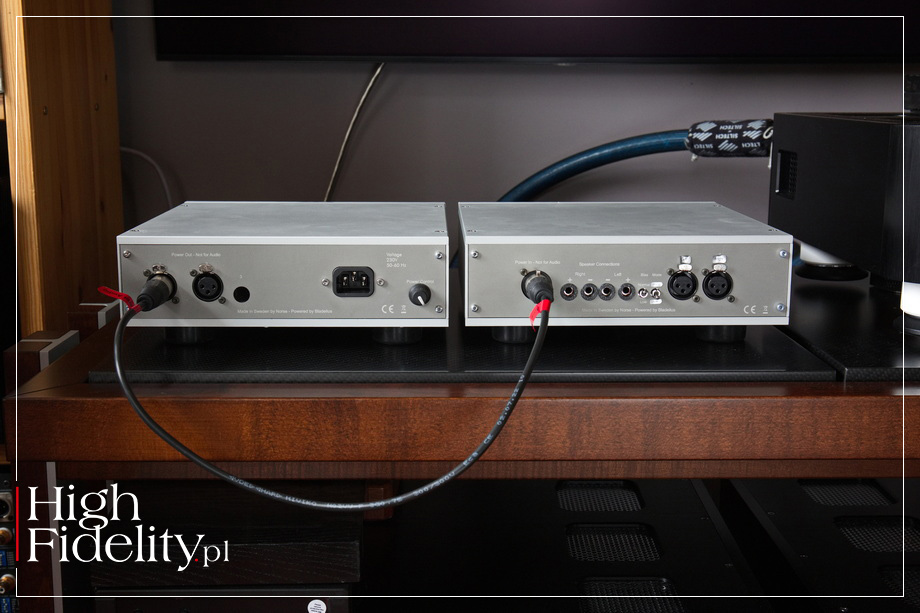
Even though it's tiny, right? Hot as hell, but still tiny. This is one of those cases where our acquired experience and beliefs fail us, because we see “small” and hear “big.” And not with some fleeting bells in the vast space of a cathedral, but with a dense, electronically generated sound from the lead singer of Radiohead, THOM YORKE's, album The Eraser. It gave me a very nice reminder of what I had heard earlier with the Bladelius Oden II A-Class integrated amplifier. Namely, fullness, density, and gravitas. Yes, this is not a playful or frivolous little amplifier that entertains us with tricks to distract us from the essentials. When listening to it, we don't even think about that, because we get a mature, excellent sound. For that kind of money? In that chassis? Well, it's something special. Both, with the title track, ˻ 1 ˺ The Eraser, and subsequent tracks, such as ˻ 3 ˺ The Clock, the tonal and spatial differentiation was really good, simply exceptional. It reminded me of listening to the Polish CS100 amplifier from More Audio. It offered a similar vibe, a feeling of participating in some kind of ritual. This was repeated with subsequent albums, such as the excellent Za niebawem by VOO VOO. Released in 2019, literally just before the pandemic, it featured wonderful compositions, but also excellent sound. The latter is due to several factors, among which it is worth mentioning a few audiophile clues. First of all, the material was mixed at JG Master Lab, owned by Jacek Gawłowski, who was also responsible for mastering. The leader, in turn, played on a Laboga tube amplifier and cables from the same company. And then there were the Lime Ears monitoring headphones, which I also use. Waglewski's vocals in ˻ 1 ˺ Niespiesznie 1,2 are placed strongly in the foreground and have a warm character. Their tone is dense and low. The Swedish amplifier showed this characteristic without pushing it too far in front of the line connecting the speakers. In fact, the perspective with Norse Audio devices is slightly further than with the reference amplifier, which means that we are looking at the recordings from a certain perspective. However, because they have well-constructed bass, low, dense, deep, and properly accentuated, they are tangible, almost touchable. And when they need to fade into the background, as in the second part of the song, when you can hear the sounds of acoustic instruments, for example, sampled air passing through a trumpet mouthpiece (?), placed in the right channel by Piotr Waglewski, who mixed the whole thing. But earlier, with York, at the end of the second minute of the title track, when the sound begins to surround us, we could hear the cool temporal consistency of this presentation. Nothing here is blurred or scattered. The presentation is coherent and saturated at the same time. ▲ Our albums SIMON & GARFUNKEL 
Bridge Over Troubled Water by the FOLK-ROCK DUO Simon & Garfunkel is their fifth and final studio album. The album was released on January 26, 1970 by Columbia Records. Produced by Roy Halee (The Yardbirds, as well as Barbra Streisand, the Byrds, Journey, Laura Nyro, Blood, Sweat & Tears, as well as Paul Simon's Graceland), who was the sound engineer on Bob Dylan's album Highway 61 Revisited (1965), achieved immortality. It topped the charts in more than ten countries and in 1971 received six Grammy Awards, including Album of the Year. It has sold over 25 million copies worldwide, making it one of the best-selling albums of all time and, at the time of its release, the best-selling album in history. 
The first song to open the recording sessions was The Boxer. Recording began at Columbia Studios in Nashville in November 1968 with Simon playing guitar in a duet with session musician Fred Carter, using special tuning. The vocals were recorded in the studio, and the brass instruments were recorded in the Columbia University chapel due to its excellent acoustics. The drums were also specially treated to resemble Phil Spector's “wall of sound.” The recordings took a very long time because various formal and technical solutions were used. The Boxer alone took a hundred hours to complete. One of the innovative solutions used was the synchronization of two multi-track tape recorders. At the end of the 1960s, tape recorders with eight tracks were in common use. This is how, for example, King Crimson's album In the Court of the Crimson King (1969) was recorded. This was not enough for Halley, so he synchronized two such devices, to have sixteen tracks at his disposal. 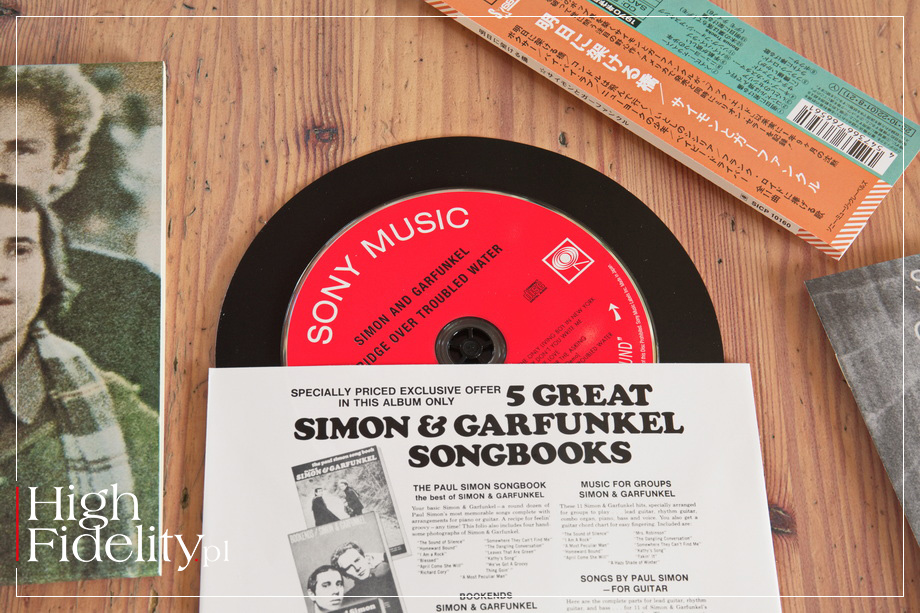
Simon & Garfunkel's album was released on many different media, including audiophile versions. These include a four-disc 45 rpm single-sided edition released by Classic Records, 200-gram discs from the same label, gold CDs from Sony, and a vinyl version from Mobile Fidelity, to name a few. The first digital remaster was prepared in 1993, and in 2001 a remix of the album was prepared, using multi-track master tapes. In 2018, MoFi released it on two 45 rpm discs using the Ultra Disc One-Step process. The version we are presenting to you is the latest approach to this material. It is remarkable for several reasons. First of all, it is a record released in 7-inch format, which means that the cover has the same dimensions (as a vinyl single). Inside, you will find reproductions of the duo's Japanese singles, a booklet, and a hybrid SACD. In terms of sound, you actually get two versions of the album. The CD layer contains Vic Anesini's remix made in 2001 from the original multi-track tapes, along with the master from that time, without any changes. The SACD layer, on the other hand, features a new DSD transfer from the stereo master tape. It appears that although the master was made in Japan, it is the same transfer that was used for the 2024 Mobile Fidelity SACD version. 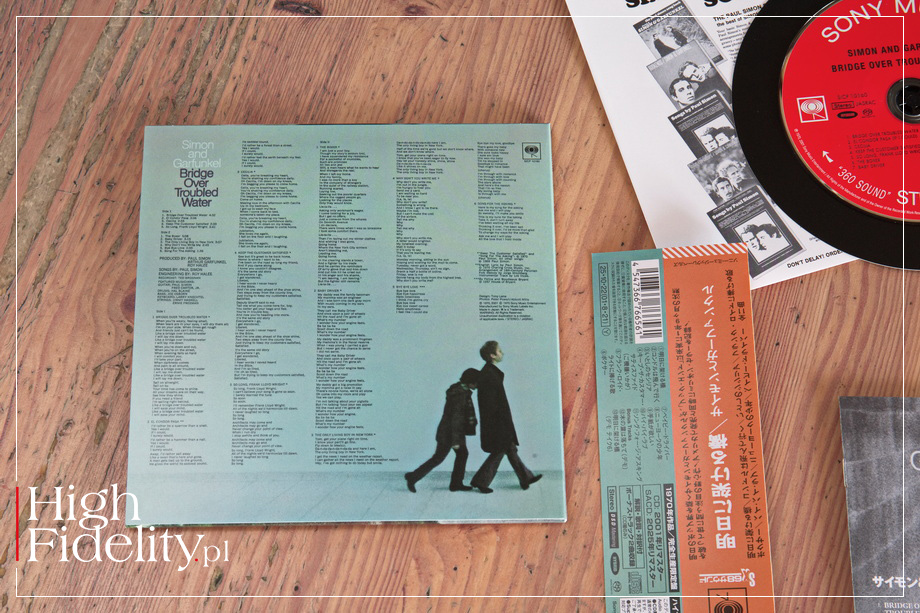
What a wonderful remaster it is! It's very clear and deep in tone. It doesn't overdo the high frequencies, but rather goes deeper. Sometimes, as in Baby Driver, the sibilants in Garfunkel's voice are more pronounced, but this is not a result of rolled off treble. That's just how I perceive it, as a densification of action in every detail. And yet it is also a very dynamic presentation, as emphasized by the intro to Cecilia. The beats are electrifying and powerful. It is also a very spacious sound. We notice this primarily in the depth, which was somewhat flattened in previous reissues, but after a while also in the wide spread of the stage to the sides, and sometimes also around us. Let's not forget that this album was mixed with a separate quadraphonic release in mind. The 2001 remix places different emphases in the sound. It is broader in terms of the panorama, less unambiguous, simply more delicate. And yet I find it inferior, less convincing. The original version is more raw, but also somehow more authentic. The remix is also brighter and less dense, as if something is missing “there”, and the sounds in the remaster on the SACD layer are unambiguous. It's nice to be able to compare these two perspectives, but I still choose the remaster, even though it has more audible noise. ● WHAT IS IMPORTANT IS THAT THE SOUND of the Norse Audio amplifier is truly detailed. I seems to me that it may even be more so than with Bladelius amplifiers. I repeat, it is a very similar sound signature. However, Mike's large amplifiers have more “air” in reserve, which is not immediately apparent, but still noticeable. This is evident in the lower volume of the vocals and in the slightly narrower soundstage. And that's normal, because there is a huge difference in price. But it is precisely thanks to this slight shift that the tested power amplifier shows more detail. 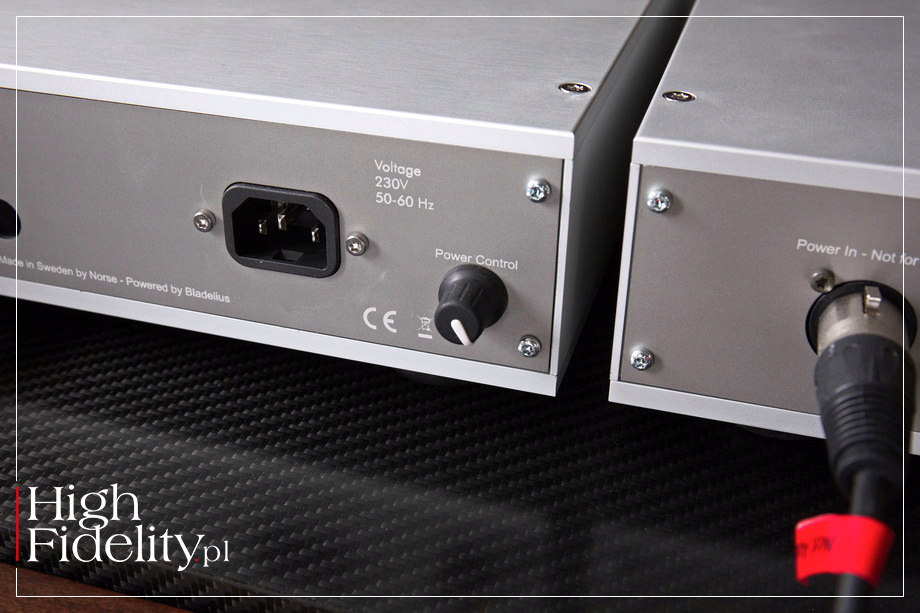
Just as in ˻ 2 ˺ Moonlight in Vermont from the album by ELLA FITZGERALD AND LOUIS ARMSTRONG, where you can hear more clearly the swallowing of saliva or the intake of air in the singer's track. Or in the trumpet attack, which with the X-1 is still golden, slightly sweet, but more powerful and clearer. At the same time, it has a large volume and is simply nicely scaled, filling the space between the speakers. Even though it is a monophonic recording. GAIN • This brings us to the knob that adjusts the voltage supplied to the power amplifier. It operates smoothly, so you can select any range between 25 and 50 watts of the device's rated output power. I tried out the two extreme positions for you. Generally speaking, the sound does not change in any noticeable way. Even though the Harbeth M40.1 speakers I use are a difficult load. The sound was still low and dense, yet spacious. The recordings from ARNE DOMNÉRUS' album entitled Jazz in the Panwshop 1+2, in an excellent transfer by AudioNautes Recordings and played from a Master CD-R burned for me from the master files, sounded incredibly natural. They were dynamic, wide and had a strongly built depth. And yet, setting it to “max” added scale, height, and depth to them. The changes were not significant, but they were important enough so that when listening to music “seriously”, I didn't want to listen to it any other way. Switching the bias current to a low setting had a similar effect on the sound. It was the same, yet not the same. That's why I would listen to this amplifier at its maximum settings and reduce them for background listening, when we are not sitting with our mouths open in front of the speakers, absorbing the sound that we have come to associate with large Class A amplifiers. ▌ Summary BECAUSE THAT'S THE KIND OF AMPLIFIER IT IS. It plays in a warm, dense way. But it doesn't warm anything up or thicken it. It comes across in a really natural way. Similar to Japanese amplifiers such as the Leben CS300 or Aurorasound HFSA-01. The Swedish amplifier plays lower and denser than them, but what I mean is the feeling of freedom and lightness in the transmission of energy that these devices share. It is interesting that with no type of music I felt like the bass was lacking. Neither with the electronic murmurs from Yorke's album, nor with the acoustic sounds from the Pawnshop club, nor with MARK KNOPFLER's electric guitar, did I feel that the low range wasn’t properly extended. This is an amplifier that can play with really large speakers in a large room. 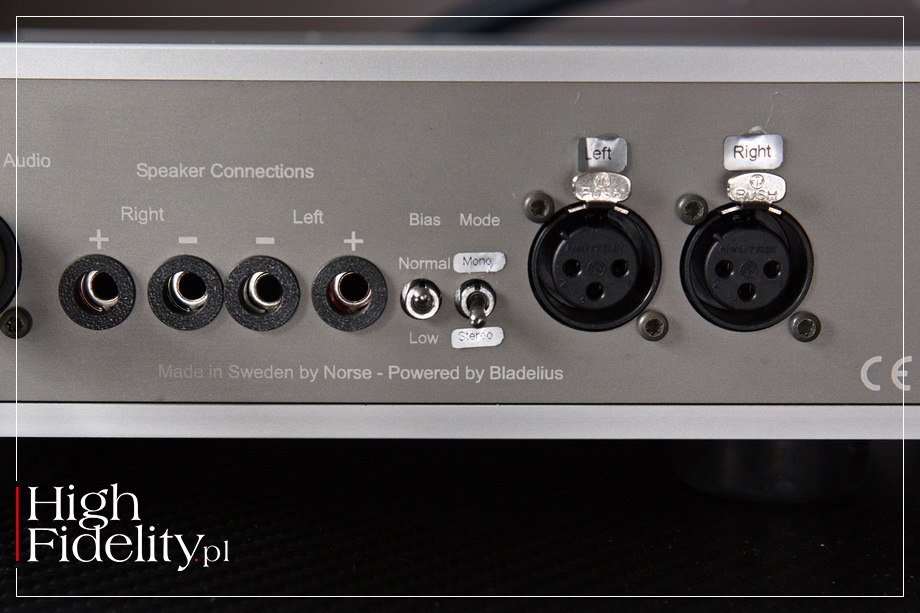
We can easily sell our friends who visit us a story that it is a hundred Watt amp weighing fifty kilograms hidden in the other room, and they will believe us. Yes, it is that kind of unique device. ● ▌ Technical specifications (according to the manufacturer)
» Power amplifier X1 
THIS TEST HAS BEEN DESIGNED ACCORDING TO THE GUIDELINES adopted by the Association of International Audiophile Publications, an international audio press association concerned with ethical and professional standards in our industry, of which HIGH FIDELITY is a founding member. More about the association and its constituent titles → HERE. |

 |

|
Reference system 2025 |
|
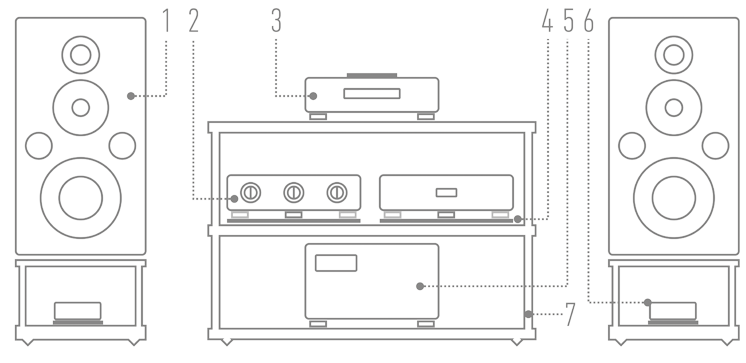 1) Loudspeakers: HARBETH M40.1 |REVIEW| 2) Line preamplifier: AYON AUDIO Spheris III Linestage |REVIEW| 3) Super Audio CD Player: AYON AUDIO CD-35 HF Edition No. 01/50 |REVIEW| 4) Stands (loudspeakers): ACOUSTIC REVIVE (custom) |ABOUT| 5) Power amplifier: SOULUTION 710 6) Loudspeaker filter: SPEC REAL-SOUND PROCESSOR RSP-AZ9EX (prototype) |REVIEW| 7) Hi-Fi rack: Hi-Fi rack: finite elemente MASTER REFERENCE PAGODE EDITION Mk II, more → HERE |
|

|
Cables Analog interconnect SACD Player - Line preamplifier: SILTECH Triple Crown (1 m) |ABOUT|» ANALOG INTERCONNECT Line preamplifier → Power amplifier: Siltech ROYAL SINLGE CROWN RCA; review → HERE Speaker cable: SILTECH Triple Crown (2.5 m) |ABOUT| |

|
AC Power Power cable | Mains Power Distribution Block - SACD Player: SILTECH Triple CrownPower (2 m) |ARTICLE| » POWER CABLE Mains Power Distribution Block → Line preamplifier: Acoustic Revive ABSOLUTE-POWER CORD, review → HERE » POWER CABLE Mains Power Distribution Block → Power amplifier: Acoustic Revive ABSOLUTE-POWER CORD, review → HERE Power cable | Power Receptacle - Mains Power Distribution Block: ACROLINK Mexcel 7N-PC9500 (2 m) |ARTICLE| Power Receptacle: Acoustic Revive RTP-4eu ULTIMATE |REVIEW| » ANTI-VIBRATION PLATFORM under Acoustic Revive RTP-4eu ULTIMATE: Graphite Audio CLASSIC 100 ULTRA, review → HERE Power Supply Conditioner: Acoustic Revive RPC-1 |REVIEW| Power Supply Conditioner: Acoustic Revive RAS-14 Triple-C |REVIEW| Passive filter EMI/RFI: VERICTUM Block |REVIEW| |

|
Anti-vibration Speaker stands: ACOUSTIC REVIVE (custom)Hi-Fi rack: finite elemente MASTER REFERENCE PAGODE EDITION Mk II, more → HERE Anti-vibration platforms: ACOUSTIC REVIVE RAF-48H |ARTICLE| » ANTI-VIBRATIONAL FEET: |

|
Analogue Phono preamplifier: Phono cartridges:
Clamp: PATHE WINGS Titanium PW-Ti 770 | Limited Edition Record mats:
|

|
Headphones » HEADPHONE AMPLIFIER: Leben CS-600X, review → HEREHeadphones: Headphone Cables: Forza AudioWorks NOIR HYBRID HPC |