

No. 269 October 2026
- INTERVIEW: JANUSZ SIKORA • J.SIKORA ⸜ founder, designer » POLAND
- KRAKOW SONIC SOCIETY № 156: HISAO NATSUME • Sakuraphon » JAPAN → POLAND
- TEST: MORE AUDIO C200 ⸜ integrated amplifier » POLAND
- TEST: NO VIBRATION Duo 110 BMZ ⸜ anti-vibration feet » POLAND
- TEST: SOYATON The Meister RCA ⸜ analog interconnect RCA » POLAND
- TEST: THUNDER MELODY Brown Noise Wall ⸜ AC power filter » POLAND
- TEST: WK AUDIO The One Interconnect RCA ⸜ analog interconnect RCA » POLAND

 |
 |
 |
 |
|
Editorial
Text by WOJCIECH PACUŁA |
 |
No 269 October 1, 2026 |
|
3 x YES. Or, why do I love Polish audio
I HAVE TO ADMIT SOMETHING to you: my first devices for listening to sounds weren’t made in Poland. Although, as photos from my childhood show, there was always a Bambino record player lurking somewhere, my adventure with sound actually began with products from abroad. Although it might seem unlikely, thanks to my father’s profession and hobby, there were always plenty of devices in my home bearing the logos of companies other than Unitra, Fonica, or Tonsil. 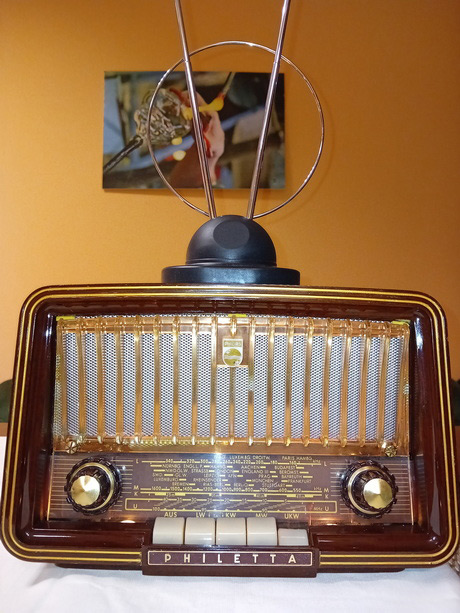
‖ Philips Philetta BD 2634 radio from the Rysiek Bartyzel’s collection, he’s a member of Krakow Sonic Society • photo by Ryszard Bartyzel/Foto Nova I’m deliberately not writing about “listening to music,” because during my early years - roughly until I was in the older group at preschool - I listened to fairy tales. Not just from recordings, because Polish Radio broadcast special programs for preschools, which I also enjoyed, but at home, the fairy tales came from LPs and cassette tapes. By the way - music education during the Polish People’s Republic, a time of hardship and poverty, was one of those government initiatives that brought real benefits to all of us and that has not been replicated in free Poland. Jan Błaszczak attests to how important it is for everyone to be introduced to music from a very young age, and to how essential it is to expose children to stories, including radio dramas (today, for adults, podcasts serve this role), when he writes: “Maria Wieman’s radio programs were initially intended to make up for the shortage of music teachers. As a result, they sparked a revolution in kindergartens on a global scale.” And further:
(Wieman) saw music education for children as a tool for shaping their physical and mental well-being, as well as their attitude toward their homeland and one another. It is an activity that develops the imagination and teaches discipline, but also brings a great deal of joy. ‖ “Tygodnik Powszechny” No. 34 (4024)
And perhaps that is why, or it might be at least one of the reasons, so many Polish engineers and audio equipment designers have been and continue to be sensitive to music. This intellectual and emotional capital continues to pay dividends to this day. It is no coincidence that foreign guests visiting the Audio Video Show in Warsaw particularly emphasize one of its aspects: its focus on music. I have heard so many times compliments from reputable manufacturers, exclaiming with delight: “You guys really know how to listen to music!” And it’s not just about classical music or jazz, but simply about a culture in which this form of expression is as common as the air we breathe, so natural to us that it’s practically “transparent.” 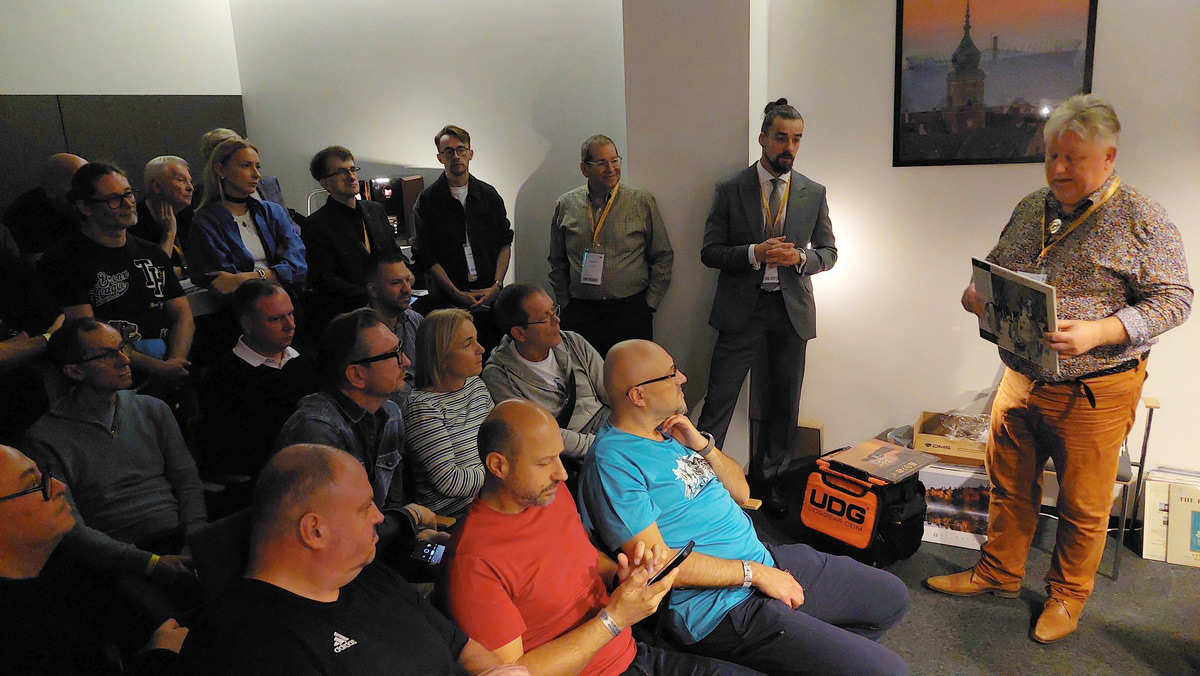
‖ A photo from 2025 AVS showing the presentation that I gave together with Adam Czerwiński - every year they gather a huge crowd And that’s something I love about Polish perfectionist audio. It stems from the spirit of musical culture. Its source is DIY, just like everywhere else in the world, but at its core lies music, and only music. I’m not saying that things are different outside of Poland or that there’s something else “underneath,” but I believe that here, on the banks of Vistula river, this is the most important imperative. If I could trace the origin of my obsession with changing audio equipment - an obsession that emerged very, very early, as far back as the fourth grade of elementary school - it would be precisely this immersion in music at a very early stage, when a person absorbs everything like a sponge. Perhaps, by the way, my love of literature stems from the same source - namely, those radio plays I mentioned, without which I simply couldn’t fall asleep. And I listened, as I said, using non-Polish-made equipment. The record player was a product from East Germany resembling a modernized Bambino, but with a very good, large cartridge. The tape recorder, on the other hand, was a small, oblong Philips (the successor to the EL 3300), which served as the basis for licensed versions produced, I believe, all over the world. And then there were the headphones - because I listened mainly through headphones - Teslas. I kept using this international setup until fourth grade, when I discovered a monster in the storage room - the Fonica Stereo 204 (if my memory serves me correctly), a stereo turntable with a tube amplifier and huge speakers. Even though one channel of the amp didn’t work, even though the platter wouldn’t spin, and even though the set came with only one speaker, that didn’t deter me. I hooked up the turntable to it and had my very own tube system. That’s how I played Queen’s singles from Another Bite to Dust and Blondie’s from Heart of Glass, released by the Polish label Tonpress; that’s how I played my first Papa Dance and Depeche Mode records. The speaker, as I said, was quite large, with a big, full-range driver in an open enclosure. It sounded wonderful. 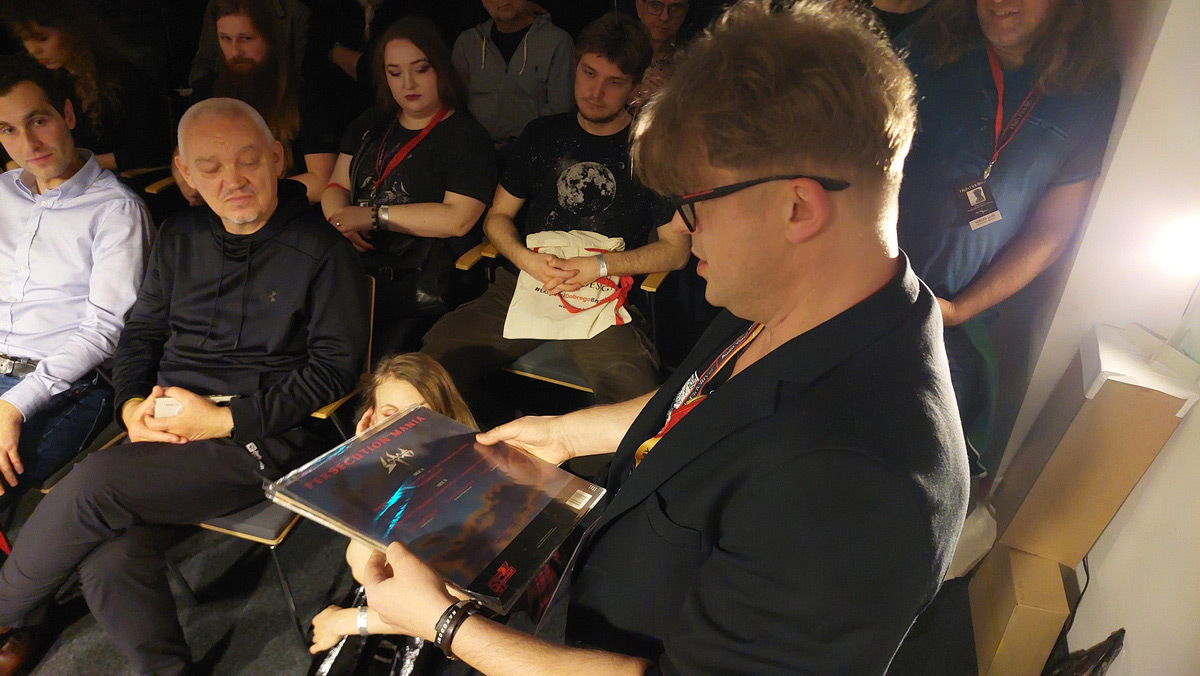
‖ Here’s another snapshot from the 2025 AVS, this time from a presentation I led together with Zbyszek Bielak - after all, a person doesn’t live by jazz alone, but also by black metal However, I couldn’t pretend that it was as impressive as the equipment some of my friends were using - namely, the Unitra and the Technics systems - or the speakers that had more drivers. So after a while, I added a Tonsil dome tweeter to my speaker, simply connecting it through a capacitor. And it sounded better. Or at least that’s what it seemed to me, because there was more treble. However, the unease sparked by listening to my records at friends’ houses took root, and after a while - using the first money I’d ever earned, at the age of thirteen - I bought my first Unitra turntable, for which, together with my father, I bought at BOMIS (Biuro Obrotu Maszynami i Surowcami, stores selling electronic modules that had been rejected by the manufacturer for some reason) a turntable board that included an amplifier and a phono preamp. We connected a huge transformer from a tube TV to it, and for filtering, I used a Soviet-made oil capacitor with a capacity of 1 Farad. Yes, they used such monsters at the Lenin Steelworks. |
In this way, slowly but surely, I entered the world of DIY. And it is precisely this world that seems particularly important to me for Polish audio. Always and everywhere, it serves as the backbone upon which the entire industry is built, and it is from this foundation that future manufacturers emerge. Not only in the Polish context is this a remarkably diverse group. Because, on the one hand, there are engineers trying to apply their academic knowledge to the audiophile field, and on the other, simply enthusiasts who work by trial and error, drawing on the knowledge of others. 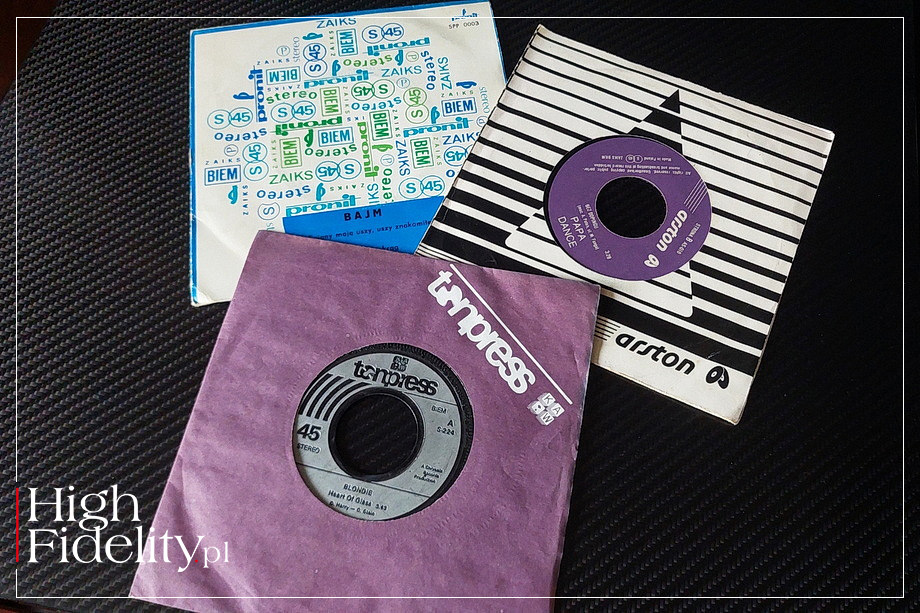
‖ My first singles And I see something special in this. After all, companies like J.Sikora, Ancient Audio, Pylon Audio, and Fezz Audio have emerged from this world - to name just the ones that have made the biggest name for themselves. There are also smaller ones, like Closer Acoustics, which are known in other circles and have an equally interesting lineup. There’s also RCM Audio, Divine Acoustics, WK Audio, and Ferrum - and… I could go on. These are just a few brands that came to mind, and I apologize to all the companies I didn’t mention. They all share a common thread: passion. This is something I value in the Polish audio scene just as much as the musical foundation. Together, they are a source of ever-new products, many of which could find their way (and do find their way) into the best systems around the world - regardless of price - simply the best in their respective price ranges. And some into the top tier ones. It just so happens that, thanks to passion, and thanks to their immersion in music, a new group of Polish manufacturers has emerged, whose defining characteristic is absolute professionalism. And this is the third thing about Polish audio that makes my heart beat faster. Few reach this stage, but those who have already made it demonstrate outstanding competence, both in production and in sales. 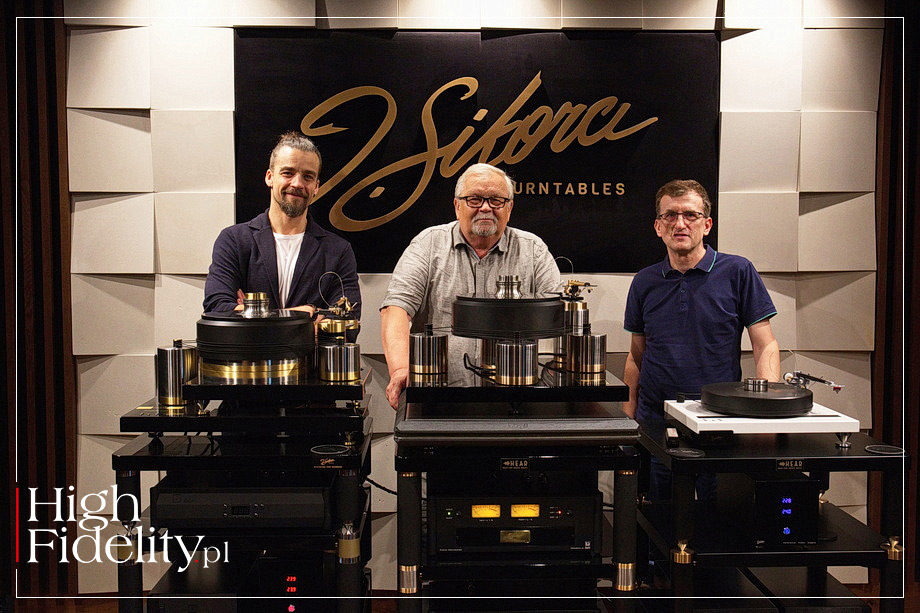
‖ Three pillars of the J.Sikora: Janusz Sikora, Robert Sikora and Adam Niezbecki Just look at how J. Sikora operates - I’m speaking with its founder in the cover interview for this issue. It has everything it takes to succeed. Namely: an idea, execution, knowledge, hard work, more hard work, and a knack for building relationships. And on top of that, an understanding of how the audio market works, which is a really high hurdle to clear. Thanks to a similar approach, companies like Pylon Audio and Fezz Audio are known practically all over the world. They’re also perceived as reliable. Perhaps this last aspect - the certainty that each new product will meet similar standards and fall within a narrow tolerance range - is the key one. Tolerance applies to both build quality and sound. For when we have all of the elements already mentioned, a blend that, in my opinion, is unique to Polish audio culture (perhaps except Japanese culture, but that’s just my own bias), the trust of customers and business partners is what brings this system full circle. This is how professional companies are born. You can, and indeed must, start in DIY; music is the most important part of it, and professionalism ties it all together into a cohesive whole. However, that alone isn’t enough to achieve success. You also need the image of a trustworthy, reliable partner. And that was probably the hardest part. This is something you have to learn by overcoming your own tendency to strive for “perfection” and to constantly “fine-tune” solutions. No one will buy a product that’s still “a work in progress.” After all, why would they if they know that an improved, better-sounding version will be out soon, and two more in a week? 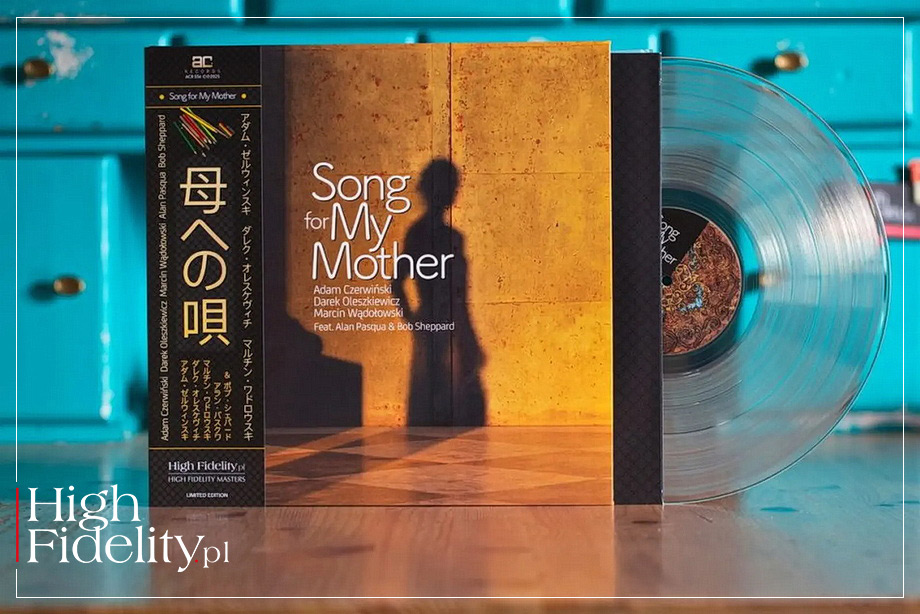
‖ One of the latest AC Records releases This principle of “polishing” works well, however, in another field related to audio. In this field, the process moves more slowly and on a smaller scale, but the results are just as spectacular. I’m thinking of Polish, specialized audio labels. Specifically, two of them: Adam Czerwiński’s AC Records and Michał Bryła’s Prelude Classics. They aren’t pioneers, as credit must go to companies such as Dux Recording Producers, OBUH Records (OBUH - Odgłosy Bocznic Ukoją Harmider), and others. Both musically and sonically excellent, they in a way anticipated the emergence of AC Records and Prelude Classics. The former has an almost religious focus on analog recording and releases; the latter, on the digital world. The former specializes in jazz; the latter in classical music. But both are excellent at what they do. And with every album, with every release, they seem to be refining something further, discovering something new. I don’t think I’m giving too much away when I say that you’ll be able to meet both labels at the Audio Video Show and, if all goes well, I’ll be hosting sessions with both of them. The plan is for Adam and me to showcase the reissue (in a box set, on three discs!) of the Friends: Music of Jarek Śmietana album, and with Mr. Michał we’ll present - I’ll repeat: if everything works out - a special program, because he recorded his new album digitally in DXD and analog on a Nagra tape recorder. Albums from both labels are released with the High Fidelity Masters logo. 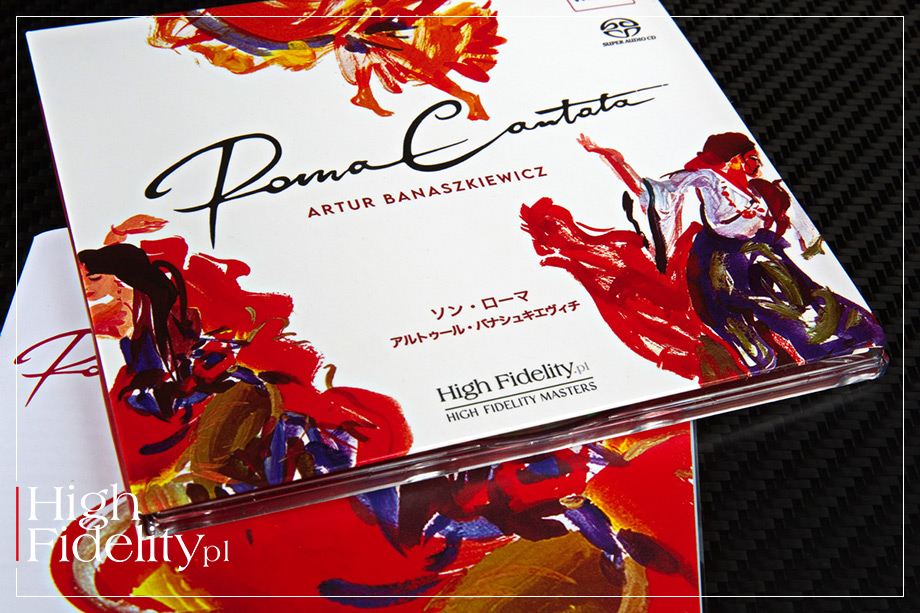
‖ One of the Prelude Classics SACD releases with High Fidelity Masters logo I got involved with these companies and these people (without any money involved, just to promote good albums), because I trusted them (almost blindly, though initially after a few attempts). Without even knowing that in 2026 I’d be talking about three “yeses,” I saw in them musically interesting projects, the immense passion behind them, and a professional approach to the product. I think it works the same way for other Polish companies that are becoming part of the audio world. That’s how it should be, and that’s what I wish for everyone who’s tinkering away on a circuit board right now, who’s just gotten their hands on capacitors for their project - capacitors from the realm of unobtanium - and who dreams of one day selling their product to someone they don’t know. I wish for all of us as many people like that as possible - it’s also thanks to them that we live in a wonderful country. ‖ WP WOJCIECH PACUŁA |
 |
 |
 |
 |
About Us |
We cooperate |
Patrons |
|
Our reviewers regularly contribute to “Enjoy the Music.com”, “Positive-Feedback.com”, “HiFiStatement.net” and “Hi-Fi Choice & Home Cinema. Edycja Polska” . "High Fidelity" is a monthly magazine dedicated to high quality sound. It has been published since May 1st, 2004. Up until October 2008, the magazine was called "High Fidelity OnLine", but since November 2008 it has been registered under the new title. "High Fidelity" is an online magazine, i.e. it is only published on the web. For the last few years it has been published both in Polish and in English. Thanks to our English section, the magazine has now a worldwide reach - statistics show that we have readers from almost every country in the world. Once a year, we prepare a printed edition of one of reviews published online. This unique, limited collector's edition is given to the visitors of the Audio Show in Warsaw, Poland, held in November of each year. For years, "High Fidelity" has been cooperating with other audio magazines, including “Enjoy the Music.com” and “Positive-Feedback.com” in the U.S. and “HiFiStatement.net” in Germany. Our reviews have also been published by “6moons.com”. You can contact any of our contributors by clicking his email address on our CONTACT page. |
 


|
  |