


|
KRAKOW SONIC SOCIETY № 154 CRYSTAL DISC AudioNautes Recordings
AUDIONAUTES RECORDINGS is an Italian record label founded in 2010 by Fabio Camorani, specializing in reissues of classical, jazz, and pop music. The label focuses on using original master sources to produce limited editions on 180-gram vinyl records or high-quality CDs, including Ultimate HQCD and Crystal Disc. |

 |
 |
 |
|
KSS
listened to and wrote down WOJCIECH PACUŁA |
 |
No 260 January 1, 2026 |
IF YOU WERE TO CONDUCT a short survey among audiophiles about their so-called “guilty pleasures”, along-side the classic choices common to all of humanity throughout history, probably albums would be at the top of the list. And it doesn't matter whether they are released on vinyl, shellac, CD, SACD, maybe also BD-Audio, and once also DVD-Audio – it would be a reasonable expense for something that makes your heart beat faster and doesn't hurt your bank account. 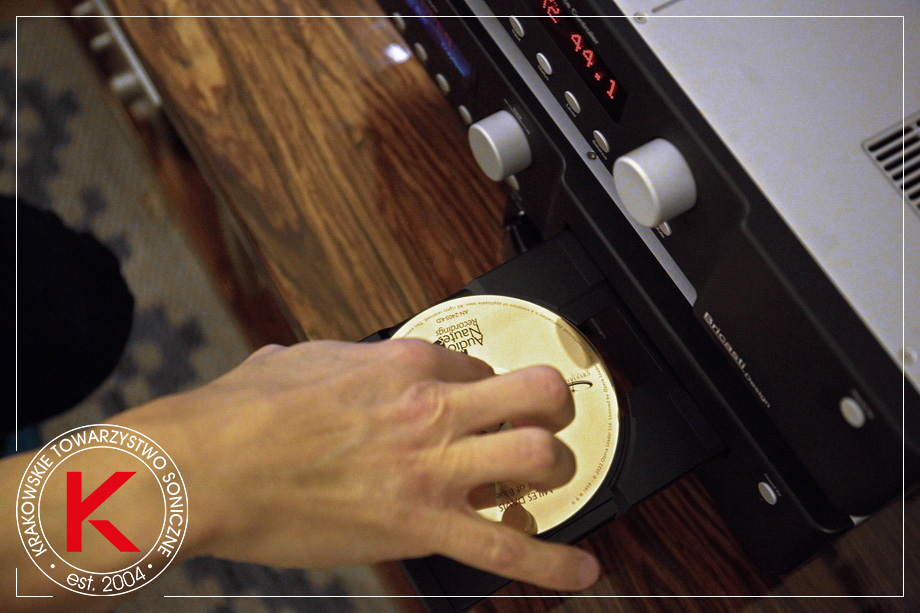
The music on a given album is guaranteed to raise your pulse, provided it is good music, of course. But equally important, perhaps even more important, is whether the music is well recorded, i.e., whether the sound is of high quality. But that's not all. I would place even higher importance on the exclusivity of a given release. This is determined by factors such as format, place of release, method of release, uniqueness, and price. So, these will not be discs from the local house appliance store or electronic market, but special edi-tions. These would be limited, numbered releases (oh, we love numbers :)), probably from Japan, released to imitate the first LP editions, and/or on media that we consider “right”. It means: XRCD, HDCD, Gold-CD, Sil-ver-CD, SHM-SACD, SHM-CD, Platinum SHM-CD, Blu-spec CD, BSCD2, HQCD, Ultimate HQCD, MQA-CD, and Master CD-R, to name the most well-known and common ones; more → HERE ˻PL˺. But the king of kings, one might say – the emperor – will be a disc that cannot be classified as a “sinful pleas-ure” because it costs as much or more than an amplifier, player, turntable, or speakers. And if it is sinful, it would be a cardinal sin. I am talking about the Crystal Disc. 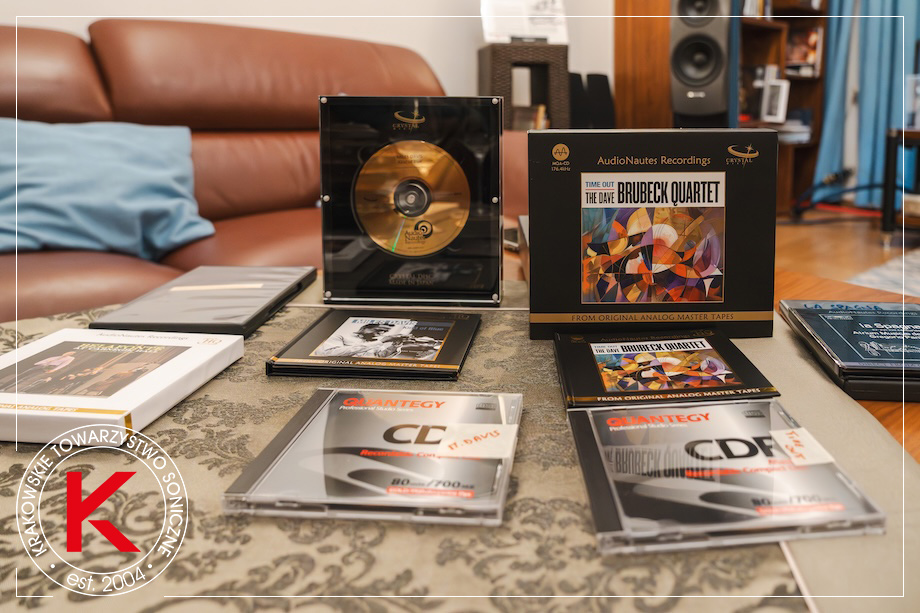
▌Shortly about CD ALMOST ALL OF THE ABOVE-MENTIONED types of discs, except for HDCD and MQA-CD, meet the requirements of the Compact Disc format, described in the technical framework of the so-called “Red Book”. This is a basic standard (developed by Sony and Philips) that defines how audio data is stored, ensuring that CDs compliant with these specifications can be played on any compatible player using specific digital spec-ifications (16 bits, 44.1 kHz) and error correction. The name of the standard comes from the red cover of the original document containing the specifica-tions. It was crucial in the process of making CD a universal, reliable, and – in theory – better format than vinyl record, guaranteeing consistent sound quality and playback on different devices; more about the “rainbow books” → HERE. 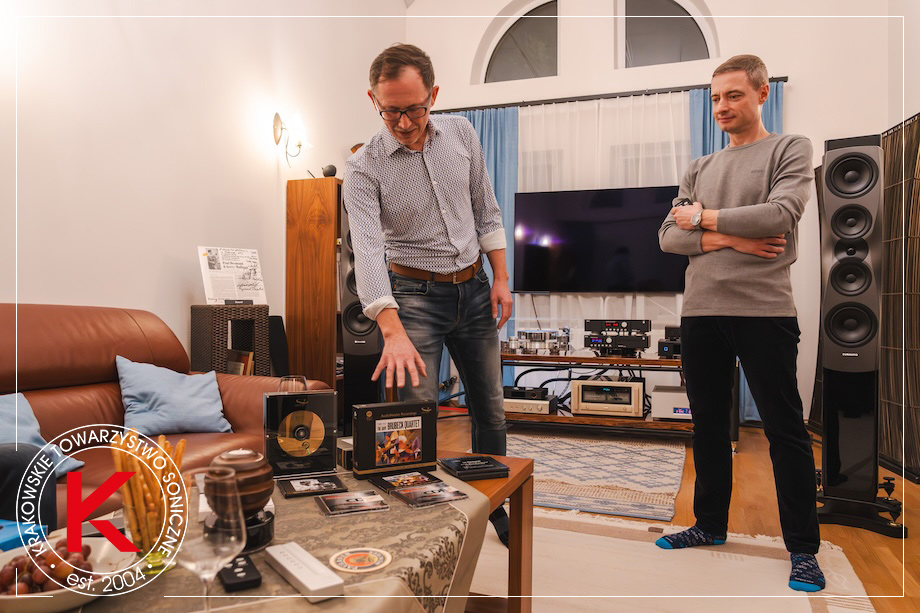
Although the standard should standardize CDs, meaning that every release from every pressing plant should sound the same, in reality this is not the case. If we compare European, American, and Japanese releases, we find that each of them sounds in its own way. This may be due to the different masters used in the pro-duction of the discs, but more often it is due to differences in the way they are pressed. And again, although the standard specifies exactly how it should look, there are significant differences between different manufacturers, and even within the same manufacturer. Similar differences in sound can also be heard when listening to versions of the same CD, the same release from the same master, made with a gold and standard aluminum layer. In Japan, attempts were made to answer the question “why?” almost from the very beginning. Although in theory it should not matter, because it is just a string of zeros and ones, during the fifty-five years of the format's existence, it was understood that the the-ory was flawed and did not cover many phenomena. 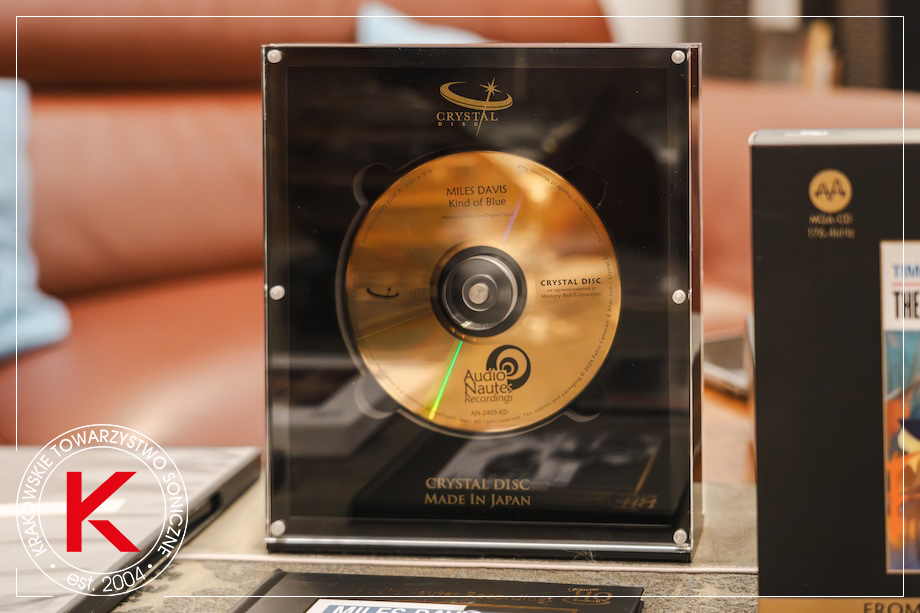
Among them, the most important was the transition between zero and one. Therefore, although count-ing the data on two discs made in different ways gave a perfectly equal value, something must have caused dif-ferences in sound. In an article describing the Crystal Disc technique, published in the Japanese magazine “Au-dio Accessory”, we read:
▌ UHQCD & Crystal Disc WE MENTION MEMORY-TECH for a reason – it is currently one of the leaders in CD research and a manufacturer offering, in my opinion, the most interesting ways to “squeeze” as much as possible from this format. And my experience shows that there is a whole universe of sounds on a CD... 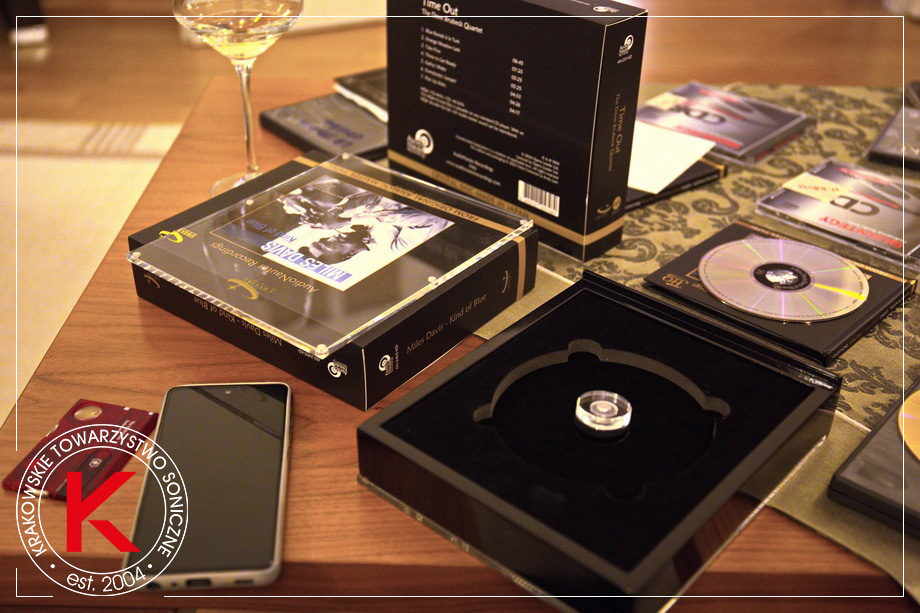
It all started in 2008 with HQCD (High Quality CD) discs. These are classic CDs, but made of plastic (polycarbonate) with greater fluidity than regular plastic. The idea was to better fill the recesses in the metal ma-trix from which Compact Discs are made. This allowed the player's laser to read them more accurately over time (which is the most important thing!), which in turn translated into lower jitter. This technique was improved upon with HQCDII discs from 2013. They used purple-colored polycar-bonate and a reflective layer of silver alloy, as well as precise manufacturing technology to reduce digital errors. In mid-2015, the first batch of Ultimate HQCD discs hit stores in Japan. Although the name is similar, the tech-nology is completely different from HQCD and HQCDII. Firstly, the reflective layer has been changed to silver alloy, which is different from HQCDII. More importantly, however, the discs are not pressed under pressure from hot plastic. A representative from Memory-Tech said:
As a result of these measures, the transitions between “0” and “1,” which are crucial for maintaining time corre-lation in the signal generated at the output of the optical system (and this, let me remind you, is an analog signal in its form, composed of a plot of several high-frequency sinusoids, up to 750 kHz), are to be more accu-rate. Can it get any better? – Of course... It turns out that UHQCD discs were developed as a result of an earlier project called Crystal Disc. This is a disc that also uses photopolymer, as in UHQCD, but with a gold re-flective layer. Instead of a plastic backing, they are glued onto a glass plate made of crystal glass. 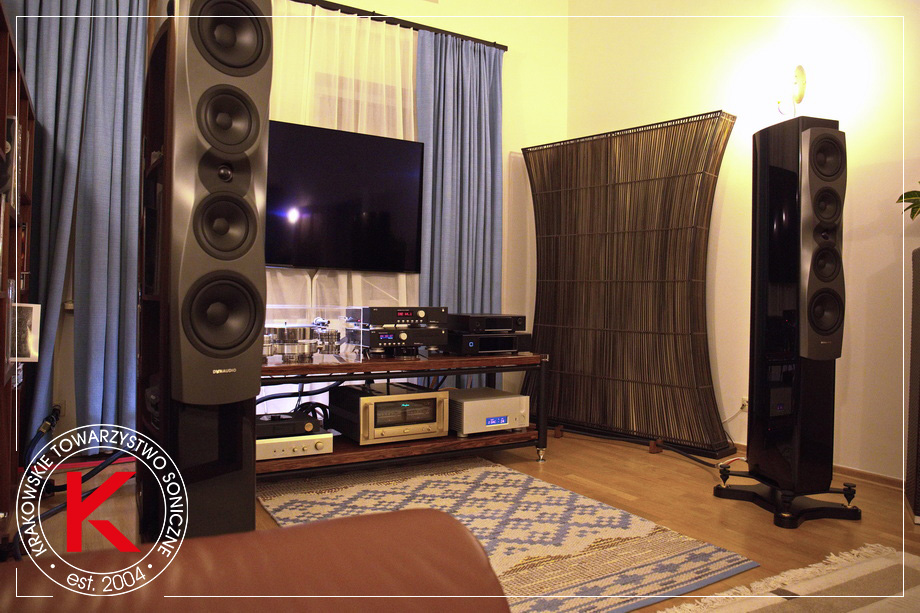
When I first heard this type of release in 2013, I couldn't believe how good it sounded. It was the 89th meeting of the Krakow Sonic Society, entitled Mr CD – where are you?. Since then, my amazement at the possibilities of this technology has grown, culminating first in my listening to Master Glass CD-R (!) albums from the Briphonic label, which I wrote about → HERE, which the Krakow Sonic Society discussed during its 115th meeting; more → HERE, and finally culminating this year. The albums prepared by the Italian label AudioNautes Recordings, we get something more. Not only an excel-lent medium, but also exceptional mastering. ▌ AudioNautes Recordings You could learn more about the label and its founder, Fabio Camorani, by reading our interview with him, pub-lished in issue 256 of our monthly magazine; more → HERE. Since he couldn't be with us in Krakow this time – although he has promised to come in the future – while skiing in the Dolomites with his wife, he said a few words to us via instant messenger. ▲ A few simple words… FABIO CAMORANI 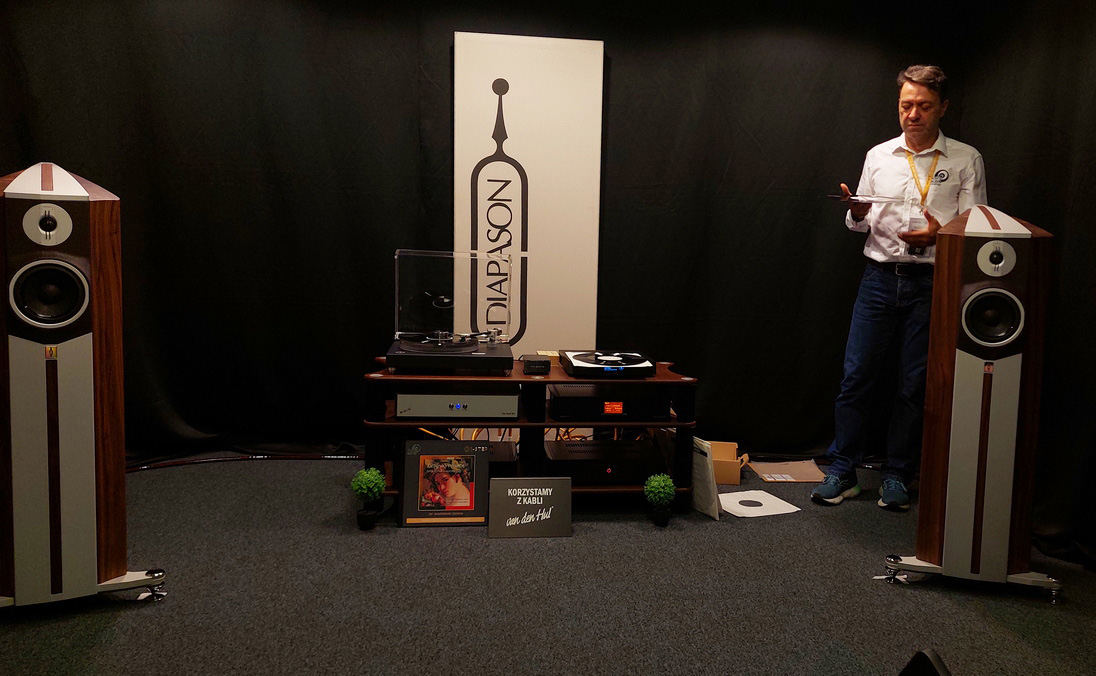
WOJCIECH PACUŁA • Your label only uses original analog tapes, we know that. But we also know that there are different master tapes, coming from different sources. How does it work in the case of the titles you've mastered? FABIO CAMORANI • > Indeed, every case is different. Here are a few examples:• Jazz at the Pawnshop Vol. 1 – master tapes, Dolby SR, Naxos-Proprius Sweden, All of them are two-track (stereo) 15 ips tapes, with and without Dolby. Future releases from the Audio Lab Records catalog will be encoded in DBX. And we always want to answer the same question: “How is it possible that most releases from such tapes are so poor?” When we listen to them, we open the door to some-thing special. Always. Then we feel responsible for offering a better version, because it can't be that difficult!!! WP • How did you connect with large labels, to gain access? 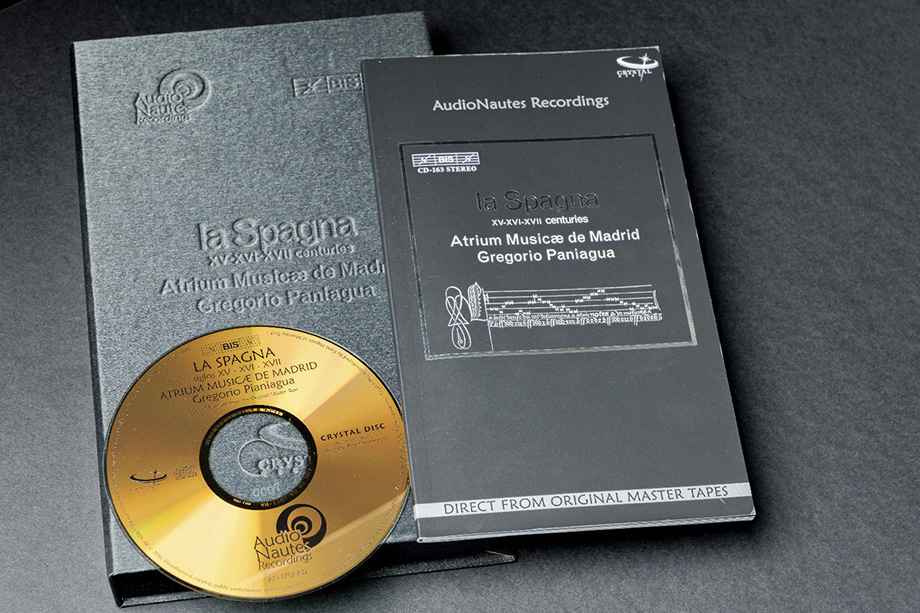
⸜ La Spagna XV-XVI-XVII Centuries, BIS (1980) on CRYSTAL DISC • photo by Audionautes Recordings FC • It’s a good question. I started with Mr. Cellier (from Disque Cellier) and Mr. Burger (from Divox). Then I con-tacted Proprius, receiving a firm refusal for JATP and Cantate..., but conditional approval for other ti-tles. So I started with the other titles, and then they agreed to the rest. They don't easily agree to hand over the tapes, even in the presence of their employee! But they like my professionalism, punctuality, and above all, the results. Then it was time for BIS, etc. Keep in mind that many labels will always refuse us. Not just the big ones. With Sony and other majors, the situation is completely different. We need an intermediary. And I found one, by accident :). I was lucky—it was the missing link. But even so, it's not possible to access the entire catalog. It's really great, but it's not everything we care about. As for the rest, we need time and perhaps more contacts. WP • Why Memory-Tech and MQA-CD? FC • When it comes to Memory Tech, it's simple – it's the best pressing plant in the world, whose Crystal Disc and UHQCD are unmatched by any other technique or technology. MQA is a different story. Andy sug-gested MQA to me a long time ago, but I never had the right moment to test this solution. After reading some of the available information, it didn't seem very promising to me. 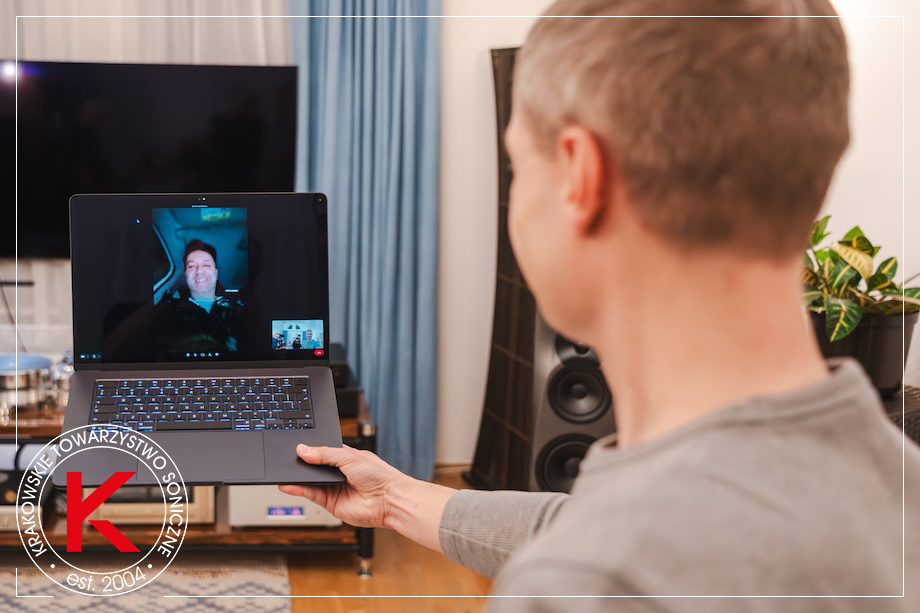
However, the new JATP release on Crystal Disc was the perfect opportunity to answer the question: why not? Encoding is cheap and I can invest in one test – we all know that testing is the only way to get answers. And that was it! We are glad that CDs are fine, but MQA encoding in some specific content makes a big differ-ence. One important aspect should be mentioned: the 24/176 signal we get after unpacking the MQA signal is made from tapes, it is native. So it is not made from a 16-44.1 master. Therefore, what is prepared for CD remains in its original form. I don't spend time and money on remastering it in 24-176, I just leave it as it is. And now I will try to offer MQA for new titles – the Asian market demands it. ● ▌ SOUND HOW WE LISTENED • The listening session was divided into four parts, each with a single track. We had UHQCD and Crystal Disc discs with the same tracks and the same master on hand, differing only in the way the disc was made. We compared them by listening to the same track three times in the A/B/A and B/A/B order. 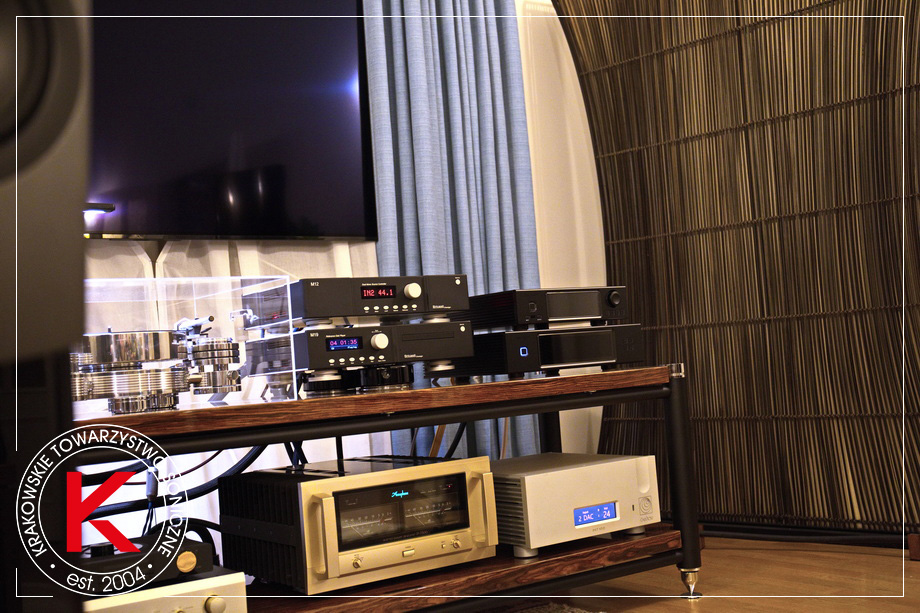
‖ RECORDINGS USED FOR THE TEST ⸜ a selection ˻ I ˺ BELLAFONTE, Belafonte at Carnegie Hall, RCA Victor ⸜ 1959 ˻ I ˺ BELLAFONTE Belafonte at Carnegie Hall RYSIEK B. ⸜ KSS • There was a huge difference between these two playbacks, as if we were watching one image in color and the other in sepia. Another association is when I am in the bathroom and see tiles on the wall or reflected in the mirror. It seems to be the same, but we immediately know that something is “plastic” and not entirely real. For me, the real world was the music from Crystal Disc. I wouldn't want to have the UHQCD version because it was boring, colorless, uninspired, and I missed the dy-namics and tonal scaling – a waste of time. TOMEK HATYLAK ⸜ Radio 357 • Unfortunately, I don't have any clever asso-ciations or metaphors at hand, although something like “shaving in the dark” crossed my mind, and that would be a UHQCD :) But seriously, the difference may not be “huge”, but it is striking. Contouring, three-dimensionality, sound planes, and so on – the Crystal Disc sounded much, much better. I am very impressed with how it sounds overall. And it is very good music, I have to add. 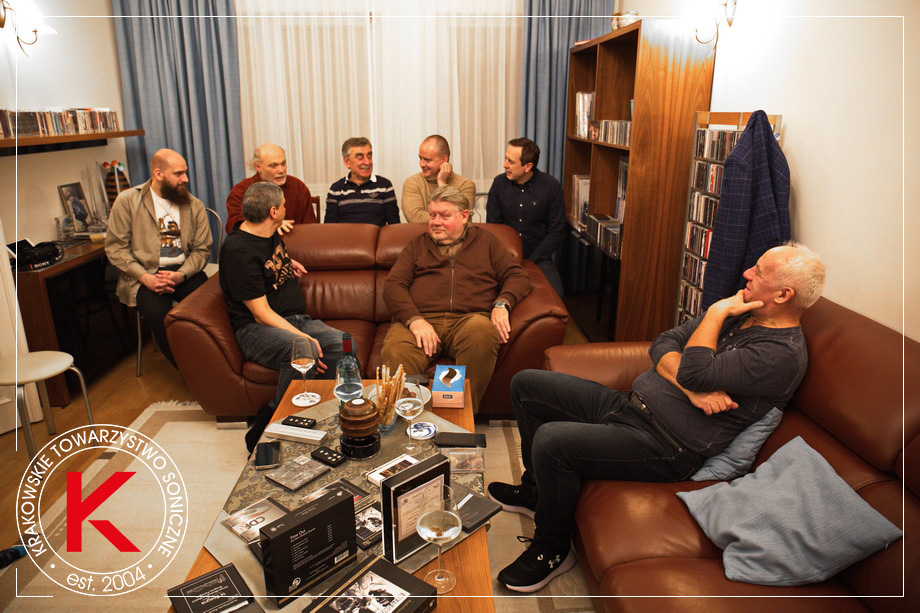
JAREK WASZCZYSZYN ⸜ Ancient Audio, KSS • I don't know who I'll end up to be in your eyes, but for me the difference wasn't that big. To be honest, I would have thought long and hard about which one to choose. The CD had nice dynamics, but on the UHQCD, I enjoyed listening to the background much more. The accompaniment was more vivid and prettier. So far, considering the price differ-ence between these discs, I'm not blown away – both sounded great. And I don't really understand Rysiek's en-thusiasm. PIOTR TABIŚ • I am a photographer, and for me it was like the difference be-tween a large-format film photo and a medium-format digital photo. When I zoom in on a photo taken with a large-format camera in Photoshop, I can still see the details, right down to the grain. Digital, even 100 Mpxl, will eventually break down, and there will be nothing between the dots. For me, Crystal Disc is like photographic film, and UHQCD is like a digital photo. It's great, it's a beautiful version, but still... The clarity on the CD is phenomenal, there are lots of details. On the ‘plastic’, there are fewer details. But were they bad? I wouldn't say so. It's a matter of interpretation and whether we like it or not. In the end, it's your wal-let that will decide. For me, the differences are clear, even huge, but would I really want to pay that much more for it? I'm not sure. Especially since the UHQCD version sounded great and played more pleasantly and smoothly. TOMEK L. ⸜ KSS • The differences were very significant to me, even though it's just zeros and ones, and the signal on both discs is exactly the same. I was shocked by this realiza-tion. There is much more detail on the glass, which makes the tonal balance seemingly set higher. Sometimes there was too much information for me, I'm not used to such honesty from the source. I would even prefer to smooth it out to make it more pleasant. But when it comes to rhythm and vocals, the glass version was unbeat-able. On a regular disc, the vocals were flat and something was slowing it down. |
WOJCIECH PACUŁA • But isn't it true that the UHQCD sounded phenom-enal, or is it just me? It's not that it sounds bad, but that it only sounds worse when compared to such a so-phisticated medium as Crystal, right? TOMEK L. • (laughing) Well, yes... We exaggerate these differences, but that's because that's how we feel. JULIAN SOJA ⸜ Soyaton, KSS • First of all, I would like to compliment the system. The way this Bricasti duo plays with the Ypsilon preamplifier is cosmically better than what the Ayon Kronos did without a preamplifier. OK, I'm exaggerating, but we always exaggerate :) It's sensational. Secondly, I am the proud owner of all four albums we have prepared today, in the UHQCD version. I think they are awesome. These “plastics” sound better than the vast majority of regular, even good versions. In my opinion, these are the best releases of these titles that I have heard. So the bar is set very high. And thirdly, the difference between UHQCD and Crystal Disc is clear. In a nutshell, Crystal sounds more analog. I agree with the photographic analogy, it's a good comparison. The sound is more coherent, smooth, and detailed, but also heavier. However, I disagree that the difference is huge, at least in this example. ANDRZEJ, KSS • I'll start by praising the system – it's a big change. And once again, I'm starting to warm up to physical media, namely CDs, and I'm beginning to regret selling my collection and switching to digital files. But that's a digression. 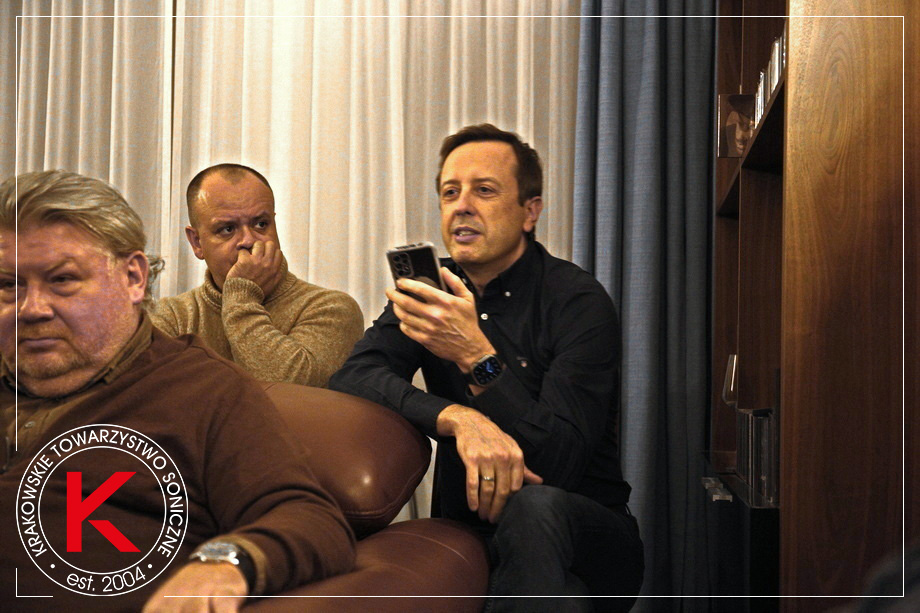
Between these two playbacks, the difference was audible from the very first moment. And I was afraid of embarrassment if I couldn't tell which one sounded better :). But they weren't drastically different playbacks. It was different, it's true, the “glass” clearly sounded better, but I don’t agree with Rysiek's division into ‘crap’ and “rocket” sound. Without looking too far, I would say it's like looking at the world through glass and through plastic. Each has its problems, but glass has fewer. Plastic is slightly dull and blurred. I like the sound that is more faith-ful – and that's how the Crystal Disc plays. It's a much clearer sound, which didn't bother me. After all, when you connect cables that are too bright to the system, you don't want to listen to it. Here, the greater amount of information was not unpleasant. ARTUR ⸜ Audio Video Summit, KSS • I'm probably going to embarrass myself, but it's a good thing that the comparison was A/B/A, because that saved me. Rysiek would have laughed at me :) I heard a clear difference for the first time on the third listen. Ohhh – then it dawned on me that the dif-ference is clear, maybe I learned something in the meantime. These are changes in detail, space, and selec-tivity, in favor of the glass disc. Plankton appeared with Bellafonte on vocals, which made me very impressed with how this Crystal sounded. And this was 1959, and a live recording at that! It sounded better in every way from the glass disc. TOMEK FOLTA ⸜ TF Audio Consulting, KSS • Thank you for your kind words about the system. I share your opinion :) 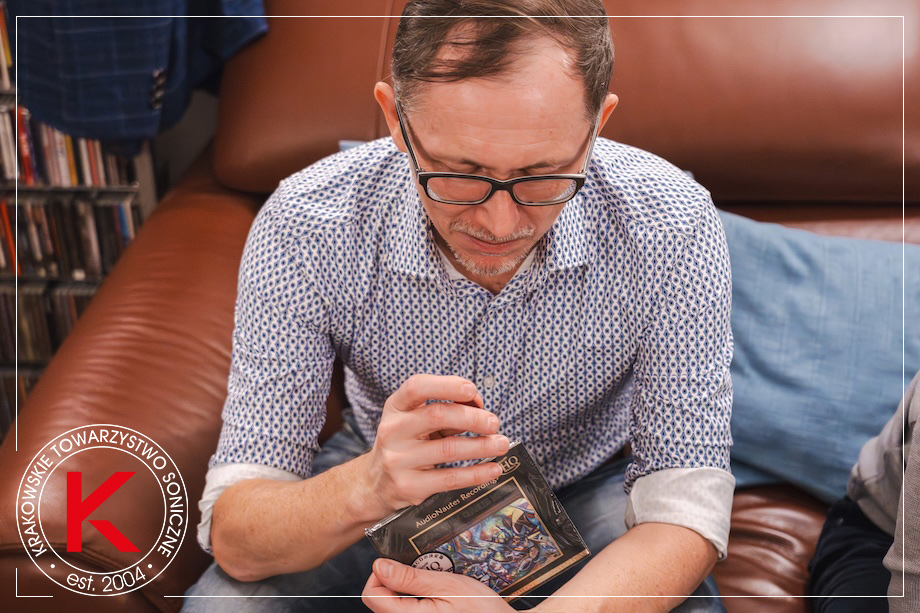
As for the differences in the sound of the discs, they were obvious to me, they were really big. Maybe not as spectacular as Rysiek assessed them, and I could live with any of them. But the differences were clear, there's no point in beating around the bush. I was very impressed by how the applause sounded on Crystal Disc – its detail, density, and naturalness. And we know applause very well from experience, so it's easy to disqualify it in a recording. The second thing – when the country part starts, the guitars, bass, everything was suspended in space from the CD. It caught my attention on the first listen, and on the third it was only confirmed. The arrangement of the in-struments on stage was also fantastic. I have no doubt that this is the better version. And as a born banker with twenty years of experience, I cannot help but refer to money. The difference in quality and price is enormous, but I don't know if I can comment on CDs, because I haven't had a player for many years... RYSIEK B. • But it seems it is about to change? TOMEK • Who knows... I recently bought myself a disc... Anyway, I think that maybe it's worth buying something expensive but good once in a while, rather than bothering with something cheaper but of lesser quality. That's how I would approach it. Crystal Disc is something good. 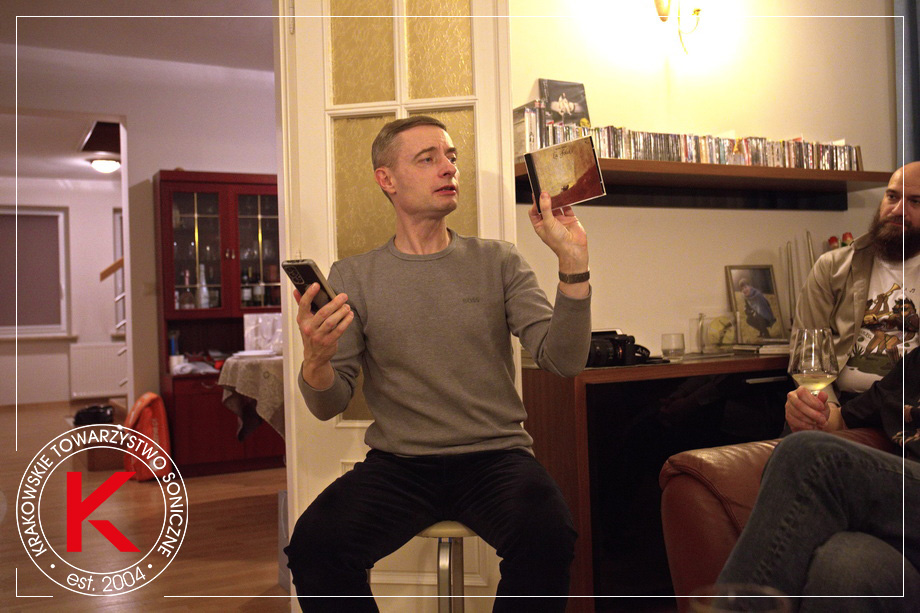
WOJTEK • OK, tell me this – we keep saying that something sounds clearer, darker, smoother, warmer, but was the Crystal Disc simply better to listen to? (all at once) TOMEK L. • All in all, although I like a warmer sound, I would still prefer the Crystal Disc, it was simply much better... RYSIEK B. • Of course, there's no point in listening to something of worse quality... JULEK • If they were priced the same, there would be no question, but they're not, are they...? ANDRZEJ • I am not sure, maybe this sample group is still too small, though...… WOJTEK • So it's time for the next album... ˻ II ˺ MILES DAVIS, Kind of Blue RYSIEK B. • Listen, it's amazing... The UHQCD version blew me away. I've been listening to it for thirty years and never, anywhere, has it sounded as good as it does now at Tomek's. I have no words to describe it, I want this album – on vinyl! Crystal was very good, but it didn't blow me away. I've heard this kind of sound a few times, but the UHQCD performance took my breath away. WOJTEK • Are you sure it took your breath, not your brain? I’m kidding, obviously... or am I? :) RYSIEK B. • That's for the readers to judge... I'm delighted and I don't need anything else. JAREK • I completely agree with you, Ryśku. On the Crystal Disc release, the piano was clearer and, in my opin-ion, more mechanical. On the plastic, on the other hand, it had emotion. For me, the separation of the saxo-phones in the UHQCD version and the dynamics of the trumpet were all better. TOMEK HATYLAK • To put it briefly: this is an album that I have known for years, every detail. The differences between these re-leases were less noticeable and significant than with Bellafonte. Nevertheless, in the Crystal Disc ver-sion, there was “more” of everything. My attention was drawn to the pops and cracks and noises that are characteristic of this recording. Maybe it's some kind of Friday hallucination, but I feel that the three-dimensionality provided by Crystal Disc was clearer and more legible. This is because these sounds were more strongly separated from the music itself. Indeed, the difference between the versions is not as big as before, both releases are excellent, but “glass” is better. Not by a knockout, but on points. PIOTR • I definitely enjoyed listening to the classic ‘plastic’ release more. Even though the glass version was better, ob-jectively speaking, it really was better. But it was also a little emotionless, as if technical. And I look for emotion in music. The UHQCD spoke more powerfully to me, it was full of passion. For me, it was also the best playback of this album I have ever heard in my life, at Tomek's place. 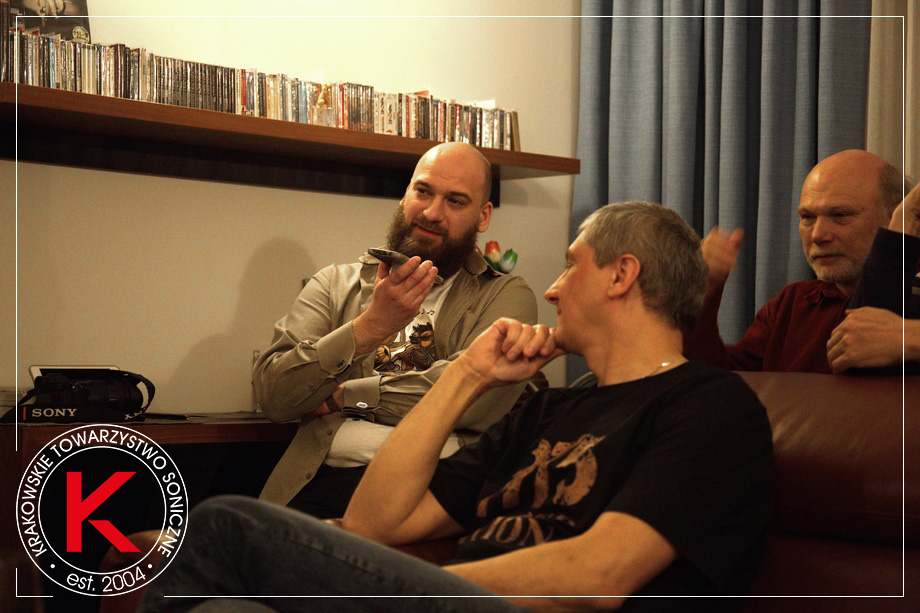
TOMEK L. • As with my predecessors, the UHQCD release made a very big impression on me. And, as in their case, I have never heard Kind of Blue reproduced as well as it is here. The differences were not that big. Again, the trumpet was clearer on Crystal, but was it more exciting? Not really... I choose UHQCD. JULEK • Two things repeated themselves: once again, I find the UHQCD version more enjoyable. It plays brilliantly. The difference between the releases was not staggering, but it was clear. In my opinion, the trumpet sounds better on the Crystal Disc in every respect. It was smooth, fluid, very analog. WOJTEK • Well, I hear it differently than most people, because in my opinion it was the Crystal Disc that sounded smooth, analog, almost dark. With lots of detail, but darkness behind it. JULEK • Yes, exactly – it was kind of liquid. Perhaps the reason why everyone likes UHQCD so much, which is perfect after all, is that most people have never heard Davis played like this before, and the first play-back was on UHQCD. And maybe that shock... ANDRZEJ • First and foremost, I vote for Sony Europe, which lent this version of the master tape, because it's a masterpiece. I liked the plastic version better because it was calmer and the trumpet was more pleasant as a result. For me, this instrument is always problematic because it usually sounds too sharp, as if I were sitting right next to it. ARTUR • Words of praise for Tomek's system – the preamplifier and source made an incredible impression. It was a pleasure to listen to and the leap is amazing. I didn't notice the flaws in the recording that you mentioned. I ex-pect the trumpet to hit you in the face, to be aggressive if that's how it's played. And in the Crystal Disc version, it meets these conditions. The plastic version, on the other hand, is more smoothed out. That's why, I choose Crystal Disc. TOMEK FOLTA • I had no doubts – just like Janusz once did, after listening to the Crystal Disc version for the first seven seconds, I decided that I could listen to this version for another hour and talk about it even longer, based on those seven seconds alone. In my opinion, the Crystal Disc version was better in every respect. The details, resolution, selectivity, everything was on a much higher level. The UHQCD version is excellent and I will probably buy it, even though I don't have a CD player yet, because there is no other option. I have a few older versions, but what we hear here is clearly the best reproduction in my life. I'm avoiding hyperbole, I don't want to say that the UHQCD is unlistenable, but the Crystal Disc version was so good that there's nothing to talk about... ˻ III ˺ THE DAVE BRUBECK QUARTET, Time Out RYSIEK B. • It's starting to repeat itself – both performances made a big impression on me, but Crystal Disc was unbeat-able. The quality of the mastering and Tomek's system are striking. Crystal – dynamic, transparent, clean, with a better outline of the instruments' surroundings. I even had the impression that it was a different mastering. In the sense that the stereo image is much wider on the glass disc, and the instruments take up more space. WOTEK • And it's exactly the same mastering and exactly the same source for the pressing plant. RYSIEK B. • Well, yes, but that's the impression I get. On the recording, the saxophone is centered on the stage, and Crystal was better in every way. It was a class difference, but unfortunately I can't afford it... 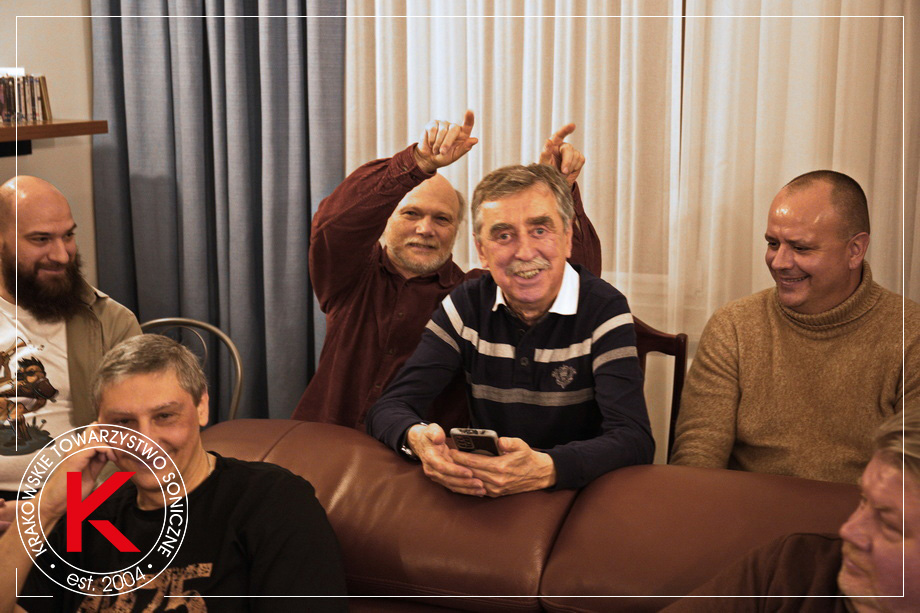
JAREK • I agree with Rysiek. The track we listened to is percussive, and I felt the rhythm better with Crystal. Here, the choice was simple – it's a Crystal Disc. And I would like to address the readers of High Fidelity: ladies and gentlemen, before you spend thousands of zlotys on a disc, it is worth inviting one of the KSS people, who for a third of that price will tell you whether it is worth it... (laughter [although not quite {and yet laughter}]) TOMEK HATYLAK • And again, Crystal is better. What I liked most was the difference in bass reproduction. On glass, it is bigger, more tangible, and has more energy. I “read” this track more as a bass line than drums, with all due re-spect to Jarek. I have no doubt – Crystal plays clearly better. PIOTR • For the third time, I can say that the glass disc sounds better, even much better. This time, for the first time, I liked it. This version was clearer, there was more information on it, and the instrument layout was perfect. You could see where the musicians playing on it were sitting. It was incredible, and I had the impression that it was a different mastering, just like Rysiu. The Crystal Disc was beautiful. Even though the UHQCD version is phenomenal, Crystal wiped it off the board. TOMEK L. • Definitely Crystal, there is no doubt about it. Nothing was unclear, everything was just as it should be. The control and resonance of the double bass were perfect. On the UHQCD version, it was a little blurred, even though it was still better than any reproduction I had heard before. I will repeat: the difference was very signifi-cant. If you can afford it, it's worth it. JULEK • This time I will be in opposition, because I think that in both versions the bass sounded bad. I have this album and for me the “plastic” CD sounded “less bad”. The bass was better controlled, faster, more tauter. It was as if the greater compression of this version kept it in check. For this reason, in this particular case, with this system, I would choose the UHQCD. ANDRZEJ • As there was no trumpet here, so I liked the Crystal Disc version much better :) But seriously – precision, clarity, space – everything was better. There's no point in arguing – if you can afford it, you have to get the Crystal Disc, and that's that. ARTUR • I won't say anything new – Crystal sounded much livelier and more natural. In the sense that it better conveyed the sound of the cymbals and the drum, everything was extremely realistic with this version. The same goes for the texture of the saxophone. In both versions, I found the bass a little irritating. But definitely – Crys-tal, I would choose it without hesitation. TOMEK • I will divide my statement into two parts. First of all, Crystal Disc sounded, in my opinion, much better. I am surprised by the consistency with which certain sound characteristics, which are probably inherent to the medium itself, appear on subsequent discs. Although there have been different opinions, I would like to remind you that during the more than twenty years of KSS's existence, there has always been something that someone liked more, someone less, and vice versa, but never before has there been such complete agreement on the sound quality of a particular technology. Secondly, certain devices and systems combined have the magical ability to control the acoustics of a room – today we have an example of this. I have never had such well-controlled low frequencies before. With the Crystal Disc version, it was lower and deeper, and I didn't mind that it was imperfect. It sounded so good that it was still a pleasant sound. ˻ IV ˺ La Spagna XV-XVI-XVII Centuries, BIS, LP ARTUR • Wojtek, they're two different masterings… 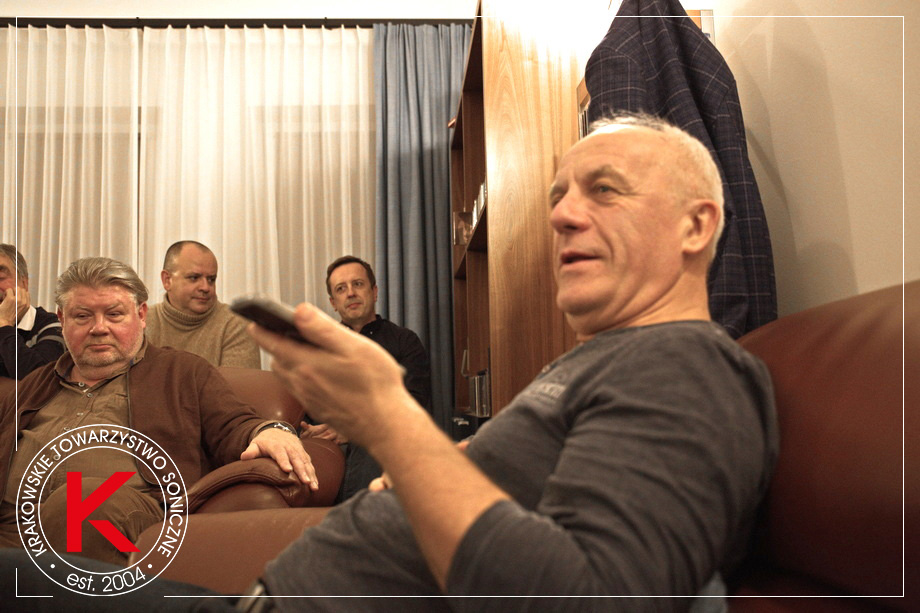
WOJTEK • Artur :) No. it's the same master, the differences between the releases are just that big. JULEK • I know this album and I think it's awesome. It's so wonderfully recorded, the acoustics, the reflections. It's a kill-er production. And yet it was recorded on a tape recorder that I consider shitty, a Revox A77. And it sounds outstanding. I don't feel like talking – this time, the “crystal” definitely sounded better. It was tangible, vivid, and resolving. TOMEK L. • For me, it was torture. I hate this type of music and consider it pointless... Musically, it's not my cup of tea. This time, the treble wasn't too bright with the Crystal; it was a much better version. It was smooth and pleasant. I would never have listened to this from UHQCD. TOMEK F. • If anything makes my heart beat faster in classical music, but not in classic black metal, it is the works of Eric Satie, and specifically La folia, which I heard for the first time at the second Warsaw Audio Show and which I then searched for on CD for a long time. And that was before the internet. Since I'm going to treat my-self on Black Friday, I'll buy the UHQCD version of this album. If I had more money, I would buy Crystal Disc, but here and now – this is a great version. The glass disc sounded better, there's no doubt about it. The high frequencies were clearer, the whole thing was smoother, and there were more beautifully resonating details. The UHQCD version sounded internally nervous, like the files used to. The glass disc had stability and density – the coolest thing I've heard today. Any-way, CDs “do the job.” ... TOMEK L. • Say what we talked about at Andrzej's place, Wojtek will be happy (laughter). TOMEK • Well, yes... The three of us listened to music from files on equipment where the cables alone cost around three million zlotys. The two file players cost 60,000 each. Finally, we connected the Onyx SACD transport for less than 10,000, and then we were blown away and concluded that Wojtek, who had been bothering us with CDs for so long, was ultimately right about the medium and technology of CD or SACD – it's simply better sound :) And we need to return to this format. ANDRZEJ • That's true, and then I panicked because I got rid of my CD collection, thinking it was time for digital files. But now I have a new system, and it turns out that the files sound great, but they can't compete with CDs. And Crystal Disc completely blows them out of the water. This music isn't really my thing, but the production is excellent. And Crystal played better, although the difference wasn't huge. RYSIEK B. • I think the choice of recording was unfortunate; it sounded too bright to me. So I won't say anything... It didn't sound bad, but I suffered... JAREK • Readers can't see it, but I saw Rysiek's suffering, he could barely sit still :). Having said that, I agree with Julek, it's a great production. I often hear the opinion that something sounds better because the sibilants, or hissing sounds, have disappeared. But sibilants are part of the voice, without them it is poorer, the music is poor-er. The point is not to cut them out, but to show them properly. And that is difficult. That's how it sounded on Crystal Disc. And the spatial representation in this version is great. I hear enormous potential in this technology. And the mastering of these discs is fantastic. PIOTR • It's hard to add anything – it's a beautifully produced album. I like it. And Crystal Disc is a class or two, or three better. Mainly because of the better acoustics. In my opinion, this is where you could hear how big the dif-ference is between UHQCD and Crystal Disc. Without a doubt, I would choose “glass”. But since it is what it is, I will buy the “plastic”. ARTUR • In my opinion, Crystal Disc hit the jackpot – it sounded so lively and natural like nothing before. Enormous space. And the high tones didn't bother me, because it was alive, it was real. Crystal rulez!!! ▌ Summary AFTER THE OFFICIAL LISTENING SESSIONS, we moved on to comparing Crystal Disc albums with earlier remasters, whether Sony, Mobile Fidelity, Audio Analogue, Japanese albums, etc. Each time, we could appreci-ate what these labels were doing; the sound was very good. But at the same time, each time, Crystal showed something that the others did not even come close to. Clarity, depth, analog smoothness, and resolution – this was repeated with these discs time and time again. 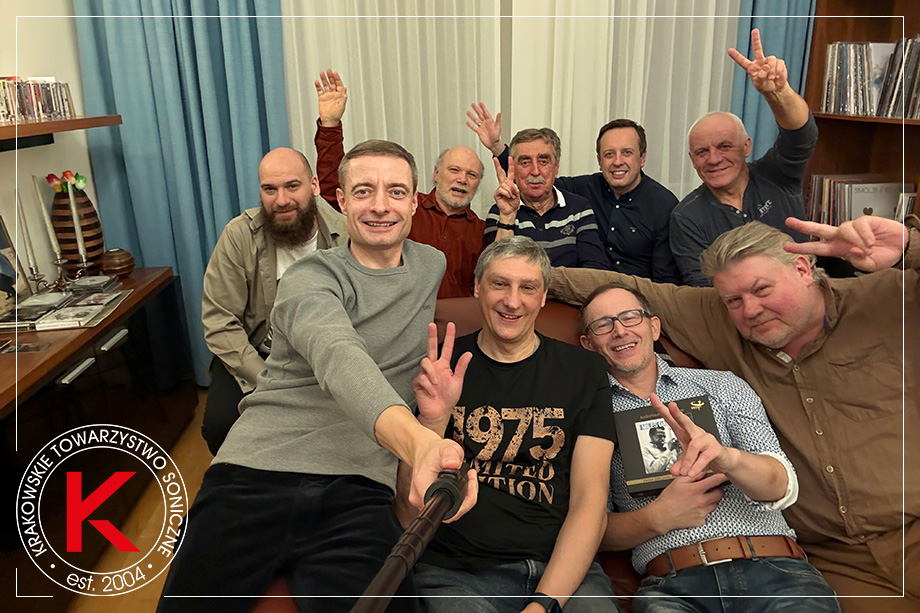
These advantages can be interpreted in different ways, depending on the system we use to listen to albums, our mood, fatigue, and even whether we like the music or not. However, in most cases, the “glass” opened our eyes to something completely new. This was helped by fantastic mastering and, it seems, excellent tapes from which it was made. And it wasn't that there was “some difference”, but that the difference was very, very big. Therefore, anyone who believes that a bit is equal to a bit, as long as they are the same, should reconsider. Yes, a bit is equal to a bit, but the moment we start playing it, everything changes. And the Crystal Disc allows this to happen in the best way I know. ● ⸜ Transport SACD: BRICASTI M19; test → HERE You can watch a short intro on the Instagram → HERE |

 |