


|
INTEGRATED AMPLIFIER YPSILON
Manufacturer: YPSILON ELECTRONICS |

 |
 |
 |
|
Review
text by WOJCIECH PACUŁA |

|
No 268 September 1, 2026 |
|
˻ PREMIERE REVIEW ˼
THE MANUFACTURER CLAIMS THAT THE NEW VERSION of the Phaethon integrated amplifier is: “One of the Best Hybrid Integrates Out There.” There is no beating around the bush or false modesty in this bold statement. However, I don’t see it as bragging either. Instead, it reflects confidence in their abilities. 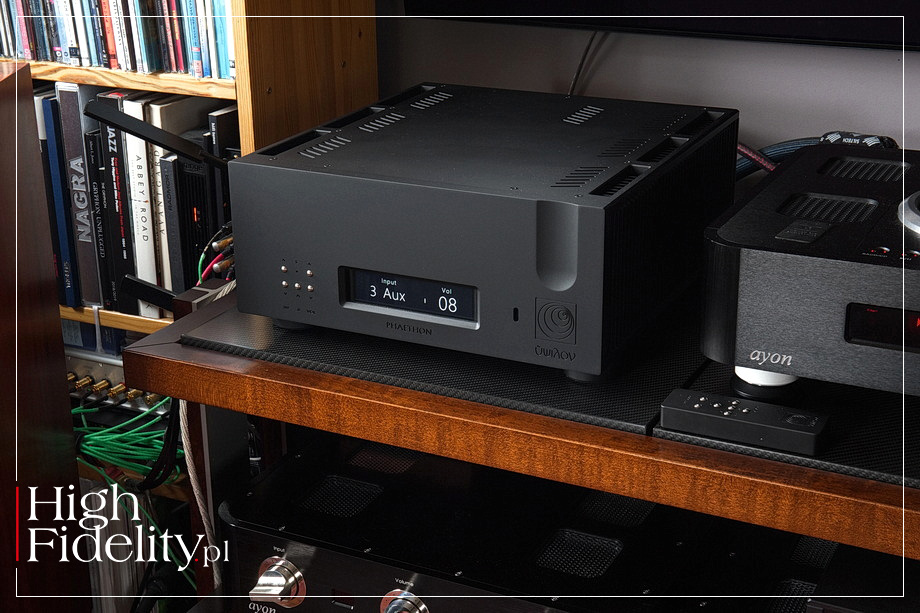
Perhaps this is the result of twelve years of experience in manufacturing the original amplifier of the same name. The model presented in 2014 at the High End show in Munich was, in general terms, the same device we’re discussing here. That is, a hybrid integrated amplifier with a transformer-coupled attenuator and an output stage that combines the advantages of single-ended and push-pull designs:
The output stage uses the same polarity semiconductors for both phases in a “balanced single-ended ” fashion that manages to transmit to the listener a magical performance with power to drive most speakers.
⸜ Phaethon Neo, → YPSILONELECTRONICS.com, accessed: 2.07.2016. Although when we think of “tubes,” we picture vintage devices, this amplifier from Greece features a minimalist, modern design. In a word - it is an interesting product. ▲ A few simple words… DEMETRIS BACKLAVAS THE PHAETHON NEO is based on the original design introduced to the market twelve years ago. It is a three-stage amplifier design. We have used a double triode as the first amplification stage, along with a solid-state power amplifier featuring coupling transformers between the stages and carefully selected components to ensure the best sound quality. 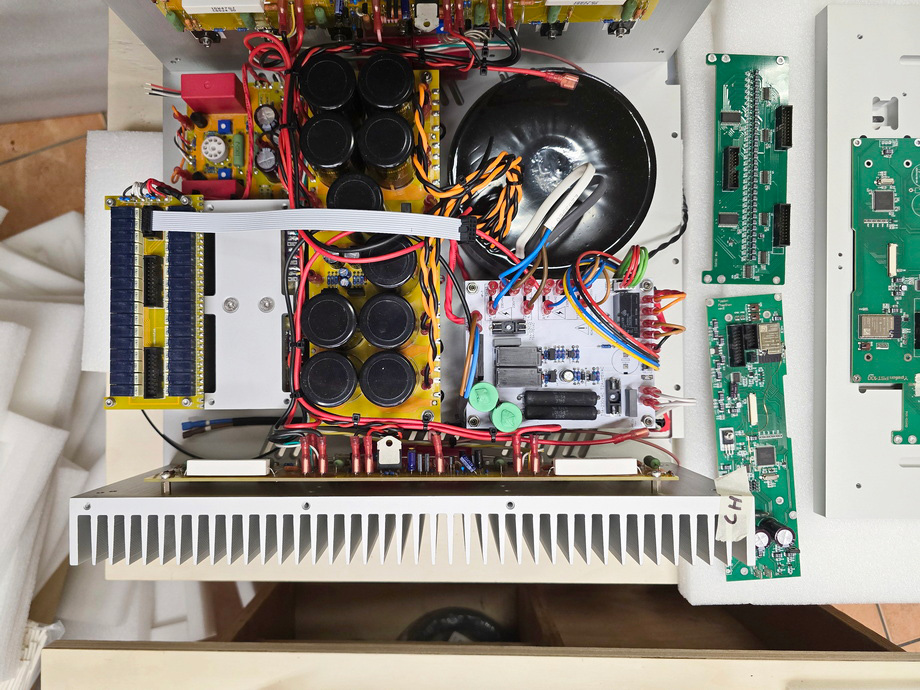
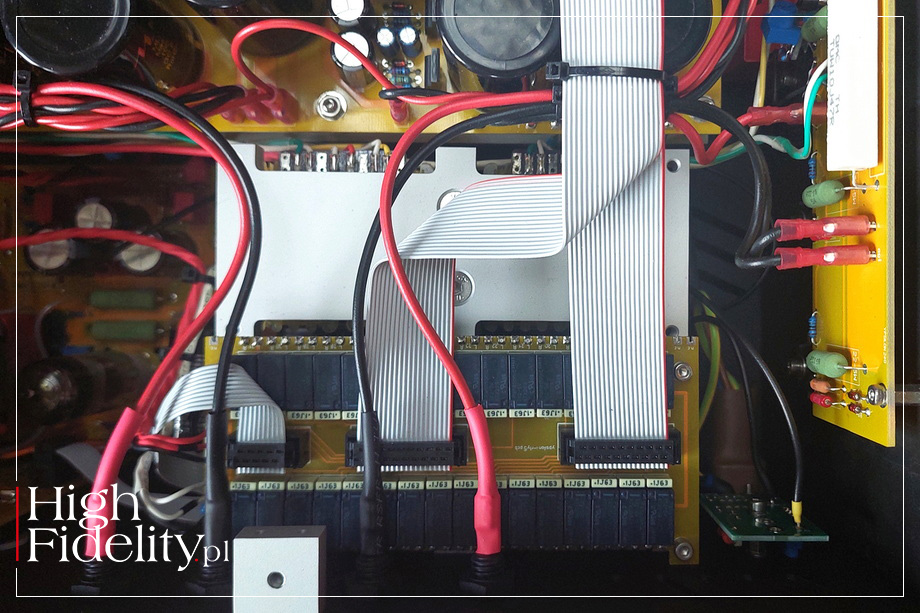
‖ An amplifier that has not yet been assembled on the assembly station - you can see the power supply board • Photo: courtesy of Ypsilon The output stage topology remains the same as in the original model but with added refinements. This topology, as used in our monoblock amplifiers, is a unique design with a floating output that allows the use of the same polarity output devices, operating in the same way, for the negative and positive parts of the signal. No overall feedback is used, also preserving the lively and musical character of the amp. 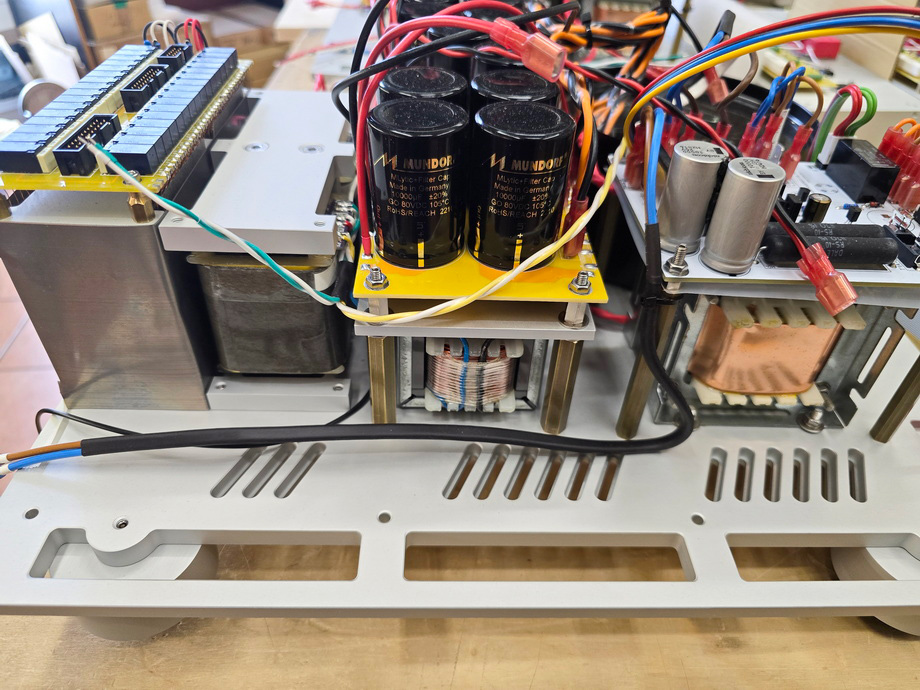
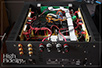
‖ View from the left side, before the heat sink was installed; the transformers and power supply modules are visible. • Photo: courtesy of Ypsilon For the Neo, we also developed new high-resolution front display hardware with a powerful micro-controller that drives it, which also controls the functions of the amp. There is DC and output current overload protection that doesn't interfere with the signal path without the use of an output relay. ‖ DB 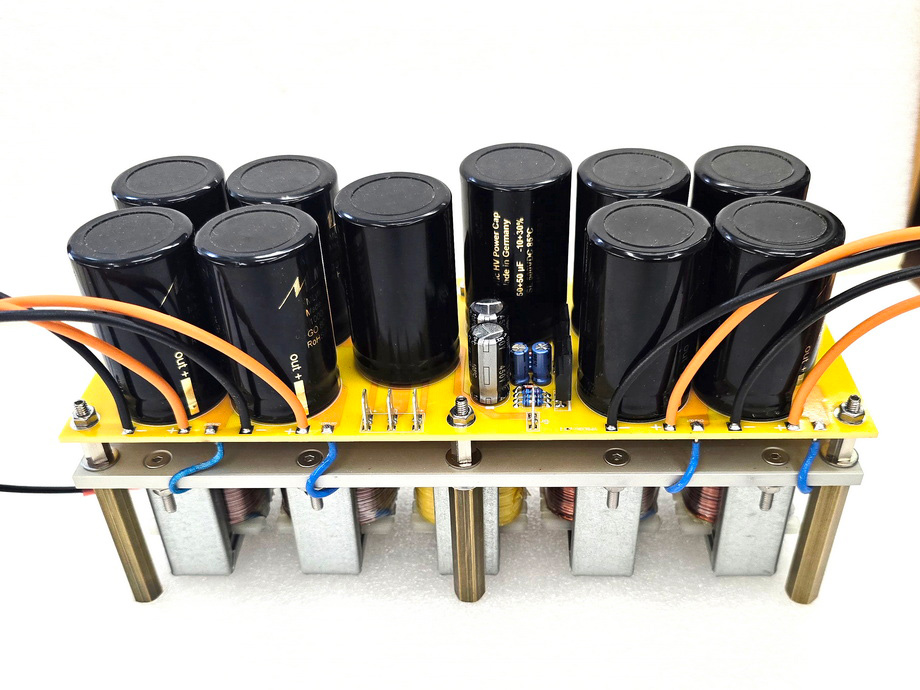
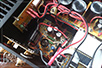
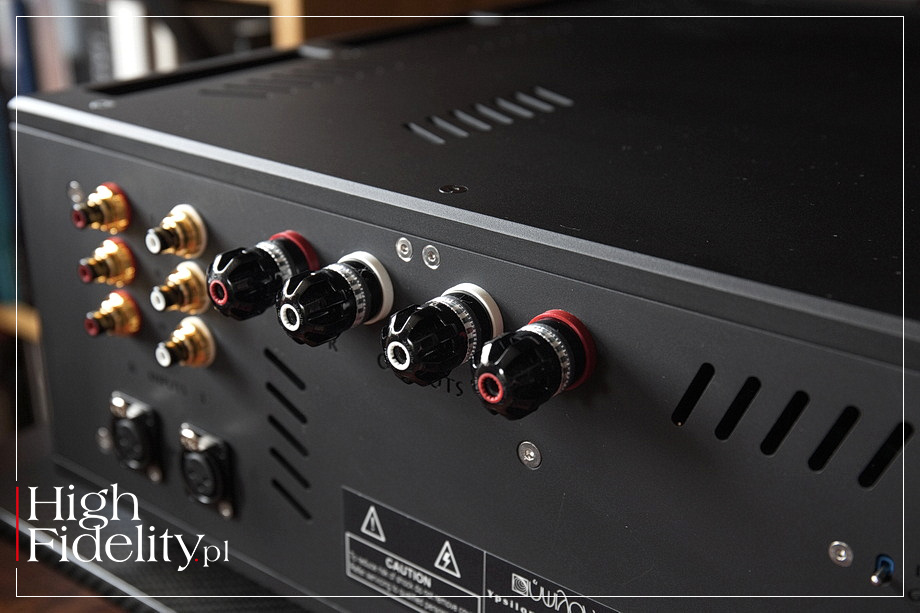
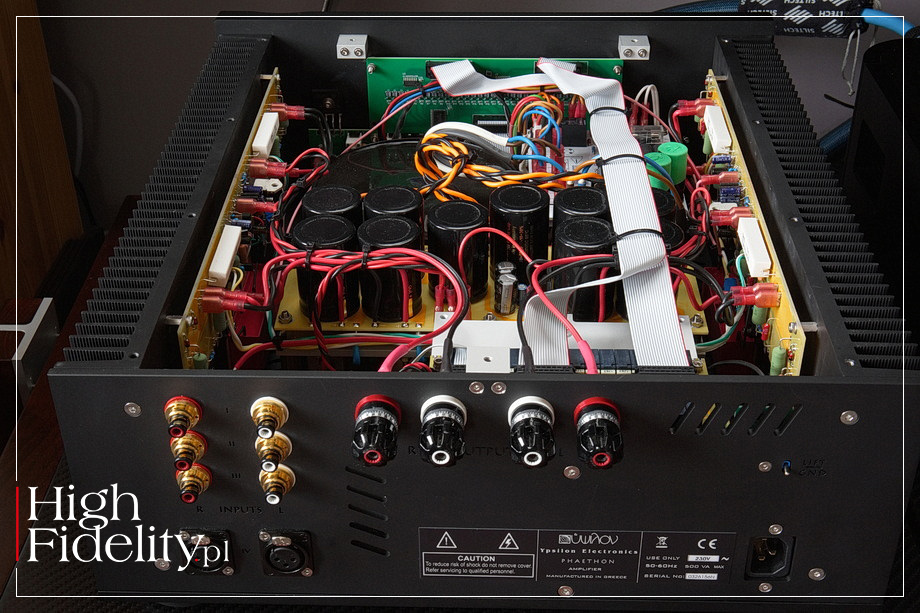
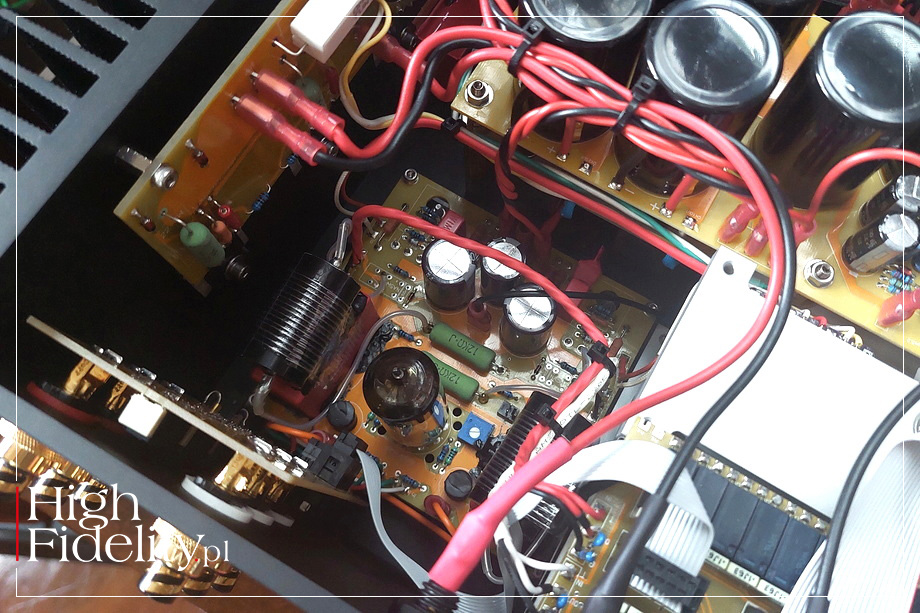
‖ Power supply board with anode-voltage chokes for the input tube • Photo: courtesy of Ypsilon ▓ Phaethon Neo THE ORIGINAL PHAETHON was an amplifier designed based on two devices: the monoblock(s) and the PST100 Mk 2 preamplifier. I assume that its new version has remained largely the same, albeit with the improvements and changes that this manufacturer has been incorporating into its products in recent years. FEATURES • This is an integrated amplifier offering four line inputs, three unbalanced (RCA) and one balanced (XLR); it’s worth remembering, though, that it is an asymmetrical design. It offers high output of 110 W at 8 Ω and 180 W at 4 Ω. It features a hybrid design, meaning it combines tubes and transistors in a single circuit. This configuration almost always features tubes at the input, in the preamp section, and solid-state components at the output; the exception was KR Audio amplifiers, which featured a reversed configuration (transistors → tubes). 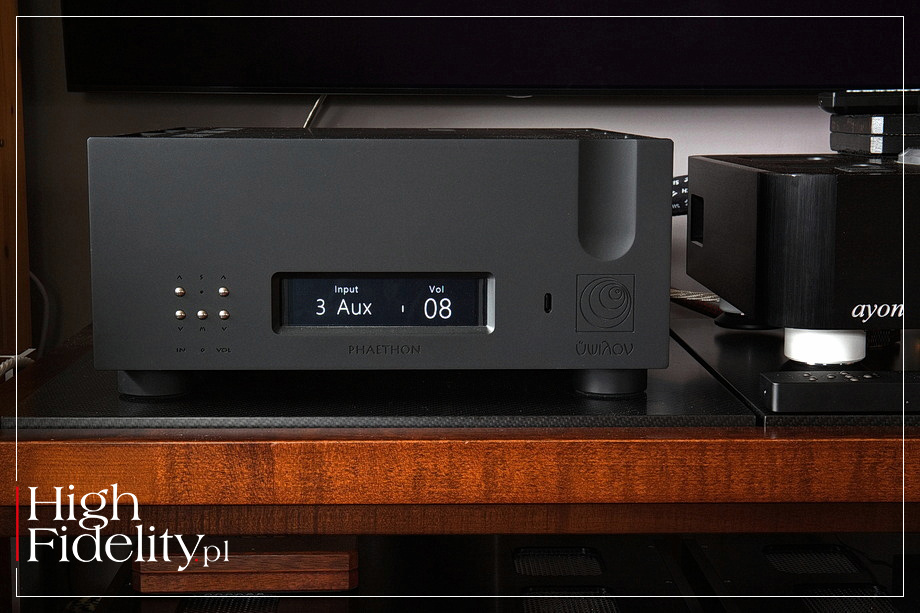
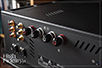
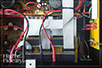
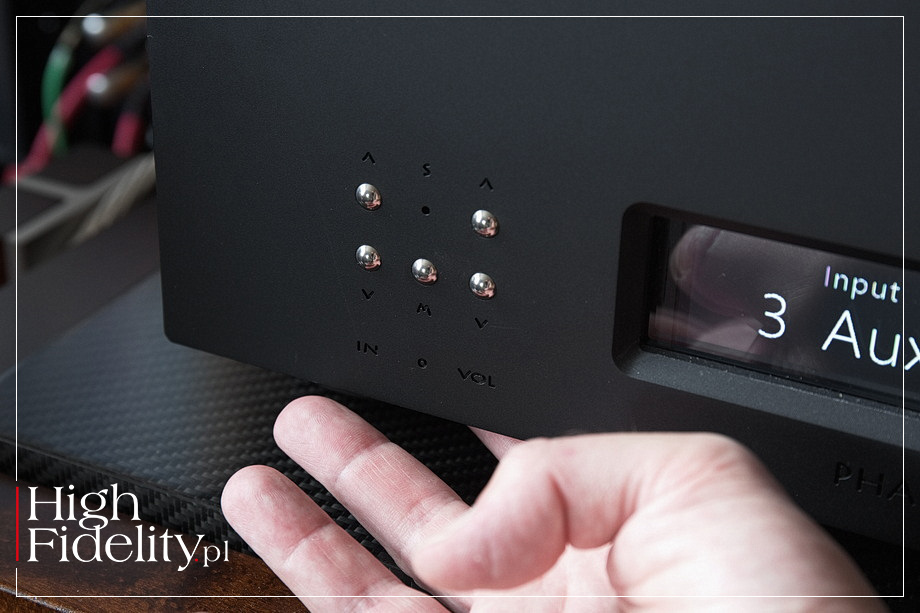
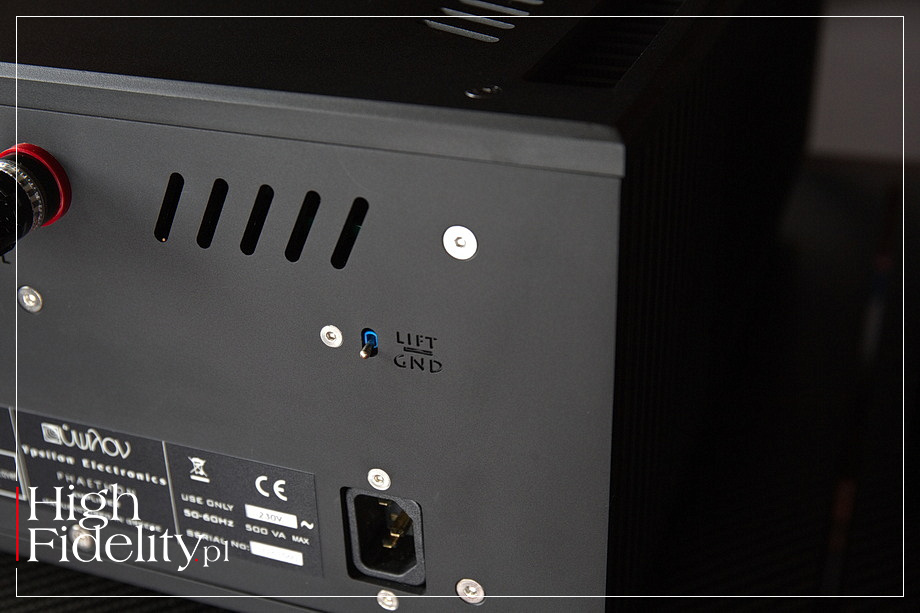
A circuit of this type is intended to combine the advantages of these technologies, namely the linearity and “harmonic richness provided by tubes” along with the “current efficiency and low distortion of semiconductors.” I use quotation marks because this is just one of many views on amplification technology, and it is not a hard-and-fast rule. However, it has many supporters, and Ypsilon has made it one of its flagship technologies, even using it in power amplifiers. The front panel of the unit resembles what we already know from the PST 100 Mk II SE Anniversary preamplifier; review → HERE ˻pl˺. It is almost flat, with a recess for the display window and five control buttons. The TFF display is legible and attractive. The buttons are used to adjust the volume, select inputs, and access the menu. To be honest, the lack of a large volume knob bothers me a bit. Still, devices by Dan D’Agostino or Canor, and many others, prove that this can be done with style... The device is microprocessor-controlled, both in terms of volume adjustment and other settings. This can be done either from the front panel or using a sturdy aluminum remote control. For example, you can select the display color, adjust its brightness, or turn it off. For convenience, the volume control has been divided into three ranges: the first five steps adjust the volume in 3 dB increments, the next four in 2 dB increments, the following eighteen in 1.5 dB increments, and the last four steps provide 1 dB of attenuation. The power switch is located on the bottom, near the front edge. TECHNOLOGY • The device is quite large, but it doesn’t feel overwhelming. It weighs 35 kilograms and measures 400 x 185 x 425 mm. Its front panel is made of a 20-mm-thick aluminum sheet, while the remaining sides are 10 mm thick. The entire unit is bolted together using fasteners and forms a rigid shell. It is available in silver or, as in this review, black. Inside, you’ll find several specialized circuit boards. The manufacturer states that the entire circuit consists of just three stages, one tube stage and two transistor stages, and it does not employ global negative feedback. Shortening the signal path typically improves energy transfer and sound transparency. In the input stage, there are transformers with taps where the input voltage is adjusted. This is a distinguishing feature of this manufacturer, linking it to Ayon Audio, whose preamplifier I use in my system. In the Ypsilon, the taps are switched by Panasonic relays controlled by a microprocessor. The signal from the transformers travels to the first stage, which is based on the Soviet 6H30P dual-anode tube. This is a low-noise “super-triode” that was popularized in the audio world years ago by BAT, and is also used by the aforementioned Ayon, as well as the Polish Ancient Audio. Surrounding it are very high-quality components selected “by ear” - these include Wima and Mundorf polypropylene capacitors. There are also Mundorf capacitors in the power supply, and there are quite a few of them. In fact, all the components are of highest quality, as most of the resistors are Dale products. The connectors are also very good - both the speaker and line connectors come from WBT’s Nextgen series and are gold-plated. 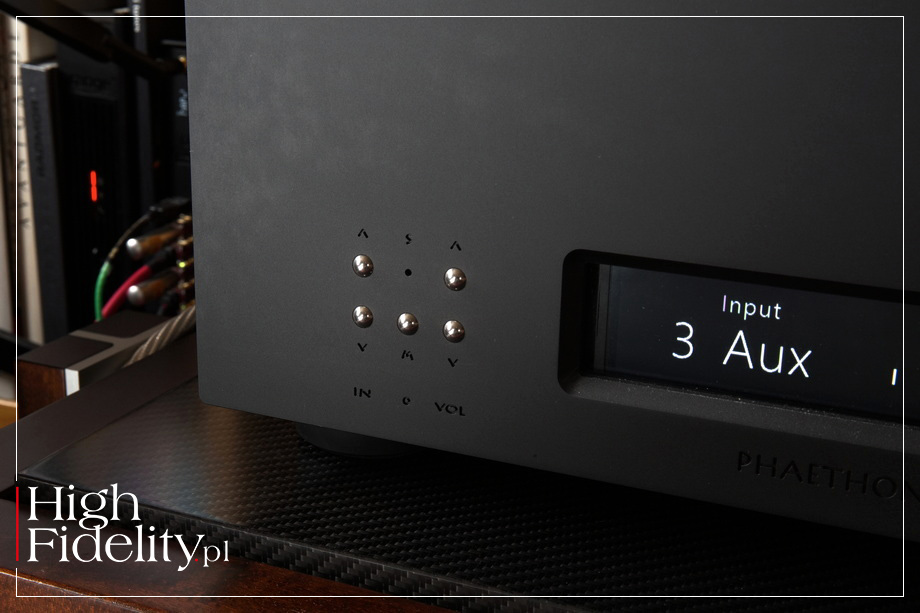
The output stages are screwed to large heat sinks on the side. They feature MOSFET field-effect transistors IRFP9240 and IRFP9240 in Ypsilon’s proprietary circuit. The company says this is a “unique ‘bridged single-ended’ output stage operating in Class A, delivering the ‘most important watts.’” As Mr. Dymitros explained, this is a circuit in which the same type of transistor amplifies both the positive and negative halves of the signal. The amplifier operates with a high quiescent current. The first few, perhaps a dozen or so, watts can be delivered in Class A. This is evidenced by the idle power consumption of as much as 120 W and the high temperature of the chassis. The voltage for the transistor section and the microprocessor is supplied by a large toroidal transformer with several secondary windings, shielded and resin-encapsulated. The tube has its own separate transformer along with a choke. The whole unit makes a very good impression, but it’s also clear that this is the work of a manufacturer that can afford to devote more time to details that are usually “handled” using industrial solutions - solutions that are safe but less transparent in terms of sound. |
▓ SOUND HOW WE LISTENED • Ypsilon Phaethon Neo integrated amplifier was tested in the “High Fidelity” reference system. It was compared to a set consisting of the Ayon Audio Spheris Neo preamplifier and the Soulution 710 transistor power amplifier. During the test, I used the Ayon Audio CD-35 HF Edition SACD player and the Sforzato digital player with an external clock as sources. 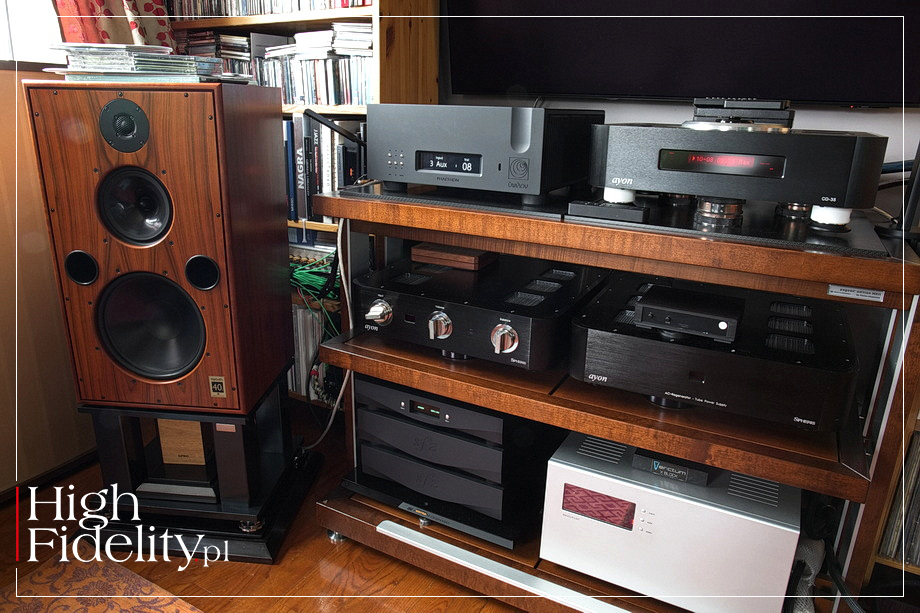
In this test, the signal between the Ayon player and the amplifier was transmitted via a Crystal Cable Absolute Dream RCA interconnect, while the signal between the file player and the amplifier was transmitted via a Siltech Single Crown RCA interconnect; the signal to the speakers was delivered via a Crystal Cable Da Vinci speaker cable. The amplifier drove Harbeth M40.1 speakers. » RECORDINGS USED IN THE TEST ⸜ a selection
• BILL EVANS TRIO, Waltz For Debby, Riverside Records/Craft Recordings/Universal Classics & Jazz UCGO-9057, „Bill Evans Remaster Series”, SHM-SACD ⸜ 1961/2023. THERE ARE A FEW JAZZ CONCERTS that, over the years, have etched themselves into my memory - both musically and in terms of the details that accompanied the music. I’m sure you’ve had the same sort of experience as I when, at the beginning of ˻ 1 ˺ My Foolish Heart from the BILL EVANS TRIO’S Waltz for Debby, I can hear a bucket being knocked over, or when, in the Black Magic Woman from PATRICIA BARBER’s album ˻ 7 ˺Companion, I can suddenly hear applause, and with a good setup it gives me goosebumps. That’s exactly what happened to me with the tested amplifier. 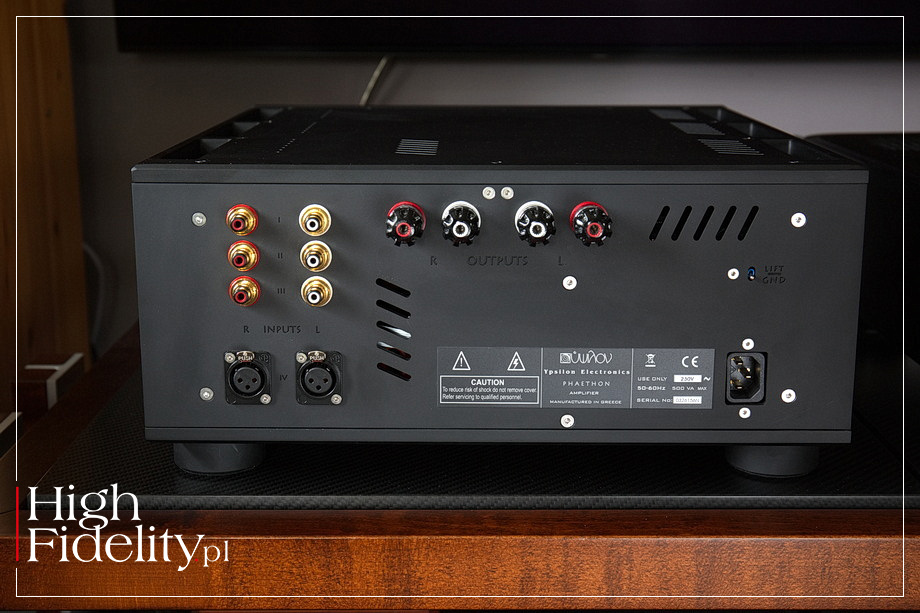
This test, however, I didn’t start with “sure bets” or albums I knew “inside and out,” but with a new release - the SHUN ISHIWAKA TRIO’S Live at Alfie “Temporal Cubic”. Released last December, it’s an example of a top-tier contemporary “live” recording. Contemporary, yet deeply rooted in the past, with the drums positioned in the soundstage not according to a left-right pattern, but center-right, the piano center-left, and the double bass in the center. What makes it extraordinary is that, although the sound seems somewhat distant, with plenty of wall reflections audible in the drums’ sound, the energy of the performance is immediate, and the instruments’ presence is palpable. And it was precisely all of this that the Phaethon Neo amplifier conveyed effortlessly and directly. In fact, it “went beyond that,” delving deeper into the music than most devices would. It did so in a way that I have long advocated, yet which many still consider to be my personal style rather than a universal one. The amplifier from Greece, after all, delivers an exceptionally dark sound. The “dark sound” in question involves a slight dampening of the bright attack, which draws our attention more to the inner layers of the sound, to what happens right “afterward.” The amplifier handles this in an incredibly cool way. This is an honest, rich sound. For a moment, it seems as though the high frequencies are held back. This is also the case with my Harbeth M40.1s. We think this until a cymbal suddenly crashes, until we realize that the double bass has such good timing thanks to the accurate reproduction of harmonics. The bass is, in fact, powerful and dense. It’s also soft - not softened or rounded, but naturally soft. The way it’s presented, right after the dark character of this frequency range, represents for me another level of mastery that the Greeks achieve effortlessly. The point is that there is high energy transfer, strong bass saturation, but also freedom in its articulation. The Phaethon Neo therefore perfectly highlights the rhythm; in this respect, it is an exceptionally well-balanced device. What struck me as even more important, however, was that both this energy and this mass have freedom of movement. They aren’t strained or “contoured” (I really can’t stand that kind of “boxy” sound!). That is why both the quiet rhythmic pulse at 0:30 from ˻ 1 ˺ Introduction to ARNE DOMNÉRUS’s Jazz At The Pawnshop album, in the Crystal Disc version, as well as his powerful playing later on, when ˻ 2 ˺ Limehouse Blues is already picking up steam - both of these dynamic low-frequency expressions were rendered softly yet precisely. And yet it’s not at all a “dark” treble or “muddled” bass that, as I suspect, will delight you first. I think it will be the way the device transfers energy across the entire frequency range. It’s wide, both at the lower and upper ends, yet focused on specific sounds rather than smeared across the recording. Listen to the rock tracks on the Jazz Hi-Res CD Sampler. Rock & Pops, which is intended to promote the MQA-CD format, and you’ll know what I mean. The opening of the ˻ 1 ˺ Free track by MR. BIG, with that distinctive bass line at the three-minute mark, will likely be what you enjoy right away. But I’d like to draw your attention to Eric Martin’s vocals. They’re perfectly clear, but not at all too bright, which is sometimes how they’re reproduced. Rod Stewart’s track, ˻ 2 ˺ Mandolin Wind, I played right after, confirmed my intuition. The Ypsilon delivers a focused sound, revealing a wealth of details - listen not only to the mandolin, but also to the tambourine that comes in a moment later - which is also intricately cohesive. 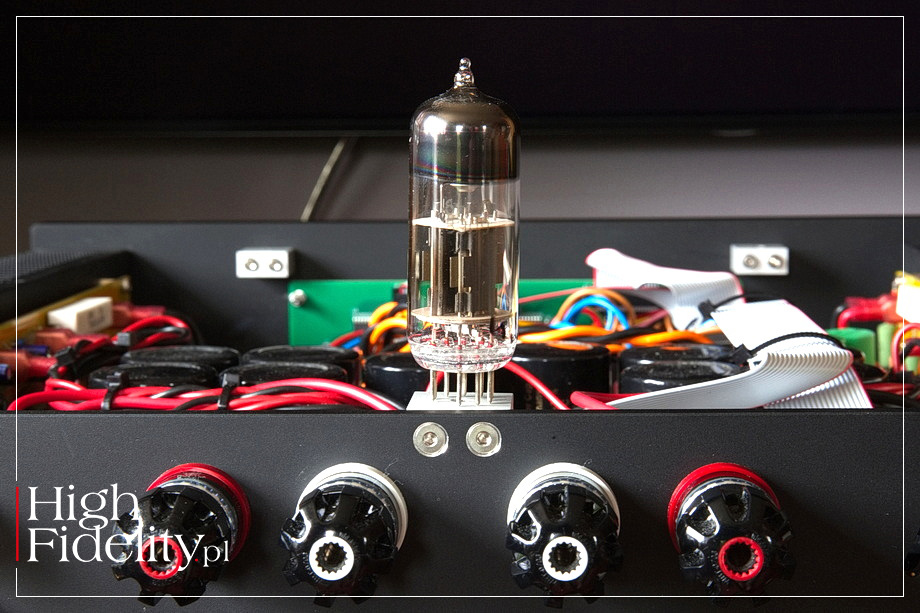
And nuanced. The Phaethon Neo brilliantly shifts the mood of songs and albums the moment we pop them into the player. It also gives them something “unique” of its own. This isn’t a dispassionate sound - far from it. It’s more about bringing out emotion while maintaining “decorum,” that is, a dark, energetic sound. This is aided by the fact that the amplifier’s sound has a wide dynamic range, and the device renders large phantom images. So even with mono recordings, and since we’re already on the subject of that compilation, let’s take ˻ 2 ˺ California Girls by The Beach Boys, we’ll get something reminiscent of the sound from large magnetostatic speakers, even though we’ll be listening using small bookshelf monitors. Let’s play ˻ 1 ˺ One of These Nights from THE EAGLES’ album of the same name right after that, and we’ll get everything I’ve been talking about plus a vast soundstage. We already know that this amplifier from Greece delivers a rich soundstage. We also know that the phantom images are large, as is the scale of the presentation. There’s a certain grandeur to it, which isn’t aggression or an attempt to overwhelm listeners. It all flows freely, even in modern music, such as Nightshift Superstar by MUSE. With that last track, I finally heard a brightening effect. In Matthew Bellamy’s vocals, you can clearly hear the processing intended to “excite” them - plugins and effects of this type are usually called “exciters.” And indeed, it sounds more energetic. But it’s an energy that’s rather flat in terms of dynamics. It’s a cool track, and the production is just as good, but it’s a song meant for listening in the car and was produced with that in mind. It sounded great with the Ypsilon because the bass was low and deep, with energy and scale, but also without high dynamics and with brightened upper mids. Even with this kind of music, the amplifier still maintains its class. TAME IMPALA’s expansive sound, as heard on their new single Hummer, thus retained the band’s classic dreamlike quality and psychedelic phasing. This time, the amplifier slightly warmed up the whole mix and boosted the lower bass. Perhaps it wasn’t the amp alone, but by bringing out these elements from the mix, it showed that this was precisely where the studio engineers had “boosted” the sound, and that this was what they were aiming for. ▒ Summary I’M QUITE CONSISTENT OR BORING, depending who you ask, in my choices. When I think of good sound, I hear it just like it comes from my system. I may be wrong, but I refuse to accept that. I reject the idea outright, fully aware of it. Because when listening to music in this very way, we get something good, I am deeply convinced of this. It could be better, but it could also be different, without that “inner calm and certainty” that are so important to me; however, Demetris Baklavas and Fanis Lagadinos, in designing the Ypsilon, seem to be following the path I’m referring to. In the Phaethon Neo amplifier, they’ve managed to balance all of this perfectly. I’d even say it went “deeper” than in a top-of-the-line separate system. I’m exaggerating, stretching the facts a bit, but I’m doing so in good faith. Listening to music with this amplifier is, after all, an experience that combines celebration and excitement, depth and energy. You can experience that depth, for example, by listening to the Berlin-orbit 4 track from Nils Petter Molvær’s new album, with that magnificent bass line and the energy from club tracks and live performances. 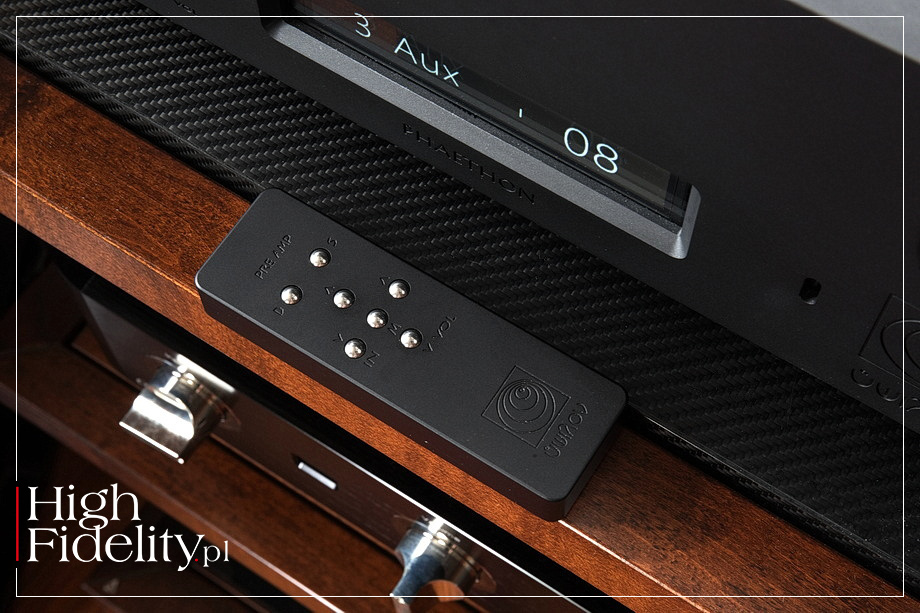
This is one of the best integrated amplifiers on the market, regardless of price. It’s completely different from the Aavik I-880, quite different from the Accuphase E-800S, but fits into the same price range. Both of these designs are outstanding, but the Phaethon Neo is similar to what I remember from the sound of the transistor amplifier → DAN D’AGOSTINO PENDULUM INTEGRATED ˻PL˺ and the tube amplifier → KONDO ONGAKU. A well-deserved RED‖FINGERPRINT. ‖ WP ▒ Technical specifications (according to the manufacturer)
Output: 100 W RMS/8 Ω |
 |

|
Reference system 2026 |
|
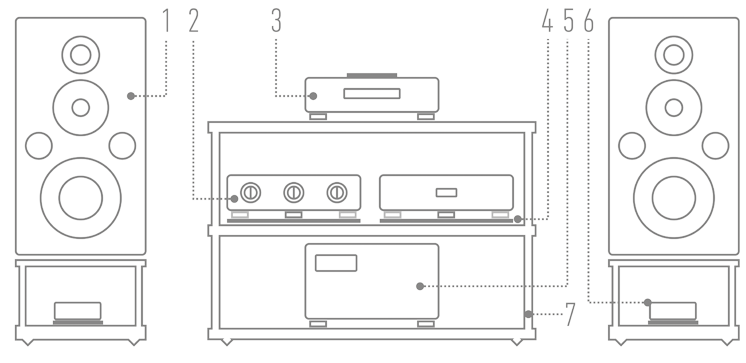 1) Loudspeakers: HARBETH M40.1 |REVIEW| 2) Line preamplifier: AYON AUDIO Spheris III Linestage |REVIEW| 3) Super Audio CD Player: AYON AUDIO CD-35 HF Edition No. 01/50 |REVIEW| 4) Stands (loudspeakers): ACOUSTIC REVIVE (custom) |ABOUT| 5) Power amplifier: SOULUTION 710 6) Loudspeaker filter: SPEC REAL-SOUND PROCESSOR RSP-AZ9EX (prototype) |REVIEW| 7) Hi-Fi rack: Hi-Fi rack: finite elemente MASTER REFERENCE PAGODE EDITION Mk II, more → HERE |
|

|
Cables Analog interconnect SACD Player - Line preamplifier: SILTECH Triple Crown (1 m) |ABOUT|» ANALOG INTERCONNECT Line preamplifier → Power amplifier: Siltech ROYAL SINLGE CROWN RCA; review → HERE Speaker cable: SILTECH Triple Crown (2.5 m) |ABOUT| |

|
AC Power Power cable | Mains Power Distribution Block - SACD Player: SILTECH Triple CrownPower (2 m) |ARTICLE| » POWER CABLE Mains Power Distribution Block → Line preamplifier: Acoustic Revive ABSOLUTE-POWER CORD, review → HERE » POWER CABLE Mains Power Distribution Block → Power amplifier: Acoustic Revive ABSOLUTE-POWER CORD, review → HERE Power cable | Power Receptacle - Mains Power Distribution Block: ACROLINK Mexcel 7N-PC9500 (2 m) |ARTICLE| Power Receptacle: Acoustic Revive RTP-4eu ULTIMATE |REVIEW| » ANTI-VIBRATION PLATFORM under Acoustic Revive RTP-4eu ULTIMATE: Graphite Audio CLASSIC 100 ULTRA, review → HERE Power Supply Conditioner: Acoustic Revive RPC-1 |REVIEW| Power Supply Conditioner: Acoustic Revive RAS-14 Triple-C |REVIEW| Passive filter EMI/RFI: VERICTUM Block |REVIEW| |

|
Anti-vibration Speaker stands: ACOUSTIC REVIVE (custom)Hi-Fi rack: finite elemente MASTER REFERENCE PAGODE EDITION Mk II, more → HERE Anti-vibration platforms: ACOUSTIC REVIVE RAF-48H |ARTICLE| » ANTI-VIBRATIONAL FEET: |

|
Analogue Phono preamplifier: Phono cartridges:
Clamp: PATHE WINGS Titanium PW-Ti 770 | Limited Edition Record mats:
|

|
Headphones » HEADPHONE AMPLIFIER: Leben CS-600X, review → HEREHeadphones: Headphone Cables: Forza AudioWorks NOIR HYBRID HPC |