


|
POWER AMPLIFIER • stereo/mono CIRCLE LABS
Manufacturer: CIRCLE LABS |

 |
 |
 |
|
Review
text by WOJCIECH PACUŁA |

|
No 267 August 1, 2026 |
|
˻ PREMIERE REVIEW ˼
CIRCLE LABS, a Kraków-based (or, more precisely, Nowa Huta-based) company, began its journey through the world of audio with integrated amplifiers, the A100 and A200. However, as power output increases, circuit complexity grows, and audio ambitions expand, companies tend to transition from an integrated platform to sets of separates. In other words, instead of a single device that combines a preamp, a power amp, and sometimes even a DAC and a file player, they opt to separate the low-voltage section (line preamp) from the high-current section (power amp). This was also the case with Circle Labs. 
Just one year after the A200, in 2021, they introduced their first split set, consisting of the P300 preamplifier and the M200 stereo power amplifier, which we reviewed → HERE. Marek Dyba tested the same system, but with the M200s configured as monoblocks; more → HERE. As the company’s CEO said at the time, this system was a “breakthrough” for them, because thanks to their expanded product lineup, they were able to build a distribution network in Europe and beyond. The next phase of this process - a process, let’s recall, focused on growth - took place in September 2025. That’s when news broke about two new devices: the AS100 integrated amplifier and the flagship M500 power amplifier. Both were developed jointly, with the AS100 serving as a reincarnation of the company’s first-ever A100, while the M500 represented - as I interpret it - a desire to cap the product lineup at the top, a sort of statement. ▲ A few simple words… KRZYSZTOF: WILCZYŃSKI & LICHOŃ 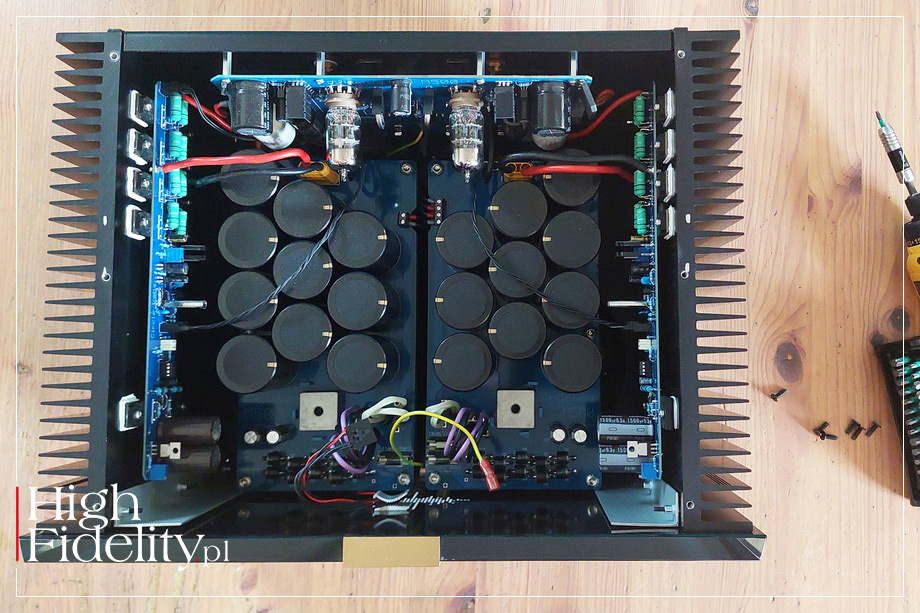
WORK ON THE M500 WAS originally completed in mid-2024, although we had actually begun the project back in 2023 at the request of our distributors, mainly from Asia. Unfortunately, shortly after we fine-tuned the final version and unanimously declared, “This is it,” the manufacturer of the control transistors - which were crucial to the M500’s sound - the American company NTE, went out of business practically overnight. It was one of the oldest semiconductor manufacturers, and its transistors were a key element in shaping the sound of the M500. The situation was particularly frustrating because we hadn’t been able to build up sufficient production stockpiles. I’ve mentioned this before: in the world of audio components, hard times had already set in. For us, this meant, in practice, having to start the work almost from scratch. 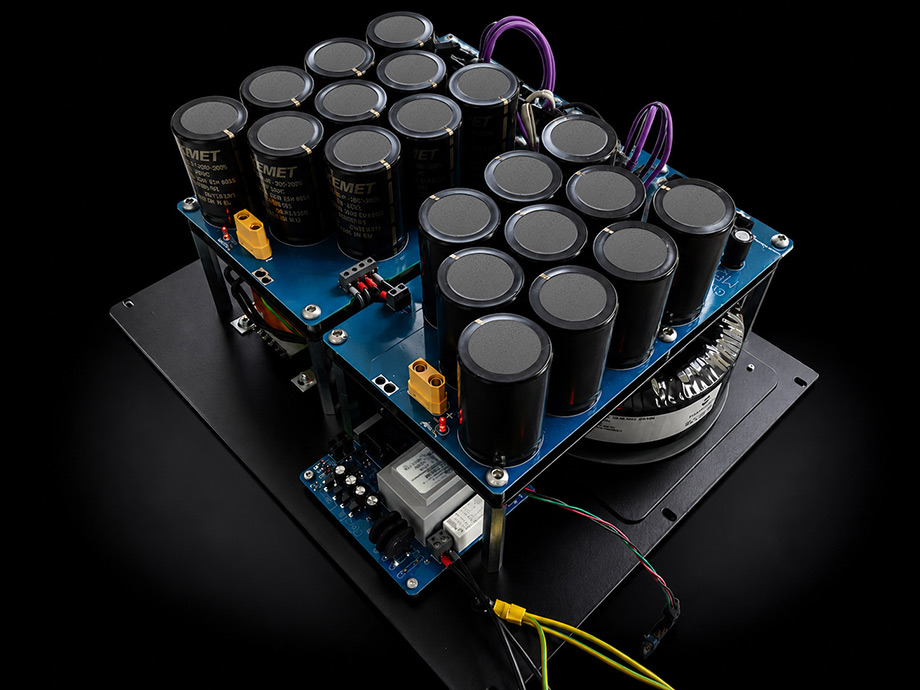
In our search for suitable replacements, we tested virtually all available equivalents from reputable manufacturers. It was painstaking work that took many months. Almost a year passed before we finally decided to use the latest, excellent JFET input transistors from Burr-Brown and Sanken transistors in the output stage. The experience gained during this work was also reflected in the AS100 amplifier, which also uses Sanken and Burr-Brown transistors. Let us add a few words about gain control, which, as usual, we approached in our own way. Gain (sensitivity) control in the M500 model is achieved using negative feedback applied to the tube input stage. The feedback loop is routed directly between the circuit’s output and input, which is the most advantageous way to implement it. The feedback circuit can be completely bypassed by selecting the 0 dB position. Settings of -3 dB and -8 dB are also available, with the -8 dB position corresponding to the lowest gain and the deepest feedback. In addition to adjusting the gain, this solution allows you to tailor the sound to your speakers or your listening preferences. The same solution is already featured in the M200 power amplifiers. Our customers have loved this solution. 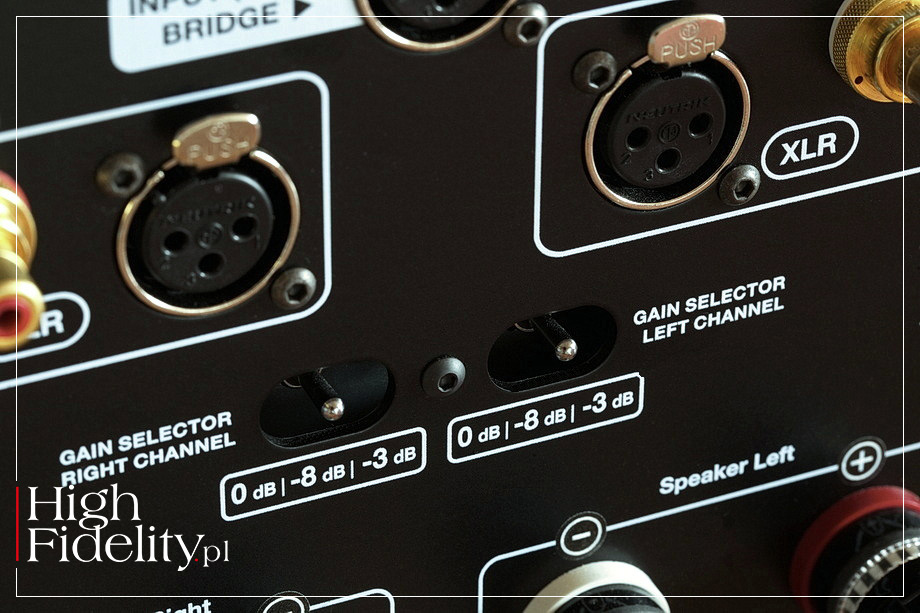
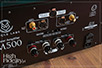
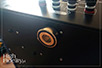
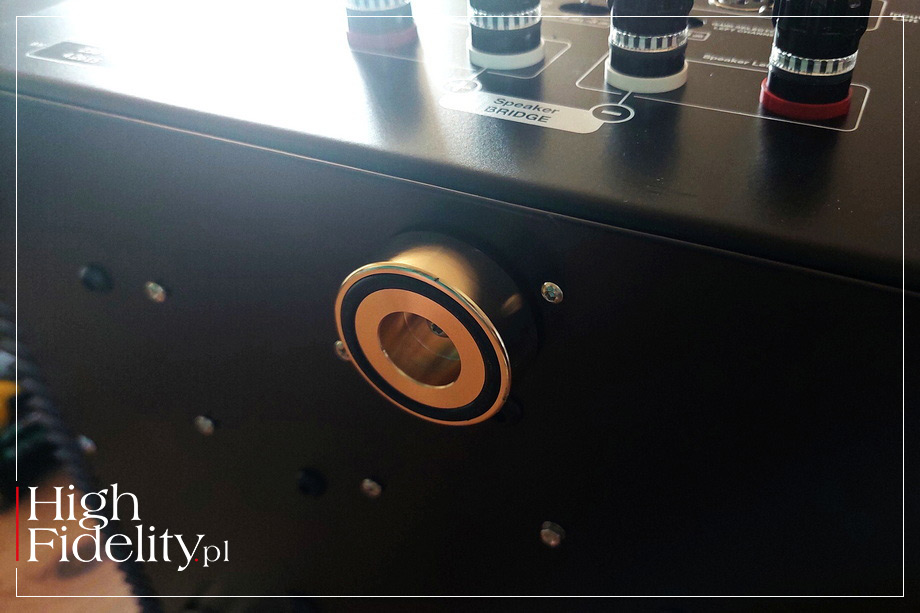
During this work, dozens of prototypes of the future M500 flagship were created. One of them turned out to be special - instead of a tube voltage gain stage, we used a modified solid-state circuit from the Circle Labs P300 line-level preamplifier. This is how a prototype, named the S500, came to be. ‖ KL ▒ M500 IN THE PRESS RELEASES for M500, it was stated that it is to be the top-of-the-line model in Circle Labs’ lineup and that “it combines years of experience in amplifier design, new technologies, and custom circuits developed from the ground up”; more → HERE ˻PL˺. It is set to be joined in the future by a top-of-the-line linear preamplifier, though we’ll have to wait a while longer for that. The device features an external design developed by Circle Labs at the very beginning of their journey. The most prominent element is the thick glass front panel with the distinctive logo and a brass element housing the standby button (the mechanical power switch is located next to the IEC socket). Together with the top panel, it creates a design reminiscent of old radio receivers from the 1930s, with lines straight out of Art Deco. A long, white indicator light is located along the bottom edge, indicating that the power is on. It initially flashes - at which point the amplifier’s output is disabled - and then remains lit after a short delay. This prevents crackling and popping sounds in the speakers and protects them from damage. FEATURES • It’s a really large, though still compact, amplifier - at least when compared to products from Boulder or Constellation. The amplifier measures 430 by 360 by 230 mm and weighs 31 kg. It sits on three brass feet with rubber rings (it doesn’t slide!). In terms of dimensions, it’s most similar to Accuphase amplifiers. 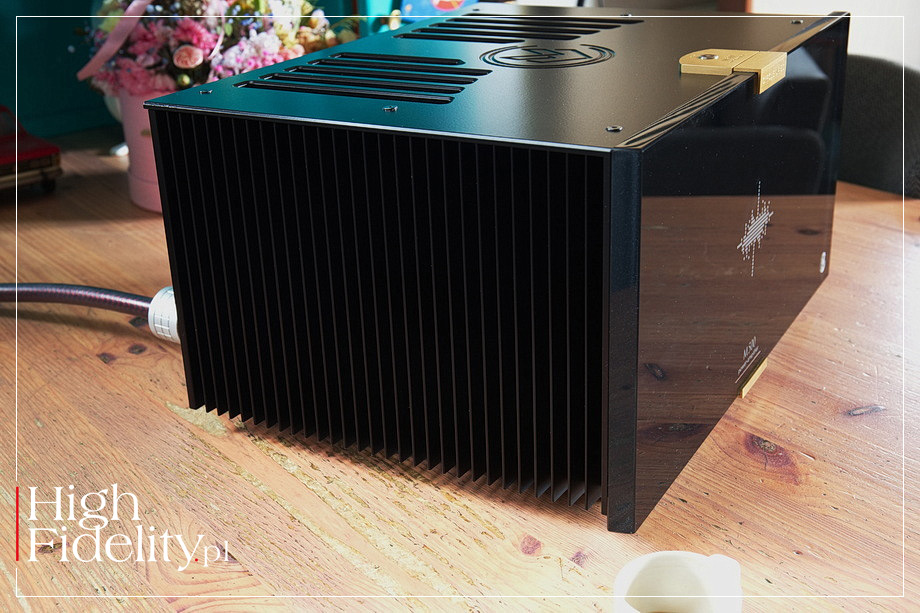
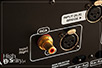
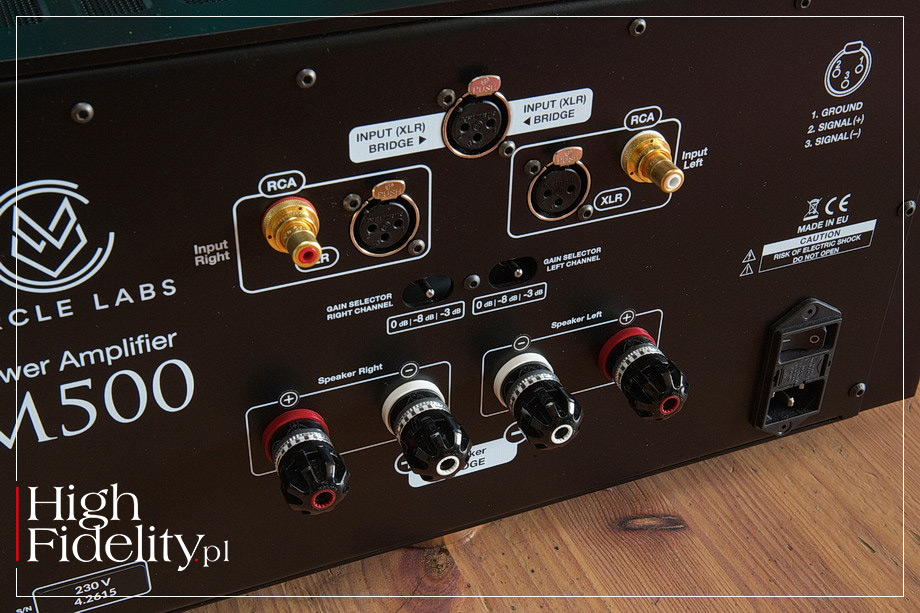
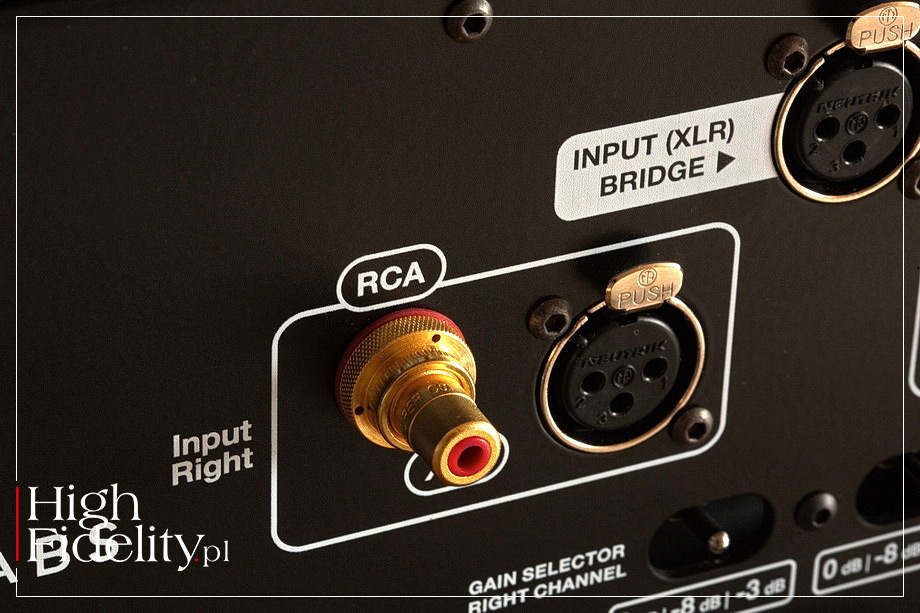
The M500 is nominally a stereo power amplifier. Its input stage operates in balanced mode, Class A, while the output stage uses a classic push-pull configuration, Class AB. However, it can be used as a monoblock. No switching is required; simply connect the signal to the third input, and you’re done. The amplifier then operates in bridged mode and becomes a fully balanced circuit. In stereo mode, the M500 delivers 180 W at 8 Ω and 340 W at 4 Ω. When using two amplifiers - one per channel - you’ll get an impressive 600 W at 8 Ω and as much as 1.2 kW at 4 Ω (!). On the rear panel of the amplifier, you’ll find a classic set of inputs and outputs plus some extras. The standard set includes gold-plated balanced XLR inputs (Neutrik) and unbalanced RCA inputs (CMC, Charming Music Conductor), as well as two pairs of gold-plated speaker outputs (WBT WBT-0703 Cu). The latter belong to the Nextgen series and feature a reduced amount of metal. But there is also one more input - an XLR-only input - designed for connecting a monoblock amplifier. In this mode, you must use a balanced cable; there is no RCA input. Another “extra element” I mentioned is the gain switch. From a user’s perspective, it works similarly to a sensitivity switch, in that it allows us to adjust the amplifier’s volume to match our system (the preamp’s output voltage and the speakers’ sensitivity). Sensitivity is adjusted by inserting signal-attenuating resistors into the signal path. However, the engineers at Circle Labs concluded that this is a flawed approach because it restricts the flow of energy and degrades the sound. Instead, they opted for a method that sounds better, though one that is more controversial in the audio world, namely variable negative feedback in the input stage. When applied correctly, feedback is extremely helpful. However, it is possible to do without it - many companies do so - but at the cost of certain compromises, whether technical or sonic. With the M500, we have the opportunity to hear this for ourselves, because the “gain” switch - actually two switches, one per channel - has three settings marked “0,” “-3 dB,” and “-8 dB.” So you can not only set the optimal gain for the circuit but also hear how negative feedback affects the sound. TECHNOLOGY • As the manufacturer wrote in the press materials accompanying its launch, the heart of the M500 is “a precisely selected ECC88/6922 triode operating in an SRPP configuration, which ensures unique sound quality.” And further:
The input stage, featuring a single tube, a single resistor, and a top-of-the-line Mundorf Silver Gold Oil signal capacitor, combines a short signal path with excellent performance, minimizing losses and distortion.
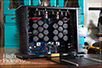
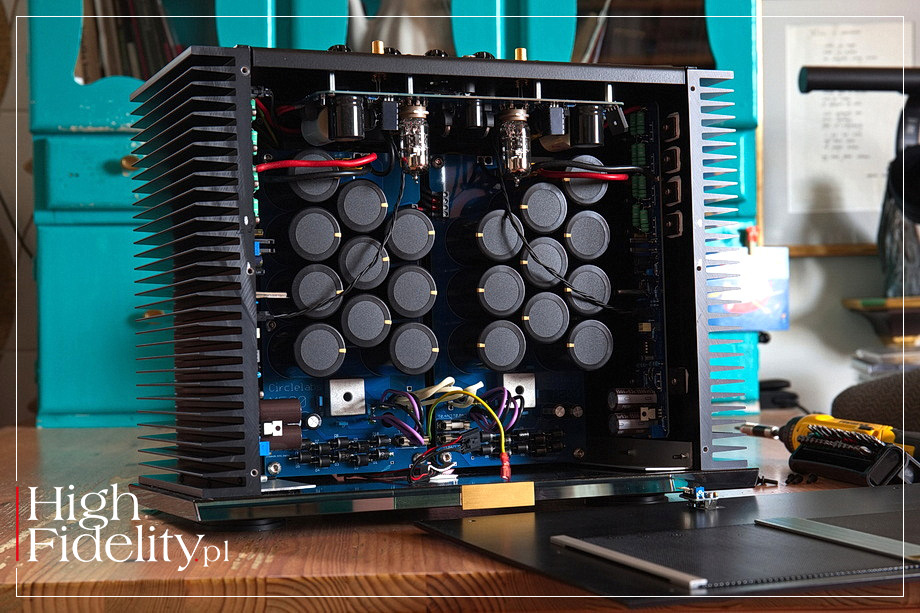
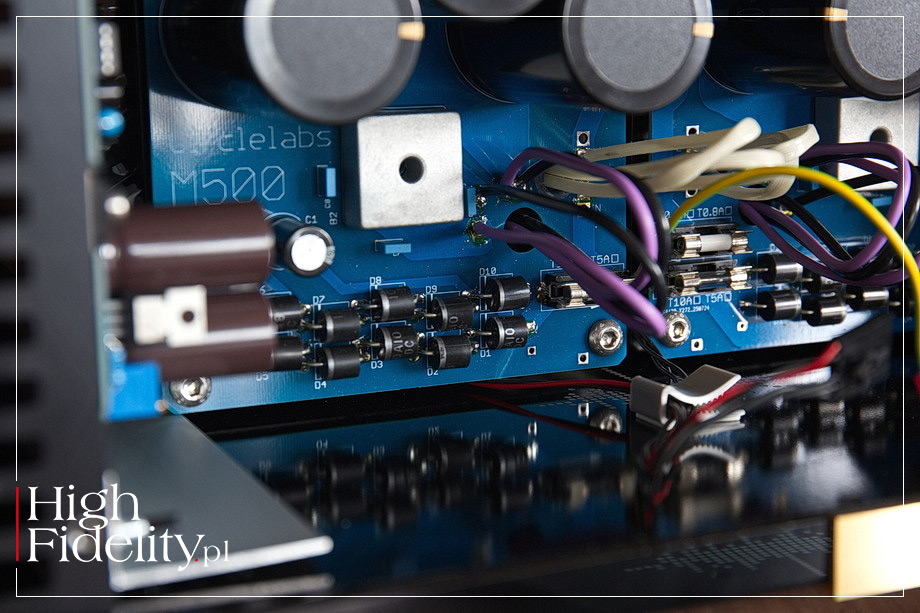
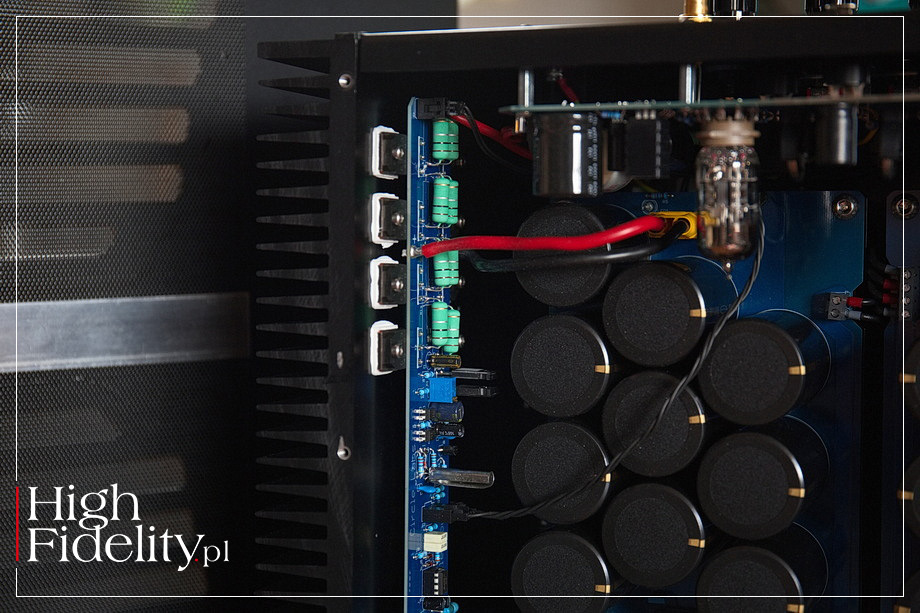
The company also highlighted the “innovative design of the current stages,” which is intended to bring the M500 closer to the topology of SE amplifiers, guaranteeing “unmatched detailed and natural sound, and full control over the low frequencies” - characteristics typical of this type of amplifier. The input stages of the power section use the latest ultra-low-noise Burr-Brown J-FET transistors, while the output employs high-current Sanken bipolar transistors, which - as the description continues - “deliver a dynamic, clean sound with unparalleled control over the speakers.” The M500 is a dual-mono design with separate power supply paths for each channel, supported by a DC-blocker circuit and toroidal transformers with a total power rating of 1,200 W. This type of configuration is intended to ensure the stability and reliability of the circuit’s operation. The tube preamp section features a shielded EI-core transformer, which “further enhances signal quality.” The output section, in turn, features a toroidal transformer. The power supply also incorporates capacitors with a total capacitance of 440,000 µF. There are also three large rectifiers. The entire power supply is mounted on a separate aluminum plate that reinforces this section. The input stage was assembled on a board screwed vertically to the rear panel - the goal was to shorten the connections. It is based on two ECC88 dual triodes, one per channel. These are Russian Electro-Harmonix tubes. An interesting fact: rechargeable batteries were used as voltage references in this design, as they provide the most stable voltage. The tubes are coupled to the transistor section via Mundorf Supreme Classic SilverGold Oil capacitors. This very interesting capacitor, with plates made of a silver-gold alloy, has been part of this German manufacturer’s lineup for years. Here’s what we read about it:
99% silver + 1% gold = 100% music. The use of this conductor material can be condensed into this simple formula. The ultra-pure Gold (typically 99.99%) changes the crystalline structure of silver and maximizes its very good electrical conductivity. Instruments and voices unfurl their whole range of lively acoustic colors, and their character is illuminated and becomes experienceable in all nuances.
⸜ → www.MUNDORF.com, accessed: 11.06.2026. The metallized polypropylene Mundorf Mcap Classic were used in the tube power supply. This distinction provides insight into the manufacturer’s methodology. Apparently, the final tests are conducted by ear, since conventional measurements do not justify the use of components with different designs but identical parameters in one part of the circuit or another. ▓ SOUND HOW WE LISTENED • The M500 integrated amplifier was tested in the HIGH FIDELITY reference system. It was compared to a set consisting of an Ayon Audio Spheris Evo preamplifier and a Soulution 710 power amplifier. The monoblocks were connected to the preamplifier using an Acoustic Revive Triple-C balanced cable. 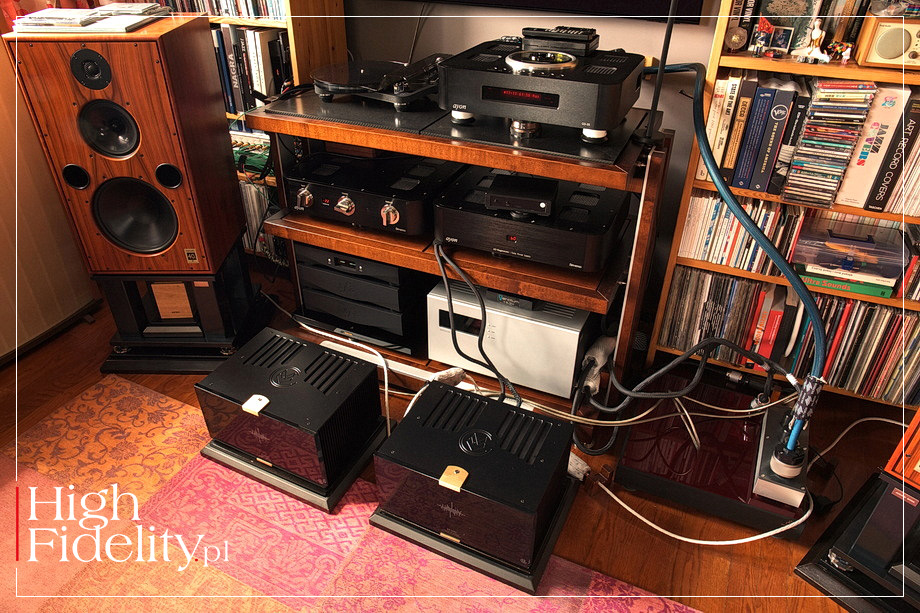
I tested the M500 as monaural amplifiers, but I also devoted a separate listening session to comparing the mono and stereo versions. During the test, the amplifiers were placed on Acoustic Revive RST-38H platforms, which in turn were placed on the floor (with Acoustic Revive RKI-5005 pads underneath). The reviewed amplifiers were powered using Acoustic Revive Absolute Power K cables. They were connected to the Harbeth M40.1 speakers via Crystal Cable Art Series Da Vinci cables. It’s worth noting that the speakers were equipped with SPEC RSP-901EX filters, which the manufacturer refers to as a “Real-Sound Processor.” 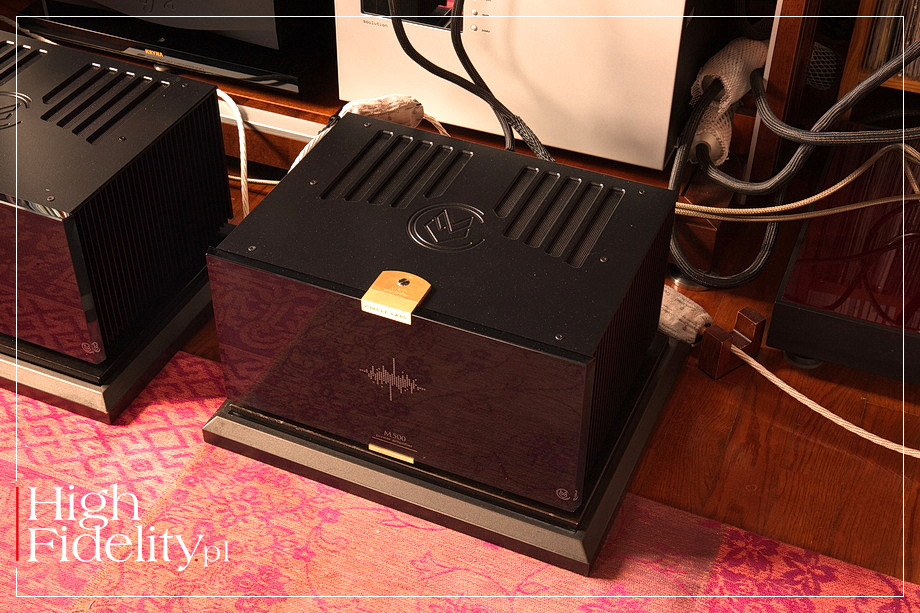
RECORDINGS USED FOR THE TEST ⸜ a selection
• JULIE LONDON, Julie is her name. Vol. 1, Liberty Records/EMI Music Japan TOCJ-90014, HQCD ⸜ 1955/2008. ONE OF THE MOST POPULAR BOOKS on the arrival of a child is titled What to Expect, When You're Expecting. Written by David Javerbaum, it is a satirical guide to pregnancy for parents. In everyday life, this relates to the principle that when you’re stepping into the unknown, the best strategy is to be prepared for absolutely anything. That’s how it was for me with the M500 amplifiers. 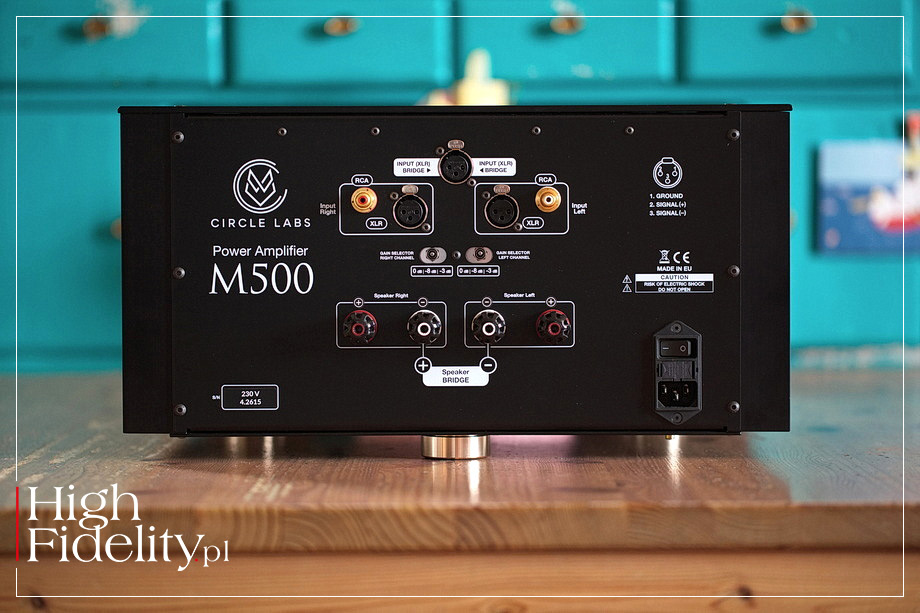
I’ve known the brand almost from the very beginning; I’ve tested most of its products; I’ve tested its M200 power amplifier, and yet for me it was a leap into the unknown. Or, so I thought. After listening to a few albums, however, it turned out that wasn’t entirely true, and that the amplifier I wanted to tell you about has a lot in common with the AS100 - the entry-level model in this manufacturer’s lineup. |
You could say that I should have known this from the very beginning - after all, they share the same technology, which sets them apart from the company’s previous generation of amplifiers. However, mechanically extrapolating the sound of one product to another simply because their circuit designs are similar carries a high risk. After all, we know that in audio, even changing a single capacitor can shift the sound in a different direction - not to mention that we’re talking about a different device here. Even understanding all this, I still didn’t know what to expect. Maybe that’s for the best; maybe it worked out in my favor. What I heard while listening to ˻ 1 ˺ Cry Me a River, the opening track of JULIE LONDON’s album titled Julie is Her name. Vol. 1, originally released in 1955 and reissued in 2008 on an HQCD, was, in fact, surprising. 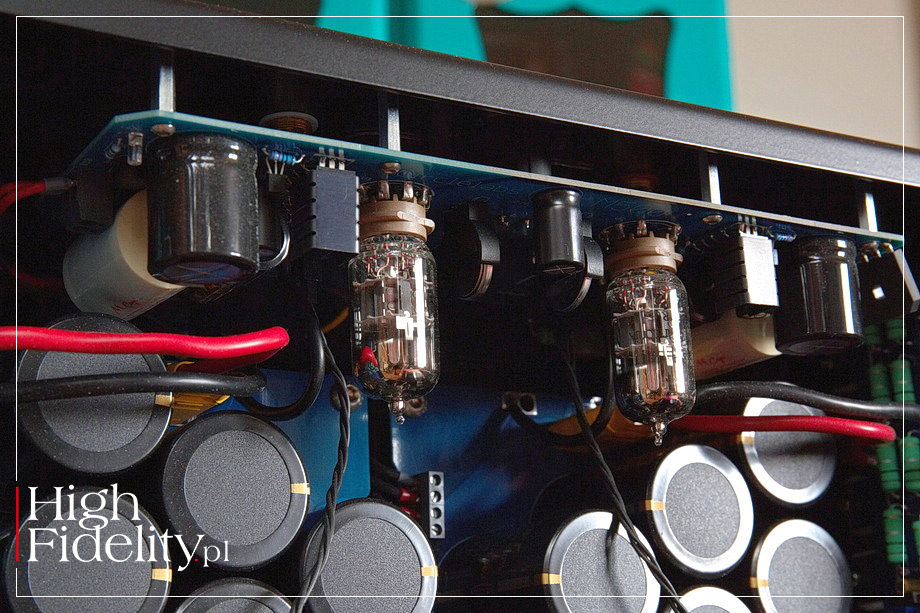
The sound of two M500 monoblocks - since that was the configuration I listened to as my primary setup -reminded me of what I know from small SET amplifiers. I’m talking about the tone, dynamics, and imaging - and, generally speaking, the “vibe.” It was an internally calm, unhurried, smooth, fluid, and warm sound. Sticking with solid-state amplifiers, one could say that the amplifiers from the Japanese company Aura and the American Dan D’Agostino sound similar; they’re part of the same “family,” sharing the same philosophy about music and how it should sound. When I say “small amplifier,” I mean that Circle Labs doesn’t “pump up” the sound. SET amplifiers -the good ones - can deliver a powerful, sweeping sound with excellent dynamics that belies their output power, thanks to skillful distortion management and a gentle transition into clipping. This produces an effect known from tape saturation in reel-to-reel tape recorders - a kind of natural “compression.” I love this type of sound, this approach. And that’s because it produces a sound that’s absolutely “human.” London’s vocals were quite bright - that’s how they sound on this version; the original LP makes them sound much darker, but still very stylish. You could hear the sound engineers’ choices, as well as the character of the tube systems on which the record was made. And there’s the hiss - distinct here - yet with the M500, it lies beneath the music, serving as a backdrop rather than demanding attention. But the way the M500 conveyed the true magic of this recording, as the magic of Barney Kessel’s guitar accompanying the singer, was exceptionally delightful. ▲ Our albums JOACHIM MENCEL Home Records 4446293 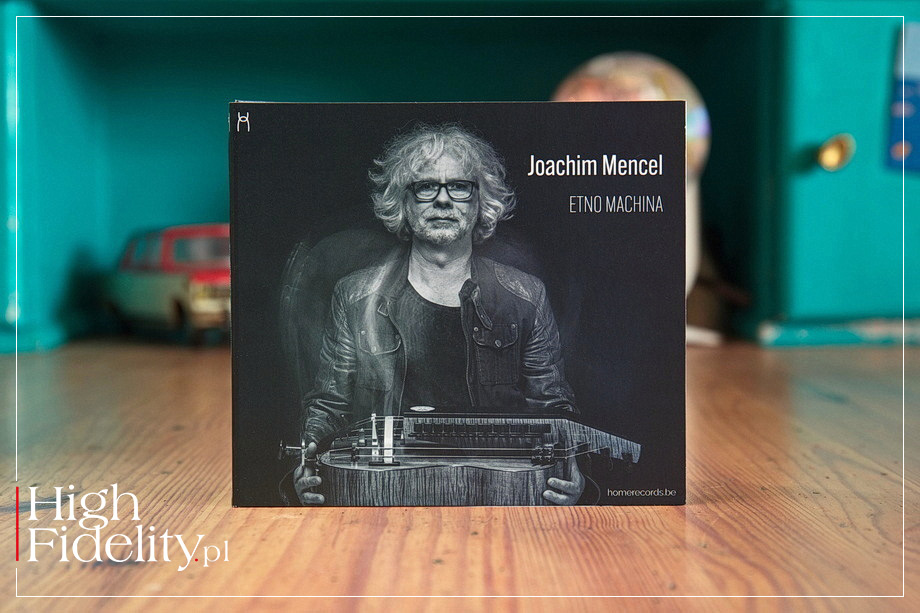
WHEN INTRODUCING JOACHIM MENTZEL in my review of the Brooklyn Eye album, I wrote that he plays the piano and the hurdy-gurdy, adding: “an exotic instrument in jazz”; more → HERE ˻PL˺. Six years later, nothing has changed: neither the status of the hurdy-gurdy nor that of the musician himself. And yet… In this case, we’re talking about something completely different. On the new album Etno Machina, the instrument in question is its centerpiece, around which everything else revolves. Joachim Mencel, as we recall, is a pianist and composer. He is also a pioneer in performing contemporary jazz on the hurdy-gurdy. A graduate of the Jazz and Popular Music Department at the Academy of Music in Katowice, he also holds a professorship at the Academy of Music in Kraków. He has played in Janusz Muniak’s bands, recording the Contemplation album, on which you’ll find our magazine’s logo (more → HERE), as well as with Andrzej Cudzich, Nigel Kennedy, and Brad Terry. He has collaborated with Lee Konitz, Dino Saluzzi, Richard Galliano, Eddie Henderson, Charlie Mariano, Terry Clark, as well as Zbigniew Namysłowski and Jarosław Śmietana. He wrote and arranged songs for Ewa Bem (all songs on the Kakadu) album, Mieczysław Szcześniak, Anna Maria Jopek, and the bands such as New Life and El Greco. 
According to press materials, his latest album is “a synthesis of concepts realized through the expression conveyed by playing the hurdy-gurdy.” The material for the album was recorded in… Well, actually - we don’t have that information. What we do know, however, is that the mixing and mastering took place at the MAQ Records studio, and was handled by Mateusz Otremba. The session was recorded digitally using a DAW, using the classic contemporary method of overdubbing, that is, layer by layer. This was necessary because - and here’s the real surprise - “all the sounds that appear come exclusively from the hurdy-gurdy.” A lot of them are electronically processed. The album, which runs for 43 minutes and 45 seconds, contains twelve tracks. They were written, arranged, and the album was produced by the musician himself - it is a truly solo, original work. Usually, the absence of an external critic, such as a producer, is detrimental to the musical material. In this case, as listening to the album has shown, everything turned out perfectly. I see no other explanation than knowledge, experience, and self-discipline. And one more thing about the instrument - it was built by luthier Stanisław Nogaj. As he writes about himself, he is a continuator of the tradition begun by his master, Stanisław Wyżykowski, in 1967 (more → HERE). 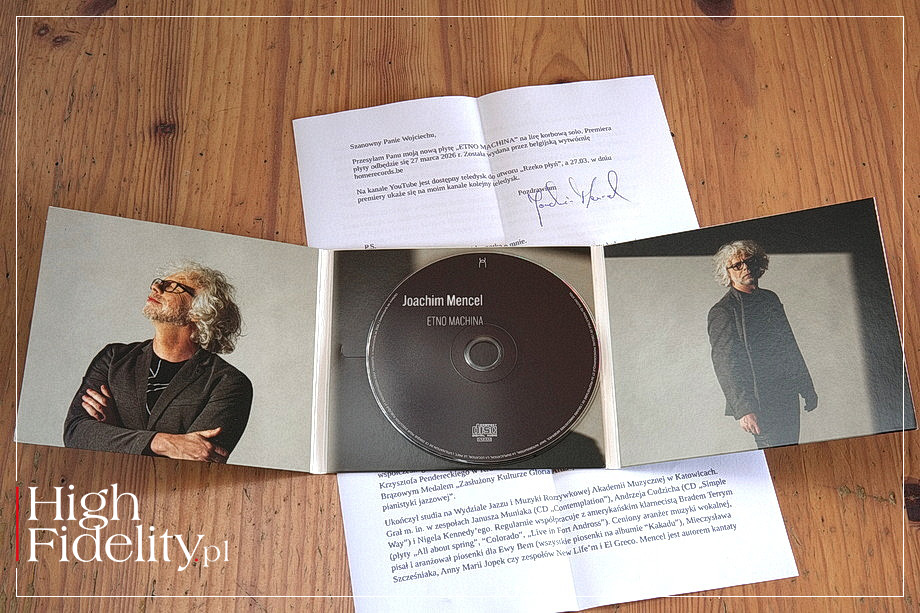
I found out that all the tracks on Joachim Menzel’s Etno Machina album were generated using a hurdy-gurdy after listening to the material several times. Yes, several times. When we hear “hurdy-gurdy” and “solo album” and put those two elements together, we might either get very excited - if we’re fans of this kind of sound and music - or immediately switch to something else. Let’s do neither. The album under review, has something special about it, which neither relegates traditional instruments to a niche nor makes it boring. Ah, how many colors there are here - dynamic, rich - and how many shifts in mood! It’s also a very carefully and attentively recorded and produced album that defies categorization, regardless of whether we approach it from the perspective of traditional, jazz, or electronic music. It’s a pleasure to listen to, and it’s also beautifully recorded. Dense internally yet very selective, it offers a wide and deep stereoscopic panorama. It possesses a certain quality that compels you not only to buy it but also to return to it from time to time. Not as a “break” from what we listen to every day, but as another album on our “favorites” shelf. ● » Sound quality: 9/10 → www.HOMERECORDS.beSIMILAR TO THE JULIE LONDON ALBUM, I perceived the sound in Oxygene 8 a track from one of my favorite albums by JEAN-MICHAEL JARRE, Oxygene 7-12. On the maxi-single I was playing, it comes in four mixes. The first of these, ˻ 1 ˺ Oxygene 8 (Club Mix), begins with low-frequency beats (thuds) in the stereoscopic panorama, which are immediately joined by a sound right in front of me - or rather, levitating slightly in front of and slightly above me. The Polish amplifier reproduced all of this richly and powerfully, powerfully and richly. I repeat this because it was energy-filled with information and vibrations, not empty “taps” or attack-enhanced bursts. What the M500 delivers - and not just in the mono version, which I’ll discuss in a moment - is high power; there’s no doubt about that. However, this power is under control. There’s a certain softness and warmth to it - exactly what I’m familiar with from amplifiers featuring 300B tubes in the output stage, and for which they are highly regarded. Thanks to its current-handling capabilities, the Jarre track was dynamic, even lively - it’s a club mix - yet still melodic, with deep, well-defined bass. 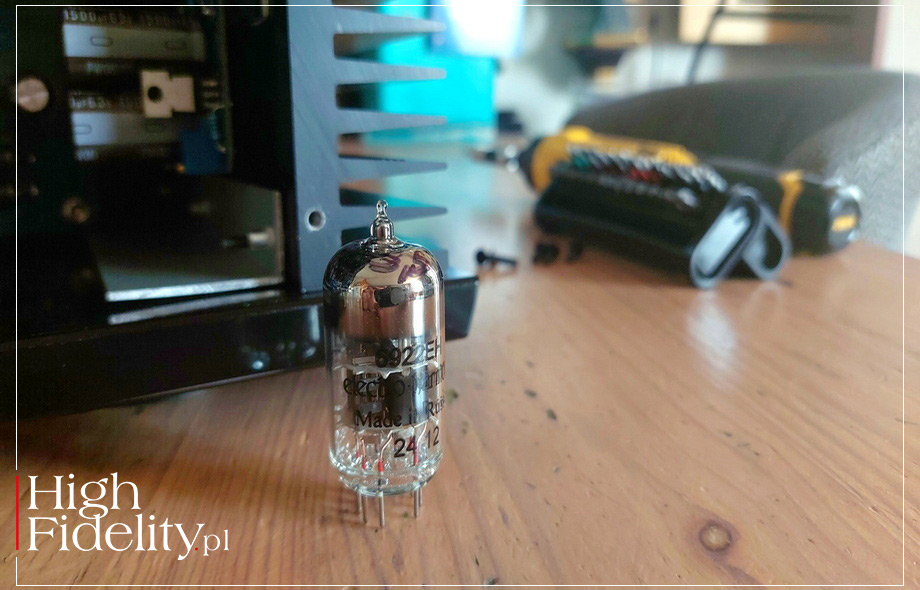
The subsequent tracks from THE CURE’s singles collection, titled Staring At The Sea, resonated with equal grace. There was Gothic melancholy in there, as well as echoes of the punk revolution - but there were also colors. And that’s what surprised me the most. That is, how wonderfully, how effectively the Circle Labs monoblocks enriched the color palette of these recordings. They do this perfectly, because they enrich with equal intensity what’s right in front of us, on the axis, in the foreground, as well as what’s further back - like that distinctive bass in ˻ 1 ˺ 10.15 Saturday Night. And when, at 2:15 and then 3:15, the electric guitar comes to the fore right in front of us - raw, almost jarring - it, too, has something theatrical, something of a performance about it. The Polish amplifier presents recordings precisely in this way - as carefully crafted performances. Their tone is dark, the dynamics are high, and the stereo image is natural. They are soft at their core, which makes them incredibly engaging and ideal for long listening sessions. The selectivity of these devices is also high, which creates a sense of immediacy and richness. Alongside their internal warmth, there is also excellent definition - something that, to return to my main point (though that’s just how it is), is more commonly associated with SET amplifiers than with solid-state ones. The differentiation is also exceptional. These are beautiful devices, which is why they present each recording in its own “decorum” - they don’t cram everything onto the same stage, dressed in the same costumes. Listening to MILES DAVIS right after that - from the first-ever SACD reissue of the Birth of the Cool album - the sound had excellent spatial definition; the soundstage was large, even expansive. And yet it was its depth that impressed me the most. The amplifiers effortlessly distinguished between what was close to me and what was placed farther away. The bright hits on the snare drum and timpani didn’t bring them closer to me, because the solo instruments were much closer. It was perfect. And then there’s that scale… The amplifiers deliver a lot of power, which is clearly audible. For example, in terms of ease and subtle details - those little nuances delivered in passing, without being emphasized. The bass is deep, soft, and very well controlled. The attack is more rounded than with my Soulution 710, but it’s along similar lines. The bright electronic percussion in PET SHOP BOYS’ ˻ 3 ˺ Twenty-Something had a bright character, and the vocals featured a distinct range of a few kHz. And yet it was cohesive and smooth, flowing, driving forward, and setting the rhythm. MONO vs STEREO • One of the functional and technical features of the M500 amplifiers is the ability to use them as stereo or monaural amplifiers. The above test focused on listening to the latter configuration, i.e., with two M500s in the system. Switching to the stereo version yielded interesting results. Generally speaking, the sound is identical to that produced by the monoblocks. It is expansive, dense, and rich in tonal color. There’s no showy bass slam here, as the bass is naturally soft yet nuanced. Nevertheless, the difference between these two setups is perfectly clear. This is primarily due to the difference in soundstaging. The stereo version places the sound farther away from us, particularly the foreground. This doesn’t make the soundstage any deeper; in fact, it’s even more pronounced with the monoblocks. It’s as if, with two M500s, we were viewing the action from a wider perspective. RóżniThe tonal character also differs, albeit to a lesser extent. It’s still rather warm and somewhat dark, but in the single-amp version, it is more open in the midrange. The upper frequencies, on the other hand, roll off more quickly, and it sounds as if everything becomes more three-dimensional. The monoblocks are more precise in rendering the physical presence of sounds and in conveying the dynamics of instruments. The overall dynamics, however, seem similar- which is a bit of a paradox. What the mono version offers can be summed up in one word: tangibility. With it, the sound is more resolving, making the instruments more “visible” and the musical events more distinct. Although the stereo version seems to sound clearer, it emphasizes the attack of the sound more strongly. It also defines the bass more clearly, which worked great with the aforementioned track by The Cure. ▒ Summary REGARDLESS OF the configuration in which we use these amplifiers, we’ll get a full-bodied, dense, and rich sound. A sound that’s lively and brimming with emotion - not for those who doze off while listening to music. It is a warm sound - no doubts about that. This warmth comes from within; we’re talking about nuance and selectivity, not coloration imposed from the outside. With two amplifiers in mono mode, we get something else that’s unique: absolute inner calm and a tangible sound. These two elements cause the mechanics of playback to be suspended, and we truly immerse ourselves in the music. The sound then surrounds us - in stereo mode, it’s right in front of us - and envelops us. It’s deep and rich in the bass, which also has excellent definition. And the soundstage is deeper in this configuration. 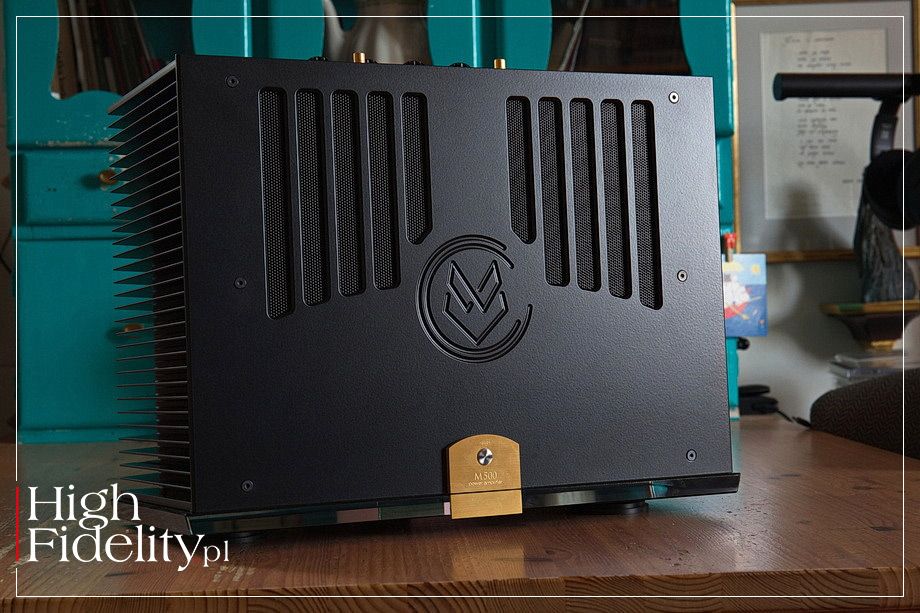
So it’s great that we can start with a stereo amplifier and then buy a second one to truly take our listening experience to the next level. Even a single amplifier, however, delivers more listening pleasure than almost any other amplifier in this price range. Congratulations! From us a fully deserved ˻ GOLD ‖ FINGERPRINT ˺, also for its incredible value for the money. ‖ WP 
▒ Technical specifications (according to the manufacturer)
Nominal output: 
THIS TEST HAS BEEN DESIGNED ACCORDING TO THE GUIDELINES adopted by the Association of International Audiophile Publications, an international audio press association concerned with ethical and professional standards in our industry, of which HIGH FIDELITY is a founding member. More about the association and its constituent titles → HERE. |
 |

|
Reference system 2026 |
|
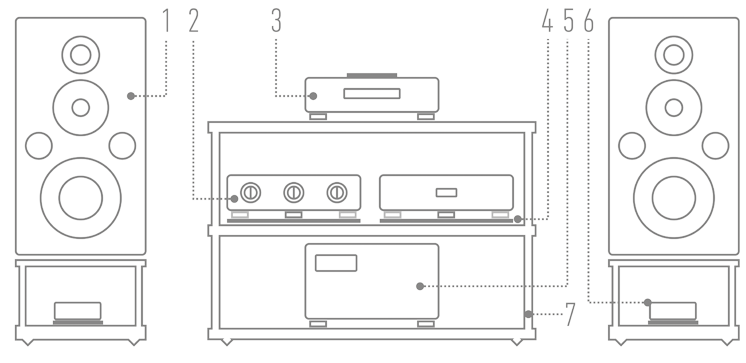 1) Loudspeakers: HARBETH M40.1 |REVIEW| 2) Line preamplifier: AYON AUDIO Spheris III Linestage |REVIEW| 3) Super Audio CD Player: AYON AUDIO CD-35 HF Edition No. 01/50 |REVIEW| 4) Stands (loudspeakers): ACOUSTIC REVIVE (custom) |ABOUT| 5) Power amplifier: SOULUTION 710 6) Loudspeaker filter: SPEC REAL-SOUND PROCESSOR RSP-AZ9EX (prototype) |REVIEW| 7) Hi-Fi rack: Hi-Fi rack: finite elemente MASTER REFERENCE PAGODE EDITION Mk II, more → HERE |
|

|
Cables Analog interconnect SACD Player - Line preamplifier: SILTECH Triple Crown (1 m) |ABOUT|» ANALOG INTERCONNECT Line preamplifier → Power amplifier: Siltech ROYAL SINLGE CROWN RCA; review → HERE Speaker cable: SILTECH Triple Crown (2.5 m) |ABOUT| |

|
AC Power Power cable | Mains Power Distribution Block - SACD Player: SILTECH Triple CrownPower (2 m) |ARTICLE| » POWER CABLE Mains Power Distribution Block → Line preamplifier: Acoustic Revive ABSOLUTE-POWER CORD, review → HERE » POWER CABLE Mains Power Distribution Block → Power amplifier: Acoustic Revive ABSOLUTE-POWER CORD, review → HERE Power cable | Power Receptacle - Mains Power Distribution Block: ACROLINK Mexcel 7N-PC9500 (2 m) |ARTICLE| Power Receptacle: Acoustic Revive RTP-4eu ULTIMATE |REVIEW| » ANTI-VIBRATION PLATFORM under Acoustic Revive RTP-4eu ULTIMATE: Graphite Audio CLASSIC 100 ULTRA, review → HERE Power Supply Conditioner: Acoustic Revive RPC-1 |REVIEW| Power Supply Conditioner: Acoustic Revive RAS-14 Triple-C |REVIEW| Passive filter EMI/RFI: VERICTUM Block |REVIEW| |

|
Anti-vibration Speaker stands: ACOUSTIC REVIVE (custom)Hi-Fi rack: finite elemente MASTER REFERENCE PAGODE EDITION Mk II, more → HERE Anti-vibration platforms: ACOUSTIC REVIVE RAF-48H |ARTICLE| » ANTI-VIBRATIONAL FEET: |

|
Analogue Phono preamplifier: Phono cartridges:
Clamp: PATHE WINGS Titanium PW-Ti 770 | Limited Edition Record mats:
|

|
Headphones » HEADPHONE AMPLIFIER: Leben CS-600X, review → HEREHeadphones: Headphone Cables: Forza AudioWorks NOIR HYBRID HPC |