

|
KRAKOW SONIC SOCIETY GEORHE MCHAEL
Faith is George Michael’s debut solo album, released in 1987. The album, featuring hits such as Father Figure and Monkey, cemented his status as a solo artist, selling over 25 million copies and winning numerous awards, including a Grammy. Its latest reissue was released on February 20. |

 |
 |
 |
|
KSS
witnessed and wrote down WOJCIECH PACUŁA |
|
No 264 May 1, 2026 |
GEORGE MICHAEL’S ALBUM «FAITH» was released in the United States on October 30, 1987, and in the United Kingdom on November 2, 1987. It featured pop music with R&B influences, funk, and soul, and, along with two other albums, released one month after another, Michael Jackson’s Bad (Epic Records, August 31) and Depeche Mode’s Music For The Masses (Mute, September 28), marked the end of an era in 1980s music. 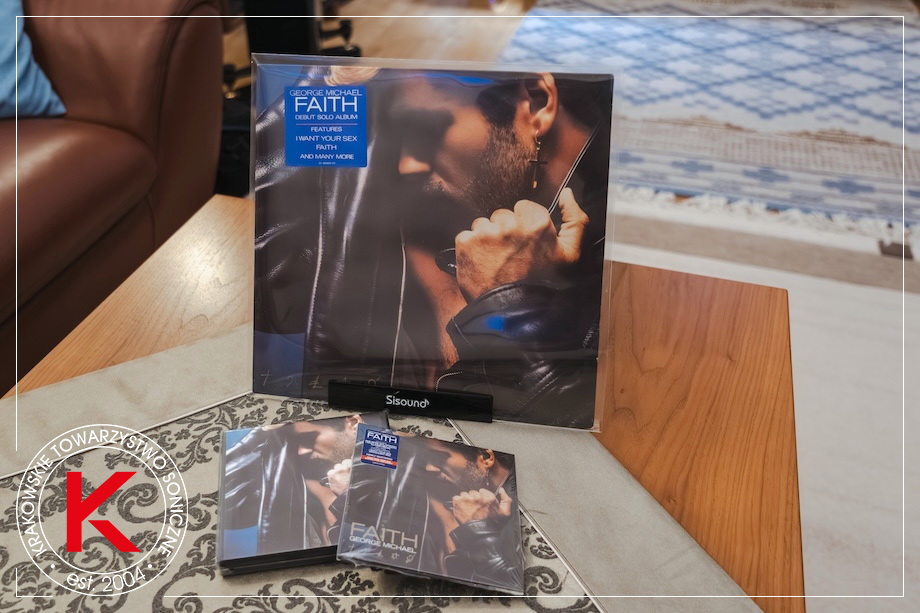
It was symbolic that all three of the aforementioned albums were recorded using Mitsubishi X-850 reel-to-reel digital tape recorders, which also marked the final stage of this technology’s dominance in large-scale studio music; more → HERE. Just around the corner, computer-based recording systems like RADAR and ProTools, as well as the ADAT tape recorder, were already lurking, revolutionizing the way music was recorded and democratizing the process; more → HERE. ▓ Recording PEOPLE REFER TO Faith as a “debut album,” even though the artist had already had a six-year career behind him as part of Wham!, which had catapulted him into the commercial stratosphere. Wham!, as a reminder, was a pop duo active from 1981 to 1986. It was founded by George Michael and Andrew Ridgeley and quickly became one of the most popular acts of the 1980s, selling 20 million albums thanks to hits such as Last Christmas, Wake Me Up Before You Go-Go, and Careless Whisper. And yet it was Faith that marked Georgios Kyriakos Panayiotou’s (Greek: Γεώργιος Κυριάκος Παναγιώτου), the child of Cypriot immigrants, first - as he often emphasized - “true” entry into the world of music. Although he had already written most of the songs during the Wham! era and co-produced the duo’s albums, it was only on this album that he was able to bring all his ideas to fruition. 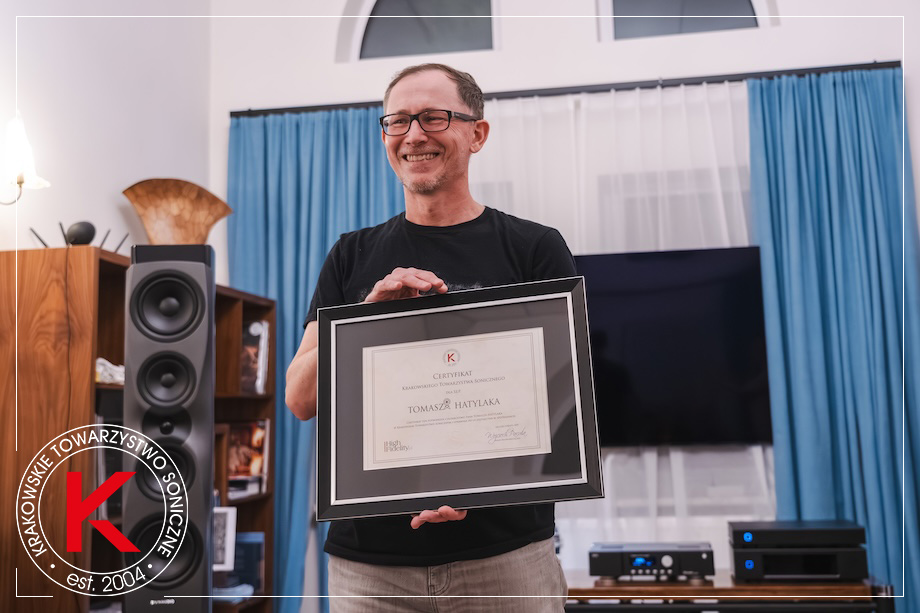
It was also the moment when his perfectionism truly came to fruition. In addition to playing various instruments on this album, Michael wrote and produced all the tracks except for one, Look at Your Hands, which was co-written by David Austin. He enlisted the help of friends from his duo days, as well as new, outstanding talents. To understand the significance of this release, let’s recall John Altman, who arranged the jazz track Kissing A Fool that closes the album. This track was released by Columbia Records in November 1988 as the seventh and final single from Faith. Altman, who was asked to “take it on”, is known for having arranged the song Always Look on the Bright Side of Life for the Monty Python film Life of Brian in 1978. He also arranged and produced the Oscar-nominated score for James Cameron’s film Titanic, and in 2020, he arranged and conducted part of Hans Zimmer’s soundtrack for the James Bond film No Time to Die. It is thanks to him that Björk’s track Os so quite sounds the way it does. As a fun fact, let’s add that John Altman’s cousin, Simon Phillips, was the drummer for Toto for many years and also played with Judas Priest, Brian Eno, and Jeff Beck. 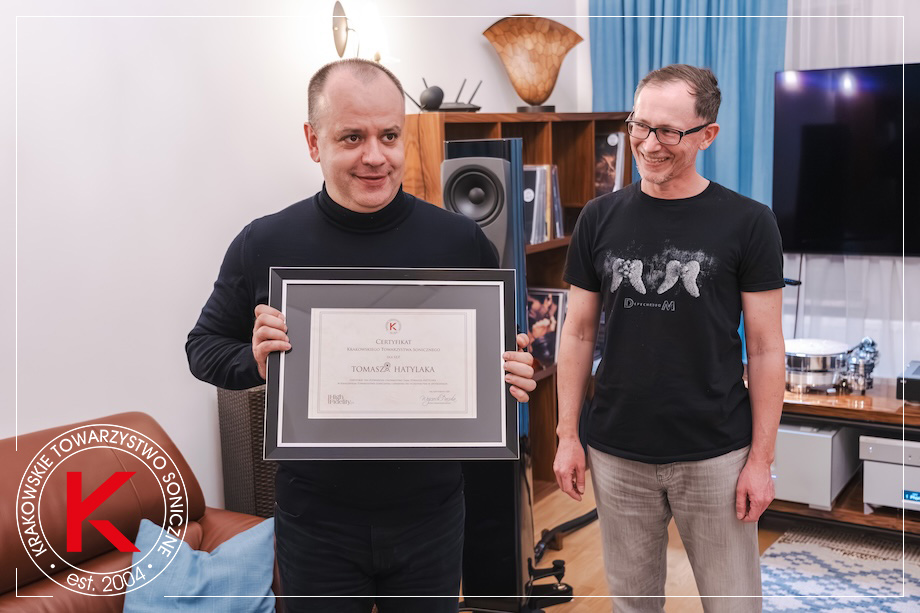
George Michael recorded his debut album in two studios: SARM West in London and Puk Recording Studios in Denmark. SARM West Studios was founded by producer Trevor Horn (SARM – Sound and Recorded Mobile). Artists who recorded there include Tina Turner, Frankie Goes to Hollywood, Tom Jones, Paul McCartney, Seal, Propaganda, Grace Jones, ABC, Lisa Stansfield, Pet Shop Boys, Mike Oldfield, Marc Almond, Genesis, and t.A.T.u. Also, the super-group Band Aid recorded their 1984 charity single Do They Know It's Christmas?, Queen recorded parts of the tracks from the albums News of the World, Seal recorded most of his albums there; and Bob Marley & The Wailers laid down tracks for the albums Exodus. Most of the live instruments and guest vocals for Michael’s album were recorded there. And it would have been another big-budget album were it not for the musician’s perfectionism, which has already been mentioned. He needed the live instruments mainly to set the direction. He didn’t want the musicians’ individual styles to come through on the record because he had other plans. Once he had the tracks recorded, he moved to Puk Studio, located in the middle of “nowhere,” as the musicians describe it. Founded in the late 1970s by John “Puk” Quist, it was located in the countryside near the village of Gjerlev, not far from Randers in North Jutland. The studio, founded in the late 1970s , was a superbly equipped facility, featuring a very large control room - where Michael recorded most of the bass and drum tracks - and a studio whose floor was higher than the control room. Artists such as Judas Priest, Depeche Mode, Elton John, Gary Moore, and George Michael recorded there. The latter used it as another instrument. The album Faith was literally constructed there from tracks, fragments of tracks, samples, and details. This was possible because tracks could be transferred without adding noise or distortion; this was the main reason for the creation of the first digital recorders. Editing could also be done quickly and precisely. He invited outstanding session musicians, and then recorded his own tracks over most of theirs - played on synthesizers, sequencers, and a LinnDrum drum machine. Only in this way, as he said, could he achieve the sound he was aiming for. His perfectionism manifested itself, for example, in correcting words, syllables, and even individual sounds in material that had already been recorded. Digital technology - the aforementioned Mitsubishi tape recorder - made this possible. He asked for a tape recorder controller to be installed in the recording studio and made the corrections himself. ▓ The release GEORGE MICHAEL’S ALBUM was released on LP, which was still the “go-to” format at the time. Interestingly, it was in 1987 that CD sales caught up with vinyl sales, and this trend would not reverse until 2022, when vinyl sales in the U.S. once again surpassed CD sales (41 million vinyl records vs. 33 million CDs). As we mentioned, the album was recorded on digital tape recorders, two Mitsubishi X-850 units. These were large reel-to-reel tape recorders with fixed heads, offering 32 tracks with a signal resolution of 16 bits and 44.1 or 48 kHz. The set included a stereo mastering tape recorder, the X-80, followed by the X-86 - the latter with the same signal specifications. Using this setup, along with an analog mixing console, the two albums mentioned at the beginning were recorded: Bad and Music for the Masses. The material was often subsequently mastered and recorded onto a Sony PCM-1600 digital tape recorder. 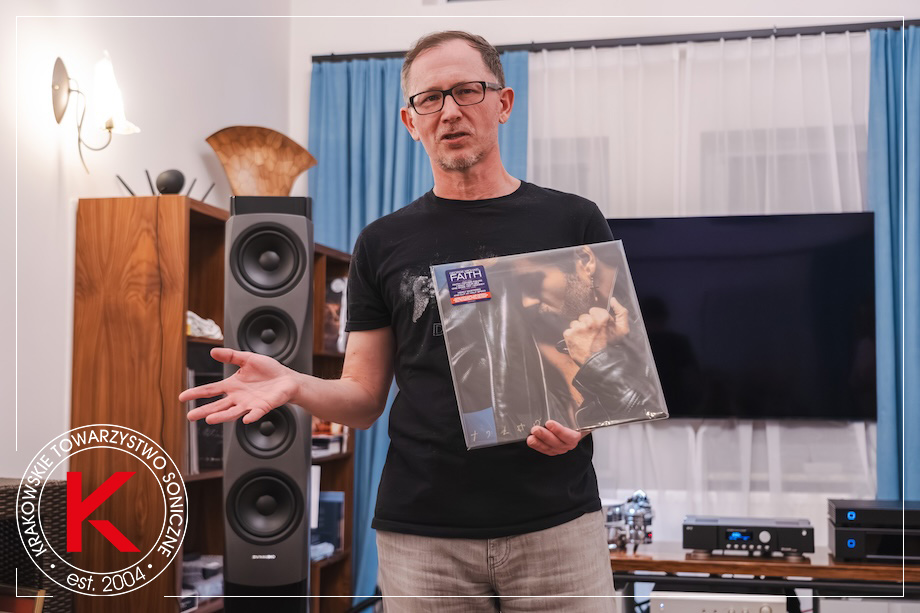
In the case of Faith, we do not know which mastering tape recorder was used - analog or digital. There is no information available on this. The latest reissue of this album is based on the 2010 remaster by Matt Colton. It was a digital remaster, likely 24/96. The signal was therefore likely transferred from an analog (or digital) tape, digitized, and processed. The vinyl was thus produced using files played back from a DAW. The reissue was created with the participation of George Michael, and its goal was - as reported at the time - to “preserve the dynamics of the original digital recording.” The lacquers for the LPs in the new reissue - separate single and double versions - were cut at Abbey Road Studios by John Webber using the half-speed technique. The records were pressed on double black vinyl, double red (speckled), single black, and picture disc; there is also an exclusive, numbered (3,000 copies) version on white speckled vinyl and- take note - a High Fidelity Pure Audio Blu-ray with Dolby Atmos and stereo. And, of course, a CD. ▲ Bio-winyl ONE OF THE FEATURES of the new reissues of Faith is that this is not the vinyl we are familiar with, but a variant called bio-vinyl. It is an eco-friendly alternative to traditional PVC, produced from renewable raw materials such as biomass, plant waste, or used cooking oil, rather than petroleum. It reduces carbon dioxide emissions by approximately 38%. The pressing plants assure us that it retains “the durability and sound quality identical to standard vinyl records.” (more → HERE). 
Unlike so-called eco-vinyl, which is often simply made from recycled scraps of old PVC, bio-vinyl is based on replacing fossil-based ethylene with plant-derived bio-ethylene and using chlorine sourced from seawater. It holds ISCC PLUS (International Sustainability & Carbon Certification) certification, which guarantees traceability and supply chain accountability. Bio-vinyl has been adopted by major record pressing plants, including Record Industry and Optimal Media, as their material of choice. ● ▓ SOUND THE AGENDA FOR THIS MEETING was extensive and varied. The first item - the induction of a new member into the Krakow Sonic Society - went smoothly, with smiles all around: Tomek Hatylak, radio journalist, received certificate No. 29. The second item, namely listening to the original album release and comparing it with three new versions and the 1988 Polish edition, seemed equally easy and enjoyable. As usual, things didn’t go the way I had planned. They turned out - as it turned out - much better. I conceived this meeting as an opportunity for a longer listening session and comparison - it was supposed to be everything we love about audio. And in the next part, I wanted to take a look, together with the participants, at other albums recorded on Mitsubishi tape recorders. There were the aforementioned albums by Jackson and Depeche Mode, then The Modern Jazz Quartet and Reunion At Budokan (Atlantic, Pablo, 1981), Joe Henderson’s State Of The Tenor: Live At The Village Vanguard, Volume 2 (Blue Note, 1985), and finally, Patricia Barber’s Café Blue (Premonition, 1994). 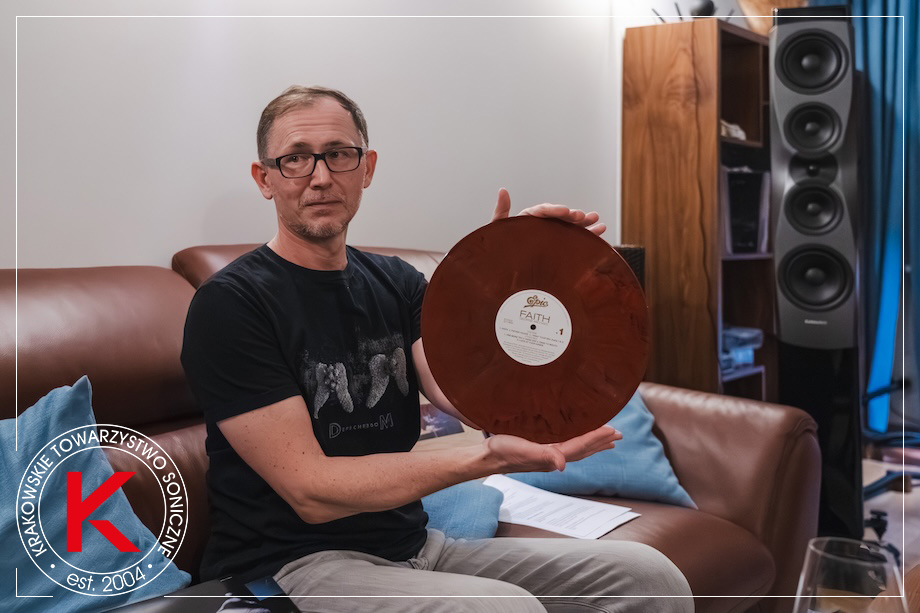
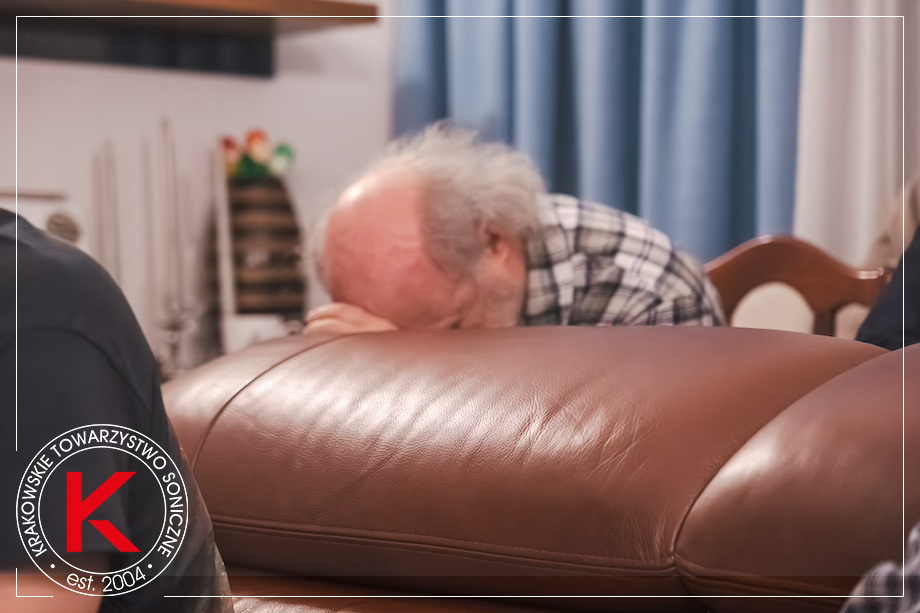
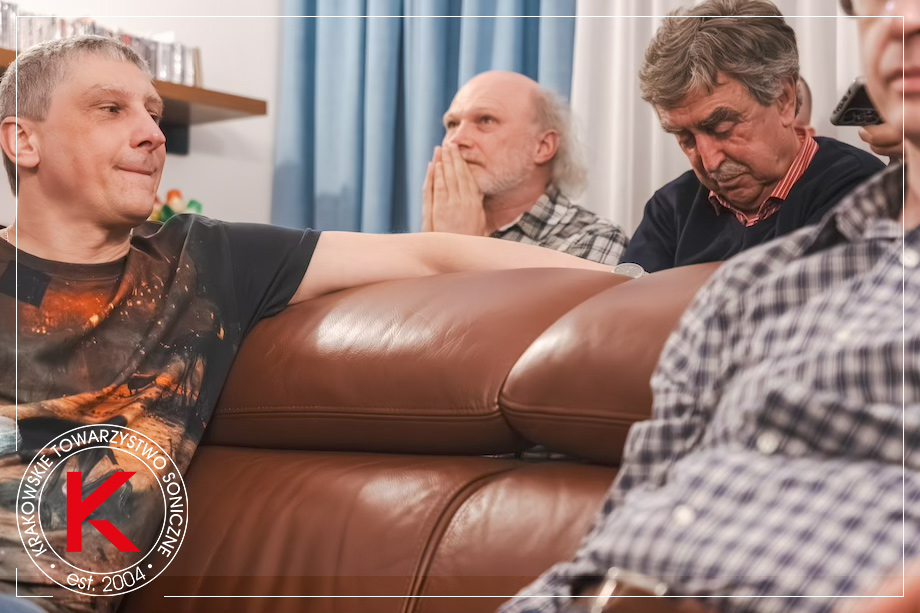
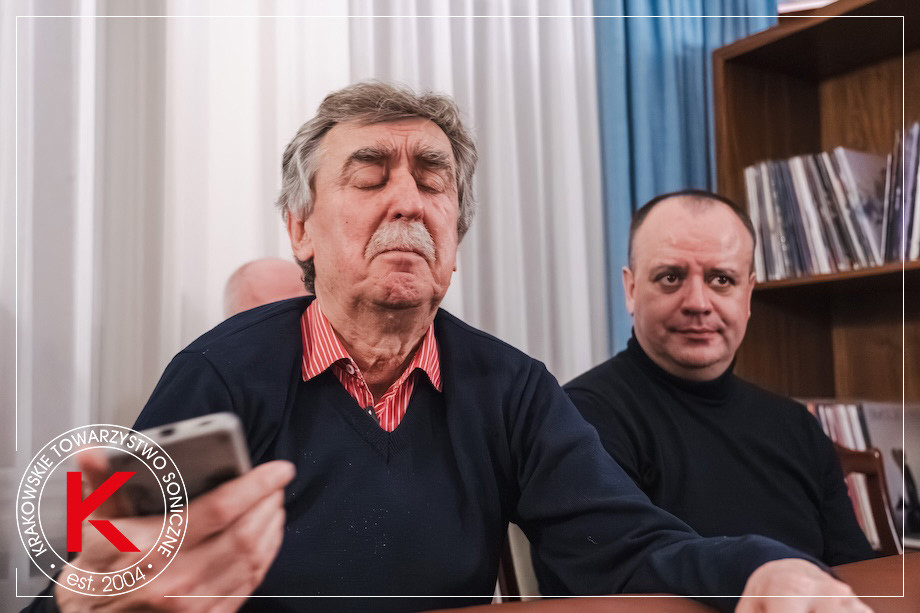
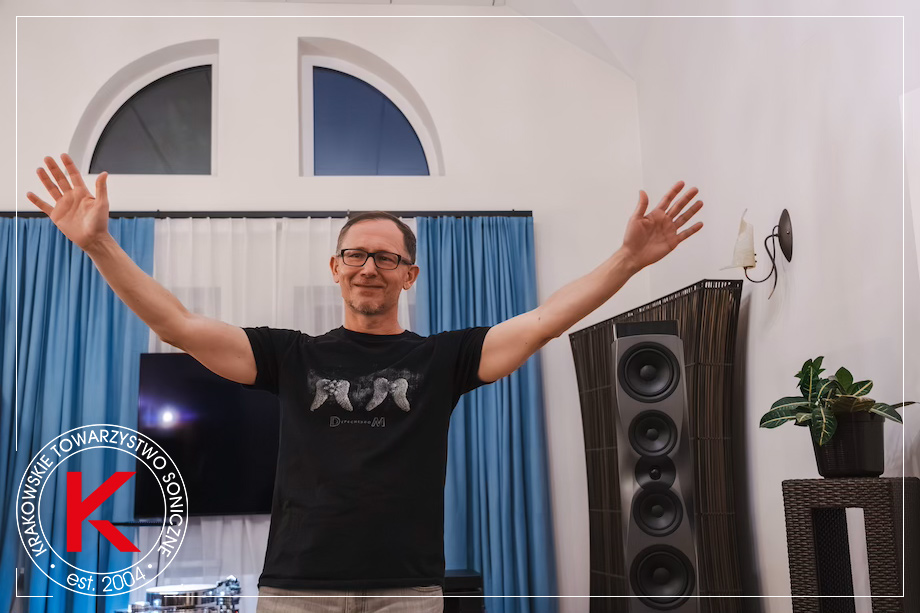
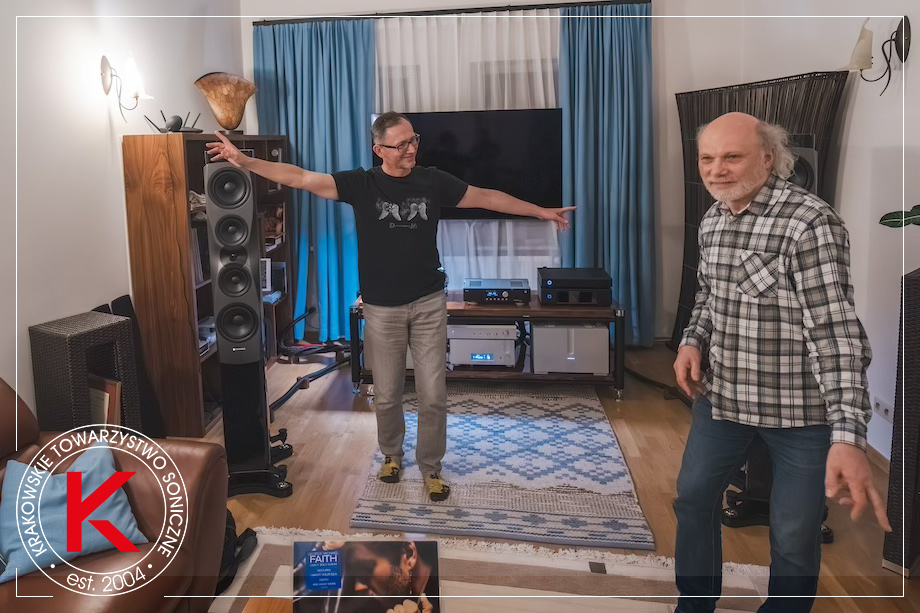
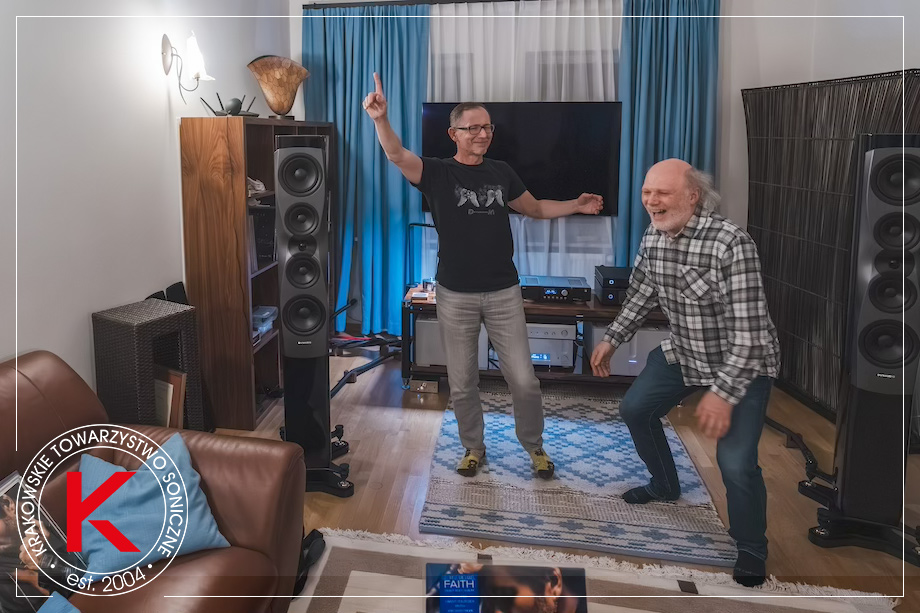
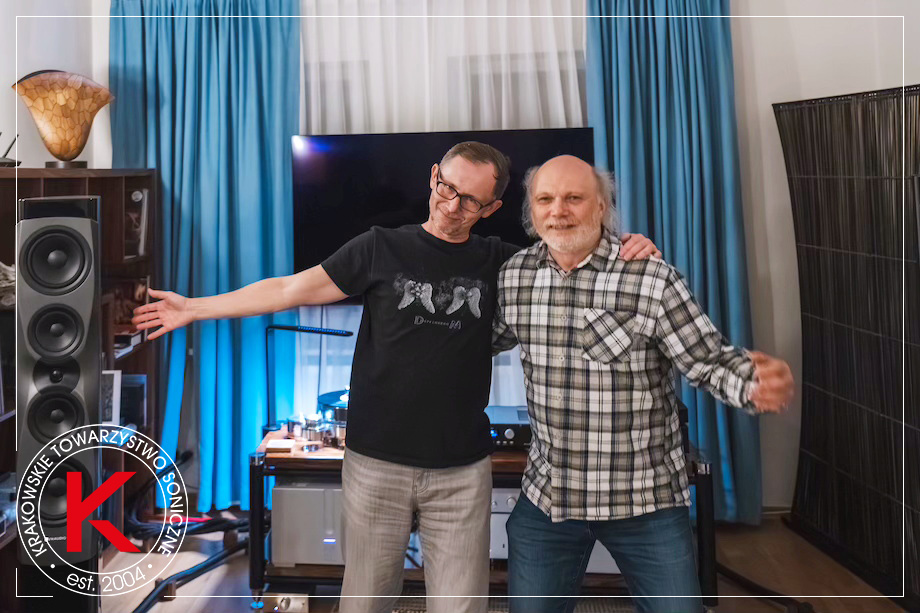
My plans fell apart right after the initial phase - that is, after listening to Side A of the original release of the Faith. They fell apart because it stirred up so many emotions and sparked such heated discussions that we could have kept talking until midnight. So at some point, I had to wrap up that part and move on to comparing the tracks from Side B - the original release (this time the “Not for sale” copy for radio DJs) versus the double album on black vinyl, and then on double colored vinyl. We didn’t have time for anything else. We really got into it as time went on, and during the meeting there was dancing, singing, praying, and wringing of hands (a record of this part in the gallery). And trampling on the sacredness that this album represents for a few other participants and me. But that’s what music is all about - emotions. I ‖ ORIGINAL RELEASE TOMEK HATYLAK ⸜ Radio 357, KSS • I’m jumping right in with my response, my friends, because this is an album that’s incredibly emotionally and intellectually significant to me. And for perhaps the first time, I feel like I’m really there on the same level with the rest of you, because we’re talking about music that I know, love, and listen to for more than just the sound. So I look at what it does to you here and now and think to myself: this is beautiful music and it’s a joy to listen to. I don’t know what lies ahead, because I’ve only heard the new remaster on CD, even though I own the original vinyl. However, I get the impression that here, with the first release, you can hear the shortcomings of the ’80s, and that what these remasters will bring out - I promise you - is much more detail, warmth, and R&B power. My second thought is that there is one fundamental difference between Father Figure and One More Try - the synthetic and lively bass. If I had to say which album is so well-composed that from “side one, track one” - as Piotr Kaczkowski used to say - all the way to the very last note, it sounds perfect; it would probably be Faith as the first album in the history of pop music. Period. 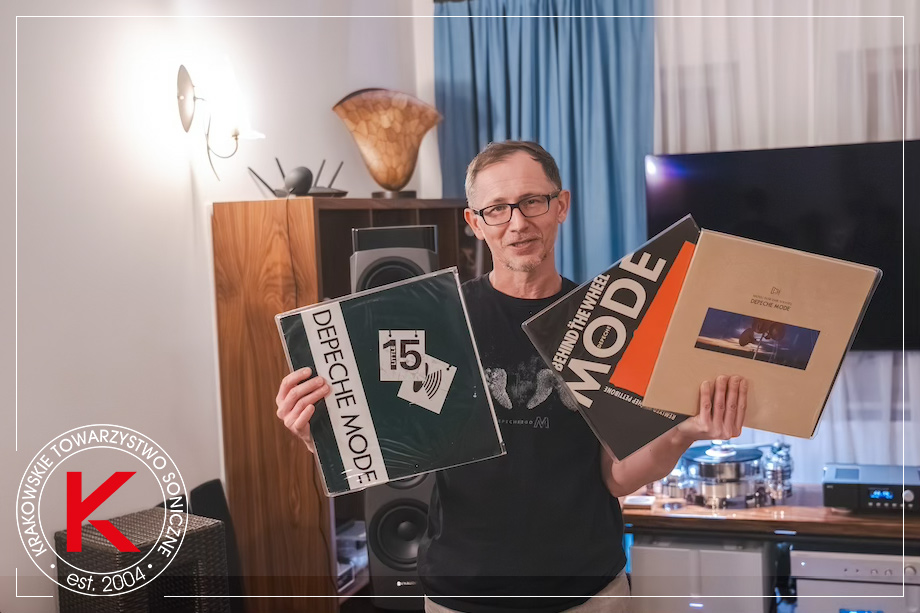
RYSIEK B. ⸜ KSS • As for me, I haven’t rushed to be the first at all, because it made me feel sad. These are memories of my youth, and I really regret that those forty years have passed; it’s gotten me a little down. The second thing is the sound - it reminds me of Jarek Śmietana’s recordings at Radio Kraków. To me, that’s synonymous with a failed approach to recording. I see a perfect analogy here. I have to say that it’s been a long time since I’ve heard such a flatly produced recording. Maybe my imagination is somewhere else entirely now, which is why I’m disappointed. It’s obvious - this is a clean, rhythmic, and musical album, but my soul doesn’t sing along with this music. Maybe it’s because so many years have passed and it just doesn’t “do it” for me anymore. I didn’t like what I heard... JAREK WASZCZYSZYN ⸜ Ancient Audio, KSS • I guess I should wait and talk last so I don't spoil the fun for you. TOMEK FOLTA ⸜ TF Audio Consulting, KSS • Jarek, no matter what you say, you can't ruin anything - I had a great time. JAREK • Oh, that’s good, because I was already worried… I was worried because, in my opinion it’s a disaster when it comes to sound. The first issue is how flat this album sounds, and its lack of expression and emotion. Which reminds me of a strip club where the coat check girls come out on stage, waving their bras around and shouting SEX! SEX! SEX! And the guys in the room ask: BUT WHERE? BUT WHERE? BUT WHERE? Perhaps this is a result of how the album was recorded. If you overwork the material, add more sections, delete half of it, and piece it together like that, something disappears - one of the most beautiful aspects of music: the dialogue between musicians. Good musicians fuel each other. WOJCIECH PACUŁA • I have to interrupt you, Jarek, before we go any further: the albums you’re talking about - they don’t exist; it’s just your imagination and wishful thinking. There are no rock, pop, or electronic music recordings that were made the way you’re describing. This kind of music is constructed in the studio. It’s very rare for two musicians to play together, let alone three, and as for vocals - forget about it. What you’re talking about is energy; it’s the result of good production, not a “dialogue between musicians.” Even the greatest Blue Note albums are the result of multiple edits. RYSIEK B. • And you can tell - Blue Note sounds terrible! It’s a disaster. The real music is on the Verve albums. WOJCIECH PACUŁA • Verve is no different from Blue Note when it comes to editing; in fact, they may have even intervened more heavily in the recorded material. RYSIEK B. • But that's real music, not what's on BN, come on, guys… TOMEK FOLTA • So you think both Michael and Blue Note are trash? What do you listen to, then? RYSIEK B. • I only listen to good music; this isn't it. JAREK • It doesn’t matter how it’s done; what counts is the result. You can piece together music from fragments and achieve a good result - but that’s not the case here. We listened to Michael Jackson in the same room, though on a slightly different system, and it sounded fantastic. And Thriller is a heavily produced album! Today’s listening session, on the other hand, is a total disaster. This music has no rhythm, no space - it simply lacks emotion. RYSIEK B. • I completely agree with you, Jarek - I was thinking about the disco at the Perspektywy Club at AGH. JAREK • Exactly - Jackson’s albums were produced much better. Or, when I play a track like I Feel Love by George Moroder, which he wrote for Donna Summer, no matter what I’m listening to it on, it gives me goosebumps. 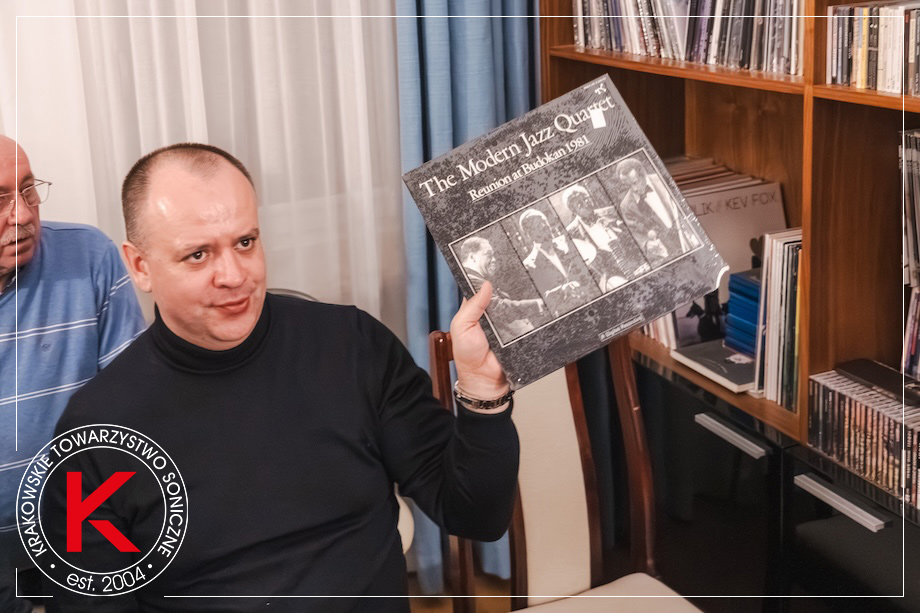
TOMEK HATYLAK • I don't know what the organizers of this event had in mind, but - in my opinion - what matters is what they've done with it now. It's pretty obvious that this isn't the best-produced album. WOJCIECH PACUŁA + TOMEK L. ⸜ KSS + cohortes • (in unison) Nooo, it's not like that (each person added something about how awesome or fantastic it was, etc. – with all the voices speaking at once, it was hard to make out exactly who said what). JAREK • I'm currently playing around with a modern replica of a Moog synthesizer. TOMEK L. • Well, we’ve had our discussion - let’s roll the: “Half an hour later…” JAREK • Buddy, the bass from this device, when listened to on headphones, is incredibly better than what you hear here. It just doesn't click for me, like Bolek and Lolek, or Żwirko and Muchomorek… |
JANUSZ TUCHOWSKI AudioEmotions ⸜ KSS • I’ve been listening to you guys for two years now, a knight number - I don’t remember… But let’s get to the point. I just wanted to point out that the guy spent over a year recording this album. He spent all that time in the studio tinkering away. It was all polished to perfection. There’s a track on this album Kissing to the Fool, where he recorded the vocals in one take - it’s unbelievable to spend a year recording an album and then record the vocals for an entire song in one go. Michael was simply a genius. I grew up during those times, and this album, along with Madonna’s True Blue, were the first two vinyl records I ever bought. I listened to them on an Artur Unitra turntable. And from the very first listen, Faith sounded bright to me. So I’m surprised by this mix here because here it sounds very dark. Besides - and I agree with Wojtek - in terms of production and execution, this is, in my opinion, a sensational album. I don’t really understand how anyone could not like it… Note that most of the tracks feature electronic drums, and that might be a bit tiring. WICIU ⸜ KSS • This is the first time I've heard this album, even though I have thousands of them at home. Huge applause and cheers… WICIU • I’ve never been a huge fan of George Michael, so I only know these songs from the radio - and even then, I’d just tune in casually. This is the first time I’ve listened to him on a high-quality system, and I’ve really focused on his vocals. I have to admit that he was phenomenal, simply a phenomenal singer. And incredibly soulful. I like his phrasing and his ease. 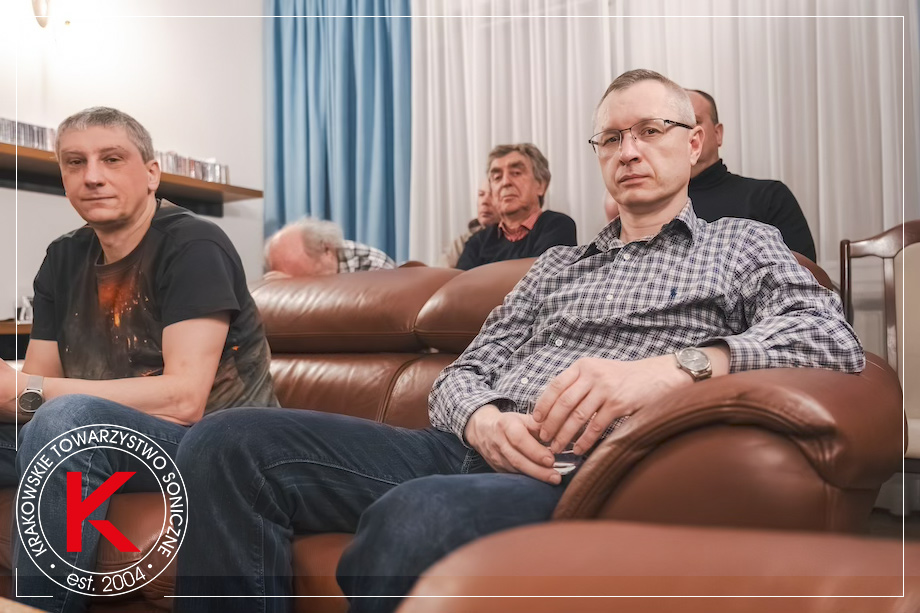
It seems to me that the individual tracks were recorded in different ways, so the album is diverse, and the sound varies, depending on the track. I didn’t like Faith because of the excessive bass. Where I’m sitting, there was too much bass. It was overpowering, and I wondered if something was “off” with my system or if it was a problem with the album. But musically, it’s great; I’m going to buy it. TOMEK L. • I prepared for this meeting by listening to the Blu-spec 2 version of this album before arriving. So I expected that listening to the original pressing would blow me away and that it would be a real treat. But what I got was a dull, flat sound. I’m a bit disappointed. On my system, this album sounds more spacious, with a more intimate vocal. However, you can tell it was recorded in different ways, with vocals sometimes closer and sometimes farther away. But I’m waiting for the remaster, because I’d like to hear how it sounds on that. The vinyl has already shown a wider soundstage and more depth than my CD. So the reissue should sound even better. Unfortunately, the first edition fell flat and didn’t draw us into the story this album tells. There’s a lot of emotion in this music, especially when we know Michael’s story. And it was there, but I didn’t really like it in this particular version. It seemed castrated. MARCIN B. ⸜ KSS • I agree 100% with Tomek. I also have the BSCD2 CD version, which sounds completely different from this one. I was expecting something special, a real show, and it wasn’t there. Compared to the CD, this vinyl sounded as if its glory days were behind it and it had been played hundreds of times. That’s how DJ records sound - and I have quite a few of them. You can tell right away which tracks were the hits because when you play a maxi-single with a hit song, the sound is “worn out.” The bass is hard to listen to, etc. Musically, it’s great; it’s one of my favorite albums. TOMEK L. • How about you Tomek, did you like it? – After all, it is your system… TOMEK FOLTA • Yes, I have to say that I really enjoyed it. And what I liked most was that we listened to a lot of music without interruption, and that’s fantastic to me. I hope we can do this more often… As for the sound, I was delighted. I know how my turntable sounds - it’s bass-heavy and overdriven - and that’s how it’ll always sound in this room. I had a fantastic time listening to the first side of Faith with you guys here, because first pressings have a certain magic to them. It’s always a listening experience through the lens of the era the music comes from. And even the best reissues can’t replicate that. To me, it’s a phenomenon. When I started collecting records again, most of them were reissues. But holding a piece of history in your hands is magic. 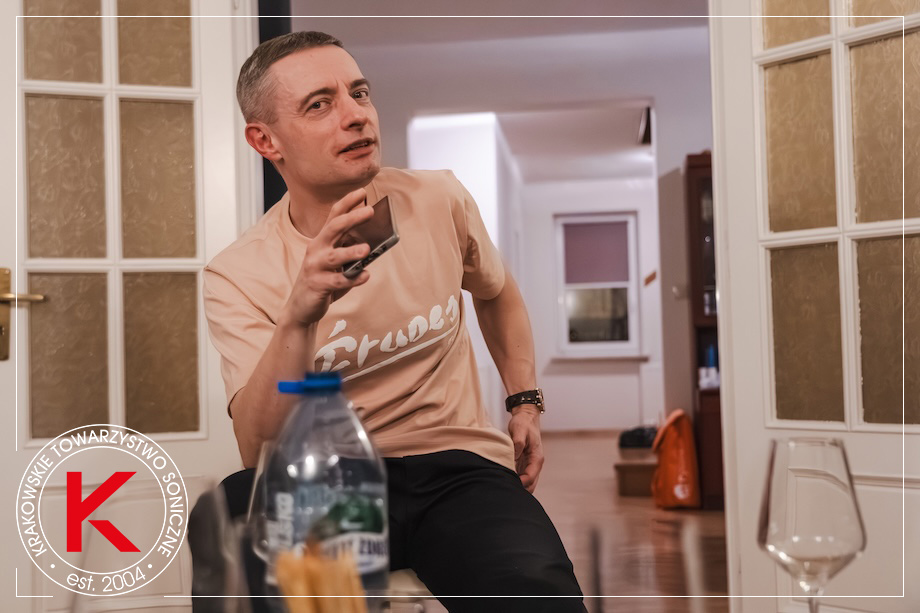
TOMEK L. • It’s true that the first pressing is an experience and you have to approach it differently. My brief foray into vinyl showed me that while releases from Mobile Fidelity or Analogue Productions sounded great, only the first pressings had the airiness and dynamics that I liked. WOJCIECH PACUŁA • I get a thrill out of this album every time I listen to it, because I bought the Polish version in 1988, right after Polskie Nagrania released it here. It’s burned into my memory. I consider George Michael a visionary, and the way he crafted this album is, to me, a kind of flash of genius. It’s an important album to me. Along with Bad and Music for the Masses. I also enjoyed this playback. I consider this album to be exceptionally well-produced piece of pop music. In this room, it didn’t sound as good as it did previously when listening to Crystal Disc albums. In my opinion, the new amplifiers in this system are asking the speakers to do something they can’t, as if they’ve hit a wall. That’s why the album sounds bass-heavy. I’m familiar with it from various rooms, because back in the day, while traveling around Poland with my Pylon Jade 20 HF Edition speakers, I played it in many audio showrooms. For me, it was always a demonstration of the capabilities of the Mitsubishi X-850 tape deck, which today would cost around $650,000, and there were usually two of them in the studio. I think that’s what you could hear here - for me, it was, after all, ultra-vivid sound. TOMEK L. + RYSIEK B. • Come on, what are you talking about? There wasn't any space at all... TOMEK FOLTA • Come on, don't overthink it - this isn't jazz or classical music, and this particular music has a very vivid and spacious sound. WOJCIECH PACUŁA • This tape recorder doesn't sound bright, and if something does sound bright, it's an artistic choice. TOMEK HATYLAK. • I think there’s a strong consistency between the ballads on this LP and those on the subsequent ones, mainly Older. TOMEK HATYLAK. • I think there’s a strong consistency between the ballads on this LP and those on the subsequent ones, mainly Older. II ‖ ORIGINAL vs DOUBLE LP (black) TOMEK L. • A comparison of the first edition and the new one showed the superiority of this new version. George sounds more seductive and is easier to hear. TOMEK FOLTA • We didn’t know there would be a coming out :) TOMEK L. • laughing The bass is a little better, but it still overpowers the vocals. Still, good job - it’s a really good version. 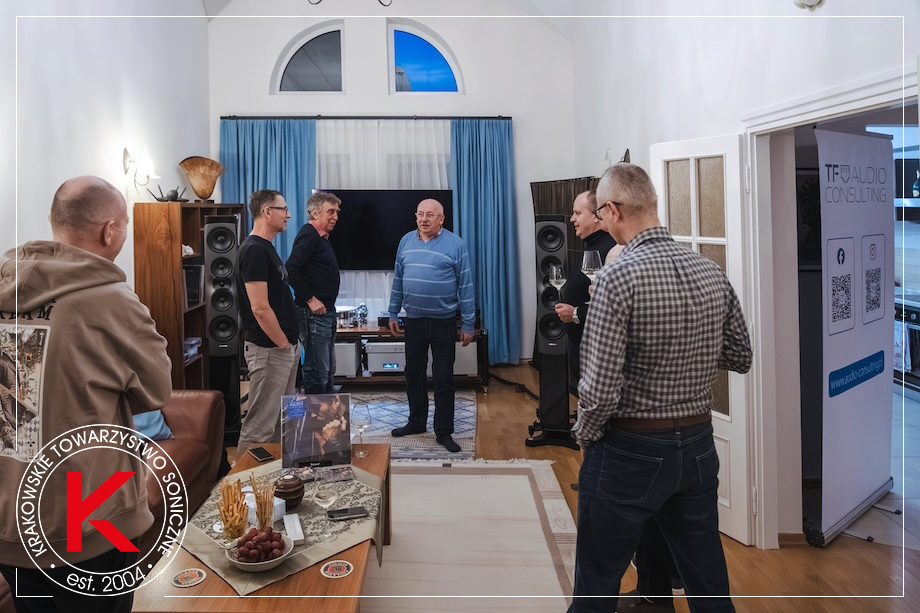
MARCIN • Sitting together on the couch, I hear it exactly the same way Tomek does :) The bass is still a bit overwhelming, but the improvement is so dramatic that you can happily listen to up to three songs… We listened to two, but I can tell that by the third one, I’d start looking for the remote. TOMEK HATYLAK • I have a feeling that my predictions are coming true. The quality of this remaster is exactly what I heard on the CD at home. It’s beautiful, and it reminds me of bringing out the best in the original. After all, that music was always there; we just hear it better now. I’m usually against remasters, but in this case, it’s a big improvement. RYSIEK B. • I know I sound like an old guy, but I have to say it: it’s still an incoherent sound. There’s a lot of low end, then the upper midrange, and nothing else. TOMEK L. • But you, Rysiu, come from a jazz background, and you'd like everything to sound like that, but this is a different kind of music. RYSIEK B. • I just would like to hear everything, and that wasn’t the case here. And I’d like there to be a foreground and a background. The vocals, however, were very good this time. But that’s it - neither the mix nor the arrangement does anything for me. Or maybe that’s just how these amplifiers sound; I’m not familiar with them, and this is the first time I’ve heard them here. JAREK • The first thing about this new release is that it is much more dynamic. Whereas with the original, if it hadn’t been for the gravity of the situation, I probably would have dozed off, here I felt like moving around and dancing a bit. They’ve added a bit more low end and a bit more midrange. But when you add something, something else is reduced. George Michael’s voice itself is therefore less full here - impressive, but less interesting. But considering the phenomenon of 25 million albums sold and keeping in mind people who aren’t audiophiles and just want to have fun, it has to be said that the new version is much better, no question about it. JANUSZ • I agree with Jarek that the new version is flashy, that it has brought out the best elements, that it has created a cool space, and that we have a sense of experiencing something cool. 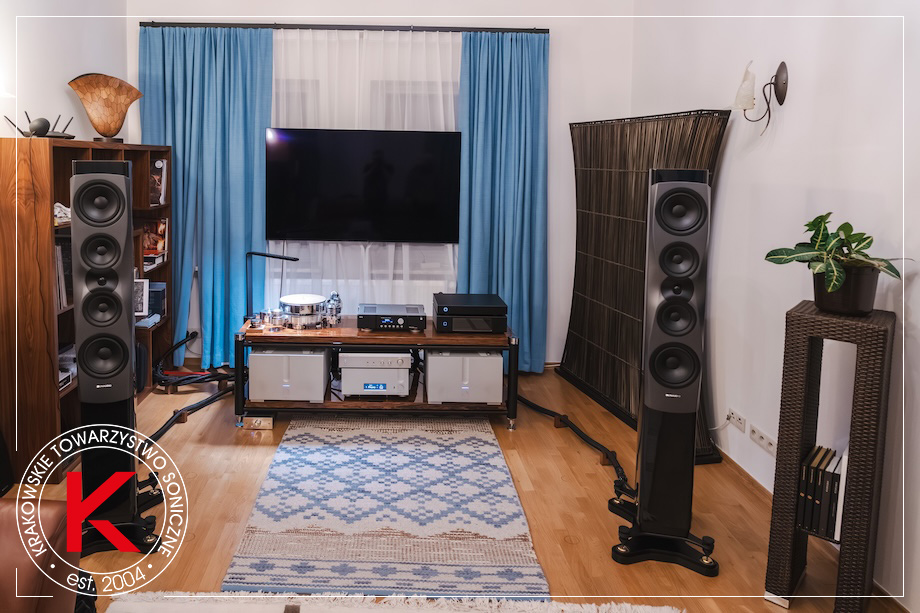
However, I felt it lacked that glue that would tie all the frequency bands together - what Rysiek was talking about. It felt a bit artificial, a bit too digital. And the bass was a bit too strong. I also missed the midrange. So I have a dilemma. I liked Wojtek’s original version - the DJ mix - the most. It had its limitations, but it was sonically coherent. WICIU • I like this version. However, I don’t like the arrangement of the songs we listened to. It’s a kind of early techno - I wouldn’t call it music. It’s something for the deaf, who have to experience music through sound waves. But I’m sitting in the back row, and I know it’s booming back here. Basically, there was an excessive bass, as if someone were banging a rubber mallet against the wall. JAREK • The problem isn't that the bass sounds artificial, but that it's played in a monotonous way. WICIU • It could be played in a monotonous way - I don’t mind that - but if a bass guitar had been used instead of a synthesizer, it would have sounded much better. The vocals sounded nice; the backing vocals sounded nice - it’s just that the bass ruined everything. TOMEK L. • How about mixing it down and adding some live bass? That would sound great. JAREK • The question is: to what extent would this be legally feasible? TOMEK HATYLAK • That is absolutely impossible to do. TOMEK L. • So let’s just do it for ourselves, press it somewhere on the cheap, and share the copies :) We’ve got a drummer and a bassist in KSS - they’ll definitely help us out… WOJTEK • But count me out - I really like the first version, the original, and I don't want to change a thing about it :) TOMEK L. • Tomek, help us out! TOMEK FOLTA • I don’t see a point - There’s nothing to defend here; it turned out the way it did. But Wojtek’s version indeed plays better than mine. Unfortunately, none of those early versions - just like the Polish one - drew me into the heart of the story, and I don’t feel that “first-press” thrill. That’s why I really liked this remastered version. Everything was more powerful there; there was wider stage and more nuances. It sounded flat, true, but that’s how they played back then. TOMEK HATYLAK • I feel like that’s exactly how this music sounded back then - that’s how it was meant to sound. And even years later, it still has so much to offer that every remaster brings out something new, something good. RYSIEK B. • What are you talking about? It all sounded terrible - what do you mean, “brings out”? Come on people! TOMEK FOLTA • Once we get a feel for the aesthetic of the music and that era - the aesthetic of that style of playing - we’ll perceive it differently. TOMEK HATYLAK • Exactly, we can’t listen to it like we do contemporary music. Historically speaking, it’s a museum. I used to be a guide at the open-air museum in Sanok, where I’m from. And I get the impression that when we talk about Faith we’re talking about an open-air museum - there’s a massive, massive gap between what’s now and what was then. That’s why we can’t measure this album against our contemporary ideas about sound. That’s ahistorical thinking; it’s wrong. The ’70s were the heyday of analog music. The ’80s had a completely different aesthetic. And you might not like it, but… JAREK • But there’s Vangelis from the ’80s, whom we still listen to and it sounds great - and this album just doesn’t sound good. TOMEK HATYLAK • But this is a completely different kind of music. It grew from a different root. We’re talking about two different species. One is fully developed, while the other is just coming into being. 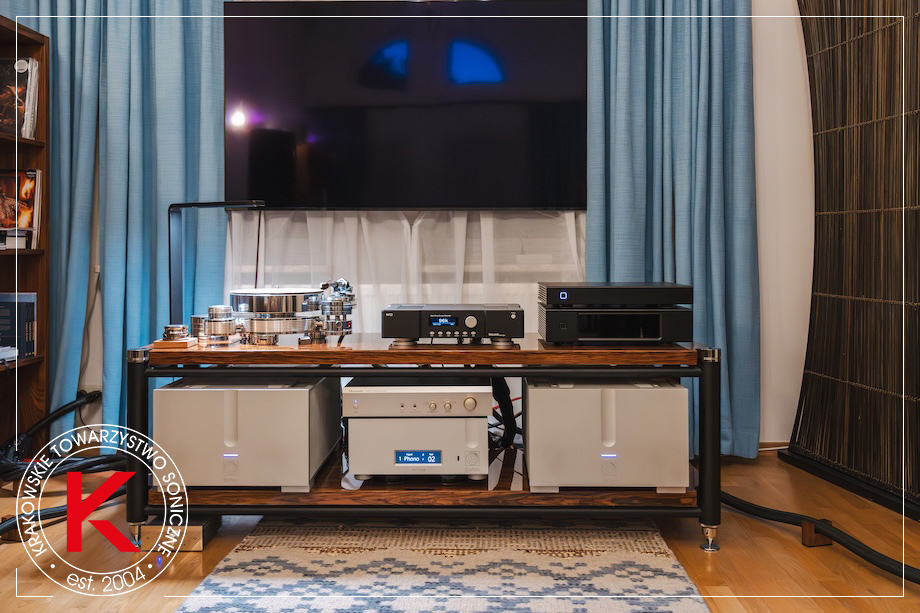
JAREK • Wait, why are we doing all of it?… WOJCIECH • To get a drink. III ‖ ORIGINAL vs DOUBLE LP (color) TOMEK HATYLAK • I can honestly say that I can't tell the difference between black and burgundy vinyl, and that there's plenty of great music here. WICIU • I changed seats, moving from the third row to the first, and I have to say the improvement is huge - it was a disaster back there. You have to take into account where someone is sitting. I take back everything bad I said about this album earlier. It sounded really great just now. But I don’t see any difference between the black and colored versions. RYSIEK B. • I don't know what you've been eating, because I hear a huge difference between the black and the colored reissue, in favor of the black one. I might have said I liked the red one if I hadn't heard the black version first. The black one really “kicks,” while the red one is kind of dull. 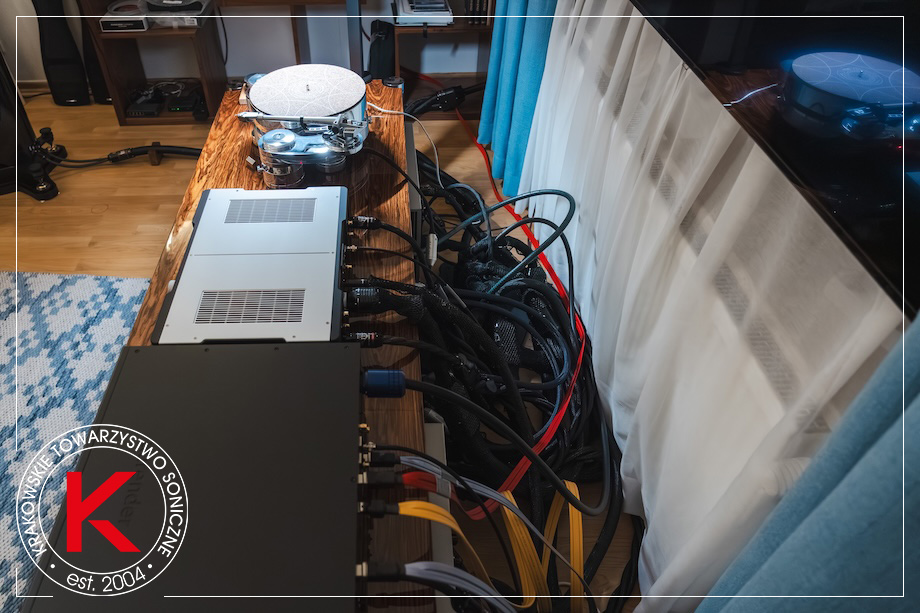
WOJCIECH • We've known each other for so many years, and the beautiful thing about it is that we hardly ever agree. TOMEK FOLTA • Actually, I agree with Rysiek. We’ve agreed with each other about three times over the past twenty-two years. JAREK • We’ve witnessed plenty of vinyl comparisons in this room, and they haven’t always been particularly impressive. But today, with every record - we’re entering a new aesthetic. The changes are truly significant, and while I won’t take back what I said about the original, these two versions - especially the black one - sounded great. In all seriousness, I have to say that this is now R&B music. Burgundy – it doesn’t sound as good. JANUSZ • Following the in-depth, comprehensive, and multifaceted analysis presented by the previous speaker, I would like to add that the black one sounded better than the red one - and I’ve said this from the third row. TOMEK L. • On the one hand, the black record sounded more dynamic and not quite as bright, but on the other hand, I preferred the bass on the red one. That’s because it was less irritating to me. The vocals - that’s a matter of personal taste. It played a bit lower, which made it more pleasant. But if I had to choose, it would have to be the black one. TOMEK FOLTA • I was supposed to avoid exaggerating, but in this case, I have no choice - the difference between the black disc and the burgundy disc is enormous to me. It’s mainly evident in the resolution. The color version is more monotonous and dull. It lacks color and contrast. It’s as if it were covered by a curtain. There was definitely less detail. WOJCIECH • You’ve crafted a coherent narrative about this album; I understand it, but I don’t agree with it. I’m in love with the original album, and its reissues don’t excite me at all. It seems to me that both of these double-disc versions sound very good. But it’s the original that has a varied sound. It seems to me that the monotonous bass we hear here isn’t the bass from this album; it’s some combination of the system and the room. That’s why the new versions sounded more pleasant - they simply have a less dynamic low end. I found the black record rather boring, so my opinion is the opposite of yours. In my view, it doesn’t have much treble or bass; it’s more “round.” And because of that, it’s easier to accept. When the full frequency range is present, everything has to be done well. It must be said that these are nice albums, both new versions; they’re a pleasure to listen to. And for the first time I liked the colored version. It was more similar to the original. Less dynamic, but there was more of everything on it than on the black version. However, I missed the vitality, the wildness, the energy in it. But, as I say, I’m in love with the original, and being in love changes your perspective. 
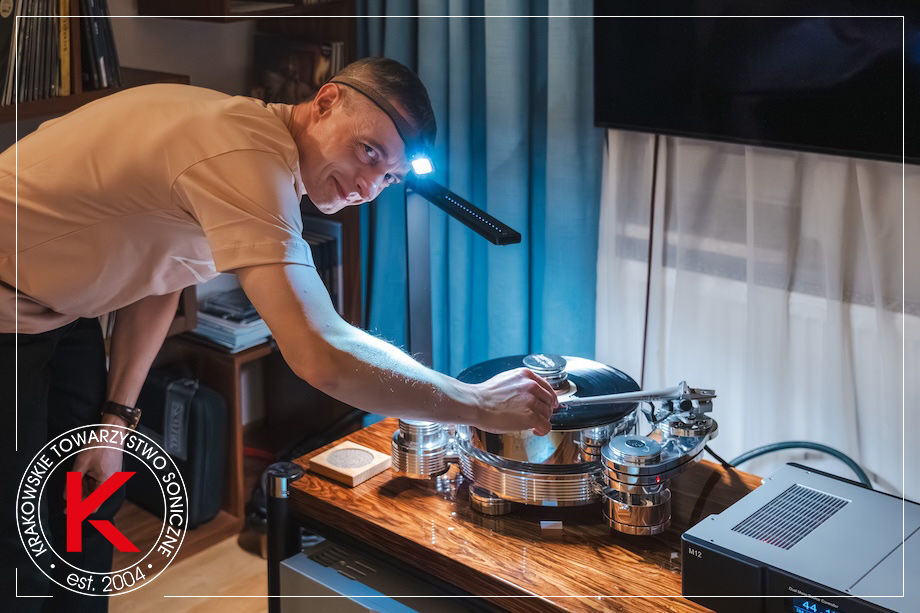
TOMASZ HATYLAK • To my ears, listening with you in this setup, I heard significantly less detail on the original than on the reissues. The reissues had much more of everything - in the soundstage and in the details. WOJCIECH • And that’s fine - we don’t have to agree. But we do agree on one thing: it’s beautiful music. TOMASZ HATYLAK • Amen. ‖ KSS ‖ SETUP • Transrotor Alto TMD – turntable |
 |