


|
LOUDSPEAKERS ⸜ floor-standing JBL
Manufacturer: HARMAN INTERNATIONAL INDUSTRIES, Inc. |

 |
 |
 |
|
Review
text by WOJCIECH PACUŁA |

|
No 270 November 1, 2026 |
ONE OF THE HOT TOPICS at the High End Vienna 2026 exhibition was the debut of two new JBL speakers. The Summit series now includes the Everest and K2 models, which joined the lineup previously showcased at the → MUNICH HIGH END SHOW 2025, the floor-standing Makalu and Pumori, as well as the Ama bookshelf speaker; review → HERE. This “complete” series currently consists of five speaker models, four floor-standing and one bookshelf model. 
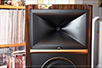
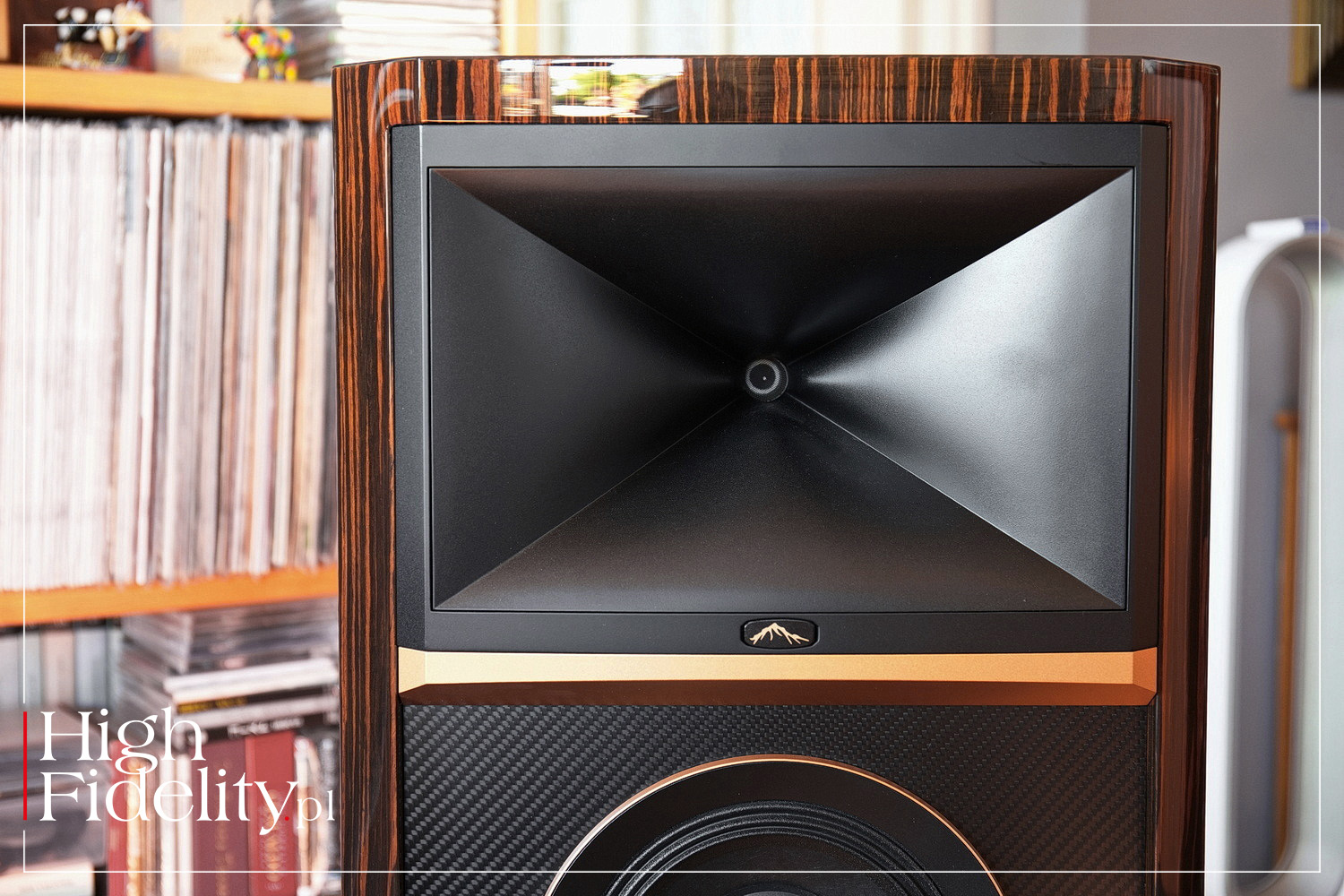
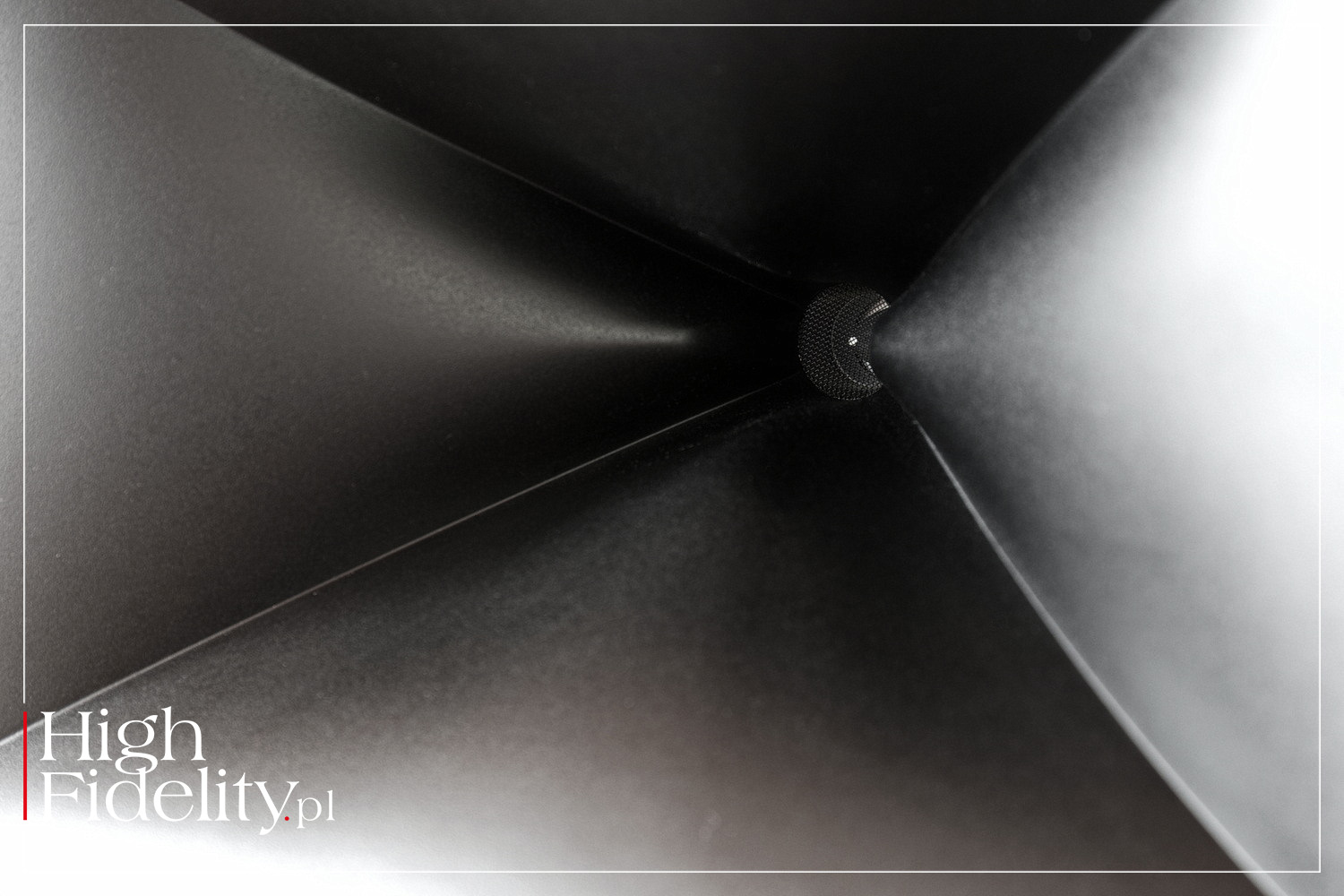
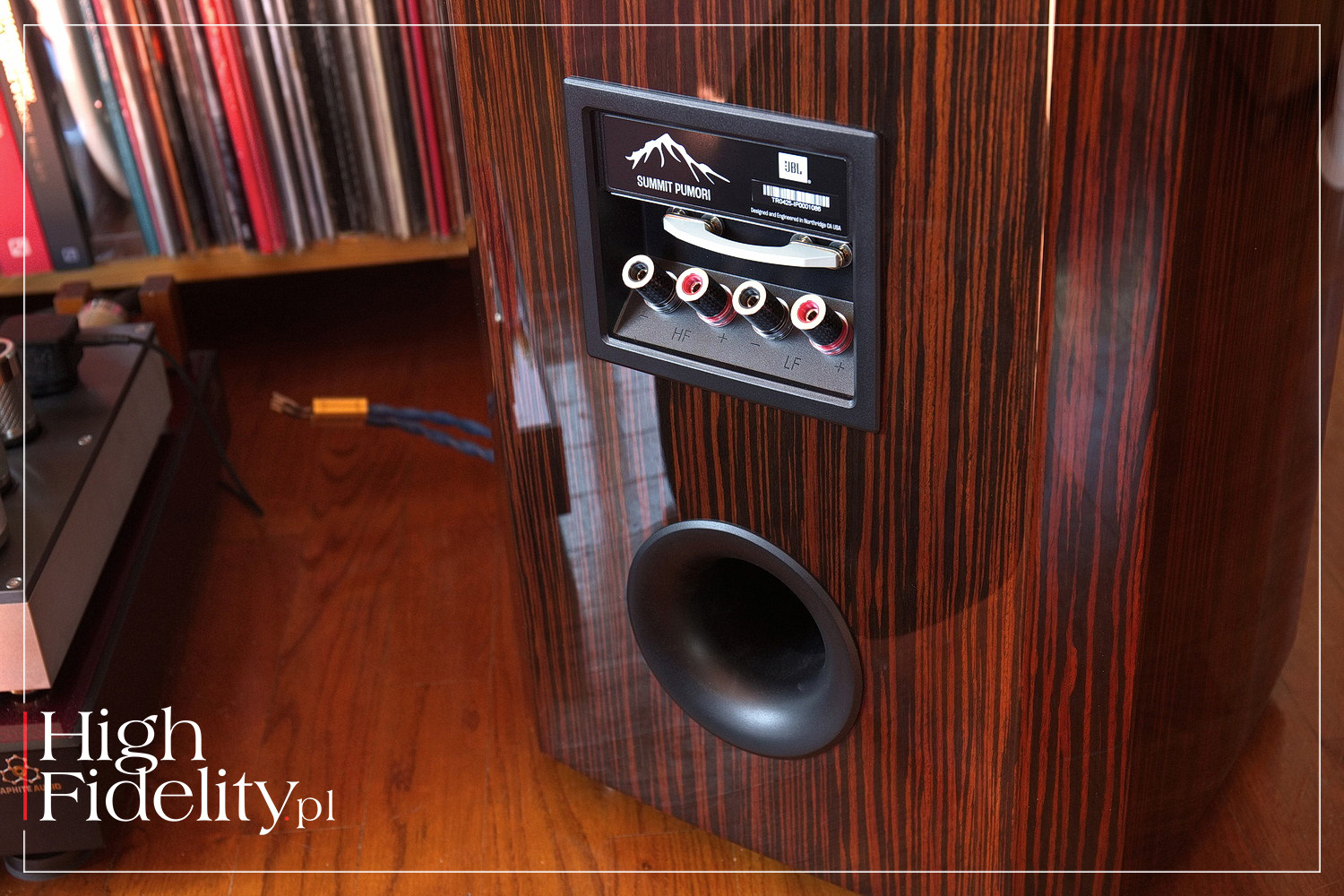
‖ The five models in Summit series, from the left: Everest, K2. Makau, Pueri, Ama • photo courtesy of Harman International The two speakers that have now been added are a continuation of the series of so-called “Projects” - the Everest from 1985 and the K2 from 1988. At the same time, they are now the flagship models of a completely new series. In this way, this American manufacturer is celebrating its 80th anniversary. As we’ve mentioned before, next year will bring another milestone, as it will mark 100 years since James Bullough Lansing founded his first company; you can read more about the history of its speakers → HERE ˻PL˺. As you know, in February of this year, I tested the Ama bookshelf speakers. After the test, I had no doubts: JBL is at the top of its game, and the solutions used in what is, after all, the smallest model in this series resulted in a sound that was incredibly refined and perfectly suited to my needs. It was a sound that is, in my opinion, “the” sound, that is, the kind that should set the standard in the audio world. Could I be wrong? Of course - it probably happens to me just as often as it does to anyone else. However, I believe that even if I was wrong in this case, it was a beautiful mistake :) ▒ Pumori AFTER THE DEBUT OF JBL’S two highest “peaks,” the Pumori is the fourth highest and the second lowest. The situation is different with the mountain of the same name. Pumori, meaning “unmarried daughter,” is not part of the Himalayan Crown. However, it is located just a few kilometers from the world’s highest mountain and is often called the “Daughter of Everest.” It rises to 7,161 meters above sea level and stands proudly on the border between China and Nepal. The Pumori model consists of large, though sleek, floor-standing speakers. They measure 1,056.5 × 393.3 × 373 mm and weigh 63.9 kg each. So, sleek but also heavy - the AUDIO STYLE team really worked up a sweat hauling them up to my fourth floor (no elevator). The speakers feature a three-way, three-driver design in a bass-reflex enclosure. They’re equipped with dual speaker terminals connected by a thick bar that tucks into a recessed panel to which the terminals are mounted. So we can connect them either the traditional way, using two pairs of cables (bi-wiring), or to two amplifiers (bi-amping). The terminals in question are of very high quality. Their core is made of pure oxygen-free copper, plated with silver and rhodium, with a chrome-plated brass housing wrapped in carbon fiber and insulated with nylon and fiberglass. The speakers offer a wide frequency response, from 30 Hz to 32 kHz (on-axis, with a -6 dB roll-off), and a high maximum power handling of 250 W. The manufacturer mentions a fairly low minimum amplifier power requirement of just 25 W, which suggests they are an easy load. This may be the case, though it’s worth noting that the nominal impedance is 4 Ω and the minimum impedance is 3.2 Ω. Hence, the average sensitivity of 87 dB. ▲ HORN THE HEART OF THIS DESIGN, as emphasized in press materials, is a compression driver equipped with a distinctive horn that company calls High Definition Imaging (HDI), which is found in all models of this series. In the Pumori model, it measures 250 × 200 × 200 mm and weighs approximately three kilograms. It is designed to ensure a more effective matching of the acoustic impedance of the small sound source (the compression driver) to the surrounding air (the horn’s outlet), while simultaneously guaranteeing - as stated - “controlled dispersion of the sound wave.” 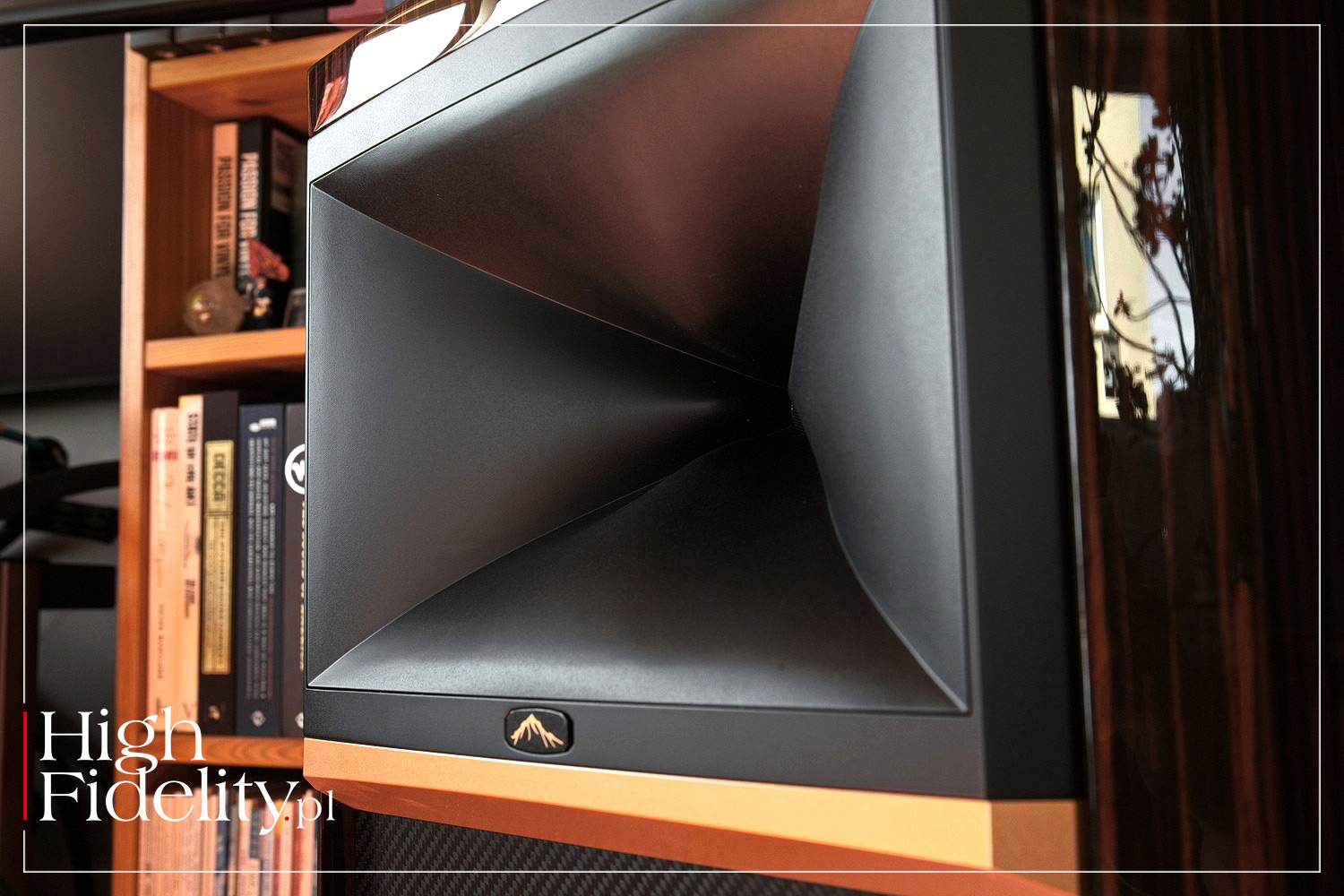
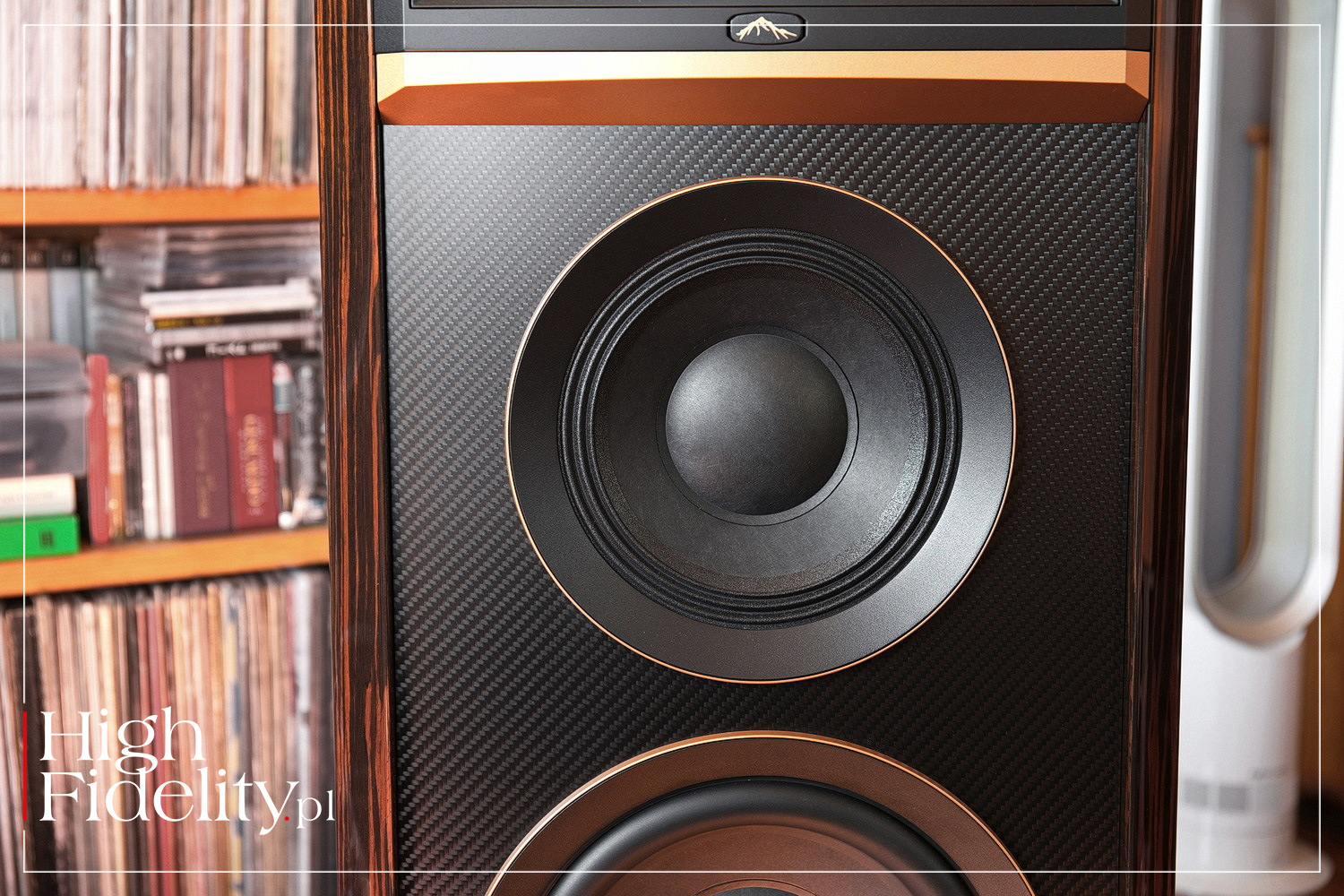
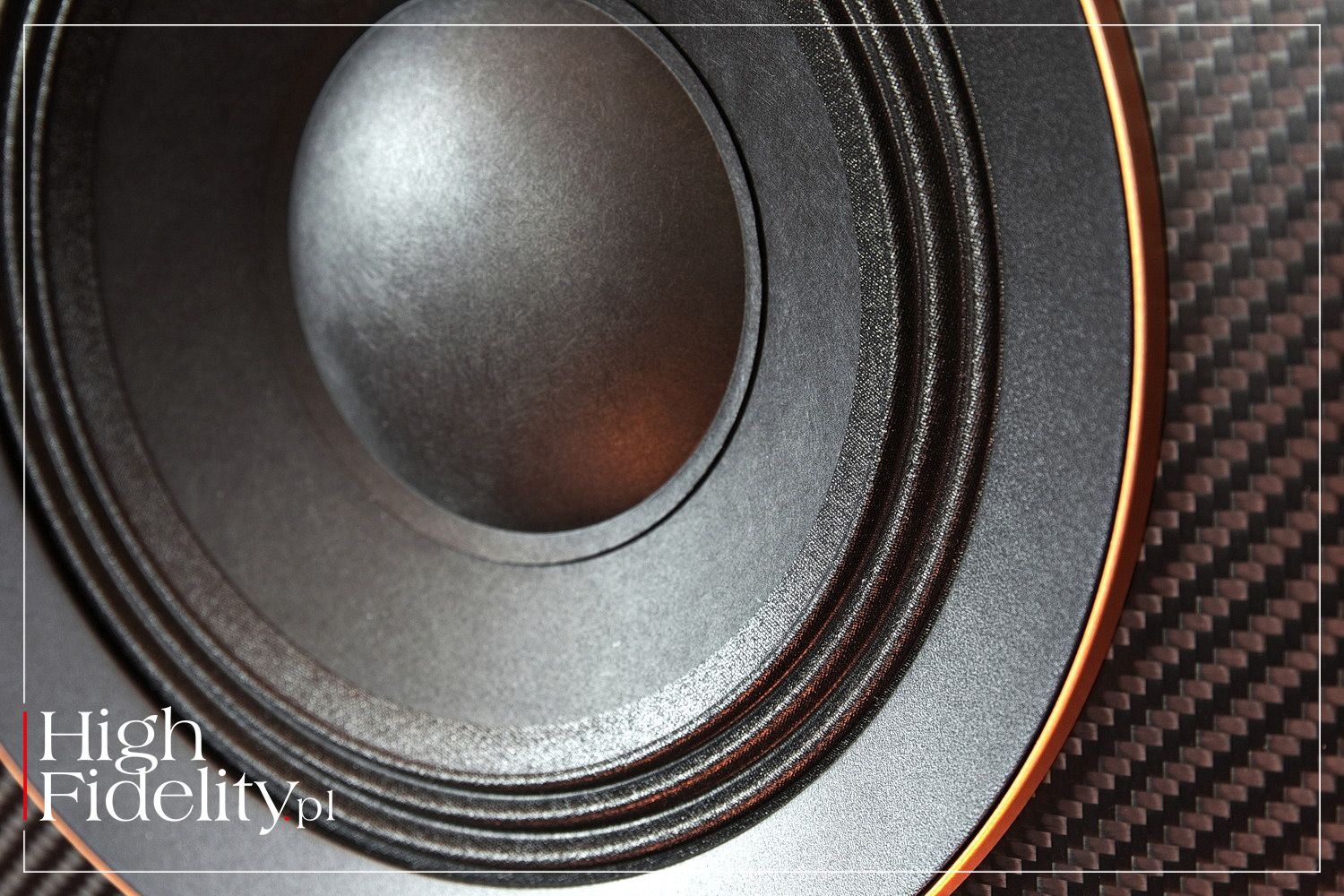
Its distinctive shape is the result of many years of research by JBL. It’s worth noting that horns with compression drivers have been a major part of JBL’s history. The HDI horn is molded from a material called Sonoglass. It is a type of resin with glass fibers embedded in it, making it rigid and vibration-resistant. JBL has been using it in its speakers for many, many years. In the Summit series, however, it has a different profile than it used to - it was once known as the Bi-Radial shape, which opened more widely in two directions (symmetrically). This material is a registered trademark of Harman International Industries, Inc., the parent company of the JBL brand. ● DRIVERS • The HDI horn loads a compression driver - JBL’s patented D2815K model with a diameter of 38 mm (1-inch) - featuring a dual diaphragm known as the Annular Ring Teonex Diaphragms and two drive systems. It is a wide-range driver, and thanks to the design of the compression chamber with a dual diaphragm, it offers high efficiency. The company’s technical documentation states that it uses two lightweight, ring polymer diaphragms, each of which features its own magnet and voice coil. In this design, the load on the diaphragm is split into two parts. Thus, the input power is also distributed between the two voice coils, which - according to the manufacturer - means “significantly higher rated power” and “lower thermal compression.” As stated in a review on the OnHiFi website, “high damping of the polymer diaphragm” and “lower moving mass” mean that each of the two diaphragms can be “tuned” to a specific range. This results in “significantly lower levels of nonlinear distortion” and “a smoother, extended high-frequency response.” The low-midrange driver is located below. The JMW200SC is a large driver, measuring 200 mm (8.5”), featuring a three-layer hybrid cone made of a carbon-cellulose composite (Hybrid Carbon Cellulose Composite Cone – HC4), a voice coil with a diameter of 63.5 mm (2.5”), and a neodymium magnet with an underhung gap (i.e., longer than the voice coil), a cast aluminum basket, and a suspension made of impregnated fabric with an accordion-style design. This is a classic cone for high-efficiency speakers - low mass with a small excursion. The HC4 cone is a “sandwich” design with carbon fiber and pure cellulose pulp on the front and rear surfaces, and a closed-cell foam core. It reads:
This hybrid cone design provides the proper stiffness, overall mass, and structure to deliver high-output, low distortion, and high-power handling. (more → HERE https://www.jbl.com/summit-series-pumori.html ).
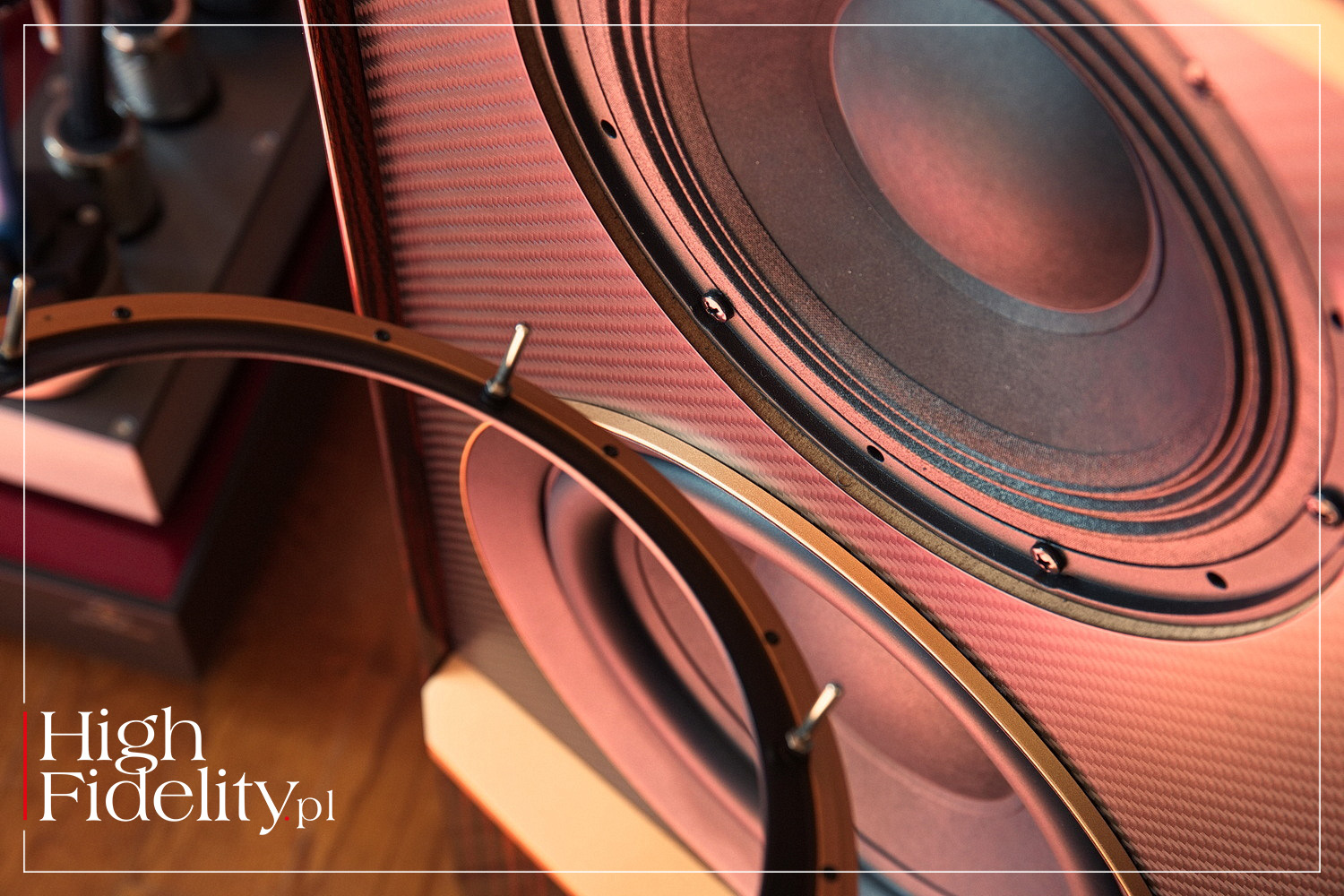
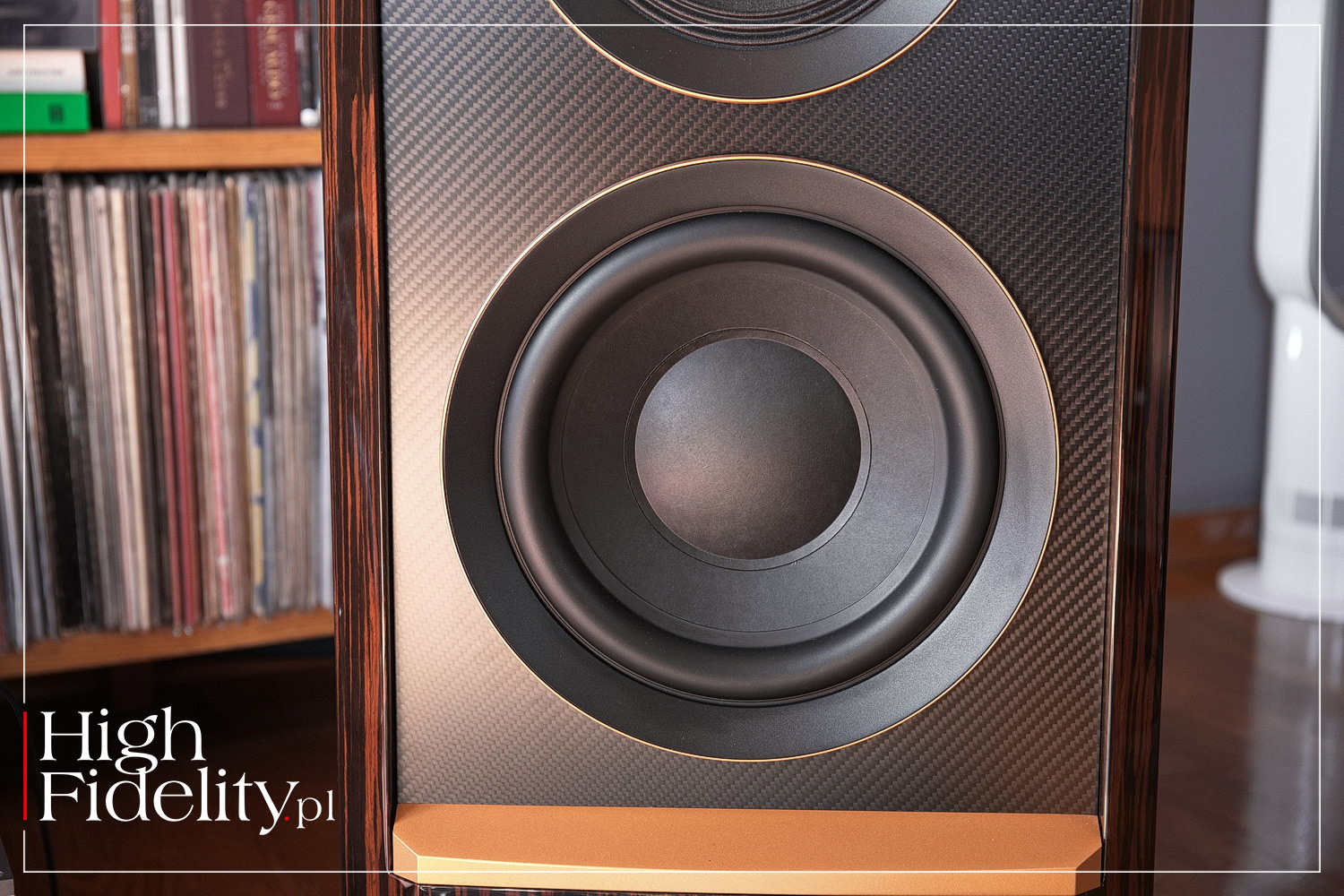
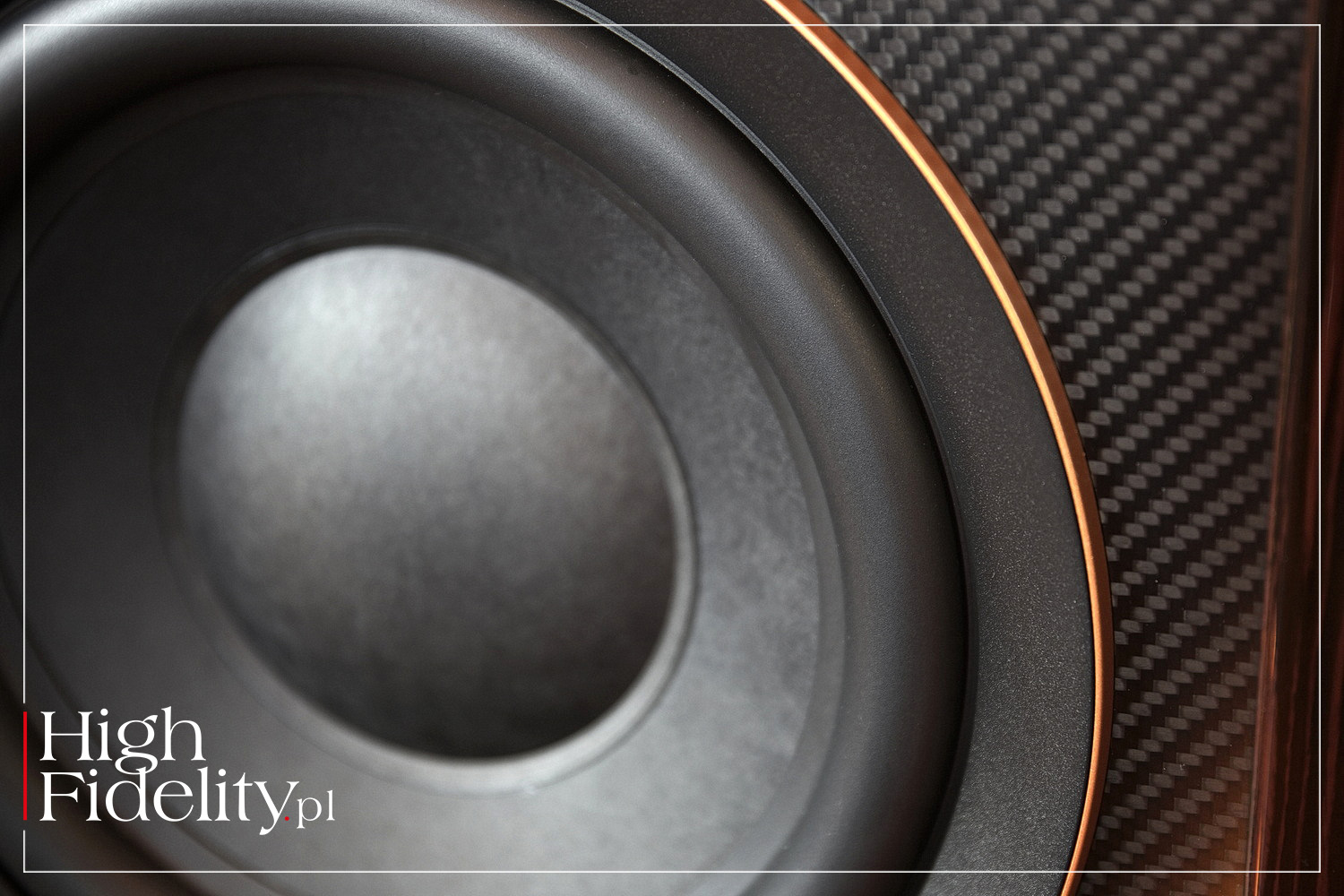
This driver reproduces a frequency range between 285 and 1250 Hz. Below this range, a 250 mm (10”) woofer, JW250SC, is used. Like the smaller speaker, it features a three-layer hybrid cone made of a carbon-cellulose composite (HC4) with a “half-forward-roll” suspension. The voice coil moves within a ferrite magnet gap. The basket is made of cast aluminum. 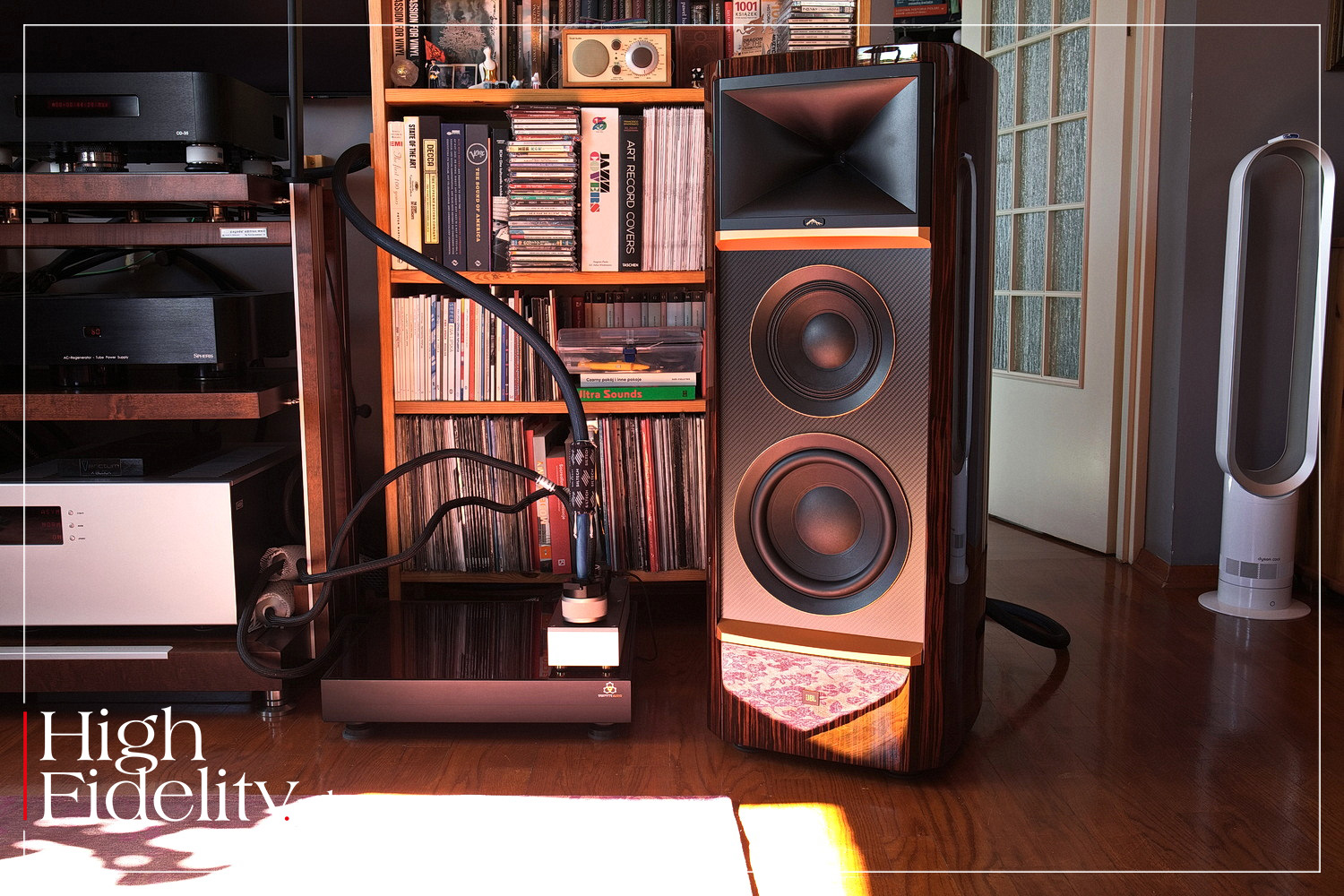
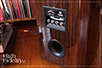
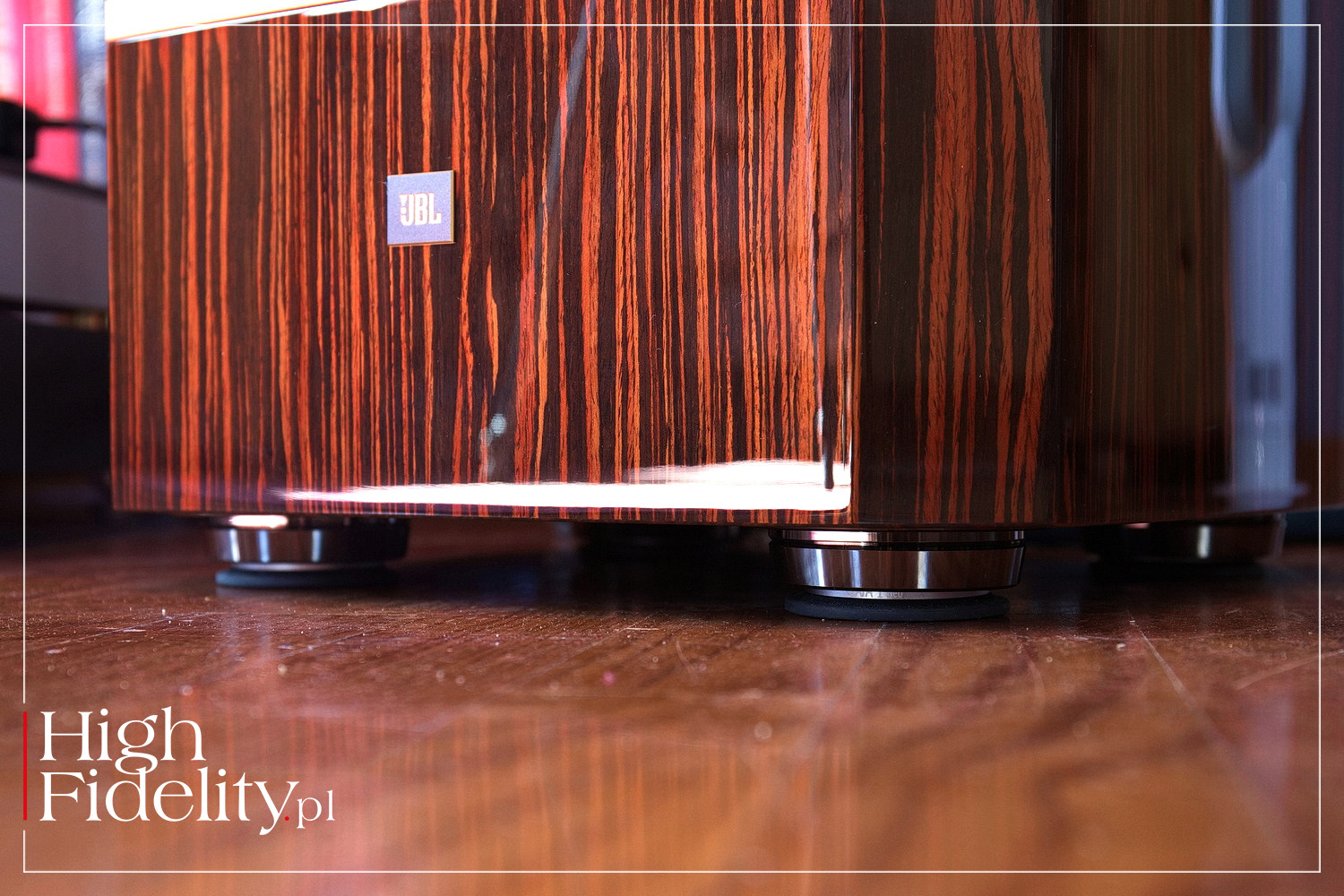
CROSSOVER • The Summit series crossover is highly complex. It has been divided into separate sections mounted on printed circuit boards screwed to the side panels of the cabinet. It features an interesting design, notable for many small capacitors from Reliable Labs’ MultiCap series, which replace single, large “can” capacitors. The manufacturer states that connecting small capacitors in parallel reduces the ESR (Equivalent Series Resistance). In metrology and electronics, this is a parameter that defines the internal loss resistance of a real capacitor (or coil). This is supposed to translate into “higher signal bandwidth, low distortion, and better micro-dynamics.” The other components are also of very high quality. These include very large resistors cooled by metal casings, as well as exceptionally large inductors. The internal connections have not been overlooked either. They are made of Ohno-Continuous-Cast (OCC) copper wire - that is, long-grain copper produced by continuous casting - and are silver-plated. CABINET • One of the most important features of the Summit series speakers is their external design. Although it builds on what the company has developed in previous years, it seems much more refined and somehow fresh. The combination of natural veneer with a high-gloss finish, a carbon-fiber-weave front panel, and metal components creates a truly attractive overall look. It’s also important that the company made sure not a single screw is visible. Some are covered by grills (on the larger drivers), some are hidden due to fixing of the remaining components from the inside. It’s clear that the designers aimed to achieve a non-technical look, because products that look too technical put off many potential buyers. The cabinet is made of MDF boards, and all of its sides are gently rounded, both inside and out. The front panel is thicker and additionally reinforced with horizontal metal braces. This is important because the mid-bass and woofer drivers feature very solid, heavy baskets, dual magnets, and dual suspensions, which increase their maximum power handling and, consequently, their resistance to distortion. The interior is lined with several layers of materials with different acoustic properties. The round bass-reflex port is located on the rear panel. The speakers are available in two finishes: high-gloss black (Black High Gloss) or natural ebony wood veneer, also finished in high-gloss lacquer (Ebony Veneer High Gloss). Metal details, such as the horizontal elements above and below the larger driver and the rims on the stands, are also available in two color options. They can be ordered in a titanium-like color called Summit Platinum or in “antique gold,” Summit Gold. In every version, the front panel remains black, with carbon fiber weave around the woofer and mid-woofer. 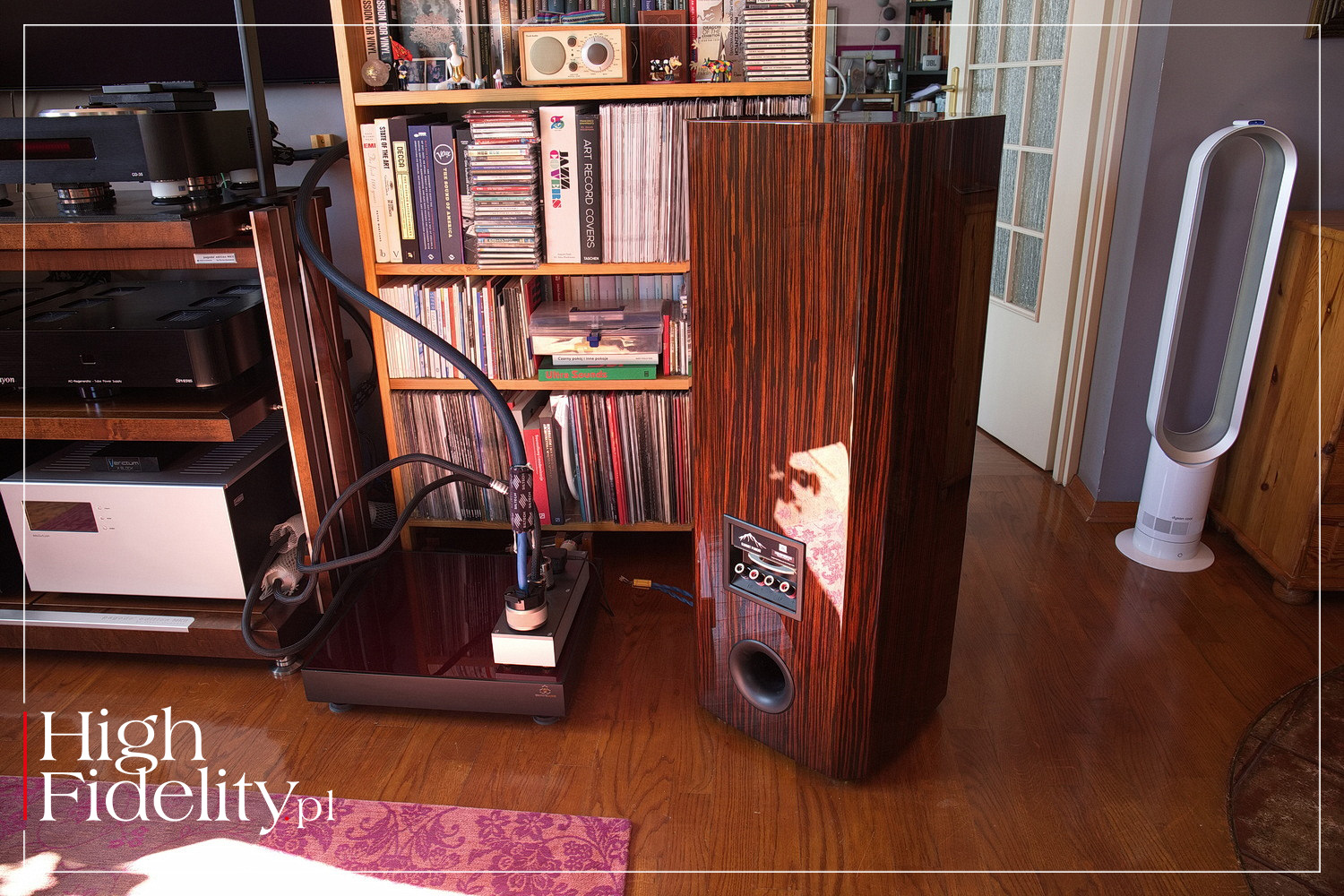
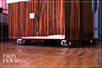
The speakers stand on very high-quality feet from IsoAcoustics. And they look fantastic. This is one of those cases where everything has “come together” perfectly. This is a solidly built yet sleek design; mighty but quite compact. And they’re meticulously crafted down to the last detail. ▓ SOUND HOW WE LISTENED • The JBL Summit Pumori speakers were tested in the HIGH FIDELITY reference system. The sources were the Ayon Audio CD-35 HF Edition SACD player and the Sforzato DSP-05 EX file player & PMC-05 EX clock. A Soulution 710 transistor amplifier drove them, and the signal was transmitted via Siltech Triple Crown speaker cables. 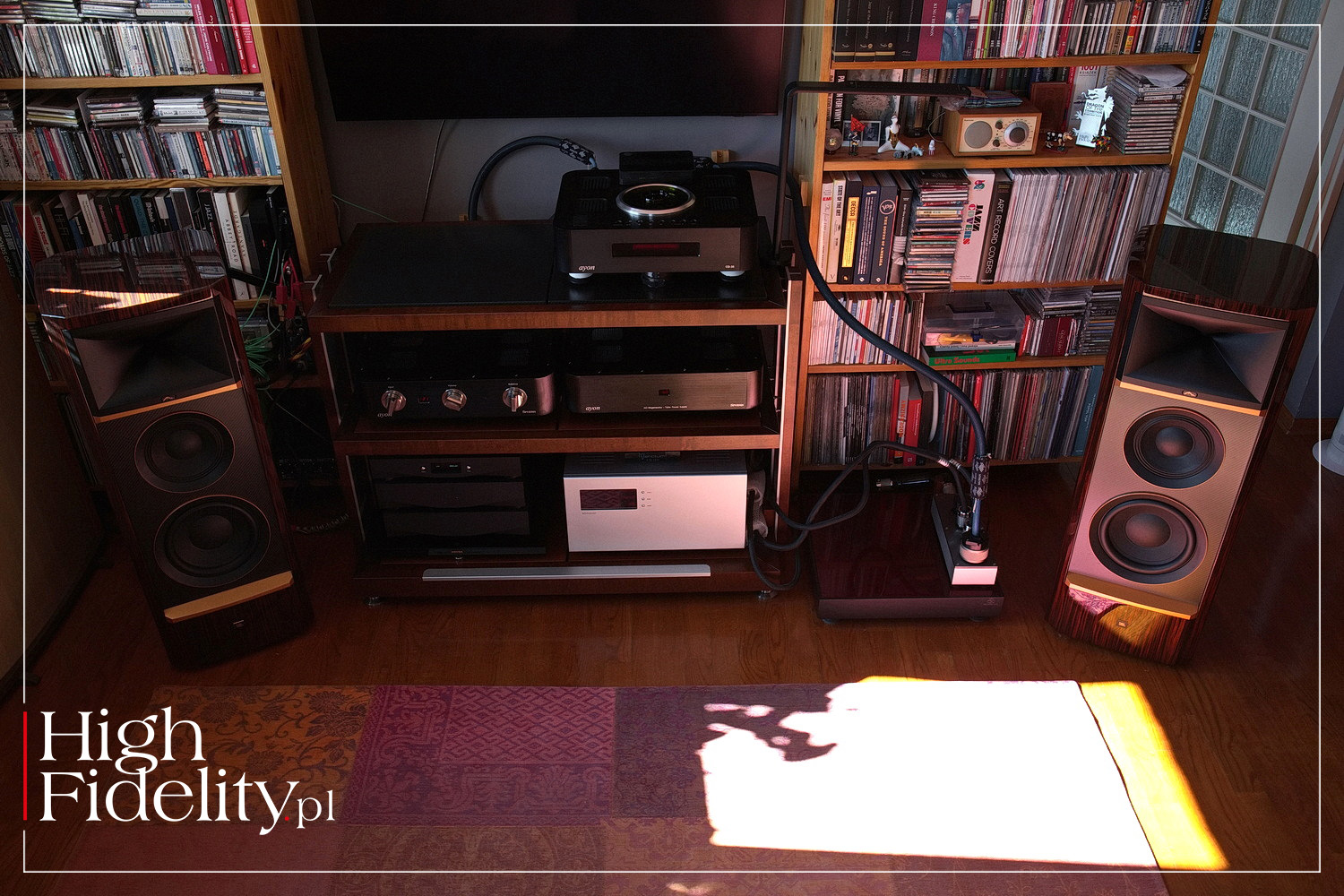
The speakers were positioned 250 cm from the listening position and 235 cm apart, measured along their vertical axes, in the same spot where the Harbeth M40.1s usually stand. They stood 72 cm from the rear wall, also measured along their axes and from the top edge. The speakers were oriented directly toward the listening position, and their axes intersected at my head. I determined the distance between the speakers and their level using the Bosch PLR 50 C device. For more on speaker placement, see the article Micro-tuning: Setting Up Your Speakers, No. 177, → HIGHFIDELITY.pl. For more on the acoustics of the HF listening room, see the article The “High Fidelity” Listening Room…, No. 189, → HIGHFIDELITY.pl. Measurements of the automatic acoustic correction for the HF listening room can be found → HERE and → HERE. » RECORDINGS USED FOR THE TEST ⸜ a selection
• FRANK SINATRA, Nice’N’Easy, Capitol Records/Mobile Fidelity Sound Lab UDCD 790, „Original Master Recording”, Gold-CD ⸜ 1960/2008. |
FIRST IMPRESSIONS during listening sessions are extremely important. We indeed know - or want to believe - that only prolonged exposure to the sound of a given system, product, or album tells us enough about it for us to feel that we understand that sound. And yet, a first impression cannot be replicated; we are, after all, human. 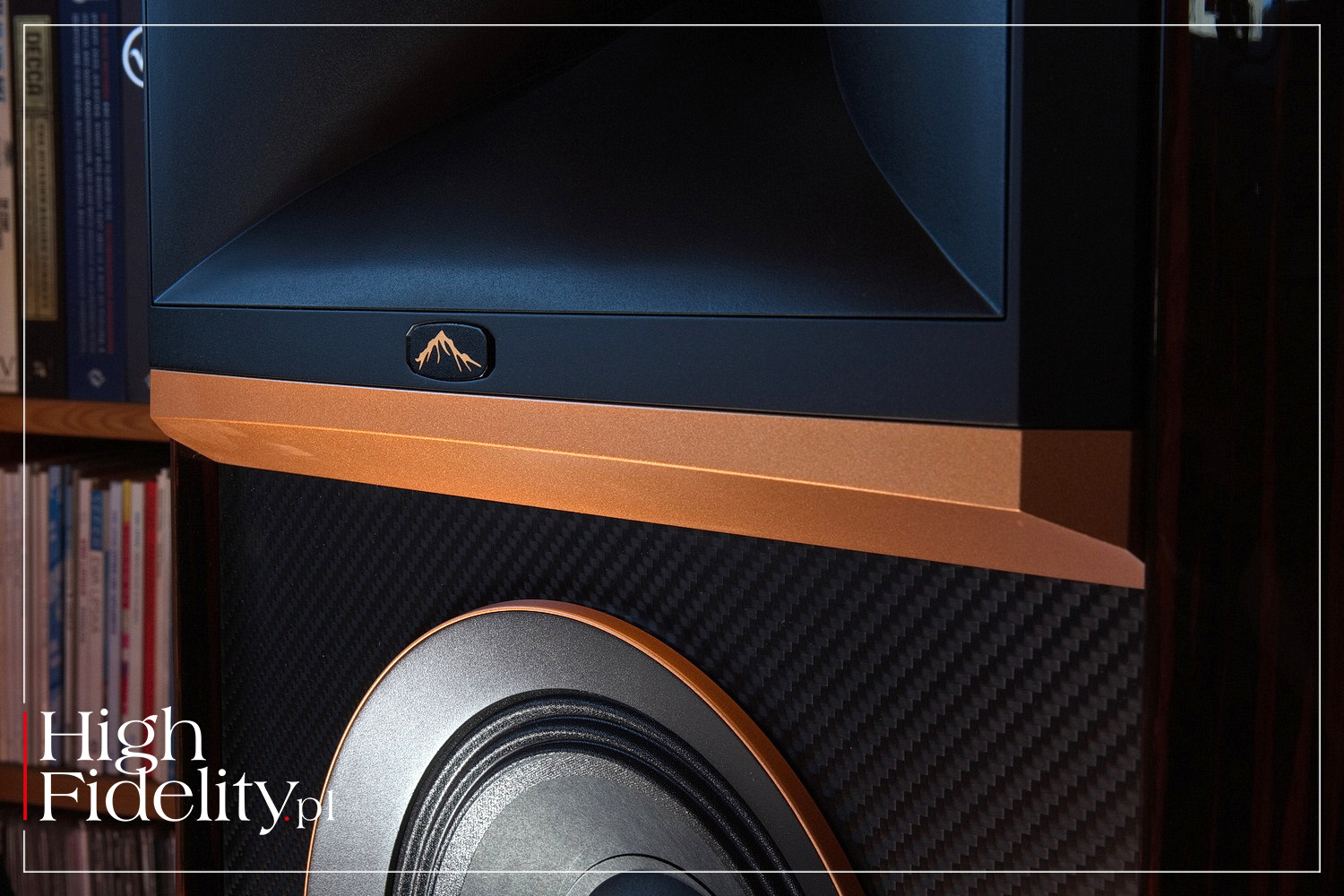
When I begin testing a product that I’m particularly curious about, or (and) one for which I have high expectations, I want that “first time” to be as good as possible. That’s why I usually have trouble choosing an album to kick off the listening session. And if I have a problem, the solution - almost always - turns out to be FRANK SINATRA. I can’t help it; after being introduced to him by a friend some thirty years ago - mainly through recordings from the 1930s and 1940s - I’ve remained loyal to the “blue-eyed one” to this day. A side effect of my obsession with the crooner’s voice is that I know it quite well. That’s why, as soon as I heard the first words in the 2 ˺ That Old Feeling, a track featured on the 1960 album Nice’N ’Easy from 1960 in Mobile Fidelity’s superb gold CD reissue - “I saw you last night and got that old feeling” - I knew something I wanted to know at that point: Wow, what excellent speakers! My curiosity about the Pumori’s sound stemmed, on the one hand, from the fact that I know and appreciate what JBL does in its “professional” line - that is, the models with blue fronts - and I’m also a fan of its largest designs, the K2 and Everest. However, it was listening to the smallest speakers in the Summit series - the Ama - that made me take a closer look at what the company had achieved within that line. And it has achieved something that puts it back on top and gives it something to say again - something that even the most die-hard audiophiles tend to associate with small, perfectionist companies. And that is, above all else, the phenomenal “internal coherence” of the sound. In other words, a kind of complete control over perspective, angles, and proportions. Of course, tone, dynamics, imaging, stereophony, and so on are also important. However, it was precisely the way the speakers portray the “represented world” - that is, the version of the music captured by sound engineers and shaped by producers and mastering engineers - that I found so incredible. Which brings me, finally (sorry), to the point. The JBL Pumori speakers deliver a warm, rich sound. This is a major departure from the fairly detailed and selective sound of their predecessors - which, to use a cliché, have “always” had a “rock” sound and were used for that very purpose in many recording studios. They produce a sound in which, it seems, there are no high frequencies. It only seems that way because there are exactly as many high frequencies as needed. However, these high frequencies are so well-articulated, so well-resolved, and so nuanced that the artifacts - which in most other designs merely mimic these elements - disappear. Pumori also reproduce deep bass. Moreover, it’s bass with excellent selectivity and clarity. Whether it’s the double bass on the aforementioned album, or the same - yet distinctly different - instrument in the ˻ 2 ˺ Use Me from PATRICIA BARBER’S album Companion or the deep bass notes of the synthesizers in the Blade Runner soundtrack, as well as from the JEAN-MICHEL JARRE’S Oxygene - all of it was exceptionally clear and deep. It was also perfectly differentiated. This clarity and differentiation echoed what I was saying about the high frequencies. That is, the speakers didn’t overwhelm with a mass of low frequencies. They sound massive, but as a unified whole. I think that’s precisely why, despite their considerable size and the use of a horn-loaded driver, they also offer a great soundstage and practically disappear from the room. Sinatra’s vocals literally materialized right in front of me, close to me, yet at a distance. It might sound nonsensical, but that’s exactly how I perceived the sound - both close and tangible, at times intimate, yet at the same time possessing scale and “breath,” and thus unobtrusive. The speakers treat the audio signal as a set of different events; they are selective. However, these events share a common denominator - one imparted to them in the studio - namely, acoustics, reverberation, effects, timbre, and dynamics. This all comes together as a whole, which the JBLs communicate and reproduce perfectly. At first glance, there are no details here at all. “How can that be?” I asked myself, “Aren’t they selective after all, for heaven’s sake!” With as much composure as I could muster, I answered myself: “But I told you they were - yet at the same time, they offer excellent resolution.” The point is that these are speakers that don’t highlight these details with hard edges, a sharp break at the edge of the instrument. This approach usually helps, but it helps where it can’t be achieved with other means. Here, we get insight into the recording that surpasses anything those thin, shrill designs - the ones I’m thinking of - have to offer. The Pumori seemed completely oblivious to any such problems; that’s how smooth and balanced they were. 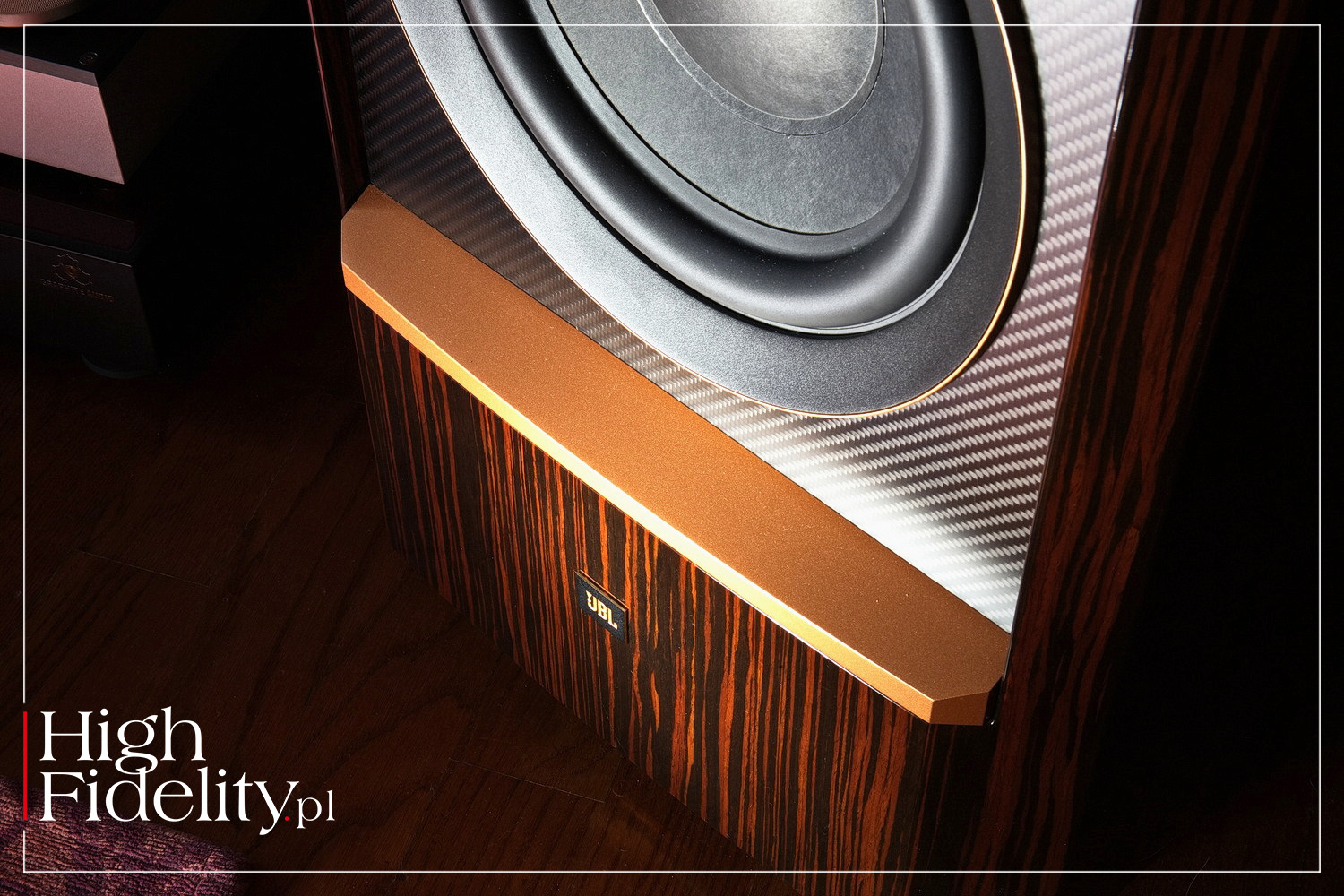
In this balance, however, I believe we can say that these are designs that celebrate and pamper the midrange. Not because it’s emphasized, but because we involuntarily focus our attention on it - since nothing diverts our attention from the range to which we are evolutionarily attuned. And the midrange is warm, almost flowing, yet also wonderfully nuanced. When, in the ˻ 1 ˺ Waiting/Evil Ways, the opening track of SANTANA’s debut album, the guitar comes in from the left and the Hammond B-3 organ cuts in from the right; the effect is explosive and driving. These speakers draw our attention to the midrange, but only because everything else is in its place, working in harmony rather than getting in the way. The same goes for the dynamics. And again - just as with the frequency extremes - here, too, the dynamics are subtle rather than harsh. Subtle in its refinement, not in its breadth - the speakers can transition from quiet to loud in a fraction of a second; they are exceptionally fast. That’s why the sound doesn’t blend into a warm blur, but is instead an energetic “torpedo.” This reminds me of the sound of speakers based on old paper cones, dating back to the ’50s and ’60s, such as those from Avatar Audio. This is a different kind of sound - a completely different approach to sound than what became mainstream in audio after the 1970s. JBL speakers add bass extension and dynamics to this, because it is, after all, a completely different technology. And they offer a more “sticky” internal character. They also offer, as I’ve already mentioned, wonderful spatiality. Both stereophony - that is, the placement of sounds on a virtual soundstage - and imaging - the ability to convey a sense of volume - are superb in these speakers. They do it in their own way. That is to say, they don’t emphasize anything, but rather project a dense, “waveless” sound exactly where it’s supposed to be heard. Vocals sound remarkably rich with them and free of irritating brightness, and yet whenever a guitar kicks in - whether on Santana’s albums, BLUR’s, or in recordings by DIRE STRAITS and THE POLICE - it’s electrifying and rich every single time. The speakers I tested are also very versatile. I played just about everything that came to mind on them -ranging from AGNIESZKA BUDZIŃSKA BENNETT singing medieval pieces with her ENSEMBLE PEREGRINA, through purist recordings from Naim, all the way to Norwegian black metal. Each time, I experienced the same qualities I’m describing here, and the recordings remained true to themselves. Yes, in a way, the Pumori suggested their own “vision” of sound. But rest assured - it’s a good vision. There are other ways to do it; you can achieve equally top-notch results using a different approach. And that’s great - that’s what audio is all about. After all, YG Acoustics speakers are also excellent with their absolute transparency, and Estelons sound outstanding. JBL speakers, however, follow a path that was once charted by BBC engineers, a path realized in Harbeth and Spendor speakers, and today in the sound of Sphinx speakers, a company owned by the Siltech Group and Edwin van der Kley. ‖ SPEC AUDIO SYSTEMS are built like a house made of building blocks - by layering one component on top of another. The largest components are the most important, but without the smaller details that complement them, the structure is incomplete. It may seem ready and finished, yet something is missing. 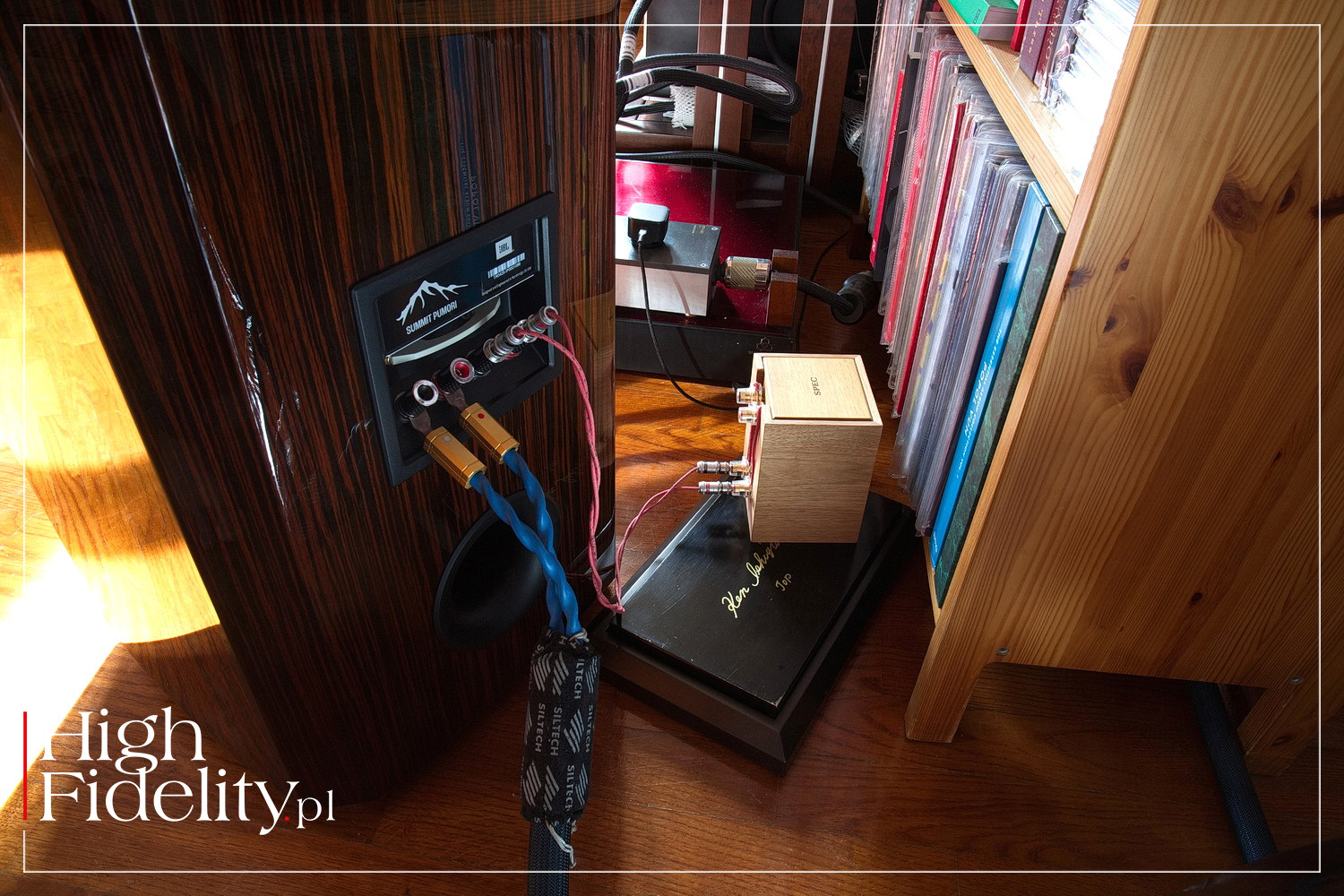
In audio, these “complements” are accessories - that is, products designed to improve the operating environment of the basic components of an audio system: the signal source, cables, amplifier, and speakers. In my listening system, one of the most important accessories is the passive correction circuits from the Japanese company SPEC. These are small, wooden boxes with speaker outputs that are connected in parallel with the speaker cable to the speakers. Their purpose is to correct back-EMF; more → HERE. I also tried them with JBL speakers. The result was the same as always. The sound with them in the system was more refined. On the one hand, nothing really changed - the Pumori are excellent speakers. Without a direct comparison, we would never have said that something was missing. And yet, it was precisely this comparison that showed that with these Japanese “inventions,” the sound is more subtle, more pleasant, and has greater resolution. As I said - SPEC is just an accessory, an optional one. However, it is part of a larger structure and, as such, deserves attention. Together with other components of the system, it creates added value. It does something my guests usually ask about: “What makes this system sound the way it does?” And it’s the whole system that makes it sound this way - a system built step by step, often with small adjustments and tweaks. Taken together, however, they make a huge difference. The RSP-W1EX is an expensive addition, but negligible in the context of the price of the JBL speakers. And it’s worth it. ● ▒ Summary THE JBL PUMORI SPEAKERS meet all the requirements expected of high-end designs. They feature superb internal organization and rich tonal depth. They convey a sense of grand scale and vast space, while remaining very full-bodied. There is no “empty space” between the performers, and the entire soundstage in front of us is tightly filled with warm sound. The frequency range extremes are clear, dynamic, and selective. However, they do not draw attention to themselves. They do not draw attention, yet they are perfectly intelligible. The bass extends deep and has very good resolution. It could be better - after all, JBL itself offers larger models with bigger drivers. It does this not just to make them play louder - though that’s part of it - but to improve energy transfer at the very bottom of the frequency range. With few exceptions, the larger the “woofer,” the better the low-end extension and the greater the freedom in that extension. That’s why the Harbeth M40.1, featuring a 300 mm driver in a comparable enclosure, delivers even deeper bass with less internal vibration. It’s not a huge difference, but it’s there. What’s interesting is that the Pumori, much like the earlier model Ama, aren’t particularly sensitive to room acoustics. In a way, they “transform” them into the acoustics of the recordings. In other words, they transport us “there,” rather than bringing the instruments or vocals “here.” I think even the large models from the Summit series can perform well in really small rooms. This is, in fact, a hallmark of this company’s speakers - I’ve seen the Everests in Japanese rooms measuring just over a dozen square meters, and I’m convinced they sounded sensational there. 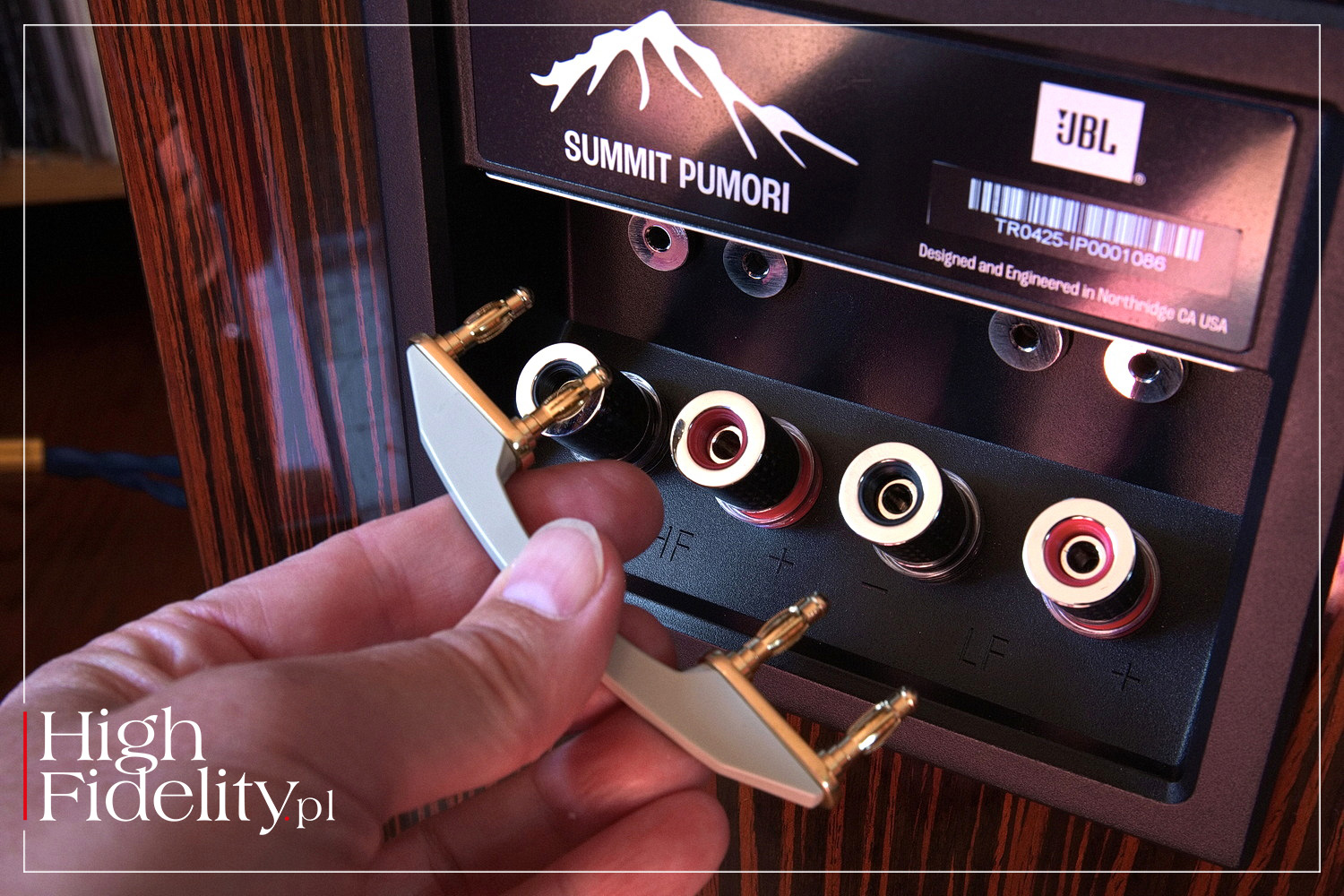
On the other hand, higher maximum power means we can place them in larger living rooms. There, they’ll create a relatively larger soundstage and a larger, also relatively, sound. It’ll be the same musical presentation, but scaled to fit the room’s larger volume. Plus, we’ll appreciate their stunning design and build quality even more. Truly great, incredibly “melodic” speakers - so they fully deserve our RED‖FINGERPRINT. ‖ WP ▒ Technical specification (according to the manufacturer)
Frequency response: » The text contains an affiliate link to the CD Japan online store. → CD JAPAN. |
 |






|
Reference system 2026 |
|
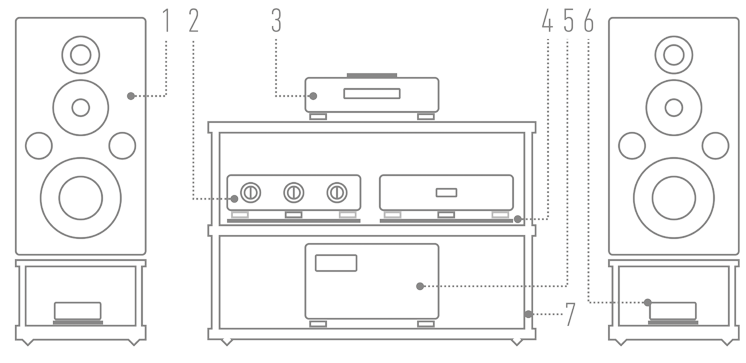 1) Loudspeakers: HARBETH M40.1 |REVIEW| 2) Line preamplifier: AYON AUDIO Spheris III Linestage |REVIEW| 3) Super Audio CD Player: AYON AUDIO CD-35 HF Edition No. 01/50 |REVIEW| 4) Stands (loudspeakers): ACOUSTIC REVIVE (custom) |ABOUT| 5) Power amplifier: SOULUTION 710 6) Loudspeaker filter: SPEC REAL-SOUND PROCESSOR RSP-AZ9EX (prototype) |REVIEW| 7) Hi-Fi rack: Hi-Fi rack: finite elemente MASTER REFERENCE PAGODE EDITION Mk II, more → HERE |
|

|
Cables Analog interconnect SACD Player - Line preamplifier: SILTECH Triple Crown (1 m) |ABOUT|» ANALOG INTERCONNECT Line preamplifier → Power amplifier: Siltech ROYAL SINLGE CROWN RCA; review → HERE Speaker cable: SILTECH Triple Crown (2.5 m) |ABOUT| |

|
AC Power Power cable | Mains Power Distribution Block - SACD Player: SILTECH Triple CrownPower (2 m) |ARTICLE| » POWER CABLE Mains Power Distribution Block → Line preamplifier: Acoustic Revive ABSOLUTE-POWER CORD, review → HERE » POWER CABLE Mains Power Distribution Block → Power amplifier: Acoustic Revive ABSOLUTE-POWER CORD, review → HERE Power cable | Power Receptacle - Mains Power Distribution Block: ACROLINK Mexcel 7N-PC9500 (2 m) |ARTICLE| Power Receptacle: Acoustic Revive RTP-4eu ULTIMATE |REVIEW| » ANTI-VIBRATION PLATFORM under Acoustic Revive RTP-4eu ULTIMATE: Graphite Audio CLASSIC 100 ULTRA, review → HERE Power Supply Conditioner: Acoustic Revive RPC-1 |REVIEW| Power Supply Conditioner: Acoustic Revive RAS-14 Triple-C |REVIEW| Passive filter EMI/RFI: VERICTUM Block |REVIEW| |

|
Anti-vibration Speaker stands: ACOUSTIC REVIVE (custom)Hi-Fi rack: finite elemente MASTER REFERENCE PAGODE EDITION Mk II, more → HERE Anti-vibration platforms: ACOUSTIC REVIVE RAF-48H |ARTICLE| » ANTI-VIBRATIONAL FEET: |

|
Analogue Phono preamplifier: Phono cartridges:
Clamp: PATHE WINGS Titanium PW-Ti 770 | Limited Edition Record mats:
|

|
Headphones » HEADPHONE AMPLIFIER: Leben CS-600X, review → HEREHeadphones: Headphone Cables: Forza AudioWorks NOIR HYBRID HPC |