


|
LOUDSPEAKERS ⸜ stand-mounted JBL
Manufacturer: |

 |
 |
 |
|
Review
text by WOJCIECH PACUŁA |

|
No 262 March 1, 2026 |
A MANUFACTURER AS OLD as JBL – which is celebrating its 80th anniversary this year – may buckle under the weight of its achievements, but also its mistakes. Such a long history is, after all, an accumulation of both, and it is the shortcomings that usually weigh more heavily. Let's add that 2027 will be an opportunity to celebrate 100 years since James Bullough Lansing founded his first company (!); more about the history of its speakers → HERE. 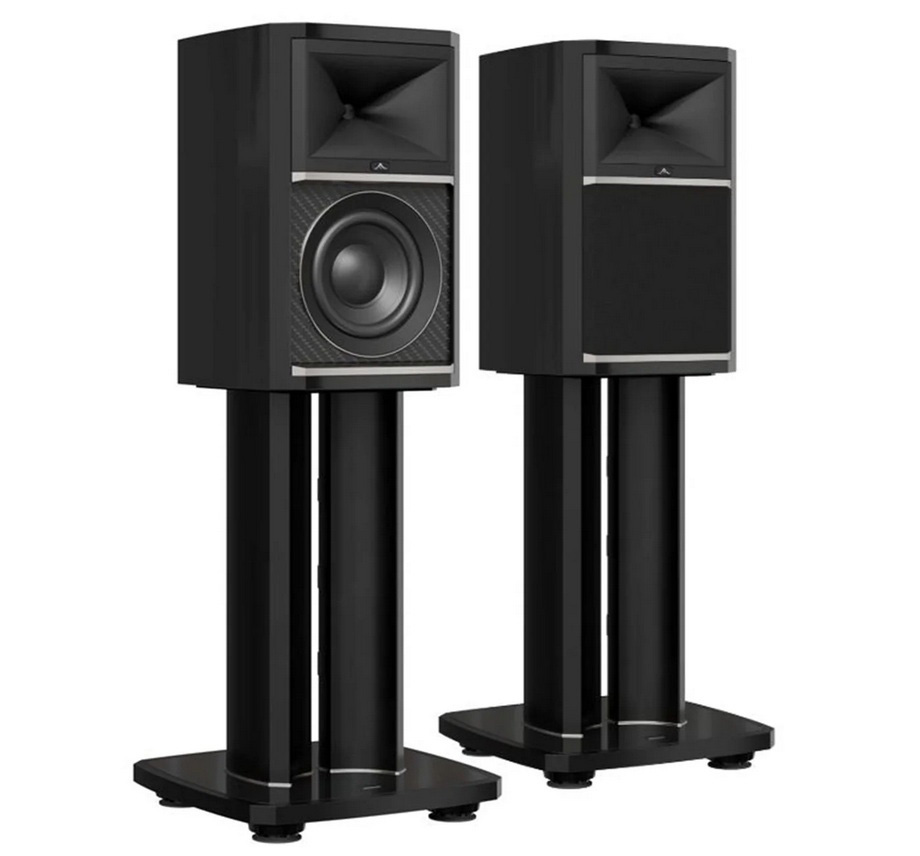
With JBL, it's different. I get the impression that the company is, once again, in top shape. It seems to have achieved this through diversification of income, as they say. On the one hand, it has remained focused on products designed for recording studios and live performances, and it is still strong in car audio, but the most important thing seems to be that it has significantly expanded its consumer hi-fi division, offering quite a wide range of products. Because it is one of the leaders in mobile audio, as we read, it has sold over 100 million Bluetooth speakers to date, with twice as many headphones. At the same time, the company cultivates the image it gained in the early 1980s, when Japanese audiophiles reached for its speakers. They were the ones who elevated the brand to iconic status, and today it is difficult to imagine the landscape of this market, as well as the Chinese, Korean, Taiwanese, and other markets, without the distinctive logo with the exclamation mark. The latest chapter in this story is the Summit series, presented at the → MUNICH HIGH END SHOW 2025. It consists of three speaker models: the Makalu and Pumori floor-standing speakers and the Ama bookshelf speaker. ▓ Summit SUMMIT IS THE HIGHEST POINT, like the peak of a mountain or the highest level of achievement. It is also the name of JBL's top-of-the-line series. On May 15, 2025, the three speakers mentioned above joined the series. At least, that is how it is presented in the press materials. The manufacturer wrote about the new series:
Premiering at HIGH END Munich 2025, the expanded Summit Series now spans five models — including the iconic JBL Everest and K2 — and introduces three new designs — Makalu, Pumori, and Ama — crafted for the world’s most discerning listeners.
“The JBL Summit Series is the culmination of everything JBL stands for — acoustic precision, timeless design, and an emotional connection to music,” said Jim Garrett, Senior Director, Product Strategy and Planning, HARMAN Luxury Audio. “With these new models, we are honoring our heritage while pushing the boundaries of sound reproduction further than ever before.” ⸜ Unveiling the Pinnacle of Loudspeaker Design at HIGH END Munich 2025, → news.HARMAN.com, accessed: 21.01.2026. Actually, the truth is a little different. The Summit series was only officially created with these three speakers. Previously, there was simply Project Everest, speaker presented in 1985, and K2 from 1988. Although both were named after the two highest peaks in the Himalayas, they did not have an official name for their series, let alone a logo. 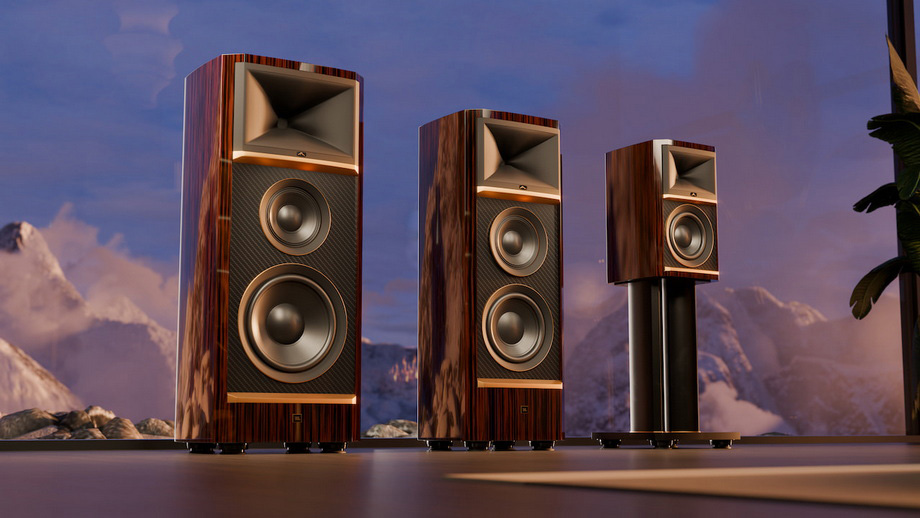
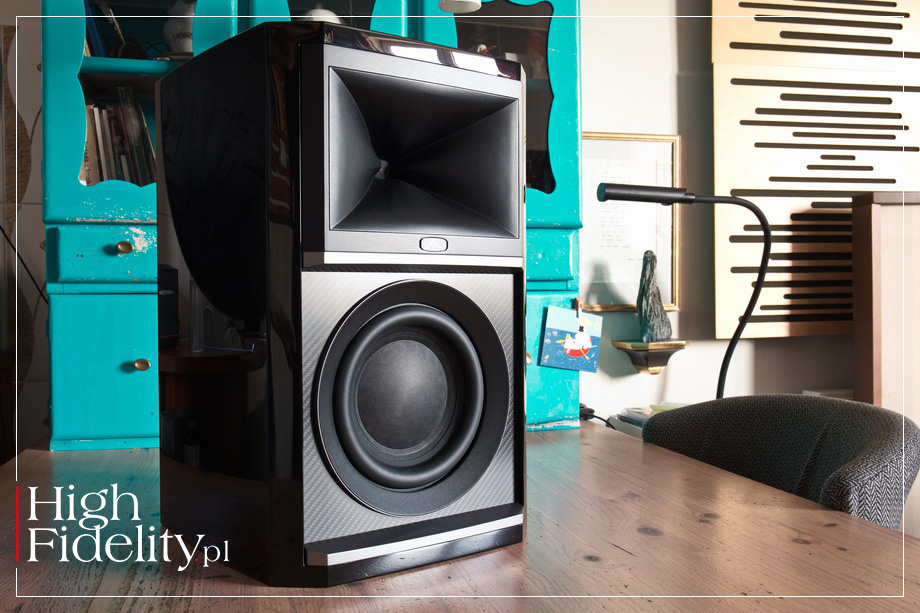
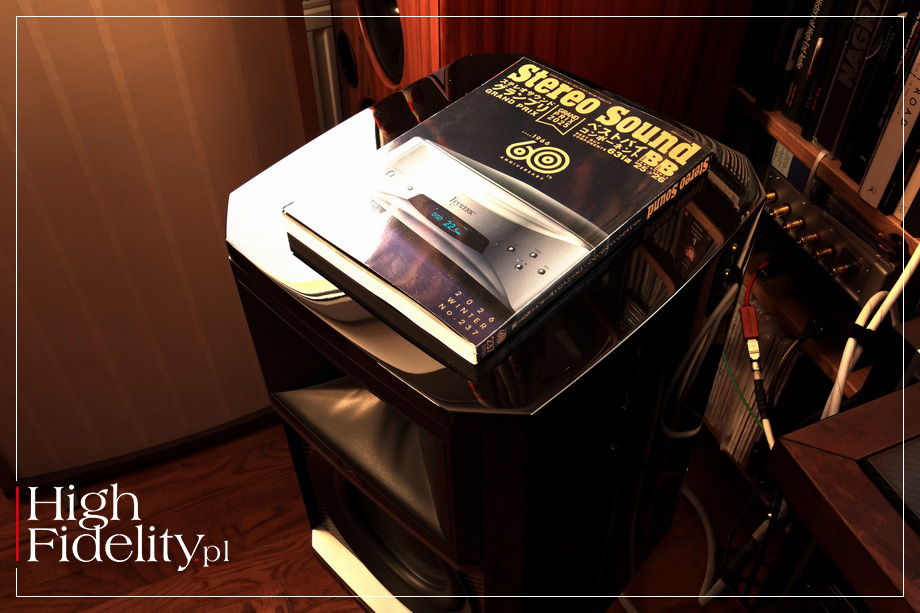
‖ Three speakers of the new series: Makalu, Pumori, and Ama • photo: Harman press materials This has only changed now – Summit currently includes five models, with Everest at the top and Ama floor-standing speakers at the bottom. It is not difficult to guess that the K2 model will soon undergo a facelift, and probably the Everest too. Although new, the series has already been recognized, among others, by the Japanese magazine “Stereo Sound.” In its 2025 summary, two models from the series, Makalu and Pumori, took 9th and 8th place, respectively, and received the 2025 Grand Prix award (“Stereo Sound,” Winter, No. 237). Let's add, that the new speakers were designed at JBL's Acoustic Center of Excellence in Northridge, California, although they are manufactured in China. ▓ Ama AMA ARE TWO-WAY stand-mount speakers. They are quite large for their type. Their name, Ama (pronounced a-ma), is part of Ama Dablam, meaning “Mother's Necklace.” It is a peak in the Himalayas with a height of 6812 meters. Ama dominates the eastern horizon from the base camp at Everest and has been named the “Matterhorn of the Himalayas” because of its – as we read on the manufacturer's website – “impressive, distinctive shape.” The speakers measure 476.3 × 308.0 × 336.0 mm and weigh 23.3 kg. Add to that the company's stands, which are really cool and weigh 20.1 kg, for a total of 43.4 kg per piece. That's a lot for monitors. The manufacturer writes about them:
Summit Ama is a compact masterpiece designed to reveal the heart of the music. This 2-way stand-mount loudspeaker pairs an 8-inch HC4 cone woofer with a D2 compression driver and HDI™ horn to deliver exceptional clarity, control, and coherence across the frequency spectrum. The Summit Ama’s elegant cabinet rests on a matching steel-and-aluminum stand.
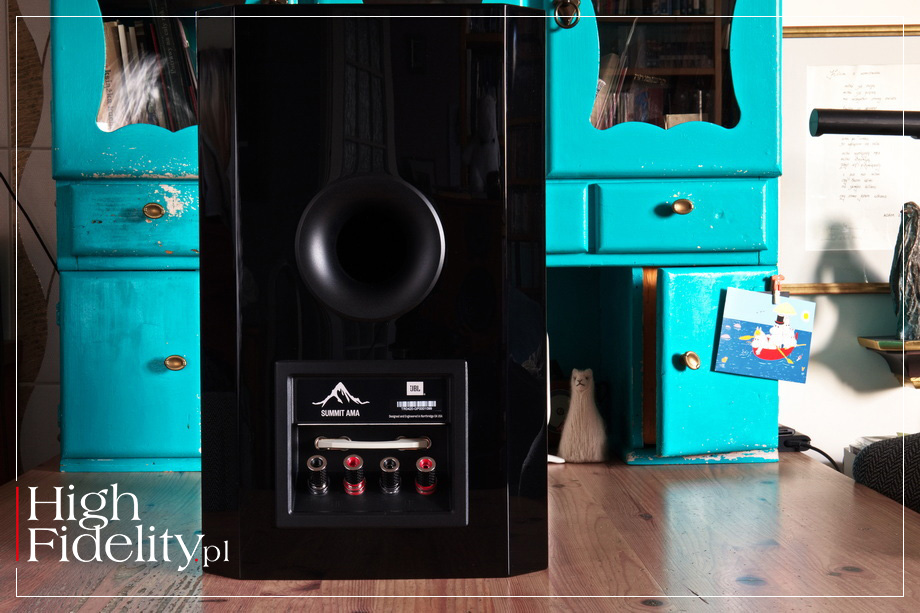
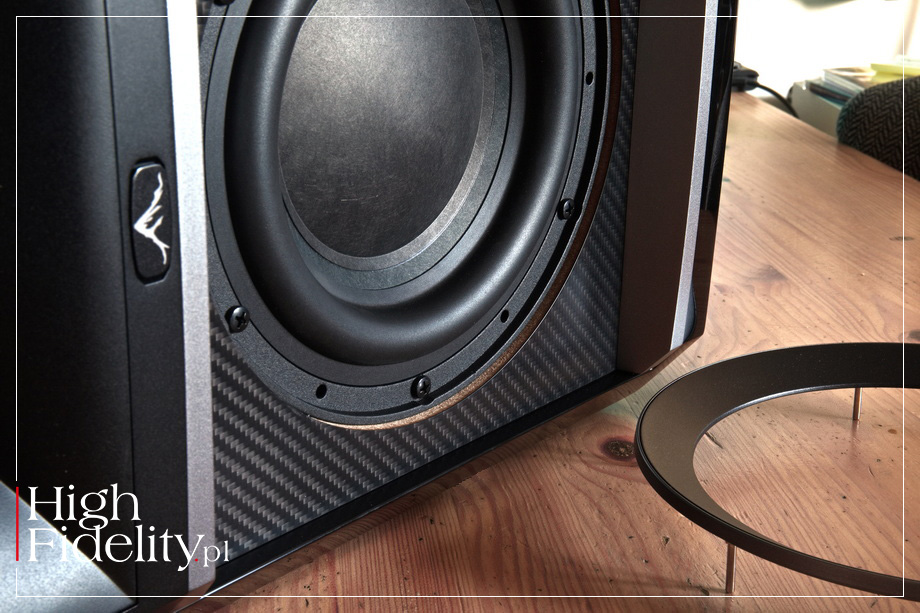
⸜ Ibidem. The speakers feature dual speaker terminals, so they can be connected either in the traditional way or using two pairs of cables (bi-wiring), or to two amplifiers (bi-amping). Instead of classic jumpers, a single element with four banana plugs is used, which is neatly hidden in the embossed element to which the sockets are attached. Simple and effective. This is a much better solution than classic “plates,” even though it will be more difficult to use higher quality jumpers. The speakers are available in two finishes: high-gloss black lacquer (Black High Gloss) or natural ebony veneer, also covered with high-gloss lacquer (Ebony Veneer High Gloss). Metal details, such as the horizontal elements above and below the larger driver and the rims on the stands, are also available in two colors. They can be ordered in a titanium-like color called Summit Platinum or in “old gold” called Summit Gold. In each version, the front remains black, with a carbon fiber weave around the low-midrange driver. 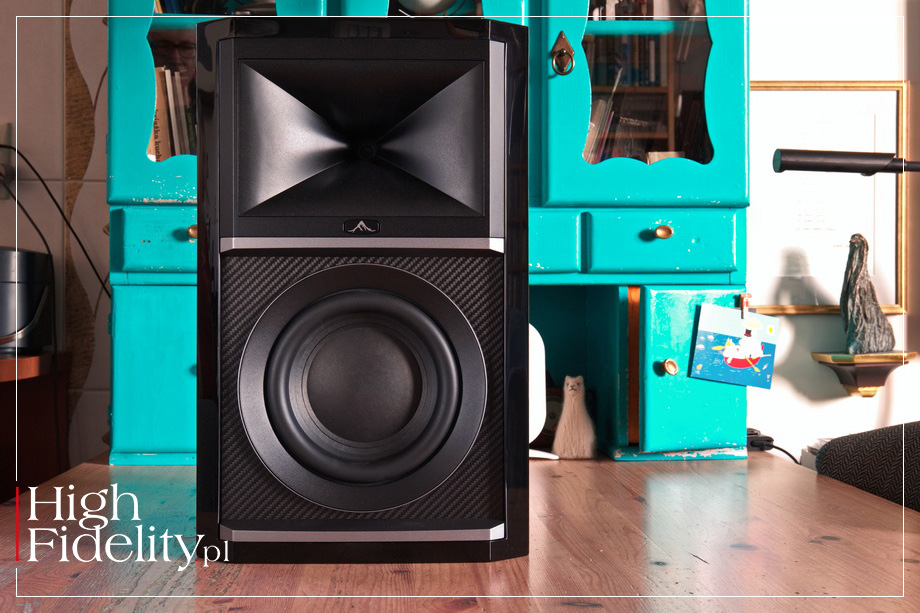
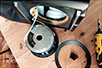
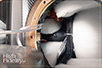
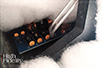
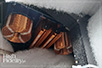
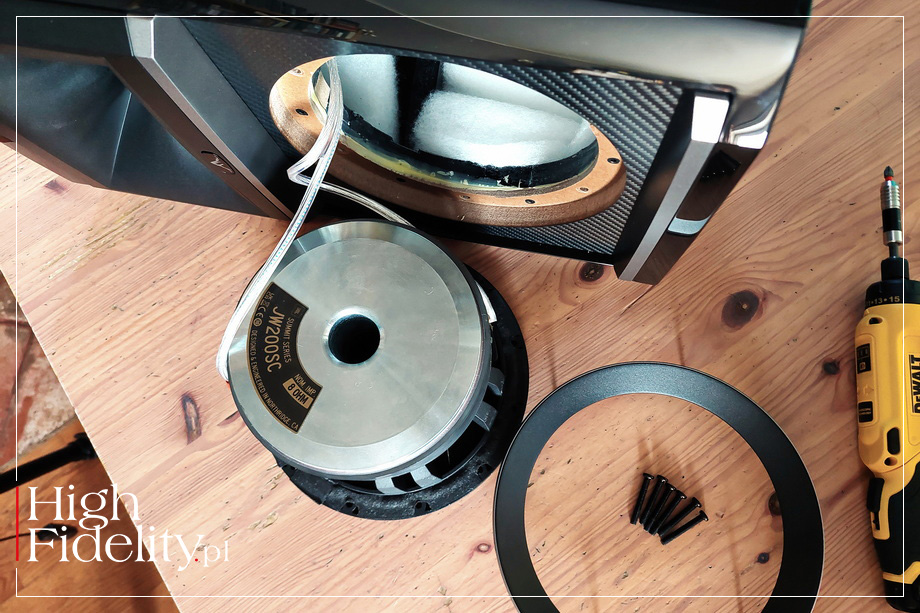
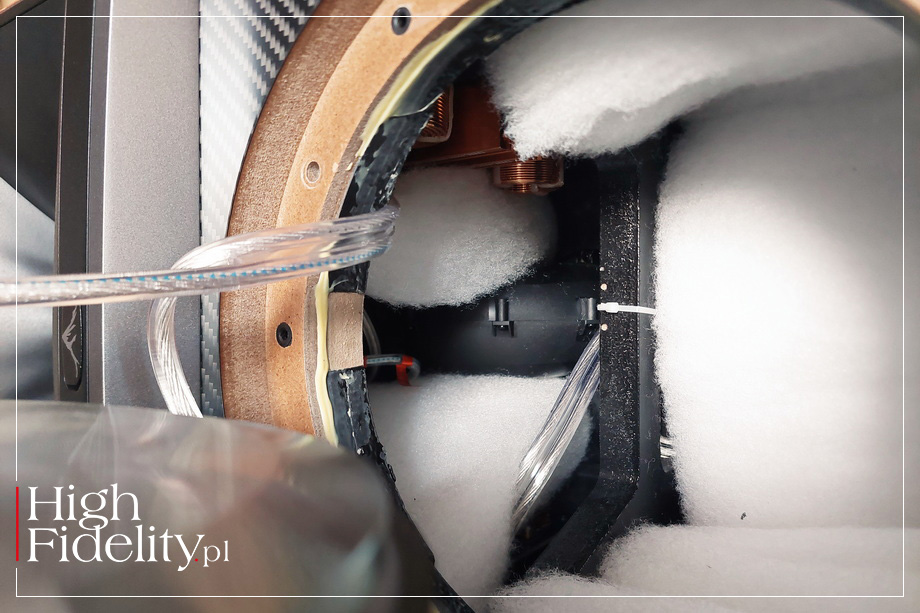
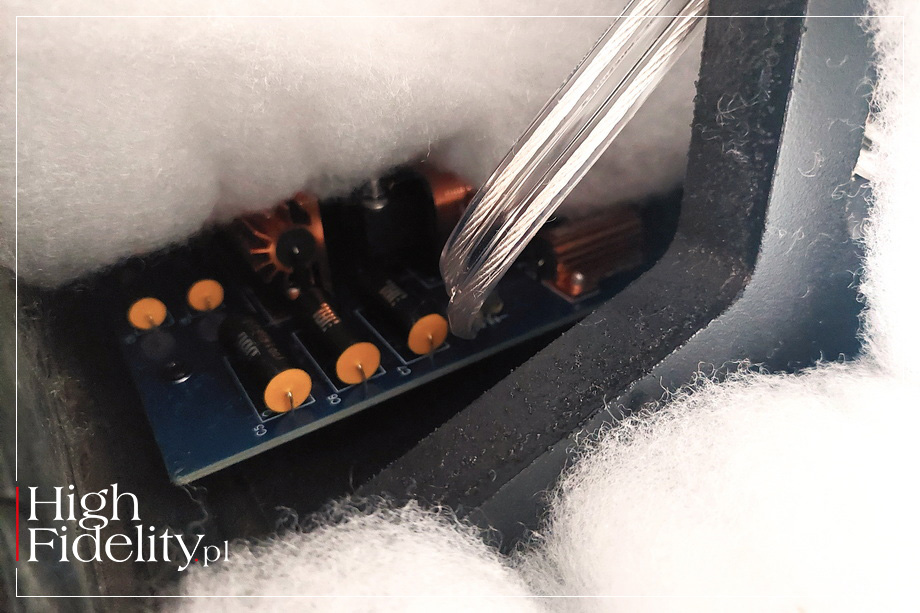
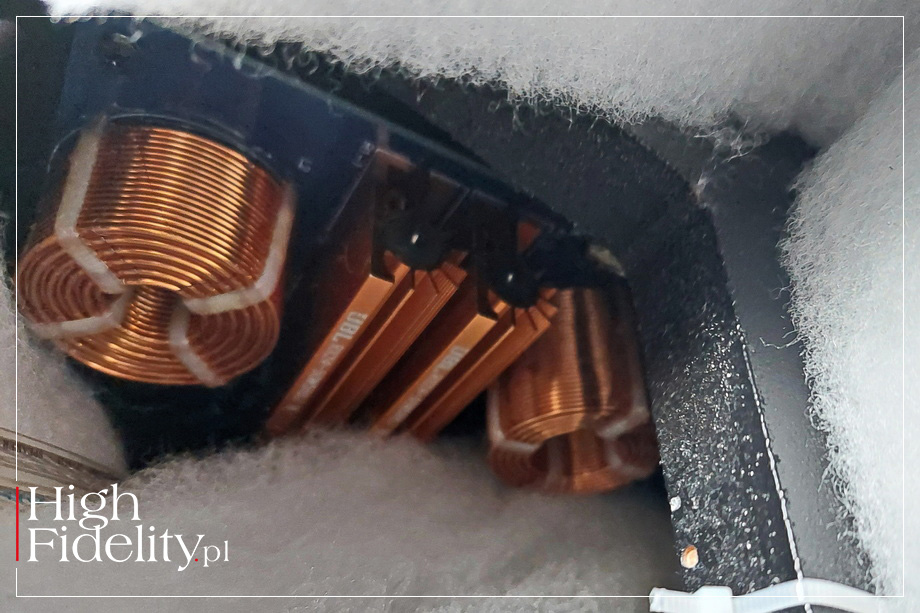
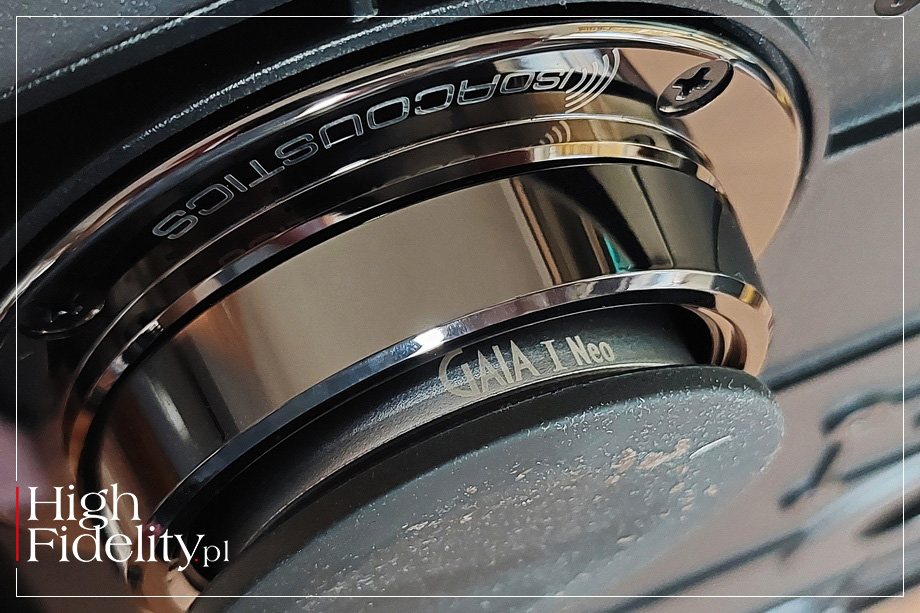
TECHNOLOGY • Although they differ in size, all three new models share the same technical solutions. And these differ in detail from those found on K2 and Everest; hence my reluctance to combine these five into one series. One of the characteristics of the new speakers, distinguishing them not only from more expensive models but also from other designs by this manufacturer, is their relatively low efficiency. For Ama, it is really low at 84 dB. The nominal impedance is also not high, at 4 Ω, but the minimum is quite acceptable, at 3.1 Ω at 239 Hz. On paper, these are difficult conditions for an amplifier. In reality, however, it may be better than with “high-efficiency” speakers, which require at least 100 watts to get going. Another feature that distinguishes this manufacturer from others is the use of proprietary drivers in the Ama, designed in-house and manufactured in factories cooperating with JBL. Few other manufacturers can afford such a luxury, as it means a lot of money spent on research, prototyping, etc. These include, for example: Focal, Bowers & Wilkins, KEF, Børresen (the big ones), Davis Acoustics, Falcon Acoustics (the small ones), and a few others; in Poland, this will soon be the case with Pylon Audio. There are also brands such as Spendor and Harbeth, which have their own low-, mid-, and low-midrange drivers but purchase their tweeters externally. In the Ama model, both drivers are manufactured by JBL. These are a 38 mm D2 compression driver (1.5“, D2815K) for high frequencies and a 200 mm JW200PB low-midrange driver (8”); we also give the values in inches because this is, after all, an American company, and these values are used in its descriptions. The tweeter features a dual diaphragm and dual drive to minimize distortion. Its visible and highly distinctive feature is a large waveguide (horn) with the brand name Sonoglass HDI. According to the company's materials, “this combination guarantees uniform dispersion, phase coherence, and dynamic freedom, even with very complex recordings.” Originally, Sonoglass was mainly used as acoustic and thermal insulation for buildings, applied by spraying. In general, it is a fibrous, recyclable spray with low volatile organic compound content, used for sound control and acoustic insulation. JBL uses it as a trade name for HDI (High-Definition Imaging) horns as a horn material. But let's get back to the drivers because they are very interesting. The D2 design is truly unique. The company's technical documents state that it uses two lightweight, ring-shaped polymer diaphragms, each with its own magnet and voice coil. In this design, the load on the diaphragm is divided into two parts. Thus, the input power is also divided between two voice coils, which means – according to the manufacturer – “significantly higher rated power” and “lower thermal compression.” As stated in the OnHiFi review, “high polymer diaphragm damping” and “lower moving mass” mean that each of the two diaphragms can be “tuned” to a specific range. This results in “significantly lower levels of nonlinear distortion” and “smoother, extended high-frequency response”; more → HERE. Let's add that a long, bullet-like phase plug, protected by a mesh, is placed in front of the diaphragm. The low-midrange range is handled by a 200 mm JW200PB driver, with an almost 160 mm (2.5“) coil and a ”hybrid" HC4 diaphragm. It is a sandwich construction and consists of three layers: carbon fiber, cellulose on the outside, and a closed-cell foam core, bonding them together. This is supposed to ensure “fast attack and controlled, tight bass.” The driver features a large dust cap and a thick, wide rubber suspension. It is recessed into the enclosure so that it can be covered with a grille that matches the horn and side walls. The crossover is exceptionally complex – it is one of the most complex and “comprehensive” crossovers I have seen in a long time. It has been divided into two sections, high and low-midrange, assembled on printed circuit boards screwed to the side walls of the cabinet. It connects to the drivers and speaker terminals via thick braids made of what looks like silver-plated copper. The crossover uses MultiCap capacitors from Reliable Labs, as well as powerful resistors cooled by metal housings and exceptionally large coils. The choice of these particular capacitors was dictated by “ESR and dielectric loss reduction,” which is supposed to translate into “higher signal throughput, low distortion, and better microdynamics.” The aforementioned speaker terminals are also part of this system. They look solid and are plated with a silvery-colored metal; however, it is not known what metal this is. Their nuts are finished with carbon fiber braiding, a method used, for example, by the Japanese company Furutech, but also by several manufacturers from Taiwan. The cabinet is made of MDF boards, and all its walls are slightly rounded, both inside and outside. The front is thicker and additionally reinforced with horizontal metal elements. This is important because the low-midrange driver is powerful, has a huge double magnet, and a heavy cast basket. It begs for the magnet to be supported by something inside. Small details, such as rounded walls, highlighted details, nice logos, etc., mean that the speakers, although quite large, do not give the impression of being “heavy.” From a technical point of view, the rounding was intended to minimize standing waves. However, it also helps to further stiffen the structure. Inside, the speaker has also been reinforced with multi-point stiffening and is quite heavily damped. The round bass-reflex port is located on the rear panel. STANDS • The stands are part of the Ama system. You cannot buy the speakers without them. And that's fine. The whole thing looks very good, and the stands themselves are really good and attractive. Especially since their lower part is finished in the same manner as the speakers, i.e., in black or with veneer. Consisting of two tops and two supports, the base is a steel and aluminum construction. The tops have drilled holes, and the cabinets feature threaded sockets. When screwed together, they form a single, heavy, rigid whole. The bottom plate is particularly thick and large, which guarantees stability. There are channels at the back for routing cables. But the most important thing is invisible. The base stands on adjustable feet prepared for JBL by IsoAcoustics. 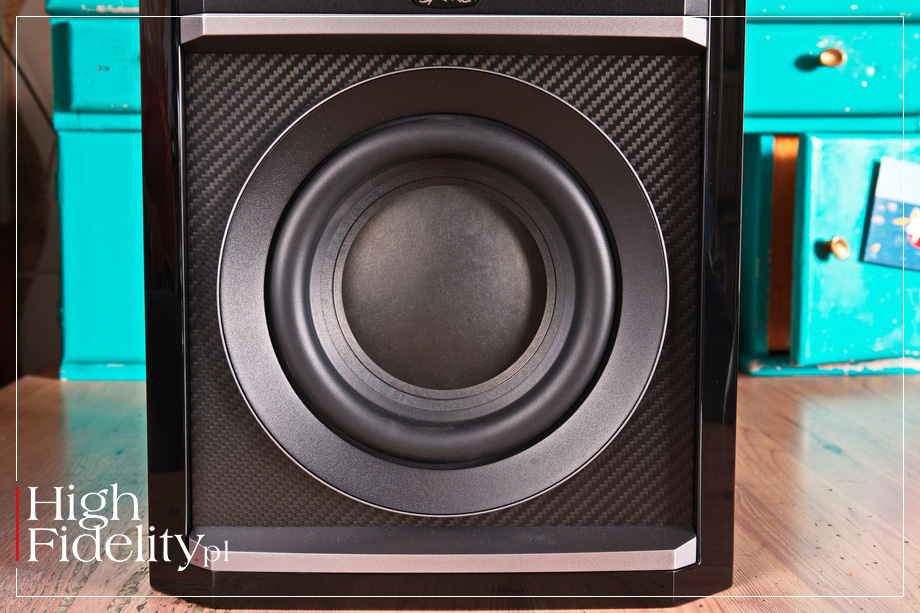
This is rare, but it does happen – usually, speaker manufacturers just screw in ordinary spikes, and that's it. But maybe it's high time to rely on proven solutions from specialists in more expensive products. I know there is a temptation to do everything yourself, but this usually does not work. Not only is it technically good, but when it comes to positioning, the flat feet of the IsoAcoustics Gaia I Neo will not scratch our floors. ▓ SOUND HOW WE LISTENED • The JBL Summit Ama speakers were tested in the HIGH FIDELITY reference system. The source was an Ayon Audio CD-35 HF Edition SACD player and a Sforzato DSP-05 EX & PMC-05 EX file player & clock, powered by a Soulution 710 transistor amplifier, with the signal fed through Siltech Triple Crown speaker cables. |
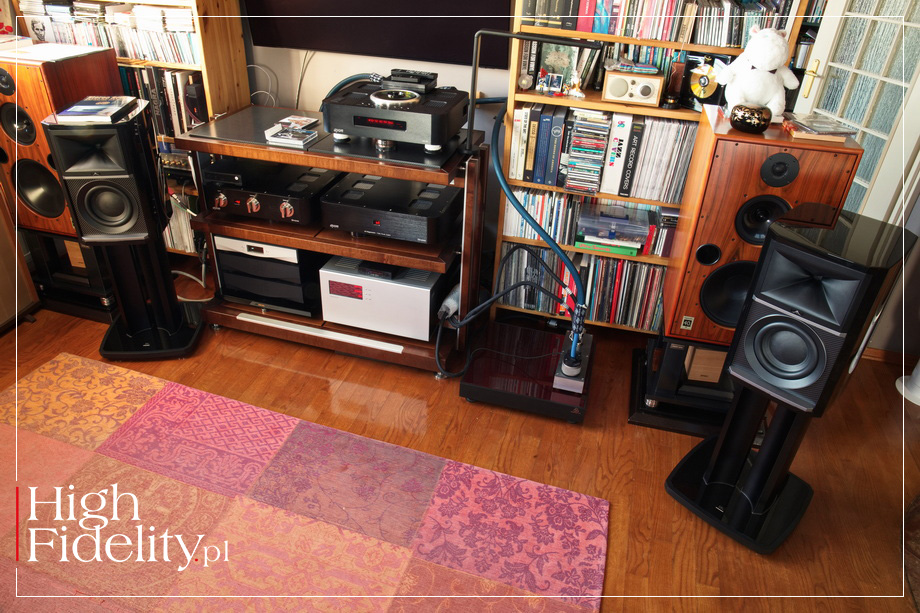
The speakers were placed on company bespoke stands, with which they are sold. The distance between the front baffles and the listening position was 243 cm and the speakers were placed 295 cm from each other, measured from their vertical axis. They stood 82 cm from the wall behind them, also measured from their axis and upper edge. The speakers were turned directly toward the listening position. 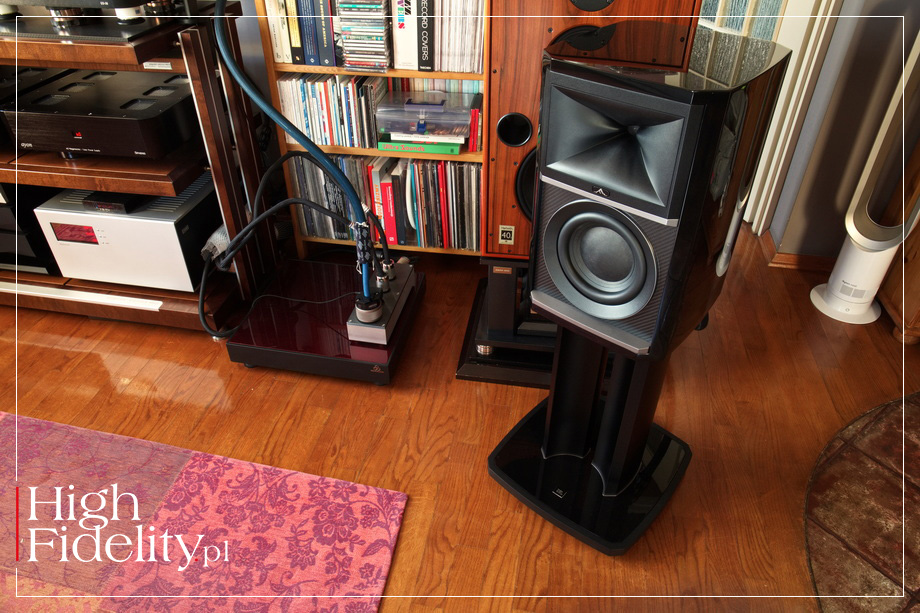
I determined the distance between the speakers and their leveling using the Bosch PLR 50 C. For more information on setting up speakers, see the article Micro-tuning, or setting up speakers, No. 177, → HIGHFIDELITY.pl. For more information on the acoustics of the HF listening room, see the article The “High Fidelity” listening room..., № 189, → HIGHFIDELITY.pl. Measurements of automatic room acoustics correction HF can be found → HERE and → HERE ˻PL˺. » RECORDINGS USED FOR THE TEST ⸜ a selection
⸜ TAKESHI INOMATA, The Dialogue, Audio Lab. Record/Octavia Records OVXA-00008, SACD/CD ⸜ 1977/2001. MEETING THE “NEW” is always a big experience. And if the ‘new’ is just another version of something we have known for years, even many years, it is also disturbing. Because what if it turns out that it is not “it”? What if everything is as it should be, fine, in place, and yet it does not convince us? I deal with such audio products quite often. I try to describe their sound as accurately as possible, thus paying respect to their creators and the brands themselves, as well as to users who are looking for something like that. But that's it; it's not “mine.” 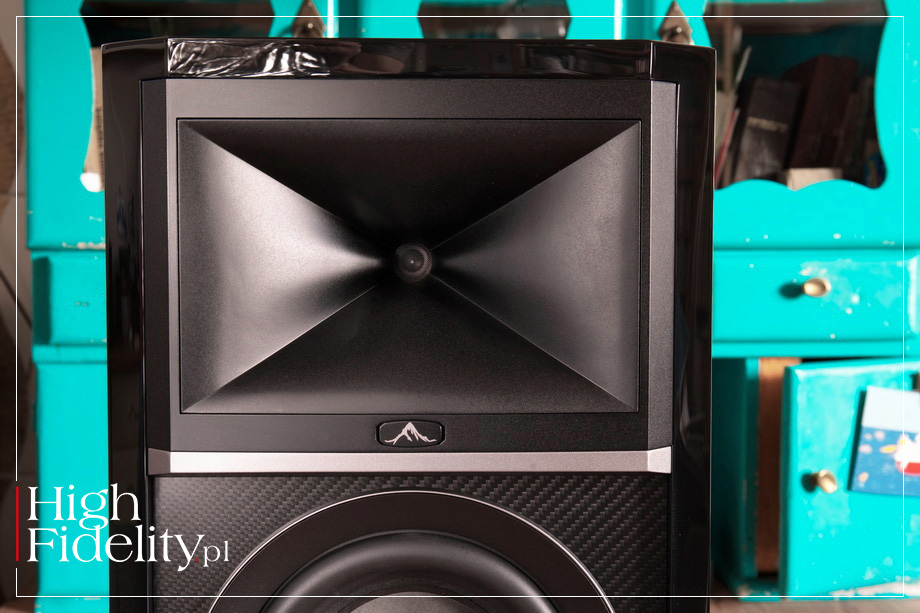
How was it with the latest JBLs? Well, my curiosity was mixed with slight anxiety – Summit has been one of the most important series from this manufacturer for many years. This is because it is marketed above the series aimed at a “broader customer base,” as company representatives like to say. It is still not the top of the line, as there are also the K2 and Everest above it, but it is probably key to showing the capabilities of this manufacturer in a world that focuses on mobility, temporariness, and the “disappearance” of products – a world that it itself helped to create. As it turned out, these are speakers that not only intrigued me but actually caught my attention. This is because they produce a sound that is significantly different from what this manufacturer has accustomed us to in recent years. It is also different from what we hear at concerts. In short, it is a sound I know from his old studio monitors – the Studio Monitor series – which audiophiles in Japan have fallen head over heels for. The Summit Ama speakers sound remarkably energetic and, at the same time, surprisingly dark. Yes, I am not mistaken; these are midrange-oriented designs. But not because they emphasize this part of the range. Both the bass and the treble are cleaner and better defined than in probably all the speakers from the Monitor series that I have listened to. As far as I can remember, of course (and my memory is emotional, meaning I remember how I reacted to one album or another). However, as far as I can tell, considering that I have tested quite a large number of JBL speakers from this series, this is indeed the case. So let's repeat, returning to what is most important – these are speakers with a dark sound. Yes, these are dark JBLs. Which is exactly how I imagine they should be. And in this respect, they are really, incredibly similar to the Harbeth M40.1s they were compared to. Maybe even “more so.” Which makes sense because both Harbeth and JBL come from the tradition of speakers designed for recording studios, i.e., “monitors.” Although their design is completely different, their approach to sound reproduction is very similar. Harbeth is the British BBC “school,” while JBL is the ‘American’ school, known for its large studios. And yet, the fundamentals of sound are the same. When I listened to ERIC DOLPHY's saxophone solo in the ˻ 1 ˺ God Bless The Child, recorded during his 1961 European tour, I sat back, relaxed, but listening intently, even mesmerized. It's a sound that draws you in. Really, I'm not exaggerating or embellishing. I chose this recording because it was included on a compilation created by Shoji “Swifty” Sugawara, founder and owner of Basie, one of Tokyo's most famous Jazz Kissas (ジャズ喫茶). It is a place where you can drink, eat, but above all listen to music on top-of-the-line audio equipment – in this case, a vintage JBL system with powerful 4355 speakers, a preamplifier and amplifiers from the same company, and a Linn Sondek turntable. It also has a small stage where jazz greats, including Count Basie, have performed. The album was prepared by professionals and released by the Japanese magazine Stereo Sound as part of the Stereo Sound Reference Record series. American speakers played it beautifully. I see no reason to embellish this because it is not necessary, so – I repeat – beautifully. The sound was tangible, dark, creamy, yet with an incredible amount of information. But this information, as with Harbeths, Spendors, Falcons, Grahams, and other BBC monitors, did not attract attention. And yet, it enriched the presentation incredibly. Because although the midrange is the most important part of the range here, it is, as I said, encased in active extremes. The high frequencies seem hidden, but they are strong and unambiguous. They seem to be very clean, and perhaps that is why they do not have to compete with the music for our attention. Because if you hear a wealth of sounds, and it does not form a story, then you hear noise. And we do not need noise in our lives. It is also an extremely precise presentation. When talking about “darkness,” one might think that you have to listen carefully to pick out the sounds from the background. This is not the case; we simply get it along with the colors, no effort required. And maybe that's why these designs show depth so perfectly. You see, this is something that has not been a priority in this manufacturer's speakers in the last, say, twenty or thirty years. Width – absolutely. In terms of depth, not quite. In this respect, they resembled horn speakers, by the way. 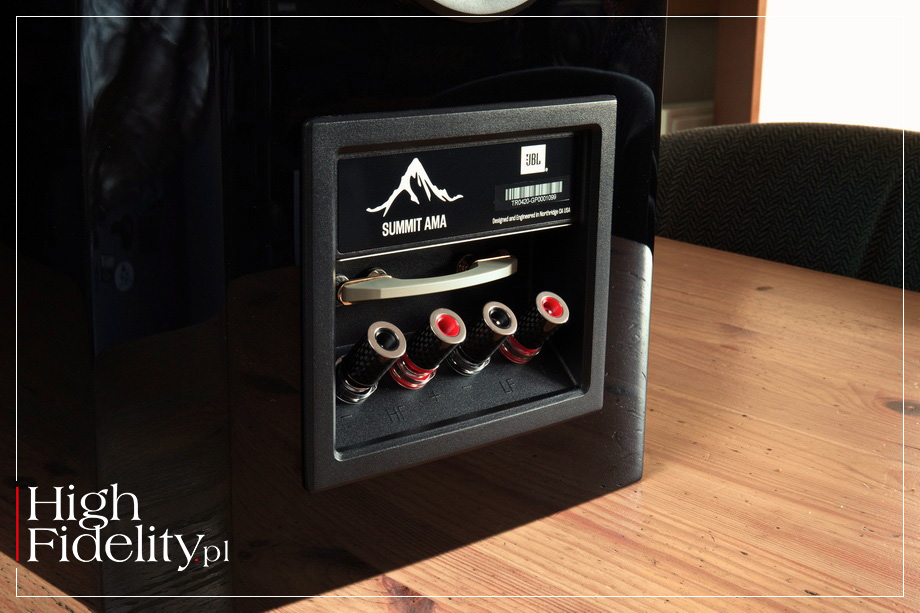
The Ama speakers are completely different. Mono recordings by LOUIS ARMSTRONG ˻ 3 ˺ On The Sunny Side Of The Street or ˻ 5 ˺ Jumping At The Woodside by COUNT BASIE, generally speaking – all single-channel recordings had excellent depth. The foreground was not too close to me, but I still felt connected; I was not just a viewer sitting in front of the screen. They clearly distinguished between different sound planes, even within a single instrument (direct sound + reverberation). This is a novelty for JBL products, at least in this century. Multi-mono recordings, i.e., classic contemporary multi-track recordings with successive instruments and voices recorded separately, are presented in an exceptionally three-dimensional way. This means that the individual tracks are clear due to their acoustic and tonal distinctiveness. ANJA GARBAREK's vocals from the Briefly Shaking album in ˻ 3 ˺ The Last Trick were clearly placed in the foreground, followed by electric guitar and sampled percussion. On the sides, there were delayed beats, which multiplied them. The strings appearing at 2:23 in the right channel added warmth and creaminess. Not that the recording needed smoothing out, but it was precisely this creaminess that was shown immediately, unambiguously, in contrast to the bright samples. The differentiation was just as good as what I mentioned earlier. But that's not why I reached for this album. What I really wanted to hear was the amazing electronically generated bass in ˻ 4 ˺ Sleep. Wow! As I suspected, but wasn't sure about, the speakers played it in a perfectly balanced way, but with the weight and energy it required. The recording was not brightened up, and the bass was not caricaturally “boxy.” On the contrary, it had the smoothness and fullness I know from the best speakers. Their tone does not change significantly when transitioning from p and pp to fff. It opens up, brightens slightly, but it is still the same idiom. When something like the maximally compressed vocals in the ˻ 5 ˺ Shock Activities, starting at 1:12, hits, it won't destroy it or drown it out. But even then, we won't have the urge to turn down the volume. We listen to it as a creation and artistic expression, and if it's brighter, then that's how it's meant to be. It helps that it's a big sound, really big. MADELEINE PERROUX's vocals from the Careless Love in the opening cover of Cohen's ˻ 1 ˺ Dance Me To The End Of Love were shown in the foreground, slightly pushed forward in front of the drums behind her. The piano, on the other hand, was spread across the channels, but with a reverb that made it seem as if we were close to it, in a small room, surrounding me. This is one of the few albums that I prefer to listen to from the original, regular CD release rather than the Mobile Fidelity remaster, which was released in 2006 on 180-gram vinyl. The MoFi version is brighter and more accurate, but it lacks the spirit of the original. And that lies in its depth and density. When, at the beginning of ˻ 2 ˺ Don’t Wait To Long, the bass hits with the kick drum, it has to be a powerful thrust, as on the CD. The vinyl is castrated in this respect. And the JBLs showed this perfectly, heavily weighting down the sound and deepening it. Once again, the lower bass with a very nice, dark tone came through. It was also very “lively” and energetic, which I believe the speakers owe to both the horn at the top of the range (high tones have an incredible impact on how we perceive bass) and the long-excursion driver at the bottom. And yet we will still listen to the vocals, as this is how the album producers set it up and how Amy will communicate it to us. ▒ Summary The TESTED SPEAKERS from JBL will surprise those who are used to the “stage-like” sound of previous models. There is no hint of aggression in the Summit Ama, yet the dynamics and energy are greater than in the Studio Monitor series and others. Their resolution is excellent – I have only heard something like this in K2 and Everest speakers so far. Not quite, but very close. It is also a wonderfully balanced sound and dark at the same time. 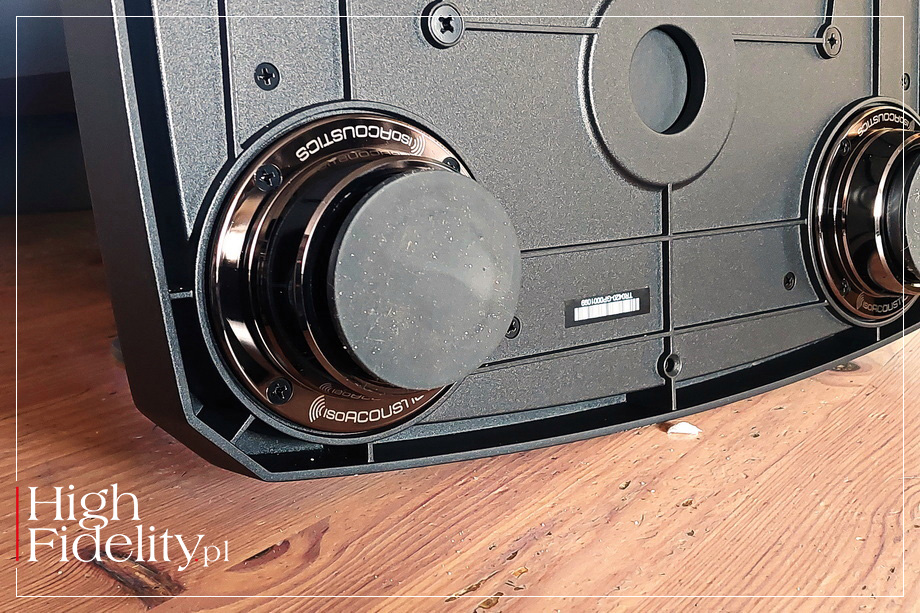
As I’ve mentioned before, this is how, in my opinion, recordings should sound at home. With these designs, JBL confirms my intuitions, which I shared with you in January last year; more → HERE. As a result, we get a true monitor, which is energetic, wonderfully spacious, but above all, allows us to listen to any music, loud or quietly, as we wish. It is smooth and organic. It does not discourage you with anything, but rather draws you into its world. And it is a beautiful world. ‖ WP ▓ Technical specifications (acc. to the manufacturer):
Design: 2-Way, 8-inch (200mm), Pedestal-Mount Reference Loudspeaker 
THIS TEST HAS BEEN DESIGNED ACCORDING TO THE GUIDELINES adopted by the Association of International Audiophile Publications, an international audio press association concerned with ethical and professional standards in our industry, of which HIGH FIDELITY is a founding member. More about the association and its constituent titles → HERE. |
 |


|
Reference system 2026 |
|
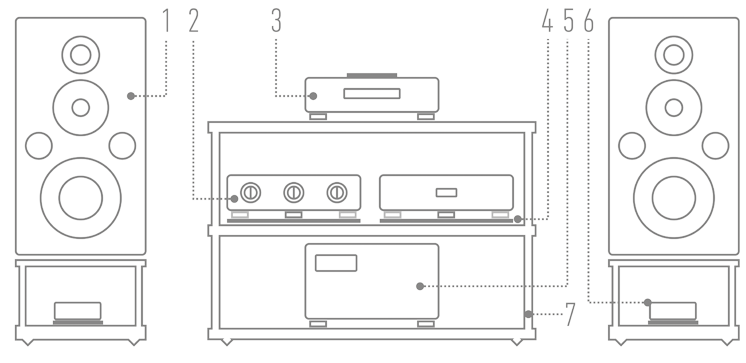 1) Loudspeakers: HARBETH M40.1 |REVIEW| 2) Line preamplifier: AYON AUDIO Spheris III Linestage |REVIEW| 3) Super Audio CD Player: AYON AUDIO CD-35 HF Edition No. 01/50 |REVIEW| 4) Stands (loudspeakers): ACOUSTIC REVIVE (custom) |ABOUT| 5) Power amplifier: SOULUTION 710 6) Loudspeaker filter: SPEC REAL-SOUND PROCESSOR RSP-AZ9EX (prototype) |REVIEW| 7) Hi-Fi rack: Hi-Fi rack: finite elemente MASTER REFERENCE PAGODE EDITION Mk II, more → HERE |
|

|
Cables Analog interconnect SACD Player - Line preamplifier: SILTECH Triple Crown (1 m) |ABOUT|» ANALOG INTERCONNECT Line preamplifier → Power amplifier: Siltech ROYAL SINLGE CROWN RCA; review → HERE Speaker cable: SILTECH Triple Crown (2.5 m) |ABOUT| |

|
AC Power Power cable | Mains Power Distribution Block - SACD Player: SILTECH Triple CrownPower (2 m) |ARTICLE| » POWER CABLE Mains Power Distribution Block → Line preamplifier: Acoustic Revive ABSOLUTE-POWER CORD, review → HERE » POWER CABLE Mains Power Distribution Block → Power amplifier: Acoustic Revive ABSOLUTE-POWER CORD, review → HERE Power cable | Power Receptacle - Mains Power Distribution Block: ACROLINK Mexcel 7N-PC9500 (2 m) |ARTICLE| Power Receptacle: Acoustic Revive RTP-4eu ULTIMATE |REVIEW| » ANTI-VIBRATION PLATFORM under Acoustic Revive RTP-4eu ULTIMATE: Graphite Audio CLASSIC 100 ULTRA, review → HERE Power Supply Conditioner: Acoustic Revive RPC-1 |REVIEW| Power Supply Conditioner: Acoustic Revive RAS-14 Triple-C |REVIEW| Passive filter EMI/RFI: VERICTUM Block |REVIEW| |

|
Anti-vibration Speaker stands: ACOUSTIC REVIVE (custom)Hi-Fi rack: finite elemente MASTER REFERENCE PAGODE EDITION Mk II, more → HERE Anti-vibration platforms: ACOUSTIC REVIVE RAF-48H |ARTICLE| » ANTI-VIBRATIONAL FEET: |

|
Analogue Phono preamplifier: Phono cartridges:
Clamp: PATHE WINGS Titanium PW-Ti 770 | Limited Edition Record mats:
|

|
Headphones » HEADPHONE AMPLIFIER: Leben CS-600X, review → HEREHeadphones: Headphone Cables: Forza AudioWorks NOIR HYBRID HPC |