


|
LOUDSPEAKERS • floor-standing PYLON AUDIO
Manufacturer: JRC GROUP S.A. |

 |
 |
 |
|
Review
text by WOJCIECH PACUŁA |

|
No 268 September 1, 2026 |
|
˻ PREMIERE REVIEW ˼
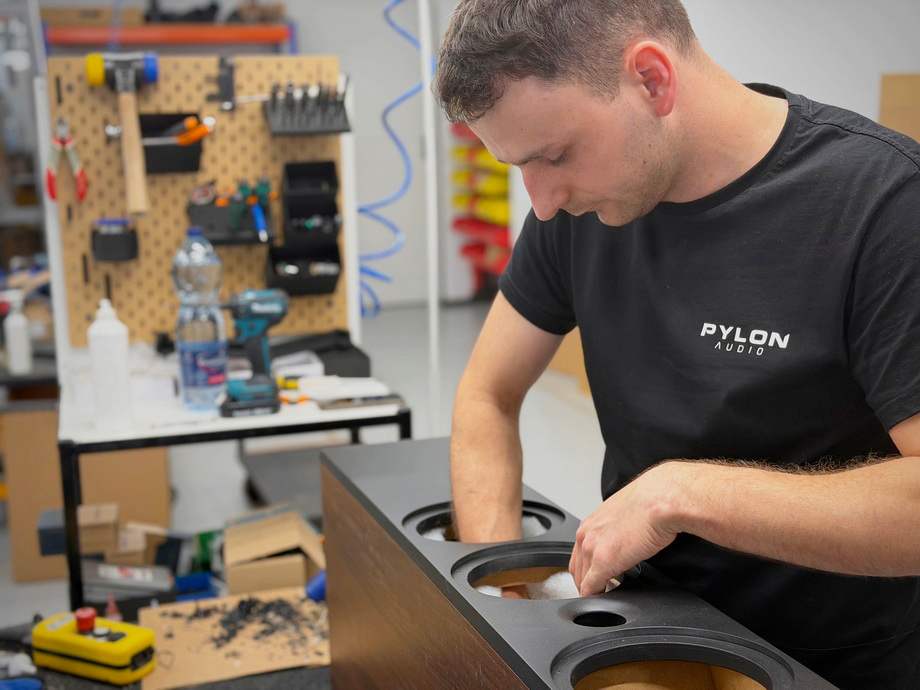
WHEN I COMPARE THE PHOTO of Mateusz Jujka, CEO of JRC Group, owner of the Pylon Audio brand, and Marek Kostrzyński, the company’s lead engineer, featured in our July 2014 review of the Pearl 25 speakers, with the one you’ll see below, I don’t see any major differences (review → HERE). Yes, both have grown in stature; yes, Pylon Audio is now not only one of the largest but also one of the most respected manufacturers of speakers and cabinets in the OEM sector in Europe. The smiles, the good spirits, and the confidence in the chosen direction - these, however, remain the same. 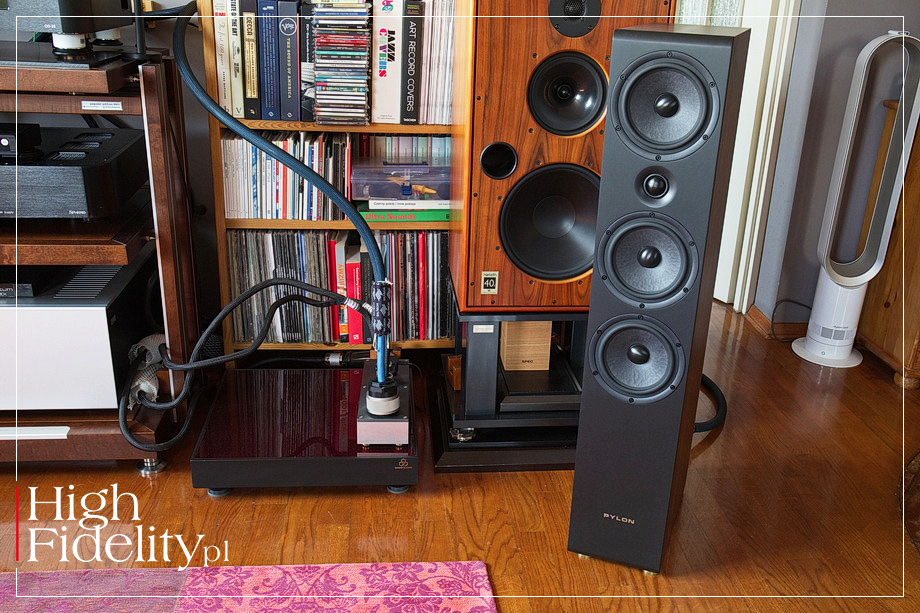
It reminds me of Pylon’s early years. Mateusz is kind enough to remind me every time we meet that the first review in its history was the one in “High Fidelity” for the Pearl model, from September 2011 (read → HERE ˻PL˺) and that it was after that test that its story really “took off.” We also often reminisce about our trips together as part of two tours across Poland - the first, in 2016 and 2017, when we showcased the Emerald Touched by High Fidelity speakers (more → HERE), and the 2023 Tour de Pologne featuring the Jade 20 High Fidelity Edition speakers (more → HERE ˻PL˺). In a word, we share a history. So I took it for granted that as soon as the new Mk II versions of the Opal series speakers were released, Mateusz and Marek would bring them to me to tell me about them and present them to me. ▲ A few simple words MATEUSZ JUJKA & 
‖ Mateusz Jujka at „High Fidelity” headquarters The OPAL SERIES is a team of fighters. In the process of developing them, therefore, no compromises were made. To take the series to a whole new level - its pinnacle - it takes not only know-how, but also the more fundamental know-what and know-why. In the next stage, the Opal 30 was taken apart down to its basic components. We examined not only the drivers, the cabinet, the crossover with its wiring, and all the details, but also how the components interacted with one another. We had no doubts about the speaker configuration or the overall size. Yes, the M-T-W-W configuration plus a rear-firing bass reflex port is an ideal and proven foundation for a 30-liter speaker. The rest, however, underwent a complete redesign. 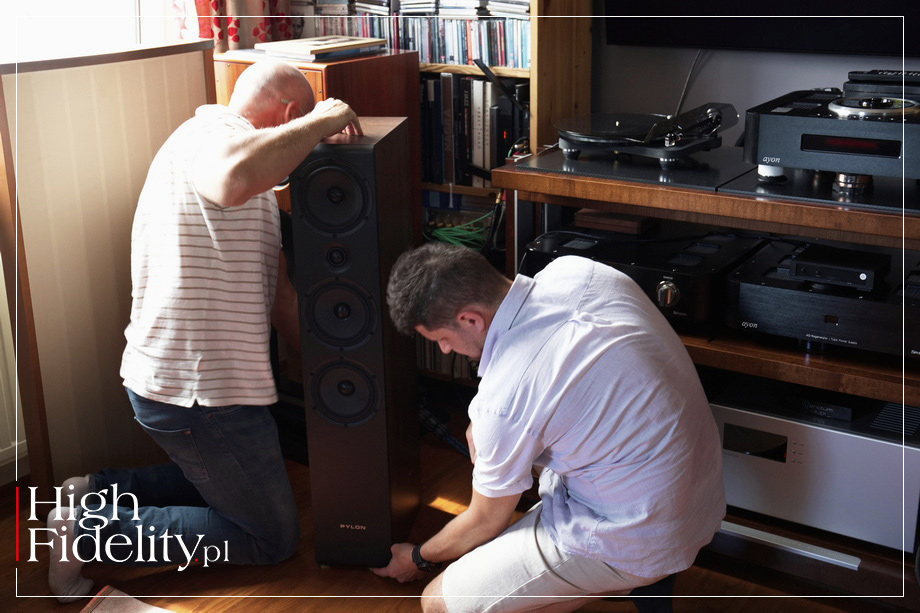
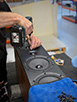
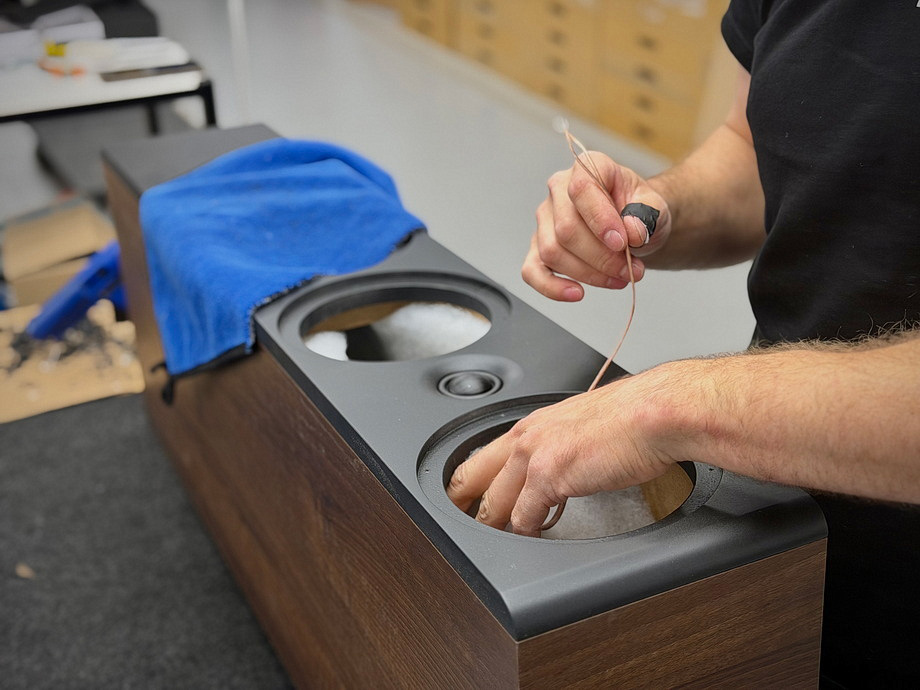
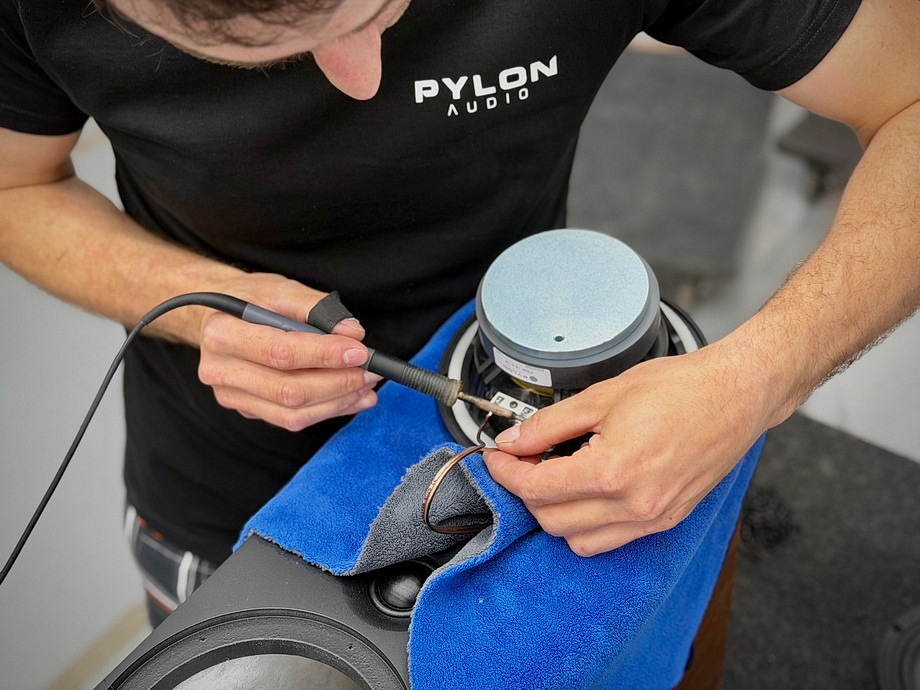
‖ Mateusz and Marek Kostrzyński set up the speakers for the test The bass section has gained more volume, thanks to a reconfiguration of the cabinet’s interior without changing its overall dimensions, and the tuning of the bass-reflex port has been lowered. The woofers’ moving parts are now more massive and have a lower resonance, yet they operate with greater acceleration and dynamics. This is thanks to significantly more powerful and stronger magnetic circuits. The Opal 30 Mk II thus has a solid foundation for its sound, which, thanks to greater depth, as well as better clarity and control, delivers that certain something associated with a grand scale sound. The quality of the entire bass range is ensured by two of our own woofers, whose motors are now not just more powerful, but significantly more powerful and more sturdy. The voice coils, now wound on rigid, electrically non-conductive frames, drive the woofers’ moving parts with great force and precision, thanks to their operation within stable magnetic fields generated by much larger magnetic circuits. This means that even the driver cones, which are thicker and a few grams heavier, having been specially developed for the bass section of the Mk II version, vibrate with vastly improved control, and the bass is now more resolving. The strong and stable magnetic fields, which are more resistant to interference, result in significantly lower nonlinear distortion, improving the clarity and accuracy of instruments such as the snare drum, timpani, bass drum, double bass, large brass instruments, and the entire range of electronic sounds. 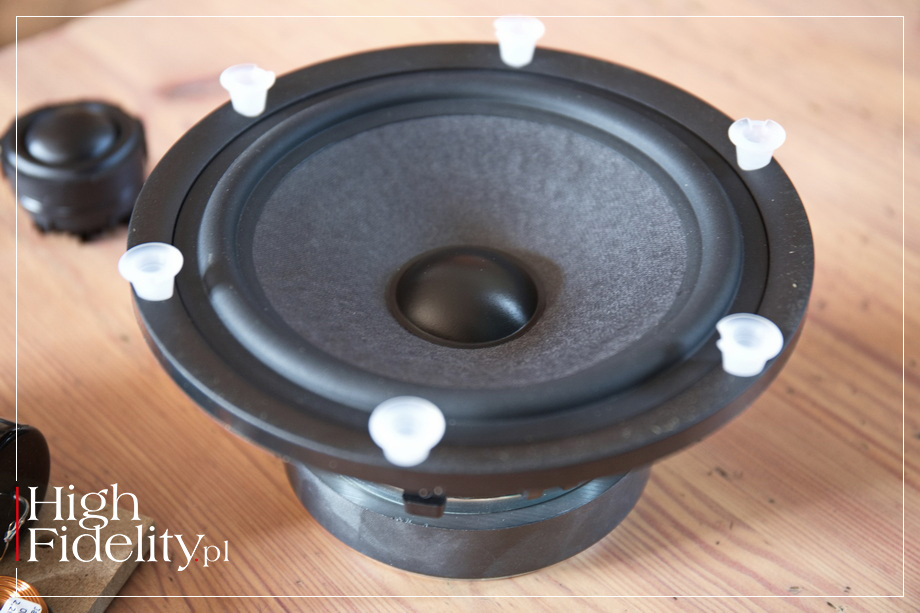
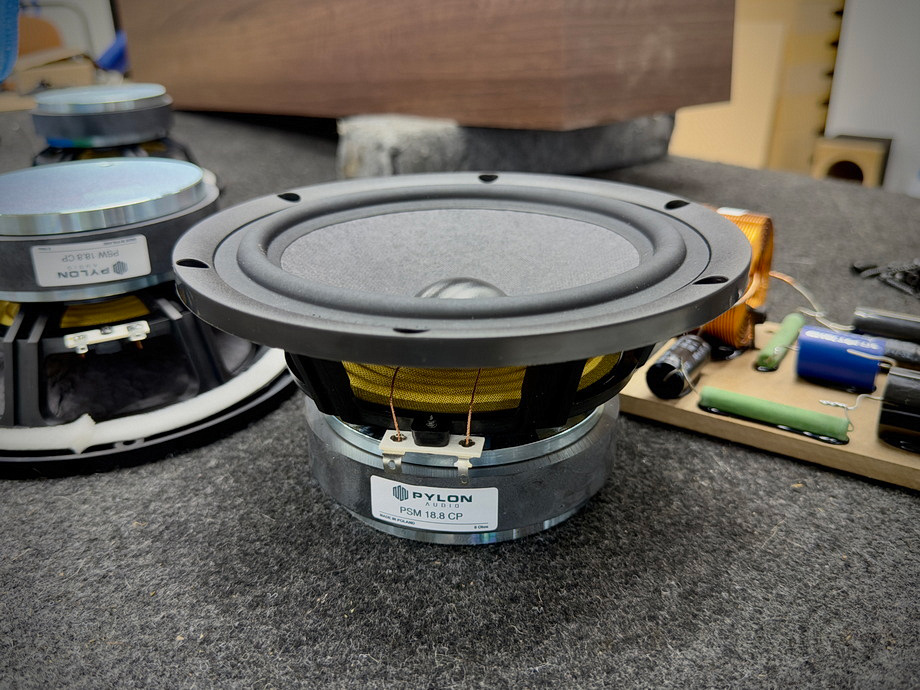
‖ The new Pylon’s bass woofer The cellulose cones of the woofers are now thicker and heavier, but also much more rigid and more durable. In addition, the cones can withstand very strong bass impulse surges, producing a tight sound wavefront even during highly dynamic passages. The rigid cones and large, powerful magnetic circuits not only add detail to both quiet and loud bass passages but also significantly increase the power of the Opal 30 Mk II. None of the above upgrades would have been possible without our newly developed basket. It is no longer a stamped sheet-metal basket, but a molded plastic basket. It features significantly greater rigidity and stability, which is crucial for the proper control of the driver’s moving parts. Furthermore, this is an open-back basket, in which the sections responsible for the driver’s excursion have been appropriately enlarged. This design reduces distortion and compression while allowing for the seamless attainment of higher sound levels. Thanks to these upgrades, the Opal 30 Mk II woofers deliver deep and precise bass, while the midrange driver produces clear and undistorted midrange. 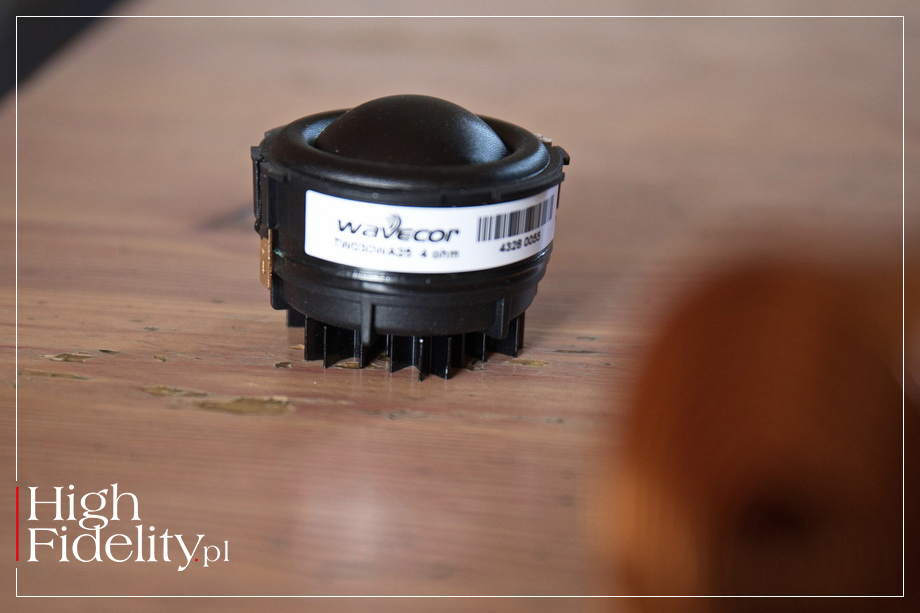
‖ The Mk II version features Wavecore tweeters Our Mk II midrange driver is also designed to operate in the lower midrange and upper bass ranges. The same applies to the Opal 30 Mk II woofers, which, thanks to their design, perform very well in the midrange as well, even though they are intended for low frequencies. However, the Mk II three-way system requires optimal midrange performance, which is why it was equipped with a dedicated midrange driver. Its equally powerful magnetic circuit generates a very strong and stable magnetic field, within which the voice coil, also wound on a rigid, electrically non-conductive frame, operates. In the highest frequency range of the Opal 30 Mk II three-way system, a new driver is at work, featuring a diaphragm with 50% more surface area and a very powerful drive. Its graphene-reinforced textile dome is capable of reproducing sound even in the supra-acoustic range. On the other hand, the tweeter extends deep into the low-frequency range thanks to a vented rear chamber, ventilation of the voice coil housing, and special recesses beneath the dome’s suspension. Its powerful drive system consists of a high-efficiency yoke magnetic circuit with a large neodymium magnet, in which an ultralight voice coil made of CCAW wire - that is, wire with an aluminum core in a copper sheath - operates. 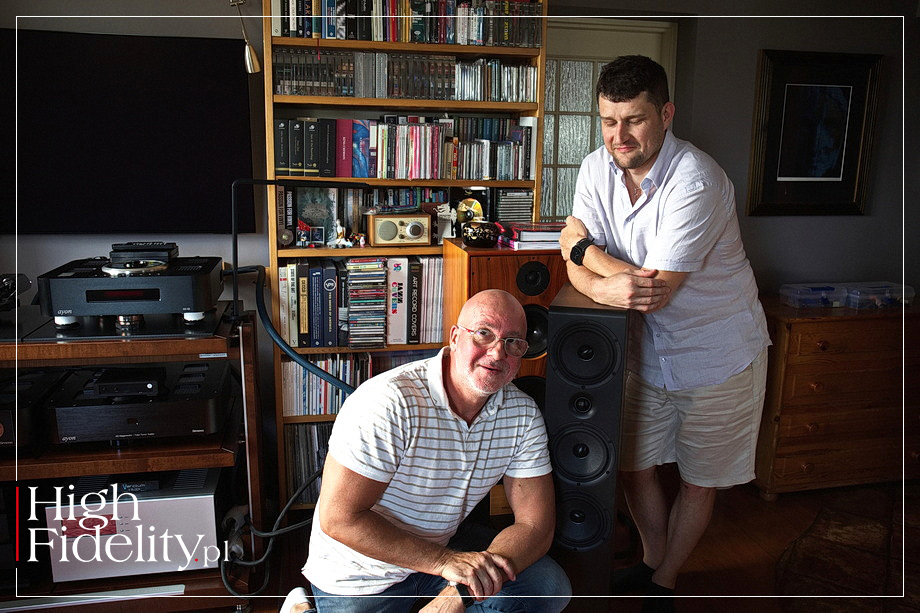
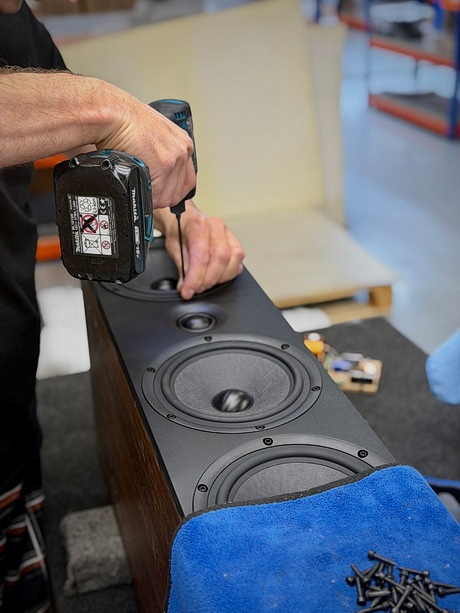
‖ Marek Kostrzyński (on the right) and Mateusz Jujka The speaker baskets are integrated into a 22 mm-thick lacquered front panel. The cabinet body made of 18 mm-thick MDF is the proven design of the Opal 30. The cabinet is rigid thanks to internal bracing. This organizes and limits unwanted natural vibrations, and the result is based on measurements taken in our anechoic chamber using a laser vibrometer. The natural vibration modes of the cabinet, that is, internal resonances, are in turn damped by a damping material. 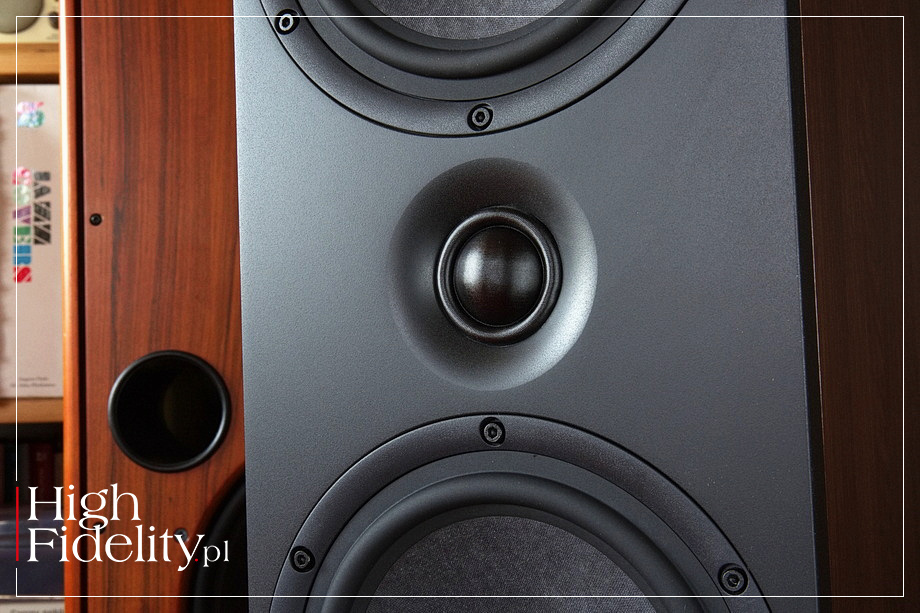
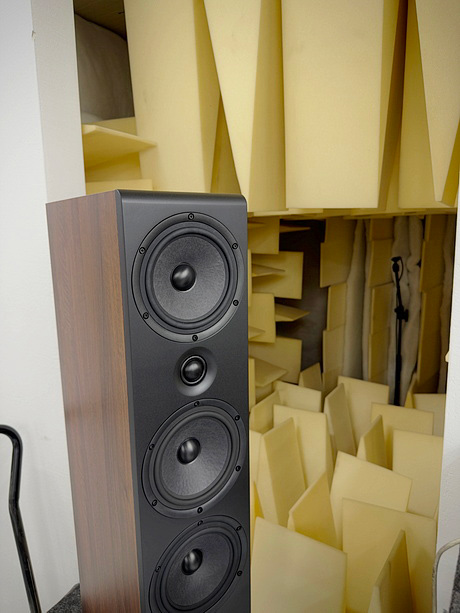
The way the tweeter is mounted deserves special mention. It is mounted from the inside, as is sometimes done in high-end speakers. This solution serves more than just aesthetic purposes. This driver, so crucial to the Opal 30 Mk II’s sound, forms a cohesive acoustic unit with the front panel, as it works in conjunction with a shallow horn molded directly into the panel. There is no horn-like sound here, as the horn is shallow and does not allow for nonlinear compression. Progress could not bypass the crossover. Its architecture has been revised, and the upgrade also extended to the components. All voice coils feature the best cores available - air - second only to a vacuum. These air-core inductors are free from the nonlinear distortions associated with ferromagnetic cores. In addition, the tweeter circuit features a high-quality capacitor built using the finest dielectrics. ‖ MJ & MK ▓ Opal 30 Mk II THE PYLON AUDIO OPAL 30 floor-standing speakers made their market debut at the turn of 2018 and 2019, and we reviewed them in March 2019; more → HERE ˻PL˺. The Opal series itself was launched in 2016, and the Opal 30 was developed as its largest, 3-way model. Externally, the new version appears very similar. Were it not for the slightly different appearance of the midrange and woofer drivers, as well as a different tweeter and its mounting, one might say they are identical designs. In reality, only the cabinet remains from the previous design, though it has been slightly improved. The measurable parameters have also improved. The nominal impedance remains unchanged at 4 Ω, as does the fairly high sensitivity, at 90 dB. However, the rated and peak power have increased, from 100 and 160 to 135 and 200 W, respectively. The frequency response has also been broadened, now reaching 30 kHz instead of 20 kHz. According to the manufacturer, during the development of the new speakers, “no shortcuts were taken,” and the changes required answers to the questions: “what?”, “why?”, and “how?”. The Opal 30 was therefore broken down into its constituent parts. The focus was not only on the drivers, the cabinet, the crossover with wiring, and all the details, but also on how they interacted with one another. The overall goal, as Mateusz wrote to me, was “outstanding sound along with a wealth of characteristics that can be enumerated and evaluated both objectively and subjectively.” 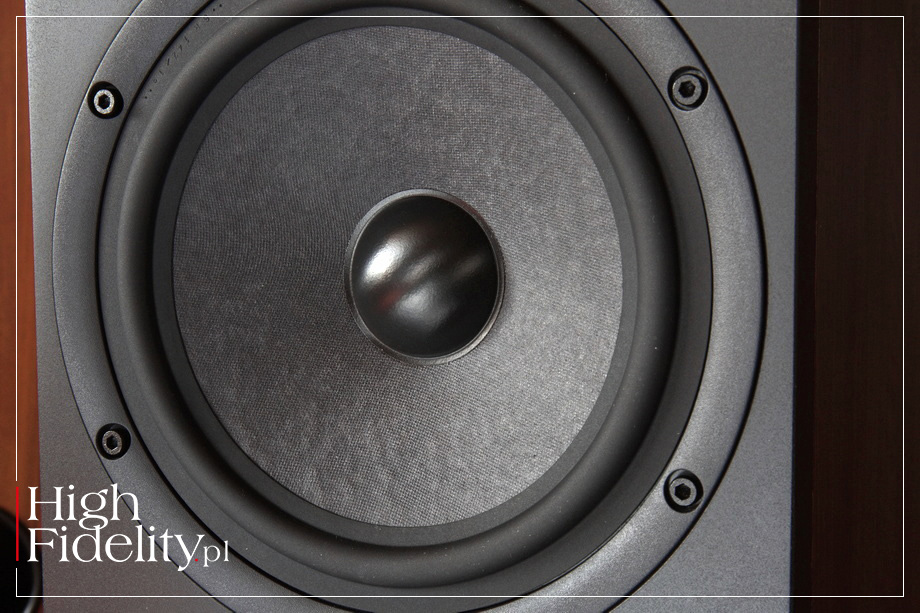
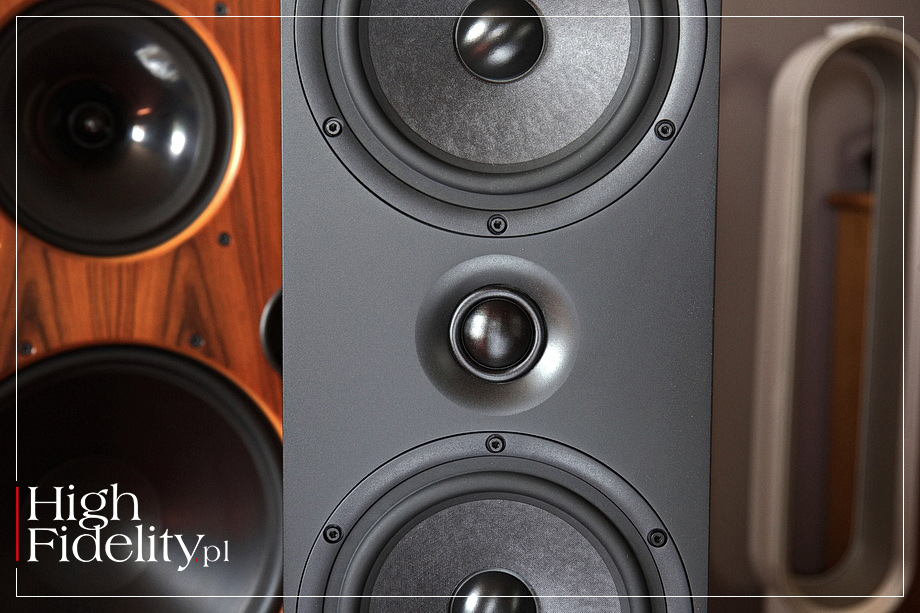
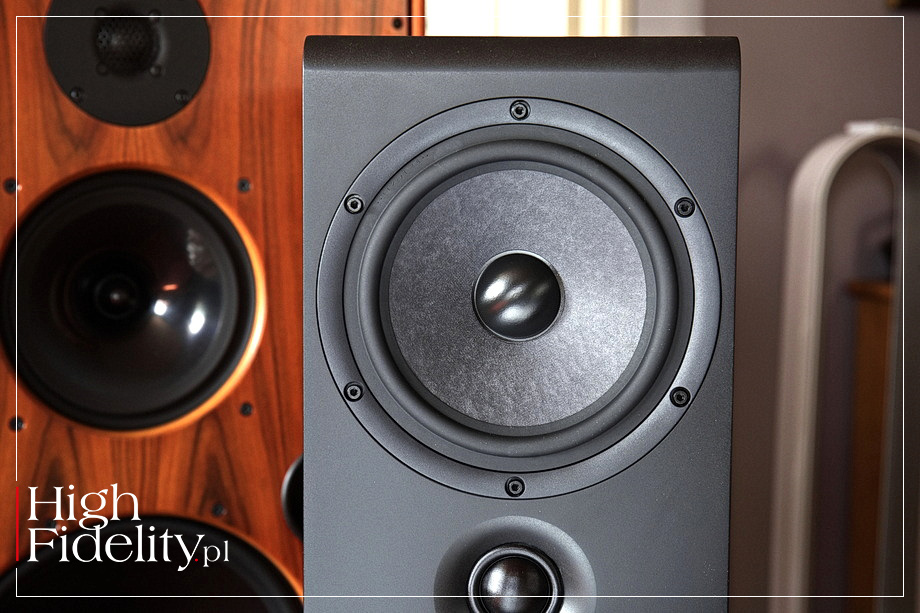
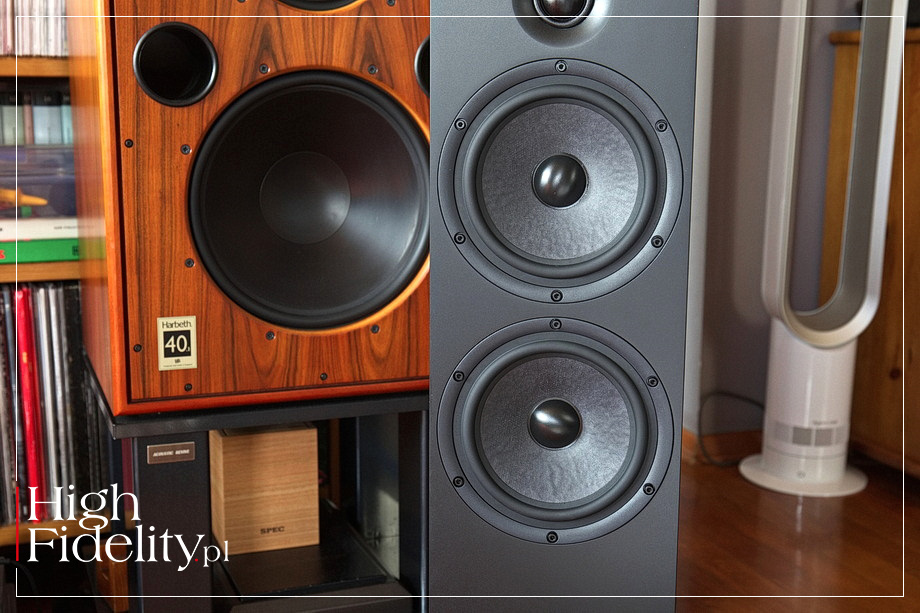
DRIVERS • The driver configuration remained unchanged, namely: midrange – tweeter – woofer – woofer. Three of them are manufactured in-house by Pylon; these are new designs, while the tweeter now comes from Wavecor. |
During work on the bass range, its lowest registers required a series of adjustments. The woofer section now features a larger chamber, achieved by re-configuring the interior of the cabinet without changing its overall dimensions, and the tuning frequency of the bass-reflex port has been lowered. The moving parts of the woofers (180 mm in diameter each) are now more massive and have a lower resonance frequency, yet they operate with greater acceleration and dynamics. This is thanks to significantly more powerful magnetic circuits. We read:
The voice coils, now wound on rigid, electrically non-conductive bodies, drive the woofer moving systems with great force and precision, thanks to their operation in stable magnetic fields generated by much larger magnetic circuits. This means that even the woofer cones, which are thicker and a few grams heavier in the Mk II version, specifically designed for the bass section, vibrate with vastly improved control, and the bass is now more detailed and textured.
The strong and stable magnetic fields, which are more resistant to interference, result in significantly lower nonlinear distortion, substantially improving the clarity and authenticity of instruments such as the snare drum, timpani, bass drum, double bass, large brass instruments, and the entire range of electronic sounds. These drivers feature new cellulose cones. They are now not only thicker and heavier, but also, as Pylon assures us, much stiffer and more durable. A new basket was developed specifically to provide greater durability. The previous one was made of stamped sheet metal, while the new one is molded from plastic. It is said to offer greater rigidity and stability. Furthermore, it is an open-frame basket, with the sections responsible for the driver’s excursion appropriately enlarged. This design reduces compression and minimizes noise. 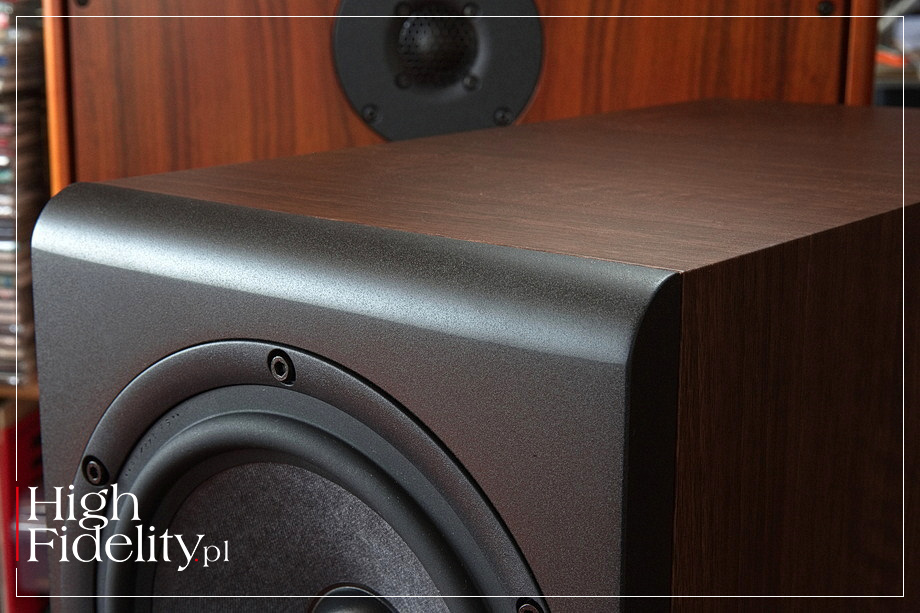
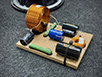
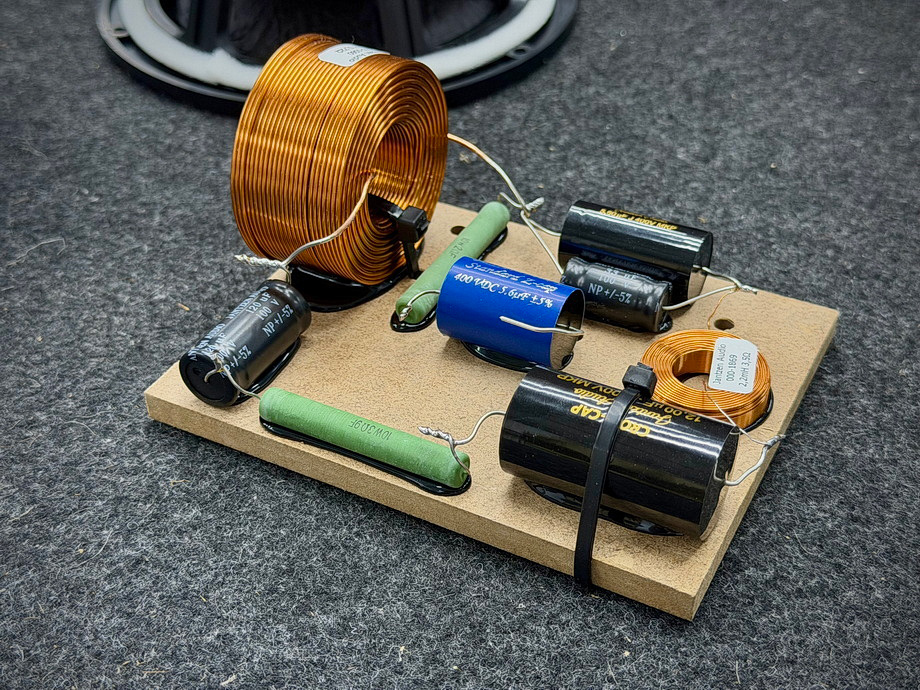
Above the tweeter, you can see a driver that looks identical to the two below it. In fact, it is a midrange driver. Its magnetic circuit, as Marek Kostrzyński explains, generates a “very strong and stable magnetic field” in which the voice coil operates; this coil is also wound on a rigid, electrically non-conductive body. However, it drives a lighter, rigid cellulose diaphragm, designed to handle higher accelerations. All Opal diaphragms are air-dried and impregnated with a special varnish. High frequencies are reproduced by the aforementioned 30-mm tweeter dome, whose diaphragm surface area is half as large as in the previous version. Its graphene-reinforced textile dome is capable of reproducing frequencies even in the supra-acoustic range. On the other hand, this driver’s range extends deep into the bass thanks to a vented rear chamber, ventilation of the voice coil assembly, and special recesses beneath the dome. Its driver consists of a yoke magnetic circuit with a large neodymium magnet, in which an ultralight voice coil made of CCAW wire, that is, wire with an aluminum core encased in copper, operates. The electromagnetic field of the voice coil is compensated by a Faraday ring, which results in a cleaner Lorentz force and significantly reduces nonlinear high-frequency distortion. The frequency response extends even higher. CABINET • The cabinets are made from 18 mm thick MDF and veneered with natural wood, and the structure is reinforced with internal bracing; the front panel is lacquered. The woofer and midrange driver baskets are integrated into the 22 mm thick lacquered front panel. The bracing organizes and reduces vibrations, and the reinforcement points were selected based on measurements taken in Pylon’s anechoic chamber using a laser vibrometer. The natural vibration modes of the enclosure, that is, internal resonances, are in turn damped by a damping filling. The mounting of the tweeter deserves special mention. It is, in fact, mounted from the inside. This is a professional solution that serves not only aesthetic purposes, which, incidentally, are the result of the work of professional designers, but also allows the tweeter to form an acoustic unit with the front panel, as it interacts with a horn directly molded into the panel. This horn conceals the mid-bass drivers and the side edges, and improves the time alignment of the tweeter with them. CROSSOVER • Changes are also evident in the crossover. Its architecture has been modified, but it is still hand-assembled using the point-to-point technique on an MDF board. All inductors are vacuum-wound, which is intended to eliminate nonlinear distortions caused by ferromagnetic cores. In addition, there is a high-quality capacitor in the tweeter circuit. The components are sourced from Jantzen. The drivers and crossover are connected with twisted-pair copper wire. On the rear panel, there are single, gold-plated, fairly simple speaker terminals screwed into a plastic plate. The plate features a recess, so tightening the terminals is not very easy. The set also includes classic steel spikes (without washers) and a magnetically attached grill. The speakers look really nice. ▓ SOUND HOW WE LISTENED • The Pylon Audio Opal 30 Mk II speakers were tested in the HIGH FIDELITY reference system. The signal sources were the Ayon Audio CD-35 HF Edition SACD player and the Sforzato PMC-05 EX file player with the DSP-05 EX clock. The Pylons were driven by a Soulution 710 transistor amplifier, and the signal was transmitted via Siltech Triple Crown speaker cables. 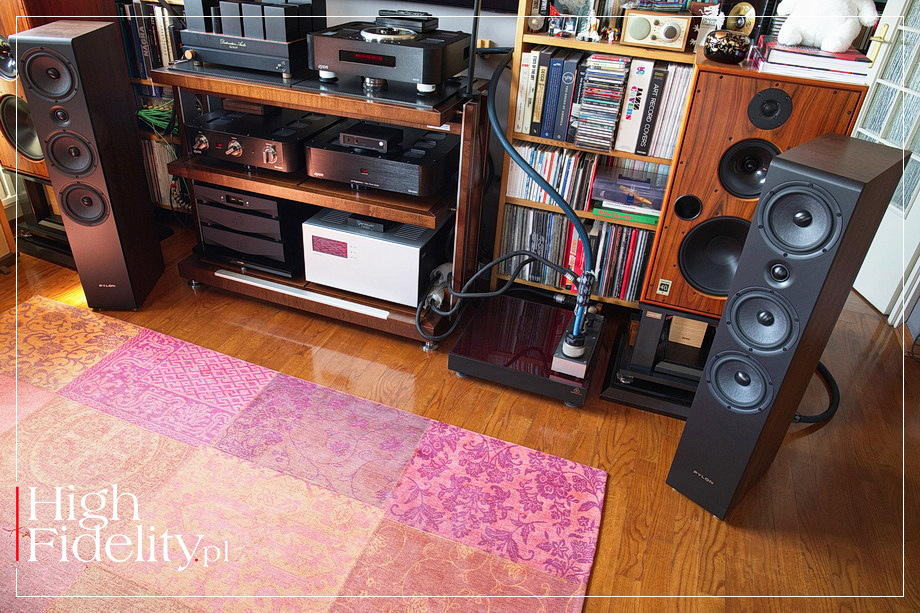
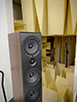
The speakers were positioned 245 cm from the listening position and 225 cm apart, measured along their vertical axis - the same spot where the Harbeth M40.1s are normally placed. They were 85 cm from the back wall, also measured along their axis and the top edge. The speakers were angled and pointed directly at the listening position. » RECORDINGS USED FOR THE TEST ⸜ a selection
• MADONNA, Confessions II, Warner Records/Tidal, FLAC 24/44,1 ⸜ 2016. IF I HAD TO CONSIDER whether there is a common denominator in the sound of Pylon Audio speakers, I would point to the balance of all the components of sound without hesitation. The individual series differ from one another; these aren’t “identical” speakers, just more expensive or less expensive ones. However, a spirit of moderation and the need for “harmony” pervades it all, at least that’s how I see it. That’s why listening to the new Opal 30 Mk II speakers felt like coming home, to something familiar, safe, and “just right” for me. These are speakers with an open sound, there’s no doubt about that. The new, clearly improved, that’s how I hear it, tweeter dome allowed the designers to adjust the tuning toward richness, rather than just openness. The high notes of a guitar in ROD STEWART’s ˻ 2 ˺ Maggie May, the snare drum in ARIANA GRANDE’S ˻ 2 ˺ Knew Better Part Two , or MADONNA’s vocals in L.E.S. Girl - all these elements were clear, distinct, but above all, rich. This is, in my opinion, and as far as my emotional memory serves me correctly, one of the most important differences between the Mk I version and the current one: richness. Madonna filled a lot of space between the speakers, thanks to the fact that the speakers created a large soundstage with a close foreground. When sound engineers use long reverberations, listen to Ambience by ANGELA BERANN, the sound opens up deep into the background. These are speakers with a powerful soundstage. But as soon as the microphone is close to the vocalist or instrument - if it’s meant to be close - it’s right at your fingertips. The scale these speakers offer is combined with high resistance to clipping. In such cases, people talk about large “headroom”. This refers to how loud the speakers can play before the sound becomes compressed and distorted. That said, what’s more important is how they behave with fast transients, rather than when cranked up. The latter can be achieved with speakers of relatively low power and volume, as long as the signal is reasonably steady. With rapid impulse changes, such as on the ARNE DOMNÉRUS Jazz At The Pawnshop album I’m listening to, the speakers must be truly resistant to clipping to handle it, just like the Opal 30 Mk II. I think this is another important feature of the tested speakers, after saturation. I assume they owe this to both the new tweeter and the improved other drivers. But I also think it’s due to the truly high-quality components in the crossover. So this is a speaker with a dynamic sound that can reach high levels very quickly and then bring them back down just as fast. This is partly thanks to the two woofers instead of just one - that builds scale. 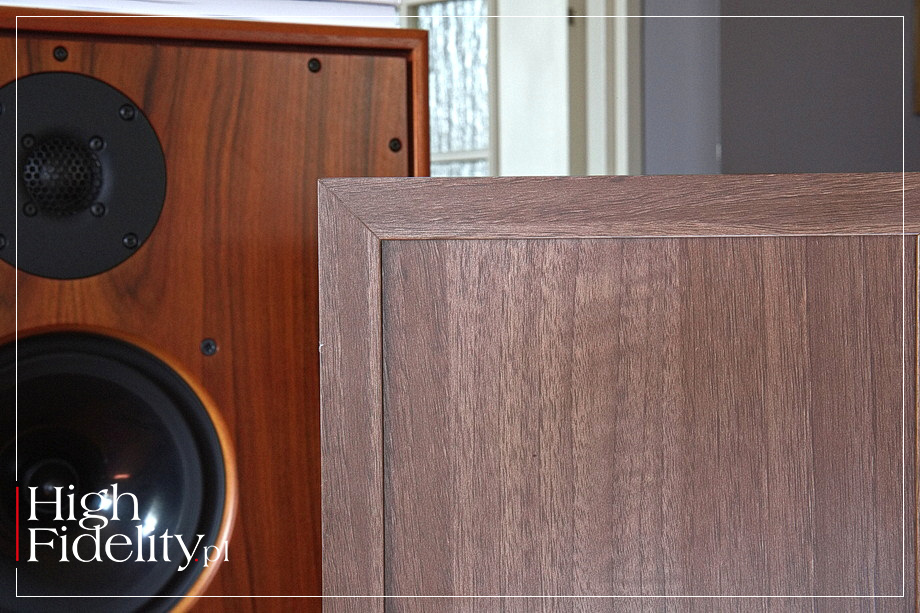
That’s why I listened with attention and curiosity to tracks from my Tidal playlist titled All that bass… (more → HERE). I add tracks there that I find particularly interesting because of their low frequencies. Both Room 4242 by LEXAR and Wracam do pokoju by WIKTORIA ZWOLIŃSKA sounded, in this regard, really, really great. The bass with the Opal 30 Mk II is very well controlled, yet internally soft. It’s not a stiff thud, but a gentle surge and a subtle receding, all while maintaining high dynamics. Such a large cabinet and two woofers just itch to crank it up and really pound out the bass. You can do that, too -in the right hands, it can sound really good. It seems to me, however, that Marek Kostyrzyński and his design team chose a different approach. I’d call it “my” approach. In the sense that I would have chosen it that way, too. Because I’m convinced this is the better path - the sound is more pleasant, more natural, and simply beautiful. They used both the cabinet’s volume and the diaphragm’s vibrating surface to build volume, and thus also spatial depth. The soundstage, its size and depth, is directly proportional to the scale and capabilities of the bass. This is also why the speakers are so versatile. I mentioned some club music above, then I reached for a classic track from the ’70s, and yet I had just as much fun listening to Frank Sinatra’s album titled Songs For Swingin’ Lovers!. Released by Capitol Records in 1956, it is a monaural recording with a low tonal center. The Pylons added a bit of body to the double bass, revealing that the 200–400 Hz range is slightly boosted in them, but they did so well and with grace. Enough to make the sound dynamic and exciting. Sinatra’s voice in ˻ 9 ˺ I’ve Got You Under My Skin, which isn’t particularly prominent in the mix here, was well-balanced, and the powerful backing band behind him stood out beautifully. This is the fourth characteristic - after richness, soundstage, and spatial depth - for which many of you will fall in love with these speakers, I’m certain of it. The differentiation here lies in a very good balance between selectivity and the overall soundstage. The speakers under review don’t delve particularly deeply into the details, but they don’t hold them back either. They simply bring out the nuances in recordings - sometimes more, sometimes less. Even on the Sinatra album, you can hear in which tracks the engineers and the artist let the high frequencies in his voice come through a bit more strongly, because ˻ 2 ˺ It Happened in Monterey is brighter and closer to us, while in the aforementioned I’ve Got You… it’s more blended into the background and darker. ▒ Summary ON TOP OF ALL THAT, as we wrap up this listening session, let’s add class. These are speakers with class. They demonstrate this through restraint, leaving the emotions up to us. These are evoked by scale, saturation, space, and excellent bass. It doesn’t go down to staggeringly low frequencies, but that wasn’t really the point. It’s deep enough on its own, as we’ll confirm by playing BTS’s latest track Normal. As a reminder, the members of this K-pop group completed their mandatory military service in mid-2025, and all seven vocalists have already returned to civilian life and their musical careers. 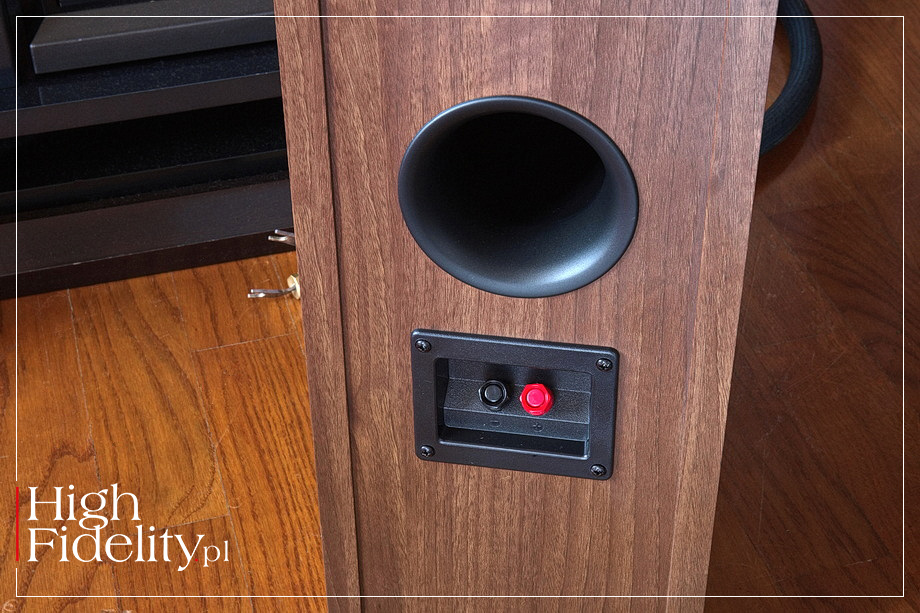
Anyway, even such heavily compressed material sounded fantastic. Not just good, but very good. And when we play classics or jazz on the Pylons, or reach for classic ’80s pop, we get the same result: a balanced, dense sound with a nice tone and a powerful dynamic range. Vocals will be a priority for them, yet the sound will remain open. The foreground will be the most important, yet when the reverb kicks in, it will recede far into the background. At this price point - they are fantastic! Therefore, a well-deserved RED ‖FINGERPRINT. ‖ WP ▒ Technical specifications (according to the manufacturer)
Nominal impedance: 4 Ω |
 |







|
Reference system 2026 |
|
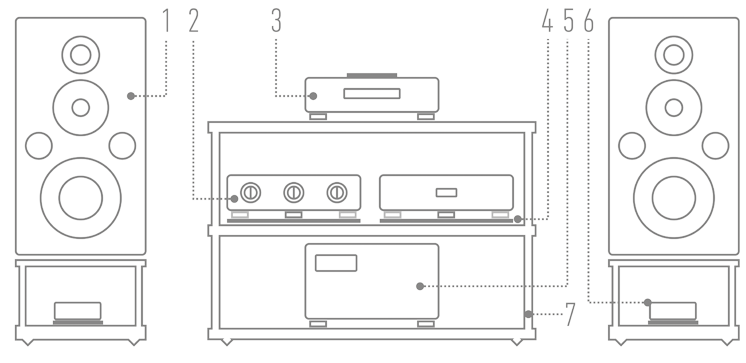 1) Loudspeakers: HARBETH M40.1 |REVIEW| 2) Line preamplifier: AYON AUDIO Spheris III Linestage |REVIEW| 3) Super Audio CD Player: AYON AUDIO CD-35 HF Edition No. 01/50 |REVIEW| 4) Stands (loudspeakers): ACOUSTIC REVIVE (custom) |ABOUT| 5) Power amplifier: SOULUTION 710 6) Loudspeaker filter: SPEC REAL-SOUND PROCESSOR RSP-AZ9EX (prototype) |REVIEW| 7) Hi-Fi rack: Hi-Fi rack: finite elemente MASTER REFERENCE PAGODE EDITION Mk II, more → HERE |
|

|
Cables Analog interconnect SACD Player - Line preamplifier: SILTECH Triple Crown (1 m) |ABOUT|» ANALOG INTERCONNECT Line preamplifier → Power amplifier: Siltech ROYAL SINLGE CROWN RCA; review → HERE Speaker cable: SILTECH Triple Crown (2.5 m) |ABOUT| |

|
AC Power Power cable | Mains Power Distribution Block - SACD Player: SILTECH Triple CrownPower (2 m) |ARTICLE| » POWER CABLE Mains Power Distribution Block → Line preamplifier: Acoustic Revive ABSOLUTE-POWER CORD, review → HERE » POWER CABLE Mains Power Distribution Block → Power amplifier: Acoustic Revive ABSOLUTE-POWER CORD, review → HERE Power cable | Power Receptacle - Mains Power Distribution Block: ACROLINK Mexcel 7N-PC9500 (2 m) |ARTICLE| Power Receptacle: Acoustic Revive RTP-4eu ULTIMATE |REVIEW| » ANTI-VIBRATION PLATFORM under Acoustic Revive RTP-4eu ULTIMATE: Graphite Audio CLASSIC 100 ULTRA, review → HERE Power Supply Conditioner: Acoustic Revive RPC-1 |REVIEW| Power Supply Conditioner: Acoustic Revive RAS-14 Triple-C |REVIEW| Passive filter EMI/RFI: VERICTUM Block |REVIEW| |

|
Anti-vibration Speaker stands: ACOUSTIC REVIVE (custom)Hi-Fi rack: finite elemente MASTER REFERENCE PAGODE EDITION Mk II, more → HERE Anti-vibration platforms: ACOUSTIC REVIVE RAF-48H |ARTICLE| » ANTI-VIBRATIONAL FEET: |

|
Analogue Phono preamplifier: Phono cartridges:
Clamp: PATHE WINGS Titanium PW-Ti 770 | Limited Edition Record mats:
|

|
Headphones » HEADPHONE AMPLIFIER: Leben CS-600X, review → HEREHeadphones: Headphone Cables: Forza AudioWorks NOIR HYBRID HPC |