


|
LAN SWITCH LUMIN
Manufacturer: PIXEL MAGIC SYSTEMS Ltd. |

 |
 |
 |
|
Review
text WOJCIECH PACUŁA |

|
No 268 September 1, 2026 |
I JUST HAD TO CHECK IT OUT, because I couldn’t believe it: The N1 is the first LAN switch in Lumin’s lineup (the name is stylized as “Lumïn”). And it’s been fourteen years now since this Hong Kong-based manufacturer entered the audio market. It’s worth noting that in recent years, switches of this type have become a must-have addition to the product lines of manufacturers focused on digital audio playback. 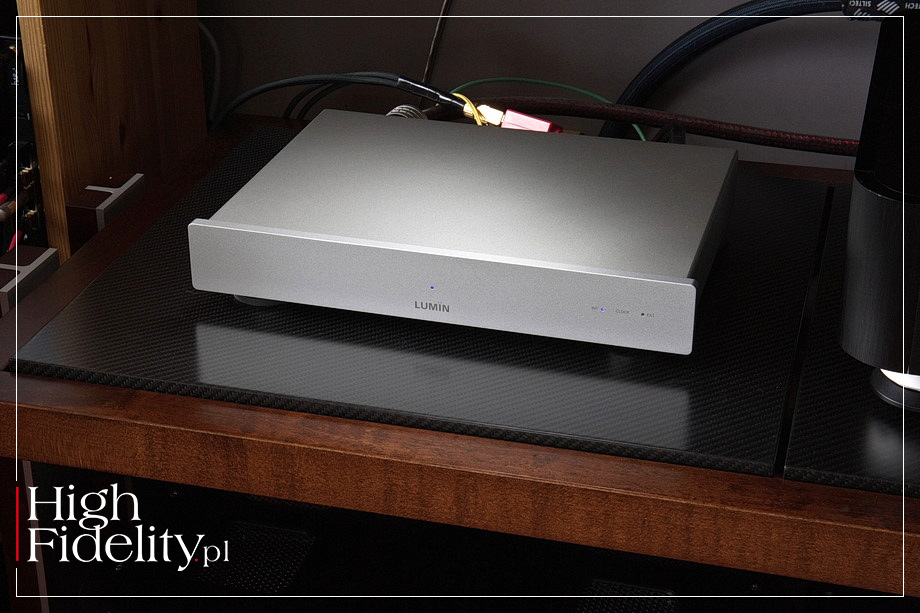
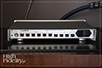
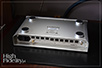
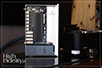
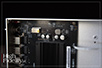
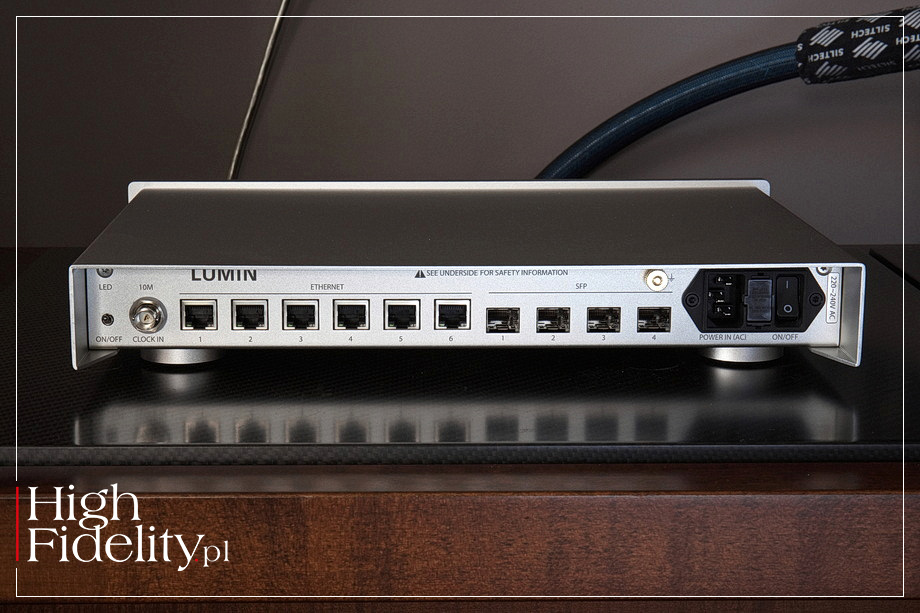
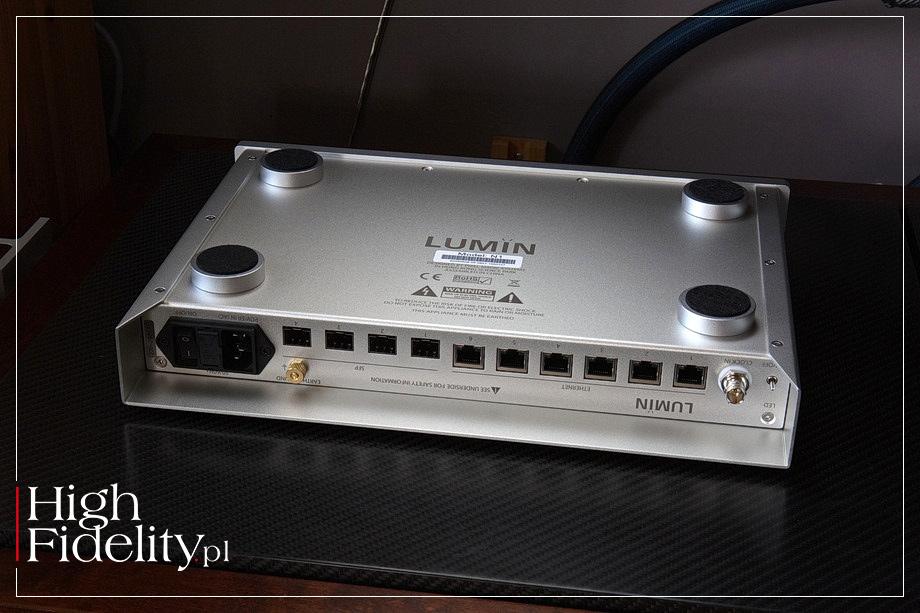
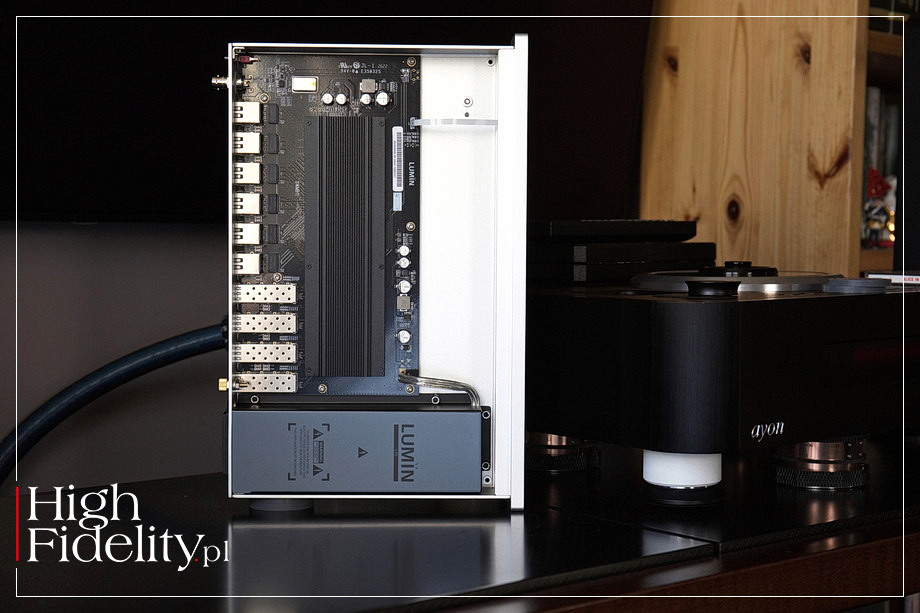
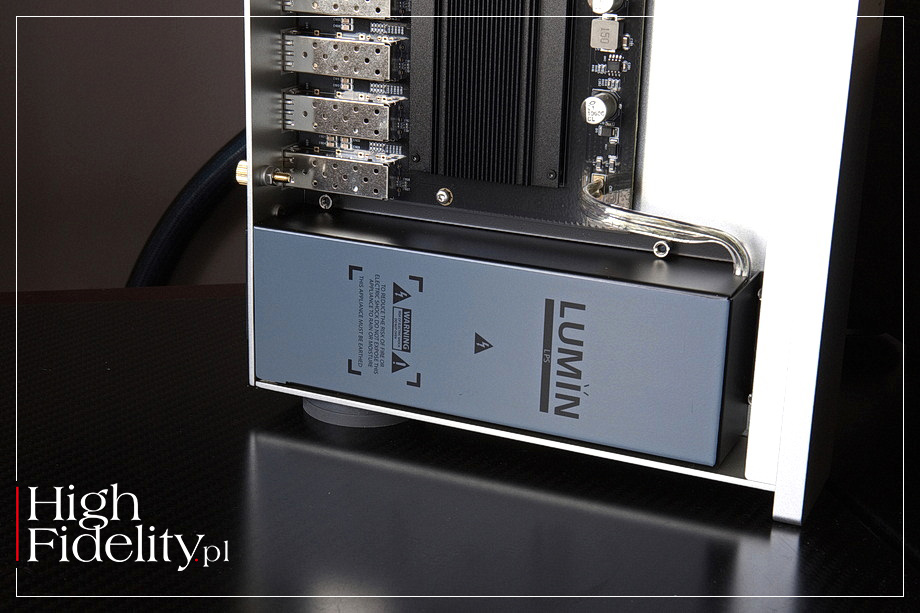
The first sign that the company was aware of this came in 2018. It was then, during the Munich High End Show 2018, that the X1 file player made its debut. In addition to the classic Lumin features, it also introduced a new one: LAN switch functionality via optical/copper SFP ports and RJ45 ports. Then, in May 2023, also in Munich, a music library (NAS) integrated with a LAN switch was unveiled, again in a 2 x 2 configuration. The N1, unveiled in May of this year, is Lumin’s first dedicated, standalone, 10-port LAN switch, equipped with an internal linear power supply and a 10M clock input. ▓ N1 ONE OF THE MYTHS perpetuated by professional haters and bots (which amount to the same thing) is that the LAN switches offered by audiophile companies are repackaged industrial devices. In other words - expensive toys with cheap insides. This is not true. Most of them start their projects based on well-known solutions, which, during development, evolve into proprietary devices with custom software, carefully selected components, and optimized clock. Because that’s how perfectionist audio works, right from the very beginning, ever since the first speakers and amplifiers were set up in cinemas. The same is true of the N1 - its late arrival on the market, in a situation where the competition has long since established itself, seems to be the result not of negligence, but of the conviction that one cannot unveil something that will fail to live up to the hopes placed in it. In other words, something that transforms the mundane into something that genuinely changes the sound and, changes it for the better. FEATURES • The Lumin N1 is a dedicated, ten-port LAN switch designed, as the manufacturer emphasizes, to ensure “complete isolation of audio systems from digital noise.” The word “complete” in the description is redundant here, as it is impossible to eliminate noise entirely, even in optical systems. I interpret this to mean that the manufacturer is emphasizing its commitment to minimizing noise as much as possible. This solution builds on the concepts used in the L2 but offers greater connection flexibility, combining high bandwidth with a “zero-noise” philosophy. The device is designed to provide “the highest quality galvanic isolation” even for the most complex configurations, serving as “the ideal foundation for Lumin system owners who require absolutely clean data transmission,” as the description continues. The device offers four SFP (fiber-optic) ports and six RJ45 ports. These are buffered and powered by a built-in linear power supply designed by Lumin, based on a toroidal transformer. This power supply was originally developed for the manufacturer’s U2 and T3X file players. The fairly large toroidal transformer is housed in a shielded chamber, which is designed to ensure there is no interference with delicate network signals. 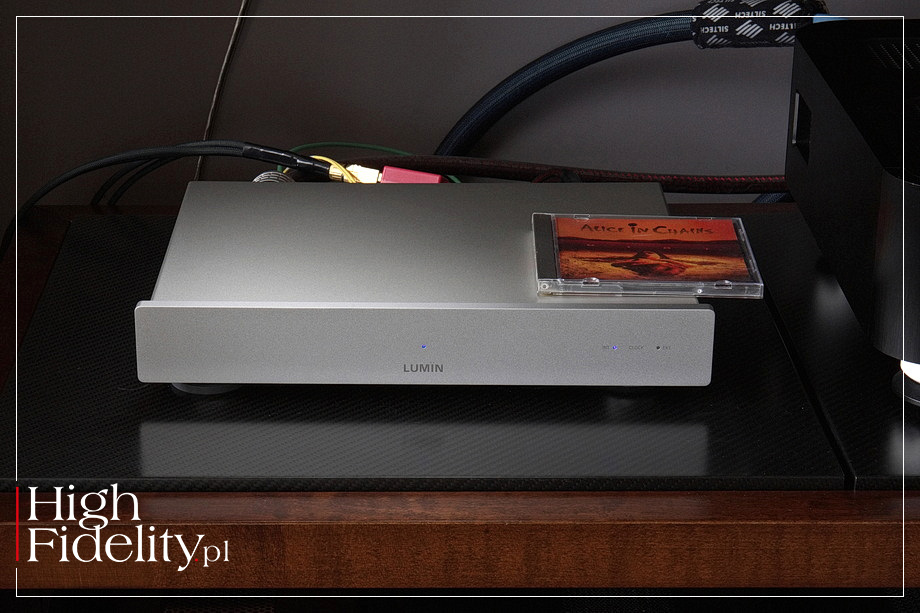
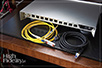
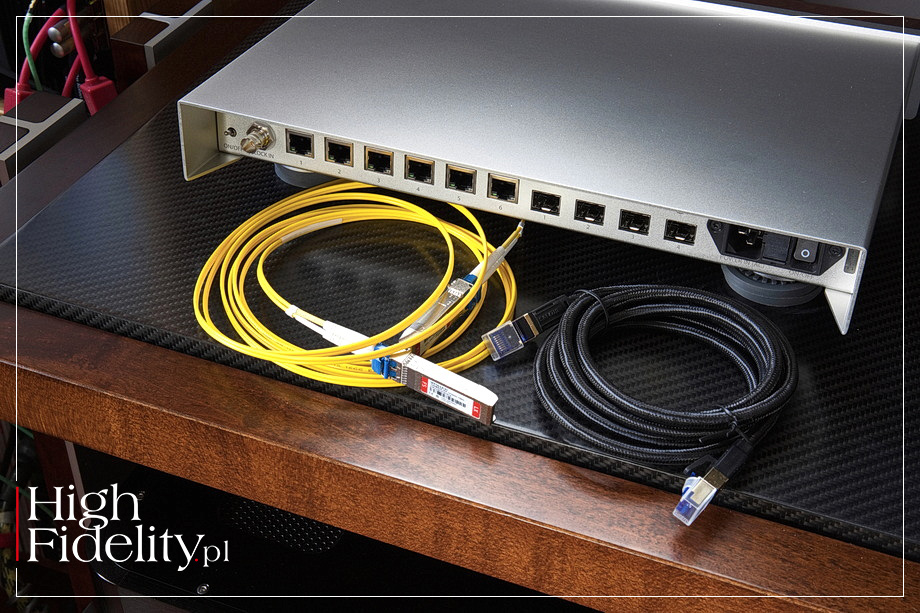
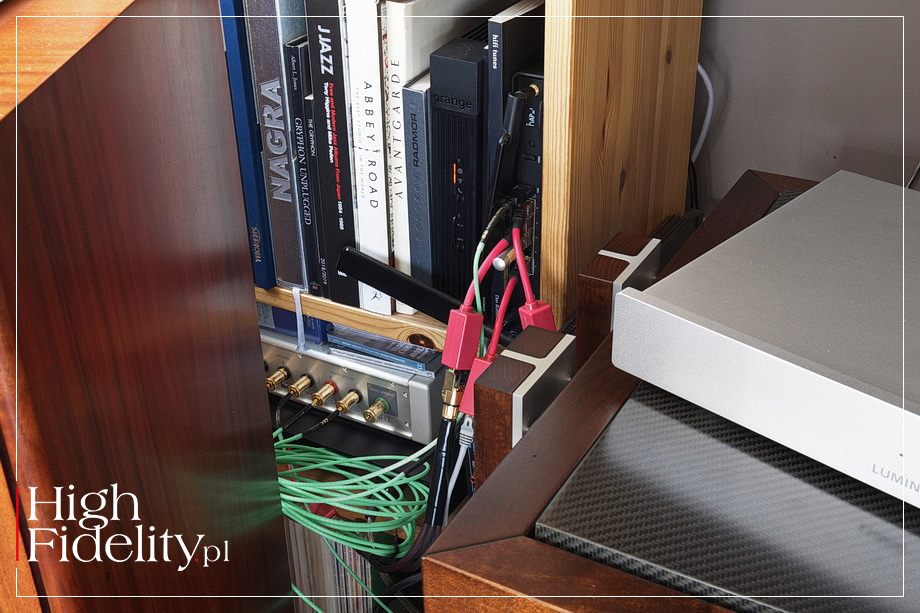
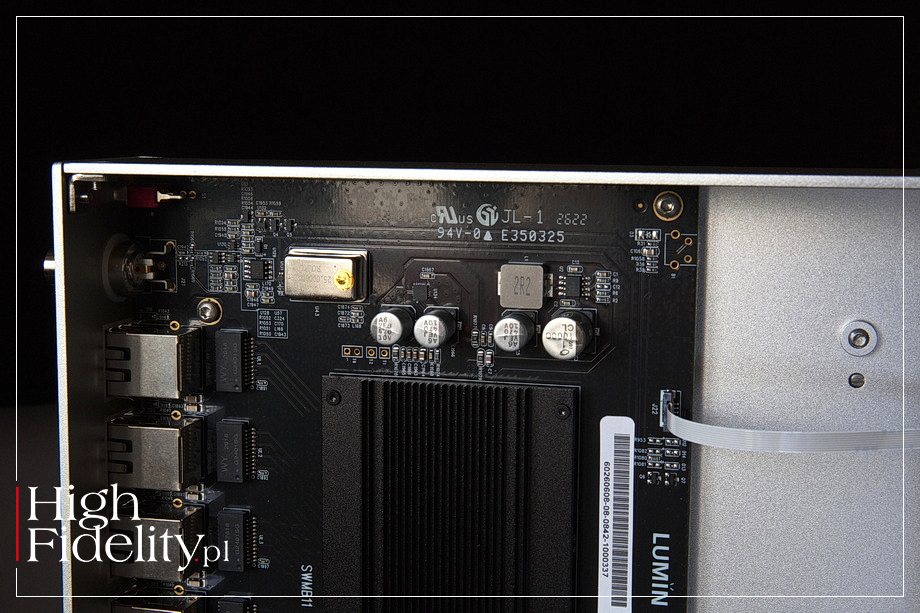
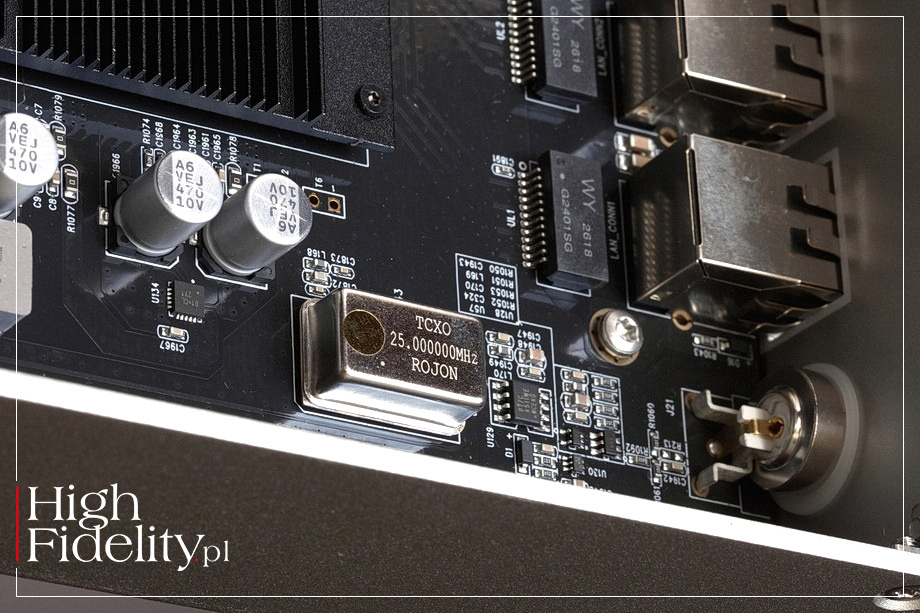
On the rear panel, you’ll also find a ground terminal, a BNC input (50 Ω) for an external 10 MHz clock, and a mechanical switch that can be used to turn off all the LEDs accompanying the Ethernet ports. The manufacturer states that the N1 is clocked by a stable internal oscillator. And indeed, after removing the top panel, we can see a very nice TCXO (Temperature-Compensated Crystal Oscillator). But, as we mentioned, there’s room for improvement, since we can clock it with a better external clock. That’s exactly what we did. The enclosure is made of bent aluminum sheets and a milled front panel. Its design is based on the D3 and U2 Mini models. This particular enclosure seems to suggest that we can expect an even better switch from this company in the future - though it will likely be more expensive. As a reminder, their higher-end models feature milled aluminum enclosures, and perhaps such a version of the switch will also be developed. The top panel of the N1 protrudes significantly toward the back of the chassis, which makes it rather difficult to unplug the optical transmitter connectors. The RJ45 jacks, on the other hand, can be unplugged without any trouble, unlike in other Lumin devices, their release buttons are located at the bottom rather than the top. The unit rests on four aluminum feet lined with felt. It’ll slide around :) On the front panel, you can see three blue LEDs - one indicating that the power is on (the switch is on the rear panel) and the main clock - either internal or external. The player comes with a power cable (generic) and two Ethernet cables: an RJ45 cable and an optical SFP cable. The latter is equipped with transmission modules from the German company FS (1000BASE-LX/LH SFP). ▓ SOUND HOW WE LISTENED • The Lumin N1 LAN switch was tested in the HIGH FIDELITY reference system. It was placed on a Finite Elemente Pagode Edition Mk II rack, on its top shelf made of woven carbon fiber, resting on its own feet, under which I placed Acoustic Revive RKI-5005 discs to prevent it from sliding. The device was powered by an Acrolink Mexcel 7N-PC9500 cable, and I connected the ground terminal to a Nordost QKore artificial ground. 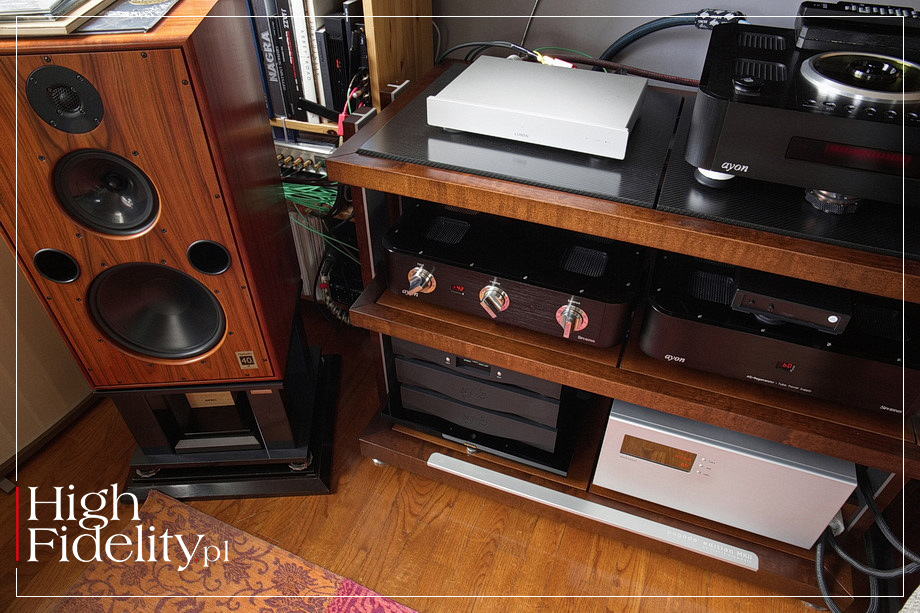
For data transmission, I used Acoustic Revive LAN Quadrant Absolute cables with an RLI-1GB ASK filter from the same manufacturer (router → player) and Acoustic Revive LAN Quadrant Triple-C cables (router → LAN switch). The test involved comparing the sound from the player connected directly to the Mikrotik Hap AX3 router with the signal passed through the N1. I also compared it separately to the switch in the L2, and finally connected the L2 and N1 in series. I also checked the differences between an RJ45 connection (LAN Quadrant Absolute) and an SFP fiber-optic cable. 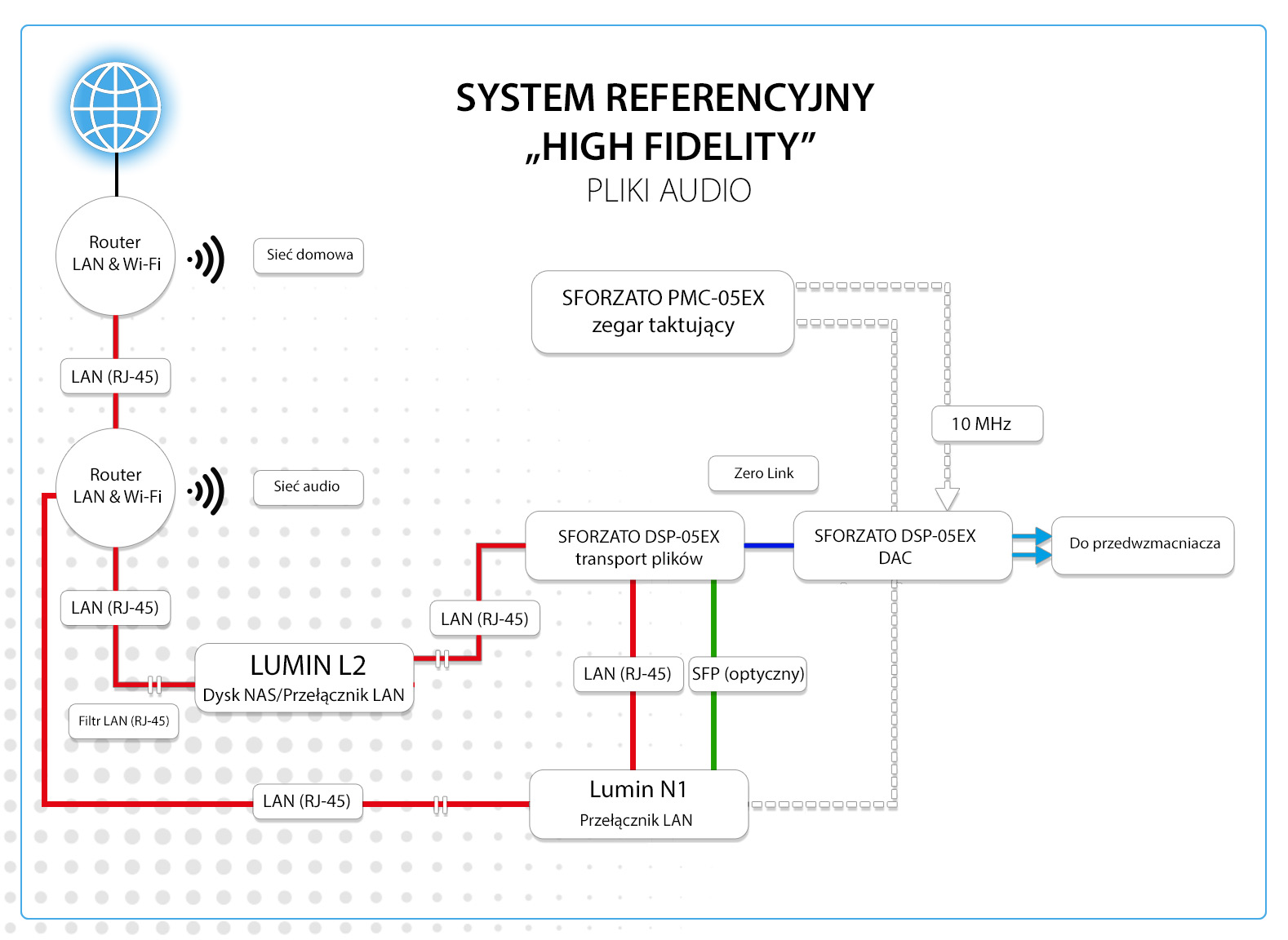
It was an AA/BB/AA and BB/AA/BB test with the A and B known. I played files using Jplay app. » RECORDINGS USED FOR THE TEST ⸜ a selection
• NAT ‘KING’ COLE, After Midnight, Capitol Jazz/Tidal, FLAC 24/192 ⸜ 1957/2014. 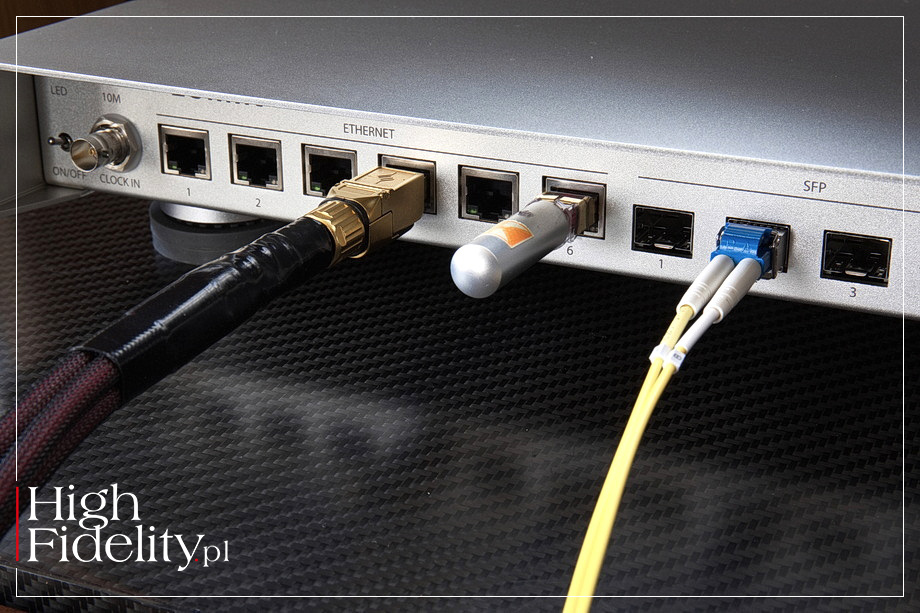
I’VE BEEN OBSERVING THIS FOR SOME TIME NOW: the refinement of file playback systems is moving toward a richer sound and making it more “analog-like.” From sterility to fullness, from harshness to softness, from mechanical sound, finally, to naturalness. The individual components of the sound are selected differently, and manufacturers’ goals and the sound they aim to achieve vary, but in the broadest sense, this seems to be the case. |
So, if I say that this is exactly what I heard when I plugged Lumin’s N1 switch into my system, would that come as a surprise? It shouldn't and it didn’t for me. And yet, even though I more or less knew what to expect, even I was struck by the scale of these changes. The LAN switch from Hong Kong works unequivocally and distinctly changes the sound. Above all, it improves the dynamic range of the files. When I first played ˻ 1 ˺ Just You, Just Me from NAT ‘KING’ COLE’s album After Midnight, I felt the performance lacked texture and depth. I’m familiar with these recordings from the excellent 2010 reissue by Analogue Productions, released on four 45-rpm LPs. I play it quite often during tests, and even though the online files offer a 24 bit resolution and are sampled at 192 kHz, I still found myself longing for vinyl. Although, let me remind you, I’m not overly in love with this format (meaning: not to the point of obsession). In any case, when drummer Lee Young sets the rhythm on the snare drum at the beginning of the song, using brushes, it made sense once I added the N1 switch. The same goes for everything that happened afterward. It was as if you could hear that shuffling and gentle rhythmic tapping more clearly, yet more delicately. The overall sound seemed a bit quieter to me. But only for a moment, because when one of the instruments sounded louder - when Young struck the snare harder with his brush, when Cole sang a phrase with a bit more intensity - then everything was louder. 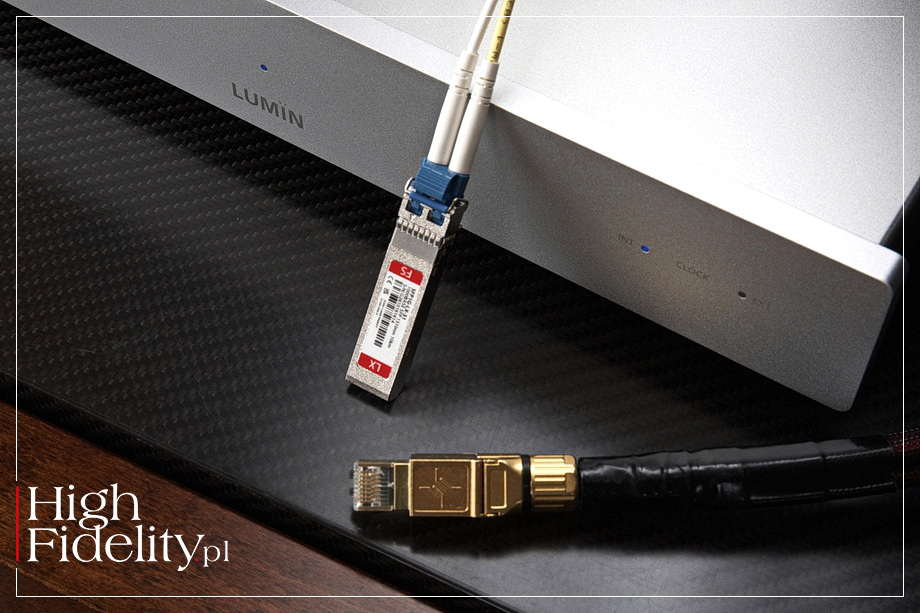
That’s how better dynamics manifest themselves. The N1 softens the sound toward analog warmth, without losing any edge or tonal information. The tones are, to be honest, stronger and more saturated with it than without it (and even when compared to the L2). The entire track had better “drive” - it really pushed forward. It was also far more vivid, and thus more enjoyable. Before, it had seemed a bit dirty and gray to me. After plugging the Lumin into the system, the whole thing took on a sense of refinement and elegance. And it’s not as if my system played files poorly without the switch. As is usually the case, it’s only through comparison that we realize what can be done better. On its own, the sound is sometimes expressive and warm, rich and dynamic. Sforzato sounds simply perfect. However, once we hear what can be done better, there’s no going back to that previous innocence - you lose it only once. In audio, these “first times” can multiply, but it’s always a step forward. Returning to what was before is even harder once we remove the N1 from the system. Then the sound fades and turns dull. There’s less joy in the playing, less energy. Even an instrument as powerful as the trumpet in ˻ 5 ˺ Strange Fruit by BILLIE HOLIDAY from the album Lady Sings The Blues - even that, without the switch, sounded “hollow.” The N1 brought out the harmonics in it; that’s how I see it, which not only enhanced its “presence” but also placed it in a more spacious soundstage. Now the instrument was positioned slightly further back, yet it was actually more distinct. Holiday’s vocals also seemed clearer and warmer at the same time. This “emergence from the gray” that the Lumin delivers works on all levels: dynamics, tone, and stereophony. The long, very long reverb on the vocals, which, during longer pauses, reveals an additional echo far in the background, was crystal clear coming from the N1 and beautifully filled the entire space in front of me with detail. You don’t need jazz or monaural recordings to appreciate this; you’ll hear it with any material. To verify this, I played a few electronic music tracks, and, unsurprisingly, I heard the same changes. When ˻ 4 ˺ Magnetic Fields, Pt 4 by JEAN-MICHEL JARRE from the album of the same title begins, the pulse is set by a rather dry, reverberation-free percussive sound reminiscent of a kick drum. Without the N1 in the system, it sounded farther away from me and was less well-defined. The Lumin gave it mass, scale, and shape. And, above all, it improved that dry strike, which is also a soft strike, though not blurred in time. The LAN switch also changed the scale of the whole presentation. Without it, the sound is more two-dimensional, and the soundstage has less depth. At the same time, the high frequencies seem more pronounced and not as well integrated into the whole. This particular remastered version of the French composer’s album, available on streaming services, is quite bright. The switch tempered it without rolling off the treble. It was as if it gave everything greater significance, as if the sounds were clearer with it and, at the same time, less aggressive. ‖ COMPARISONS N1 vs L2 • It’s amazing just how different the switches are from one another! I know, I said this not too long ago, but it just slipped out when I switched from the N1 to the switch in the Lumin L2, which is, nominally, a NAS with LAN switching capabilities. The L2 sounds brighter and more pronounced in this role. The sound was significantly better in terms of tonal quality and dynamics than when the Sforzato was connected directly to the router - no question about it. And the sound from the L2 is much more impressive. And yet, once again, after testing the Xact N1 (review → HERE) and the Aurender NH10 (review → HERE) switches, I see that this is just an additional feature and can be used when you don’t have an external LAN switch. However, if you want to expand the system and improve something in it without changing the main components, a device like the N1 will be necessary. While compared to a direct connection to the router, it opened up the sound and enriched it; compared to the L2 it was much more expressive, and that sound - already open and already rich - was soothing. 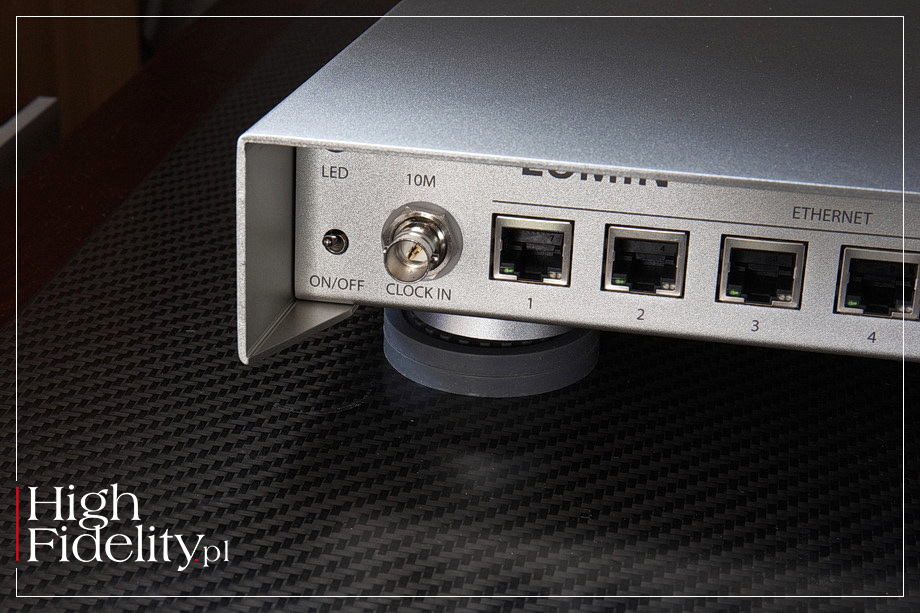
N1 + L2 • Things got even more interesting when I connected the two switches in series - the L2 to the router, and the N1 to the L2 - and sent the signal from the N1 to the Sforzato player. This time, the tone was set by the L2, i.e., the NAS with the LAN switch. The sound was lively and open, and it was also very “up front.” The foreground was clearly closer to me and had incredible dynamics. It was also very open. This setup took the sound vividness from the N1 and the forward drive and open tone from the L2. The overall sound wasn’t quite as exceptionally velvety as it was with just the N1. That’s why you’ll be able to choose whether you want the L2 to serve only as a NAS, connected to the N2 in parallel with the player, or whether you want to use the switches in series. Each time, you’ll get a slightly different sound. Not better or worse, just different. RJ45 vs SFP • This change, that is, the transition from an RJ45 (Ethernet) cable connection to a fiber-optic connection using the SFP (Small Form-factor Pluggable) protocol, seemed to me just as important as the experiments with daisy-chained switches. Replacing the very expensive Acoustic Revive Absolute LAN cable with the inexpensive SFP optical cable included with the N1 introduced new variables into the equation. Now, with the “fiber” in the signal path, the sound was smoother. The dynamics increased, the foreground felt close to me, and yet the whole presentation was less “forceful” - it was more musical. In other words, smooth and natural. In a way, the slightly excessive treble we get from the L2 acting as a switch was reduced. The sound was even more detailed before, yet the overall presentation was much more subdued and, as a result, more natural. And now - there’s currently a bit of a shift in the world of audio related to file playback. There’s a lot of talk about SFP, and this type of connection is being touted as the solution to all problems. That’s not true; please don’t believe it. This format has its own problems, and while it solves many issues, it also introduces others. Its advantage is the galvanic isolation of devices - no question about it. However, this doesn’t mean that noise and jitter disappear. They simply change form, thereby modifying the signal, and consequently the sound, in a different way. The SFP connection seemed very appealing to me, but I also lost something that a good RJ45 cable offers. First and foremost, that velvety quality. An optical cable provides a nice tone and a sense of depth, but it isn’t quite as refined when it comes to revealing the subtle details hidden somewhere in the background of the scene. And after all, those are the details that create the atmosphere. I don’t want to be misunderstood - this is a great solution wherever we have to deal with noise. However, if we’ve got that under control at another level - whether it’s the LAN switch, the power supply, or, finally, noise-eliminating components - then an RJ45 cable may turn out to be the better choice. ▒ Summary FIRST AND ALREADY very good switch - that’s how I could sum up the N1. Although more expensive products from the competition go a bit further in terms of either smoothness or resolution, the Lumin “gets the job done.” It delivers a dark, deep, and dense sound. It doesn’t dampen the treble; rather, it adds weight to it, which prevents the sound from becoming harsh. With it, the sound is much more colorful and multidimensional. It’s also more dynamic. 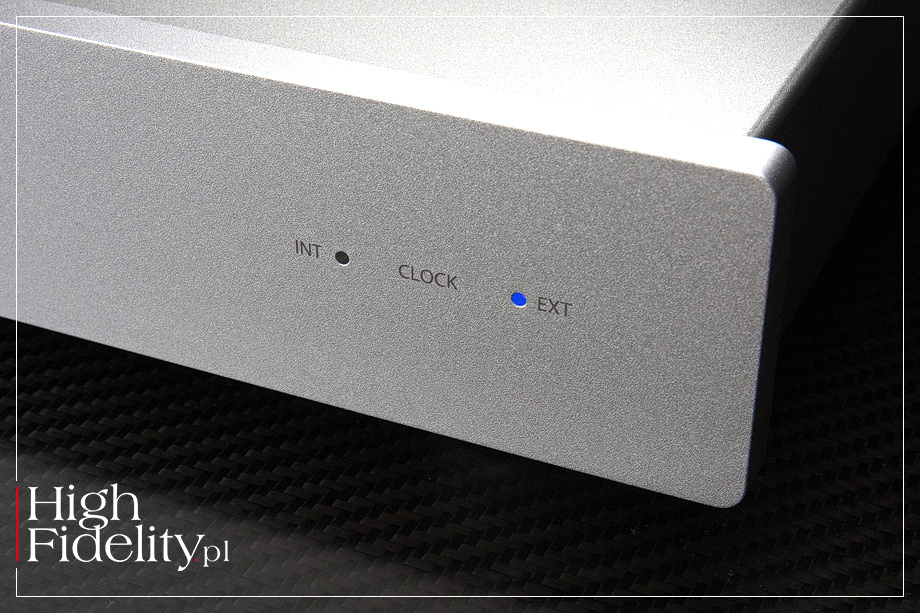
The device is compact, and while it’s pricey, it’s not that expensive. On the other hand, it can be part of a truly high-end audio system, even though it will be one of the cheaper components in it. It will bring class and calm - qualities that digital files need. And it will transform a dull, bland sound into a musical event. ‖ WP ▒ Technical specifications (according to the manufacturer)
• Network connections: 6 x Gigabit Ethernet RJ45 (1000BASE-T), 4 x Gigabit SFP |
 |

|
Reference system 2026 |
|
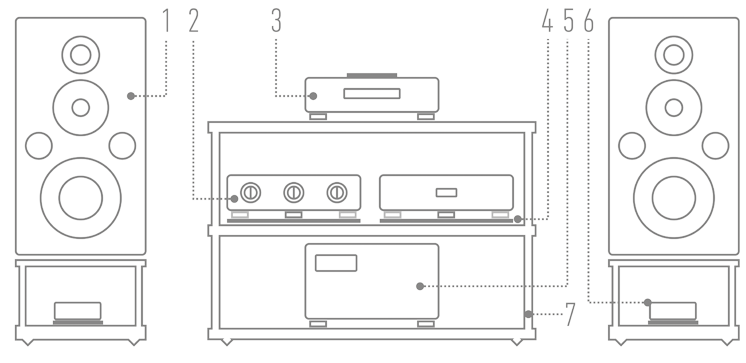 1) Loudspeakers: HARBETH M40.1 |REVIEW| 2) Line preamplifier: AYON AUDIO Spheris III Linestage |REVIEW| 3) Super Audio CD Player: AYON AUDIO CD-35 HF Edition No. 01/50 |REVIEW| 4) Stands (loudspeakers): ACOUSTIC REVIVE (custom) |ABOUT| 5) Power amplifier: SOULUTION 710 6) Loudspeaker filter: SPEC REAL-SOUND PROCESSOR RSP-AZ9EX (prototype) |REVIEW| 7) Hi-Fi rack: Hi-Fi rack: finite elemente MASTER REFERENCE PAGODE EDITION Mk II, more → HERE |
|

|
Cables Analog interconnect SACD Player - Line preamplifier: SILTECH Triple Crown (1 m) |ABOUT|» ANALOG INTERCONNECT Line preamplifier → Power amplifier: Siltech ROYAL SINLGE CROWN RCA; review → HERE Speaker cable: SILTECH Triple Crown (2.5 m) |ABOUT| |

|
AC Power Power cable | Mains Power Distribution Block - SACD Player: SILTECH Triple CrownPower (2 m) |ARTICLE| » POWER CABLE Mains Power Distribution Block → Line preamplifier: Acoustic Revive ABSOLUTE-POWER CORD, review → HERE » POWER CABLE Mains Power Distribution Block → Power amplifier: Acoustic Revive ABSOLUTE-POWER CORD, review → HERE Power cable | Power Receptacle - Mains Power Distribution Block: ACROLINK Mexcel 7N-PC9500 (2 m) |ARTICLE| Power Receptacle: Acoustic Revive RTP-4eu ULTIMATE |REVIEW| » ANTI-VIBRATION PLATFORM under Acoustic Revive RTP-4eu ULTIMATE: Graphite Audio CLASSIC 100 ULTRA, review → HERE Power Supply Conditioner: Acoustic Revive RPC-1 |REVIEW| Power Supply Conditioner: Acoustic Revive RAS-14 Triple-C |REVIEW| Passive filter EMI/RFI: VERICTUM Block |REVIEW| |

|
Anti-vibration Speaker stands: ACOUSTIC REVIVE (custom)Hi-Fi rack: finite elemente MASTER REFERENCE PAGODE EDITION Mk II, more → HERE Anti-vibration platforms: ACOUSTIC REVIVE RAF-48H |ARTICLE| » ANTI-VIBRATIONAL FEET: |

|
Analogue Phono preamplifier: Phono cartridges:
Clamp: PATHE WINGS Titanium PW-Ti 770 | Limited Edition Record mats:
|

|
Headphones » HEADPHONE AMPLIFIER: Leben CS-600X, review → HEREHeadphones: Headphone Cables: Forza AudioWorks NOIR HYBRID HPC |