


|
RECORDING TECHNIQUE ⸜ digital recorders DENON PCM p. 3
This is the third part of the history of digital recording techniques and albums from Nippon Columbia, a pioneer in digital music recording. In this installment, we’ll take a look at the DN-023RA, the first portable recording device developed by Denon’s engineers. |

 |
 |
 |
|
TECHNIQUE
text by WOJCIECH PACUŁA |
|
No 263 April 1, 2026 |
DENON WAS THE FIRST manufacturer in the world of digital tape recorders capable of recording sound. For much of the 1970s, it was also the only one. This situation changed only in 1976 with the introduction of Dr. Thomas G. Stockham’s Soundstream tape recorder prototype, and a year later, a prototype device from 3M; more → HERE and → HERE. In that same year, 1977, Sony launched the PCM-1, the world’s first affordable consumer PCM encoder (44.056 kHz and 14 bits). A home VHS video recorder could be used to record the data. 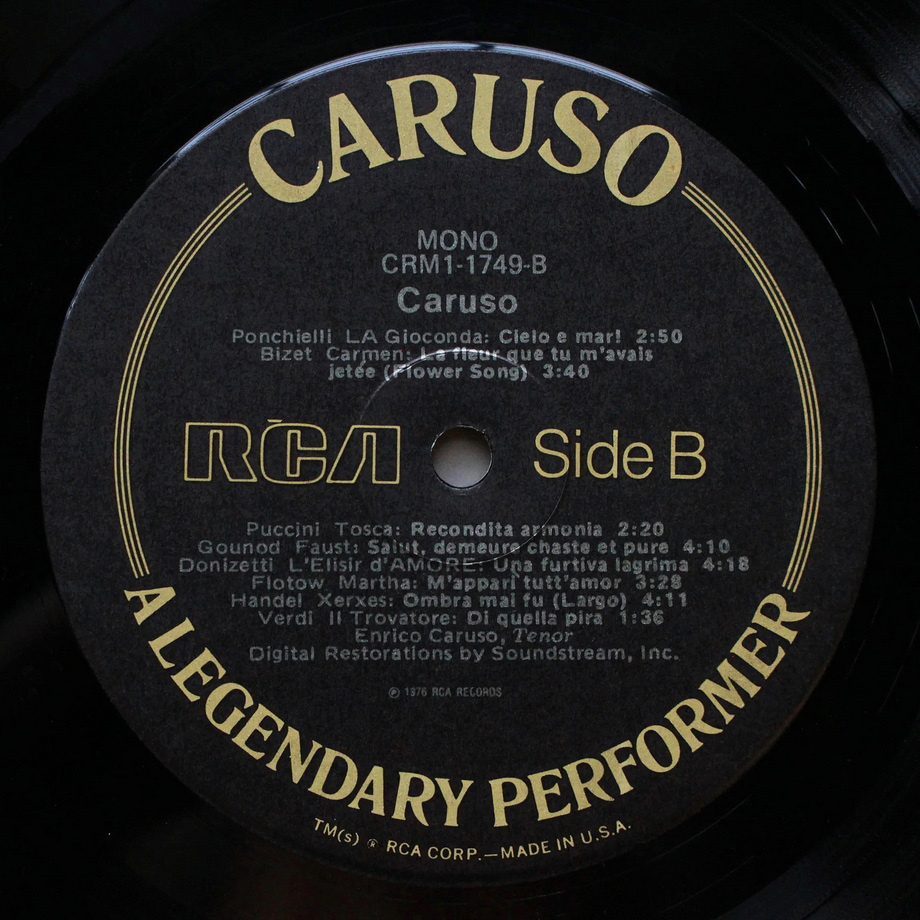
‖ In 1976, Soundstream remastered Enrico Caruso’s acoustic recordings (from before the electronic era) by digitizing them on a computer and processing them using a technique known as “blind deconvolution.” These recordings were released by RCA Records as Caruso – A Legendary Performer. Stockham's 37.5 kHz, 16-bit, 2-channel recorder was used to record Virgil Thomson's opera The Mother of Us All, performed by the Santa Fe Opera for New World Records, making it the first digital recording made in the United States. However, Soundstream’s first commercial release was not recorded until February 1978: it was the A Tribute To Ethel Waters by Diahann Carroll and the Duke Ellington Orchestra for Orinda Records. That same year, at the AES conference in New York, a 2-channel, 16-bit 3M digital recorder with a sampling rate of 50.4 kHz was demonstrated, operating with 1-inch tape at a speed of 45 ips. It was not until July 11, 1979, however, that Warner Bros. Records released the first LP in the United States featuring popular music (with vocals) recorded digitally, titled Bop Till You Drop by guitarist Ry Cooder. The album was recorded in Los Angeles on a 32-track tape recorder. The year 1977 was also significant because of the emergence of optical systems. At that time, three companies announced their work on a digital real-time audio playback system capable of using any software and any professional media. This solution, called UDSP (Universal Digital Signal Processor), utilized 12-inch optical video disc technology. Denon, in collaboration with Hitachi, also announced the development of an optical audio disc. Ultimately, the joint development by Philips and Sony prevailed, which was implemented in the Compact Disc system. 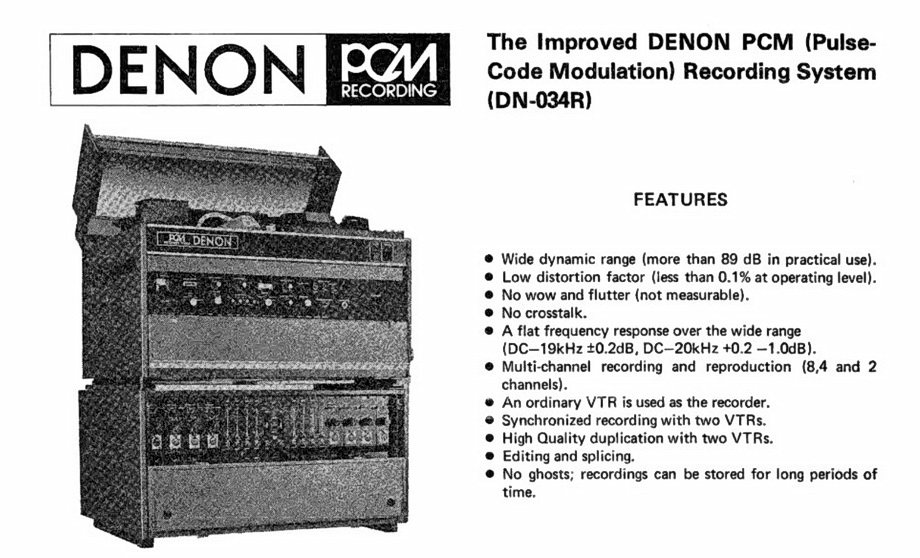
‖ By 1977, Denon had already released the third generation of its digital tape recorders, the DN-034R. While some companies were still making their debut in 1977, Denon already unveiled a third generation of digital recorders. The DN-034R tape recorder, which we’ll discuss in the next section, was a portable device (by the standards of the time) and offered eight channels with a sampling rate of 47.25 kHz and a word length of 14 bits, which, together with pre-emphasis, provided a resolution equivalent to 15.5 bits. At Sound Ideas Studios in New York, the DN-034R was used to record Archie Shepp’s album On Green Dolphin Street, which became the first commercially released digitally recorded album in America. Before returning to Japan in December, five other albums were recorded in New York. ▓ DA-023 RA BEFORE THAT COULD HAPPEN, however, digital tape recorders had to set out from Japan to conquer the world. This meant they had to become lighter and more compact, without compromising performance or sound quality. At the 7th AES Conference, Mr. Takeaki Anazawa, head of Denon’s engineering team, said:
In the early days, PCM recordings took place only in Japan. However, Denon set itself the goal of establishing a presence in the global market. That is why the first approach was to record classical music in magnificent concert halls and churches across Europe.
⸜ TAKEAKI ANAZAWA , Historical Development of Analog Disk Recording. Technology and Artifacts Now in Existence, 7th International Conference: Audio in Digital Times, April 1989, Paper Number: 7-004, p. 14. Nippon Columbia began with a prototype developed by the research division of NHK (Nippon Hōsō Kyōkai, the state-owned television broadcaster), the NHK Science & Technology Research Laboratories (STRL). In 1969, the device used to produce Steve Marcus and Jiro Inagaki’s album Something was ready. The circumstances surrounding the transfer of this technology from NHK to Denon are unclear, but what is important is that two years later (following the first published recording), in 1972, the first tape recorder branded Denon, the DN-023R model, was ready. 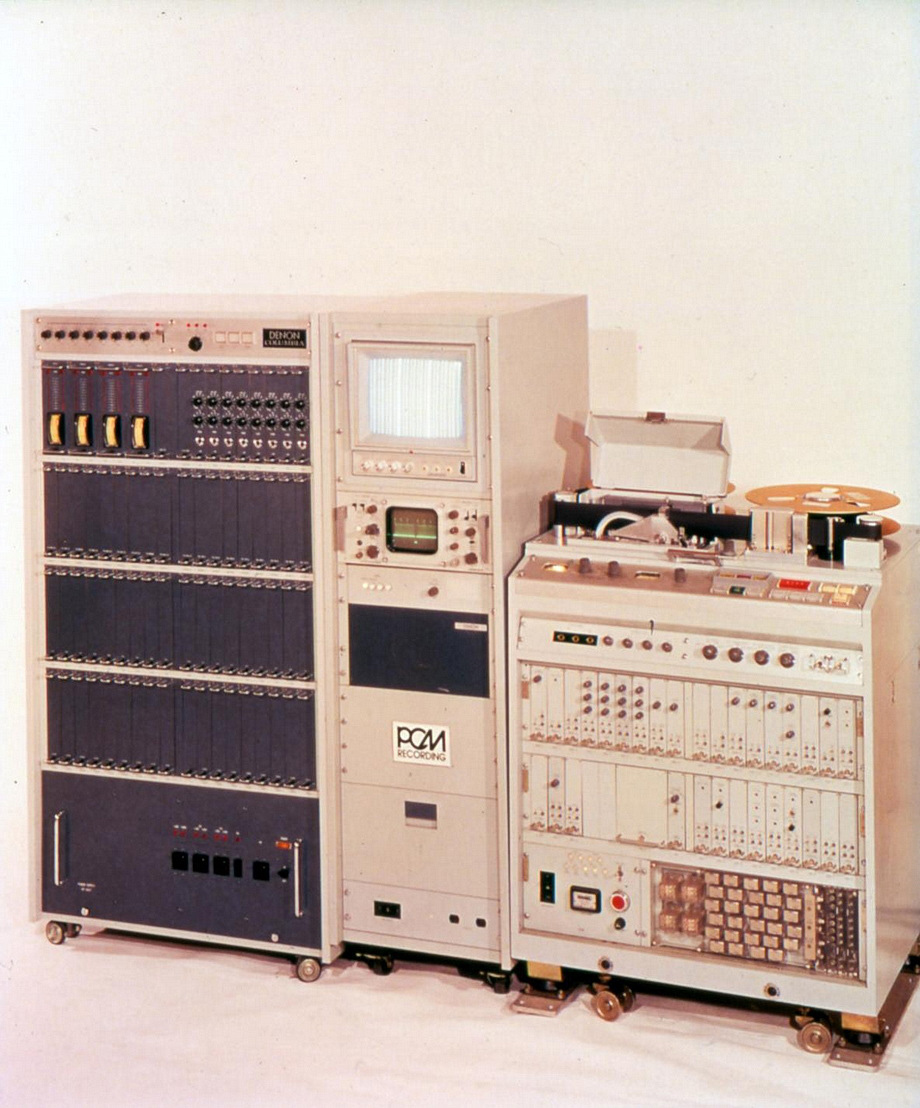
‖ Denon DN-23R recorder consisted of three modules • photo press release Denon The tape recorder weighed 400 kg, and a single one-hour reel of tape weighed 10 kg and cost over $500, which is equivalent to $3,890 today (according to the CPI Inflation Calculator). It was therefore suitable only for studio recordings and was used exclusively in this manner for two years, solely in Japan. This device served as both a recording and mastering tape recorder. It offered up to eight channels (8/4/2), with the operator able to choose how many channels to use. The sampling frequency was 47.25 kHz, and the word length increased from 12 to 13 bits (without pre-emphasis). The first commercial recording made using the Denon DN-023R system was the Smetana Quartet performing Mozart’s works, recorded in April 1972 at Aoyama Tower Hall in Tokyo: String Quartet No.15 in d minor, K.421(417b), String Quartet No.17 in B flat minor, K.458 'Hunt'. At least six other digital LPs recorded by Denon will be released in October, including jazz, classical music, and traditional Japanese music; more → HERE. The Japanese manufacturer’s new portable model, designated DN-23RA, was ready in 1974. Its specifications were identical to those of the DN-23R, and it differed from the “R” model only in weight and size – the unit was two-thirds smaller than the DN-23R and used a “standard” reel-to-reel tape recorder, as Denon’s technical materials described it. The entire setup fit into three transport cases. Japanese engineers set off for Europe with the tape recorder and, that same year, recorded the Bach: Musical Offering, BWV 1079, performed by the Paillard Chamber Orchestra (Denon 0X-7022). The material for the album was recorded on December 2–3, 1974, at the Église Notre-Dame Des Roses in Grisy-Suisnes, and the album was released a year later. It was the first album released in Europe featuring digitally recorded material. 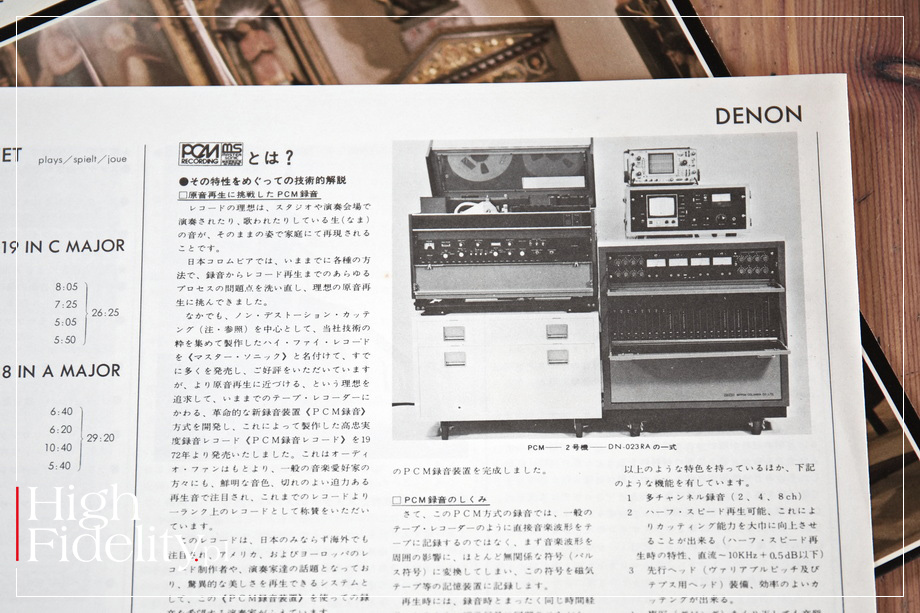
‖ Denon DN-23RA recorder, a photo used in the insert for the J.S. Bach, L'Offrande Musicale, BWV 1079 (Denon OX-7021-ND) A week later, Denon’s technicians, Mr. Takeaki Anazawa and sound engineer Peter Willemoës, are already at their next location. From December 12–19, 1974, Helmuth Rilling recorded three Bach organ works at the Gedächtniskirche in Stuttgart, Germany, using the same tape recorder. Following these initial recordings, more sessions took place in France, Germany, and Czechoslovakia. Between 1974 and 1977, Denon recorded over 250 PCM sessions; most of them, however, took place in Japan. Mr. Anazawa again:
The album (Bach: Musical Offering, BWV 1079 – ed.) turned out to offer excellent sound quality and captured the characteristics of the hall’s acoustics much better than earlier analog recordings. This confirmed the ability to eliminate quantization noise in the PCM signal, which greatly contributed to enhancing the musicality of digital recordings.
⸜ Ibidem. ▓ RECORDINGS DETAILS REGARDING THE RECORDINGS produced by Denon are known only in part. There is likely material in the label’s archives, but until someone catalogs it and makes it available in English, we are left to guess and speculate. We know for certain that between 1974 and 1977, the DN-23RA digital tape recorder was used to record material in Europe and Japan, and that eight channels were recorded. Typically, this was done using the “One-Point Recording” technique – that is, with a stereo pair of microphones – a method developed by Denon over many years. Two additional microphones were added for solo instruments and/or cellos, as well as two ambient microphones; the latter came in handy when the label decided to release albums with quadraphonic recordings. 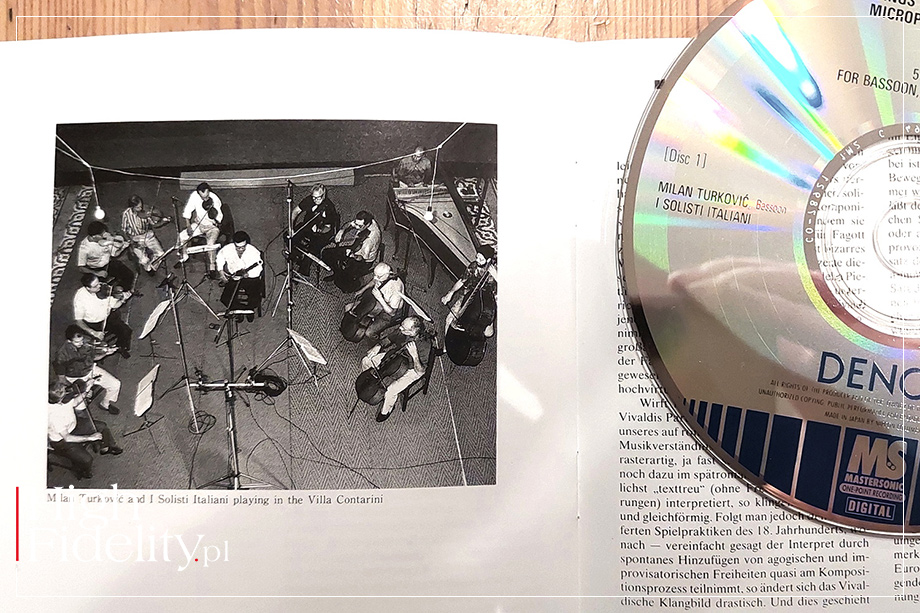
‖ The “One-Point Recording” technique involved recording the material using a single pair of main microphones, sometimes supplemented by two additional microphones and two ambient microphones; pictured here is a recording session for the 1990 Vivaldi’s 5 Concerti, performed by Milan Turković and I Solisti Italiani (Denon CO-78921) However, we do not know the details of the other components of the system – neither the microphones nor the mixing console. Regarding the former, we only know that they were “high-quality professional condenser microphones from Europe.” As for the latter, some insight is provided by notes in the CD reissues of certain titles, suggesting that during the recording, mixers, compressors, and limiters were completely omitted, and eight microphones were connected directly to microphone preamps, which, in turn, were connected to the tape recorders’ inputs. Mixing at the Nippon Columbia headquarters was performed in the analog domain using in-house equipment. These were thus classic D | D | A recordings. It is also known that the digital “master” tapes were transported to Japan, where they were mixed in the analog domain into another digital tape recorder, though one operating with two channels. After mixing and mastering, manual editing came – the technician cut and spliced the tape using a microscope. The master prepared in this way was sent to the pressing plant, where the same tape recorder was installed, but with a lead-in head, similar to analog systems. As a result of these processes, a large body of digitally recorded titles was created, which, in the early 1980s, were ready for pressing onto CDs, which Denon did almost immediately after the format was established. At that time, it could proudly print the SPARS code: D | D | D. To get a sense of the quality of these recordings, I listened to a dozen or so titles from that period, selecting the three most representative and – in my opinion – most interesting ones: ˻ I ˺ J.S. BACH, L'Offrande Musicale, BWV 1079 perf. by Les Solistes de L'Orchestre De Chambre Jean-François Paillard, Denon OX-7021-ND ‖ 2-3 Dec. 1974 ˻ II ˺ J.S. BACH Orgelchoräle Durch Das Kirchenjahr perf. by Helmuth Rilling, Denon OX-7023-ND ‖ 12-19 Dec. 1974 ˻ III ˺ W. A MOZART The Haydn Quartets Perf. by Smetana Quartet, Nippon Columbia OX-7039-ND ‖ 12-13, 16, 22 and 24 June 1975 ˻ I ˺ J.S. BACH, L'Offrande Musicale, BWV 1079 perf. by Les Solistes de L'Orchestre De Chambre Jean-François Paillard 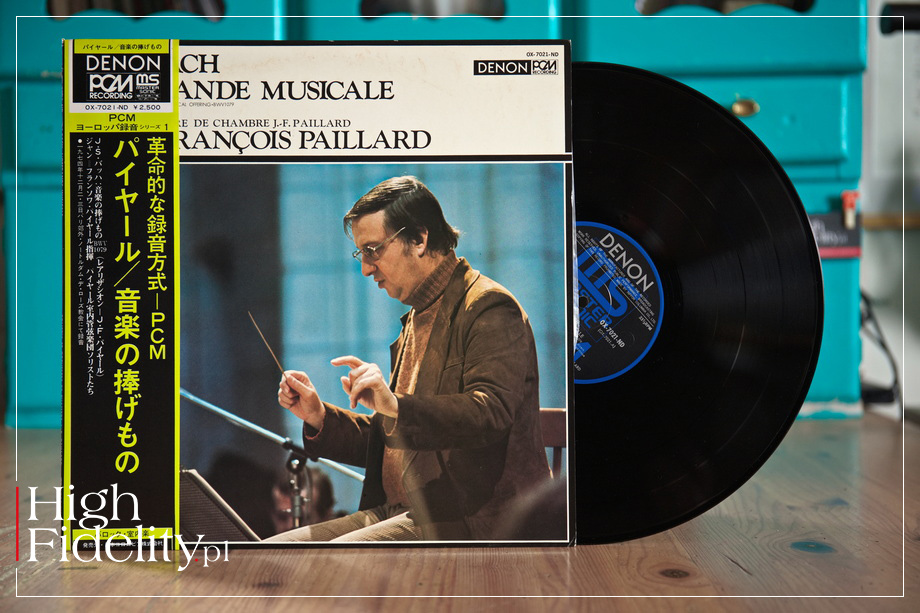
THE J.S. BACH’S L'Offrande Musicale, BWV 1079, is the first album recorded by Denon in Europe using the DA-023 RA tape recorder. This material was recorded on December 2–3, 1974 at the Église Notre-Dame Des Roses in Grisy-Suisnes, France. Like many other Nippon Columbia albums from this period, this one was produced in collaboration with Erato Records. Erato Records is a renowned French classical music label founded in 1953, known for its recordings of Baroque (particularly French) and contemporary music. Since 1992, it has been part of the Warner Music Group. This collaboration is misinterpreted by many blogs and websites. It appears that the Japanese side was the initiator and was responsible for the publishing aspect. It was also responsible for production, the technical aspects of recording, mixing, and mastering. The French side, on the other hand, handled the musical aspects, namely the selection of artists and repertoire. However, it also had its own engineer on site, Mr. Peter Willemoës. Mr. Michel Garcin and Mr. Tohru Yuki were responsible for the production of the album in question. The Denon and Erato albums were released simultaneously, though the French discs do not include any information indicating that this is a digital recording. It is also unclear which master tape was used in France – in Japan, they were digital tapes, but in Europe, they may have been analog copies. 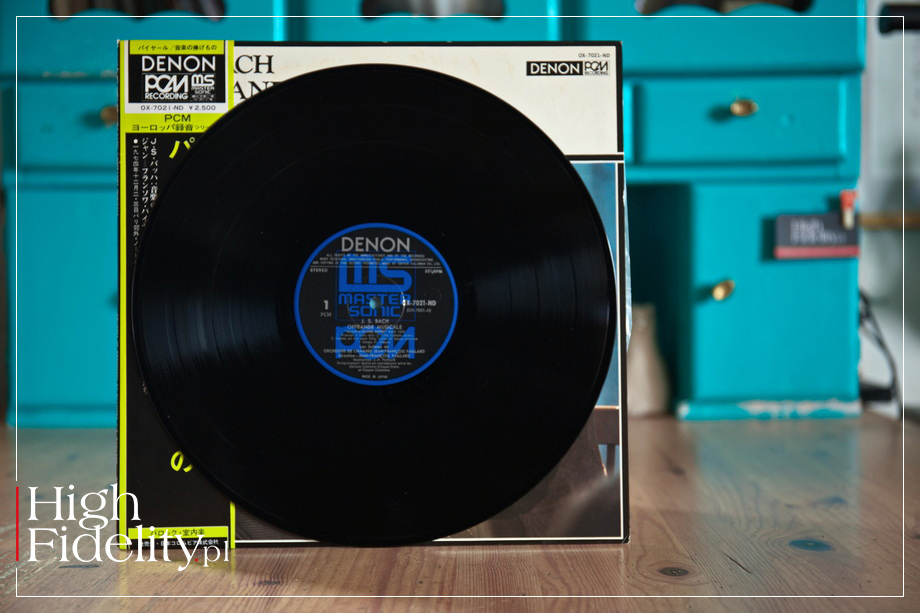
The album was also released in Israel under the RCA Red Seal label, and a year later in the U.S. by the Musical Heritage Society, with a revised cover. More importantly, however, Denon released it in both stereo and quadraphonic versions (4OX-9027-N). The latter was encoded using the proprietary UD-4 system. Quadraphonic sound was one of the pet projects of the sound engineer, Mr. Anazawa. In August 1981, Alan Penchansky wrote:
Quadraphonic sound was in vogue at a time when Denon’s first 14-bit digital system was still in its infancy. According to Anazawa, dissatisfaction with the quality of quadraphonic recordings was a sign pointing to the digital future of this format.
“It was the era of quadraphonic sound, but the sound quality was very poor. We knew that this direction had no future.” Anazawa believes that the proper path to achieving four-channel sound is DAD technology, and virtually all of Denon’s digital master tapes were recorded with two additional ambient channels. “I never gave up on quadraphonic sound,” adds Anazawa. “It’s very easy to create quadraphonic sound for DAD or three channels. The important thing is to capture as much information as possible.” ⸜ ALAN PENCHANSKY, Japan's Denon Label 10-Year Digital Veteran, „Billboard”, 22 August 1981, source: → QUADRAPHONICQUAD.com , accessed: 5.02.2026. We should also mention that in 1983, Denon released this title in a stereo version on CD. ▲ UD-4 QUADRAPHONIC was a system of four-channel audio transmission, the first commercial multichannel audio system in history. It was based on specially prepared vinyl records and reel-to-reel tapes. There were many standards for four-channel sound recording, but the three most popular were: SQ (Stereo Quadraphonic) from 1971, developed by CBS Records (Columbia Records); QS by Sansui, from the same year; and CD-4 from 1972, developed by JVC and RCA. 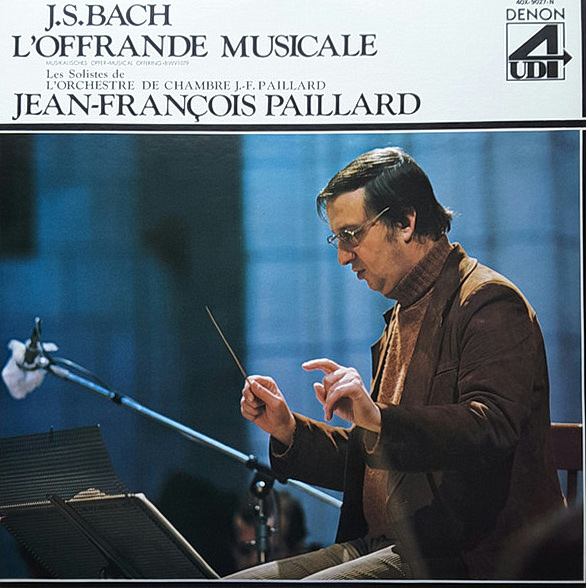
They differed in the method of encoding the signal for the rear channels. SQ and QS were matrix standards in which the rear channel signals were encoded together with the front channels. A much better technical solution was CD-4, a discrete system. In this system, the signal for the additional channels was encoded using a 30 kHz carrier frequency. In 1974, Denon proposed its own system, called UD-4. It differed from the two earlier systems in that it used the UMX (Universal Matrix) standard with two subsystems: Since the signal encoded in the UD-4 in the discrete section did not have as wide a bandwidth as in the CD-4 system, the requirements for the cartridges and the cutting system were lower. Compatibility with stereo cartridges was also intended to be an important factor, though this was not fully realized due to a phase shift between the left and right channels. Between thirty-five and forty records were pressed using this system. ● |
▒ SOUND QUALITY THE SOUND OF THIS ALBUM, while generally reminiscent of what I heard in recordings made with the DN-023R tape recorder, marks a kind of evolution. The density of the sound and the focus on the midrange remain, thanks to which the cello in the right channel sounds perfectly rich and deep. But it is also a more open sound. It is obvious that the engineer’s choices are what matter most, and the recording medium is merely a kind of accessory. But in the case of early digital technology, it is a crucial accessory. The openness at the top of the frequency range is evident in the more distinct violin part and the clear sound of the flute. Also, the harpsichord that strikes right at the beginning of Cing Canons Drivers, whose sound comes from the right side, slightly from the rear, has an open, resonant tone. All of this is also incredibly creamy. The Denon DL-103R cartridge, which I used to listen to this album, has a similar sound signature, and one might point to it as the culprit. That is not the case. 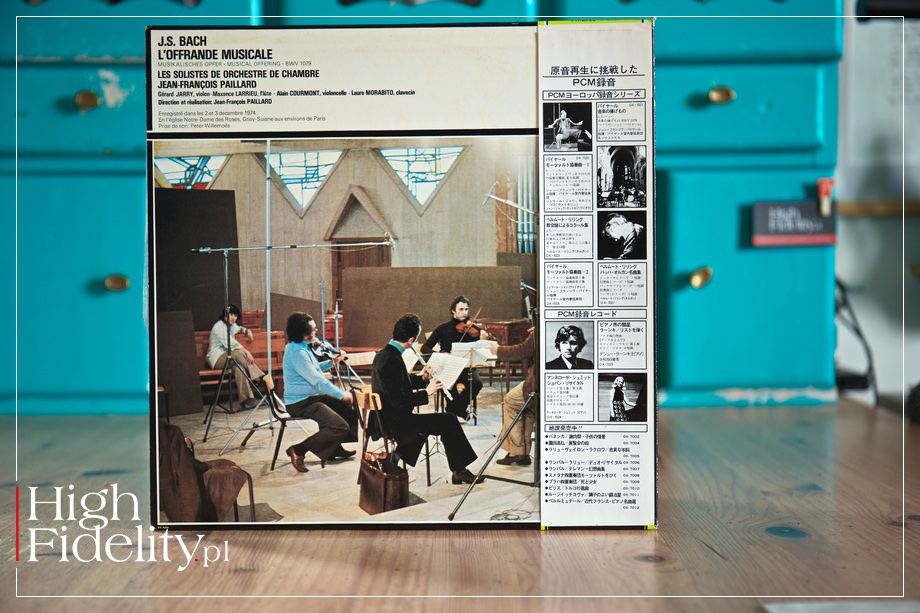
The engineers cutting the acetate disc had to keep in mind how the record would be played. So they had to adjust the sound to achieve exactly what they wanted with that particular disc. Ha! – After all, the tonearm used for listening to the acetate disc mounted in the lathe was definitely equipped with a Denon DL-103 cartridge. Therefore, the assumption that it is supposed to sound like it does with this type of cartridge is not far from the truth. And it is precisely this that gives the sound both the density and creaminess of the DN-023R’s tape recordings, as well as something new, which, to get ahead of myself, characterizes its newer, more compact version, the DN-023RA. This is due to a deeper entry into the sounds, a closer perspective, and greater energy in the upper midrange. Yet it remains warm and bears no resemblance to the shrillness of digital classical music recordings from the '80s and '90s. Ah, what a beautiful sound! If anyone wants to immerse themselves in the sound of shellac records – or even gramophone cylinders – but with a wide frequency response, nice stereo imaging, and high dynamics, this is where they should sit back, get comfortable, and relax. Everything contributes to this – the tone, the dynamics, and the perspective. The latter is closer than on Denon’s earlier recordings, but it is still the listener’s perspective, not the musician’s, and certainly not the conductor’s. Sophistication, composure, fullness – a magnificent recording! ▲ European release J.S. BACH, L'Offrande Musicale, BWV 1079 Perf. by Les Solistes de L'Orchestre De Chambre Jean-François Paillard IT IS SHOCKING just how much the Erato version differs from the Japanese original. The same goes, incidentally, for other European reissues of Denon’s digital recordings. The French version is nice; I’d even say it’s interesting. But just a moment earlier, I heard the same material played from a Japanese pressing made directly from the digital tape, and that is impossible to forget. In comparison, the Erato version sounds as if its frequency range extremes have been cut off and the sound is compressed. It is more distant, less detailed, but, above all – boring. The Japanese original sounds both warm and incredibly selective, which is most evident in the sound of the harpsichord. The one on Erato is veiled and placed further back in the soundstage. The flute, too, sounds in this version as if its tonal palette has been limited. 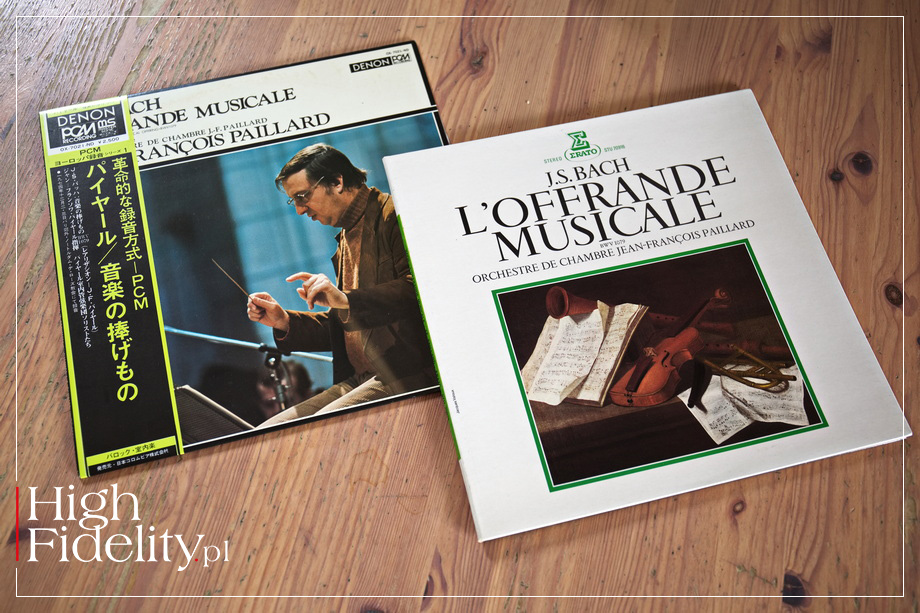
Generally speaking, then, the issue is both a loss of selectivity and a broadening of the frequency response, but also the significantly lower dynamic range of the French copy. Because that is how I would view it – not as a version, but precisely as a copy. It is similar to a photocopy – even the best machines lose some information because that is the nature of a duplicate. In the case of the L'Offrande Musicale recording, this is particularly acute. It shows just how superb Denon’s technical capabilities were at the time and how other labels failed to understand what they had in their hands, tailoring the material to their own notions of sound. ● ˻ II ˺ J.S. BACH Orgelchoräle Durch Das Kirchenjahr Perf. by Helmuth Rilling 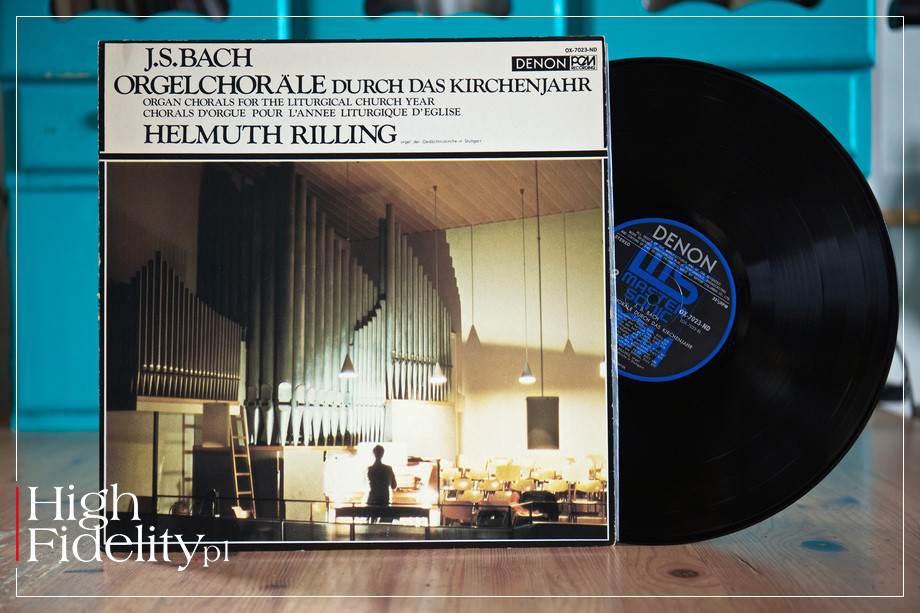
THE SECOND RECORDING IN HISTORY, made on a Denon DN-023RA tape recorder, is an organ recording. Helmuth Rilling performed Bach’s works from a collection of forty-six (out of the planned one hundred sixty-four) short organ preludes by Johann Sebastian Bach, known as Orgelbüchlein (Little Organ Book, BWV 599–644). This is an educational and liturgical cycle of works designed to illustrate, through music and the text of Lutheran chorales, the various feasts and seasons of the church year. Born in 1933, Helmuth Rilling was an outstanding German conductor, educator, and organist, as well as a world-renowned expert in the interpretation of Johann Sebastian Bach’s music. He founded the Bach-Collegium Stuttgart (1965) and the Gächinger Kantorei, and was the first to record Bach’s complete church cantatas. He was also a Grammy Award winner (2001) for his recording of Krzysztof Penderecki’s Credo. The musician collaborated with the Academy of Music in Kraków, where he received an honorary doctorate in 2003. He died on February 11th of this year, at the age of ninety-two. However, we are still at the beginning of his career. On December 1, 1957, Rilling became organist and cantor at the rebuilt Gedächtniskirche in the northern part of Stuttgart. Rilling, who was still studying in Rome under Fernando Germani at the time, was able to play a significant role in the disposition and “organization” (playing aids, radial pedal, and many other elements) of the organ. Rilling’s first organ concert at the church took place in February 1958. On the Walcker organ –revolutionary in terms of technical equipment – Rilling recorded Das Orgelbüchlein I–IV (J. S. Bach) for Bärenreiter Musicaphon in 1964, and ten years later, as one of the first organists, he digitally recorded Bach’s organ works for Denon. 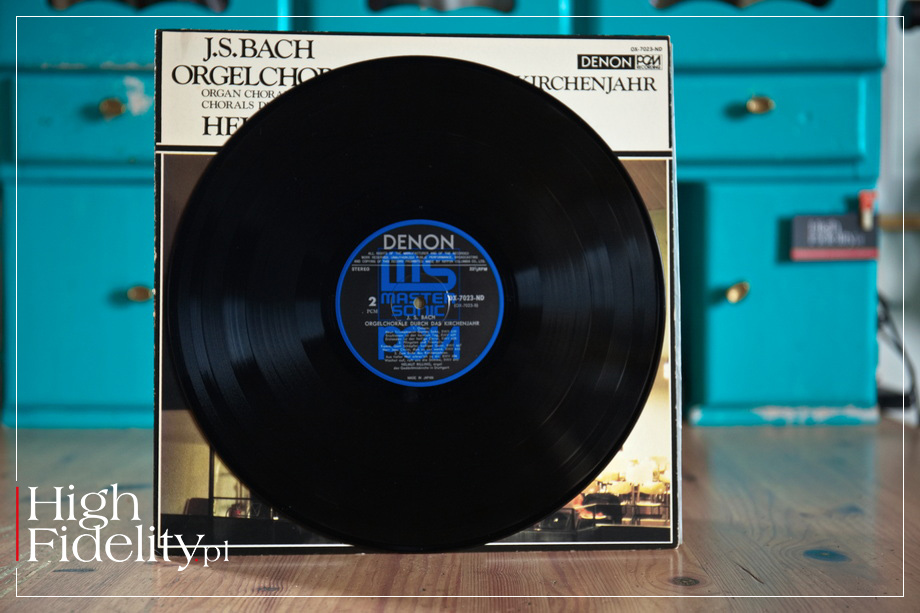
It was there, in December 1974, that the album in question was recorded. The sessions were spread out over several days, and the entire process was completed between December 12 and 19. The same engineer who worked on the Erato album, Peter Willemoës, was in charge of the sound. Mr. Anazawa was responsible for the technical aspects, and Hideki Kugisaki handled the tape editing at Nippon Columbia Studios. The album was pressed in the Master Sonic series, which minimized distortion during the cutting process. Like the recordings by Les Solistes de L'Orchestre De Chambre Jean-François Paillard, made in the same month, this was a release with an obi strip (unfortunately, my copy does not have one) and a four-page booklet. This material was never reissued on LP, but a CD with a revised cover was released in 2002. In 2012, the same remaster was pressed on a Blu-Spec CD. ▒ Sound quality BEFORE WE START LISTENING to the music, the first thing that catches your attention right from the start is the unusual opening of the recording. Usually, this is done by slowly opening the master potentiometer slider from silence – we’re talking about mastering – to transition from the sliding noise to the ambient noise of the concert hall or, as in this case, a church. And this is significant noise, with a completely different character than mechanical noise. In this case, the transition is distinct because the recording itself doesn’t produce any noise – after all, it’s a digital recorder. Denon’s engineers did it differently; instead of a fade-in, they released the entire signal at once, as if they hadn’t interfered with the tape after it was recorded, hadn’t run it through the mixer again to master it, but had simply edited it by cutting. You can hear something similar in the transitions between tracks. And the sound itself is perfect, simply perfect and different from the L'Offrande Musicale, BWV 1079. Obviously, the instrumentation is different, and so is the miking. Here it is distant, recorded from a distance; there it is close, “heard” by microphones from about two meters away. Bach, under the direction of Jean-François Paillard, is clearly warmer, more “tube-like.” And much more “vintage.” In the sense that it is based on the lower midrange. 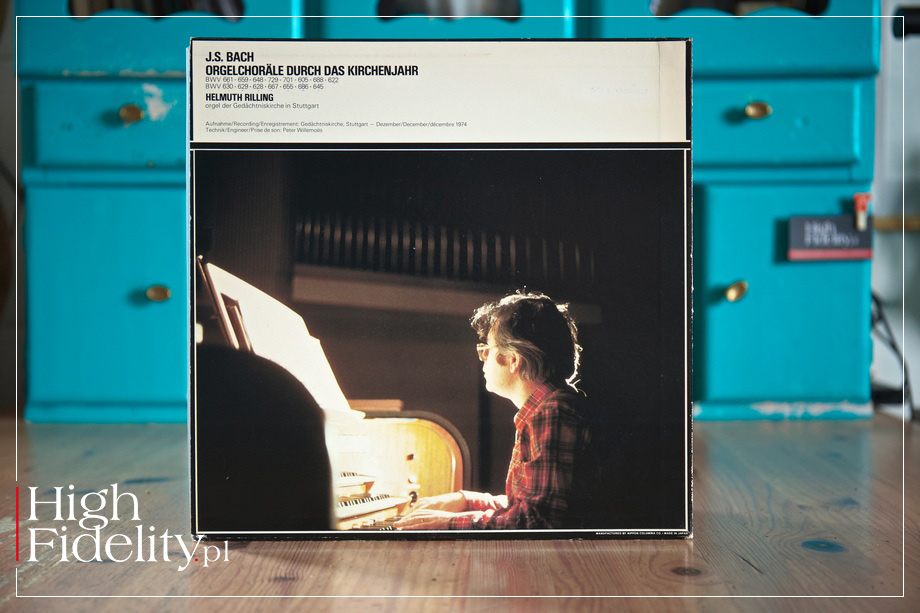
Helmuth Rilling’s recording is, in turn, full range. It features superb bass weight, a sense of grandeur, and crystal-clear sound in the quiet passages. The instrument has a powerful volume; it is a large structure. Yet this does not come across as dominating the space. The recording has a carefully chosen perspective. Organs are usually heard from a distance and almost always from behind the audience, except in “concert hall” settings. And this is, after all, Bach and liturgical music, so it should sound just as it does in a church. And that is exactly how we experience it on this recording. Denon’s engineers didn’t try to tweak or emphasize anything; instead, they chose honesty. But not childish naivety, so to speak, but a clear, mature message. There is depth and clarity in it, but also something we expect from music – an energy that infects us. And this is true in both the quiet passages and the loud ones, when a bright, clear window to a vast interior suddenly opens up before us. The sound is pure, but not sterile, a trait that is extremely characteristic of early digital recorders, whether from Denon, 3M, or Mitsubishi. Sony’s DASH tape recorders went in a different direction. In this respect, the Denon DN-23RA recorder is, in my opinion, better than 99.9% of modern DAWs, perhaps except for a few that work with high-sampling-rate DSD (DSD256). A wonderful album! ˻ III ˺ W. A MOZART The Haydn Quartets Perf. by Smetana Quartet 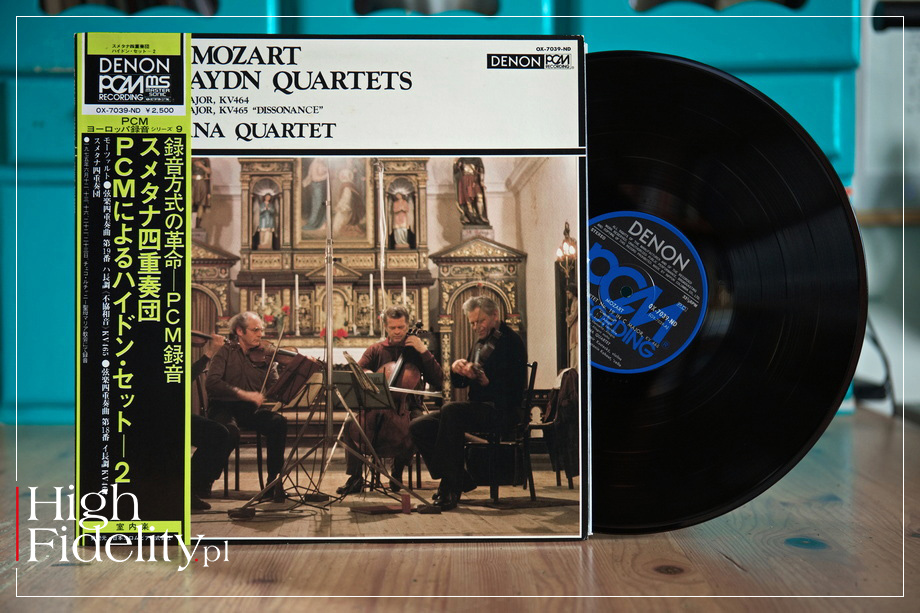
IN 1975, THE DENON CREW returned to Europe. This time, one of their stops was Czechoslovakia. As we mentioned in our review of the DA-23R tape recorder, the Czechoslovakian Supraphon label was not known for particularly good sound quality in the Eastern Bloc countries during the 1970s and 1980s. In Japan, things were different. Thanks to recordings co-produced by Nippon Columbia and Supraphon and released in Japan, a small cult following developed around Supraphon. It was Supraphon that recorded the first-ever album on the DA-023R tape recorder, the predecessor to the “RA” version we are discussing here. The recording of Haydn’s quartets, performed by the Smetana Quartet, was made on June 12, 13, 16, 22, and 24, 1975. The recording took place at the Church of St. Mary in Lučany, in what was then Czechoslovakia (Czech: Kostel Navštívení Panny Marie, Lučany nad Nisou). Lučany nad Nisou (German: Wiesenthal an der Neiße) is a town in the Jablonec nad Nisou District of the Liberec Region in the Czech Republic. It has a population of approximately 1,900. The church where the recording was made was built in the Neo-Renaissance style between 1886 and 1889. In the 1970s, Denon recorded three other albums there. Supraphon engineer, Mr. Miloslav M. Kulhan, was responsible for the sound, and Takeaki Anazawa-san handled the technical aspects. Musical supervision was provided by Eduard Herzog and – once again – Peter Willemoës, while Toru Yuki was responsible for production, as usual. The album was released in the “European Recording Series” as number 9. It featured an obi strip and a six-page booklet. In 1984, it was reissued on vinyl with a revised cover, and in 1987 on CD with yet another cover design. ▒ Sound quality REUNION WITH THE Smetana Quartet was a sort of return to what I had already experienced. But, like all returns, it wasn’t an identical experience. It resembled the first set of Haydn Quartets, recorded on the DN-023R tape recorder, but with the awareness that we are, after all, in a different place. 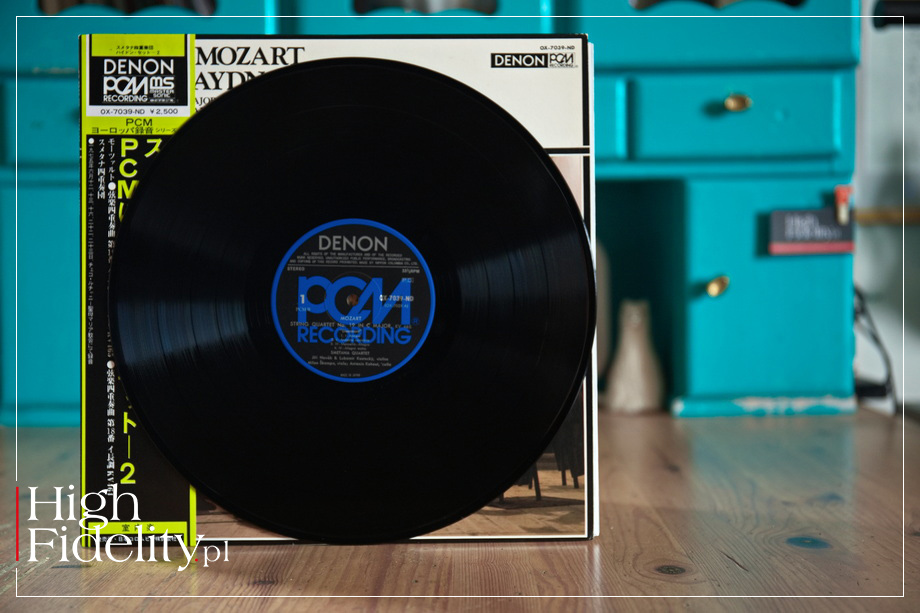
The recording was made in a church rather than a concert hall, so we’re dealing with a completely different acoustic environment – that of a (Neo)Renaissance church. This means significantly longer reverberations. And yet, we don’t perceive it that way at all. There is something about Denon’s recordings from the 1970s that strives to present a tangible and clear sound, without drowning it in reflections that blur the details. The sound is still quite warm and midrange-focused, but it also has a distinctly brighter midrange, around 5 kHz. This provides the aforementioned clarity and openness. This sound is closer to what Deutsche Grammophon proposed when it adapted the 24-track Sony DASH PCM-3324 digital tape recorder (first units in 1982), which was later replaced by the 48-track PCM-3348 model (1989). But not quite the same. Denon is following the path it set with its first set of Quartets…, released in 1972. It’s a rich and full-bodied sound without any tonal excesses or artificial widening of the soundstage. Both of these elements are equally important and contribute equally to this sound. The tone evokes recordings from the analog era – even the acoustic era – while the perspective presents events in excellent balance: not too far, not too close. Despite this, the sound is detailed and selective. However, this selectivity stems from the absence of distortion, low noise, etc., rather than from artificially emphasizing the attack.
It may not be quite as breathtaking as the first recording from Tokyo, but still beautiful. ▒ Summary WITH THIS CHAPTER OF DENON’S digital recording history in mind, I listened to several other albums, both on vinyl – from copies pressed in Europe by partner labels – and on CD reissues released by Denon itself. In every case, the former were by far the best. Their counterparts produced by Nippon Columbia’s partners sounded noticeably worse – less selective, with lower resolution, and lesser dynamics. CDs, in comparison, come out quite interesting. They aren’t quite as good as the vinyl records, but they retain much of their charm. The problem with the CDs is that the DN-23RA tape recorder, like earlier Denon recorders and the later DN-34R, lacked digital outputs. Furthermore, these were devices with 14-bit resolution and a sampling rate of 47.25 kHz. The copy for the CD, therefore, had to be made via the analog output, and the master re-recorded with 16-bit and 44.1 kHz parameters. 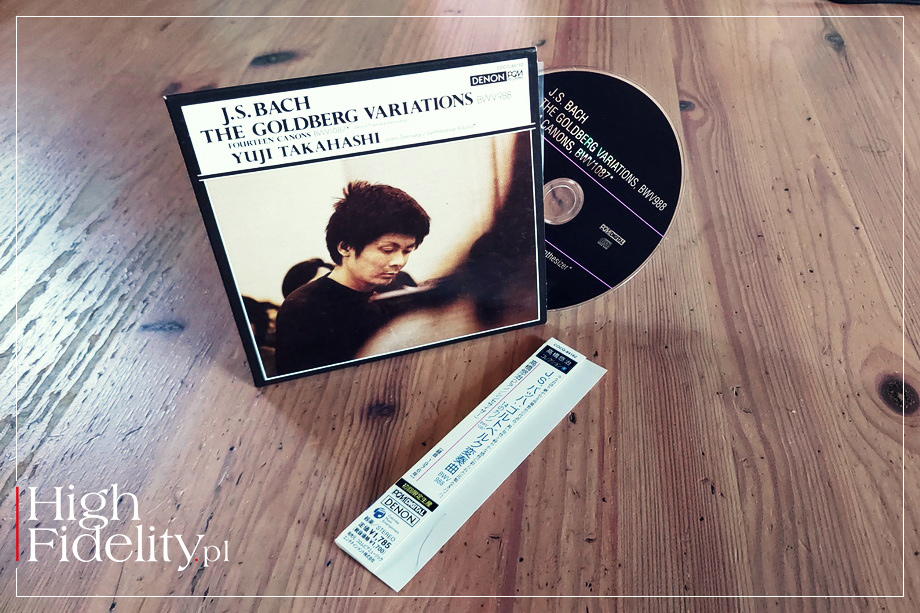
It’s worth buying CD reissues, especially those released on gold-coated discs and Blu-spec CDs. However, if you want to hear what was actually recorded during sessions in France, Germany, Czechoslovakia, or – as in the case of Yuji Takahashi’s Golberg Variations from the CD release shown above – you’ll need to reach for the original Denon pressings. To get ahead of events, I’ll add that the same will be true for albums recorded on the DN-034R tape recorder, which we’ll discuss next time, when we’ll travel to the United States of America and New York. ░ Bibliography • HIROSHI IWAMURA, HIDEAKI HAYASHI, ATSUSHI MIYASHITA, TAKEAKI ANAZAWA, Pulse-Code-Modulation Recording System, AES Journal Volume 21, Number 7 pp. 535-541, September 1973. |
 |