


|
LOUDSPEAKERS ⸜ floor-standing SPENDOR
Manufacturer: SPENDOR AUDIO SYSTEMS Ltd. |

 |
 |
 |
|
Review
text by WOJCIECH PACUŁA |

|
No 262 March 1, 2026 |
I WAS SURE I REALLY “SAW” my review of the Spendor A4 speakers. I could even visualize them standing in my room. I entered their name into the search engine on the HF website and – nothing. I searched the archive and got the same result. It was only after some time that I gave up and realized that I had tested a smaller model, the A3, and that this test had stuck in my memory so much that I transferred it to the larger speakers in this series. 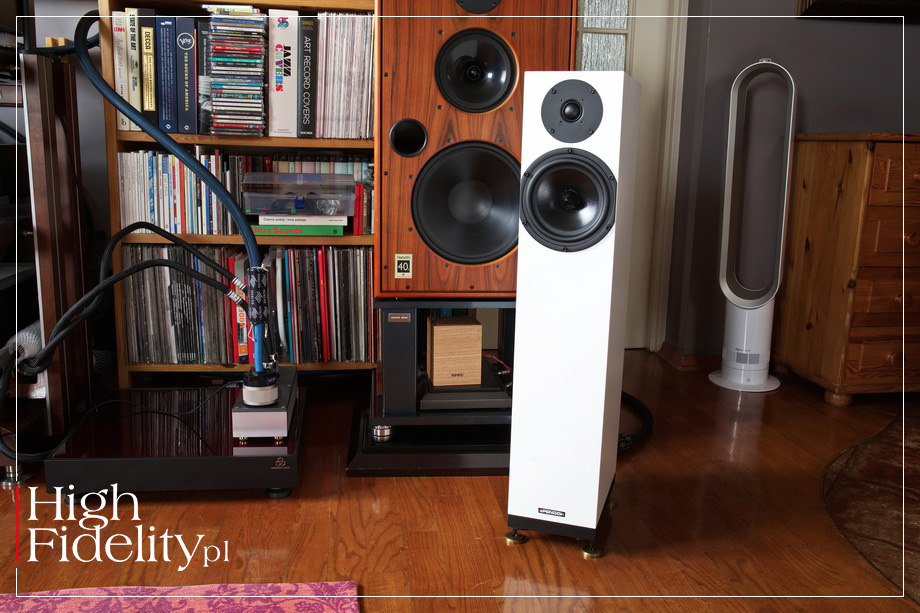
The A3 floor-standing speakers were the “golden mean” for me, small designs with surprisingly big sound and amazingly low, full bass. When I had to recommend something blindly to someone, for both small and quite large rooms, Spendors were the first things that came to mind. They almost jumped out of my subconscious, like a champagne cork pushed out under high pressure. That's how good these speakers were. Perhaps there would be nothing strange about my recollection were it not for the fact that I tested these speakers as long as fifteen years ago (!), in October 2011 (HF ‖ № 90, more → HERE ˻PL˺). Something like this has only happened to me a few times in my career. It is a unique achievement and a demonstration of the capabilities of Philip Swift's team, but it also places a considerable burden on the tested speakers. All the more so because the A.2 series is the first group of Spendor speakers in many, many years that was not designed by Swift. He retired last year and appointed Torin Wilson as chief engineer. ▓ A4.2 SPENDOR'S NEW “A” SERIES includes seven models, four of which are aimed at stereo enthusiasts, while the three additional models can be used to create a complete multi-channel system. Of the speakers designed for listening to music, one model is a bookshelf speaker, and three are floor-standing speakers. Usually, the proportions are reversed. But then again, this is a company focused on music... The “A” catalog begins with the A1.2 bookshelf speaker. Even in this smallest speaker, we find key changes. These mainly consist of strengthening the internal ribbing and reducing damping. By changing the position of the horizontal reinforcement beam and placing it directly behind the driver, as well as using a damping-reducing layer of Sorbotan, Spendor claims to have minimized vibrations that can affect the sound. ▲ Sorbothane SORBOTHANE, let us remind you, is a viscoelastic polyurethane material based on polyurethane, known for its excellent shock-absorbing, vibration-damping, and vibration-isolating properties.It was invented in 1975 by Dr. Maurice Hiles, a materials scientist at the University of Akron, to mimic human tissue for shock absorption. Sorbonite was patented in 1982 and is often used in audio to dampen vibrations. ● The NEW A.2 SERIES does not include a model with the number “3” – instead, we get the A2.2 speakers. They are larger than the A 1.2 bookshelf speakers and smaller than the two floor-standing speakers, the tested A4.2 and A7.2 models. From the outside, the .2 speakers do not differ much from their predecessors, but what you cannot see are really significant changes. These include new tweeters, redesigned crossovers, as well as changes in the internal reinforcement of the walls and damping. The manufacturer writes about them:
Our new Spendor A-Line loudspeakers prove you don’t need a big space or budget to enjoy dynamic, open, and exhilarating sound. If you’re someone who truly loves music, whichever model you choose, it will add a whole new dimension to your listening pleasure.
They are slim, compact, and you can place them easily and unobtrusively into your living space, and they will fill the room with a clear, captivating sound. And thanks to innovative Spendor technology, the A-Line loudspeakers will get the very best from whatever equipment you have. ⸜ A-Line, → spendoraudio.com, accessed: 15.01.2026. ▲ A few simple words… TORIN WILSON 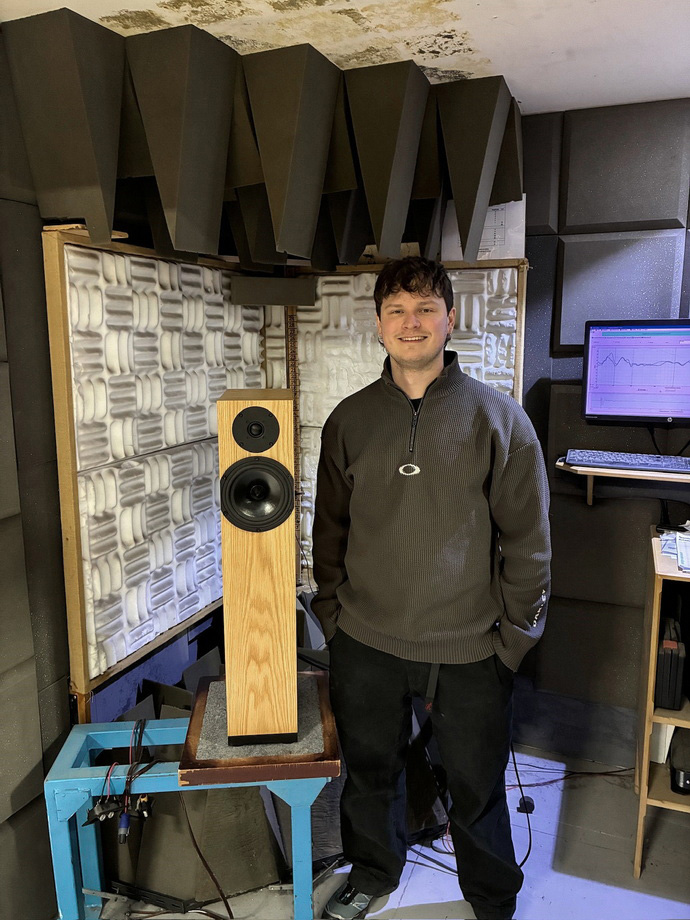
‖ Torin Wilson in the measurement chamber • photo: Spendor THE A4.2 IS A THOUGHTFUL REVISION of our original A4 – one of the most commercially successful loudspeakers in Spendor's illustrious history. While the A4.2 may look almost identical to the untrained eye, extensive developments beneath the surface fundamentally elevate its performance. 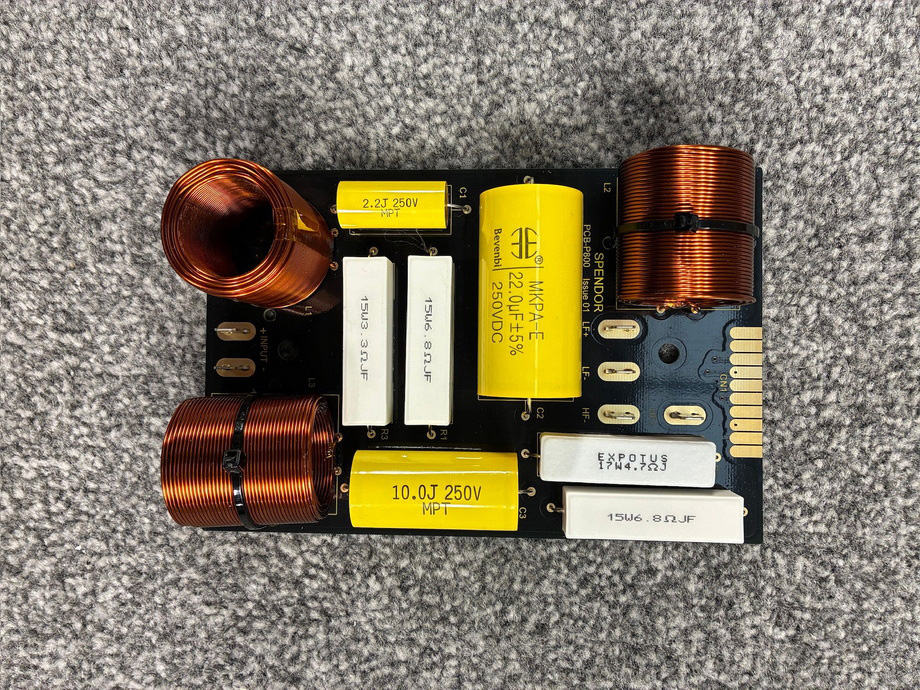
‖ Crossover for the A4.2 • photo: Spendor My design brief was very clear: build on everything that made the A4 so well-regarded, address its limitations, and do so without changing its sonic character, its form factor, or market position. In many ways, that made the project more demanding rather than less. The A4 provided a strong foundation, but it also carried a reputation that had to be respected. Before implementing any changes, I spent considerable time fully understanding its performance, both subjectively and objectively - identifying its accolades and where there was genuine scope for improvement. 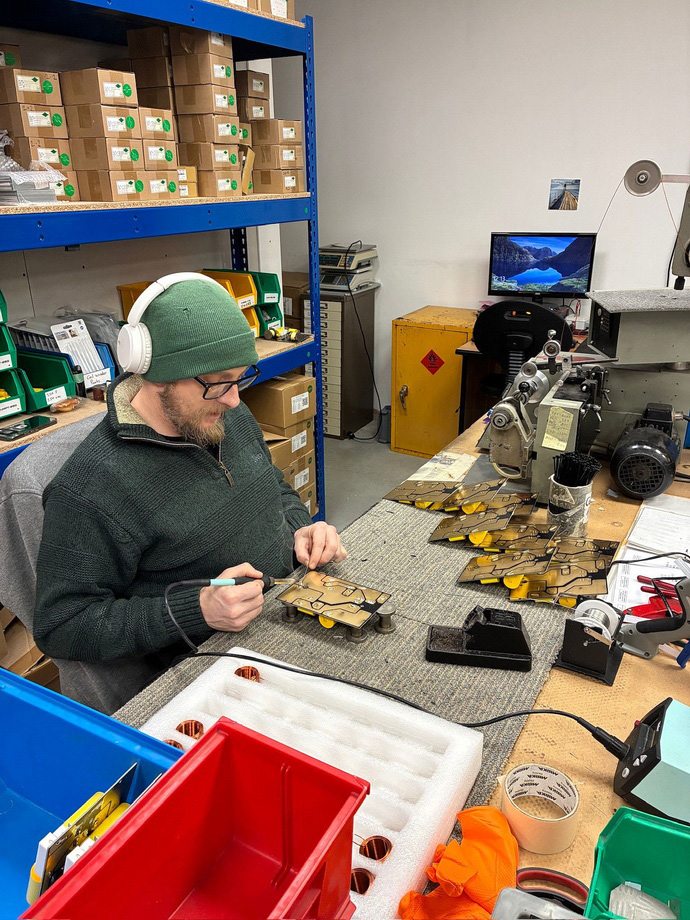
‖ Assembly station for A4.2’s crossover • photo: Spendor The A4.2 is a more technically accomplished loudspeaker and, just as importantly, more musically rewarding across a wider range of systems and listening environments. By focusing my design efforts on improving its off-axis frequency response and lowering the noise floor, the A4.2 delivers a more engaging and seamless experience, regardless of your listening position. 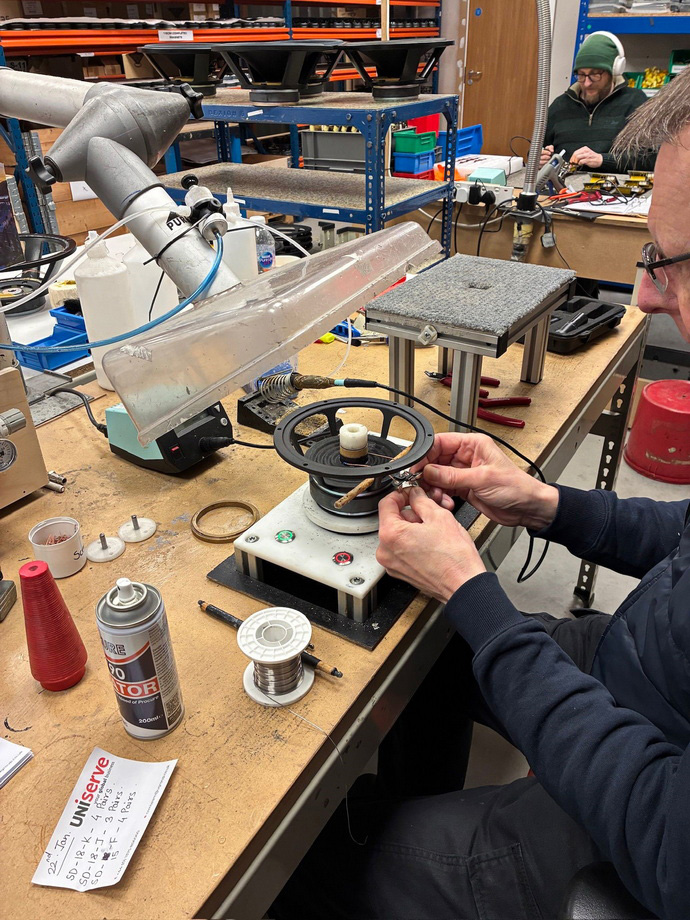
‖ The workstation where the A4.2 low-midrange drivers are built • photo: Spendor Key developments include a completely new crossover design, optimised for off-axis performance and smoother driver integration. This creates a more open and accurate stereo image while remaining room-friendly. A larger, more capable rear-chambered tweeter allows for a lower crossover point with reduced distortion, resulting in a sweeter and cleaner high-frequency presentation. 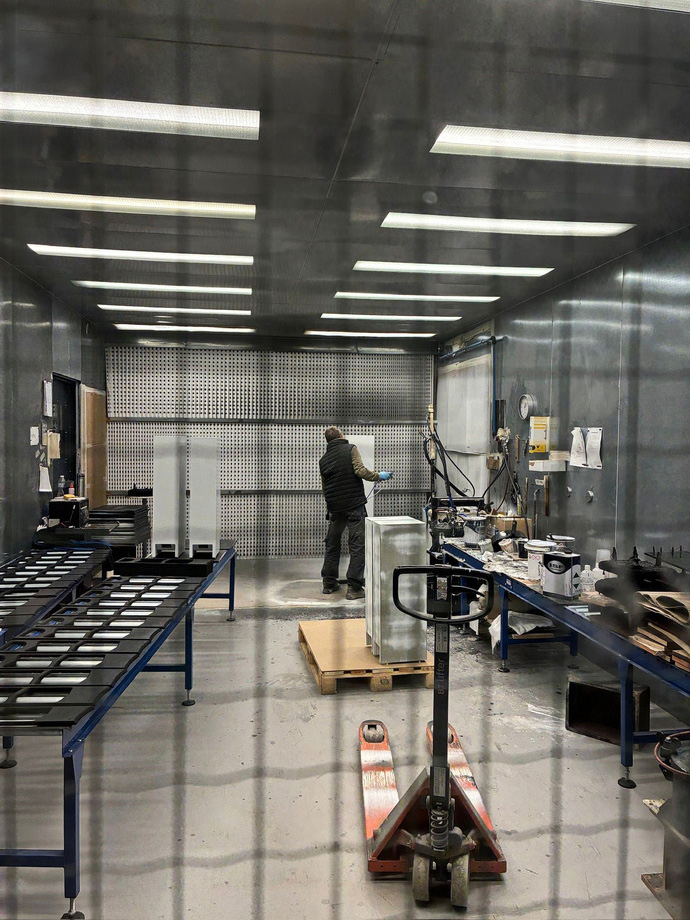
‖ Paint chamber – pictured with a white cabinet • photo: Spendor Internally, the A4.2 has been further refined through improved bracing and a damping system to create a more inert cabinet and reduce unwanted interactions between the driver and the cabinet itself. A new bass alignment improves transient response and lowers group delay, giving bass that is tighter, more agile, and better controlled. Taken together, these improvements produce a clearer, more open, and more accurate loudspeaker that only elevates the performance and inherent charm of its predecessor. ‖ TW TECHNOLOGY • The A4.2 speakers are a two-way design and are intended to be placed on the floor (in other words: floor-standing speakers or free-standing speakers). The low-midrange driver works in conjunction with a rear-mounted bass reflex port. It has been tuned so that it can be placed close to the rear wall:
Music remains tuneful and articulate even when the A4.2 is positioned close to a wall or in a small room. The A4.2 is easy to drive, and it brings out the best from your amplifier.
⸜ Ibidem. The A4.2 features a completely new 27 mm soft dome tweeter with a wide suspension and a large rear chamber. This is a version of the SEAS driver made for Spendor. The low and midrange frequencies are still handled by the 18 cm EP77 driver with a cast basket and polypropylene cone, familiar from the previous version of the A series. In its center, there is a fixed phase cone designed to equalize the reproduction between this driver and the dome. 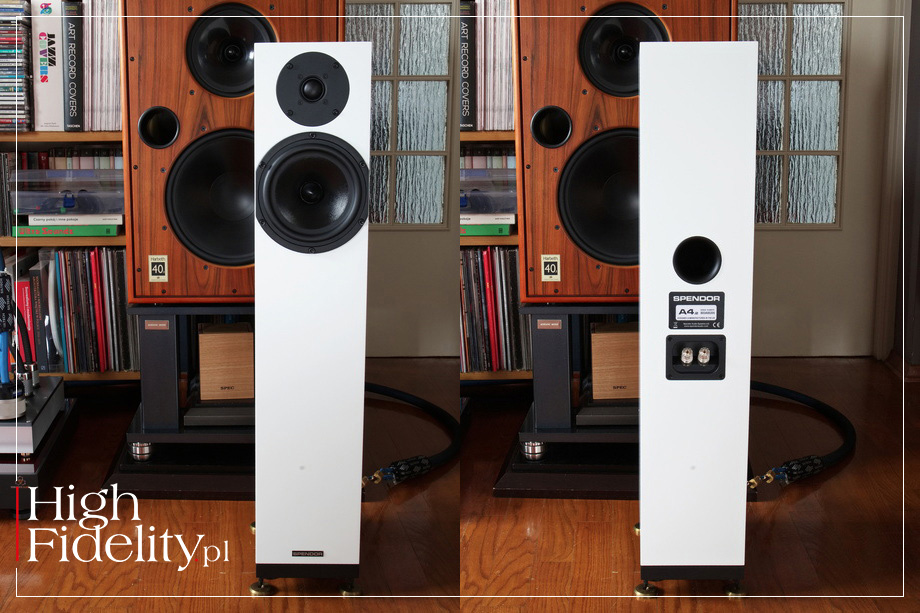
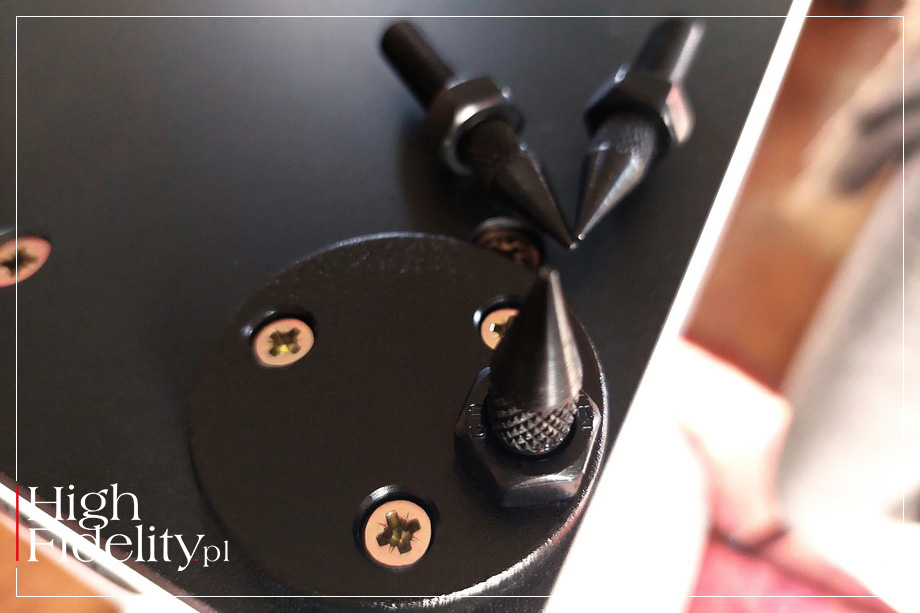
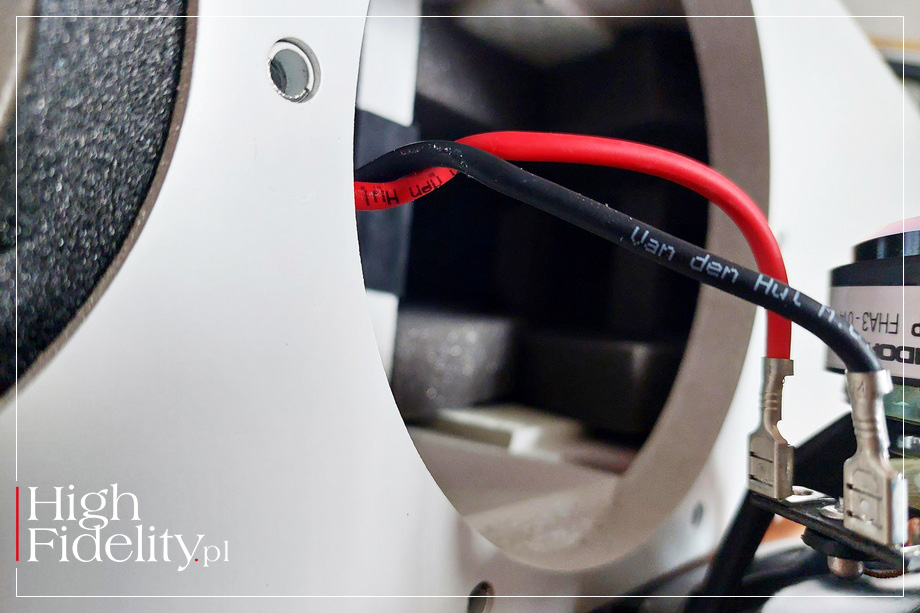
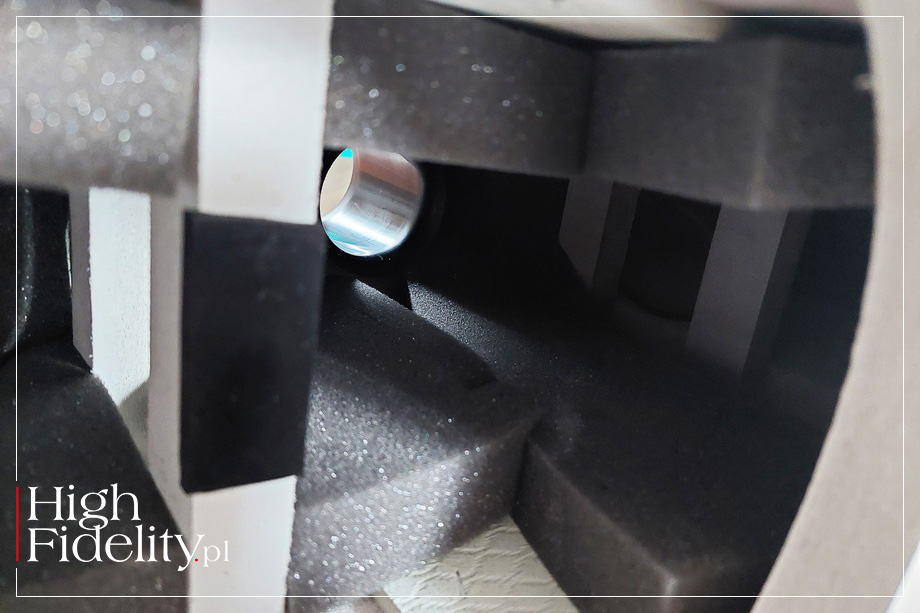
According to the manufacturer, the frequency range is divided using an “improved crossover” designed to “provide a more open, dynamic, and natural high-frequency reproduction.” The internal wiring is very good for a speaker manufacturer. These are Van den Hul FS-16 cables, a braid of copper, zinc, and silver alloy. The signal is fed to the speakers through single gold-plated sockets recessed in a plastic molding. It is easy to plug in cables with banana plugs, but it is more difficult to tighten cables with spade connectors. The cabinet is made of MDF boards and is varnished or veneered on the inside and outside. The center has been reinforced with a bracing, also made of MDF, on which the low- to midrange speaker magnet rests. Sorbothane mats are attached to the sides, and all walls are additionally lined with two types of foam. This type of combination, i.e., a thick mat on the side and foam filling, is known from classic BBC designs, including the LS3/5A. Black plinths, also made of MDF, are screwed to the bottom of the speakers, and standard steel spikes are screwed into them. However, these are not fixed directly to the base but to metal discs, and not centrally but with an offset. Thanks to this, the spikes are located at the very outer edge of the speakers while remaining stable. The set also includes magnetically attached grilles. The manufacturer emphasizes another important thing that is worth noting: the speakers were designed and, above all, manufactured in the United Kingdom. This is not a case of “Designed in the UK, Made in China,” which is very common. |
▓ SOUND HOW WE LISTENED • The Spendor A4.2 speakers were tested in the HIGH FIDELITY reference system. The sources were an Ayon Audio CD-35 HF Edition SACD player and a Sforzato DSP-05 EX & PMC-05 EX file player and clock,. A solid-state Soulution 710 amplifier drove the tested speakers via Siltech Triple Crown speaker cables. 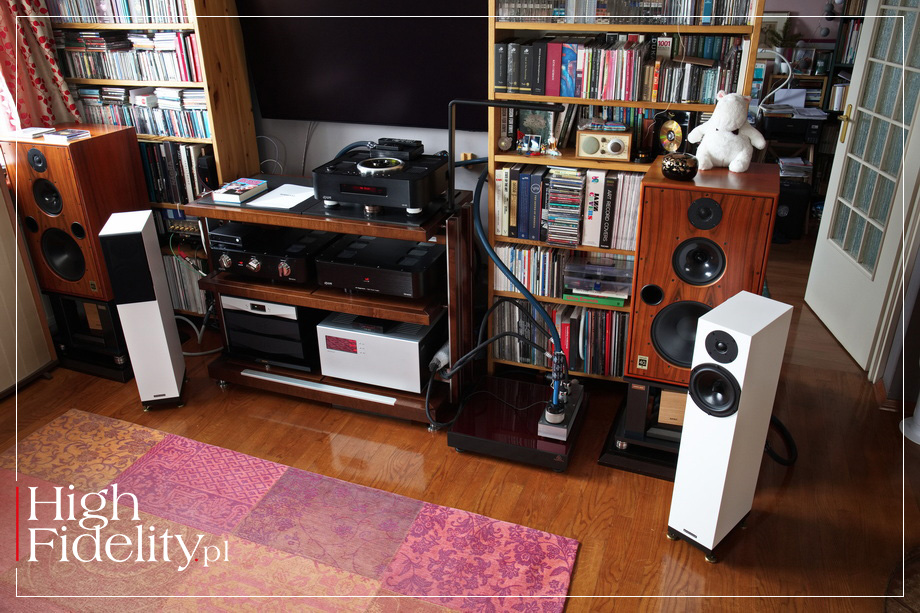
The speakers stood on company spikes, under which I placed Acoustic Revive SPU-8 pads; the set does not include pads. In the future, it would be worth replacing the spikes with anti-vibration feet, such as Pro Audio Bono or similar. The front panels were placed 245 cm from the listening position and 200 cm apart, measured along their vertical axes. They were 85 cm from the rear wall, also measured from their axis and top edge. The speakers were turned directly towards the listening position. 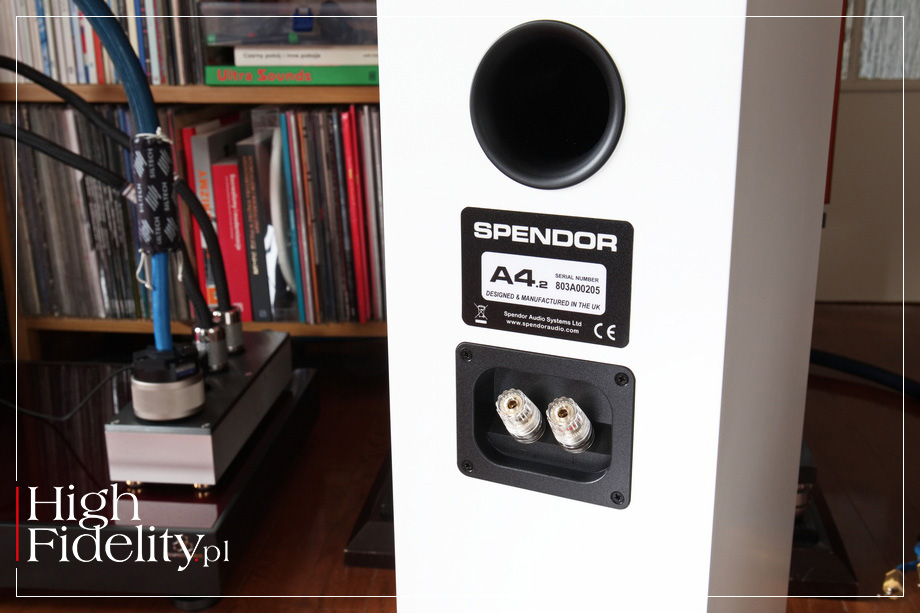
I determined the distance between the speakers and their leveling using a Bosch PLR 50 C device. For more information on speaker placement, see the article Micro-tuning, or how to set up your speakers, No. 177, → HIGHFIDELITY.pl. For more on the acoustics of the HF listening room, see the article The “High Fidelity” listening room… , No. 189, → HIGHFIDELITY.pl. » RECORDINGS USED FOR THE TEST ⸜ a selection
→ SUPER AUDIO CD/COMPACT DISC I WILL NOT GIVE YOU a long introduction and will say straight away that products such as Spendors A4.2 are referred to as “gems.” Manufacturers overuse phrases designed to “enlarge,” at least in our minds, small speakers, resorting to expressions such as “small in appearance, big in sound” or “the sound belies its size” and the like. This is often true; it is not that everyone has shifted the responsibility for words to the marketing and promotion department. Usually, however, it is adding ideology to reality. 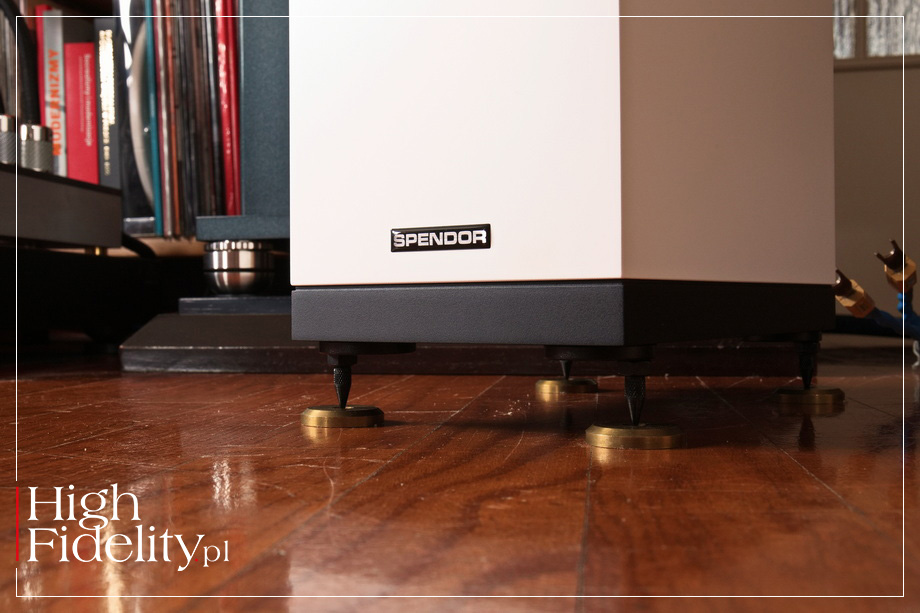
With Spendor speakers, whether the previous generation or the new A.2, there are no such problems. What you get is really and truly big sound from small speakers. The company achieves this effect by slightly emphasizing the crossover between midrange and bass and handling the high frequencies delicately. And by maintaining high energy. To be precise, I would say that the treble is slightly withdrawn – and that would be true. Or rather, part of it, so perhaps not entirely “true.” The fact is that in home listening conditions, flat reproduction by speakers is deadly for music. When you look at the curves obtained by room acoustics correction systems, you will find that the ones we like best have a falling section above 1 kHz. In a typical room, this results in a flat frequency response. In addition to direct sounds, reflected sounds also contribute to the overall sound, and it is their sum that produces the sound we “hear.” That's why Spendor speakers suit me so well. Many years ago, for the first time, and today again. These are not designs that encourage ‘heavy’ music, and yet they play perfectly well all those albums and music genres that usually sound really bad on “audiophile” speakers, whether it's PANTERA or SLAYER. No wonder that what I listen to most often, namely jazz, sounds great on them. FRANK SINATRA's vocals from the Nice'N'Easy, released on gold disc by Mobile Fidelity, were warm, deep and perfectly anchored in front of me, between the brass instruments on the left and the violins on the right. It was a low, full, and gutsy performance, but I did not feel any tonal imbalance. Both the tuba and the trombone were presented with energy and without sharpness. The same was true for the vocals. Phrasing and vibrato, which Sinatra was a master of – as in ˻ 5 ˺ You Are Going to my Head, when the crooner ends the line with “my head,” “haunting refrain” or “glass of champagne,” the latter words vibrate delicately, and the precise, even celebrated diction of the singer makes the ending “t” (an unvoiced ‘d’) in “head” clearly audible. All this is thanks to perfect diction, but you have to know how to use it. I am writing this because Spendors are great at showing such things, without forgetting the big picture. They create a large space, a compressible space filled with energy. They keep everything under control, but in a friendly way, not oppressive or exclusionary. It's as if they encourage long listening sessions. This is “high comfort” listening; I have no doubt about it. Fortunately, it is not a comfort that puts you to sleep, but one that stimulates you. So when the first bars of ˻ 2 ˺ Amazing from GEORGE MICHAEL’s album, one of my pop music heroes, start, the A4.2 opens up a deep and wide soundstage, and a high one (!). And the acoustic guitar, spread across the channels and often sharp, takes on a rosy hue, sounding sweeter than usual. Sweeter – yet clearer. A paradox, but one that clearly demonstrates the uniqueness of these designs. This is because it is very, very high-resolution sound. People often, too often – and I will repeat myself – confuse resolution with selectivity or even detail. The latter two categories are important, but there cannot be too much of them. If there is too much, it's game over, zero listening pleasure. If there isn't enough, it's the same thing, because it's boring and distracting. Resolution, on the other hand... You can never have too much of that. And that's why, among other reasons, the Spendors A4.2 are so excellent. What's more, they are small and create a large soundstage – I've already mentioned that. And on this soundstage, they build credible, three-dimensional phantom images (of instruments) in a way that is appropriate. That is, natural, not artificial. This is not the creation of independent entities with clear lines, as in manga and comics, but the presentation of solids in a way that gives them weight and mass, yet blends them into a whole with other sounds. But let's also repeat: these are small speakers. So we won't get bass comparable to what we get from Harbeth M30.3 XD2 or JBL Studio Monitor series speakers; that's impossible. And yet, it's not missing. When we listen to the long intro to ˻ 2 ˺ Use Me from PATRICIA BARBER's album Companion, played on the double bass, we can literally see the instrument. It has weight and energy, and the playing style is also clearly audible. I had the same experience with Michael earlier. The tested Spendors feel great in energetic music. Even the smaller A3s were excellent – I sometimes listen to them at the graphic designer's who prepares High Fidelity issues for you, where they are paired with a Fezz Audio amplifier and a Rega turntable – but the A4.2s add even more freedom to that. The larger internal capacity in larger designs does not translate into lower bass, at least subjectively, but rather into a more relaxed playback of low frequencies, as if there were less compression in them. 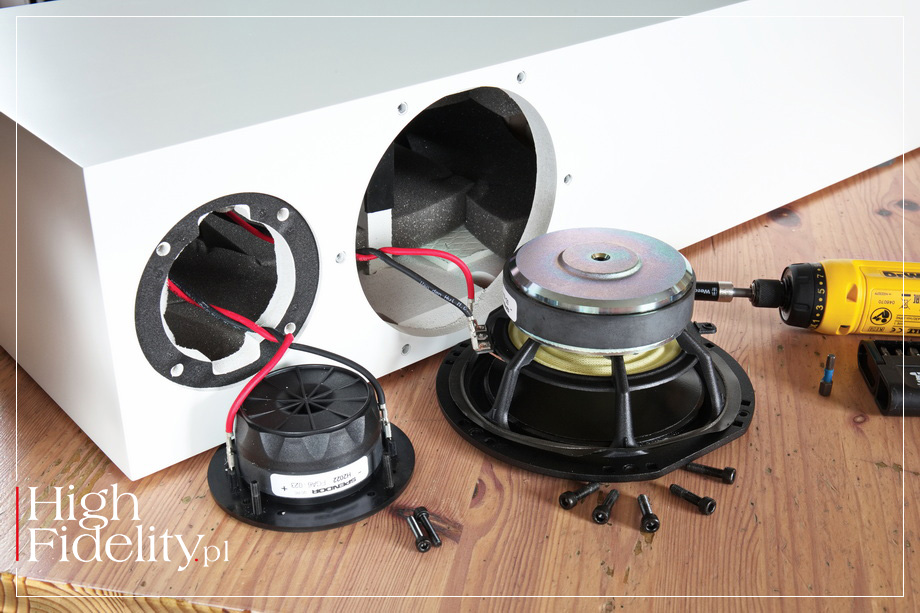
These are speakers that respond quickly to signal changes. This is aided by their high impedance, which means they are better suited to amplifiers, including tube amplifiers. Their efficiency seems lower than previous models, but you can't hear it at all; they play with ease and “swing.” They are focused on the midrange; there is no doubt about that. However, because the midrange is open – not bright, but open – there is no feeling of “lack”. It is obvious that when we play something very vintage, such as the aforementioned Sinatra or CORREY FONVILLE's I Couldn’t Love You More, it will sound patinated. But PETER GABRIEL's new single Been Undone (Dark-Side Mix), which is clearly more open, sounded balanced, which is not often the case with this artist's songs. And there was Levin's low, dense bass combined with the kick drum. And it was with this track that I could best hear something that I had missed at first, namely that with Spendor speakers, we can listen to music really loud and it won't hurt us. On the day I returned the speakers, LAMB OF GOD, one of my favorite heavy bands, released a new single, Into Oblivion. Well, it's not exactly calm music. But I turned up the volume knob on the preamplifier and the sound got louder and louder without becoming more and more irritating. The same applies to other music genres. At the same time, electronic music sounded particularly good with them. This is because the A4.2 speakers create a multi-layered sound, both in terms of depth and the ability to differentiate between tones. And again, yes, they don't have a bright treble; they may even seem dark. When you put them next to brighter speakers, this will be obvious. But don't be fooled by a short demo, because ultimately it is the Spendors that will play more energetically. Like the MOBY's new single, When It's Cold I'd Like To Die, recorded by JACOB LUSKI. Jarre? – Here you go – there is slam, there is density, but above all, there is scale. As in SHABAKA's Future Untold, as in JACK JOHNSON and the HERMANOS GUTIÉRES duo’s Hold On To Light. And that's because we're talking about speakers that don't seem to compress the sound. I know that fans of horn and open-baffle designs are looking for something similar, but here they get it without sacrificing mid-bass energy. The tangibility that Spendors offer is not so immediate; there is a “haze” around the sounds, but – in my opinion – this is what makes their sound so natural. It is as if all the acoustics accompanying the recording are transferred to our room, rather than the sounds generated in our acoustics. ▒ Summary I LISTEN TO THE END of the solo guitar test – PAT METHENY from the What’s It All About album and I can’t stop smiling. I know that not everyone will like Spendor speakers. And that’s fine; audio is an art of choices. But those who are looking for an organic, smooth, natural sound on a large scale will be delighted. It's a warm sound – let’s say it is. And midrange-based sound – let it be that way too. But there is also energy, dynamics, and above all, power. These speakers play more effortlessly than the A3, although they don't extend any lower. I would say that in the smaller and older model, the higher part of the low frequencies is slightly emphasized, while here the lower part sounds more effortless. 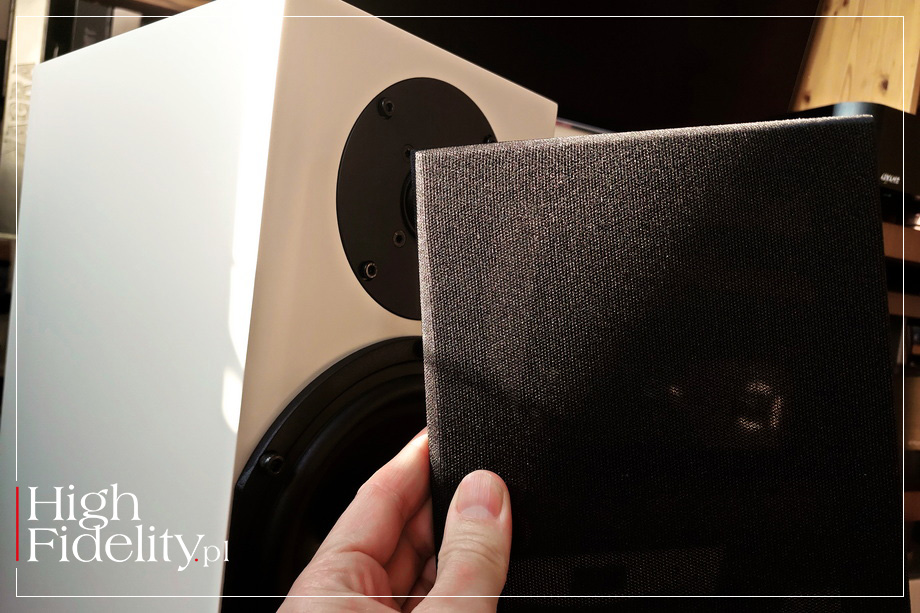
These are speakers that will play in both small and large spaces, with transistor and tube amplifiers – they are really very versatile. And it doesn't matter what kind of music we listen to. They also have their limitations. They will not show a clear attack, nor will they amaze you with cymbal ringing way back on the stage. But that's not what music is all about. ˻ RED FINGERPRINT ˺ from us and huge congratulations to Torin Wilson and his team! ‖ WP ▓ Technical specifications (according to the manufacturer)
Description: 2-way floor-standing loudspeaker 
THIS TEST HAS BEEN DESIGNED ACCORDING TO THE GUIDELINES adopted by the Association of International Audiophile Publications, an international audio press association concerned with ethical and professional standards in our industry, of which HIGH FIDELITY is a founding member. More about the association and its constituent titles → HERE. |
 |

|
Reference system 2026 |
|
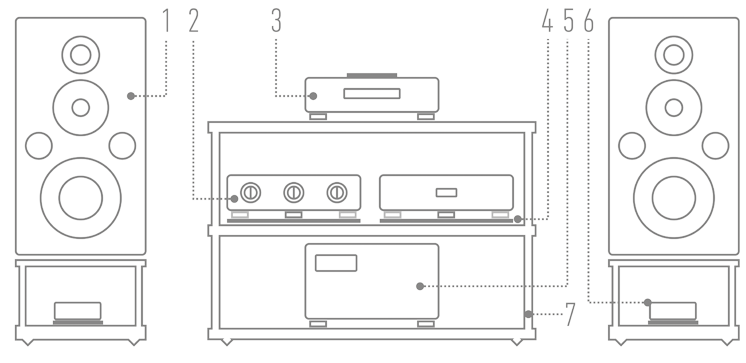 1) Loudspeakers: HARBETH M40.1 |REVIEW| 2) Line preamplifier: AYON AUDIO Spheris III Linestage |REVIEW| 3) Super Audio CD Player: AYON AUDIO CD-35 HF Edition No. 01/50 |REVIEW| 4) Stands (loudspeakers): ACOUSTIC REVIVE (custom) |ABOUT| 5) Power amplifier: SOULUTION 710 6) Loudspeaker filter: SPEC REAL-SOUND PROCESSOR RSP-AZ9EX (prototype) |REVIEW| 7) Hi-Fi rack: Hi-Fi rack: finite elemente MASTER REFERENCE PAGODE EDITION Mk II, more → HERE |
|

|
Cables Analog interconnect SACD Player - Line preamplifier: SILTECH Triple Crown (1 m) |ABOUT|» ANALOG INTERCONNECT Line preamplifier → Power amplifier: Siltech ROYAL SINLGE CROWN RCA; review → HERE Speaker cable: SILTECH Triple Crown (2.5 m) |ABOUT| |

|
AC Power Power cable | Mains Power Distribution Block - SACD Player: SILTECH Triple CrownPower (2 m) |ARTICLE| » POWER CABLE Mains Power Distribution Block → Line preamplifier: Acoustic Revive ABSOLUTE-POWER CORD, review → HERE » POWER CABLE Mains Power Distribution Block → Power amplifier: Acoustic Revive ABSOLUTE-POWER CORD, review → HERE Power cable | Power Receptacle - Mains Power Distribution Block: ACROLINK Mexcel 7N-PC9500 (2 m) |ARTICLE| Power Receptacle: Acoustic Revive RTP-4eu ULTIMATE |REVIEW| » ANTI-VIBRATION PLATFORM under Acoustic Revive RTP-4eu ULTIMATE: Graphite Audio CLASSIC 100 ULTRA, review → HERE Power Supply Conditioner: Acoustic Revive RPC-1 |REVIEW| Power Supply Conditioner: Acoustic Revive RAS-14 Triple-C |REVIEW| Passive filter EMI/RFI: VERICTUM Block |REVIEW| |

|
Anti-vibration Speaker stands: ACOUSTIC REVIVE (custom)Hi-Fi rack: finite elemente MASTER REFERENCE PAGODE EDITION Mk II, more → HERE Anti-vibration platforms: ACOUSTIC REVIVE RAF-48H |ARTICLE| » ANTI-VIBRATIONAL FEET: |

|
Analogue Phono preamplifier: Phono cartridges:
Clamp: PATHE WINGS Titanium PW-Ti 770 | Limited Edition Record mats:
|

|
Headphones » HEADPHONE AMPLIFIER: Leben CS-600X, review → HEREHeadphones: Headphone Cables: Forza AudioWorks NOIR HYBRID HPC |