

|
POWER CORD AC ACOUSTIC REVIVE
Manufacturer: SEKIGUCHI MACHINE CO., Ltd. |

 |
 |
 |
|
Review
text by WOJCIECH PACUŁA |

|
No 259 December 1, 2025 |
⌈ ACOUSTIC REVIVE is a Japanese company founded in 1997 and run by Mr. KEN ISHIGURO. It specializes in interconnect cables and anti-vibration products, but also offers innovative products frequently inspired by the University of Tokyo and industry. We are testing the latest version of the AC power cord, the Absolute Power Cord-K. ⌋ TEST OF THE AC POWER CORD Acoustic Revive Absolute Power Cord-K is the second part of a review published a month ago, the first being of the AC power strip RTP-4EU Final from this company. These two products usually work together in audio systems, as was the case when I tested the first set of this type that I had, the → RTP-4EU ULTIMATE strip and the Power Reference cable. Both became part of the HIGH FIDELITY reference system for eight years. 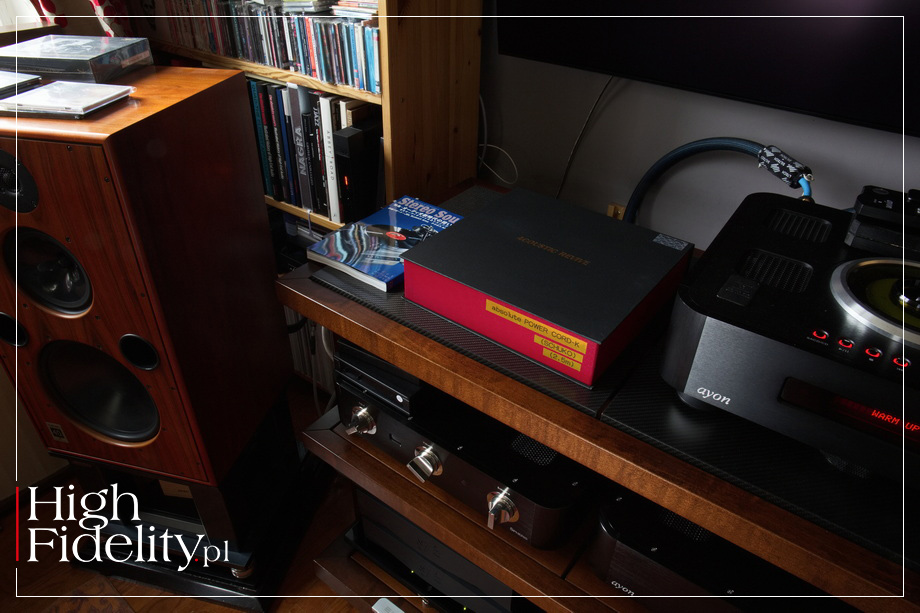
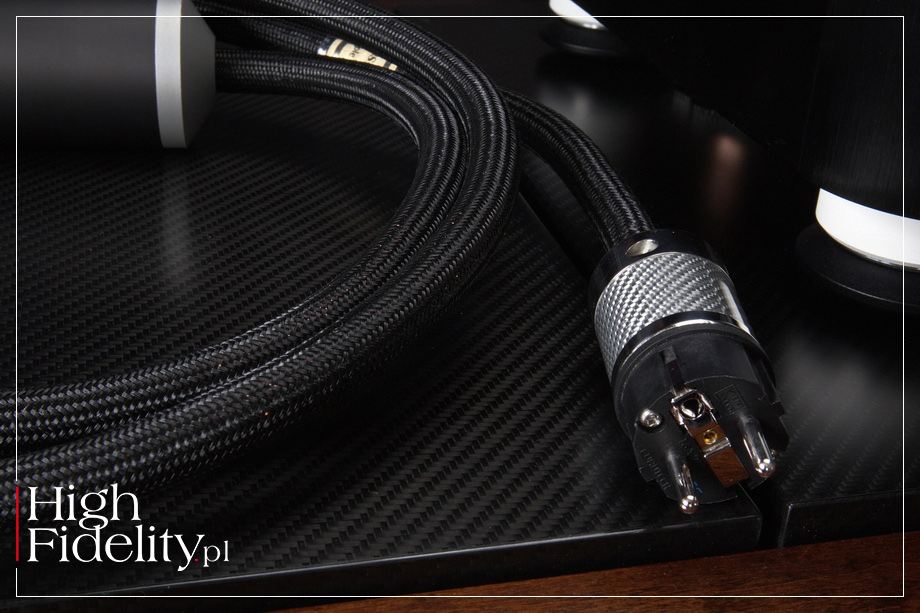
As soon as it was released, I tested the new version of the strip, → RTP-4EU ABSOLUTE strip, which replaced the Ultimate in my system. This time, the test of the new version of the power cord, → ABSOLUTE-POWER CORD, was carried out in a similar fashion. It turned out, it was not just an accessory to the strip but a full-fledged partner, equally important. No surprise then, that after the test I bought two such cables for the HF system, and since 2018 they have powered the preamplifier and the power amplifier. The same is true for the AC power cord introduced by this manufacturer in 2021, the Absolute Power Cord-K. It’s more expensive than the strip itself, and it features all the technologies, solutions and techniques that this Japanese manufacturer has implemented in successive generations of its products over the years. ▌ Absolute Power Cord-K The Absolute Power Cord-K is the top AC power cable in the Acoustic Revive lineup. It’s rather stiff and heavy and doesn’t look as flashy as many other products in this price range. Its mechanical parameters result directly from the technical solutions used in it, and the design – well, power cables are usually hidden behind the audio stand... The important thing is that the cables are neat, and the box in which they are sold (standard for this company’s products) is modest but nice-looking. Japanese companies build their portfolios over time by adding some minor elements to each generation of products. Rarely is it something revolutionary, usually, it's the sum of many small steps. This is a particular strategy, characteristic of designers and manufacturers who plan to last for many years. Though not a spectacular method, it yields spectacular results – though not immediately, as successive generations of Acoustic Revive power cords show. STEP 1. Plugs •The first step, in 2016, was equipping them with NCF (Nano Crystal2 Formula) technology plugs. The idea came from Acoustic Revive, and was executed thanks to the resources and contacts of Furutech, which owns the patent. In the latest cable, you will find Schuko FI-E50 NFC (R) and FI-50 NCF (R) plugs with contacts made from pure copper, thermally treated in the company’s α (Alpha) process, and rhodium-plated. 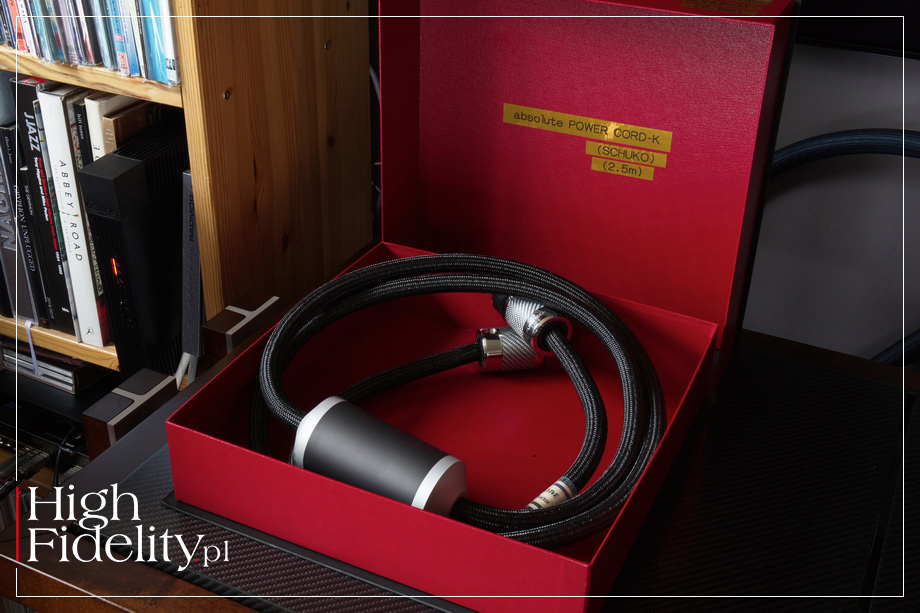
STEP 2. Conductors •The second element is the conductors. Historically, most Japanese manufacturers have used PCOCC copper. Pure Copper Ohno Continuous Cast wire is the result of Professor Atsumi Ohno’s work at the Chiba Institute of Technology, who, instead of pulling wires, proposed casting them. This process resulted in ultra-long crystals: 125 m and a diameter of ø 0.1 mm. This process, named after the inventor, has been known as Ohno Continuous Casting (OCC). Furukawa developed a process for audio cables where the copper purity, obtained via OCC, exceeded 99.9997%. When production ended, FCM (Fine Chemicals & Materials), part of the Furukawa group, offered copper called PC Triple-C in its place. Pure Copper-Continuous Crystal Construction is copper with a purity of 99.996% or more, and after processing, it exhibits similar properties to 7N purity cables. It is obtained in a process similar to forging, where the wire is repeatedly compressed (struck), decreasing its volume by 70%. The impacts have specific angles and directions, selected through experiments and designed to “flush out” impurities. This clearly references the Japanese tradition of sword forging, which is why Acoustic Revive ads sometimes feature the katana blade. STEP 3. Filters •When a characteristic central element, a large aluminum sleeve, was added to the Power Reference cable, the Absolute was created. Inside was a high-frequency filter using the “Degawa method MD” (utility model no. 31710024). Developed by Mr. Saburo Degawa, it is a magnetic suppressor of thermal noise. The phenomenon of thermal noise, also known as Johnson-Nyquist noise, was discovered and measured by John B. Johnson at Bell Labs in 1926, and later described by his classmate Harry Nyquist; the noise’s name comes from these researchers. Since Acoustic Revive bases its products on “hard” research and listening tests, they have implemented also this innovative solution. ▲ SABURO DEGAWA JAPANESE ENGINEER SABURO DEGAWA graduated from Tokai University in 1961 and worked for more than 40 years at International Rectifier Japan as a key engineer, focusing on audio technology. He holds patents for audio diodes, special SBD diodes, and low-noise circuits for audio applications. In 2003, he founded A&R Lab, a company specializing in high-end audio modules and car batteries. 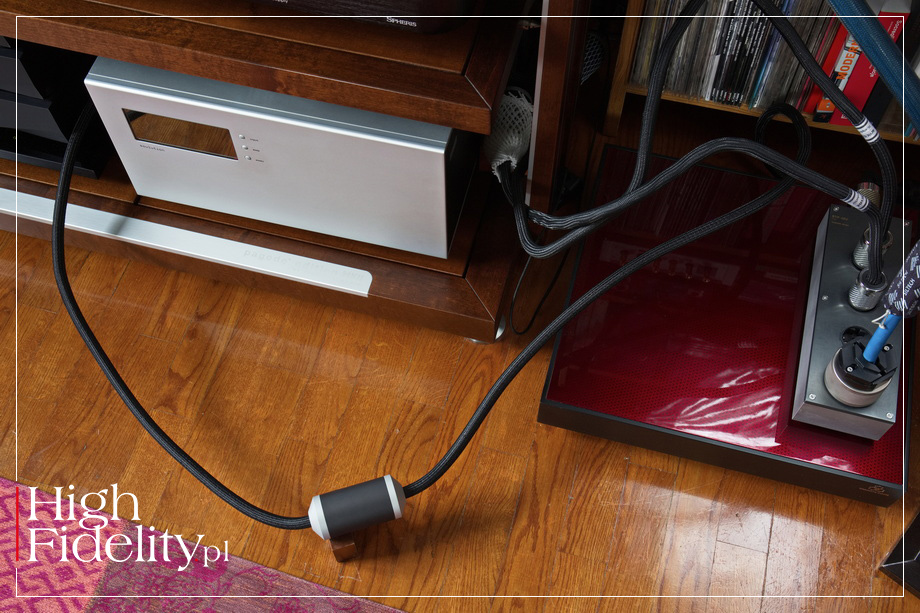
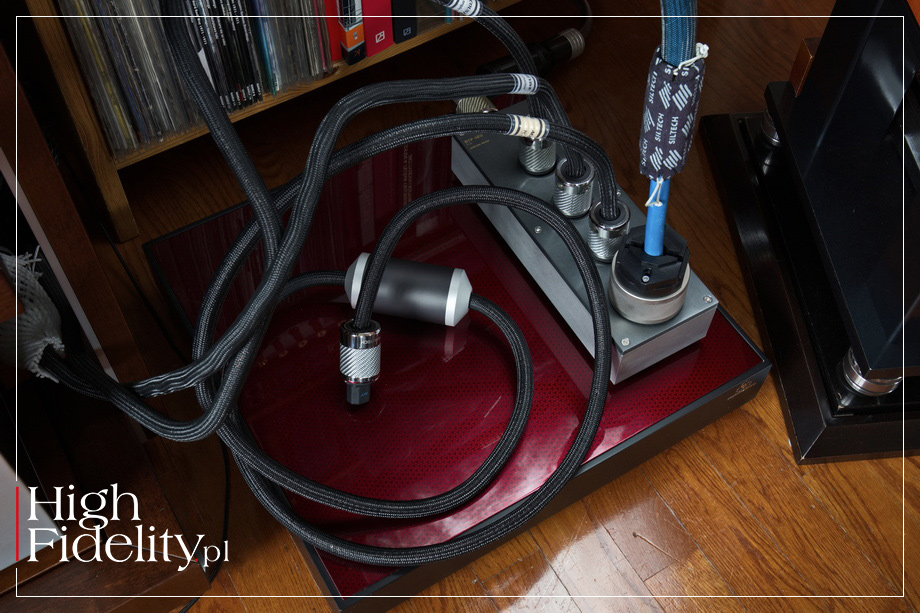
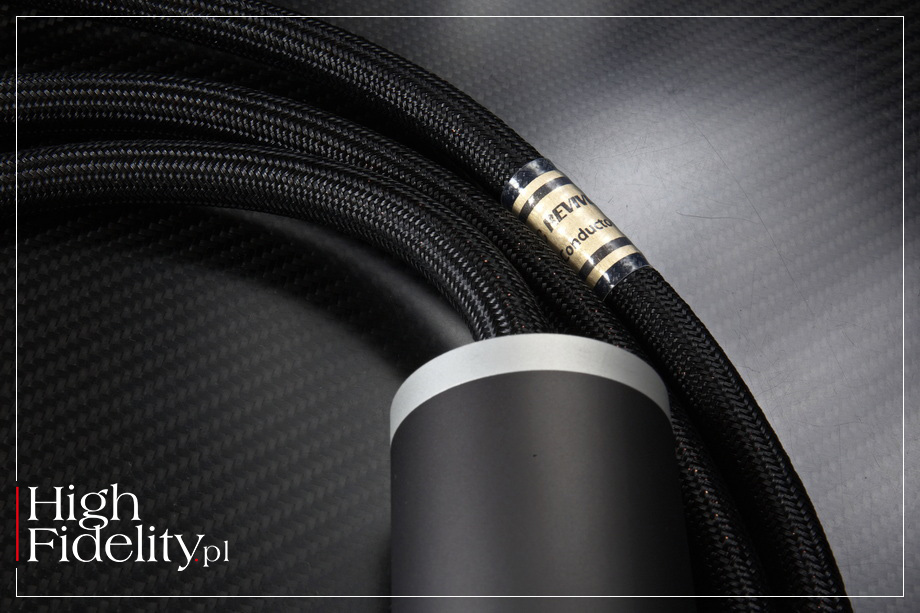
⸜ The magnetic suppressor in Acoustic Revive cables is housed in an aluminum tube. It can be moved along the cable to slightly alter the sound; it is also available as a separate component. In 2007, at the Acoustic Engineering Society (AES) convention, he presented the so-called “white paper,” which described in detail a new design for ultra-low-noise circuits for power modules that – as the inventor writes – reduces AC ripple noise by up to 46% compared to conventional power supplies. The LATEST VERSION of this cable, the Absolute Power Cord-K, is being tested here. As you may have noticed, compared to the previous flagship Acoustic Revive power cord, the new one’s name differs by only one detail: an added “K”. A detail but an important one. “K” indicates that the product uses a mineral called 'Kiyoh-stone.' Mr. Ishiguro began introducing it into products in 2021, gradually replacing “non-K” versions with “K” versions. It is used both as an aggregate and as a paint that coats the conductors. Elia Hontai-san of Muson, Acoustic Revive’s overseas representative, writes that Kiyoh-stone is a rare earth element, its main component being aluminum silicate. It is only available in one place in Japan, Gunma Prefecture. He says this is no coincidence, as Acoustic Revive is also based in Gunma. The property of this material that Mr. Ishiguro sought is its ability to easily generate high concentrations of negative ions, peaking in the far-infrared. Kiyoh-stone generates up to 40 times more ions than tourmaline. Elia adds that it is one of the most expensive materials of this type on the market, available only in limited quantities. In the tested cable, it is placed in the aluminum tube with the magnetic filter, supporting its activity at higher frequencies. For dielectrics, AR has long used a combination of natural silk and Teflon, which, as they state, offers “some of the best insulating properties.” The relative dielectric constant (the force that tries to block electric current) for PVC insulation in typical power cords is 5.6, while for natural silk and Teflon, it is 2.5. The solid-core conductors, with an oval cross-section, are housed inside Teflon tubes, and silk isolates both runs from the shield. 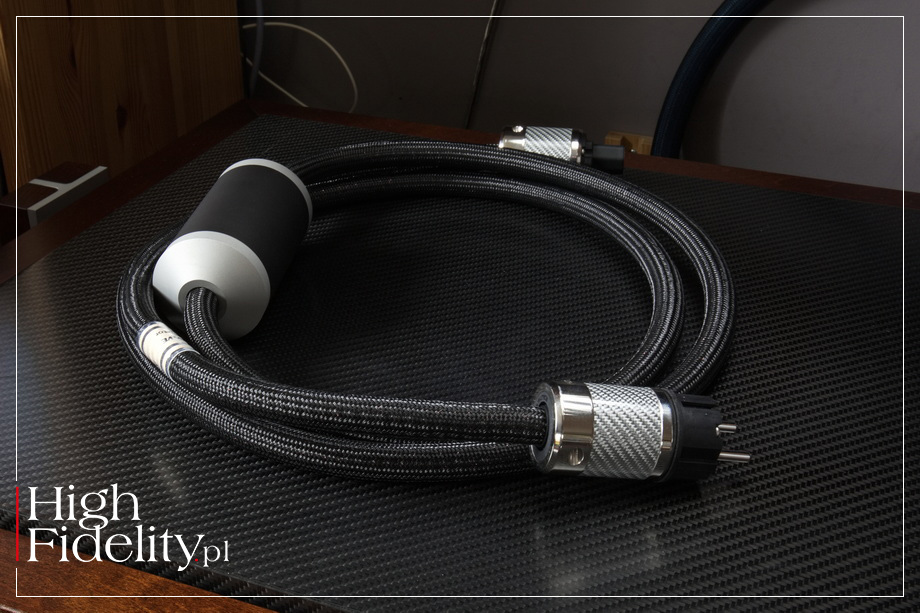
The whole is covered by a CSF (Carbon Shield Mesh Tube) jacket. Unlike conventional nylon or polyester mesh tubes, the CSF Carbon Shield Mesh Tube is made from polyurethane infused with about 10% carbon particles, which is the production limit for such materials. This infusion is to shield from external interference, block radiated noise from the cable itself, and absorb eddy currents. Let’s summarize the design of the Absolute Power Cord-K: • Conductor material (solid-core): PC-TripleC (Pure Copper-Continuous Crystal Construction), Cables are available in two-meter lengths,but other lengths are available on request; a 2 m cable costs 39,900 PLN, and the 2.5 m tested here is 46,900 PLN. ▌ SOUND HOW WE LISTENED• The Acoustic Revive Absolute Power Cord-K was compared to three other cables in three different spots in the “High Fidelity” reference system. 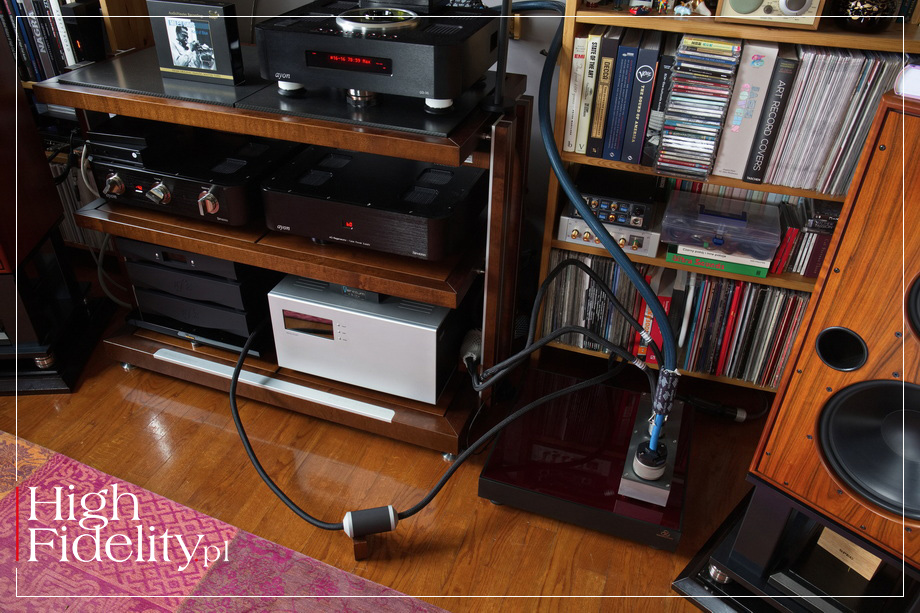
The first comparison concerned the Siltech Triple Crown cable and the Ayon Audio CD-35 HF Edition SACD player (№ 1/50). |
The second compared to the Acoustic Revive Absolute Power Cord powering a Soulution 710 power amplifier. And finally, the longest-serving cable in the system, the Acrolink Mexcel 7N-PC9500 (2.5 m); with the preamp and strip, a passive Acoustic Revive RAS-14 Triple-C filter is used. The Acrolink cable delivers power to the → ACOUSTIC REVIVE RTP-4EU FINAL power strip and is plugged into a Furutech FT-SWS (R) wall outlet, which is supplied by a dedicated power line with an Oyaide Tunami cable and an AHP Klangmodul III fuse. 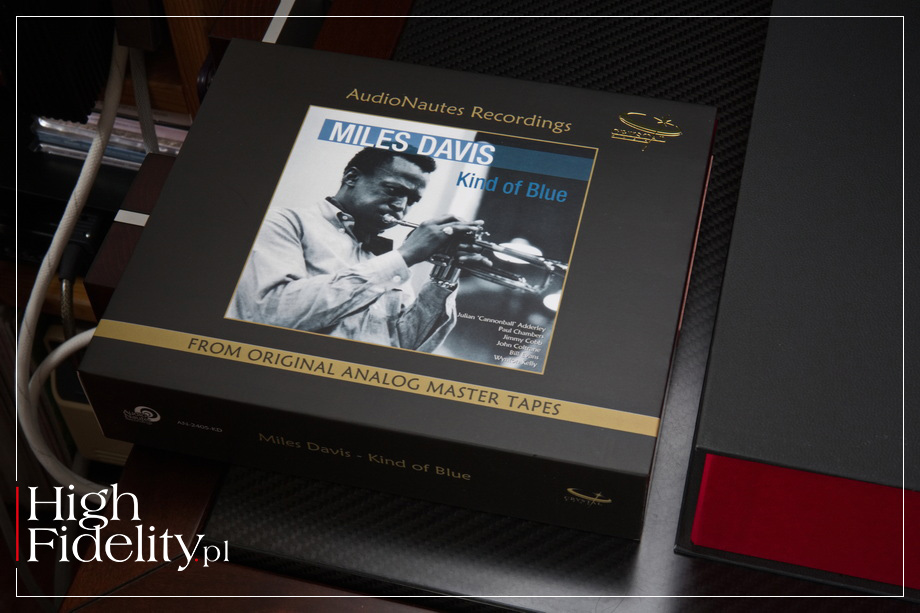
During the comparisons, I switched individual devices as well as the entire system’s power. Since the SACD player and preamp tubes need time to warm up, there was a two-minute break between each series of comparisons. The test was based on AAA/BBB/AA comparisons, with known A and B, using short, two-minute samples from the given album. Breaks were about 40 seconds long. » ALBUMS USED FOR THE TEST ⸜ a selection
⸜ BILLIE HOLIDAY Body and Soul, Verve Records/Tidal Master, MQA FLAC 24/192 (1957/2012). SOMETIMES I GET GOOSEBUMPS waiting desperately for the first sounds of music after switching to a tested component. Rarely, but – it happens, as with the Acoustic Revive Absolute Power Cord-K. That’s because I greatly respect its designer, Mr. Ken Ishiguro, the company’s blend of audiophile passion and exceptional musical sensibility with technology from outside of audio, and because I have been using their products in my listening system for many, many years. 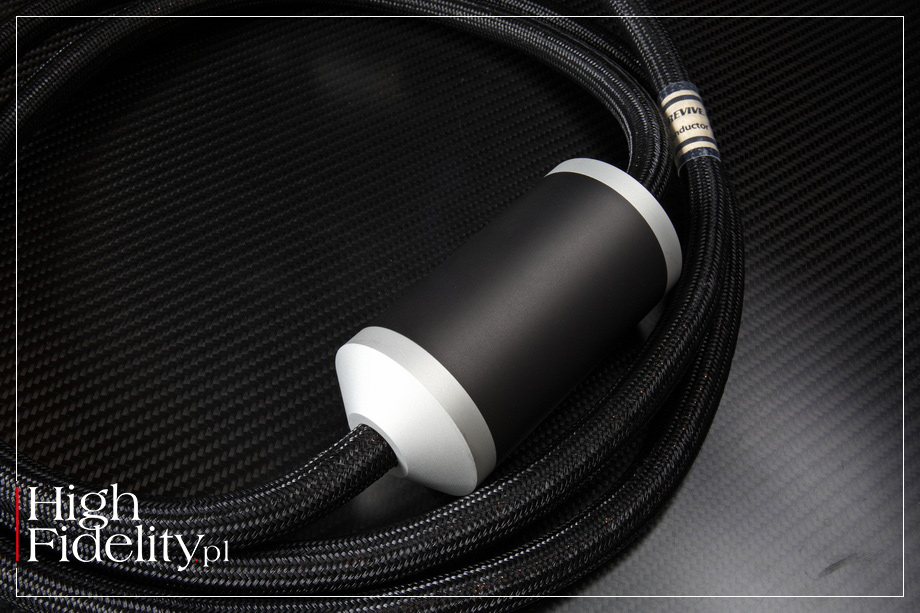
What did I hear when Barney Kessel played the first few bars on the guitar, and Alvin Stoller answered with a drum hit in ˻ 5 ˺ Comes Love from the Billie Holiday Body and Soul album? I heard the Japanese cable slightly brings the foreground closer and enriches it. More importantly, it makes the sound “come alive” with an inner calm, not with the nervous vibration of modern life, but the tranquil peace found more in literature than reality. This is a cable that produces a sound rich with resonant “wood”. By this, musicians refer to organic, natural tones, full-bodied but detailed and internally differentiated. The tested cable brings the sound closer to us, but not in its entirety, just the foreground. Middle grounds – vocals, behind them percussion, then reverberation, saxophone, and trumpet jumping forward due to its timbre – remained deeper, not pushed ahead, yet the impression was as though the whole sound gained energy and came closer. Power Cord-K produces a very creamy sound (overall) with a wealth of detail. Frank Sinatra, starting ˻ 4 ˺ I’ve Got A Crush On You on Nice'n'Easy, was big and full. Again – the aforementioned “wood” quality was present. It’s a kind of “gut-level” presentation – playing from the core, beyond random, fleeting gestures. As if to fill the sound to its limit and present it completely, powerfully. Yes, it’s a cable that delivers warm sound. The piano, in the left channel on this album, had a creamy tone and less attack than with the Siltech. Yet the tape hiss, not excessive but clear, was not cleaned up or suppressed. The same was true on Miles Davis’ Kind Of Blue in the exceptional UHQCD Crystal Disc edition from AudioNautes Recordings. When, in ˻ 1 ˺ I’ve Got A Crush On You, the double bass hits center, the piano answers on the left, and along with the hiss and the sound of the instruments, you hear the reverberation, both from the studio and the echo chamber under Capitol’s studio. With this cable, it was all meatier, more energetic. That’s probably because colors from Acoustic Revive are internally dense. They aren’t artificially weighted, but the whole is ultra-emphatic, with mass and momentum, especially noticeable when the cymbals crash at 1:32 in the right channel. The Absolute Power Cord-K gives tracks gravity and “momentum,” meaning mass combined with energy. This also came through in Thin Lizzy’s ˻ 6 ˺ Whiskey In The Jar. The song sounded lower, darker, denser than with the Siltech Triple Crown. On the other hand, it wasn’t as selective and resolving as the reference cable. This was also true for the new “K” version, an immediate but subtle difference. Still, the richness of the sound didn’t seem lesser than with the Dutch cable. The guitars added to the drums and vocals had a milder attack and sweeter decay, yet they pulled the whole thing forward, widened the soundstage – likely the intent of the producers – and infused the space with sound. With recordings that aren’t particularly resolving or detailed themselves, you can witness the class of this Japanese cable. I did some listening on a Friday, and so The Cure’s ˻ 7 ˺ Friday I’m In Love from Wish seemed a natural choice. I listened to it from the 1992 Sound-Pol release – which I prefer to remasters even the SHM-CD one that I have in my collection. Switching from the reference cable to Acoustic Revive deepened the sound, lowered the scale, but didn’t mute the treble. The rhythm-keeping tambourine remained clear and energetic. It’s not sharply defined by itself, only standing out more in a few moments. Yet the test cable maintained its energy, setting the rhythm for the whole track. Smith’s vocal was slightly warmed up, as were backing vocals, but these too didn’t lose drive. 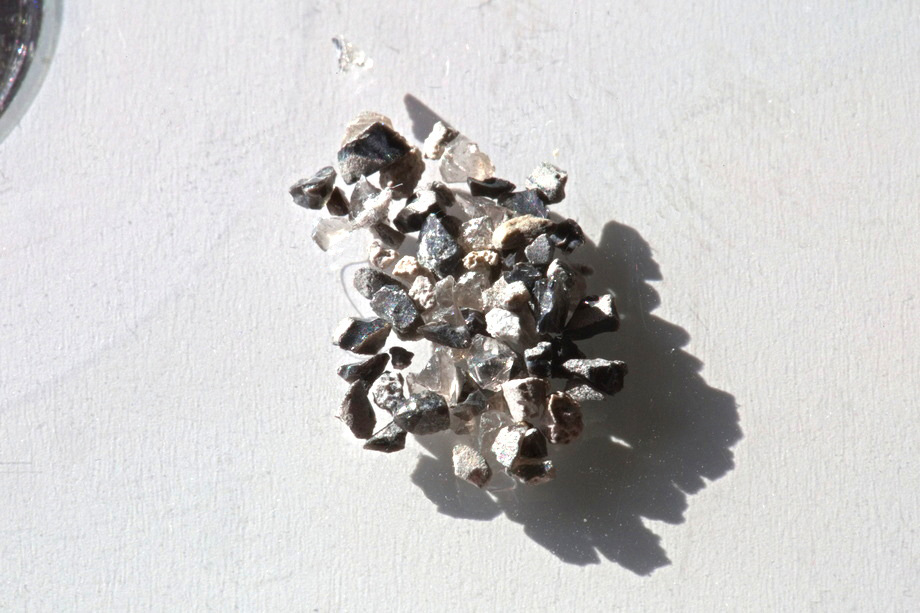
It was different when comparing Mr. Ishiguro’s cable with Acrolink 7N-PC9100. The change wasn’t dramatic, but the sound was significantly different – and, to my ears, better, favoring AR. Listening to Acrolink compared to the Siltech, it was still smooth and dense, but now the bass’s attack was stronger. The whole range was fuller, with 50-70 Hz range clearer and more assertive at the same time. What I said earlier about the tambourine was also true here, although with the Power Cord-K it was denser and less aggressive. More important, though, is that the new cable gives the sound more order than the Acrolink. This is a power cord from a few generations back, but it’s still fantastic, almost unrivaled in its price class. But spending more on Acoustic Revive, you know what you’re getting: density, fullness, internal differentiation combined with saturation of information that emerges not “alongside” the sound but from within it. I hope you understand what I mean – it’s like meeting people who immediately command respect and make a good impression, even though they do nothing special; they simply are there. An interesting thing: although the sound with the Acoustic Revive seems stronger and closer, in fact the whole presentation gains perspective. Acrolink is excellent at building soundstage, but AR deepens and organizes it. The space is more compact, more full of sound. Previously I lacked nothing, yet a moment with Absolute Power Cord-K and “it’s there.” Maybe also because AR is more precise when it come to micro-details? Like when Sinatra’s long vocal reverb meets the piano reverb. This was shown uniquely clearly, making it sound as if the two acoustics almost argued. And finally, there’s something I pay special attention to – with Mr. Ishiguro’s cable, you can play music both loud and quiet. In both cases, the sound will be delivered with equally high quality. Especially since, in the setup with it, it seems about 1 dB quieter than with any of the three cables it was compared to. The Crystal Disc with Davis’ recording is outstanding in its natural timbre, and with the test cable, it was especially clear. The older Absolute Power Cord isn’t dramatically different, but even it seems less deep, less saturated, less differentiating. Small changes, yet important. ▌ Summary The ACROLINK 7N-PC9100 POWER CORD is a product that has stayed the longest in my system, since 2009. I used these cables both to power devices and as the main cable for the power strip. In the latter role, it has remained to this day – sixteen years. It’s a great Japanese hi-tech product, trustworthy. But when something like the Absolute Power Cord-K comes along, I can’t pretend nothing has changed in the audio world. That’s why it will remain in the HIGH FIDELITY reference system. 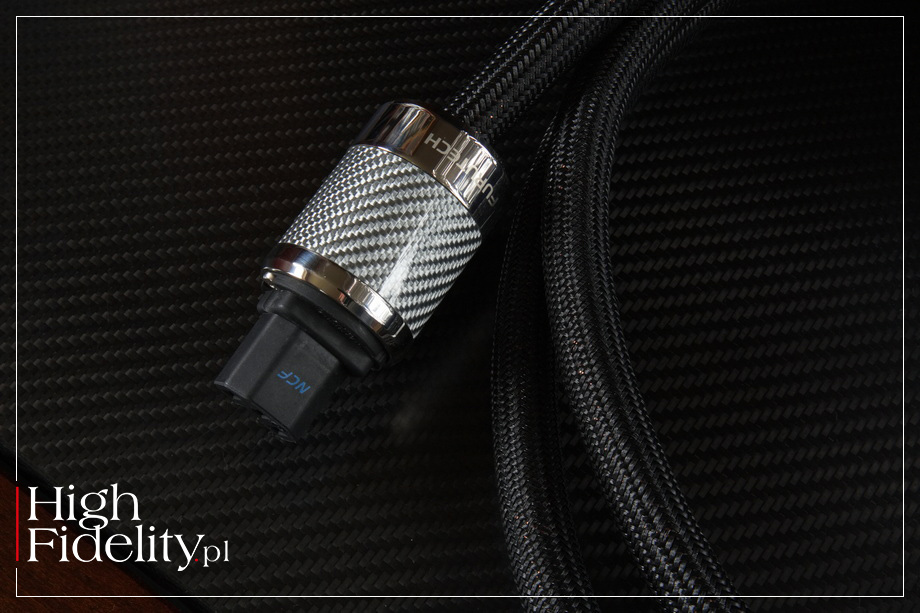
It meets all the requirements needed for that. It’s resolving, selective, energetic, with full bass and a saturated midrange, excellently differentiating treble. And above all, it is outstandingly natural. Most importantly, you can listen to music with it for hours, focused and without fatigue or irritation. And with hundreds (or more) hours spent annually in front of the system, that’s priceless. ● 
THIS TEST HAS BEEN DESIGNED ACCORDING TO THE GUIDELINES adopted by the Association of International Audiophile Publications, an international audio press association concerned with ethical and professional standards in our industry, of which HIGH FIDELITY is a founding member. More about the association and its constituent titles → HERE. |
 |

|
Reference system 2025 |
|
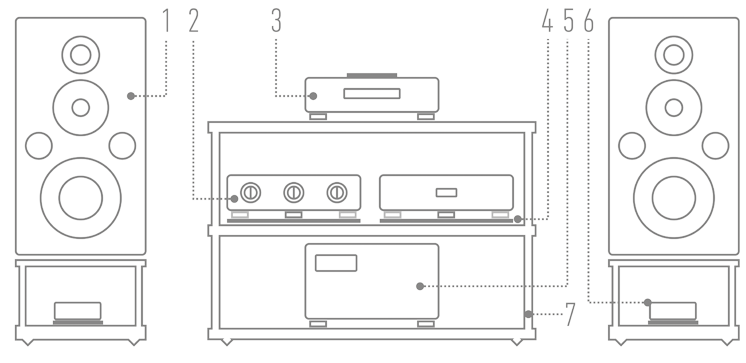 1) Loudspeakers: HARBETH M40.1 |REVIEW| 2) Line preamplifier: AYON AUDIO Spheris III Linestage |REVIEW| 3) Super Audio CD Player: AYON AUDIO CD-35 HF Edition No. 01/50 |REVIEW| 4) Stands (loudspeakers): ACOUSTIC REVIVE (custom) |ABOUT| 5) Power amplifier: SOULUTION 710 6) Loudspeaker filter: SPEC REAL-SOUND PROCESSOR RSP-AZ9EX (prototype) |REVIEW| 7) Hi-Fi rack: Hi-Fi rack: finite elemente MASTER REFERENCE PAGODE EDITION Mk II, more → HERE |
|

|
Cables Analog interconnect SACD Player - Line preamplifier: SILTECH Triple Crown (1 m) |ABOUT|» ANALOG INTERCONNECT Line preamplifier → Power amplifier: Siltech ROYAL SINLGE CROWN RCA; review → HERE Speaker cable: SILTECH Triple Crown (2.5 m) |ABOUT| |

|
AC Power Power cable | Mains Power Distribution Block - SACD Player: SILTECH Triple CrownPower (2 m) |ARTICLE| » POWER CABLE Mains Power Distribution Block → Line preamplifier: Acoustic Revive ABSOLUTE-POWER CORD, review → HERE » POWER CABLE Mains Power Distribution Block → Power amplifier: Acoustic Revive ABSOLUTE-POWER CORD, review → HERE Power cable | Power Receptacle - Mains Power Distribution Block: ACROLINK Mexcel 7N-PC9500 (2 m) |ARTICLE| Power Receptacle: Acoustic Revive RTP-4eu ULTIMATE |REVIEW| » ANTI-VIBRATION PLATFORM under Acoustic Revive RTP-4eu ULTIMATE: Graphite Audio CLASSIC 100 ULTRA, review → HERE Power Supply Conditioner: Acoustic Revive RPC-1 |REVIEW| Power Supply Conditioner: Acoustic Revive RAS-14 Triple-C |REVIEW| Passive filter EMI/RFI: VERICTUM Block |REVIEW| |

|
Anti-vibration Speaker stands: ACOUSTIC REVIVE (custom)Hi-Fi rack: finite elemente MASTER REFERENCE PAGODE EDITION Mk II, more → HERE Anti-vibration platforms: ACOUSTIC REVIVE RAF-48H |ARTICLE| » ANTI-VIBRATIONAL FEET: |

|
Analogue Phono preamplifier: Phono cartridges:
Clamp: PATHE WINGS Titanium PW-Ti 770 | Limited Edition Record mats:
|

|
Headphones » HEADPHONE AMPLIFIER: Leben CS-600X, review → HEREHeadphones: Headphone Cables: Forza AudioWorks NOIR HYBRID HPC |