


|
LOUDSPEAKERS • floor-standing KROMA ATELIER
Manufacturer: KROMA ATELIER |

 |
 |
 |
|
Review
text by WOJCIECH PACUŁA |

|
No 270 November 1, 2026 |
I DON'T KNOW IF YOU'VE NOTICED, but Tomek Folta, a founding member of the Krakow Sonic Society who has also been providing audio consulting through his company, TF Audio Consulting, for some time now, has been rapidly changing his music listening system; more about his company → HERE. 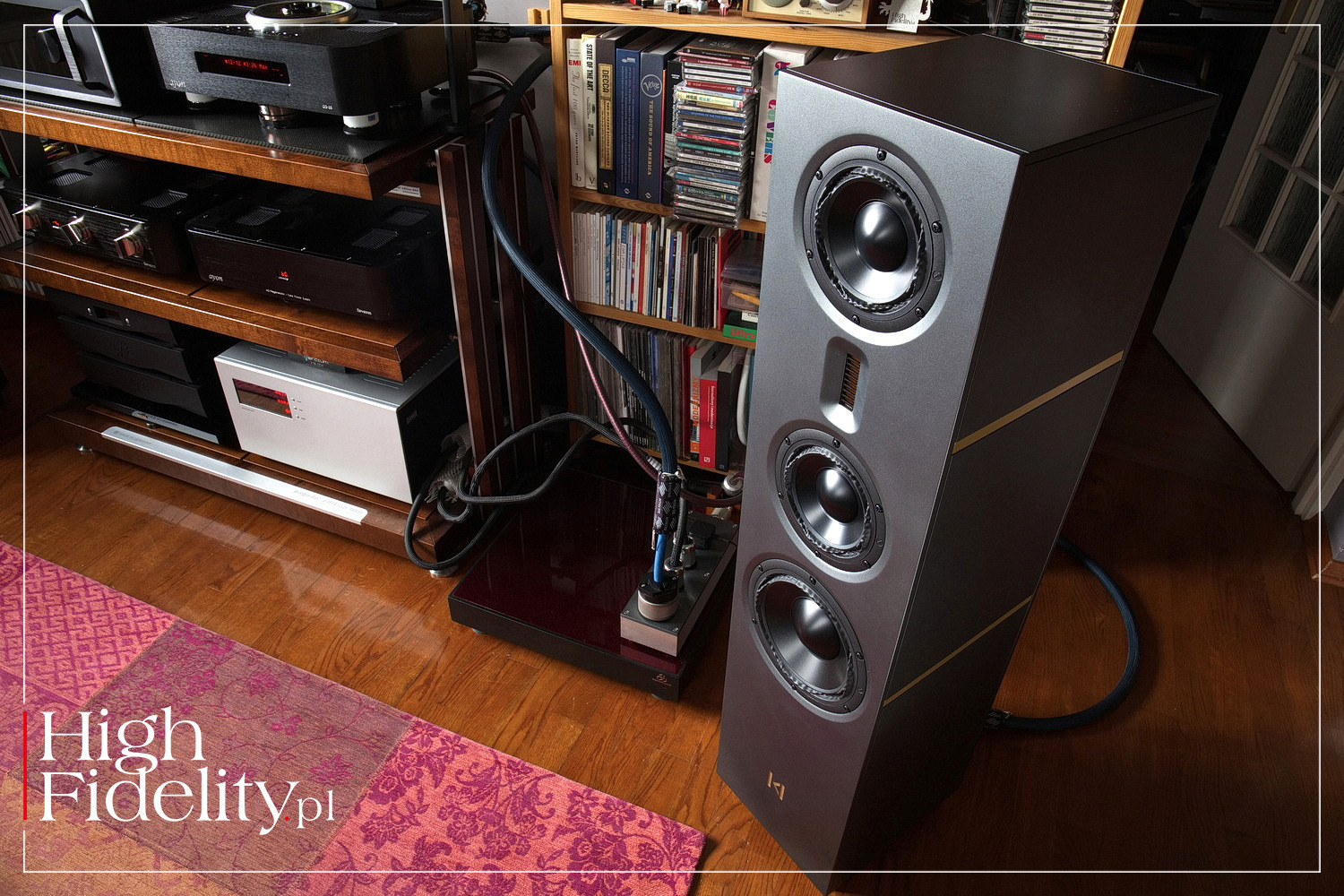
For years, he relied on Dynaudio speakers, upgrading to higher-end models ever since we’ve known each other -some twenty-five years, if not more - and he also took a liking to Accuphase electronics, specifically power amplifiers. However, when he heard the Kroma Atelier speakers and took a closer look at Ypsilon electronics, he decided it was time for a change. So he ordered a split system featuring Greek electronics and Mercedes speakers from the Signature series - the latter without even listening to them before. It takes a great deal of faith or trust to buy speakers this way - weighing 138 kg (each), measuring 160 cm (height) x 50 cm (depth) x 32 cm (width) and designed for amplifiers with power ratings ranging from 30 to 1,000 watts, right? Yet there’s something to be said for this move. Having experienced the brand’s smallest speakers, the Thaïs model, in my own system and having listened to their top-of-the-line models at various shows, I can understand this decision. As a reminder, Kroma Atelier speakers are highly efficient and are often recommended for low-power (tube) amplifiers; they are manufactured using high-end components from Mundorf and Duelund. Their speakers feature a “Silent Cavity” enclosure design - inspired by damper technology - which, according to the manufacturer, allows for the control of airflow and eliminates metal parts from the design. All Kroma Atelier speakers are handcrafted in Granada, Spain. ▓ Jovita THE JOVITA IS THE SMALLEST floor-standing speaker from Kroma's Signature series, based on the aforementioned Mercedes speakers. It was first unveiled at the 2024 Munich High End Show. They are medium-sized speakers and feature very sleek proportions. In this respect, as well as with the horizontal stripes on their side panels, they resemble the designs of the Swiss company Stenheim. They measure 1170 x 320 x 275 mm, weigh 48 kg each, and feature high sensitivity of 91 dB and, as the manufacturer notes, “stable” impedance of 4 Ω. They are the mid-range model in the Signature series, which also includes the Leonore and Macbeth speakers, positioned below them in the price list, and the Matilde and Mercedes models above. The Signature series itself is also mid-range - positioned between the Classic and Reference lines - so it can be said that the Jovita model is the absolute centerpiece of this company’s lineup. 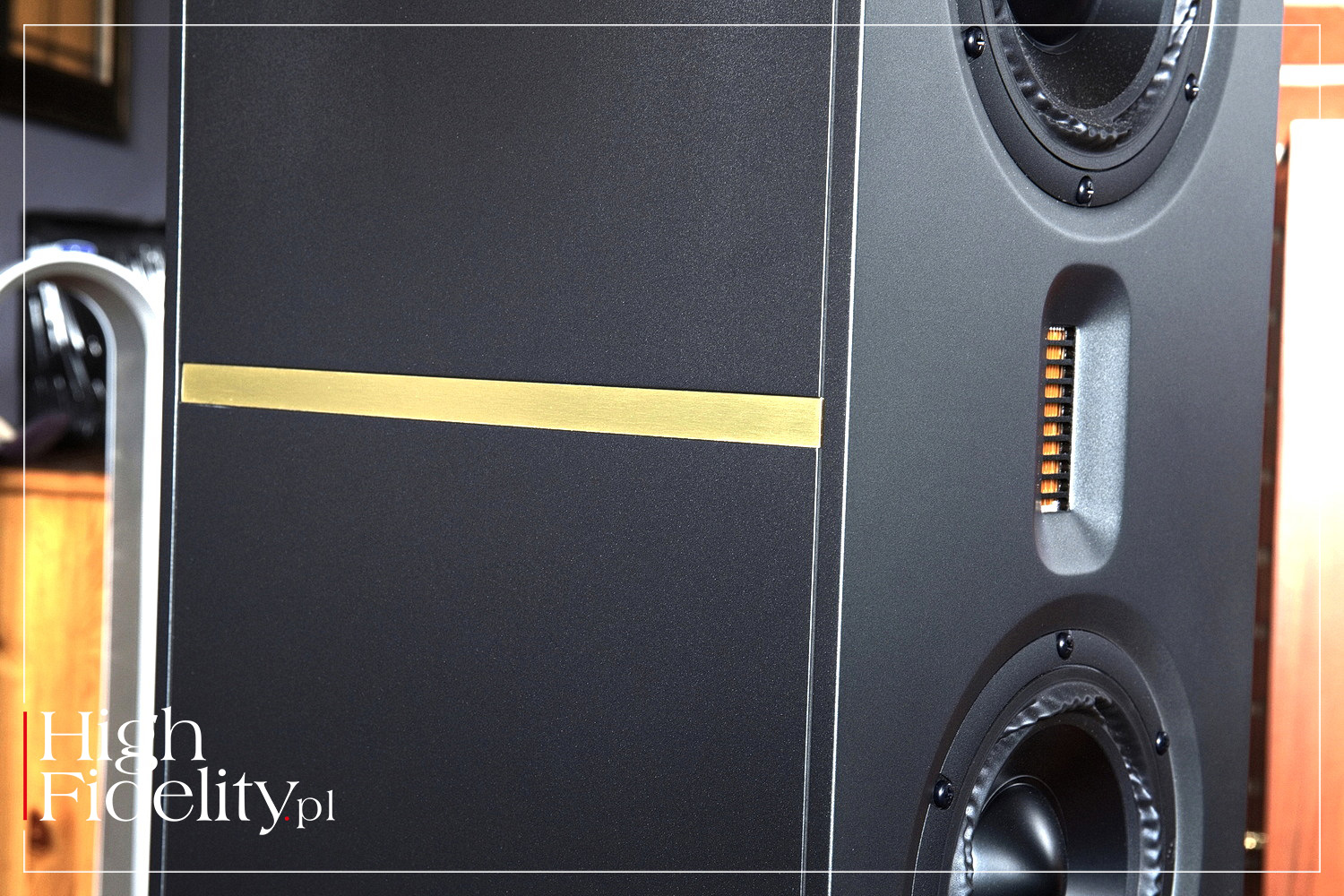
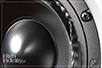
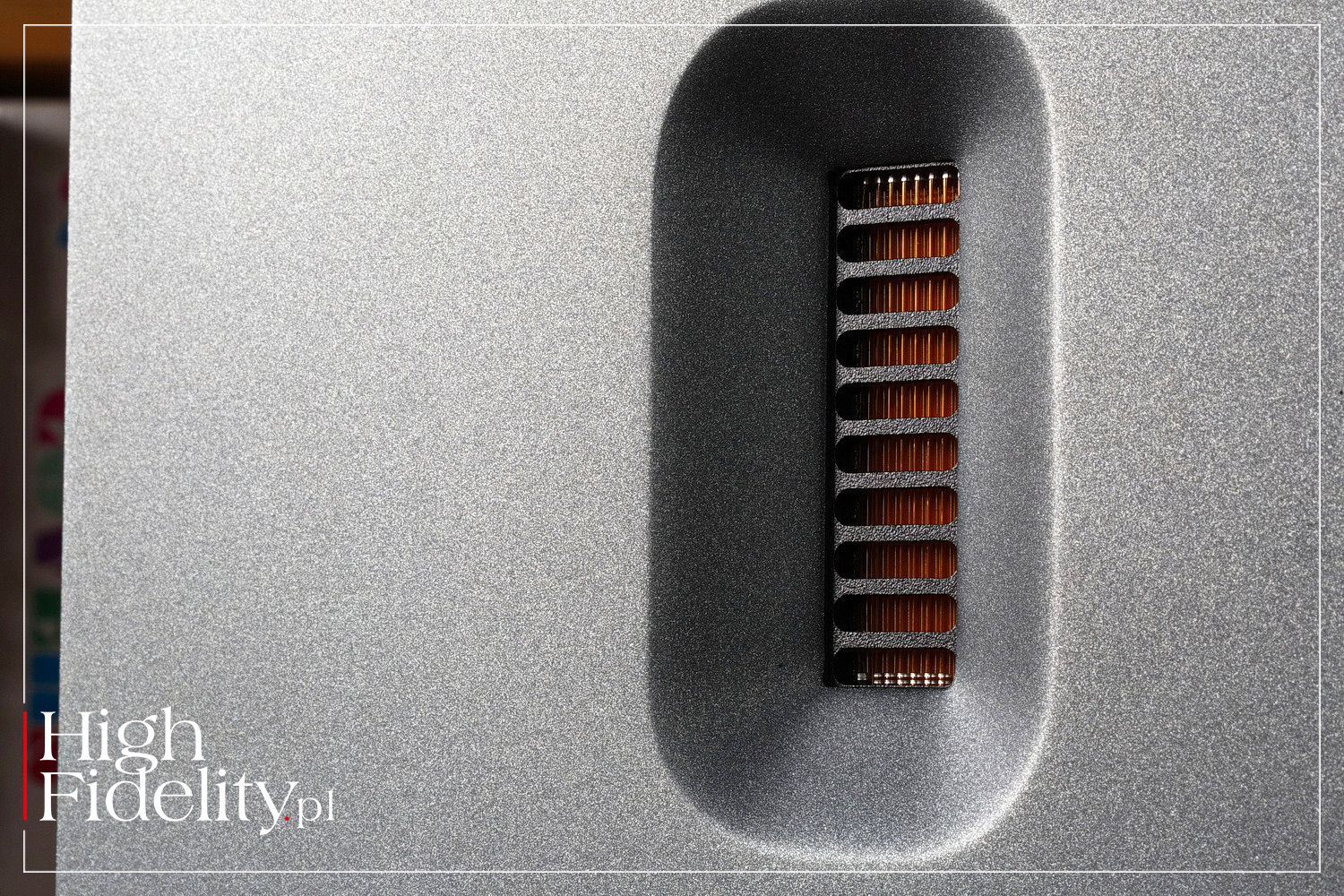
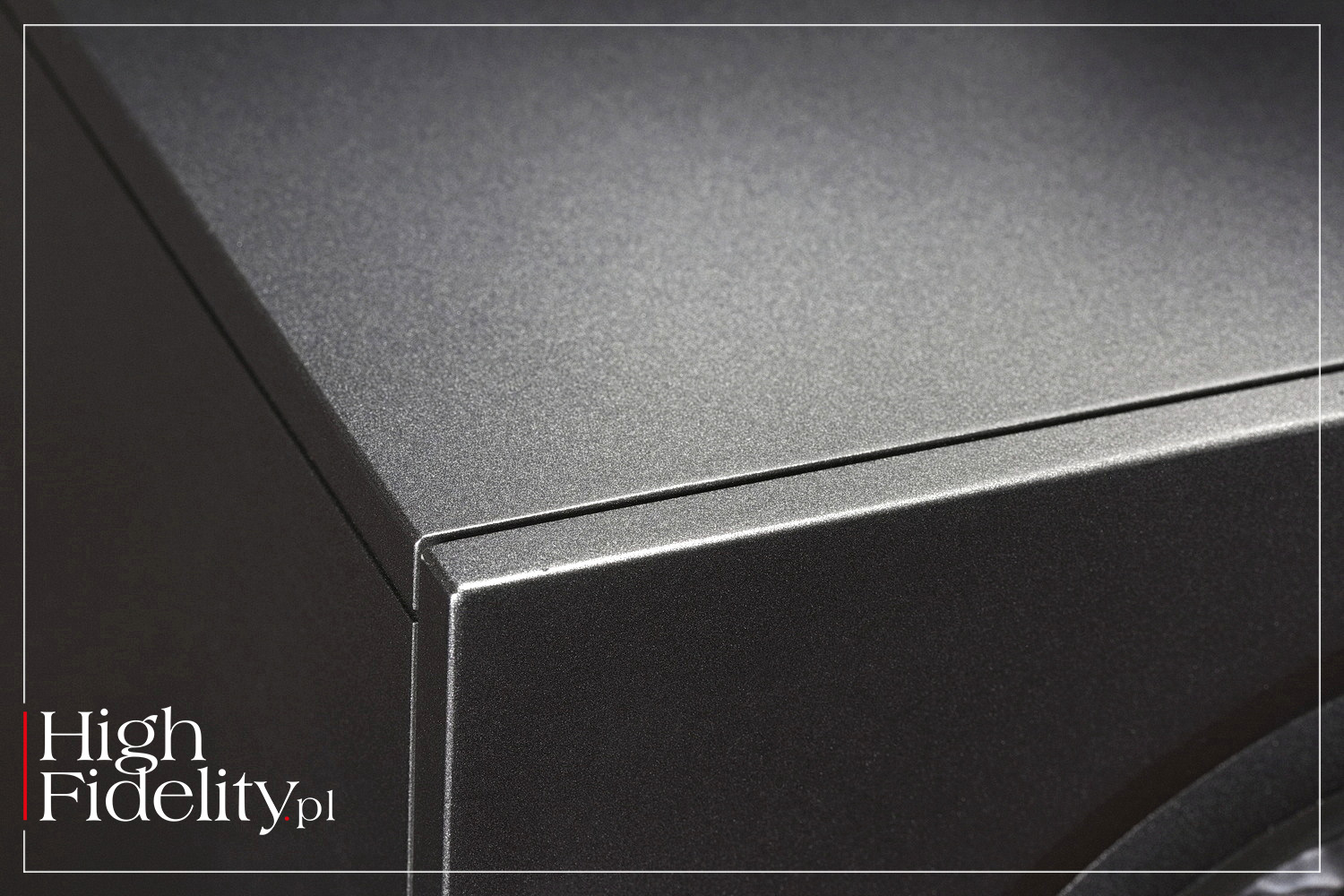
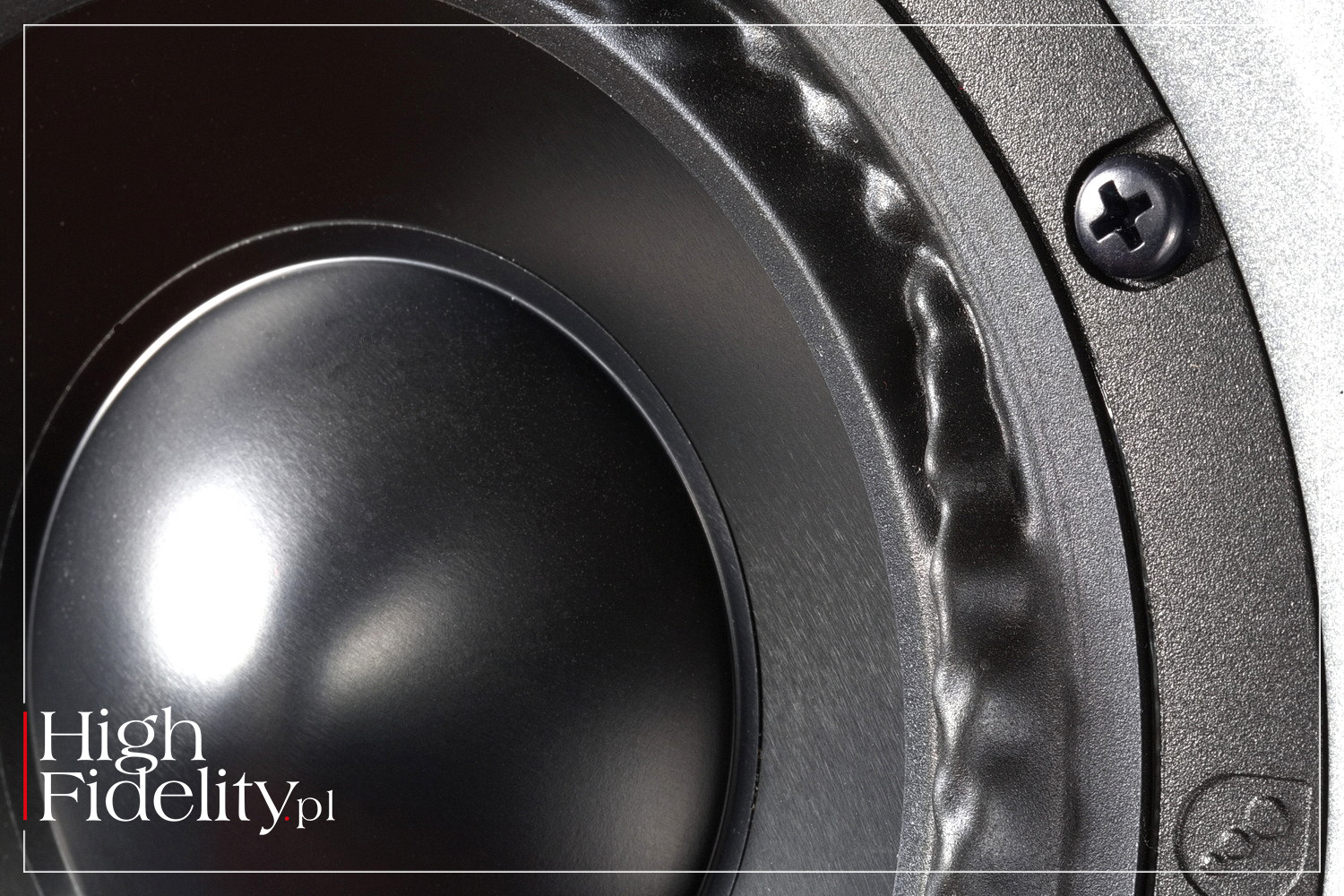
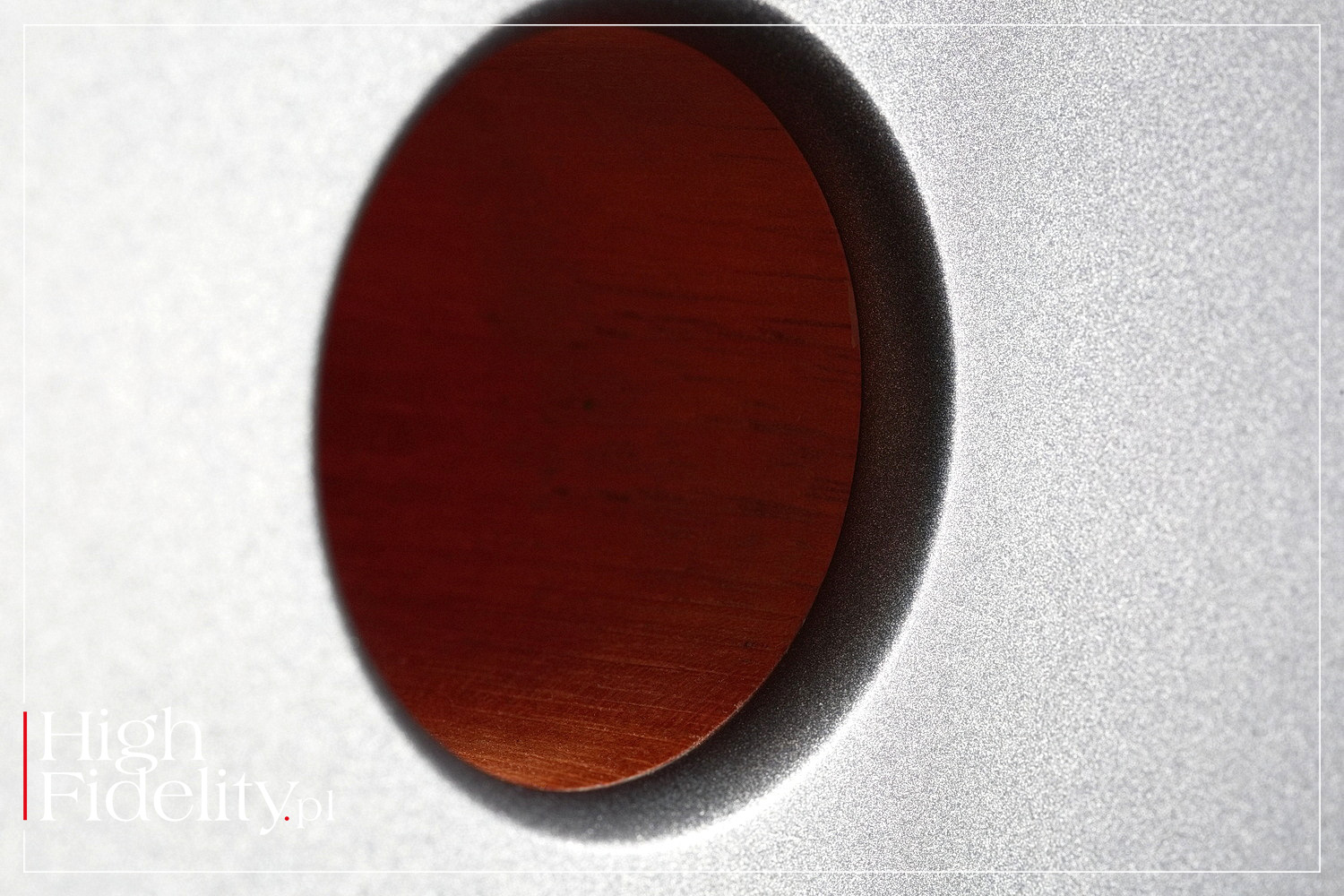
The Jovita is a three-way floor-standing speaker, featuring four drivers. Its enclosure is vented via two bass-reflex ports on the rear panel. The ports are made of spruce, and both have a resonance frequency of 34 Hz. The manufacturer states that the controlled low-frequency response extends down to 30 Hz. One of the mid-bass drivers, located below and above the AMT driver, operates from the top down to 250 Hz and is cut off by a second-order crossover, while the other stops operating at 2.2 kHz. As with other models, the high frequencies here are reproduced by the aforementioned AMT (Air Motion Transformer) driver. Its diaphragm is neither dome-shaped nor flat; instead, it acts like a harmonica, compressing and expanding the air. As we’ve already noted, this type of driver has been a common choice among high-end manufacturers in recent years. To name just a few: Monitor Audio, Owl Audio, Esprit, Burmester, FinkTeam, and Audiovector. The drivers used by Kroma Atelier are manufactured by the German company Mundorf, which also supplies crossover components and terminals. The tweeter works in conjunction with three other drivers - two mid-bass drivers and one bass woofer. The first two, which look identical though have different bass cutoff frequencies, have a diameter of ø 165 mm (6.5”) and diaphragms made of anodized aluminum. Although they look similar to those in the Thaïs, they are different. In the Classic series as well, Kroma Atelier uses Purify Audio drivers with a distinctive, irregular top suspension system called Neutral Surround Geometry, though in that series the diaphragms are made of paper fiber composite. Speaking of the suspension: its irregular shape is intended - as the Danish manufacturer states - to “radically reduce harmonic distortion,” especially in the midrange, while maintaining high linearity of excursion and eliminating its natural resonances. It’s worth noting that the fourth driver in these speakers - a 200 mm (8”) woofer - also comes from the same series. However, the key to understanding this company’s approach to sound seems to lie in the cabinets. They are cut from a material called Krion. We’ve already mentioned this in connection with the smaller model, but it’s worth repeating that it is manufactured in Spain by the Porcelano Group and, like Corian (which is used, for example, by Sphinx in its new speakers), is widely used in construction, including for the production of kitchen and bathroom tiles. Krion is therefore a material similar in concept to other resin-based composite solutions found in speakers from companies like Wilson Audio or Focal-JMLab. It is a mineral-based composite, selected, according to the manufacturer, for its mechanical properties, as well as its non-conductive and non-magnetic characteristics. This type of cabinet is designed to provide a good balance between internal damping and vibration dissipation. The manufacturer writes about its efforts regarding enclosure damping:
As a result of these measures, a cabinet was developed whose acoustic properties are closer to those of stone or mineral composite structures than to those of wood. In terms of sound, this translates to extremely low cabinet distortion, allowing the drivers to operate with minimal mechanical distortion.
Another feature designed to help achieve this is the way the panels are mounted. Their surfaces are smooth not only on the sides and back, but also on the front, and the tweeter mount is not visible. Kroma Audio connects the enclosure modules not with screws, but with thermoplastic fasteners. This is not just a design choice, but also a technical one. The manufacturer’s goal was to eliminate metal components from its speakers, which, as it puts it, “distort the sound.” It’s worth noting that thanks to the composite enclosure, the speakers can be easily painted. In addition to white Krion, seven other finishes are available: Midnight, Graphite, Lunar, Ocean, Sky, Ruby, and Mocha. These finishes come at an additional cost. 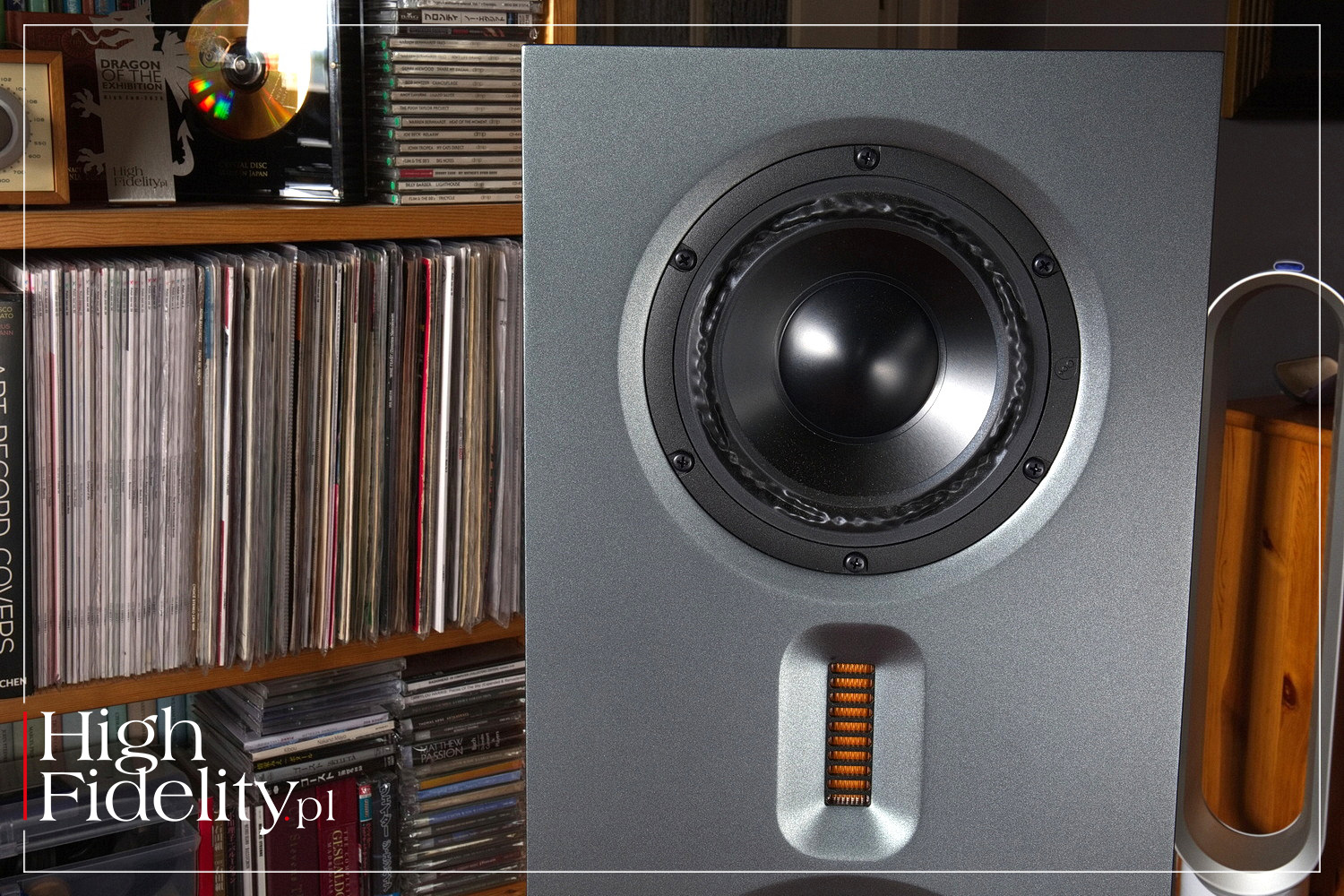
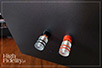
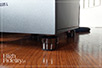
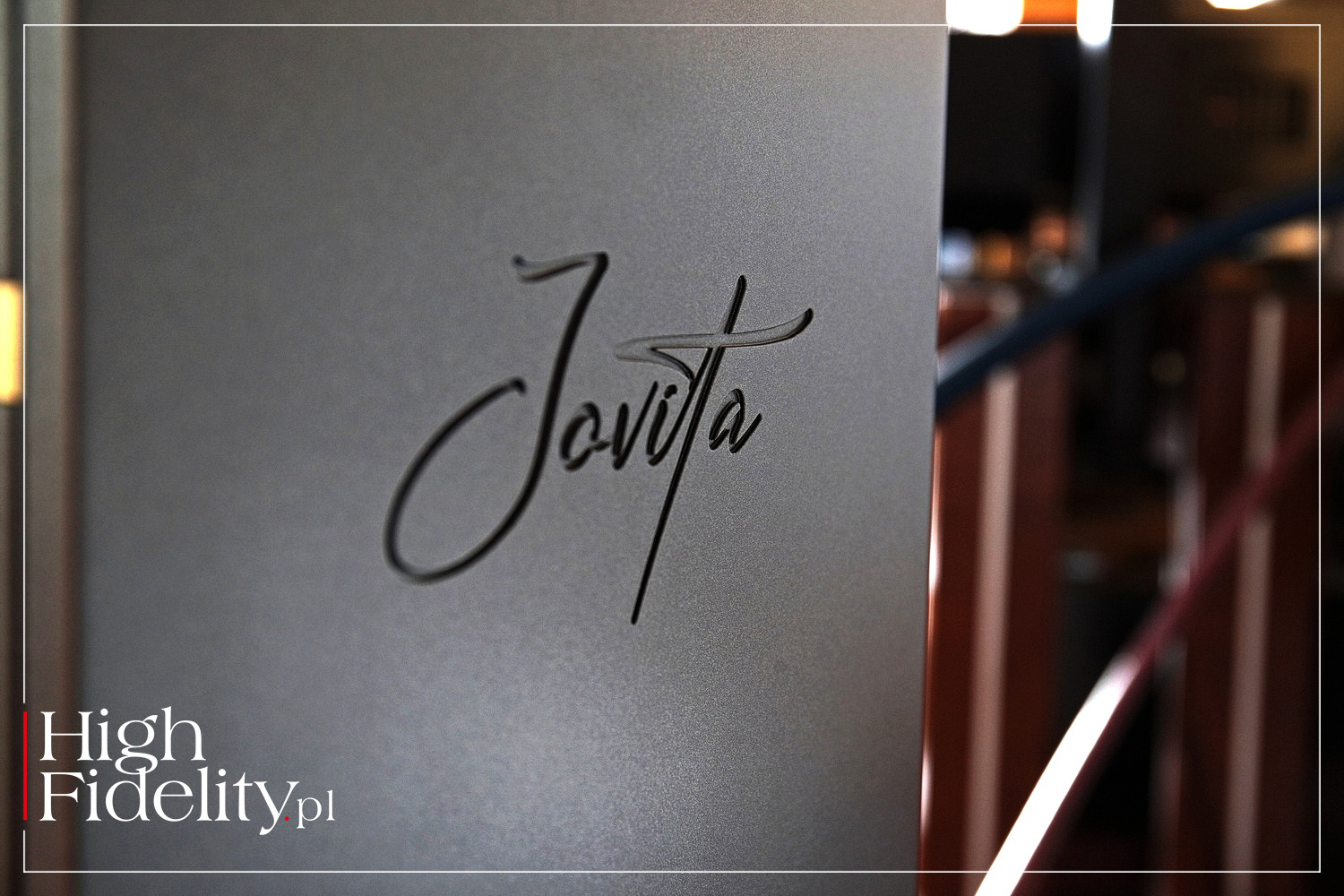
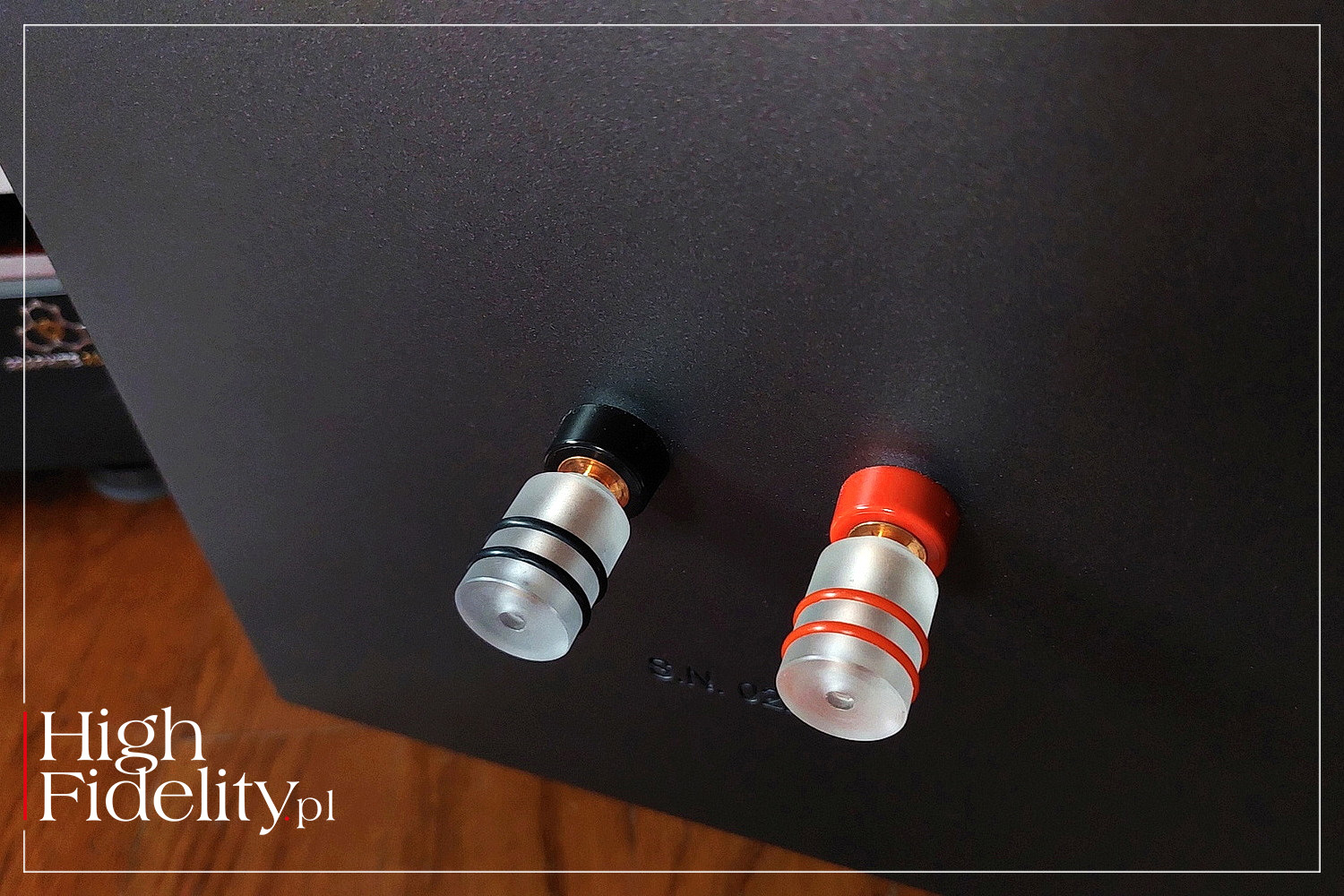
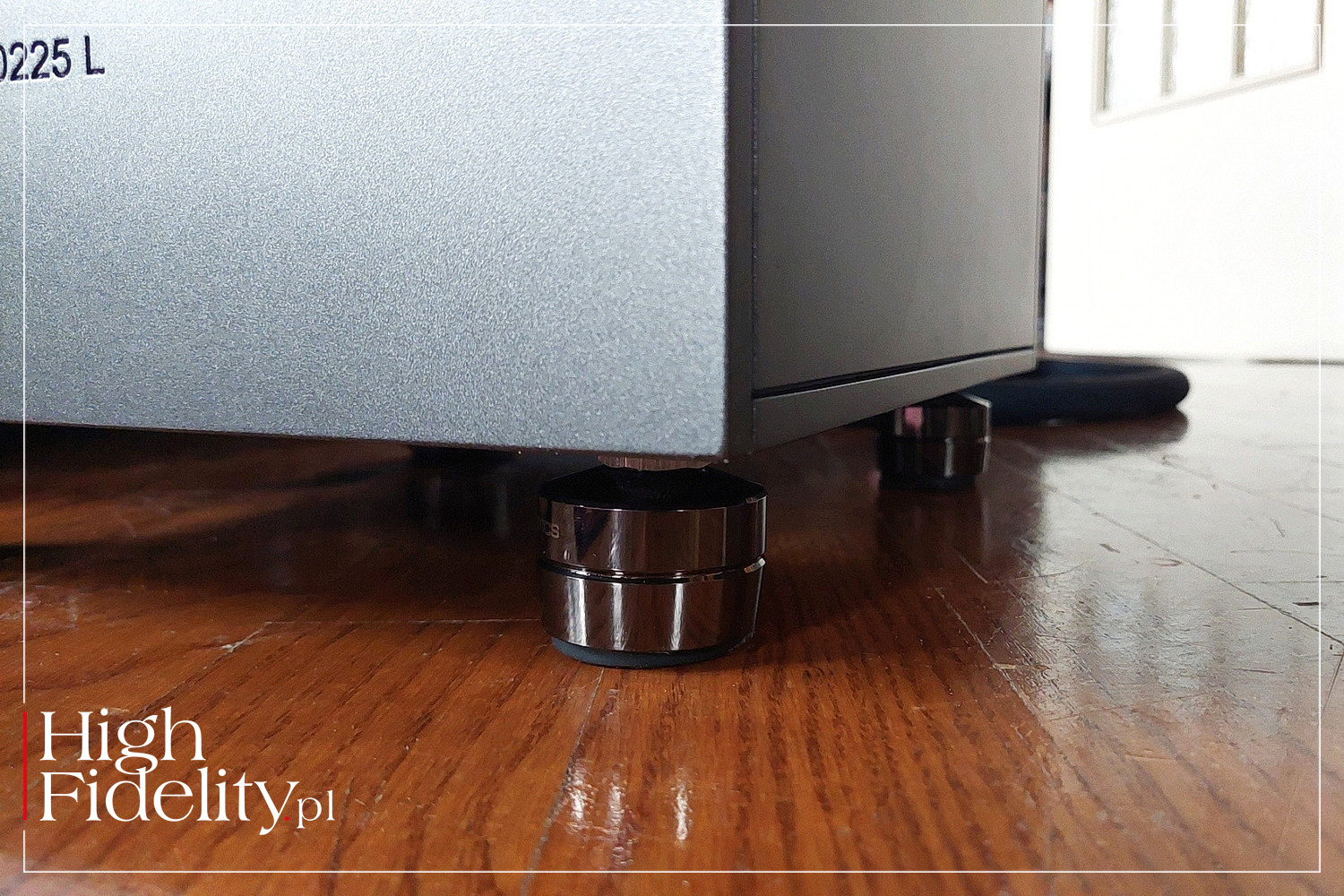
The model name and company name are engraved on the back of the speakers, and that’s where the single, high-quality speaker terminals are located. They’re made by Mundorf and feature copper contacts and polymer nuts. Instead of standard spikes, the manufacturer uses feet from a specialized manufacturer, IsoAcoustics; JBL does the same. The speakers are simply very attractive. ▓ SOUND HOW WE LISTENED • The Kroma Atelier Jovita speakers were placed almost exactly where the Thäis model once stood. The Harbeth M40.1 speakers have also been there from the very beginning - that is, since 2011. We’re talking about the mid-field, although the Jovitas required a slightly wider spacing. They were placed 250 cm from the listening position and 260 cm apart (measured from the center of the front baffle). They were 80 cm from the rear wall, measured from the center of their rear baffle (top panel). During the test, the speakers were angled so that the driver axes intersected exactly above my head. 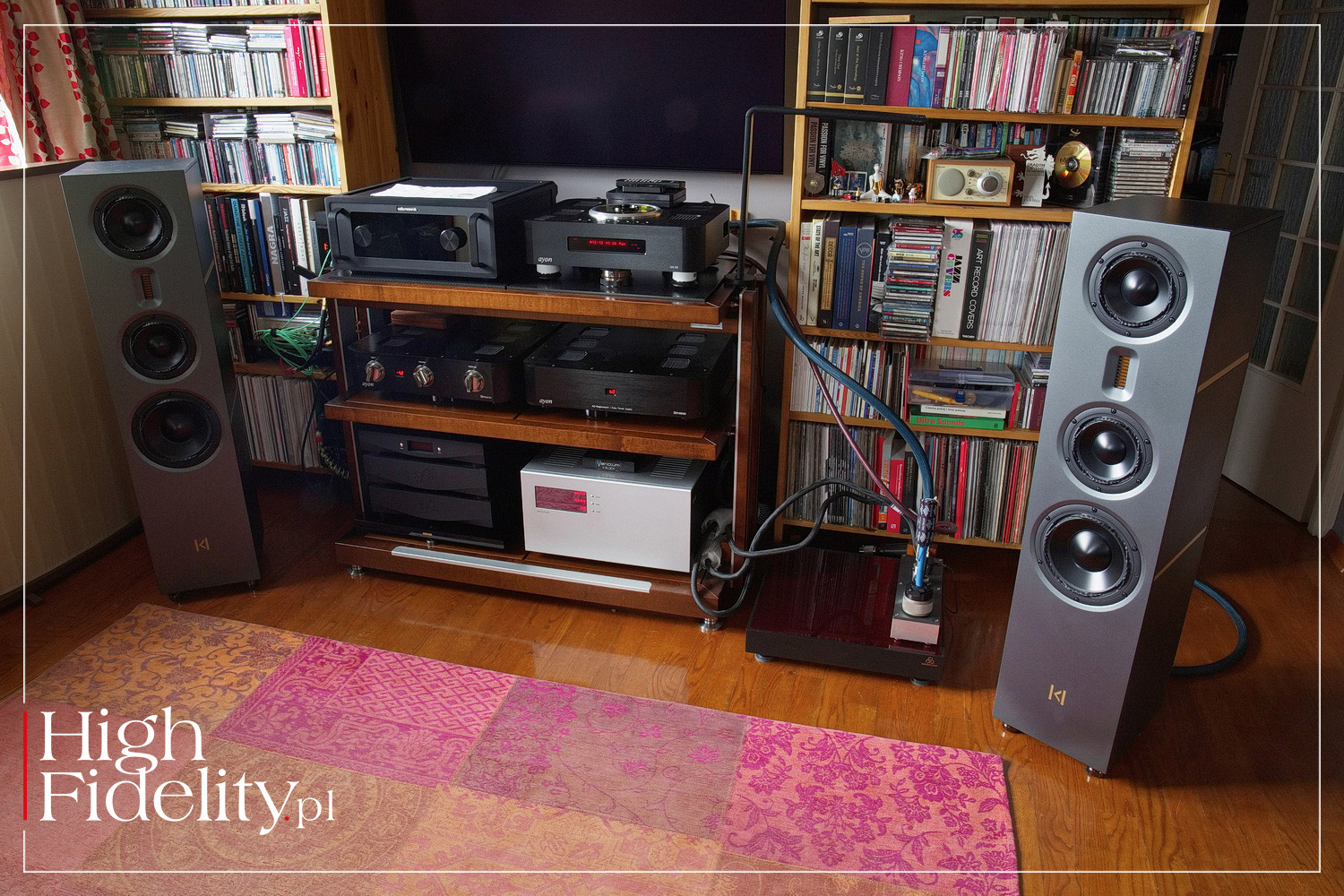
I determined the distance between the speakers and their level using the Bosch PLR 50 C. For more on speaker placement, see the article Micro-tuning: Setting Up Your Speakers, HF № 177, Jan 1st 2019, → HIGHFIDELITY.pl, accessed: 31.03.2026. For more on the acoustics of the HF listening room, see the article The “High Fidelity” Listening Room…, HF № 189, Jan 1st 2020, → HIGHFIDELITY.pl, accessed: 31.03.2026. » RECORDINGS USED FOR THE TEST ⸜ a selection
• DOMINIC MILLER & NEIL STACEY, New Dawn, Naim naimcd066, CD ⸜ 2002. |
» The albums used in the test can be found on a playlist on Tidal → HERE WHEN I PLAYED THE FIRST track from the album by DOMINIC MILLER and NEIL STACEY, the title track ˻ 1 ˺ New Dawn, for a moment I was overcome by panic. It was just a moment - a fleeting one - but it was enough to define these speakers throughout the entire listening process. You see, the sound that came out of the speakers once I had positioned them properly and sat comfortably in front of them was so incredibly spacious that there could only be one reason: I had made a mistake while connecting them and reversed the phase. 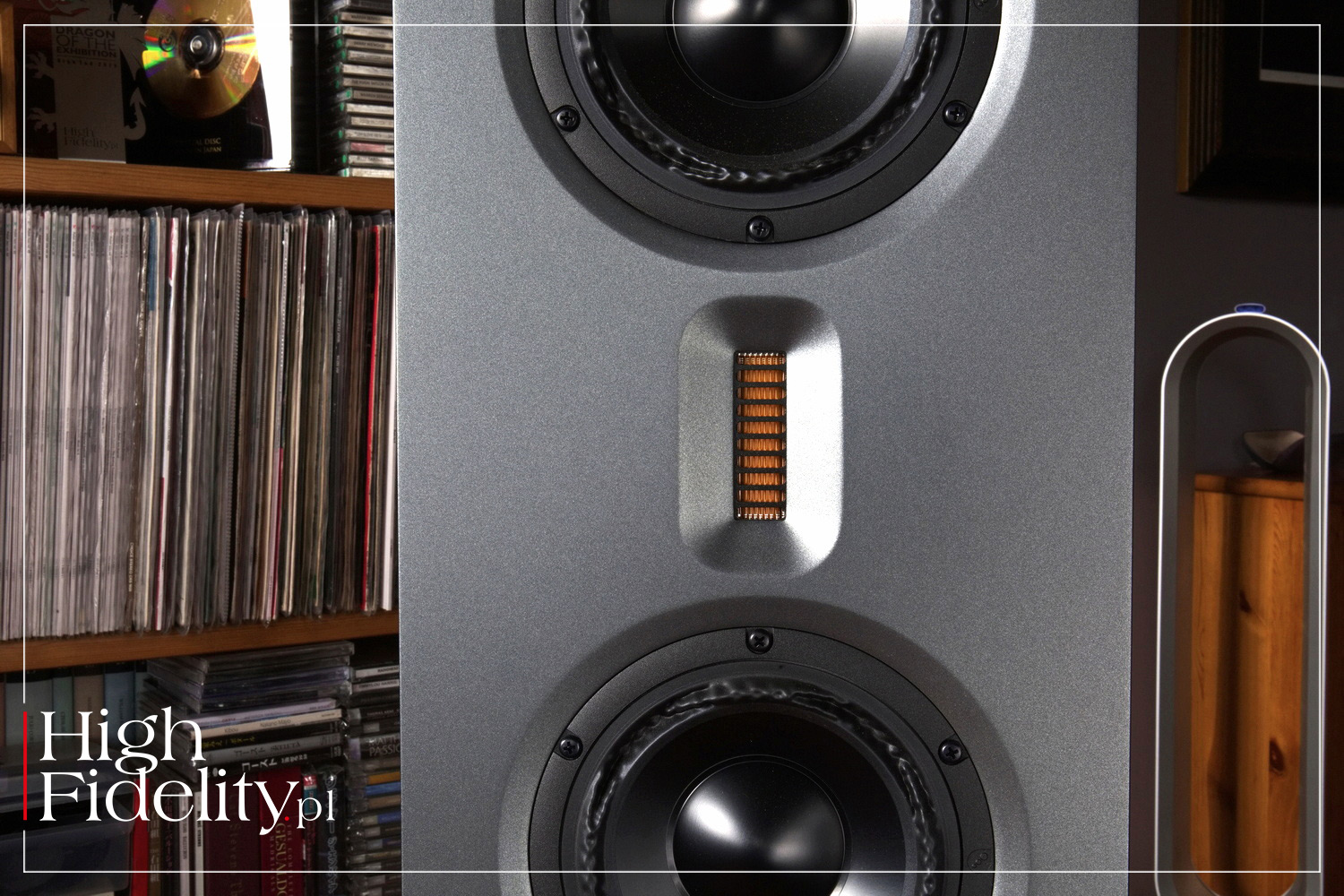
The panic stemmed, I think, from the fear that I had made a mistake in something so simple, rather than from the speakers sounding bad. After all, the test consists of dozens (really) of different steps, and each one can be performed incorrectly - each one can, in fact, be botched. And that distorts the listening results - it actually falsifies them. That’s why the soundstage generated by the tested speakers scared me. It was, after all, incredible in its expansiveness and coverage of the listening space. And what turned out to be the case? - The connection was fine, and the characteristic I’m referring to turned out to be a fundamental component of the sound produced by the speakers I’m telling you about. The stereo image offered by the Jovitas is something you have to hear to fully understand. In the sense that it’s very rare to encounter such powerful, all-encompassing stereo imaging. However, if I may draw your attention to one thing, it’s the way the soundstage is formed - which differs from most speakers I’ve encountered. Usually, the sound images of instruments are positioned behind the line connecting the speakers, sometimes on it, and occasionally slightly in front of it. In the first case, the sound is distant, and in the latter, tangible. The Kroma, as I said, are different. They are both distant and tangible. The sense of distance stems from the fact that the instruments are placed behind the line connecting the speakers, only occasionally on it. They have great volume, but they do not strive to be “tangible.” In turn, the accompanying acoustics are drawn far back into the soundstage, but they also end not in front of us, but behind our heads - hence my momentary confusion, because this usually happens when we mix up the phase while connecting the speakers and plug the red connector into the red terminal (or white) (or vice versa). With the Jovitas, it was like stepping into a bubble - a bubble of sound. The Andalusian speakers expand the “listening field” - I suppose that’s the right way to put it. They’re also very precise. Their tonal character differs from that of the Thaïs model and, more generally, the Classic series. The Signature series is much more open and “lively.” It lacks that warm, enveloping quality around the instruments that’s characteristic of the company’s smaller speakers. Yet it’s still a smooth presentation. The definition of sounds is excellent, but it’s achieved here not through a sharp and hard attack, but through superb separation between sounds - tonal separation. The Jovitas are substantial speakers. At the beginning, in the description, I referred to them as “medium-sized,” but that observation stems from comparing them to larger models in this series. In any other comparison, they would have to be described as quite large. The cabinet’s volume, combined with a large woofer, two sizable mid-bass drivers, and a dual bass-reflex system, suggests a lot of bass - perhaps even too much. Usually, that’s exactly the case. Except not here. The speakers under review produce a very balanced and disciplined sound, with no „boomy” tendency. Yes, when something low-frequency plays on the album by the duo I mentioned, it’s reproduced very low. However, the impulse is quickly dampened, giving the impression of a sound that’s agile rather than muddy. This is how sealed-box speakers behave. Perhaps, at the very bottom end, the Jovitas let up slightly on definition, but they go truly low without any unpleasant consequences. At the same time, they are extremely honest in what they do. In the sense that they try to impose their character as little as possible. So when I played one of the new albums by our friend, Hisao Natsume, on the Sakuraphon label, I sat for quite a while contemplating the precision with which these recordings - dating back to the 1920s and sourced from shellac records - were reproduced. It was an empathetic precision. That is to say, the real goal was to bring out as much of the music as possible, rather than performing technological acrobatics. There’s a lot of noise, but beneath the noise is a piano that “sings.” The speakers showed with super-precision the three-dimensionality of this sound. It isn’t particularly wide - the Harbeths present such recordings on a larger scale - but it is incredibly focused on ensuring that the sound is precise yet smooth. The speakers thus superbly separated the ambient noise, the piano, and even - you can really hear it - the acoustics of the room where the recording was made - I’m talking about Chopin’s ˻ 2-3 ˺ < i>Nocturne in F major, op. 15 no 2/p> 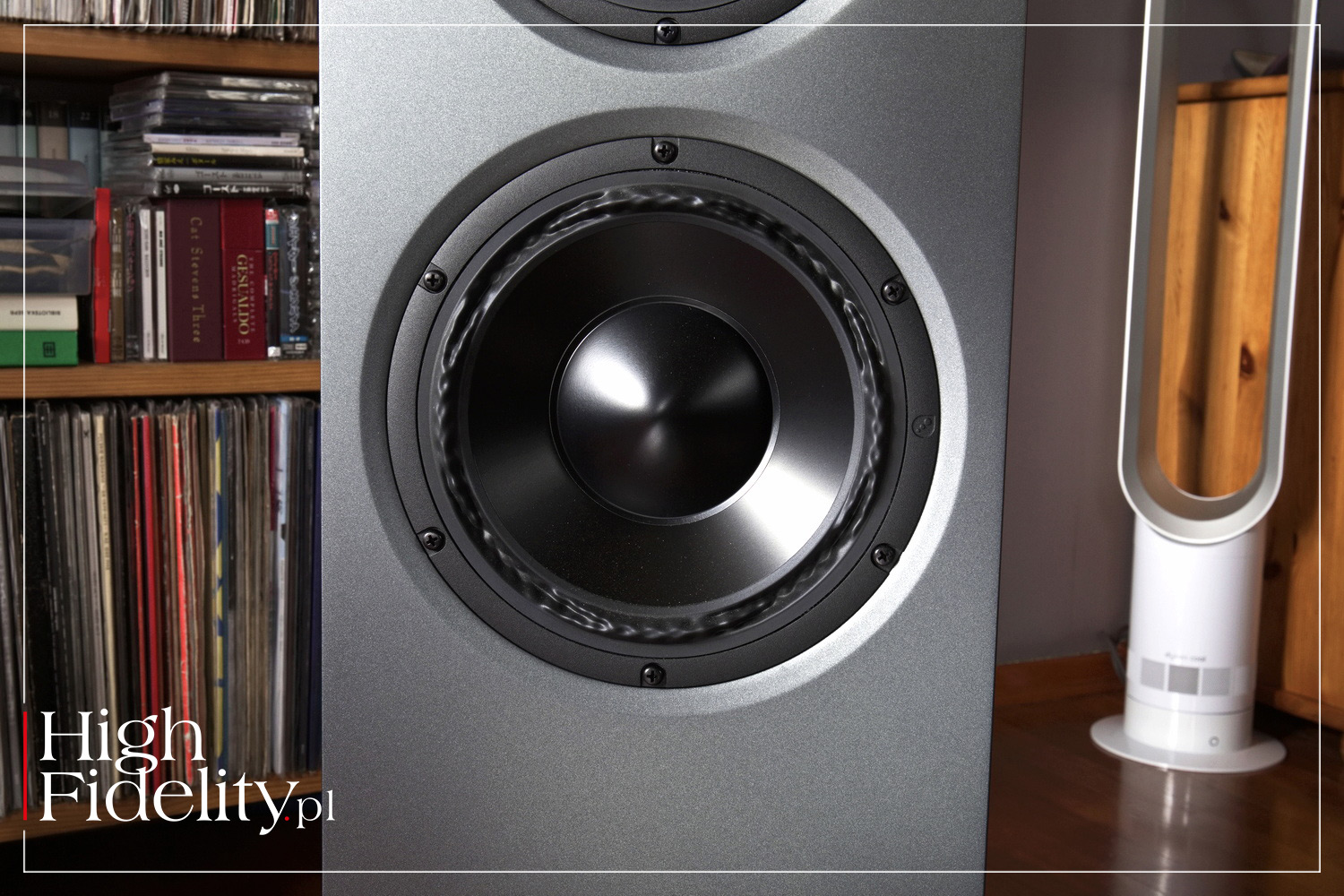
However, when needed, the Jovitas can really drive the bass; they can produce a powerful sound. It’s not as tangible a sound as from the Harbeths, nor as deep, rich, so to speak, as from the Sphinx 3 speakers (designed by Edvin van der Kley of the Siltech Group), but then again, not everyone likes that kind of sound. Nevertheless, ROBERT PLANT and SUZI DAN on the Two Coats track were presented quite close to me, without that wonderful clarity I experienced with other albums. But that’s to be expected - it’s a commercial recording, intended for a wide audience. Still, there was plenty of music in it, and the fullness - driven by very deep bass that was truly powerful and dense - made the whole thing energetic and, quite simply, powerful. This is exactly the kind of sound - it’s got power, punch, and drive. The slight brightening of the former Led Zeppelin vocalist’s voice wasn’t emphasized by the speakers, even though they don’t try to warm up or smooth out anything. AMT drivers tend to produce a warm sound. Here, however, it isn’t warm per se, because the speakers play with a very open sound. The high frequencies are shaped to be open and precise. So there is a clear presentation, but without harshness - these drivers do not sound harsh. That is why Keith Jarrett’s piano on the recently released album Roma, in the track It’s a Lonesome Town, was powerful and dynamic, open and resonant, while remaining on the silky side of power. It was also presented with depth and a delicate warmth. Perhaps not in the sound itself, but in the nuances and reverberations. The resolution of these speakers - which is superb - was confirmed here as well. We’re talking about a live recording, which you can’t really hear in this track - there’s no coughing or shuffling (I wonder if they were edited out, or if people were actually holding back?). However, when at 1:50 something falls to the floor - quite far back in the hall - that subtle movement is perfectly discernible and evokes in us a sense of participating in something communal, rather than with a lonely pianist abandoned somewhere in a deserted theater. When a recording is heavily compressed, and the producers have placed the sound sources close to us - that’s how it will be reproduced. Remember: Jovita are honest speakers. Guitar and IRMA’s vocals in Black Sun (acoustic) were therefore compressed into a rather flat soundstage, and very close to me. Close, yet not in front of the speakers, but between them. The backing vocals added here and there, followed by the synthesizers (orchestra), were far behind and to the sides, perfectly complementing this otherwise dry presentation. But the sound was still quite flat dynamically and slightly “forward.” That’s life… ▒ Summary KROMA JOVITA SPEAKERS are highly precise tools. With high-quality recordings, they’ll sound incredibly cohesive, accurate, yet natural. This doesn’t mean they have to be audiophile recordings - quite the opposite. It’s about high-quality music recorded with sensitivity and a clear vision. As I mentioned earlier, even recordings that lack both frequency range and dynamics will be reproduced in a way that puts the music first. The speakers are capable of producing a very deep bass, instantly compressing the air in the room and expanding it just as quickly. They aren’t aggressive in this regard and aren’t trying to prove anything. The bass is right where it should be, reminiscent of the sound from sealed-box speakers. Its lowest end is rounded off but still under control. Perhaps that’s why, even at high volumes, I didn’t feel like it was over the top or overwhelming me. The treble is open yet silky. This openness is part of the speaker’s overall character, in which the midrange is lively and resonant. It’s still that “Kroma-style” sound - smooth and fluid. But in this case - unlike in the lower-end series - we’re no longer talking about a warm sound, but rather a silky one. There’s no warmth here, because the focus is on transparency and clarity. But again - from the perspective of the people from Granada. 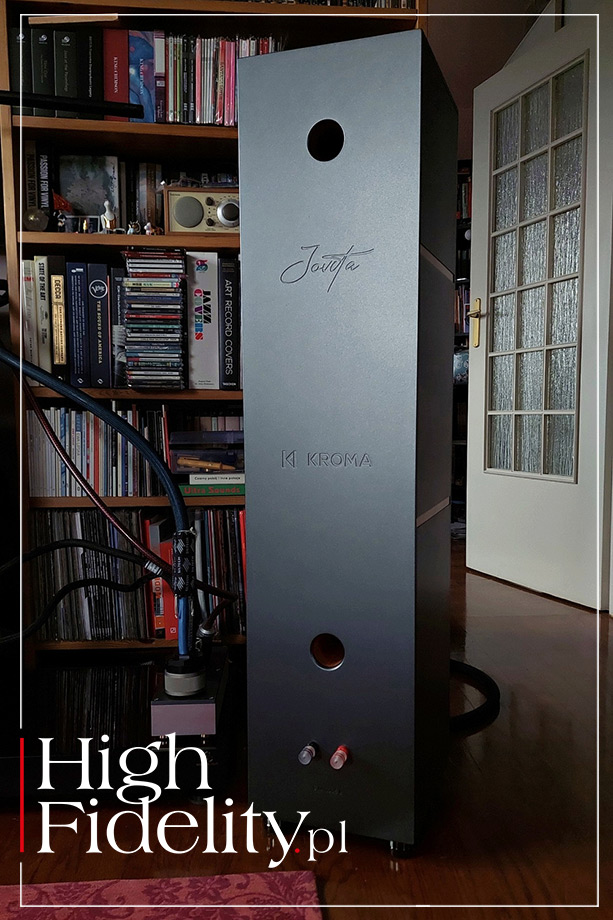
The Kroma Jovita speakers, therefore, bridge these two worlds: warmth and openness. They create a powerful soundstage that draws us right into the heart of the action. They don’t impose their own character on the sound, because they neither push it out in front of the speakers nor harden its attack. They are very faithful to what we feed through them and interpret the sound of recordings exceptionally well. And they sound like one giant driver without an enclosure - that’s really something! Fully deserved RED‖FINGERPRINT. ‖ WP ▒ Technical specification (according to the manufacturer)
Design: floor-standing, 3-way, 4-driver, vented |
 |




|
Reference system 2026 |
|
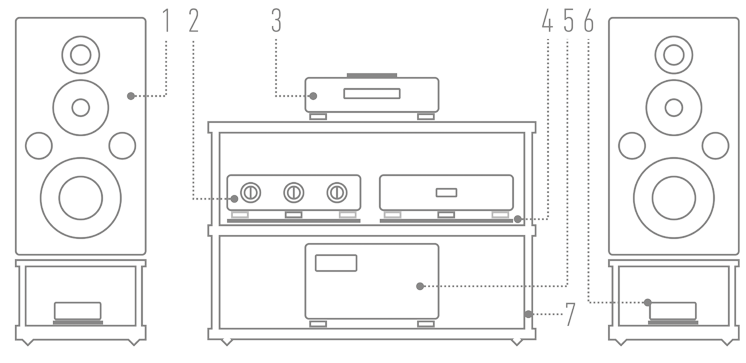 1) Loudspeakers: HARBETH M40.1 |REVIEW| 2) Line preamplifier: AYON AUDIO Spheris III Linestage |REVIEW| 3) Super Audio CD Player: AYON AUDIO CD-35 HF Edition No. 01/50 |REVIEW| 4) Stands (loudspeakers): ACOUSTIC REVIVE (custom) |ABOUT| 5) Power amplifier: SOULUTION 710 6) Loudspeaker filter: SPEC REAL-SOUND PROCESSOR RSP-AZ9EX (prototype) |REVIEW| 7) Hi-Fi rack: Hi-Fi rack: finite elemente MASTER REFERENCE PAGODE EDITION Mk II, more → HERE |
|

|
Cables Analog interconnect SACD Player - Line preamplifier: SILTECH Triple Crown (1 m) |ABOUT|» ANALOG INTERCONNECT Line preamplifier → Power amplifier: Siltech ROYAL SINLGE CROWN RCA; review → HERE Speaker cable: SILTECH Triple Crown (2.5 m) |ABOUT| |

|
AC Power Power cable | Mains Power Distribution Block - SACD Player: SILTECH Triple CrownPower (2 m) |ARTICLE| » POWER CABLE Mains Power Distribution Block → Line preamplifier: Acoustic Revive ABSOLUTE-POWER CORD, review → HERE » POWER CABLE Mains Power Distribution Block → Power amplifier: Acoustic Revive ABSOLUTE-POWER CORD, review → HERE Power cable | Power Receptacle - Mains Power Distribution Block: ACROLINK Mexcel 7N-PC9500 (2 m) |ARTICLE| Power Receptacle: Acoustic Revive RTP-4eu ULTIMATE |REVIEW| » ANTI-VIBRATION PLATFORM under Acoustic Revive RTP-4eu ULTIMATE: Graphite Audio CLASSIC 100 ULTRA, review → HERE Power Supply Conditioner: Acoustic Revive RPC-1 |REVIEW| Power Supply Conditioner: Acoustic Revive RAS-14 Triple-C |REVIEW| Passive filter EMI/RFI: VERICTUM Block |REVIEW| |

|
Anti-vibration Speaker stands: ACOUSTIC REVIVE (custom)Hi-Fi rack: finite elemente MASTER REFERENCE PAGODE EDITION Mk II, more → HERE Anti-vibration platforms: ACOUSTIC REVIVE RAF-48H |ARTICLE| » ANTI-VIBRATIONAL FEET: |

|
Analogue Phono preamplifier: Phono cartridges:
Clamp: PATHE WINGS Titanium PW-Ti 770 | Limited Edition Record mats:
|

|
Headphones » HEADPHONE AMPLIFIER: Leben CS-600X, review → HEREHeadphones: Headphone Cables: Forza AudioWorks NOIR HYBRID HPC |