


|
AC POWER FILTER THUNDER MELODY
Manufacturer: INNOVACOM sp. z o.o. |

 |
 |
 |
|
Review
text by WOJCIECH PACUŁA |

|
No 269 October 1, 2026 |
|
˻ PREMIERE TEST ˼
WE KEEP STILL LEARNING, and - I hope - we will never stop. Fields that strive for perfection aim to improve the parameters of their subject of interest based on the “state of knowledge” in the here and now; thus, with each improvement, a new “zero” level is established, and that is where we start our journey toward new discoveries. This is cumulative knowledge and, to some extent, speculative. Everything we hear can indeed be measured, but this is usually done after the fact, once we already know what to look for. 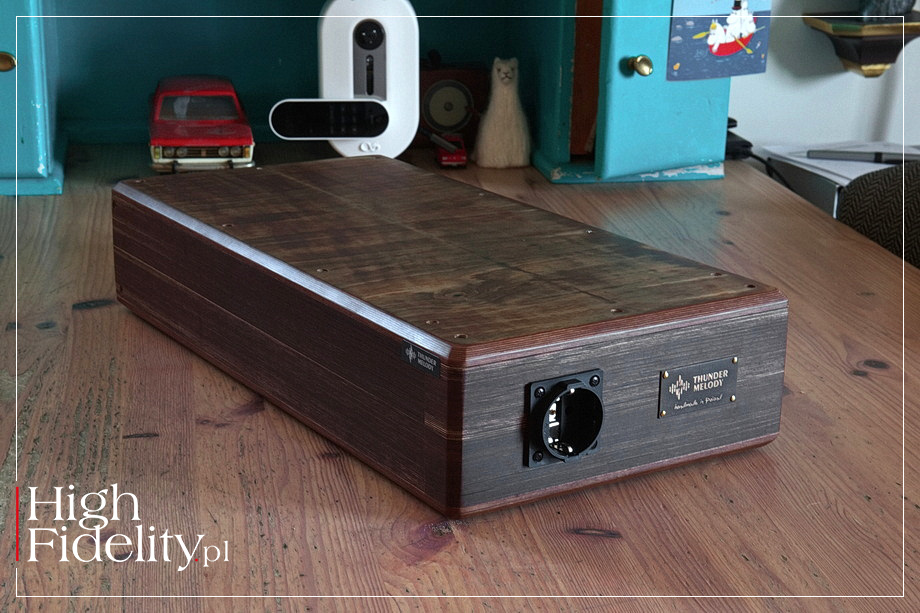
One of the fields that has been developing the fastest in recent years is noise elimination (minimization). The goal is to reduce noise at every possible point in the system - from discharging charges from driver baskets, to applying EMI filters to integrated circuits, all the way to the DC and AC power supply voltages. And perhaps this last area, namely, filtering and conditioning the power supply for our devices, starting - in its simplest form with the wall outlet - seems the most accessible to most music listeners. Thunder Melody - the company whose filter we’re testing this time - specializes in these types of solutions. It has already built up a following of “devotees” and customers, even though its products are very expensive and it doesn’t have a strong media presence. I get the impression that “High Fidelity” is one of the few publications that Konrad Raś and Rafał Hładziak have placed their trust in. This time, they did so by bringing in an AC power filter for testing, which plugs in between the wall outlet and the power strip that powers the entire system - this is a passive series filter. ▲ A few simple words… KONRAD RAŚ FOR THIS REVIEW, we’ve brought in the Noise Wall pass-through (serial) filter in the Brown (entry-level) version. We specifically chose the base version to show you the quality of our “entry-level” products. 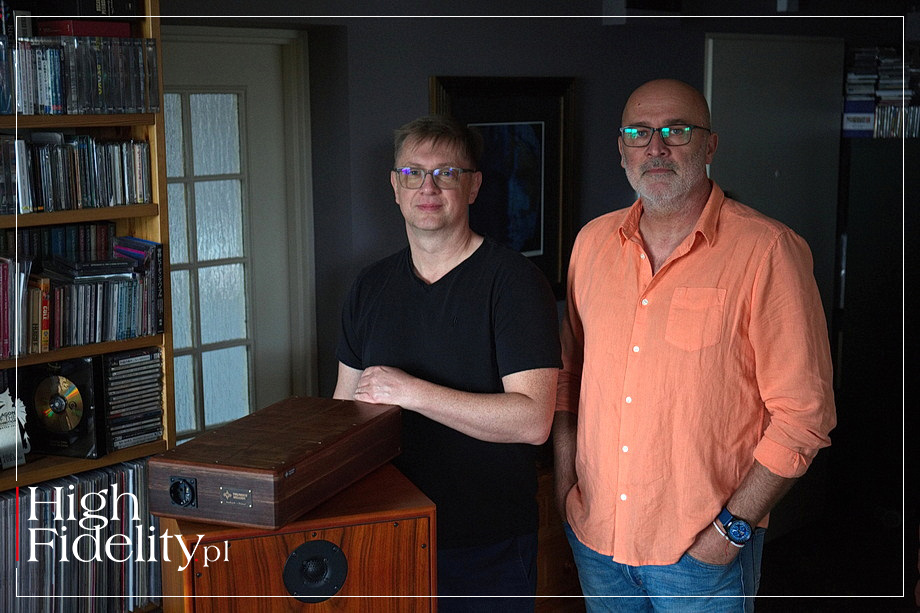
‖ Messrs. Konrad Raś and Rafał Hładziak with their new product, Noise Wall filter, Brown version The test concept is based on integrating into the main power supply circuit of the unit controlling the quality of the supply voltage for the audio system. This is achieved in the audio circuit using the Noise Wall pass-through filter, for which - in the section upstream of the audio circuit - we also offer the complementary Vacuum Infinitum filter. They can operate independently of one another, individually, or in any combination. Nevertheless, their combination embodies the essence of complementarity - that is, the sum of complementary components that together form a new, higher-quality whole. The Noise Wall filter is a pass-through filter for 220–240 VAC mains power with a current rating of 16 A. It is designed to be installed between the wall outlet of the audio circuit and the first power conditioner or power strip. Its purpose is to create a barrier - like a “moat” - separating the final audio circuit from the rest of the circuits. This concept is similar to how a “firewall” works in computer networks. 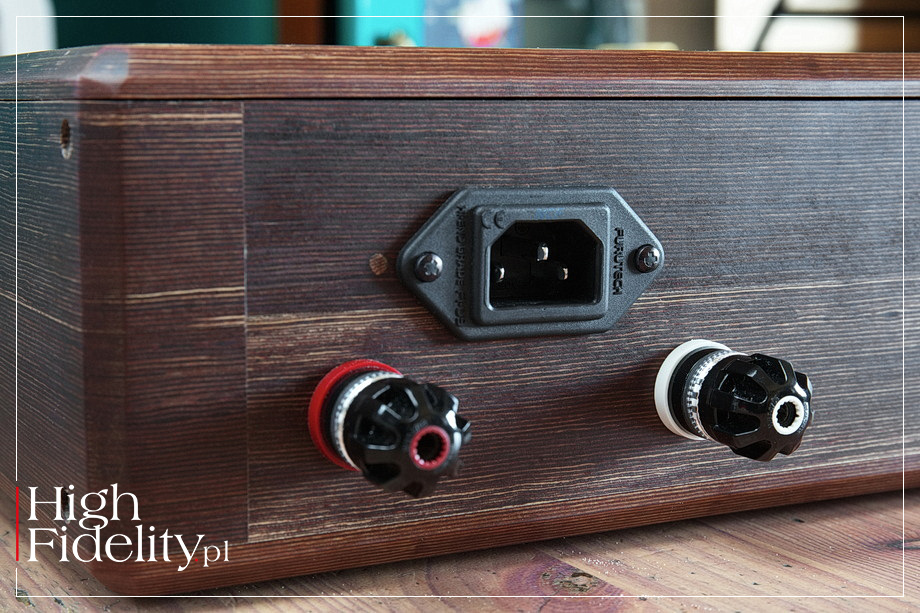
‖ Both inlet and outlet feature Furutech sockets The second function is to filter the mains voltage, removing mains interference. The third function is surge protection, although the level of protection increases with the Silver and Black versions. In the Brown version, this is the base level. The Noise Wall filter is also designed to work with ground conditioning, but only starting with the Silver version (although, for logistical reasons, it is equipped with WBT Ag terminals). The Brown version has been stripped of this feature to optimize costs. However, in accordance with our upgrade policy, every one of our products, even in its lowest version, can be upgraded to higher versions, both in terms of quality and functionality. As we’ve mentioned before, an audio and home power system is like an aquarium filter - when it’s running, it cleans the circulating water over time, and once it’s turned off, sediment will only become visibly noticeable after some time has passed. After startup, we recommend leaving the system running until morning and only then assessing the results. In our experience, the system’s stabilization process takes anywhere from two to three days up to a week; after that time, the improvement in stability decreases, though it may still be noticeable. 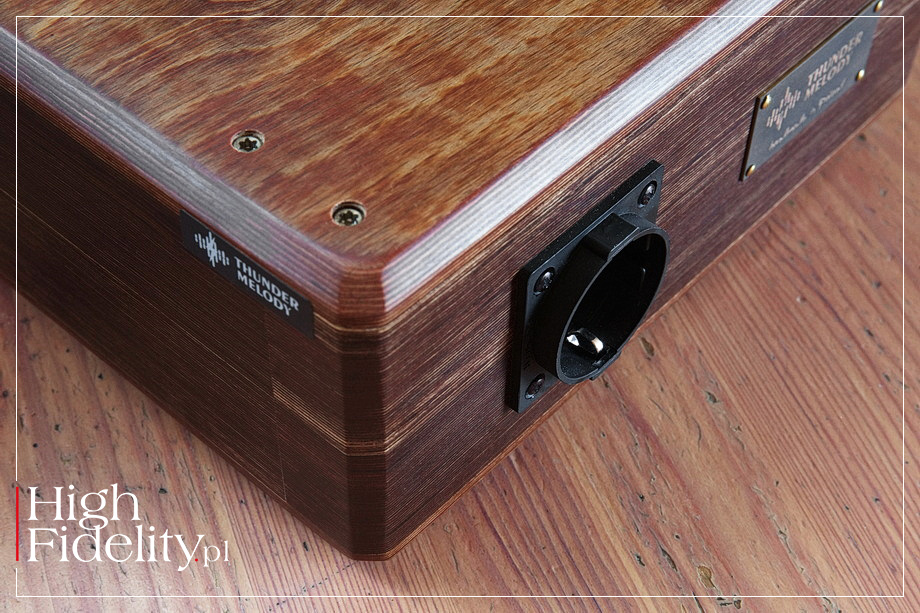
‖ Housings of Thunder Melody are made of „Panzerholtz” The filter was delivered with a generic power cable. It goes without saying that the better the power cable, the more effectively the device will perform. ‖ KR ▒ Noise Wall NOISE WALL IS A SERIAL FILTER for AC power; it is serial because it is connected into the existing circuit between the “transmitter” and the “receiver.” The device has one input and one output: the input is an IEC socket, and the output is a Schuko socket. We plug the IEC plug from the wall outlet (connected to the fuse box) into the former, and we plug the power cable for our power strip or conditioner into the Schuko outlet. AC - alternating current The functionality of the device under test is therefore straightforward and requires no explanation. The Noise Wall is functionally equivalent to filters from Acoustic Revive, such as the RAS-14 (which Firla calls the “AC Stabilizer”), or Furutech’s Flux-50 NFC (“In-Line Filter”). In terms of operation, however, they are worlds apart. The filters from both Japanese companies work by damping vibrations and noise around short sections of cable, while the Polish filter is a much more advanced device packed with electronics. It is closer in design to solutions from Transparent and products such as the Opus Powerisolator. The Noise Wall not only filters but also provides protection - in the event of a power surge, it short-circuits the circuit, forcing the residual current device (RCD) to trip. 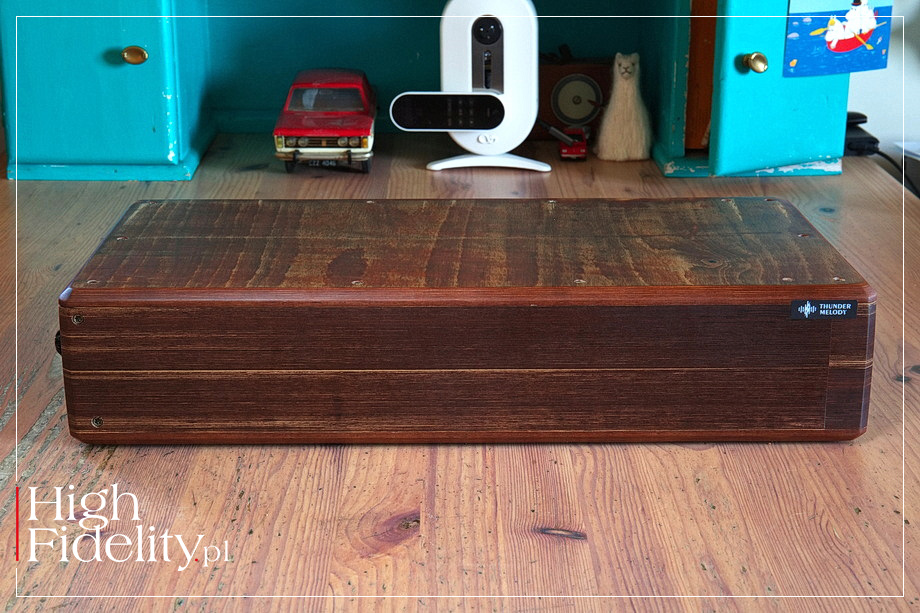
Its sophistication is evident in both its size and weight. It’s a large and heavy device housed in an “armored” (Panzerholtz) oiled plywood enclosure, fifty centimeters deep, ten high, and twenty-five wide. It can serve as an anti-vibration base, for example, for Cyrus equipment, although it has no feet other than the rubber hemispheres glued to the bottom. I’ll have to try it out someday (when I have time, which I never do…) to see how this product sounds on high-end anti-vibration feet and whether it makes a difference in the sound. 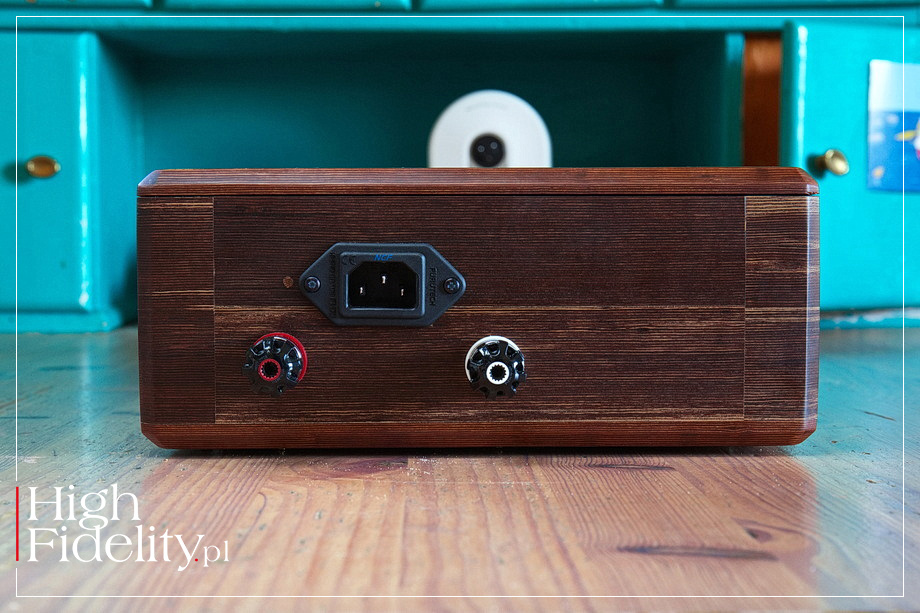
The manufacturer offers the option to have it custom-made in any size so that equipment with classic proportions can be placed on it. You can also order combined products, such as the Noise Wall filter with grounding, an AC power strip, or an artificial ground. It all depends on the buyer, their needs, and the depth of their wallet. I’ll just add that the IEC and Schuko outlets used in the filter are top-of-the-line components from Furutech’s NFC series, with rhodium-plated contacts. I also use these in my own system, from the wall outlet to the power strip. |
When it comes to the technical description of the Noise Wall, I have to rely solely on guesswork. Thunder Melody does not disclose it. This is frustrating for me as well, but the reality is that these are solutions that have been developed and tested over time; they are not protected by patents and are therefore easy to copy. Such a copy won’t be quite the same, but people will believe anything just to save money - that’s human nature. To prevent being ripped off, the company doesn’t disclose the design and makes it difficult to see what’s inside the enclosure. 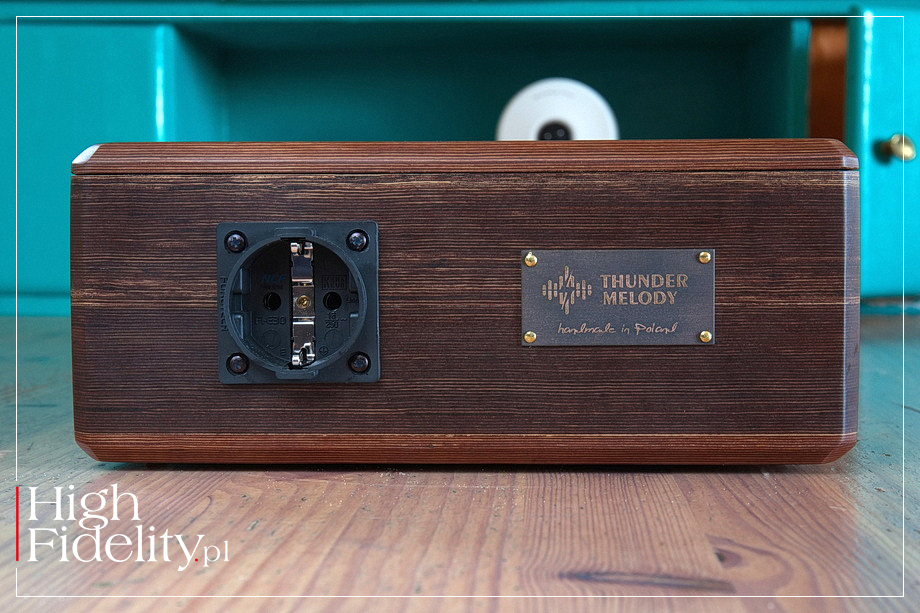
All that is known is that they operate at the intersection of micro-vibration management and electromagnetic and radio frequency interference (EMI/RFI) reduction. Their operating principle is based on advanced passive filtering, nanotechnology, and the suppressing resonances in the power, ground, and signal paths. I’ve seen the printed circuit boards for these products, and they’re more complex than those in many amplifiers. The supply voltage is routed through custom-designed cables surrounded by materials that convert vibrations into heat and suppress electromagnetic distortion. However, their exact composition is unknown. So you’ll just have to trust your own ears. ▓ SOUND HOW WE LISTENED • The Thunder Melody Noise Wall AC power filter was tested in the HIGH FIDELITY reference system. The test involved connecting the filter between a wall outlet, a Furutech FT-SWS (R), and the Acoustic Revive RTP-4EU Final AC power strip; a separate power line, using an Oyaide Tunami cable, runs to the outlet from a dedicated AHP Klangmodul III fuse. 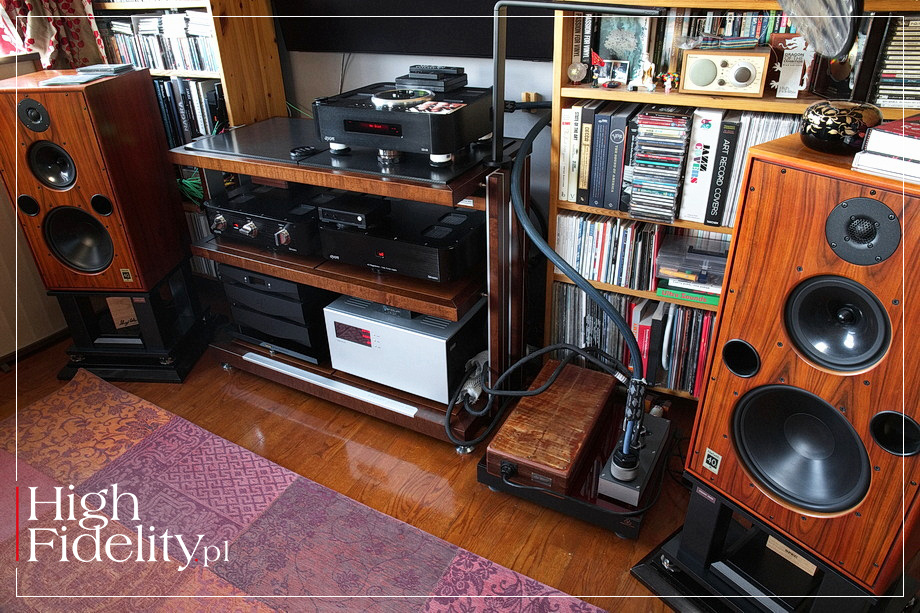
The power strip is normally powered by a 2.5-meter Acoustic Revive Absolute Power Cord K. So I connected the Thunder Melody filter between that cable and the power strip; from the filter to the power strip, I used a generic cable that comes with it, so as not to introduce another variable into the equation. You can perform this test with your own cable or with the Thunder Melody cable. The filter is mounted on a Graphite Audio Classic 100 Ultra anti-vibration platform. 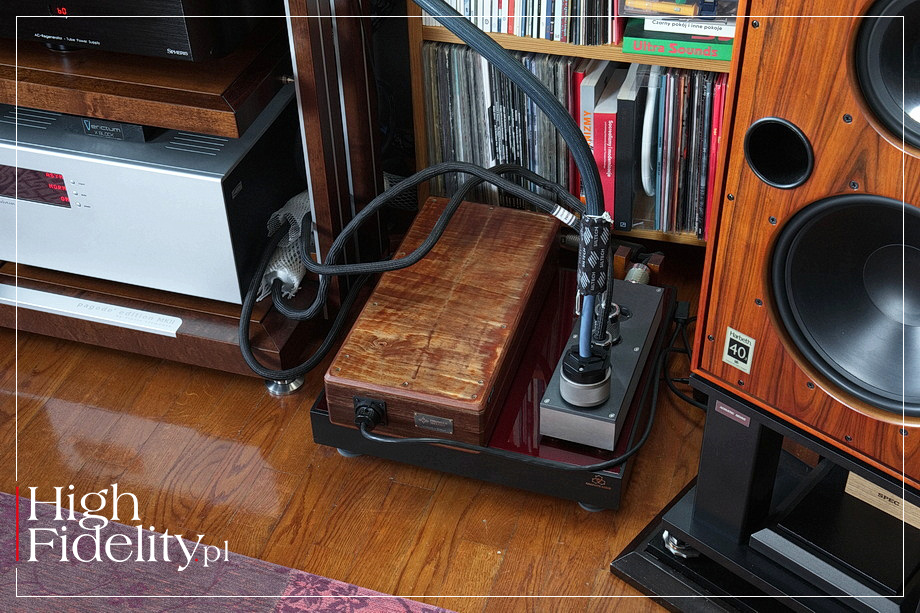
During the comparisons, I switched the entire system's power supply. Since it takes time for the tubes in the SACD player and preamp to warm up again, two minutes had to elapse between each series of comparisons. The comparison followed an AAA/BBB/AAA BBB/AAA/BBB pattern, with A and B being known. » RECORDINGS USED FOR THE TEST ⸜ a selection
• KANKAWA, Organist, T-TOC Records UMVD-0001-0004, Ultimate Master Vinyl, 4 x 45 rpm 180 g LP + CD-R IIα + 24/192 WAV ⸜ 2010 ‖ reviewed → HERE ˻PL˺. THUNDER MELODY PRODUCTS change the sound of the system clearly and unmistakably. The same is true of the Noise Wall filter. This time, in addition to the change itself - in the sense of an improvement - I also noticed something interesting: this device also reshaped the way I perceived events on the “soundstage.” The system, with the filter connected to its power supply, played music in a more delicate manner -that’s one thing (when I say “played,” I mean “modified the sound”). And that’s because it extended the soundstage deeper. The sound of the reference system I use for testing is tuned to be tangible, full, and dense. This is intended to ensure the best possible energy transfer and, consequently, the emotional impact of the performance. Noise Wall slightly pushed the foreground away from me while < b>arranging everything on the soundstage in such a way that it no longer had to be close to me, yet still carried a greater emotional charge than before. The emotions, however, were subdued and arranged in “longer sequences.” This was perfectly audible, for example, in the sound of the Hammond B-3 organ played by TOSHIHIKO KANKAWA in ˻ 2 ˼ Dear Myself, a track he wrote, taken from the album Organist. This album was released by the tiny Japanese label T-TOC and was recorded in an ultra-purist manner. This is evident in the beautiful, natural sound. The organ in question is presented in this track up close and with incredible energy. The Polish filter projected that energy further into the soundstage. It was no longer “here and now,” but rather beyond the line connecting the speakers. And yet the sense of “presence” - which is incredible on this album - was even greater than before. The tested filter also improved the sound’s resolution, that’s two. The track begins with an intro played on the double bass. With a cleaned-up power supply path, the instrument was clearer and had better-controlled lower-end. It’s boosted on this album, which sounds really great. But we also know that this is a production choice and that, in reality, the double bass sounds a bit drier, less “rich.” It was precisely in this direction - not by much, but still - that its sound shifted with the filter. I perceived the sound of Paul McCartney’s bass guitar on THE BEATLES’ album With The Beatles - in the version just released in Japan - in a very similar way. The point is that the filter organizes the sound and presents it in a more controlled manner. It’s a rich and full sound, yet more disciplined. As a result, more is happening. Thanks to this, in the recording ˻ 1 ˺ I Saw Her Standing There, Lennon and McCartney’s vocals, placed in the right channel, were better, truly much better, defined. 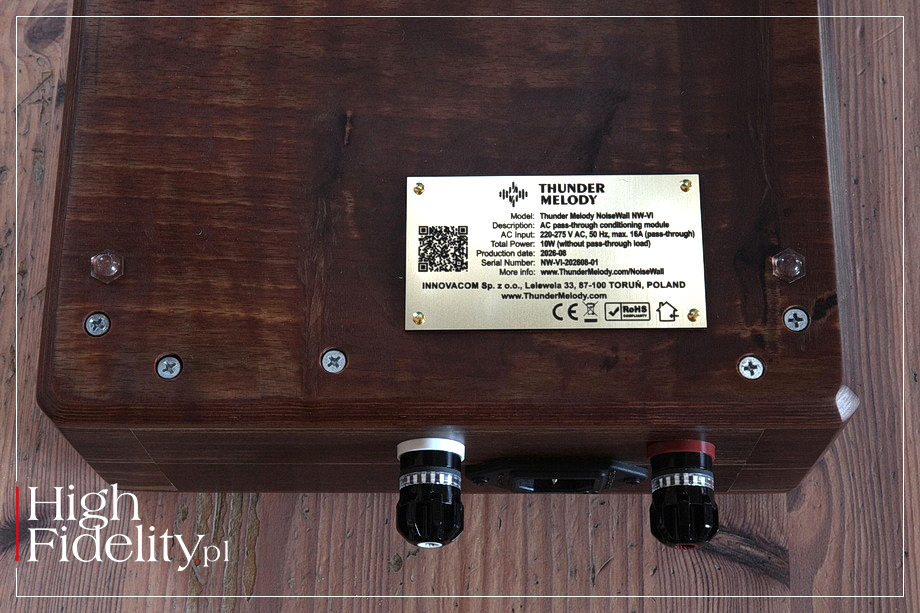
More important than these precise definitions, however, is the impression I got from listening to this album. Namely, that the soundstage is wider than I thought and that the unnatural placement of voices and instruments in the panorama fits together better. I do not doubt that this is precisely due to improved resolution. It supposedly provides more detail, but that’s not really the point. The details with Noise Wall were denser and had more weight than before, rather than simply “coming through” louder. Noise Wall also makes the sound more natural - that’s three. Not that I’m complaining - I love my system and enjoy listening to all kinds of music on it. It’s just that the Polish filter renders the sound in a slightly softer and more “laid-back” way than without it. Please keep in mind what I said about definition and resolution, so that I’m clearly understood. As demonstrated by the much better-defined bass and the clearer - yet positioned slightly further back in the soundstage - GEORGE MICHAEL’s vocals in the ˻ 2 ˺ Fastlove, the filter does all these things at once. That’s why the opening lyrics of ˻ 4 ˺ Spinning The Wheel, somewhere in the background, emerging from the silence, had better articulation and diction - they were clearer, yet blended more seamlessly with the mix. The entire track seemed slightly quieter, which allowed me to turn up the volume on the preamp by 1 dB without losing control over the whole thing, resulting in a bigger, more dynamic sound than before. It seems that the “softness” I’m referring to - which we get with this Polish product - isn’t a softening, but rather a smoothing out of something rough that was previously present in the sound, even though I hadn’t heard anything like that before. It wasn’t until I made a direct comparison and switched back and forth between “with” and “without” filter several times that I realized this. This also showed that the frequency response with the filter is wider than without it, and yet the sound still feels warmer. It’s as if the sense of organization and better control that we get from the Thunder Melody extends to the entire sound, regardless of what we’re listening to. This became even more apparent when I listened to music from a file player. Even though my streaming setup is separated from the rest of my system and plugged into a separate power outlet (!). RUFUS WAINWRIGHT in the ˻ 3 ˺ April Fools, an extremely Beatles-esque track, had a clearer voice, even though it was positioned farther away from me. It wasn’t quite as clearly in the foreground, yet its fullness, density, and clarity were greater. ▒ Summary EVERYTHING I'M TALKING ABOUT produced a more pleasant sound, with better definition and higher resolution. Even fairly bright mixes and remasters, take, for example, the ˻ 5 ˺ A Gipsy’s Kiss from my beloved DEEP PURPLE album Perfect Strangers - will sound better with it than without it. Not by rolling off the treble or emphasizing the midrange, because the filter doesn’t do that. It happens due to greater sonic freedom and better “spatial extension.” Everything sounds richer with it, but not because the volume increases, rather because of improved tonal differentiation and dynamics. 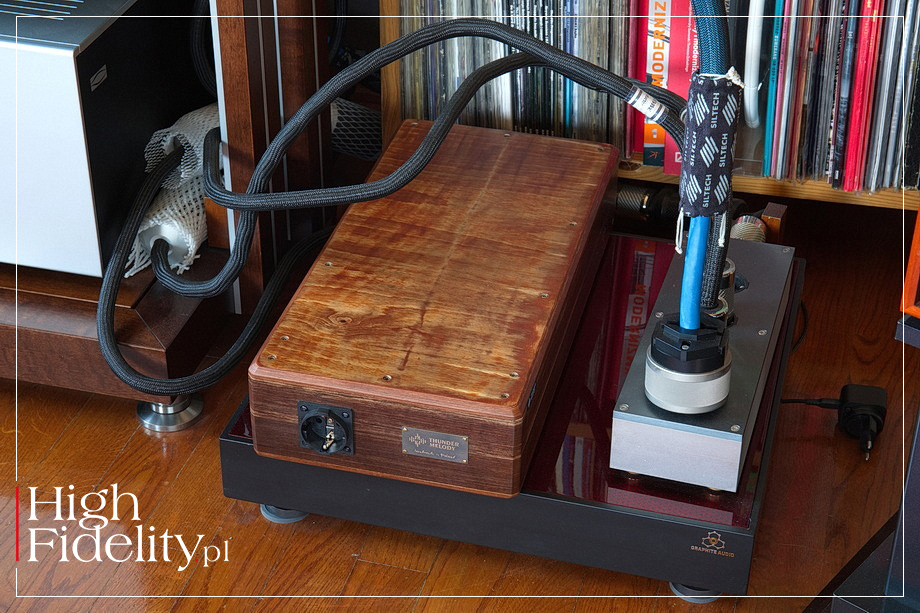
It’s about a smooth yet information-rich soundstage. But it’s also a soundstage presented from a greater distance than before. This is a sound that extends deep into the soundstage and gives it a wide expanse. Instruments that were previously tangible and within arm’s reach will be pulled back to and beyond the line connecting the speakers. And that’s the one thing that might not be to everyone’s taste. On the other hand, most listeners prefer this kind of sound - they don’t like the “here and now” sound - and the Noise Wall delivers it in a sophisticated way. ‖ WP |
 |
|
Reference system 2026 |
|
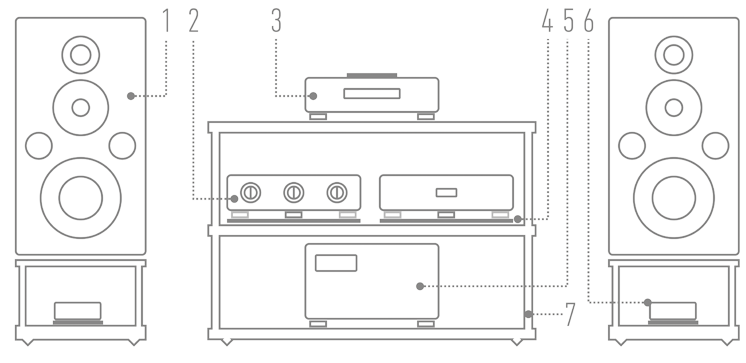 1) Loudspeakers: HARBETH M40.1 |REVIEW| 2) Line preamplifier: AYON AUDIO Spheris III Linestage |REVIEW| 3) Super Audio CD Player: AYON AUDIO CD-35 HF Edition No. 01/50 |REVIEW| 4) Stands (loudspeakers): ACOUSTIC REVIVE (custom) |ABOUT| 5) Power amplifier: SOULUTION 710 6) Loudspeaker filter: SPEC REAL-SOUND PROCESSOR RSP-AZ9EX (prototype) |REVIEW| 7) Hi-Fi rack: Hi-Fi rack: finite elemente MASTER REFERENCE PAGODE EDITION Mk II, more → HERE |
|

|
Cables Analog interconnect SACD Player - Line preamplifier: SILTECH Triple Crown (1 m) |ABOUT|» ANALOG INTERCONNECT Line preamplifier → Power amplifier: Siltech ROYAL SINLGE CROWN RCA; review → HERE Speaker cable: SILTECH Triple Crown (2.5 m) |ABOUT| |

|
AC Power Power cable | Mains Power Distribution Block - SACD Player: SILTECH Triple CrownPower (2 m) |ARTICLE| » POWER CABLE Mains Power Distribution Block → Line preamplifier: Acoustic Revive ABSOLUTE-POWER CORD, review → HERE » POWER CABLE Mains Power Distribution Block → Power amplifier: Acoustic Revive ABSOLUTE-POWER CORD, review → HERE Power cable | Power Receptacle - Mains Power Distribution Block: ACROLINK Mexcel 7N-PC9500 (2 m) |ARTICLE| Power Receptacle: Acoustic Revive RTP-4eu ULTIMATE |REVIEW| » ANTI-VIBRATION PLATFORM under Acoustic Revive RTP-4eu ULTIMATE: Graphite Audio CLASSIC 100 ULTRA, review → HERE Power Supply Conditioner: Acoustic Revive RPC-1 |REVIEW| Power Supply Conditioner: Acoustic Revive RAS-14 Triple-C |REVIEW| Passive filter EMI/RFI: VERICTUM Block |REVIEW| |

|
Anti-vibration Speaker stands: ACOUSTIC REVIVE (custom)Hi-Fi rack: finite elemente MASTER REFERENCE PAGODE EDITION Mk II, more → HERE Anti-vibration platforms: ACOUSTIC REVIVE RAF-48H |ARTICLE| » ANTI-VIBRATIONAL FEET: |

|
Analogue Phono preamplifier: Phono cartridges:
Clamp: PATHE WINGS Titanium PW-Ti 770 | Limited Edition Record mats:
|

|
Headphones » HEADPHONE AMPLIFIER: Leben CS-600X, review → HEREHeadphones: Headphone Cables: Forza AudioWorks NOIR HYBRID HPC |