


|
SACD PLAYER SHANLING
Manufacturer: SHENZHEN SHANLING DIGITAL TECHNOLOGY DEVELOPMENT Co., Ltd. |

 |
 |
 |
|
Review
text by WOJCIECH PACUŁA |

|
No 268 September 1, 2026 |
WHEN, A FEW YEARS AGO, Ayon Audio discontinued the production of SACD players, leaving only a CD player in its lineup, this move was justified by its owner, Gerhard Hirt, as a necessity to improve the performance of the CD transport. However, once only the most expensive CD models remained in its lineup, it was already clear that the company was focusing on file players and D/A converters. With Shanling, it’s completely different. 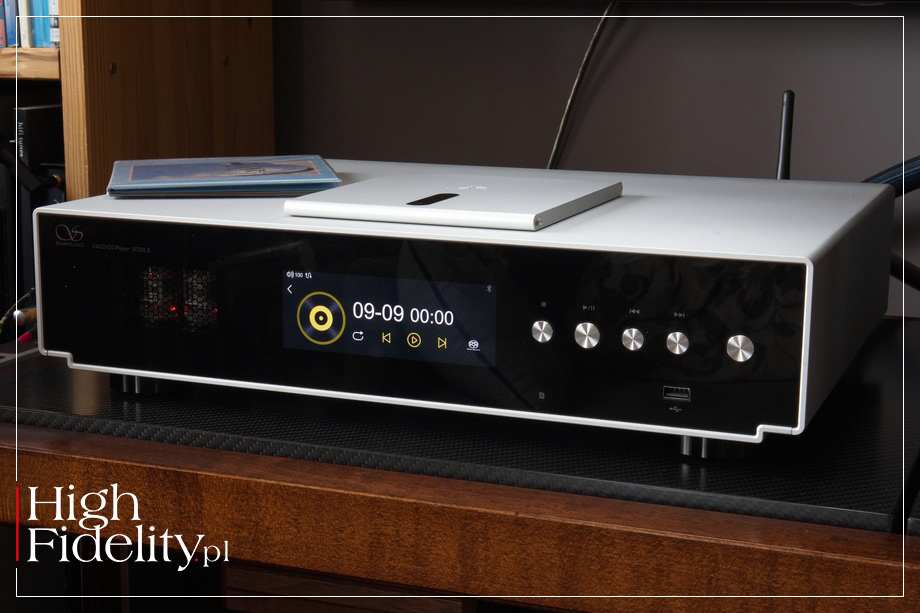
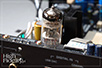
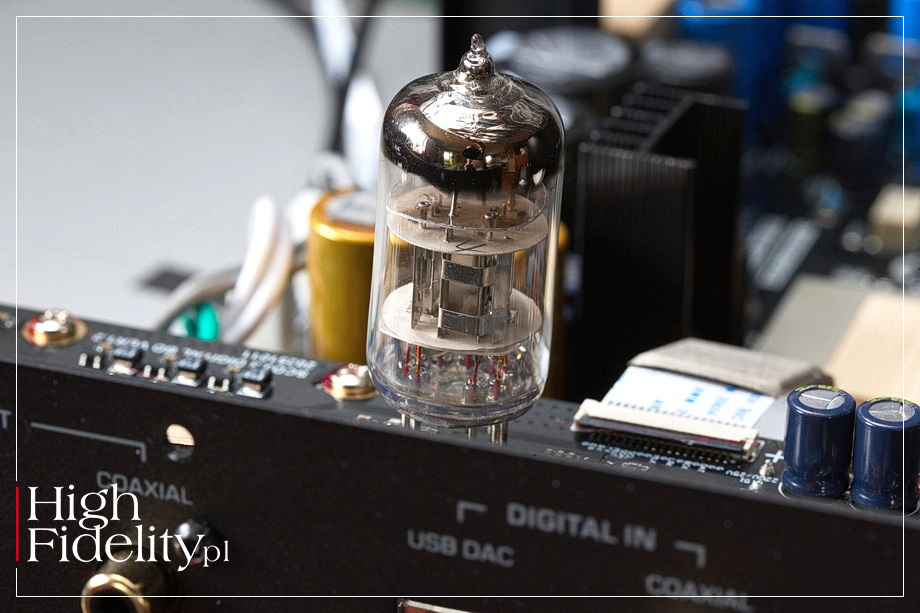
This Chinese company offers as many as fifteen (!) CD and SACD players, including both portable devices (see last month’s editorial → HERE), as well as desktop models - expensive and inexpensive, transistor and tube-based, top-loaders, slot-loading, and those with a classic tray. Added to this, of course, are file players and “DACs.” In a word: this is a manufacturer specializing in digital sources. ▓ SCD3.3 THE SCD3.3 IS A PLAYER that puts at our fingertips just about every audiophile feature and trick we could possibly imagine. And even more. It’s a top-loader optical disc player. You can use it to play SACD, CD, and MQA-Audio discs, as well as files from a USB drive. The DAC used in it is the company’s proprietary design and operates based on discrete resistors controlled by an FPGA (Field-Programmable Gate Array). It can be used traditionally, with or without oversampling. This process, oversampling, is now present in every DAC integrated circuit and involves sampling the audio signal at a frequency many times higher than that of the original audio signal. It improves dynamics, reduces quantization noise, and makes it easier to filter out unwanted interference. On the other hand, it introduces artifacts into the sound that not everyone appreciates. Another audiophile “must-have” feature found in the SCD3.3 is the use of vacuum tubes, namely two 12AT7 dual triodes. They are installed in the output buffer. The manufacturer states:
Shanling SCD3.3 is a flagship Super Audio CD player that sets a new benchmark in the high-end class, serving as the direct successor to the highly regarded Onix Zenith XST-20 transport. The device was designed as a complete digital center, combining a proprietary SACD reading system, a second-generation discrete R2R converter, and a tube-based analog stage.
The SCD3.3 challenges the world’s finest designs, offering not only full support for SACD and MQA-CD formats, but also native DSD signal transmission via I2S and support for ultra-high-resolution files. The entire unit is housed in a massive, luxurious chassis that underscores this model’s top-tier status within the manufacturer’s lineup. ⸜ SCD3.3, → en.shanling.com, accessed: 30.06.2026. SCD3.3 is this manufacturer’s top-of-the-line player and looks like a well-refined product. Although the price list still includes the T35 - a device whose design draws inspiration from Denon players on one hand and Loit on the other - it was a limited-edition product with only ninety-nine units produced; Loit Passeri review → HERE. 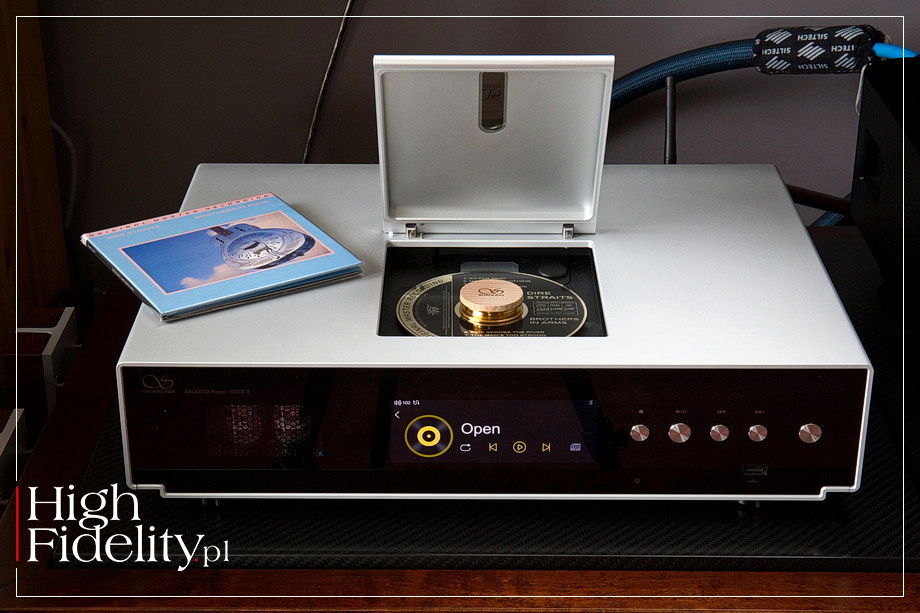
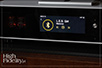
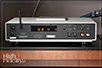
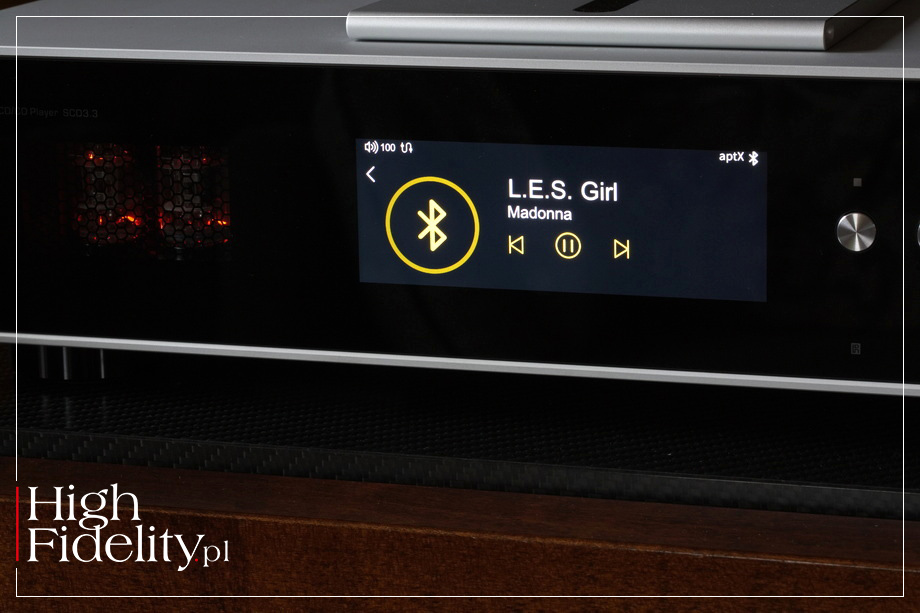
Looking at the reviewed device, one could venture to say that the days are gone when interesting technical solutions from companies behind the Great Wall were hidden in stylistically questionable devices, ones bearing clear similarities to those of Western manufacturers and often simply tacky. The SCD3.3 looks, as I said, very good. The device features an all-aluminum chassis, whose silver bezel contrasts with the black acrylic on the front. Thanks to the recessed lower edges, it has an interesting, sculptural design. Below it, in the center, is a < b>5-inch touchscreen display from LG. This is something I immediately envied, even though the red LED display on my Ayon Audio CD-35 HF Edition player is very stylish. The functionality of what we get with the Shanling is simply much better. We’ll come back to it later. ▲ Top loader 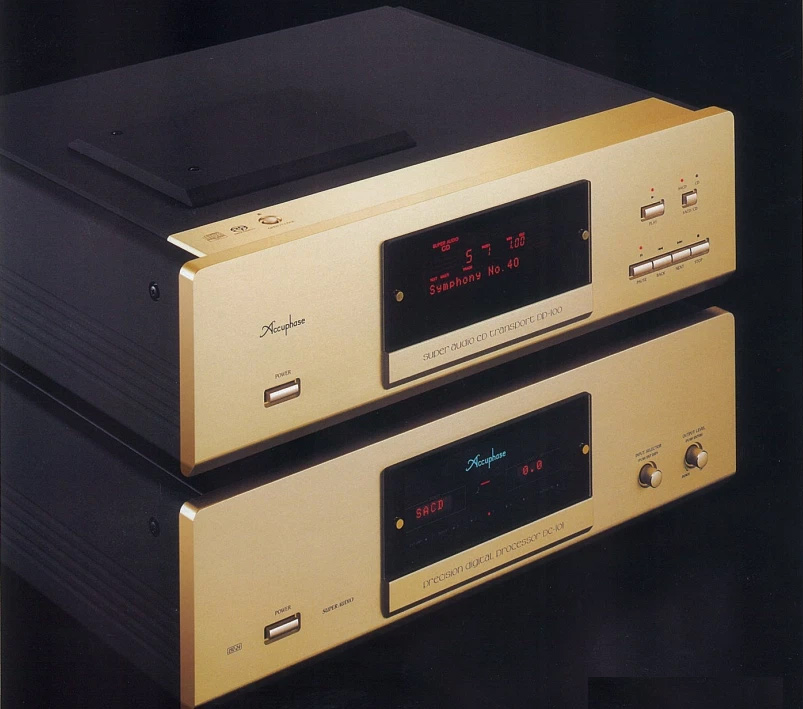
‖ Accuphase – side-sliding lid, automatic • photo courtesy of Accuphase THE CHINESE PLAYER is a device referred to as a top-loader. This is a type of player in which the disc is placed directly on a wheel mounted on the motor’s shaft. The disc is held in place by a small wheel and is either covered with a lid or left exposed (see Ancient Audio). 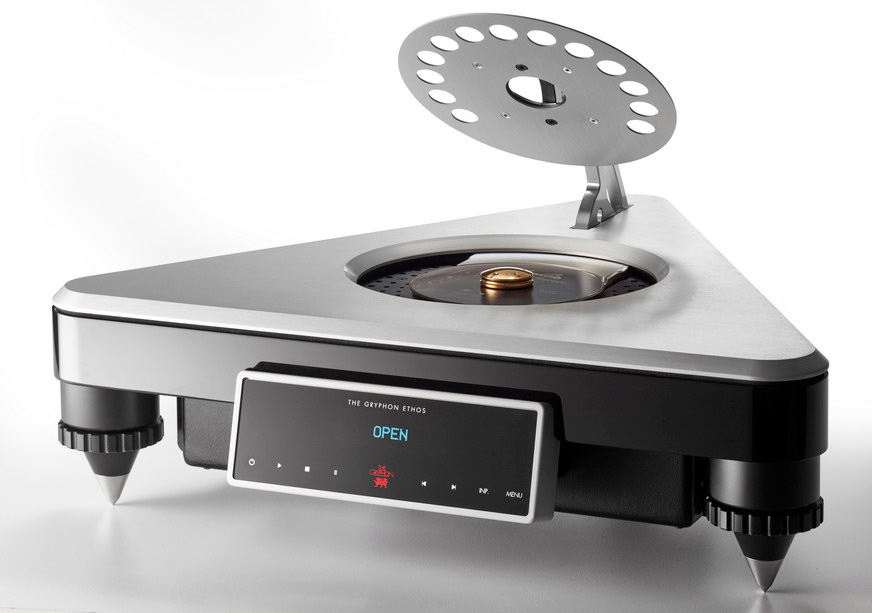
‖ Gryphon – lid lifts upward automatically • photo courtesy of Gryphon Throughout the history of this format, which was introduced in Tokyo on October 1, 1982 with the Sony CDP-101 CD player, the lid has taken on various shapes. It was moved backward (→ AUDIONET PLANK) or to the side (Sony SCD-1), and it lifted upward (the aforementioned Loit Passeri, but also → GRYPHON ETHOS), and it opened electrically or manually (→ REGA ISIS VALVE). 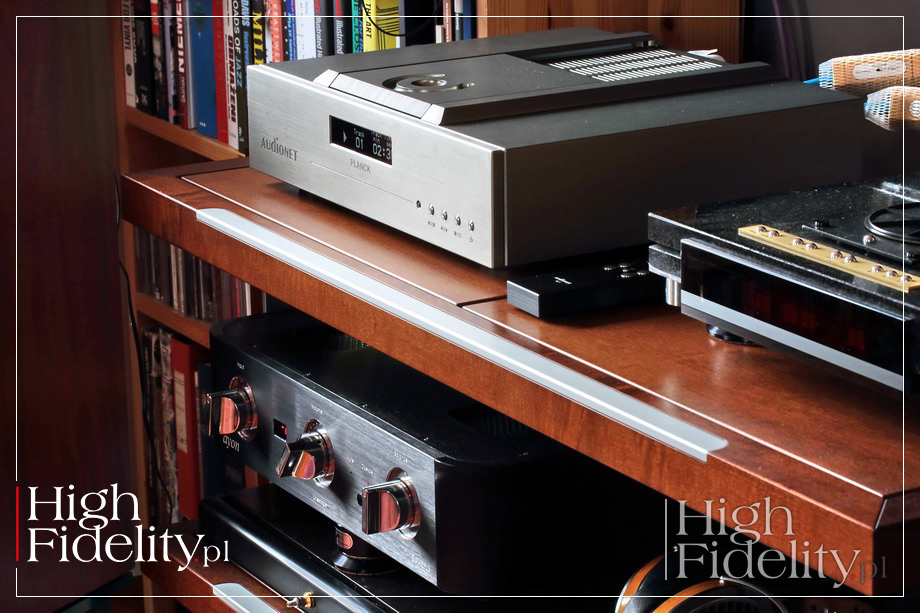
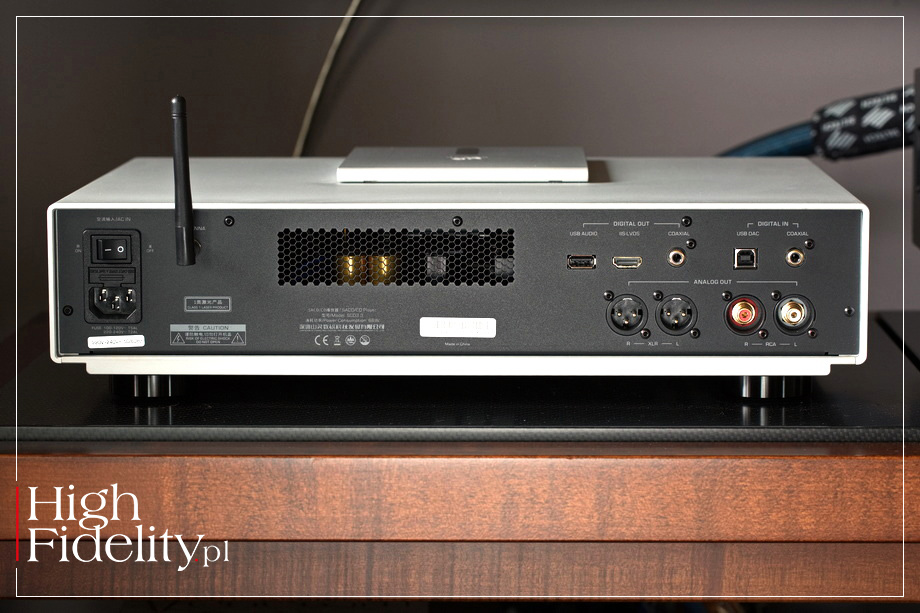
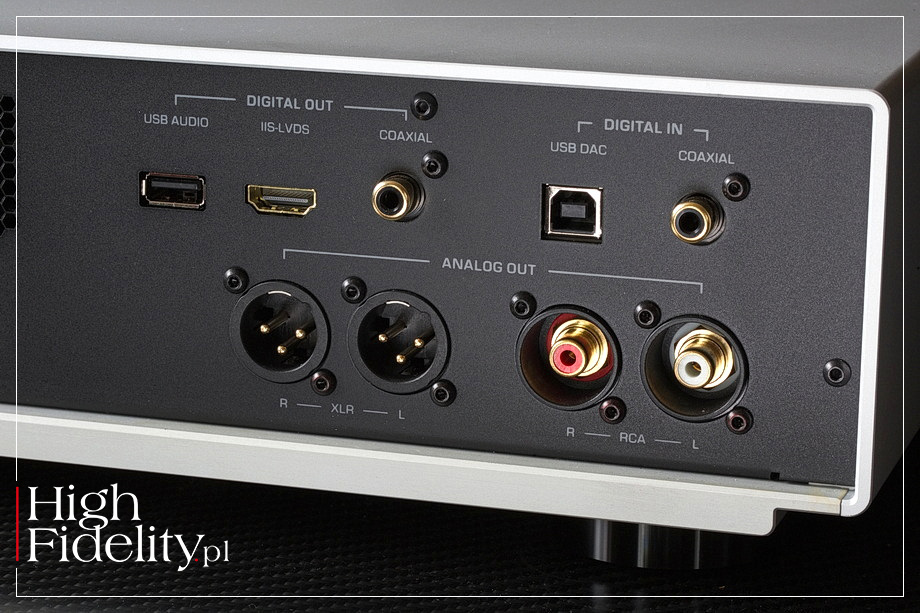
‖ Audionet – lid slides back, manually A separate category consists of players with a separate cover that fits over the disc compartment, such as the → AYON AUDIO or the → TOTALDAC d1-CD. The choice of a specific technology was based on the manufacturer’s technical capabilities, the financial resources allocated to this component, and, last but not least, aesthetics. The Shanling is a top-loader with an integrated, manually operated lid that slides backward. It looks nice, but the lid features no brake and, if you don’t hold it up, it falls limply. ● FEATURES • The SCD3.3 is a Super Audio CD and MQA-CD player; this means it can play SACDs, CDs, and MQA-CDs. It also features digital, USB, and RCA inputs. The digital inputs work with the XMOS XU316 chip, which supports PCM files up to 768 kHz and DSD up to DSD512. This chip features separate clock oscillators that the manufacturer claims are of “ultra-high precision.” 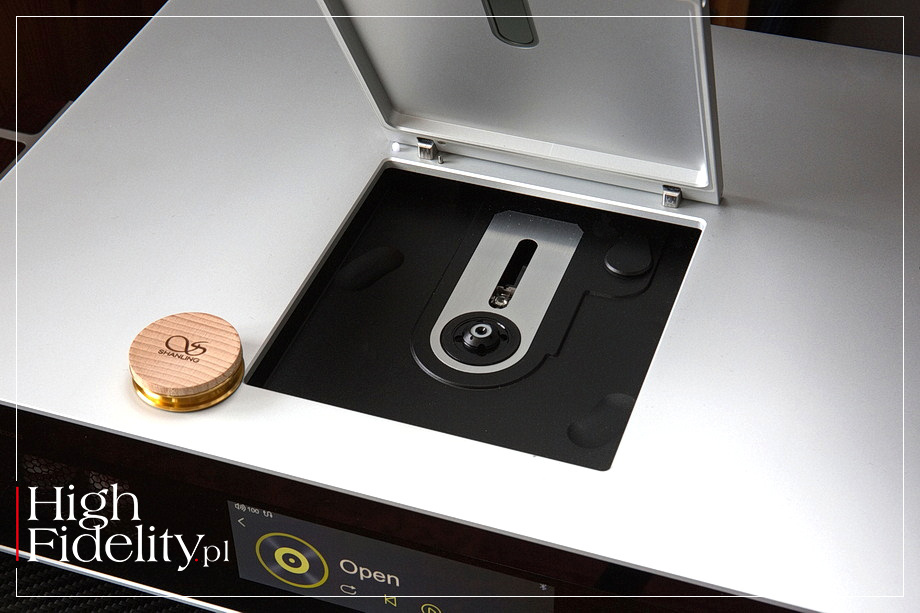
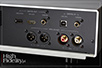
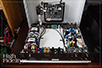
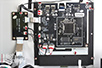
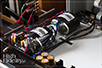
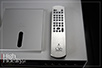
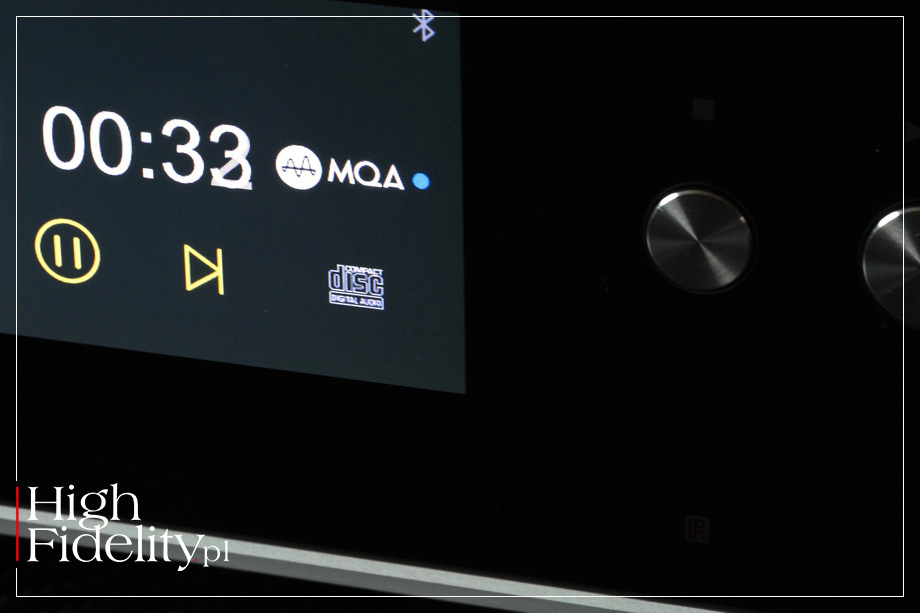
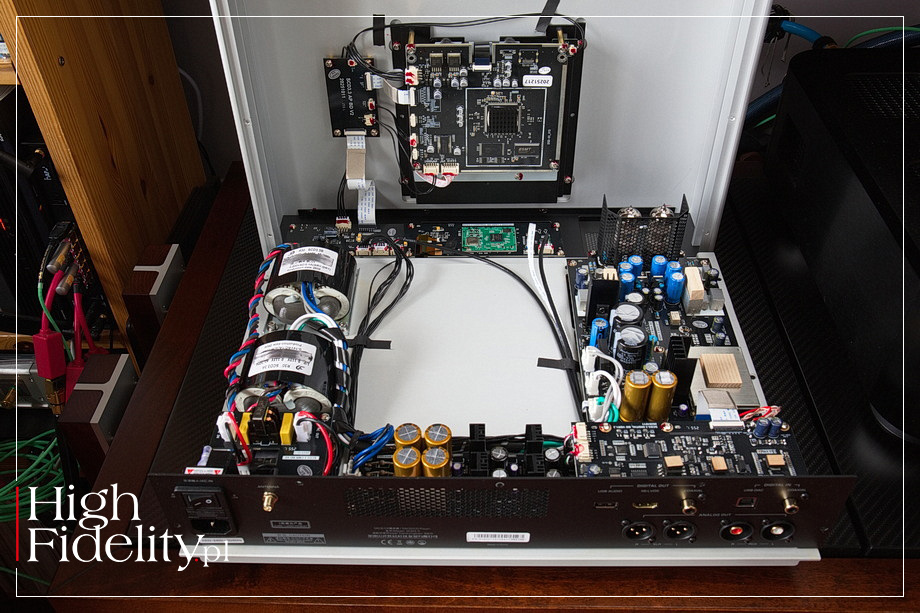
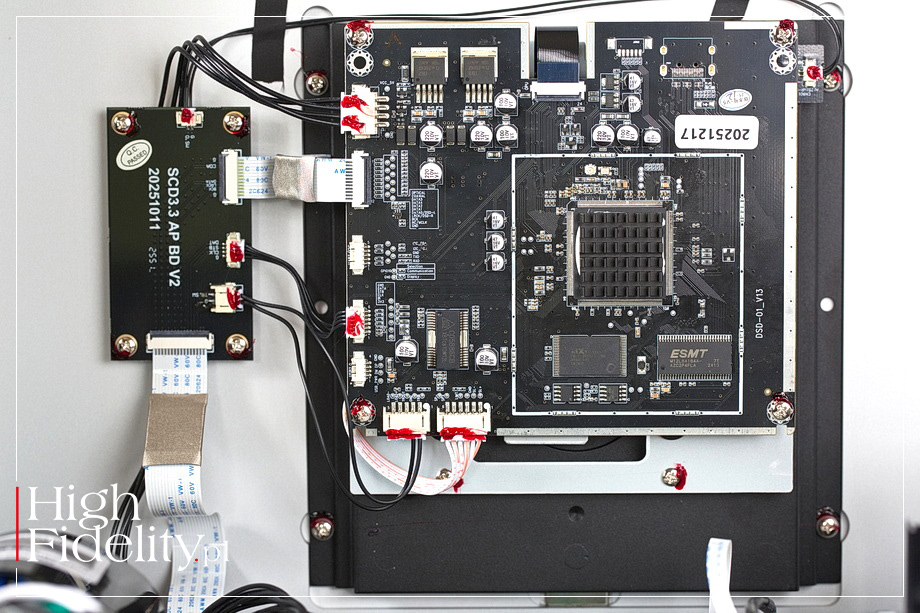
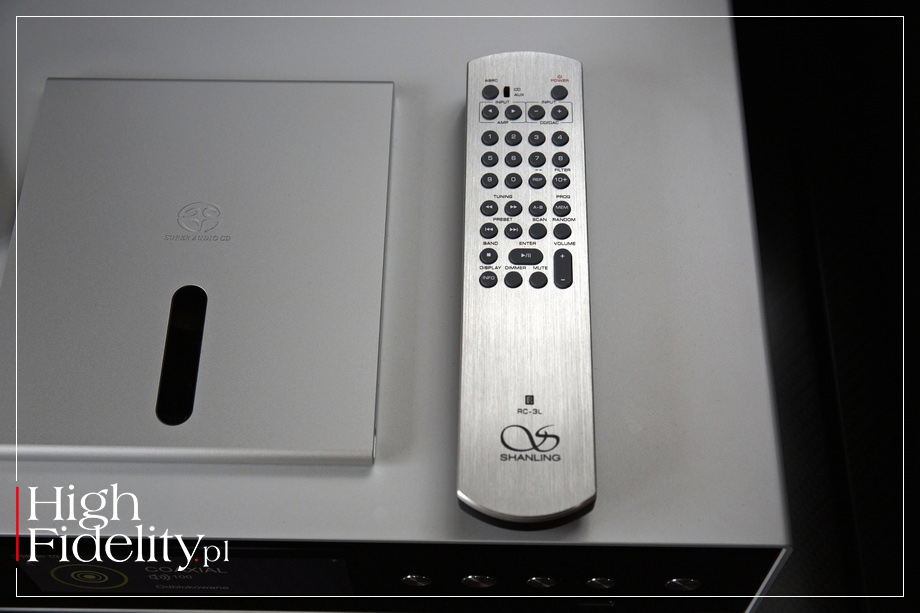
Equally important are digital outputs, namely: USB, I2S (HDMI), and RCA. Thanks to these, the device can function as a SACD and CD transport. The first two offer a “native” DSD signal, while the RCA output provides DSD via DoP. This means you can use an external D/A converter in the future, with the SCD3.3 serving as a digital disc transport. Fun fact - via the USB output, you can rip a CD. The player features a built-in Bluetooth 5.0, though unfortunately it’s one-way. This means you can send a signal to it from an external source, but you can’t connect headphones to it. However, it does offer some good codecs, such as LDAC, aptX, and aptX HD, plus the classic AAC and SBC. It does not, however, support lossless codecs. The digital and analog sections of the device feature a balanced design, so it includes both RCA and XLR analog outputs. What’s more, you can adjust the volume. We can control it either with the remote control, via the touchscreen display, using the physical buttons on the front panel, or from a smartphone/tablet using the Eddict Player app. This last option is particularly interesting. When I first saw photos of the tested player, my attention was drawn to the album covers displayed on its front panel. I thought, “It is obvious, that I am mistaken” and to confirm it I opened the file player’s page. I wasn’t mistaken at all. As we mentioned, the device also plays music via Bluetooth, as well as from a USB drive connected to the front panel. It retrieves the album art from these sources. Unfortunately, we can’t display CD-Text, even though this technology is actually meant for us (sorry for the “us”) - us cavemen. Small logos (too small) indicate the type of disc being played. Unfortunately, with MQA, we only know whether it’s a studio-certified file (blue LED) or not (green). I haven’t found any information anywhere on how to view the parameters of an MAQ-CD being played. However, we can select Polish as the menu language, change the digital filter to NOS (Non-Oversampling), adjust the tone, volume, and many other settings. TECHNOLOGY • The remote control is nearly identical to the one included with Ayon Audio players. For a long time, these brands were linked through OEM production by Shanling. As you can see, the years-long separation didn’t stop the Chinese manufacturer from picking up a few tricks. Both companies share the same drive mechanism. It features Sanyo optics but is controlled by custom software running on an Ingenic X2000 processor (Ayon uses the SUOS platform). This drive mechanism generally performs very well, but it’s not exactly quiet. Nevertheless, the one in the Shanling is quieter. I also tested its performance using the CD-Check disc (more → HERE). It turns out that the drive performs better in this unit than in the Ayon. The device played all tracks flawlessly, just like the Philips CD-Pro 2 drives and their newer versions. The disc is pressed down by a small disc, and in the SCD3.3, this disc is custom-made from brass and wood. The transport outputs a DSD signal from SACDs and a PCM signal from CDs. This signal is sent to a programmable FPGA, in which the designers have programmed the digital filters and the D/A converter. The D/A converter is discrete, meaning it is composed of individual resistors. It consists of 212 ultra-precise components, each with a tolerance of 0.01%. This is already the second generation of Shanling’s R2R DAC, a 24-bit circuit utilizing a 19-bit ladder with 4-bit compensation. 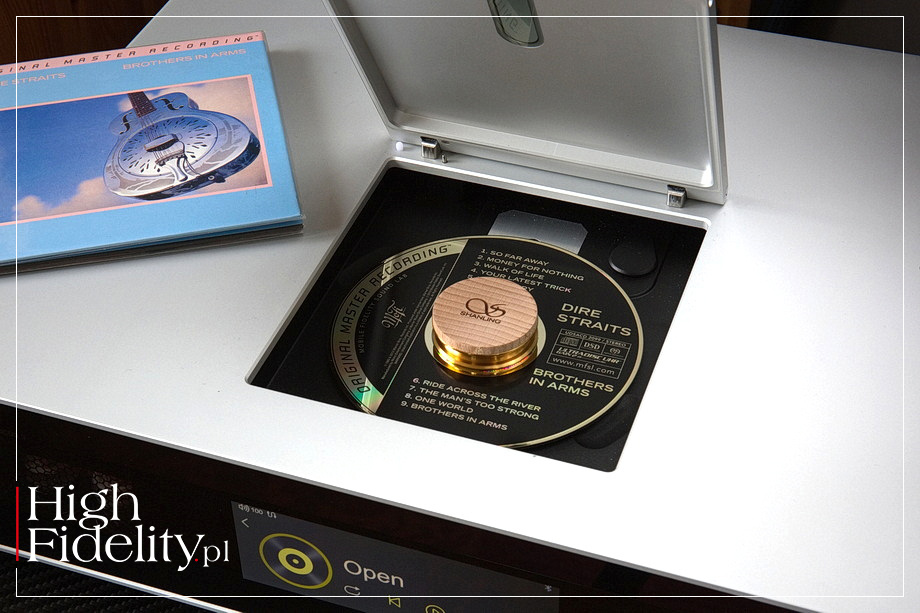
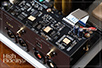
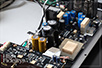
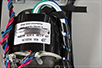
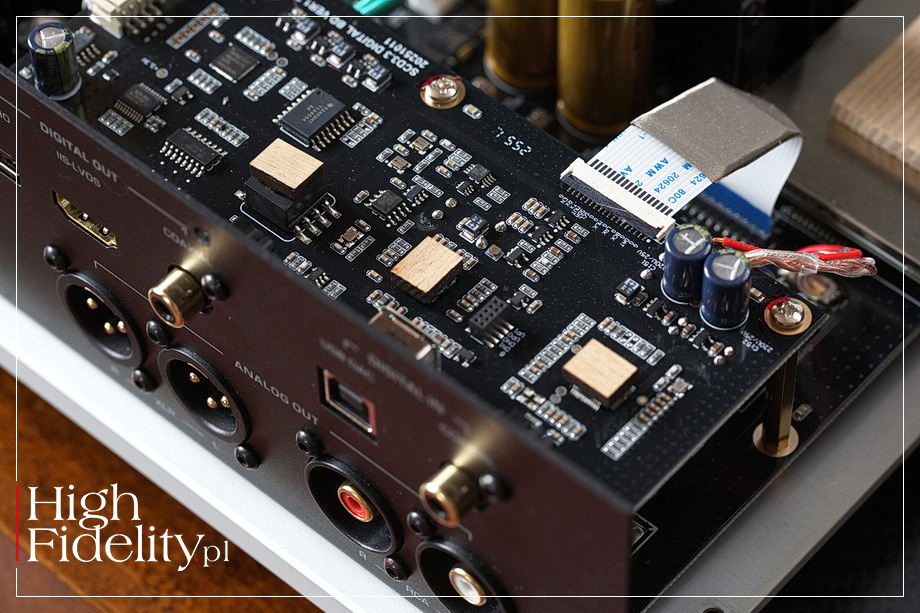
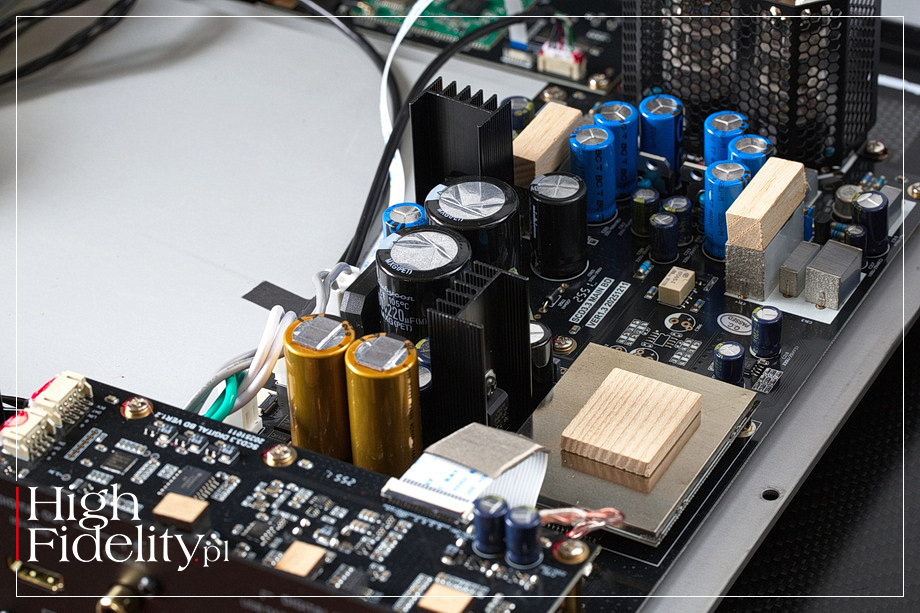
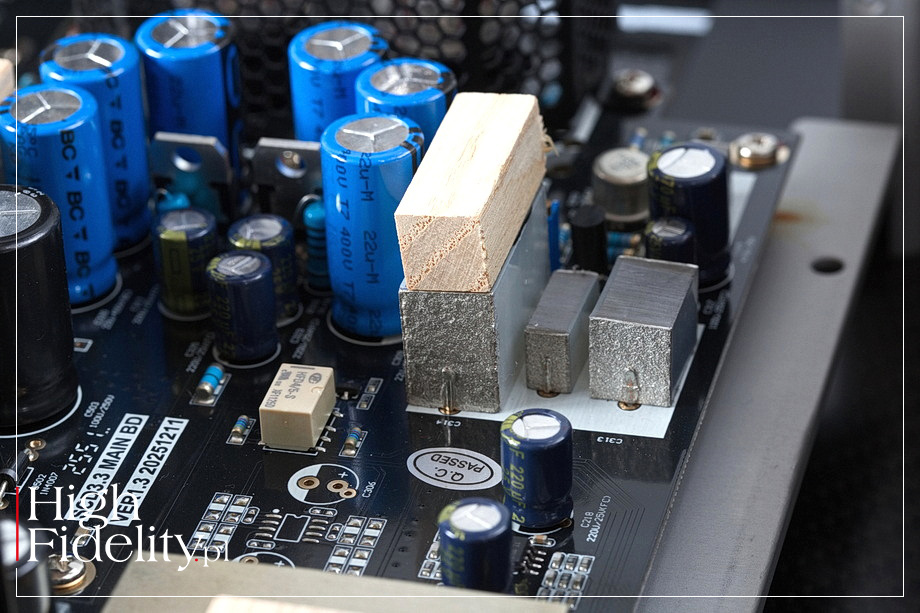
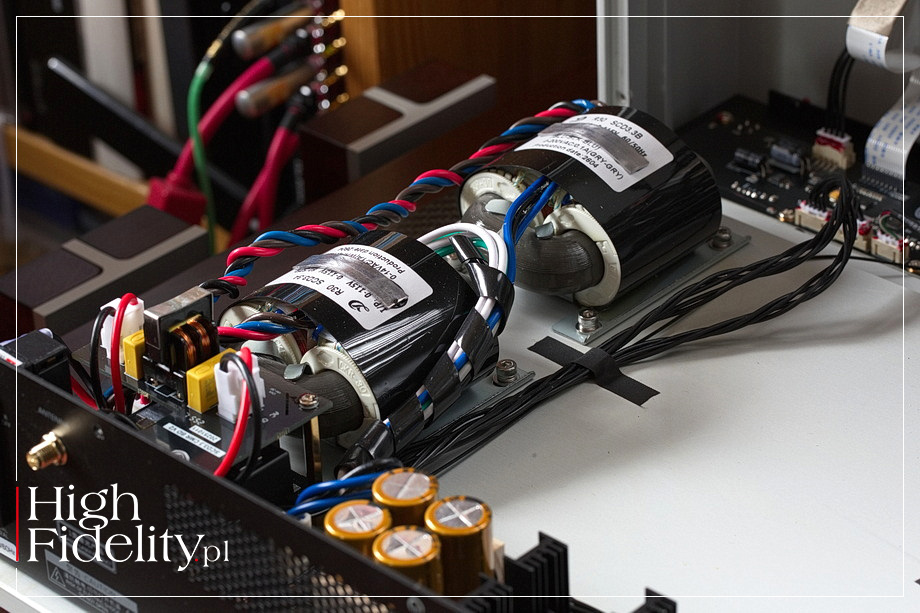
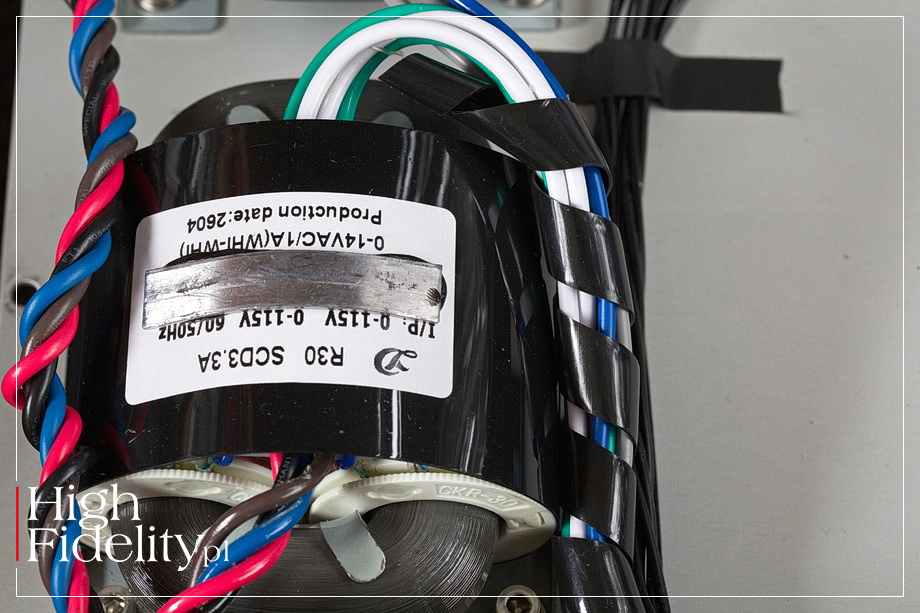
Throughout the circuit, including the power supply, manufacturer used high-end passive components, such as ELNA, Nichicon Fine Gold, Rubycon, and Panasonic capacitors, as well as two high-quality R-core power transformers. These have a power rating of 66 W. The tubes are manufactured in China by the Beijing Electron Tube Factory. As the manufacturer notes, they are carefully selected and matched. And there’s something else this manufacturer also uses in its cheaper products, though not on the same scale as here. On selected capacitors and selected integrated circuits, he attaches small wooden blocks, and on the transformers, strips of mu-metal. I’ve seen this a few times, and it’s a genuine way of “tuning” the device. It’s expensive - it’s handcrafted - but, as you can see, it’s important to this manufacturer. If you’re going to be an audiophile, go all out… The chassis weighs 10 kg and is made of thick aluminum. The bottom panel is a full 9.5 mm thick and provides a rigid base for the electronics; the transport mechanism is bolted to the top panel. The whole unit stands on four classic feet. The unit is truly impressive. |
▓ SOUND HOW WE LISTENED • Shanling SCD3.3 player was tested in the HIGH FIDELITY reference system. It was compared to the Ayon Audio CD-35 HF Edition SACD player (SACD, MQA-CD, and CDs) and the Sforzato DSP-05EX file player with the PMC-05EX clock. The test involved comparing AAA/BBB/AAA and BBB/AAA/BB, with known A and B. 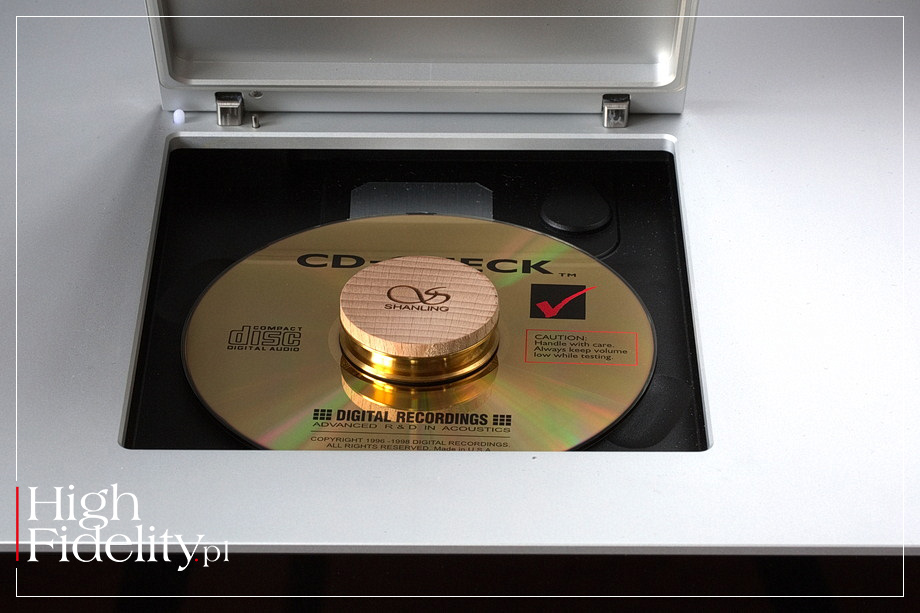
In my system, I use only unbalanced connections, which I consider to be superior. That was the case this time as well - the signal was transmitted to the preamplifier via Crystal Cable Absolute Dream cables. The player was powered by an Acrolink Mexcel 7N-PC9500 cable and sent the signal to the Ayon Audio Spheris Evo line preamplifier, and from there to the Soulution 710 power amplifier and Harbeth M40.1 speakers. The unit sat on the top shelf of a Finite Elemente Pagode Edition Mk II table, next to the Ayon Audio player. I set the output voltage to the maximum of 2.49 V (0 dB on the display). » RECORDINGS USED IN THE TEST ⸜ a selection
• DIRE STRAITS, Brothers in Arms, Vertigo/Mobile Fidelity Sound Lab UDSACD 2099, seria: Original Master Recording, Ultradisc UHR, SACD/CD ⸜ 1985/2013. ONE OF THE FUNDAMENTAL PRINCIPLES of testing - any kind of testing - is to compare the test subject to a reference. These can be measurements - that is, the best measurements that have been obtained - or they can be organoleptic comparisons. In the audio industry, a method has been developed that involves “comparison listening,” that is, listening to the device under test in the presence of a reference product. This method yields repeatable and reliable results. 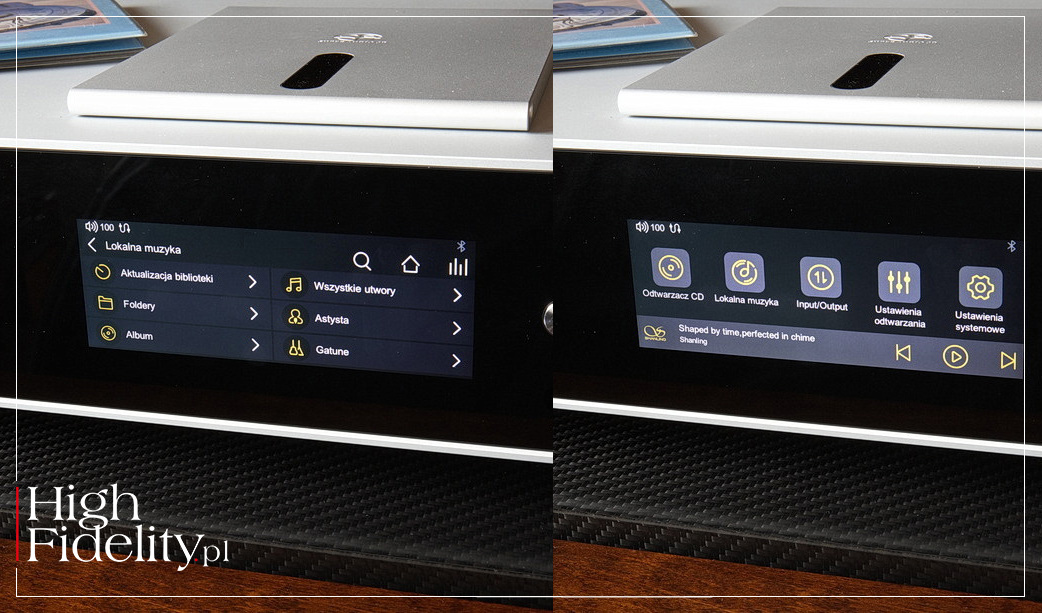
While listening to the Shanling player in my system, the differences between it and the Ayon Audio player were obvious and even quite significant - both in quantitative and qualitative terms. In short, these are devices that differ from one another in sound and class. On the other hand, however, as I switched yet another disc between the SCD3. 3 and the CD-35 HF Edition, it dawned on me that these are differences which, in a less resolving system, that is, one where we don’t pay fifty thousand zlotys or more for cables (just to give the haters something to write about), will be blurred. And that’s because, although so different, these two devices share a common approach to sound presentation. This approach involves a gentle entry into the recording, without any jarring anomalies in the attack, but also with a strong, distinct treble. The Chinese player sounds decisive and sweeping, because when the tambourine comes in from the left in ˻ 4 The Gift, a track from MARK HOLLIS’s album, it’s powerful and delicately overdriven - just as it should be. It was similar earlier with the drums on the DIRE STRAITS album Brothers in Arms. Even the opening track, the rhythmic ˻ 1 So Far Away, left an impression on me with its dynamics and energy. And when, in the opening track of WES MONTGOMERY’s album Smokin’ At The Half Note, ˻ 1 No Blues, after a moment, the band leader’s powerful guitar enters the left channel, the Shanling reproduced it clearly and powerfully. So there is a soft, expressive sound with high energy. When we listen to the vocals, it also becomes clear that this is a sound that can be described as warm or even tube-like. I get the impression that this was probably the intention of its creators. There’s no disorder or instability here - just the realization of a specific vision; at least, that’s how I perceive it. The albums I’m referring to had their own distinct character and were well-differentiated, yet they were united by a hint of “extra punch.” This “boost” consists of the fact that the mid-bass and lower midrange are emphasized. Not in an exaggerated way, but just enough so that both Hollis’s vocals and Montgomery’s guitar sound big and are slightly pushed to the foreground. Interestingly, Knopfler’s vocals were further away than with the reference player. What could this mean? I interpret it this way: the player from China presents a big sound with large phantom images. But only those that are close to us. The ones that are more deeply embedded in the mix, as on the Dire Straits album, are spatially balanced with the other instruments at the back of the soundstage. ▲ The clamp YOU DON'T HAVE TO believe what you're reading right now, as I don't believe it myself. However, I hear what I hear, and I can't just brush it off. The clamp placed on the disc changes the sound. I thought I knew this already - in my Ancient Audio Lektor Air V-Edition Player, I replaced the stock clamp with a “Spider” from Electrocompaniet; more → HERE. And yet, this time the change seemed less intrusive, simply more subtle. 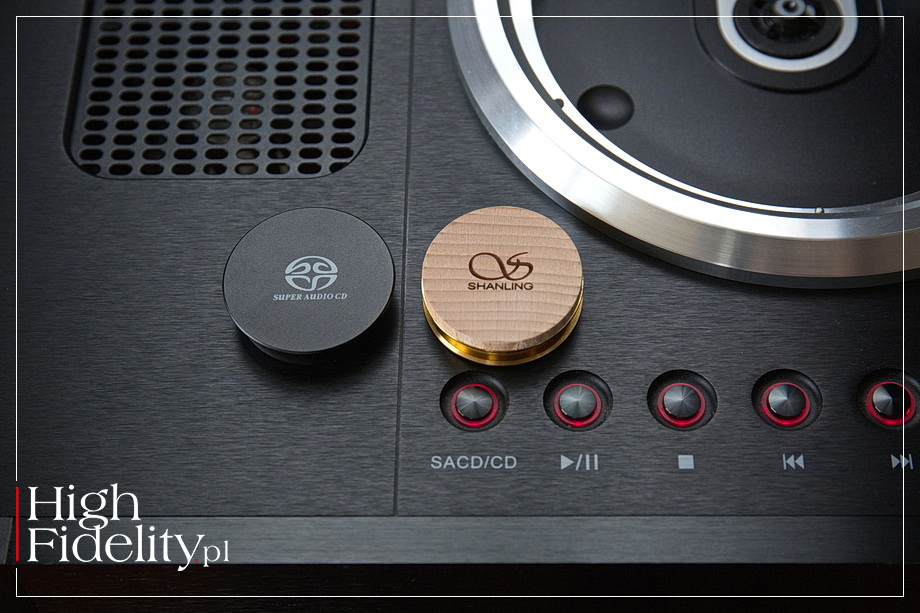
And yet, the Shanling clamp causes the data to be read from the disc and transmitted outside the mechanism in a slightly different way, as I understand it. Even though the data that’s read and processed will be identical, there seems to be a difference in the dynamic transmission. The sound is more detailed and slightly more pronounced with it. Ayon Audio’s proprietary clamp makes the sound slightly more vivid and softer. The Shanling clamp slightly hardens the attack of the bass and midrange, leaving less room for spatial depth. 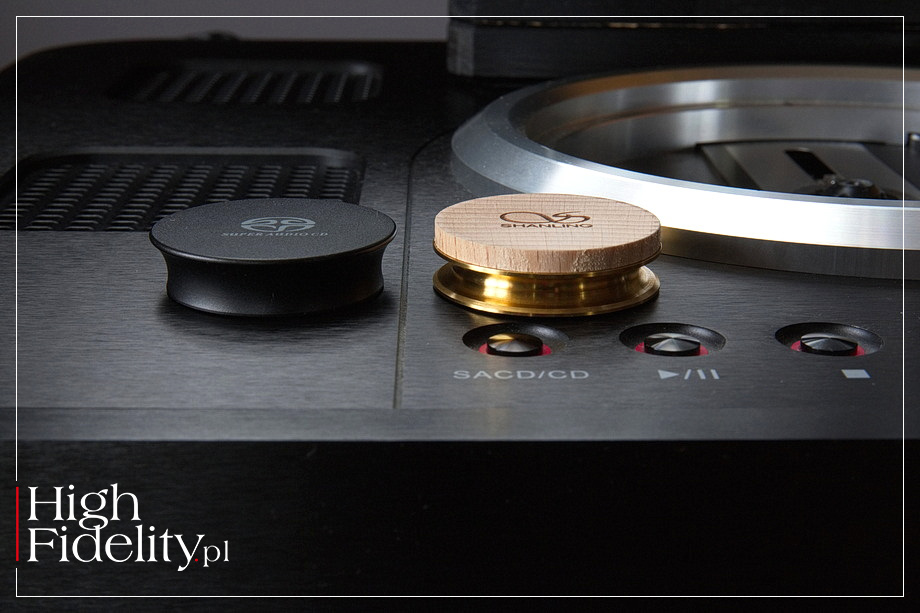
So it’s not as if one is excellent and the other is useless. However, since they change the sound of the albums enough to be worth mentioning, you should be aware that you can slightly modify the sound of either the Shanling or the Ayon by replacing this one component. Provided, of course, that it’s available as an “accessory” - you’ll have to check that for yourselves. And you don’t have to take my word for it - after all, you can try it out for yourself, right? ● CD3.3 SO IT PLAYS WITH MOMENTUM, emphasizing the direct sound. The reverberations are therefore somewhat masked by this quality. There isn’t a hint of thinness or dryness here - it’s not that type of sound - but we do know that these firm sound sources have a stronger “center” than what’s happening around them. So I’m talking about a sound with high energy concentrated at specific points, that is, the places from which the sound is emitted. All of this takes place in a golden halo. I think, however, that this is the center around which our impressions will coalesce as we listen to subsequent albums. In the sense that it is a sound that is unambiguously warm in terms of texture but also open at the upper end. Being open to what’s happening there gives the sound energy, thanks to which ARNE DOMNÉRUS’s alto saxophone, Lars Erstrand’s vibraphone, and Egil Johansen’s drums from the album Jazz at the Panwshop - all of these elements of the recording, positioned high in the frequency range - sounded powerful and distinct. And yet, my thoughts kept returning to this: the Shanling plays in such a pleasant, organic way that we focus more on what’s happening in the midrange. That’s where the vocals operate, where the piano is heard, and where the bass harmonics resonate. The bass is powerful and dense. It also has - I’ll say it again - an emphasized upper end, which makes it seem prominent and “present,” regardless of the type of recording. It isn’t particularly deep. In this respect, both the reference player and other high-end players, such as those from Accuphase, are better. As it happens, though, I didn’t really miss it. In a direct comparison, I heard the difference - I hesitated for a moment - but after just a few minutes that impression faded, and what remained was the thought that it all “sounds great,” that “it sounds so pleasant.” And the better the album, the better the perception. Not because the worse it is, the worse it sounds. It’s a paradox, but not the only one in audio. The point is that when listening to better recordings or switching from CD to SACD (I compared several releases with separate discs), we get more in return. However, when we listen to mainstream music, or simply music conceived in a different way than “purist jazz” - for example, albums by BLUR or OASIS - the sound won’t be worse due to the player’s intentional design. In fact, in some respects, it will be even cooler than those polished releases on Crystal Disc or SHM-SACD. It will, in fact, be better than we might expect. The high rhythmic precision achieved by the unit under review drives its performance, so rock and electronic music will sound fantastic. They’ll be rich and warm, yet open, without any blurring in the upper midrange or treble. And then there are MQA-CDs. Seriously, it really does make a difference. With the Shanling, you can hear the difference between standard releases and Master Quality Authenticated releases. The latter are more powerful, more dynamic, more selective, and faster. Some of the “warmth” we get from CDs and SACDs disappears a bit, but we also get more detail. It’s as if MQA-CDs open up yet another layer, perhaps not the most crucial one, perhaps secondary, but still important for a better understanding of the story. ▒ Summary SHANLING CD3.3 PLAYER strikes me as an excellent bridge between “entry-level” digital players, that is, those priced up to ten thousand PLN, and those costing forty and fifty thousand zlotys. It fills the gap that used to exist there. And it certainly doesn’t sound like it’s just a “stopgap.” This device performs in an exceptionally pleasant, refined way and has an unmistakably “tube-like” character. It is naturally expressive and possesses a natural softness of sound. But it also has an open, powerful treble, as well as a pronounced transition between the bass and midrange. This results in a big sound and high subjective dynamics. And it doesn’t matter whether it’s a DSD recording from the single-layer SACD by the TSUYOSHI YAMAMOTO TRIO entitled: Misty. Live At Jazz Is, or the cool, well-conceived, and successful reissue of AMERICA’s album Homecoming - the effect is the same. 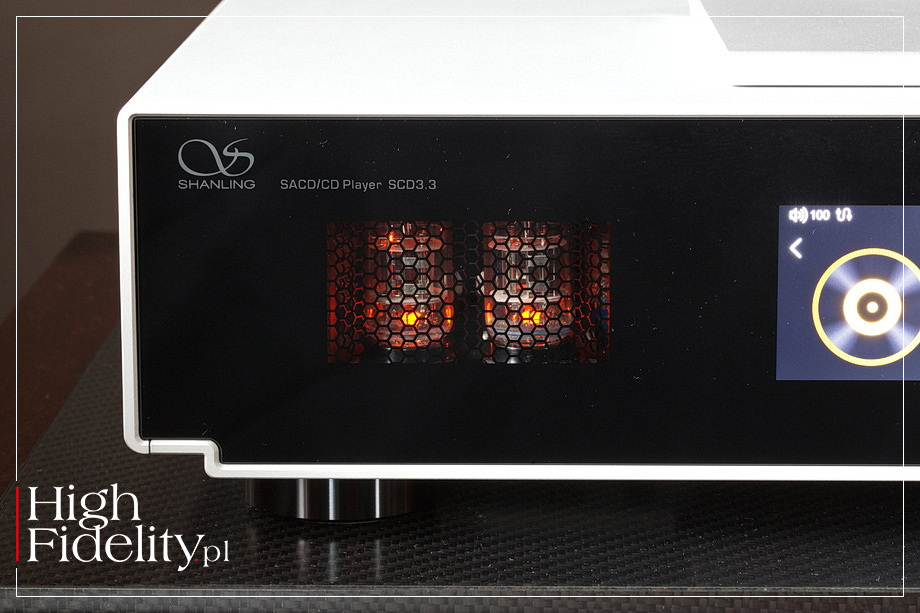
At the same time, the Shanling is very versatile in terms of functionality; we can use it in various ways, and each one will be really good. Even the Bluetooth connection won’t let us down. It is a crappy way to transmit audio, but it’s also a lot of fun. MADONNA’s track ˻ 16 So far awayL.E.S. Girl, which closes her latest album Confessions II, was romantic, almost seductive. It’s a soft, “tube-like” mix, but the player didn’t overdo it – it simply played it that way. This Chinese player will appeal to anyone who values class in sound but isn’t necessarily attached to reverberation, and wide and deep soundstages. All of that is present here, but it takes a back seat to what’s happening in the sound’s texture - how the bass drives it, how nicely the high frequencies sound. A great, really great player at a surprisingly low price for a high-end model ‖ WP ▒ Technical specifications (according to the manufacturer)
Output level: RCA 2.45 Vrms, XLR 4.9 Vrms |
 |


|
Reference system 2026 |
|
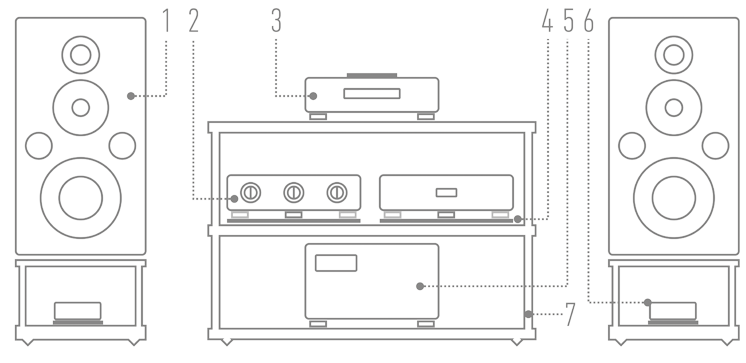 1) Loudspeakers: HARBETH M40.1 |REVIEW| 2) Line preamplifier: AYON AUDIO Spheris III Linestage |REVIEW| 3) Super Audio CD Player: AYON AUDIO CD-35 HF Edition No. 01/50 |REVIEW| 4) Stands (loudspeakers): ACOUSTIC REVIVE (custom) |ABOUT| 5) Power amplifier: SOULUTION 710 6) Loudspeaker filter: SPEC REAL-SOUND PROCESSOR RSP-AZ9EX (prototype) |REVIEW| 7) Hi-Fi rack: Hi-Fi rack: finite elemente MASTER REFERENCE PAGODE EDITION Mk II, more → HERE |
|

|
Cables Analog interconnect SACD Player - Line preamplifier: SILTECH Triple Crown (1 m) |ABOUT|» ANALOG INTERCONNECT Line preamplifier → Power amplifier: Siltech ROYAL SINLGE CROWN RCA; review → HERE Speaker cable: SILTECH Triple Crown (2.5 m) |ABOUT| |

|
AC Power Power cable | Mains Power Distribution Block - SACD Player: SILTECH Triple CrownPower (2 m) |ARTICLE| » POWER CABLE Mains Power Distribution Block → Line preamplifier: Acoustic Revive ABSOLUTE-POWER CORD, review → HERE » POWER CABLE Mains Power Distribution Block → Power amplifier: Acoustic Revive ABSOLUTE-POWER CORD, review → HERE Power cable | Power Receptacle - Mains Power Distribution Block: ACROLINK Mexcel 7N-PC9500 (2 m) |ARTICLE| Power Receptacle: Acoustic Revive RTP-4eu ULTIMATE |REVIEW| » ANTI-VIBRATION PLATFORM under Acoustic Revive RTP-4eu ULTIMATE: Graphite Audio CLASSIC 100 ULTRA, review → HERE Power Supply Conditioner: Acoustic Revive RPC-1 |REVIEW| Power Supply Conditioner: Acoustic Revive RAS-14 Triple-C |REVIEW| Passive filter EMI/RFI: VERICTUM Block |REVIEW| |

|
Anti-vibration Speaker stands: ACOUSTIC REVIVE (custom)Hi-Fi rack: finite elemente MASTER REFERENCE PAGODE EDITION Mk II, more → HERE Anti-vibration platforms: ACOUSTIC REVIVE RAF-48H |ARTICLE| » ANTI-VIBRATIONAL FEET: |

|
Analogue Phono preamplifier: Phono cartridges:
Clamp: PATHE WINGS Titanium PW-Ti 770 | Limited Edition Record mats:
|

|
Headphones » HEADPHONE AMPLIFIER: Leben CS-600X, review → HEREHeadphones: Headphone Cables: Forza AudioWorks NOIR HYBRID HPC |