


|
DIGITAL TO ANALOG CONVERTER DESTINATION AUDIO
Manufacturer: DESTINATION AUDIO POLAND |

 |
 |
 |
|
Review
text by WOJCIECH PACUŁA |

|
No 268 September 1, 2026 |
|
˻ PREMIERE REVIEW ˼
WE’VE HEARD AND READ ABOUT IT many times. And yet this story, this founding myth, still resonates strongly and continues to shape our view of audio companies that draw on it. Apparently, it triggers something in us that we aren’t even aware exists. Destination Audio is one of the audio manufacturers that benefits from it. 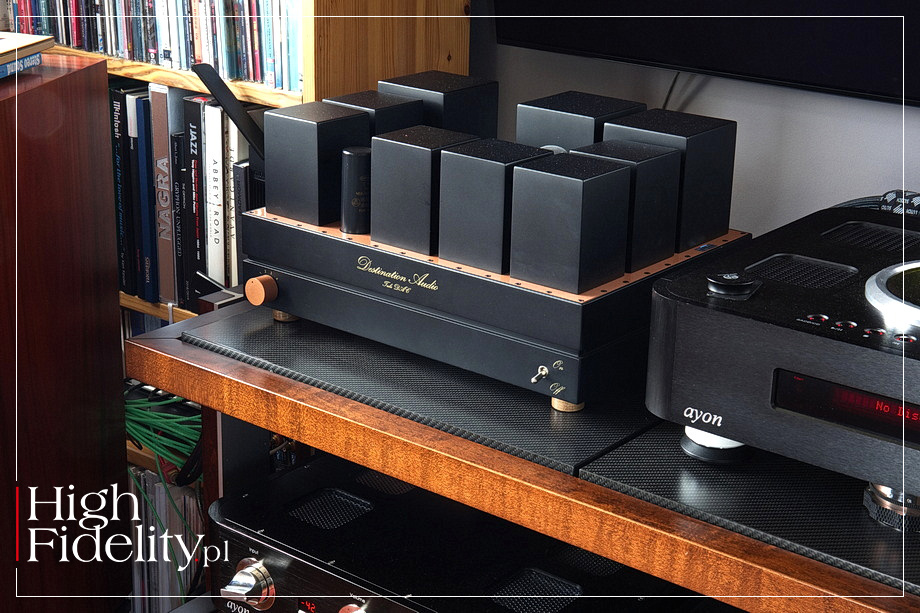
The company was founded by Mr. Włodzimierz Wiśniewski out of, as we read, “a fascination with the magic of directly heated triodes, and in particular the rare Type 45 tube.” Having once owned a top-of-the-line audio and home theater system, he was left with nothing at a certain point in his life as a result of an illness. To recreate that experience, he began to explore the secrets of vacuum tubes and horn-loaded speakers, a direction he chose, drawing on his own knowledge and seeking help from other designers. The company’s U.S. website states:
Our dream was audacious yet simple - to forge a loudspeaker that makes no compromises on sound quality. Our goal was to achieve a reference-level sound for any genre of music, rendering the need to choose obsolete. We envisioned a loudspeaker capable of filling both intimate spaces and grand living rooms with pure, enveloping music, powered by as little as 2W amplifiers.
⸜ Destination Audio: Where Your Audiophile Journey Culminates, → DESTINATIONAUDIOUSA.com, accessed: 20.07.2026. After more than 10 years of experimentation, the first product was developed: the Vista horn speakers (2013). Unveiled at the Audio Video Show in Warsaw, it is a three-way speaker system with a sensitivity of 105 dB. It takes the team five to six months to build a single pair of these speakers from specially laminated layers of wood. This model remains part of Destination Audio’s lineup to this day. In 2017–2018, the company gained some recognition in the U.S., at least for such a niche and small manufacturer. It was noticed at the AXPONA and the California Audio Show. The owner of Destination Audio has lived in the United States since he was 24; that’s also where he registered his company, and his first presentation at AXPONA in 2017 already brought him some recognition. In the U.S., everyone calls him Sam instead of Włodzimierz, because when he arrived in the States as a young man, no one could pronounce his name, so he was given a new name: Sam. And he’s kept it till this day. 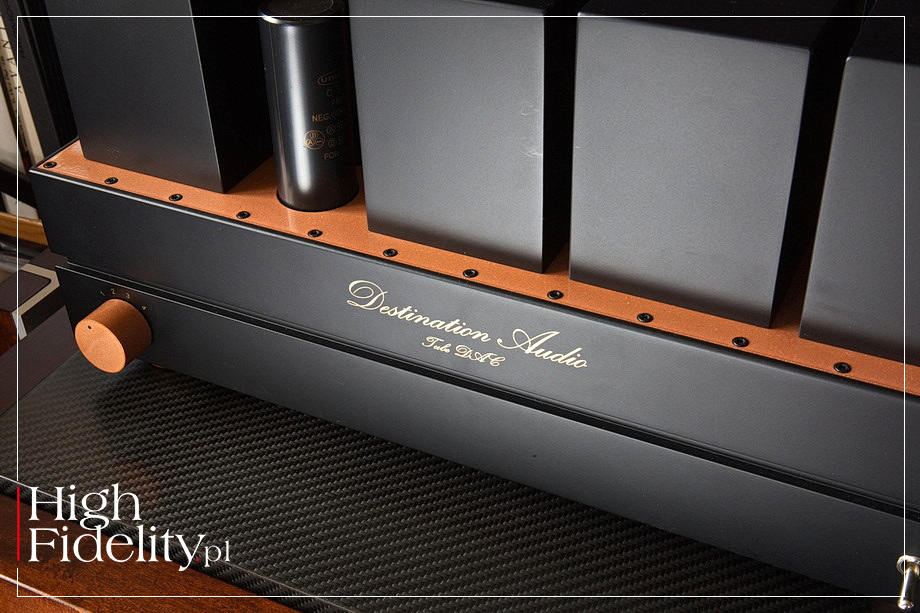
It was in 2018 that the Nika model (named after his firstborn daughter, Weronika) was created. These are three-way speakers, designed as a response to requests for smaller designs, while still maintaining high efficiency (99 dB). Their dimensions were reduced by about 70% compared to the Vista. In 2022, the Ruby bookshelf speaker model made its debut, designed with even smaller rooms in mind. At the same time as speaker lineup, Destination Audio worked on its electronics line. The tube-based monaural power amplifiers, known as the 45 Tube Power Amplifiers, were designed and launched between 2013 and 2015, and their official debut took place at the Audio Show in Warsaw in November 2015. In the following years, Destination Audio expanded its portfolio to include powerful, two-piece tube amplifiers, the WE417A phono preamplifier, and the GM70 integrated amplifier based on broadcast triodes. Its latest product is the digital-to-analog converter ECC40 Tube DAC. Its unbalanced version was released in 2024, and the balanced version, the one under review, a year later. ▲ A few simple words WŁODZIMIERZ ‘SAM’ WIŚNIEWSKI THE STORY OF MY DAC began in 2014. Of course, it wasn’t the current DAC, but its first, rather distant predecessor. Back then, I designed a system based on two AD1860 chips operating in a dual-mono configuration. Those were the days when PCM and a USB input were more than enough for what I expected from a digital source. 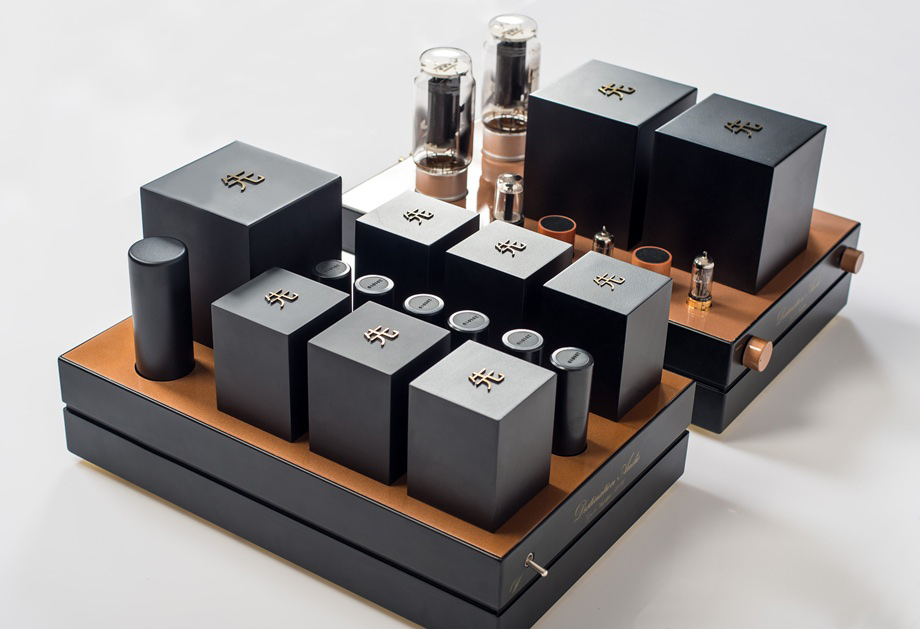
‖ GM70 power amplifiers • photo courtesy of Destination Audio The digital PCB was designed for me by Mr. Waldek, who at the time was also collaborating with Łukasz Fikus and manufacturing DAC boards for Lampizator. This was done with Łukasz’s knowledge and consent. Several subsequent versions and prototypes were developed before we arrived at a solution that I was very satisfied with in terms of sound quality. We showcased the finished DAC in 2015 at the Audio Video Show in Warsaw, held at the National Stadium. It was part of the Destination Audio system, and it was then that our system received the Best of Show award. Later, for many years, I actually had no plans to develop the DAC as a standalone product. Interestingly, my customers kept coming back to this topic. People who bought speakers, amplifiers, or preamplifiers from me would ask why I didn’t also develop a DAC offering a similar sonic character to the other Destination Audio devices. I resisted this for a long time, also for a very simple reason - by nature I’m an analog person, not a digital one :) I feel much closer to tubes, transformers, analog circuits, vinyl, and tape than to the world of digital circuits, formats, and ever-changing standards. That’s why I’ve always treated the digital part primarily as a tool designed to deliver the signal as well as possible to the part of the device I know best and to which I devote the most attention, the analog section. Over time, however, the requirements for DACs have changed significantly. PCM and a single USB input were no longer enough. DSD emerged, along with ever-higher sampling rates, and customers expected USB, S/PDIF, AES/EBU, or I²S. So if I were to return to designing a DAC, it had to be a DAC designed with current expectations in mind. So in 2025, the idea arose for a joint project with Łukasz Fikus. He designed a circuit board, and I worked on this solution for some time. Ultimately, however, it turned out that our design approaches and assumptions regarding this specific project differed, which is why we did not put the joint DAC into production. We parted ways amicably, and I decided to continue developing my own concept and look for a digital solution that would best suit my analog circuit and my sonic goals. 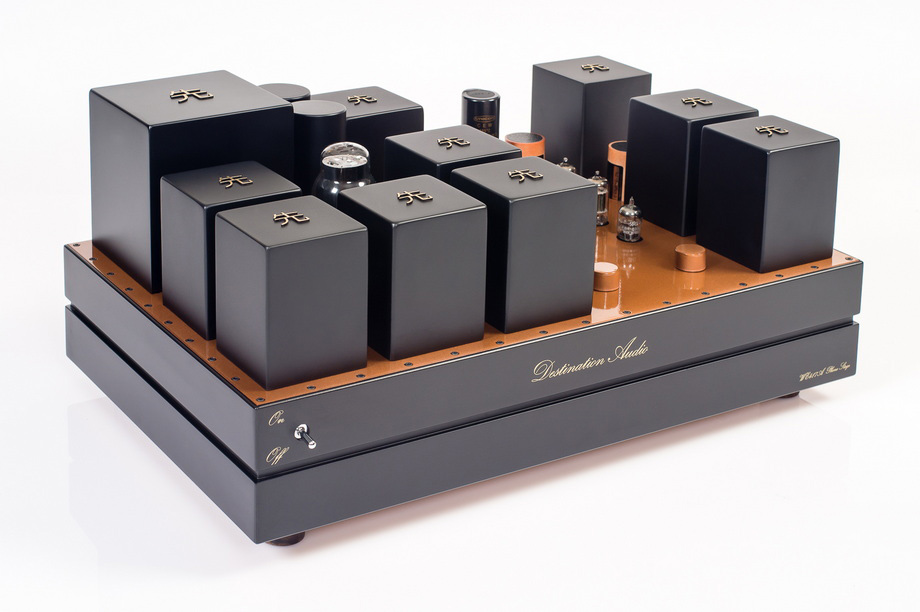
‖ DAC’s aesthetics resembles Destination Audio Phono • photo courtesy of Destination Audio I want to take this opportunity to mention one more thing that’s very important to me personally. Łukasz and I have known each other and have been friends since 2013. Over the years, we’ve organized several Audio Show presentations together, both in Poland and in the United States. Still, our friendship has long gone far beyond joint exhibitions or professional matters. Łukasz is one of those people in the audio world to whom I really owe a great deal. Many times, when I was working on my own designs and ran into a problem I couldn’t handle on my own, I could simply give him a call. He never kept his knowledge to himself and never refused to help. He helped me completely selflessly, suggested solutions, shared his experience, and often steered me in the right direction. So it would be dishonest of me to talk today about the development of Destination Audio without mentioning that, over the years, Łukasz also influenced my thinking about certain design solutions. Of course, each of us has gone our own way; everyone has their own philosophy of sound and their own ideas, but his knowledge, experience, and above all, his friendly and completely selfless help are very valuable to me. Let’s get back to the current DAC. Ultimately, partly due to my customers’ constant encouragement, I decided to build a new design. From the start, however, my goal wasn’t to create a device that would impress with a multitude of features or specifications. The digital section, of course, had to meet today’s requirements, but I was most interested in what happens next and what the sonic character would ultimately be. It’s worth noting here that the circuit board used in the current DAC is not a ready-made module purchased off the shelf, nor is it a solution found in other devices. It is designed and manufactured specifically for me, exclusively for Destination Audio, in accordance with the specifications of this particular DAC. It is, therefore, a bespoke solution dedicated to this device. 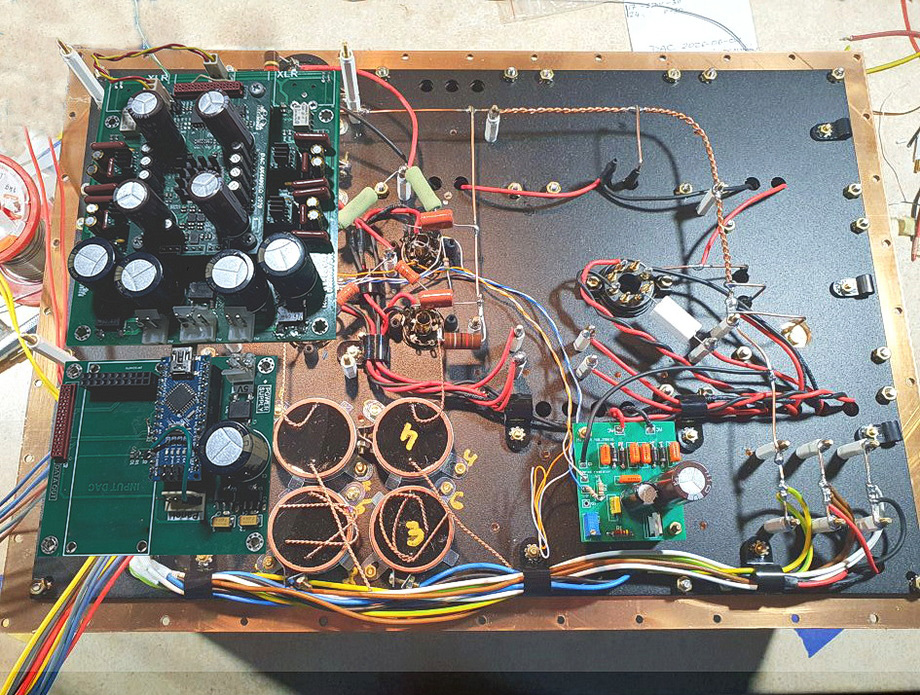
‖ The analog stage of the DAC is built in a similar way to classic tube amplifiers using point-to-point assembly. • Photo courtesy of Destination Audio For me, the most important thing was that I could have the digital section custom-designed to meet my specific needs, and then integrate it with my own design for the analog section, the power supply, and the entire output stage. This allowed me to treat the DAC as a single, coherent whole. The tube circuit, on the other hand, is based on a design I had already used in my previous DAC. It’s relatively simple, with the shortest possible signal path. This time, however, I was able to use much better components, transformers, and power supply solutions. My approach to building equipment isn’t based solely on designing according to specifications. Of course, technical correctness and specifications are the foundation; without them, there’s no point in even starting. But later on, I spend a great deal of time listening and selecting individual components. That said, I don’t believe in a single “magical” capacitor, resistor, transformer, or tube that will produce good sound on its own. I’m more interested in how all these components work together. Changing a single component can shift the balance of the entire device, and then sometimes you have to go back and adjust another part of the circuit. So it’s more about building the sound structure step by step and finding the right harmony between the individual components than following a single, specific formula. As for the sound, though, I knew right from the start what I was looking for. I like a dense, organic sound with a natural tonal quality, along with the right saturation, timbre, and texture. Dynamics, effortlessness, and the naturalness of the sound are also very important to me. I also wanted to bring the character of digital music playback as close as possible to what I value most in a good analog system. However, my intention was not to use tubes to artificially “warm up” or embellish the sound. Rather, I was concerned with preserving the information and the advantages of a good digital source, but presented in a natural way, without aggression and without losing the tone, saturation, or emotion contained in the music. 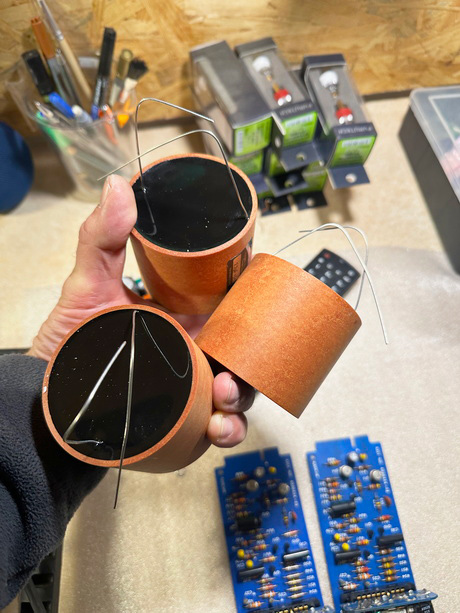
‖ High-quality Duelund capacitors were used in the output stage • Photo courtesy of Destination Audio As far as the design itself is concerned, there’s no great mystery to this DAC, nor any solution I’d like to present as revolutionary. The tube circuit is relatively simple, the signal path is short, but I place great emphasis on the power supply, transformers, tubes, and the quality and mutual compatibility of the other components. What took me the most time was getting all these elements to achieve the balance I was looking for. 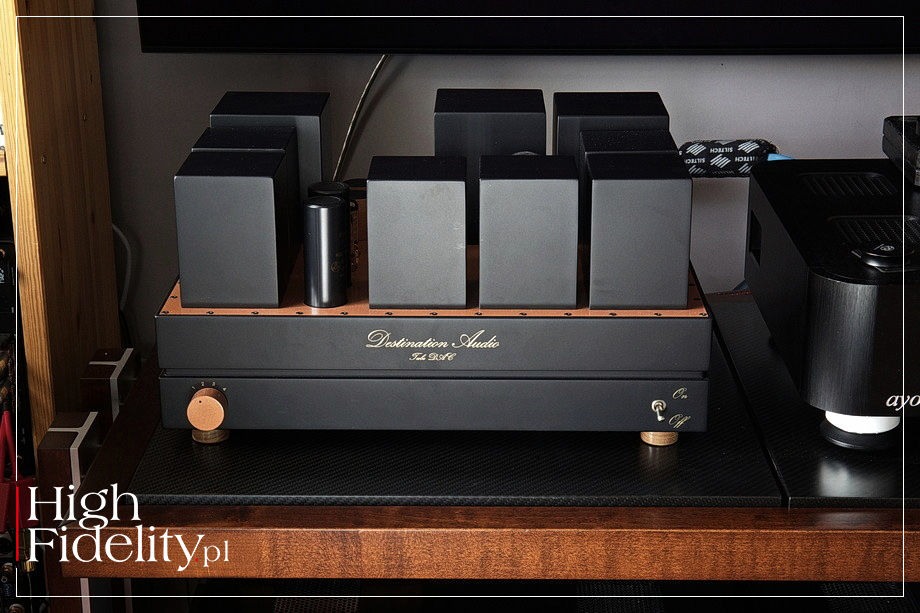
However, I don’t like to describe how my device sounds. When someone asks me about it, I usually reply, “Listen to it and tell me yourself.” As a designer, I can explain what I was looking for, what decisions I made, and why I made them. However, I prefer to leave the assessment of whether I succeeded in achieving the intended effect to the people who listen to this device. In the case of reviews, I believe all the more that this is the role of the reviewer, not the designer. ‖ WW |
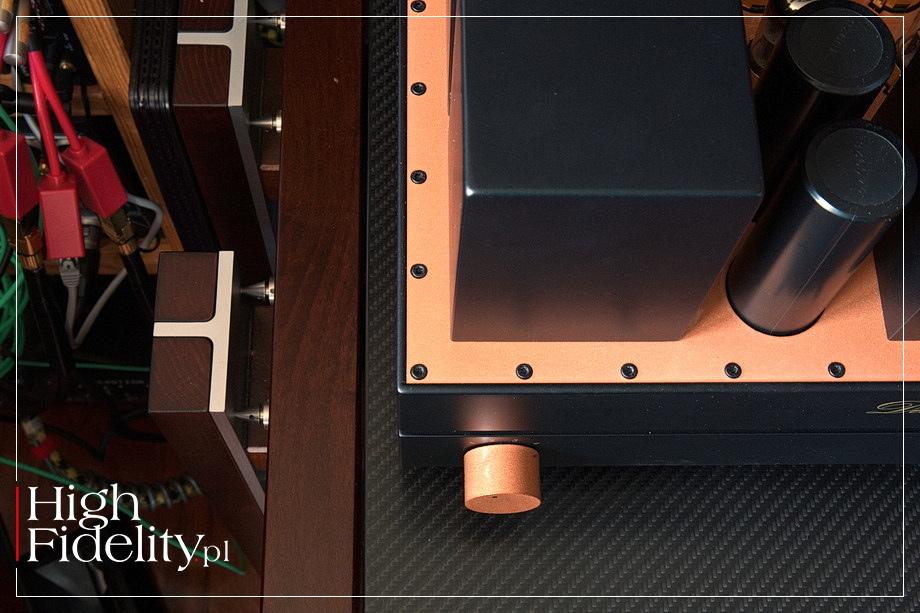
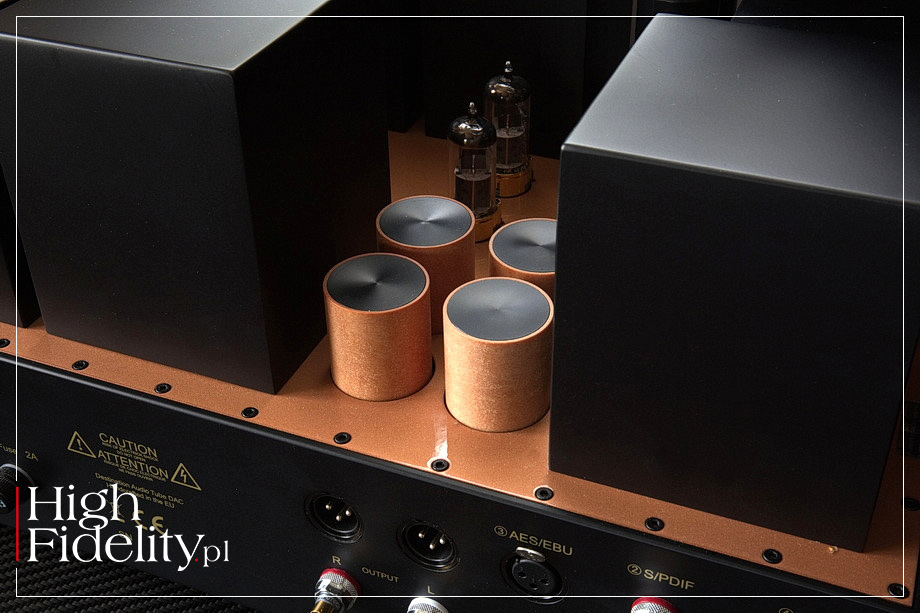
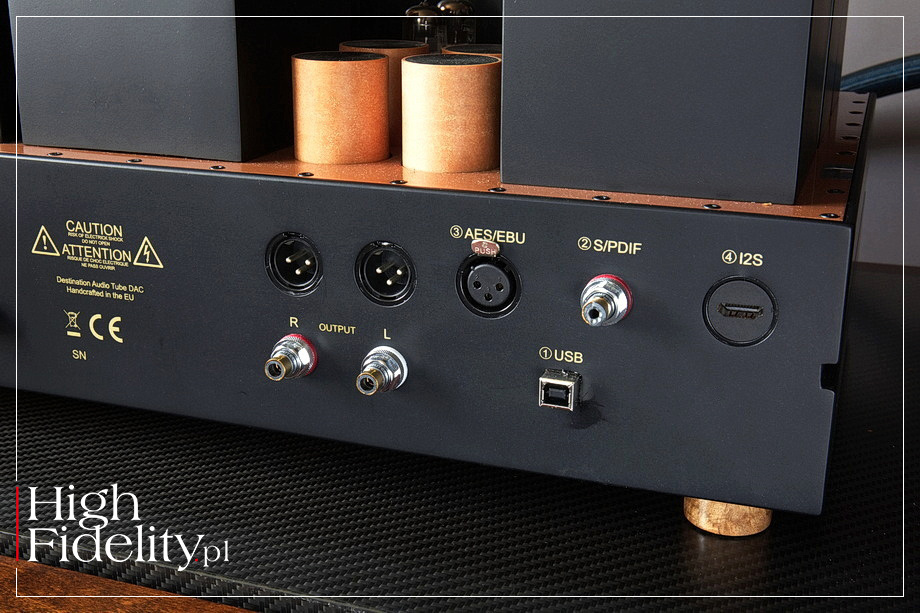
▒ ECC40 Tube DAC ALTHOUGH IT MAY NOT LOOK LIKE IT, the ECC40 Tube DAC is a digital-to-analog converter. Its design resembles products from the Japanese brand Audio Tekne, specifically its amplifiers and phono preamps; more → HERE. The roots of this approach to product design, however, run much deeper, and these ideas are based on Western Electric designs from the 1930s and 1940s, primarily amplifiers used for sound reproduction in movie theaters. Today, they can be linked to McIntosh’s Model 50W-1, a tube power amplifier introduced in 1949. This design was later developed by the American company for transistor-based devices as well, and its influence can be seen in QUAD amplifiers, such as the QUAD II, a 15-watt power amplifier introduced in 1953. What’s the idea? It involves moving not only the tubes but also the transformers, chokes, and capacitors to the exterior. This creates an almost monolithic design with the main components on the outside, forming an architectural structure that’s hard to pass by without noticing. This works brilliantly in the Tube DAC, and the impression is heightened by the fact that it is, after all, a digital-to-analog converter, and in the second decade of the 21st century, we tend to associate such devices with small, pretty, almost “candy-like” products from China. FEATURES • From a functional standpoint, however, it is a classic DAC, with digital inputs and analog outputs. There are four inputs: USB, S/PDIF RCA, AES/EBU, and I2S via the HDMI port; USB and I2S support PCM signals up to 768 kHz and DSD up to DSD512. The presence of HDMI indicates the ability to connect a file transport (or a CD and SACD player) bypassing the USB module. 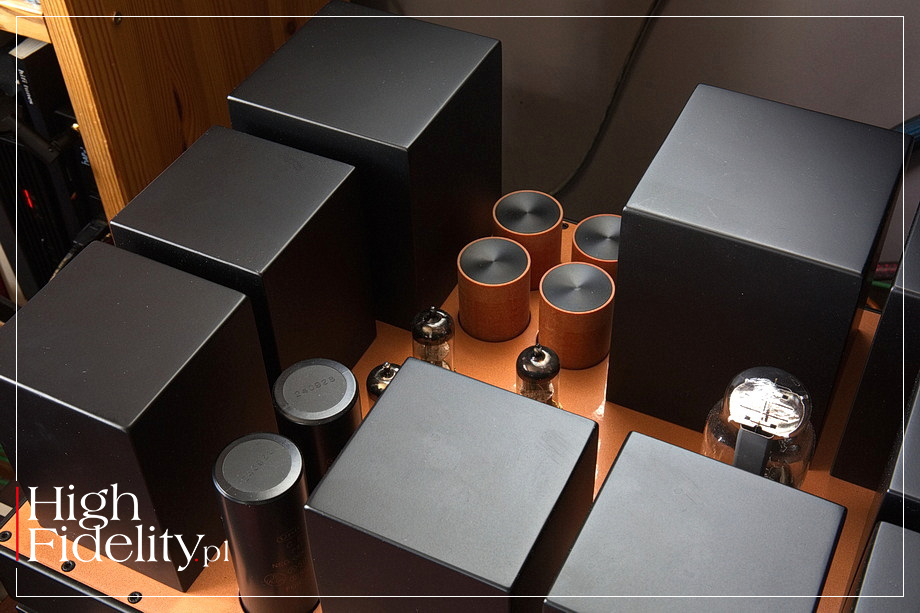
This connector also hints at something more, albeit quietly: at its core, the project had a lot in common with Łukasz Fikus, the head of Lampizator. In his flagship products, he uses precisely these connections, which comply with the PS Audio standard. By the way, I wonder if that company’s Perfectwave SACD Transport (PST) is capable of sending a DSD signal to the Polish “DAC”… The signal is output via unbalanced RCA or balanced XLR connectors. The signal has a high level, up to 7 V, so you should consider a preamp with moderate gain. You switch inputs using a small metal knob on the front panel. There is also a mechanical power switch there. There is no power-on indicator, let alone any indication of whether the DAC is synchronized with the signal source. I won’t even mention the fact that there’s no way to get any information about the signal itself. TECHNOLOGY • On his website, the manufacturer says:
Discover the pinnacle of digital audio conversion with the Destination Audio DAC. Featuring a transformer-laden chassis and dual-board design, this DAC offers unmatched PCM and DSD native playback, setting a new standard for audio fidelity and purity.
⸜ Digital-to-Analog Converter, DESTINATIONAUDIOUSA.com, accessed: 20.07.2026. The ECC40 Tube DAC is a D/A converter with the analog section based on vacuum tubes. Its name reflects its design; in the American version, it is abbreviated to “DAC.” Mr. Wiśniewski also uses this abbreviated style to describe other devices - the phono preamplifier is called the “Phono Preamplifier.” This design uses four NOS ECC40 tubes, in this case from Mullard. The ECC40 is a double triode with specifications fitting between those of the ECC82 and ECC83 models, introduced in 1948. Original ECC40 tubes feature silver-plated pins. These tubes are powered by a tube circuit based on the AZ31 full-wave rectifier, also from Mullard. It’s a truly old design, dating back to 1938, and thus a direct-heated tube. This circuit operates with chokes and, also visible on the outside, capacitors, forming a “Pi” filter. There are actually more power supplies. The manufacturer states that separate transformers are used for: the ECC40 tube filament, the AZ31 rectifier tube filament, the high-voltage power supply, and the power supply for the fully isolated digital section. That’s why so many transformer enclosures and chokes are visible on the top panel. The manufacturer also states that it used only top-of-the-line components in this design. On the exterior, you can see beautiful, Duelund Coherent Audio foil capacitors from the top-of-the-line series, coupling the outputs, as well as gold-plated output connectors from Furutech. It is known that the transformers for Destination Audio devices are handcrafted in Japan by a specialized, niche company; the manufacturer does not disclose which one. These are said to be advanced amorphous transformers designed to minimize distortion. It is unclear which D/A converter the manufacturer used. All that is known is that it is an AKM chip, though its markings have been obliterated. The device is a handcrafted product, in the best sense of the word, that is, built by hand. Instead of printed circuit boards, point-to-point wiring was used, an excellent, but time-consuming solution. The DAC is very nicely made and makes a good impression. Its solid body is assembled from aluminum components painted black. The transformer and choke shields are also painted black. The exception is the copper top panel, which immediately brings to mind Japanese products from Kondo, which uses a similar design. The entire unit rests on four wooden feet. ▓ SOUND HOW WE LISTENED • The Destination Audio Tube DAC was tested in the HIGH FIDELITY reference system and compared to the D/A section of the Ayon Audio CD-35 HF Edition SACD player, which also served as a transport. I also used the Sforzato DSP-05EX file player with the PMC-05EX clock serving as the file transport. 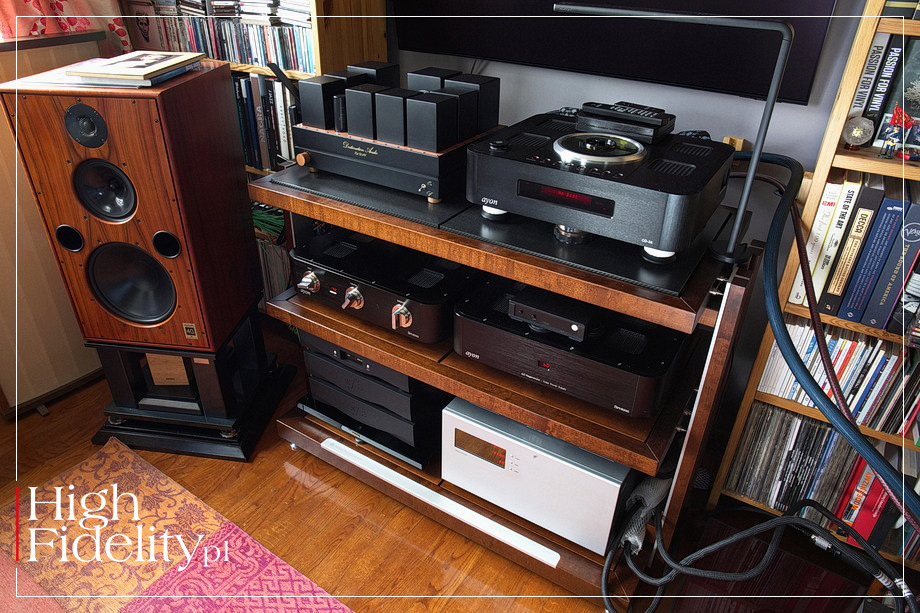
The Ayon’s digital output was connected to the DAC’s input via an Acrolink Mexcel 7N-DA6100 II RCA-to-RCA cable, and to the Sforzato via an Acoustic Revive USB-1.0 PL Triple-C USB cable. The DAC was powered by the Acrolink Mexcel 7N-PC9500 power cable. The signal was sent to the Ayon Audio Spheris Evo line preamplifier, and from there to the Soulution 710 power amplifier and Harbeth M40.1 speakers. The unit stood on the top shelf of a Finite Elemente Pagode Edition Mk II rack, on its own feet, and Acoustic Revive RKI-5005 pads. » RECORDINGS USED FOR THE TEST ⸜ a selection
• DAVE BRUBECK QUARTET, Time Out, Columbia Records/Audionautes Recordings AN-2513-CD, Crystal Disc MQA-CD ⸜ 1959/2025. THE TEAM BEHIND the Destination Audio DAC loves music. No, I don’t know them personally; I’ve only spoken with Mr. Włodek on the phone. My acquaintance with the owner of Lampizator is also rather casual. How do I know what I know? You just hear these things listening to their creations. This Polish DAC plays in a wonderfully rich way. Rich to the point of high saturation. It builds the sound close to us, with an emphasis on the foreground. It thickens and warms the sound. It’s a warm sound - let’s not have any doubts about that. However, this warmth doesn’t stem from damping the upper midrange and treble, nor from emphasizing the lower midrange, but from something else. If I could say where it comes from, where that “tube-like” quality of the 300B tubes comes from, I’d say it’s from the resolution. There is nothing missing in this sound. The DAC, when compared to the analog output of my Ayon Audio player, which is also tube-based and tube-powered, shows less spatial depth, doesn’t go quite as low in the bass, and isn’t quite as breathtakingly fast. At the same time, however, it’s an equally good, equally fascinating sound, one that you can fall in love with in a split second, just as I did. What’s more, it’s a sound that offers something different from the CD-35 HF, something extra. 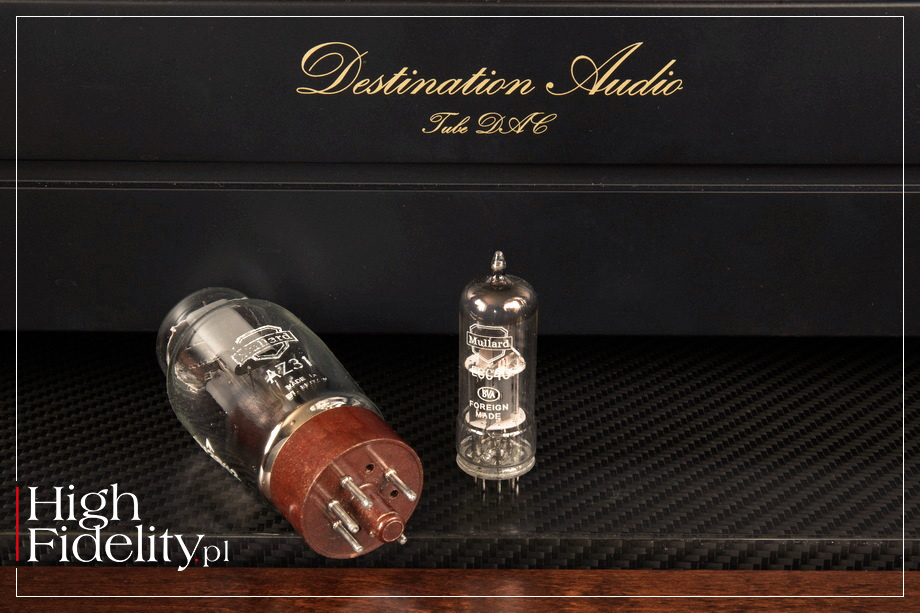
As I said, the foreground is the most important part of it. And there’s more going on there than in Ayon’s. All the elements featured there, such as DAVE BRUBECK’s saxophone from the Time Out, ELLA FITZGERALD’s vocals from the Clap Hands, Here Comes Charlie, and others, all of them were bigger and more substantial than with the reference player. And that means they were more richly saturated than with probably every “DAC” and digital player I’ve ever had. Fitzgerald in ˻ 3 My Reverie sounded as if she were standing right in front of me. Close, almost within arm’s reach. When you hear a loud “pop” at 0:28, the Destiny Audio DAC reproduced it with power and depth, softly and richly, and more powerfully than the Ayon. It’s distortion, a recording flaw - that’s clear. But it’s also part of this album’s DNA, ingrained for good. That’s how I know it, and the fact that the “p” popped out of the mix so suddenly, I perceived as something cool and positive. Something that attested to the human character of the recording, rather than its mechanical “skeleton.” Struck gently, slightly to the right, the triangle in this track had a great tone - as dense as the drum cymbals on Brubeck’s album. It had a weight that’s usually lost, not only in systems with digital sources but also in analog ones. I’m talking about details, but they also show how the whole thing sounds. And it sounds warm, it sounds dense, it delivers all that with verve. As a result, the DAC turns out to be an incredibly versatile device. Not just for jazz, not just for small ensembles and vocals, not just for slow and calm music (which I love). ˻ 1 Blue Orchid was the first track by THE WHITE STRIPES from their 2005 album Get Behind Me Satan to be released as a single. The album, like all of Jack White’s records, was recorded in a fully analog system. It’s dark, low-end-heavy, and not very selective. This is exactly how it was reproduced by the Polish DAC. The DAC filled out the lower midrange and brought the foreground closer, which was to be expected. But it didn’t dampen the energy of the track. I played this album from a Reference CD-R disc, burned for Masterdisk Studios, which is still untitled (it reads: “Album – SQ REV 3/29/05”). And it’s an incredibly natural version. And it sounds dark, and the DAC emphasized that darkness. It played it phenomenally in terms of its internal energy and coherence. The depth was very good, and that’s where most of the action takes place. However, the warm and dense guitars did not interfere with the excellent clarity of the maracas in ˻ 2 The Nurse. I’m sure that those who find early CD pressings to sound harsh and bright will, after listening to them with the Polish DAC see the light, so to speak, and realize that it’s not about brightness, which is imposed by poor-sounding players, but about rawness. Yes, it’s often distortion, but combined with low compression and a simple signal path. Most later remasters are over-complicated and butchered by compressors. The DAC handles them beautifully. It warms them up, brings them closer, and rounds them out. However, when it comes to albums with a powerful, even explosive treble, such as Jazz At The Pawnshop on the Crystal Disc release, the device suddenly opens up to a universe of sound. These will be sounds with a mellower attack, softer than those from Ayon and more akin to Linn turntables than Techdas or SME; the sound will be closer to Kondo than to Spectral or FM Acoustics. But at the same time, it will be incredibly nuanced. That is why the drums, with their long, hard reverberation that open the ˻ 5 Five Miles Out track from Mike Oldfield’s album of the same title, were punching hard, and the individual elements that came in later had properly rigid response, which is exactly how this album sounds. On the one hand, it’s dark; on the other, it’s somewhat aggressive in its attack. The Polish DAC didn’t blur these elements; it didn’t draw me into the warm orbit of a golden sun, so to speak. The sound was close to me; the foreground elements took precedence - that’s just how this device plays. The lead guitarist’s guitar on the ˻ 6 Waldberg (The Peak) bonus track had a long reverb - again, that’s just how it sounds - but it was also clear and carried a lot of energy. It sounded phenomenally good. ▒ Summary The POLISH DAC sounds the way that, in my opinion, top-tier audio equipment should sound like. That is, with passion, but also with perfect control over the material. This isn’t the only possibility, because Ayon Audio shapes the sound differently, and yet in an equally fascinating way. But it’s the Tube DAC that reveals a warm soundstage with a soft attack and incredible richness that “draws you in” so perfectly. At the same time, the device is fast and energetic. Information transmission is instantaneous. Thanks to its high resolution, the warmth I’m talking about doesn’t impose its own character on the music, but rather is layered over what has already been shaped. The frequency extremes are slightly rolled off compared to a reference player, which reminds me of the sound of the Sforzato file player in its full, three-part version. And yet the sound is complete and beautiful. 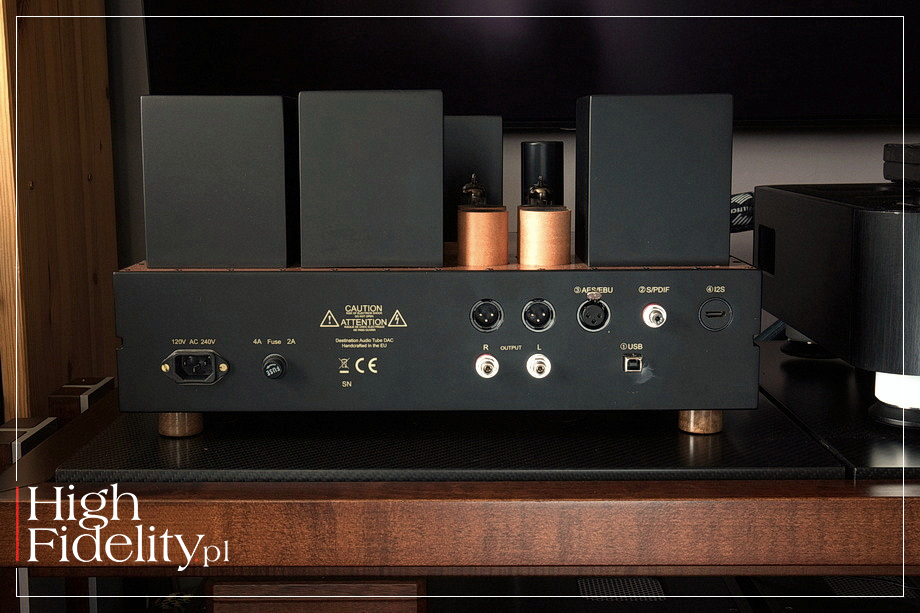
This is a top class D/A Converter, which places it among other top performers, and on top of that its sonic character is close to my heart or what I believe is the best way to experience music. I wish everyone could hear digital audio the way this DAC presents it at least once in their lives. We award it our highest honor - ˻ GOLD ‖ FINGERPRINT‖ WP 
▒ Technical specifications (according to the manufacturer):
Inputs: USB, S/PDIF RCA, AES/EBU, I2S (HDMI) |
 |


|
Reference system 2026 |
|
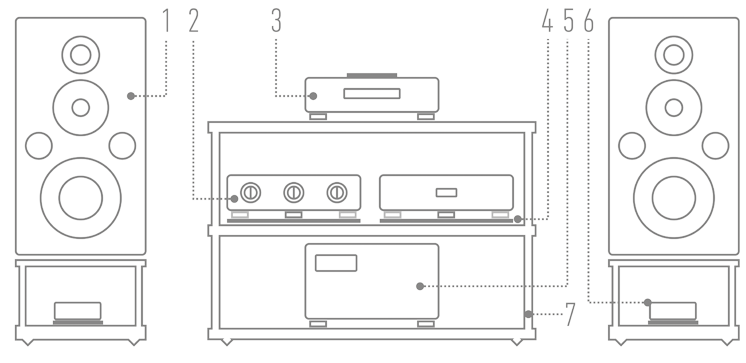 1) Loudspeakers: HARBETH M40.1 |REVIEW| 2) Line preamplifier: AYON AUDIO Spheris III Linestage |REVIEW| 3) Super Audio CD Player: AYON AUDIO CD-35 HF Edition No. 01/50 |REVIEW| 4) Stands (loudspeakers): ACOUSTIC REVIVE (custom) |ABOUT| 5) Power amplifier: SOULUTION 710 6) Loudspeaker filter: SPEC REAL-SOUND PROCESSOR RSP-AZ9EX (prototype) |REVIEW| 7) Hi-Fi rack: Hi-Fi rack: finite elemente MASTER REFERENCE PAGODE EDITION Mk II, more → HERE |
|

|
Cables Analog interconnect SACD Player - Line preamplifier: SILTECH Triple Crown (1 m) |ABOUT|» ANALOG INTERCONNECT Line preamplifier → Power amplifier: Siltech ROYAL SINLGE CROWN RCA; review → HERE Speaker cable: SILTECH Triple Crown (2.5 m) |ABOUT| |

|
AC Power Power cable | Mains Power Distribution Block - SACD Player: SILTECH Triple CrownPower (2 m) |ARTICLE| » POWER CABLE Mains Power Distribution Block → Line preamplifier: Acoustic Revive ABSOLUTE-POWER CORD, review → HERE » POWER CABLE Mains Power Distribution Block → Power amplifier: Acoustic Revive ABSOLUTE-POWER CORD, review → HERE Power cable | Power Receptacle - Mains Power Distribution Block: ACROLINK Mexcel 7N-PC9500 (2 m) |ARTICLE| Power Receptacle: Acoustic Revive RTP-4eu ULTIMATE |REVIEW| » ANTI-VIBRATION PLATFORM under Acoustic Revive RTP-4eu ULTIMATE: Graphite Audio CLASSIC 100 ULTRA, review → HERE Power Supply Conditioner: Acoustic Revive RPC-1 |REVIEW| Power Supply Conditioner: Acoustic Revive RAS-14 Triple-C |REVIEW| Passive filter EMI/RFI: VERICTUM Block |REVIEW| |

|
Anti-vibration Speaker stands: ACOUSTIC REVIVE (custom)Hi-Fi rack: finite elemente MASTER REFERENCE PAGODE EDITION Mk II, more → HERE Anti-vibration platforms: ACOUSTIC REVIVE RAF-48H |ARTICLE| » ANTI-VIBRATIONAL FEET: |

|
Analogue Phono preamplifier: Phono cartridges:
Clamp: PATHE WINGS Titanium PW-Ti 770 | Limited Edition Record mats:
|

|
Headphones » HEADPHONE AMPLIFIER: Leben CS-600X, review → HEREHeadphones: Headphone Cables: Forza AudioWorks NOIR HYBRID HPC |