


|
AUDIO FILE PLAYER SILENT ANGEL BREMEN
Manufacturer: THUNDERDATA Co. Ltd. |

 |
 |
 |
|
Review
text by MAREK DYBA |

|
No 262 March 1, 2026 |
TIME FLIES, so I'm not even entirely sure when exactly I tested the first device with the Silent Angel logo. It has certainly been quite a few years since then, during which time I have probably had about ten different models from this manufacturer pass through my system. Among them were servers, transports, and file players, both budget and more expensive (but still reasonably priced), LAN switches, including the top-of-the-line Bonn NX, supported by the excellent Genesis GX external clock from the same brand, and often assisted by linear power supplies. 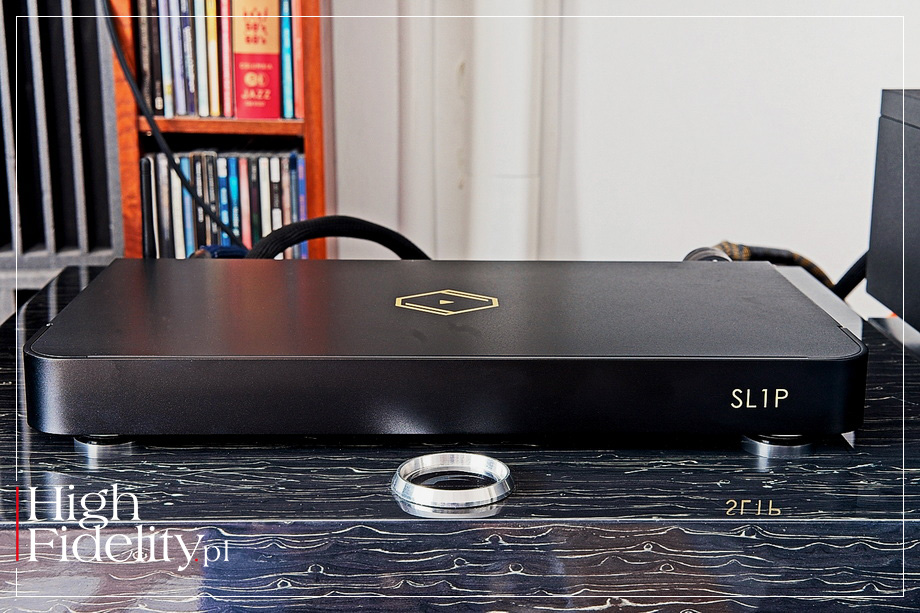
Servers, transports, and LAN switches are designed to provide the player or digital-to-analog converter with the best possible quality “input.” The role of both the power supplies and clocks offered by this manufacturer is to support the first group of devices so that (ultimately) it is possible to achieve even better sound quality coming out of the speakers. Do they actually do that? For years, I have been suggesting to every potential buyer of one of these components who asks me about it to check it in their own system and make a decision based on their own assessment. As for me, two of the Silent Angel devices I tested, which were among the first ones I came in contact with, namely the Bonn N8 LAN switch and Forester F1 linear power supply, became a part of my setup as their positive influence on the system’s performance was clear to me. There are even better devices of this type on the market, even in Silent Angel's lineup, which have an even greater impact on the sound of a file-based system. However, it is always a matter of how much one can or wants to spend on the system and how to use or spread the budget among several components to achieve the best possible performance. I am not going to try to convince you that a LAN switch or power supply will take a so-so sounding system to the next level. However, I will say that, in my opinion, a good file playback system should include a quality switch, preferably supported by a high-quality power supply (I prefer linear ones), because only then will such a system perform at its full potential. Anyway, the Chinese manufacturer offers everything you need to build such a system, and its lineup includes several components at various price levels. So let me encourage you to explore it and, if possible, test chosen coponents in your system. ▓ Bremen SL1 Plus SERVERS, TRANSPORTS, D/A Converter, cables, etc. – anyone who has built an audio system knows perfectly well that selecting individual components is not a simple matter. So not everyone is interested in complex systems. Instead, they prefer relatively simple solutions, i.e., devices that (ideally) look good, do not require a degree in computer science to operate, are easy and pleasant to use, and at the same time offer good sound quality that simply makes listening to music a pleasure. And preferably, they don't cost a fortune. This is clearly what the creators of the Bremen SL1 Plus file player (also known as SL1P) had in mind. Unlike a server or file transport, in addition to being able to decode music files from network sources and often local sources, and send them to an input of a DAC, the player features its own built-in digital-to-analog converter and also offers analog output(s). In short, it can be used as a source connected directly to an integrated amplifier or line preamplifier, just like a CD player or phono preamplifier. In the simplest option, we connect such a player to our home network (and then to the Internet) using a cable or wirelessly (Wi-Fi), and its analog output using an interconnect to the input of our integrated amplifier or preamplifier, and we’re ready to play music. This is exactly the case with the Silent Angel device we tested. Of course, to control music playback from files, you also need an app installed on a mobile device, i.e., a cell phone or tablet. The Chinese manufacturer offers one, and the installation and configuration will take only a few minutes. Yes, that is how the Bremen SL1 P works in very general terms. Let's move on to the details. ‖ APPEARANCE OLDER DEVICES by Silent Angel were characterized by neat but (at least the cheaper ones) fairly simple, small-sized enclosures. I may be wrong, but it seems to me that larger sizes were first introduced with the top-of-the-line LAN switch and its supporting clock (and later also in a dedicated power supply), in other words, with the company's top-of-the-line devices. The Bremen SL1 P is the cheapest and, objectively speaking, an inexpensive file player; yet it also comes in a large, though not very tall, case. I did not have a chance to compare it with Bonn NX or Genesis GX, but it seems to me that the SL1 P uses the same enclosure, which is also logical. So perhaps this is a choice that, on the one hand, raises the prestige of the cheaper device because visually it is no different from the most expensive ones, and on the other hand, allows for reducing the production costs of the latter. The solidity and rigidity of such a construction, with a galvanized steel frame and anodized aluminum front, translate into aesthetics and better working conditions for the electronic systems installed inside. In short, nothing but advantages. 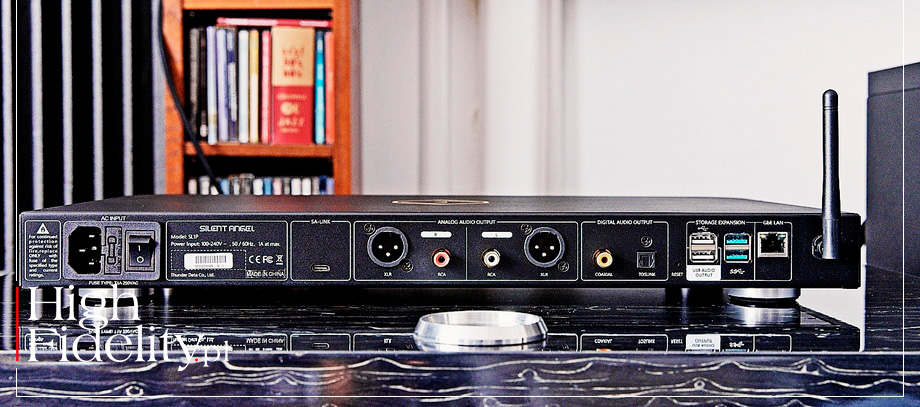
The solid, exquisitely finished black front with rounded corners features only the model name: SL1P (in gold letters). A blue LED is located under the front edge of the device, and it shows the status of the device when turned on and its readiness for operation after startup. There are no unnecessary embellishments or displays here. By design, operation, and access to all information are offered via the company's app on a phone or tablet. The player's cover features the manufacturer's distinctive gold logo in the center. Approximately two-thirds of the side walls are perforated, providing passive ventilation for the electronics. Passive ventilation is important because it guarantees the silent operation of the device, unlike classic computers or laptops, which usually use fans. The case is mounted and equipped with four elegant anti-vibration feet. The device may be inexpensive, but it does not look like it, and these feet are a nice addition. All the connectors are located on the rear panel, and there are quite a few of them. As I mentioned, the device can connect to your home network via wired or wireless connections. A gigabit LAN port is used to connect via an Ethernet cable (a LAN cable is included in the accessories) to a LAN switch or router, and a Wi-Fi antenna is located in the left rear corner of the device (when viewed from the front). Next to it, you will find a set of four USB ports; two are USB 3.0, and two are USB 2.0. One of the latter is marked as dedicated audio output, so you can send a signal via a USB cable to an external digital-to-analog converter. The other three are used to connect data storage devices (USB), i.e., flash drives or external hard drives. In the case of the latter, only those with their own power supply (!) can be used. It is also possible to install an M.2 SSD drive with an NVMe interface and a maximum capacity of 4 TB inside the device, but this is only an option. Next to the USB ports is the digital section, i.e., additional (next to USB) digital outputs. The digital signal can be sent outside the player (to the DAC input) using an optical (Toslink) or coaxial cable. Both allow PCM signal transmission at a resolution of up to 24 bits and 192 kHz. The analog outputs are located in the middle of the rear panel. Although the device is inexpensive, it offers both balanced (XLR) and unbalanced (RCA) outputs. With inexpensive devices, usually used with inexpensive cables with standard plugs, this may not be that important, but it is worth mentioning that the sockets in the SL1P are spaced quite widely (another advantage of using a much larger enclosure), which makes it easier to connect interconnects. In addition to the aforementioned LAN cable, the manufacturer includes a pair of unbalanced analog interconnects and an AC power cable. The set of connectors is complemented by the company's SA-Link, which enables communication with other Silent Angel devices, as well as an IEC power socket with a fuse compartment and an accompanying on/off device switch. ‖ INSIDE THE INTERIOR of the SL1 P is divided into several sections, all of which are mounted on an aluminum plate that serves as the “floor” of the device. A low-noise, highly stable power supply, which, according to the manufacturer, is “radar-grade,” i.e., meets the requirements for radar manufacturers, is located separately. If I were to point out any shortcomings in this device, it would be the lack of the option to connect an external power supply. Silent Angel offers such outboard power supplies, and every time one of them replaced the built-in switching power supply for this brand’s component that allowed it, regardless of the price range, I heard an improvement in sound quality. On the other hand, the SL1 P is the cheapest model, so let's not ask for too much – as I said, it's nitpicking. File transport is a separate section of the device. It is built on a solid (hi-fi class, according to the manufacturer) motherboard, hosting a six-core processor (Dual-core Cortex-72 1.8GHz + Quad-core Cortex-A53 1.4GHz), 4 GB of RAM, and FLASH memory (32 GB) for the proprietary VitOS operating system. According to the manufacturer, the motherboard and disk enclosure (FLASH memory) are covered with a thick layer of copper. Its role is to effectively dissipate heat, which translates into stable operation and minimized interference. Advanced shielding further reduces electromagnetic interference, resulting in higher sound quality. The third section of the device is a digital-to-analog converter that supplies the signal to the analog outputs. The entire DAC section is placed on a dedicated PCB, which is housed in an aluminum shielded housing. The purpose of this solution is to minimize interference from the power supply section and digital circuits, or, in other words, to effectively isolate the analog section from the digital section, which should result in even greater clarity and precision of sound. Silent Angel does not disclose information about the manufacturer or model of the D/A chip it has used, and the aforementioned casing makes it impossible to (easily) verify this information. ‖ SOFTWARE SILENT ANGEL is one of those manufacturers whose development I have had the opportunity to follow almost from the very beginning of their presence in our market. The company seized the right moment (let me remind you once again that it was established in 2014) and, benefiting from the knowledge and experience of the engineers from its parent company, Thunder Data, it offered the then only fledgling but already rapidly growing market for music file playback devices a range of solutions that made files sound simply better. Importantly, the company' chose a twin-track development path, so to speak, as it consisted not only of developing new and improving older models of devices (i.e., hardware), but also of developing its own operating system, VitOS, and a control application (software) that enabled the operation of the brand's devices. The system is based on a Linux kernel but has been optimized and refined by the Chinese company's developers to ensure, as we read, “the best possible sound quality and convenient operation.” The application, or rather three control applications (VitOS Manager, Orbiter, and Lite), used depending on the model, are available free of charge for both Android and iOS devices. The development of the operating system (and, consequently, the control app) was driven not only by the need to remove bugs, improve the smoothness of operation, and increase intuitiveness but also by the need (driven by customer requirements) to add new features. Thanks to this approach OS, Bremen allows you to play music files from locally connected data storage devices, from servers located in your home network, but also, and this is one of the most important areas of software development, from streaming services. Silent Angel has so far integrated support for up to fourteen such services into its app, including Tidal, Qobuz, and Spotify. In addition, it supports DLNA rendering and internet radio. Many models can also work as an endpoint for the Roon server (this is my favorite feature as a long-time user!). The app, installed on an Android phone (in my case), worked smoothly and without any problems. I also admit that it is highly intuitive, which is increasingly important for someone of my age (:-)) ). It may not be the best app of its kind that I have come across, but it is good enough not to complain. You can change all the available settings, select files to play, and check their type, resolution, titles, artists, duration, etc. 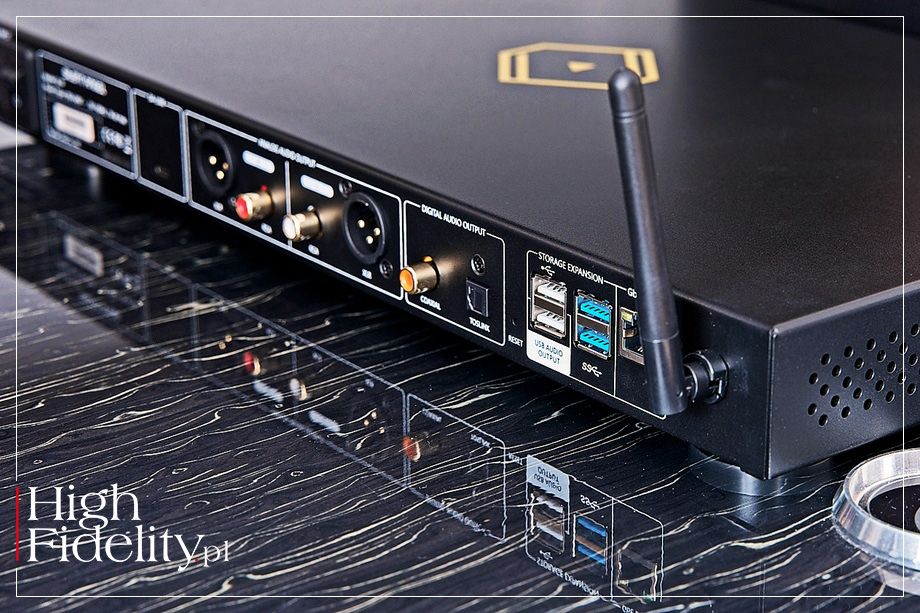
The manufacturer does not provide much information about the capabilities of the tested device on its website. To find out what it can do, you need to refer to the application. There, it turns out that DSD playback via the USB output (max. DSD256) is carried out using DoP mode, but it is also possible to convert files in this format to PCM. The maximum sampling frequency for PCM (for USB output) is 786 kHz, and the word length is 32 bits. The device also offers digital volume control. It can be completely turned off independently for digital and analog outputs. Thanks to this feature, the SL1P can work directly with a power amplifier or active speakers. It is therefore possible to build a minimalist system in which we connect the SL1P to the network on one side and to active speakers on the other, and nothing else is needed to play music from files. In the settings available in the app, you can select which outputs you want to use, meaning that you can use either analog, digital, or USB. In the same app, you can also enter your login details for the streaming services to which you’re subscribed. The “Internet Radio” tab offers hundreds of stations that provide different genres of music and varying stream quality. In short, apart from Bluetooth (but Apple users can use Airplay2), the Bremen SL1P offers virtually everything that most users require from network players. ▓ SOUND HOW WE LISTENED • The Silent Angel Bremen SL1 P file player was tested in my reference system. At the beginning, I decided to test it in three ways: 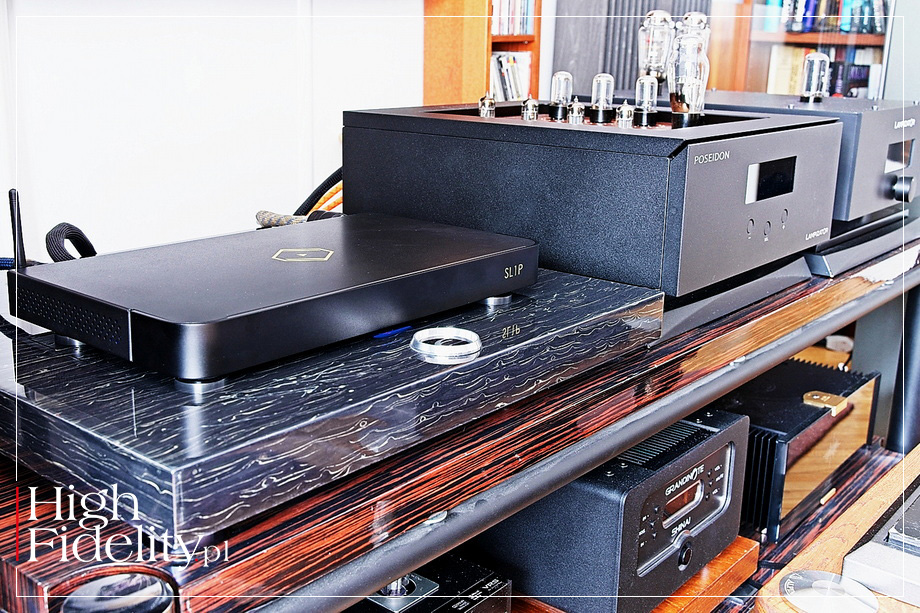
|
1) First, I tested it as a fully standalone, complete device, which I connected to a LAN switch of the same brand, Bonn N8, supported by a Forester F1 power supply, using a DL Custom Audio Sapphire LAN cable. Another cable by Dawid Laboga, the NA-C Connect model, provided power to the device. 2) In the second part of the test, the SL1 P acted as the endpoint for my Roon server. In both cases, I sent the analog signal via an unbalanced Hijiri HCI-20 RCA cable to the GrandiNote Shinai integrated amplifier. The latter, in turn, drove the GrandiNote MACH 4 speakers via Soyaton Benchmark speaker cables. 3) In the shortest third part of the listening sessions, I used the tested Silent Angel device as a transport (rather than a player) for files, which I connected to the USB input of the LampizatOr Poseidon converter using a DL Custom Audio Akoya USB cable. 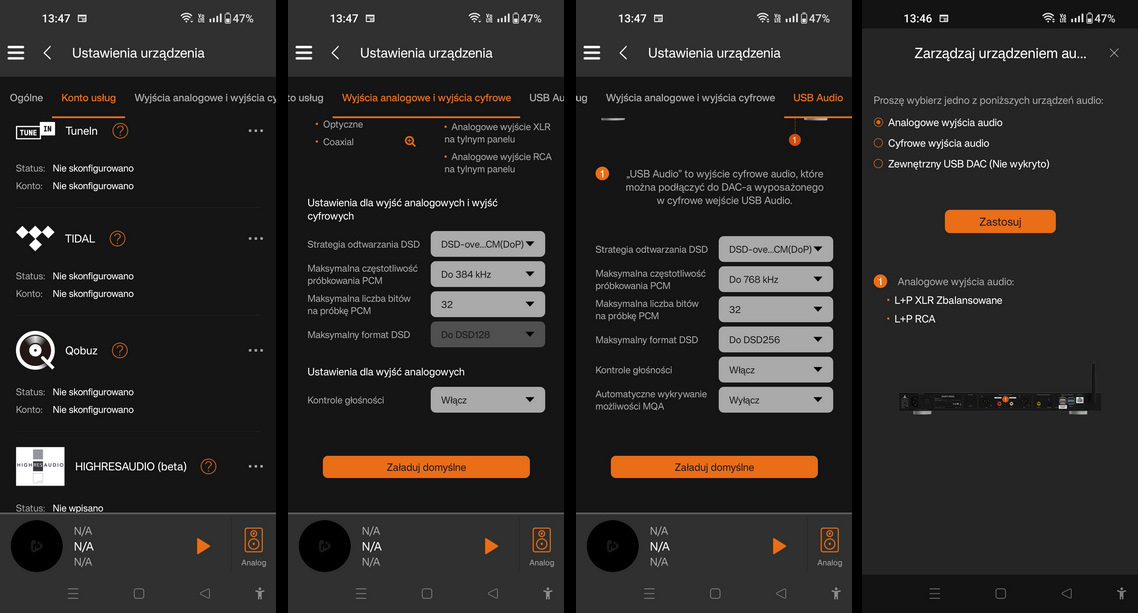
1) AUDIO FILE PLAYER BREMEN SL1 P, as a standalone file player plugged into a system consisting of much more expensive devices, offers a sound that I would call quite safe. It is not the king of resolution, but there is quite a lot of information in its sound; it plays quite evenly throughout the whole range, but there is no doubt that the most important part of the presentation is the midrange. It's not that there are any major deficiencies in the band’s extremes, but rather that, regardless of the type of music or the quality of the recordings, there is no doubt that what happens in the middle of the band is crucial. It could be said that this is the nature of almost all music, but here it was about something more. The treble was not quite as open, as airy, and resonant as I was used to, and the bass did not extend as low, did not have the same weight or tightness (natural, not artificial), nor did it have the “slam” that I usually hear in my system. The upside of this presentation was that even if the recording was not of the highest quality, listening to it with the SL1P was simply enjoyable. 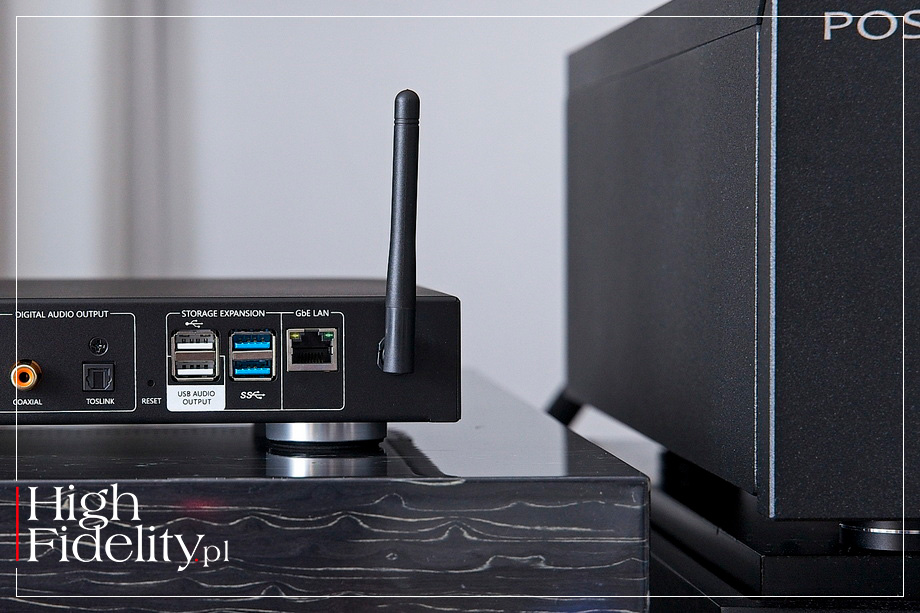
Take, for example, the FMB TRIO’s album entitled The New York Connection. The cymbals shone more “golden” than usual; they did not respond as immediately and strongly to the sticks, but their sound was still quite sonorous, fast enough, although more golden than silver. The double bass did not have as much mass as in previous listening sessions with my server and LampizatOr, but it was sufficiently „meaty,” naturally soft, and colorful to still listen to it with interest. It was clear that the drums could have been a bit stronger and more „springy” but it didn't really matter. I looked for differences and found them, but they didn't spoil my listening pleasure. It was still music that came first. With this particular recording, it was difficult for me to assess the spatial aspect of the presentation because it played a minor role here. Nevertheless, even here, or in the gospel single with RON CARTER, RICKY DILLARD, and NEW G entitled Sweet, Sweet Spirit, I could hear good localization of phantom images and a perhaps not very deep, but quite wide soundstage. The latter track was also further proof of how well the SL1P renders the midrange; in this case, human voices – warm, colorful, saturated, and beautifully natural. This is a recording of a high emotional temperature, and the tested device did not fail to show quite convincingly. The change (at least to some extent) to a bluesy atmosphere with B.B. King’s Blues Summit 100, by JOE BONNAMASA, accompanied by a whole host of excellent musicians whom B.B. had inspired over the course of his long career, confirmed not only the exceptionally good sound of the guitars and vocals with the tested device, but also the confident and accurate handling of the rhythm and tempo so important in blues. This is not an audiophile production, but Bremen did a good job of conveying not only the good quality of the recording but also – and perhaps most importantly – the emotional component of blues. This is music that you have to feel, that makes your foot tap to the rhythm and your head nod. And that's exactly how the tested player served this album to me: smoothly, effortlessly, rhythmically, in a relaxed way on one hand, but on the other hand, constantly attracting attention – that's how blues should sound. In its slightly more “aggressive” form, such as recorded on STEVE RAY VAUGHAN's album, all of the above-mentioned elements made me listen to his performances with great attention and pleasure, although I admit that I would have preferred a little more of that “aggressiveness,” or perhaps simply the rawness of the master's guitar sound. The slight rounding of the attack made me miss some of the sharpness and freshness of his playing. However, the fact that I noticed this difference was more due to my focus on finding differences than to a lack of satisfaction with the listening experience as such. It was a really good presentation that I enjoyed. It's hard not to bring it up, but please remember that we are talking about a complete device (player) that costs less than four thousand zlotys, which I inevitably compared to my own set, in which the DAC alone costs nearly thirty times more. Objectively speaking, though, and it wasn’t the first time when reviewing some Silent Angel's device, I had to admit that this Chinese company knows how to make components that can compete in terms of performance with significantly more expensive devices. It is not high-end level performance, let’s be clear about it, and it does not even pretend to be, but it is quite solid hi-fi, which will be enough for many people. Also, for those who treat files solely as an easily accessible music medium that is only meant to supplement physical media, without necessarily competing with them in terms of sound quality, the Bremen SL1P may be a great solution. It looks good, sounds good, and is just as easy to use as a CD player. 2) AS ROON ENDPOINT IN THE SECOND PART OF THE TEST, the tested player served as an endpoint for my own Roon server. Both the latter and the SL1P were connected via Ethernet cables to a Bonn N8 LAN switch. My server read files from the NAS and then sent them to Bremen via the network. In theory, adding another device to the data transfer chain should not cause any, or at least no significant, change in sound. The SL1P no longer controlled music playback, but its built-in DAC still played a key role, as the signal from it was still sent to the amplifier via the analog output. 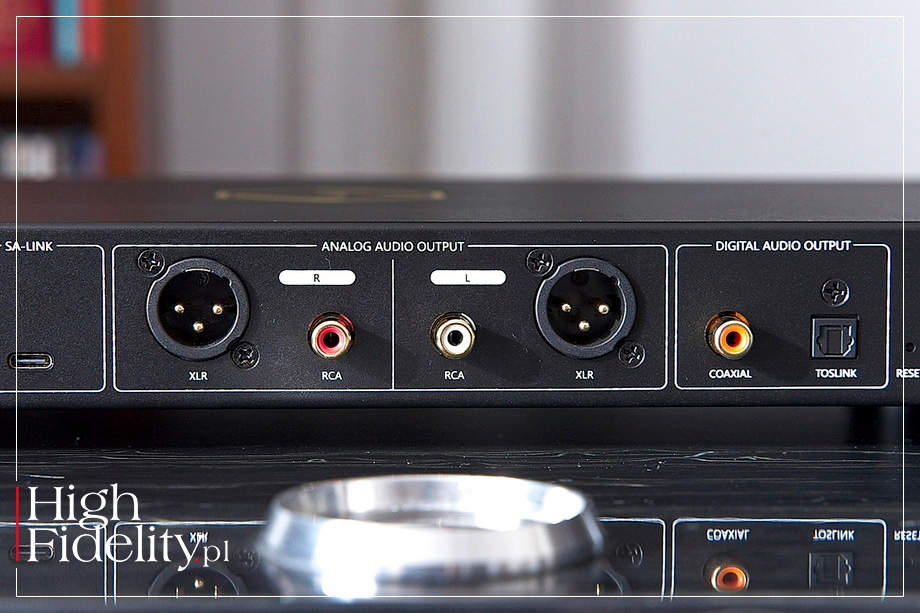
And yet... And yet there was a difference. It wasn't big, to be clear. Trying to quantify it, I would say that it wasn't worth the amount of money I would have to spend on a “custom” server like mine (in addition to computer components, also top-of-the-line JCAT USB and LAN cards, a clock for these cards, power supplies for the cards and clock, a power supply for the entire server, power cables for the power supplies, and Roon itself) plus a second LAN cable of the same class as Sapphire - all of this together would cost three or four times more than the entire Silent Angel. So, when looking for optimal sound quality, it would be easier to simply buy a more expensive model. Nevertheless, having performed such a test, I must say that a slightly blacker background (i.e., lower background noise) and the associated slightly better readability of details and quieter (blacker) moments of silence between sounds, slightly richer colors, a slightly tighter leading edge, and slightly longer (though still imperfect) reverberations - all this together made higher quality recordings in particular simply sound better. Take, for example, HANI RANI's music for the Sentimental Value movie. Slightly clearer sounds of the piano or strings, a little more air around them, the aforementioned slightly longer, slightly more realistic reverberations - all this deepened the emotional atmosphere of the album and made listening to it a more engaging experience. So, is it worth buying this device as an endpoint for Roon? Probably not. Unless, like me, you are very attached to the Roon app, because it is (in my opinion) much better than VitOS Orbiter... I hope no one took this argument seriously :). The only rational option is to buy SL1P as an „auxilary” device, i.e. for playing music in another room, e.g., a bedroom or office. The Roon server can handle several devices, so you can have a cool server and DAC in your main system, and in addition, use Bremen as an endpoint driving, say, active speakers in your office or bedroom. Why not? It's a pretty good idea for such an additional, inexpensive, pretty good-sounding system. 3) AUDIO FILE TRANSPORT → USB FINALLY, I decided to check how the tested device would perform as a file transport, i.e. leaving its D/A Converter out of the picture. Instead of analog outputs, I used a dedicated USB port, which I connected to the Lampizator Poseidon input. And? And some still claim that a bit is always the same bit no matter what, and in this setup, my DAC was still fed the bits from SL1P via USB, theoretically the same ones. However, the difference in sound quality was significant, even very significant. Sure, the LampizatOr is a very expensive, high-end converter, but that doesn't change the fact that the sound coming out of the speakers depends just as much on the “input” that this (or any other) DAC receives as it does on every other component through which the signal passes. Apparently, the SL1P is capable of sending quite high quality bits, or at least high enough for a much more expensive DAC to take advantage of them and show its superiority. The same Hani Rani album was filled with resonance and air; the sounds became denser, had more mass, and at the same time sounded cleaner and more expressive. The soundstage opened up both to the sides and into the depth, and the phantom images took on shape and mass. The dynamics gained a lot, especially on a micro scale, but also to some extent on a macro scale, and the energy of the performance as a whole was clearly higher, even though it is calm, lyrical music. Although I already wrote when listening to the Bremen as a complete file player that it offers engaging, effortless playback that you can enjoy for hours on end, the high-end external DAC and SL1P used as a transport elevated the sound to a completely different, much higher level in terms of both the listener's emotional involvement and the reluctance to end the listening session quickly. There was clearly more information in this sound, which made the presentation more complete, ergo natural. ▒ Summary IT WASN'T AS GOOD PRESENTATION AS WITH MY SERVER, but good enough to consider this device as a transport for a good-quality DAC. Not from Poseidon's top shelf, of course, but even for around ten thousand zlotys, you can find a lot of really good converters, and when looking for file transport for them, you can safely reach for the SL1P. However, it is worth remembering that Silent Angel also offers dedicated transports, and if you are only looking for this functionality, it is worth taking a look at the Munich M1T V2 model, for example. This is one of the advantages of this company's lineup – you will find devices with different functionalities, which will allow you to choose the one that best suits your needs, while giving up the features you don't need. 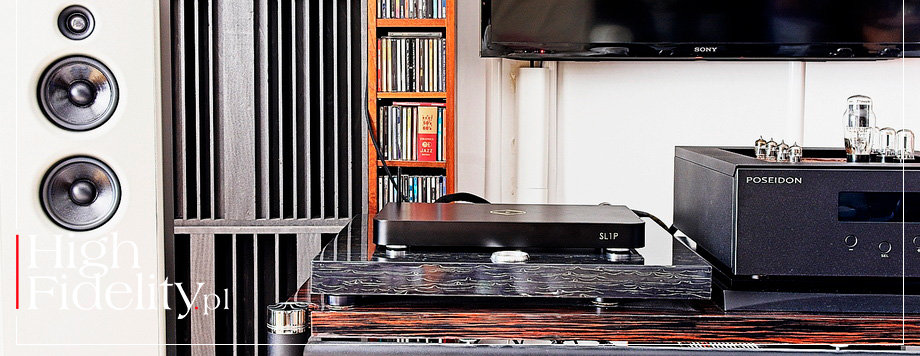
However, the Bremen SL1P was designed as an inexpensive, complete file player and, as such, performs better than its price suggests. It can be used as the basis for both a good-quality complete audio system and a minimalist version, which, apart from this player, will only include active speakers. The ability to use it as a good file transport allows you to leave the option of upgrading for the future when, wanting to improve the sound quality of the system, you can add a good external DAC to it. In addition, the original and constantly evolving Silent Angela software will allow you to play files from local and network resources, create playlists, use virtually all popular (and a few lesser-known) streaming services, and even convert DSD files to PCM or select the maximum resolution of the latter. What more could you want? Even if the Bremen cost twice as much, considering the market reality, it would still be an interesting proposition. Go on and check it out for yourselves! ‖ MD ▒ Technical specifications (according to the manufacturer)
OS: VitOS-1.1.9956 
THIS TEST HAS BEEN DESIGNED ACCORDING TO THE GUIDELINES adopted by the Association of International Audiophile Publications, an international audio press association concerned with ethical and professional standards in our industry, of which HIGH FIDELITY is a founding member. More about the association and its constituent titles → HERE. |
 |
|
|
