


|
TURNTABLE + TONEARM SME
Manufacturer: SME LIMITED |

 |
 |
 |
|
Review
text by WOJCIECH PACUŁA |

|
No 259 December 1, 2025 |
⌈ SME was founded in 1946 as Scale Model Equipment Company. In 1959, when its owner, Alastair Robertson-Aikman (1924-2006), designed the first turntable tonearm, SME Limited was established. Based on this design, the first commercial product, the 3009 model, was introduced to the public in September of the same year. Today, it is known for both its excellent tonearms and turntables. ⌋ FOR YEARS, SME's (The Scale Model Equipment Company) Model 30 turntable, sold with the company's V-arm, was the object of desire for audiophiles around the world. It was introduced in 1990 as the “carrier” of the “five,” and its name referred to the three decades that had passed since the creation of the company's first tonearm bearing the numerical name 3009 (and the 12-inch version 3012). 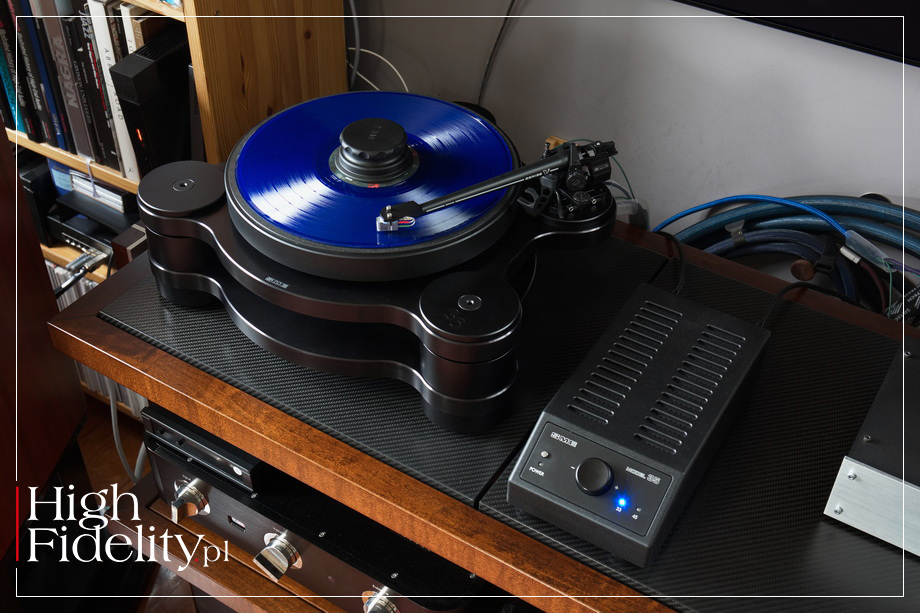
In Model 30, the two bases, upper and lower, were decoupled from each other by a soft lossy element. It consisted of 48 highly distinctive, specially made O-rings (12 per tower), dampened in each tower by a paddle immersed in a viscous fluid. It was the company's flagship model, followed by others using similar technologies that were more affordable, Model 20 (1992) and Model 10 (1999), and then their 30/12 and 20/12 versions adapted for 12" arms. Twenty-two years later, in 2022, Model 60 was unveiled as an “anniversary” turntable to celebrate the company's 75th anniversary and as the new flagship model of this British company. Its launch was delayed by the pandemic – the official press premiere did not take place until March 2022 – but its “flagship” status was evident at first glance, as was the new approach to mechanical design. It weighed 48 kg (without the power supply and controller) and was constructed from two separate bases (decoupled with damping materials). However, the difference between the previous and current suspension systems was significant, and for fans of the brand, even fundamental. The most important change that SME implemented in the new turntable was hiding the decoupling system. Instead of visible O-rings and a system in which the top plate is “suspended”, the lossy components were hidden in thick, round legs, and the system is now “reversed”, meaning that the plate with the arm and platter is “suspended.” It may seem like nothing, but it's a new era. The Model 35 brings the same change. ▌ Model 35 The SME TURNTABLE MARKED “35” was unveiled on April 4, 2025 during a special presentation in London and at the AXPONA 2025 audio show in North America, where it was presented alongside the new SME Series Vi tonearm. Along with it, the company's entry-level Model 8, replacing the “six”, was also introduced. The company's materials state:
Among the most important features of the new turntable, the manufacturer mentions:
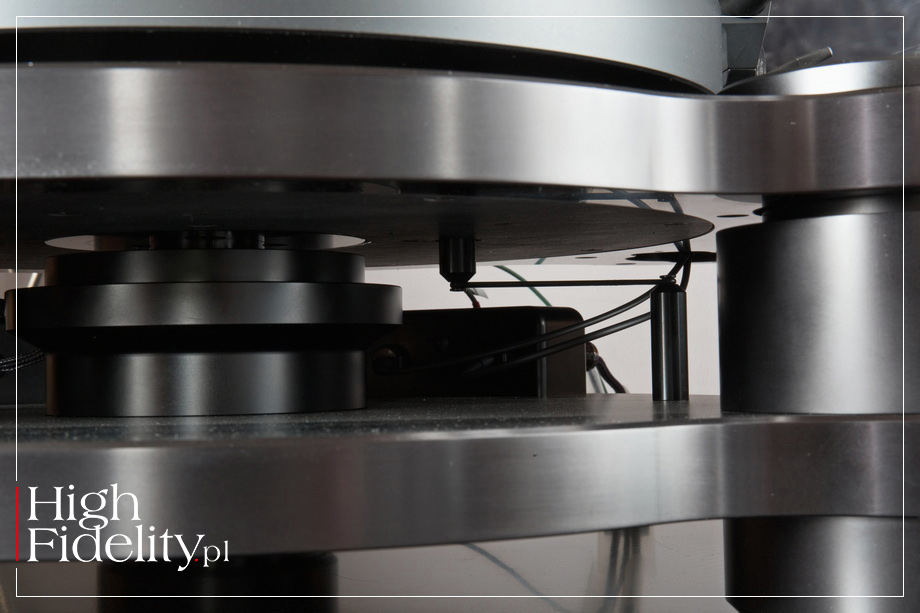
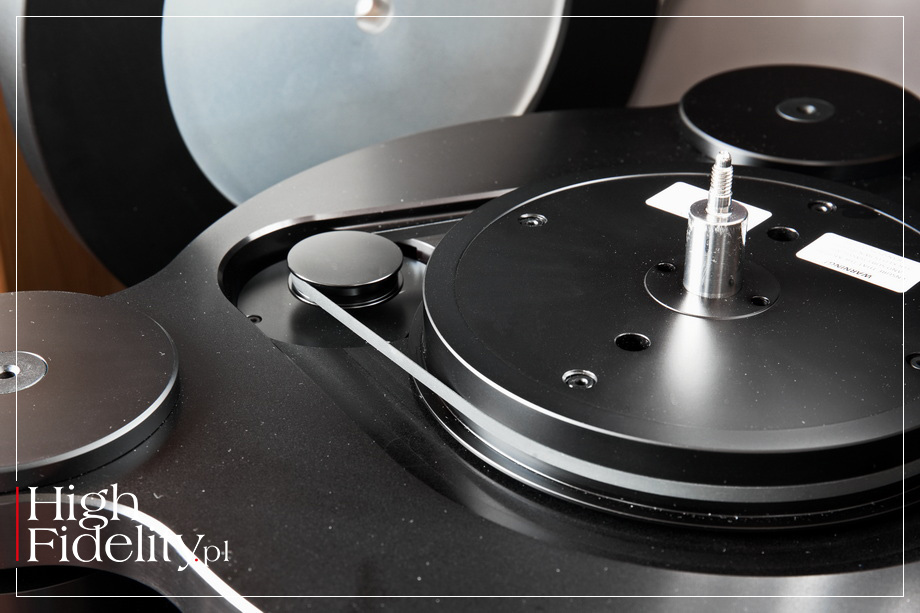
CHASSIS • The turntable is perfectly crafted. Its design, although seemingly uncomplicated, is based on many small elements that together make up a structure quite different from the classic Model 20 and Model 30 turntables. But the most important thing is that the company decided to go with a shape known from cheaper turntables, in which the base is not rectangular, but has a shape cut to the curves of the platter. It is a decoupled yet massive construction. It consists of two aluminum platforms separated from each other by a decoupling system. The platforms are not rectangular, but rounded, which visually reduces the size of the turntable. They are finished with round elements at the corners, which fit into the legs on which the entire structure stands. The turntable can be bought in silver or black anode, and for an additional fee, also in one of two other colors: Midnight Blue and Gunmetal Anodized. The arm and platter bearing are mounted on the upper platform in such a way that they have as little influence on each other as possible. The lower platform houses the motor, output sockets (RCA), and an aluminum element with oil that dampens the movements of the upper platform. The motor is housed in a heavy brass housing and is additionally decoupled by three adjustable spikes. It is pressed against the ground by small rubber rings. On the side, there is a gold-plated ground terminal, which is useful for dissipating static electricity. 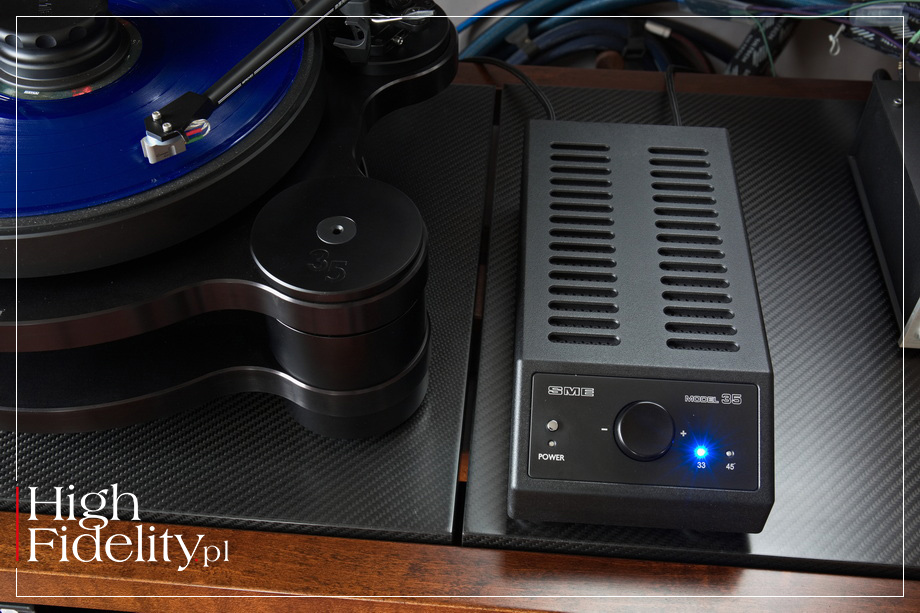
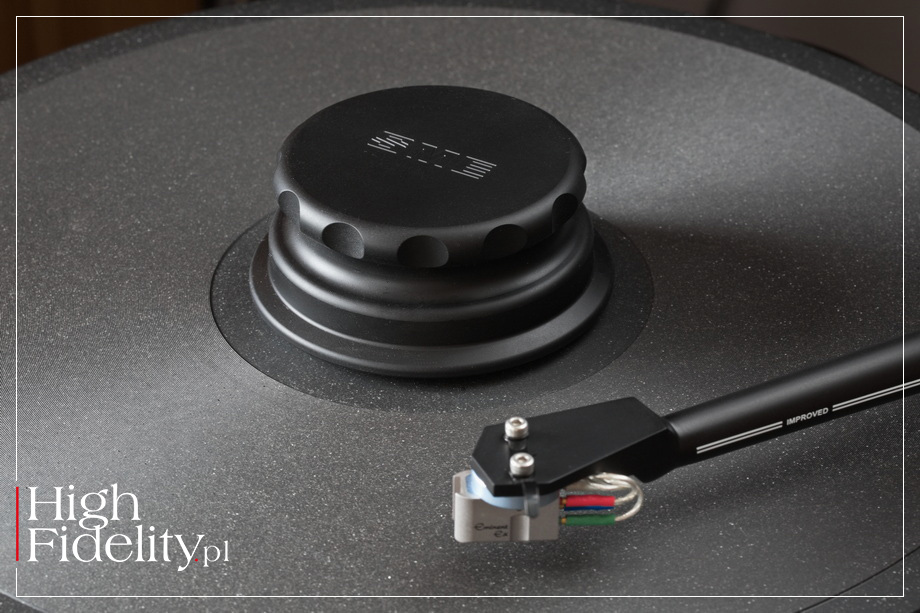
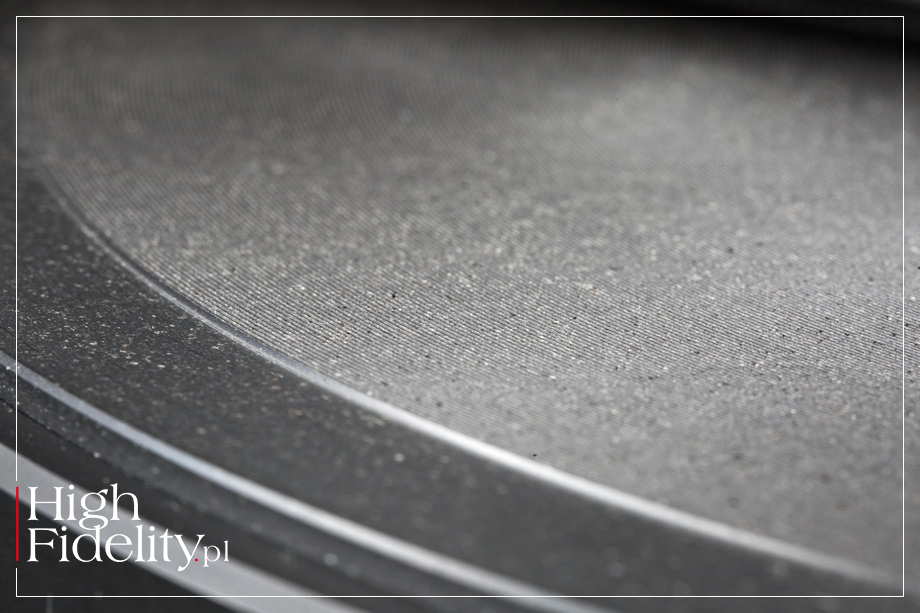
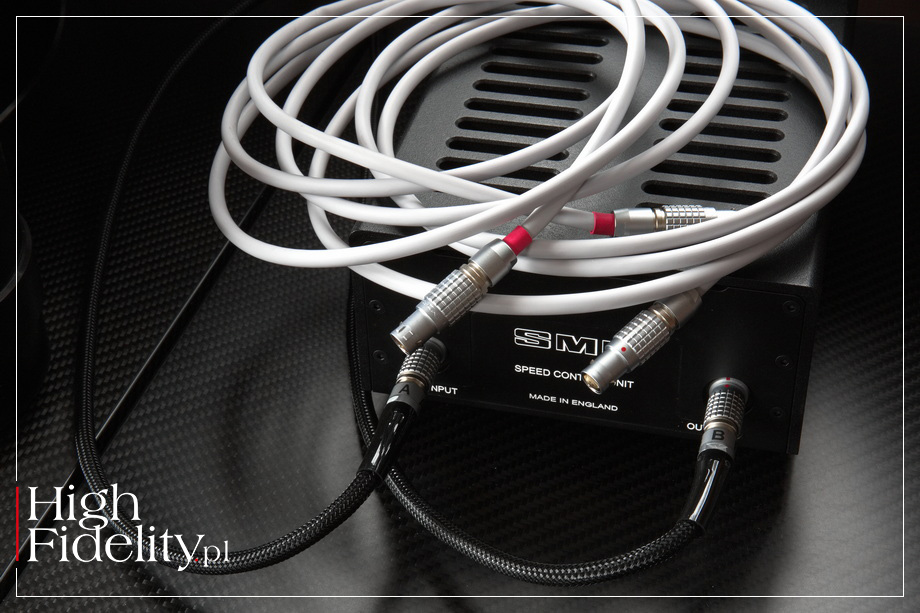
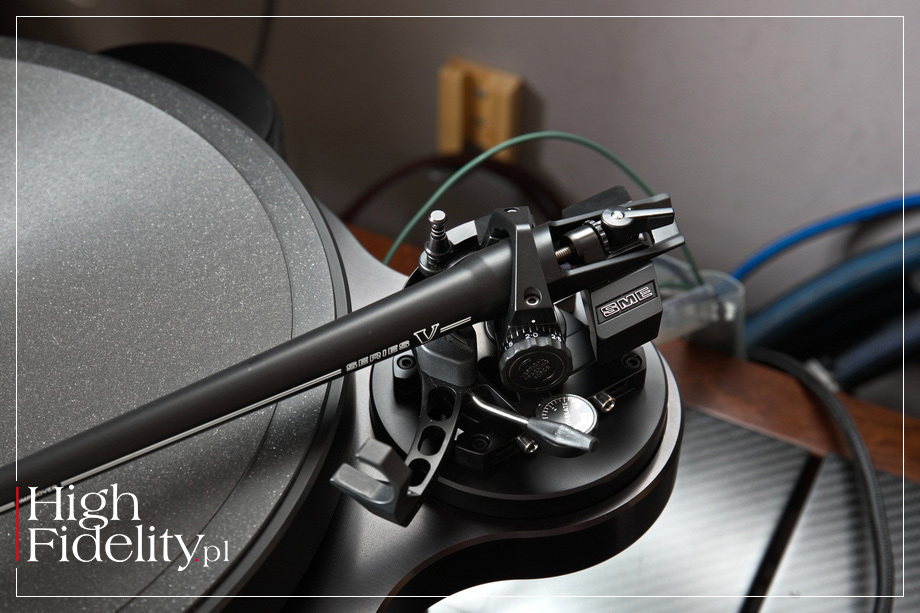
The most important change that SME implemented in the Model 60, which we also see in the Model 35, is the concealment of the decoupling system by reversing the layout and hiding it in aluminum pillars – three in this case. This not only changed the mechanical properties of the system, but also the appearance of the device. The changes resulted in a squat, strong, powerful body, much more powerful than Model 30. In fact, in this form, Model 35 resembles turntables from another British manufacturer, Avid HiFi. Although, if you think about it holistically, the archetype would be the designs of another British legend, Michell. The columns not only serve to decouple the entire turntable, but also conceal the damping elements on which the upper platform is suspended. A conical recess with a pin in the center has been milled into them. A hollow brass element with attached O-rings is placed on the pin; in this model, there are fifteen per column. The rings are suspended on the base tabs. The columns are not oil-damped, as in the Model 60, and have no horizontal axis damping. This system allows for level adjustment – this is done using a key to turn the screw at the top of each leg. From below, they are additionally dampened with rubber pads placed on the screw system and metal spacers; the leg housing is milled from aluminum elements. It is a truly complex system. PLATTER • The platter used in the tested turntable is also known from other SME models. Its characteristic feature is that it is larger than the LP record itself, with a diameter of 330 mm. It is made of two aluminum elements, a solid plate and a rim that acts as a flywheel. On top, an isothermal mat was applied, diamond-turned with a fine coil on the surface, which is designed to dampen vibrations and help ensure the best possible contact with the record. The center is slightly recessed, and an aluminum disc is placed on the axle. Together with a screw-on aluminum clamp, they are designed to mechanically bind the rec and the platter together. The whole assembly weighs 4.6 kg. The main bearing of Model 35 is again made of high-carbon steel and rotates on, as the manufacturer assures, a precision ball bearing with sintered bronze sleeves. This bearing is placed in a damping bath of silicone oil, which works on the same principle as in Model 60, although its design is slightly different. As before, its purpose is to absorb resonances resulting from the rotation of the platter, including motor noise transmitted by the belt. The torque is transmitted not to the main plate, but to the auxiliary plate, integrated with the steel axle. The belt is made of neoprene rubber, which is resistant to oil, water, and solvents, and is reinforced inside with high-strength polyester strings for durability and flexibility; the belt has a flat profile and is not too long. To counteract the force pulling the plate toward the motor—and remember that these are two independent platforms—a rubber O-ring is attached symmetrically on the other side of the axle, pulling it in the opposite direction to maintain balance. DRIVE • The motor was a new feature found in Model 60. Instead of the asynchronous (DC) motor from the “thirties”, a 24-pole synchronous (AC) motor was used. As we wrote in our review of the top-of-the-line SME model, DC motors tend to be slightly quieter than asynchronous motors. In theory, this means they have less impact on the sound and are easier to dampen mechanically. But AC motors also have their advantages, the most important of which is the high torque achieved at a given size. This allows for better control of the platter. To achieve similar torque, a DC motor would have to be larger, which would make it—yes, you guessed it—louder. The motor in Model 35 is the same as in “60”, and so is its control system. To minimize interference, it has been divided into two parts. One part contains a transformer, and the other a control system with a DSP circuit. It takes the form of a large oblong element with a knob and buttons on the sloping front panel. There, we can turn on the motor power (rotation) and change the rotation speed between 33.3 and 45 rpm (unfortunately, there is no 78 rpm). The knob is used for precise tuning of the controller, if necessary. The motor operation and speed selection are indicated by large, bright blue LEDs. According to the manufacturer, the speed control unit uses a DSP system to generate two independent sine waves that “provide complete control over frequency, phase relationship, and amplitude”. These, in turn, are adjusted (tuned) to a specific motor. The output stage is a two-channel, bipolar, “low distortion” amplifier operating in class AB with a relay directly coupled to the motor. The entire design is surface-mounted on a gold-plated FR4 printed circuit board. The cables connecting the power supply to the controller and the controller to the motor are terminated with high-quality LEMO connectors. The Polish distributor offers slightly different cables, which are worth trying (I have tried them). TONEARM • A new feature in contemporary SME models is not only the new suspension system, but also the tonearm. The Model 35 has also been equipped with a new tonearm; in this case, the Series Vi, where the “i” stands for “improvement”. Interestingly, Luxman decided to use exactly the same designation in its latest SACD player, the D-100 Centennial, whose improved transport is called the LxDTM-i1. The Vi arm differs from the V (as well as the VA in Model 60) primarily in the material used for the tube. The new arm is CNC-machined from a high-density non-metallic polymer selected for its acoustic inertness. According to the manufacturer, “this one-piece construction has been manufactured to tight tolerances and rigorous quality control standards”. SME believes that additive manufacturing, i.e., 3D printing, is not yet sufficiently precise, which is why machining was used for this arm. 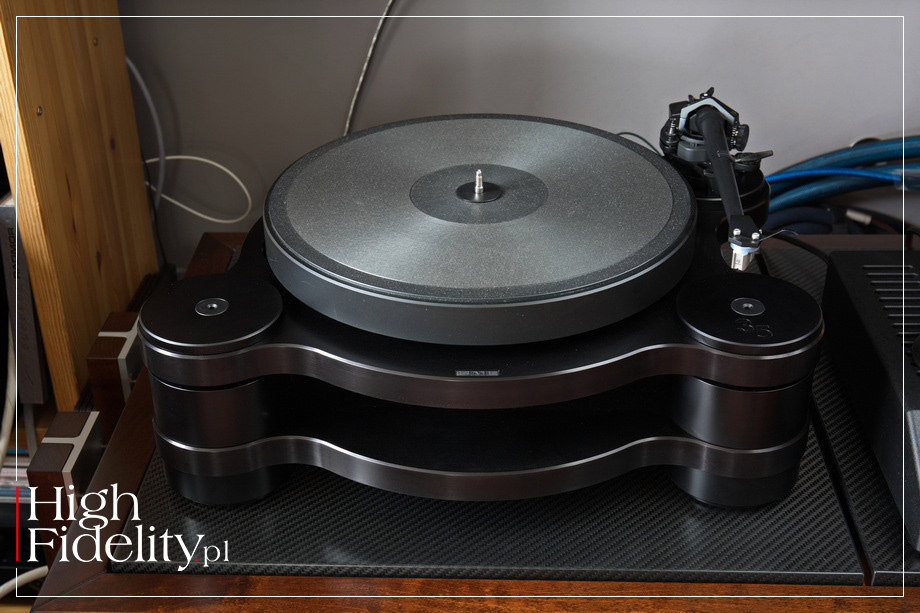
The Vi’s tube has a round cross-section (in the VA, it was a more complex tri-lobe profile, i.e., divided into three segments and resembling an egg in cross-section). The manufacturer claims that this design results in “a very low resonance signature with significantly better measured arm and column resonances”, which should ensure greater tracking precision. It is supposed to be stiffer and less susceptible to vibration than the classic magnesium alloy version. However, the most important goal of this change was to reduce the weight of the arm. Developed in 1986, the V model was the company's heaviest and most technically advanced design. However, its weight was so great that not all cartridges could be paired with it. It should be noted that the tubes in the “V” were the only component purchased by SME from an external supplier, a manufacturer based in Chicago (USA). The effective length of the Vi tonearm is 233.15 mm. We can mount cartridges weighing from 7 to 18 grams on it. The internal wiring is, as we said, Crystal Cable. Similar to the VA tonearm, these are silver wires with a diameter of ø 0.1 mm, made using the Mono X-Tal technique, i.e., from monocrystalline silver. The signal is output through RCA sockets attached to the lower base, which is also a change from SME's previous practice of using DIN plugs attached to the tonearm column. |
The new tonearm retains the aluminum alloy bearing housing familiar from the V model, with a modified internal tungsten weight and the same Swiss-made steel balls. Let’s add, that the tonearm features a dynamic cartridge balance weight system, allows for VTA/SRA and anti-skating adjustment, but does not allow for azimuth adjustment. SME believes that it is more important to maintain the greatest possible rigidity of the tonearm. The set does not include a connection interconnect. ▌ SOUND HOW WE LISTENED • The SME Model 35 turntable was tested in the HIGH FIDELITY reference system. It was placed on the top carbon fiber shelf of the Finite Elemente Master Reference Pagode Edition Mk II rack. 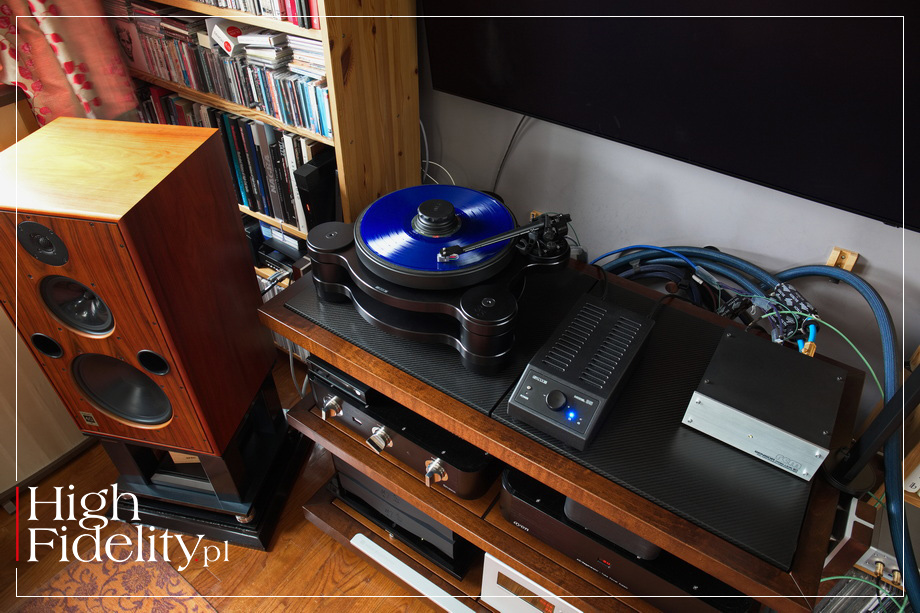
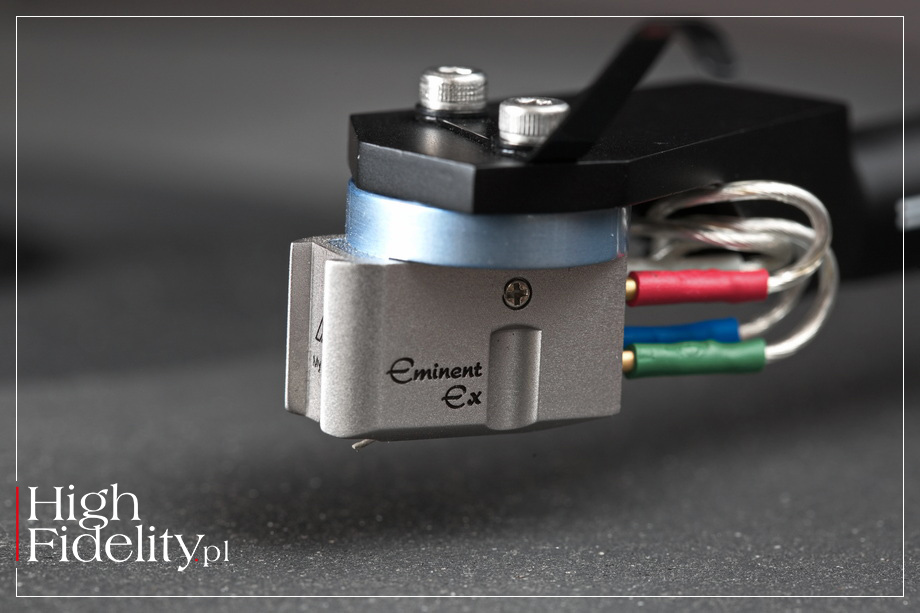
During testing, I listened to the turntable with the My Sonic Lab Eminent EX cartridge. I used DS Audio ST-50, a solid gel, to clean the stylus. The signal to the RCM Audio Sensor Prelude IC phono preamplifier was transmitted via a Furutech Ag-16-R4 cable, and to the line preamplifier via a Siltech Triple Crown interconnect. I connected the preamplifier to the Nordost QRT QKore6 artificial ground. » ALBUMS USED FOR THE TEST ⸜ a selection
⸜ THE MONTGOMERY BROTHERS, Groove Yards, Riverside/Analogue Productions AJAZ 9362, „Top 100 Fantasy 45 Series”, 45 rpm, 180 g, 2 x LP ⸜ 1961/2008. WHEN I LISTENED TO THE MODEL 60, I realized that SME had changed direction in its new designs. Being familiar with the Model 30, refreshed by a recent listening session with this turntable at Zbyszek Bielak's, author of album covers for, among others, Mayhem's Esoteric Warfare (2014) and Paradise Lost's The Plague Within (2015), it was not difficult for me to notice that the top-of-the-line design from this British manufacturer, the Model 30, had moved towards sounding like a “master tape”. That is, it sounded “raw”, open, precise, and at the same time extremely resolving. 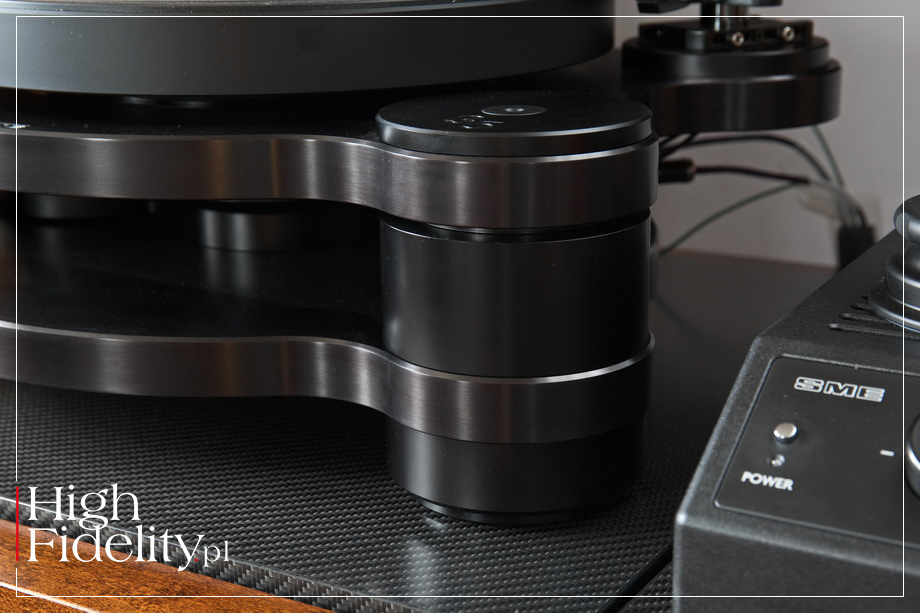
This resulted in a sound that, on the one hand, allowed for deep insight into the recording, and on the other, did not draw attention to itself, disappearing behind the music. The Model 35 seems different to me. The new base and arm design also changes direction compared to the Model 30, but moves towards fullness, mass, and dense air. It is a design that plays in a more “analog” way than the Model 60. In this sense, it is more reminiscent of what we think of when we say “vinyl sound.” To get an idea of the changes compared to the company's top-of-the-line turntable, I started by listening to a few records that I had used to break in the Model 60. The Montgomery Brothers' Groove Yard, reissued by Analogue Productions in 2008 and released on two 45 rpm discs, sounded remarkably rich and deep with the Model 35. There was a lot of information, detail, and nuance in the sound, with the drums echoing in both their own channel and the right channel. However, there was a clear modus operandi. The turntable tested in this comparison and configuration plays with strong, clear bass. It is not a sharp sound, but the sustain is strongly supported. So it is not about a slightly relaxed double bass sound, but a clear, almost point-like strike. At the same time, this is not a simple thickening of the sound, as I understood when listening to ˻ A-1 ˺ Autumn Leaves, the opening track on CANNONBALL ADDERLEY's album Somethin' Else, again in the Analogue Productions version on two 45 rpm discs, released in 2008. Neither the double bass nor the kick drum were enlarged, but simply “present”, strong, and clear. This time, the “stiffening” of the mid-bass allowed for better rhythm – ultimately, the double bass plays quite sparingly here and is not strongly pushed forward in the mix. What has changed mainly concerns the space. With the Model 35, it is very large. Not inflated, but naturally spacious. Naturally – meaning that we do not pay attention to it as a separate “entity”, but perceive it as a large sound image. Perhaps that is why I perceived this presentation in a very organic way – because it is organic itself. Unlike the Model 60, which sounds more raw, here it is more saturated and less selective, but these are different designs. But compared to many other designs in this price range, it is open to changes in sound, tone, dynamics, and the positioning of instruments in the mix. Because when I heard the first sounds from MICHIKO OGAWA's album Balluchon, released by the Japanese label Ultra Art Records, I immediately heard a completely different way of building space. Ms. Ogawa's album sounded as if its sound was more focused and less open to reverberation. In this sense, the recordings by Ray Flower (The Montgomery Brothers) and Rudy Van Gelder (Cannonball Adderley) had a lot of sound and reverberation from instruments located in the studio at the same time in the microphones of individual instruments. Although the tracks on the Japanese album were recorded in one take, which the company refers to as “One Take Recording”, the sound is less spatially open and more focused on the instruments themselves, which are slightly more muffled as a result. 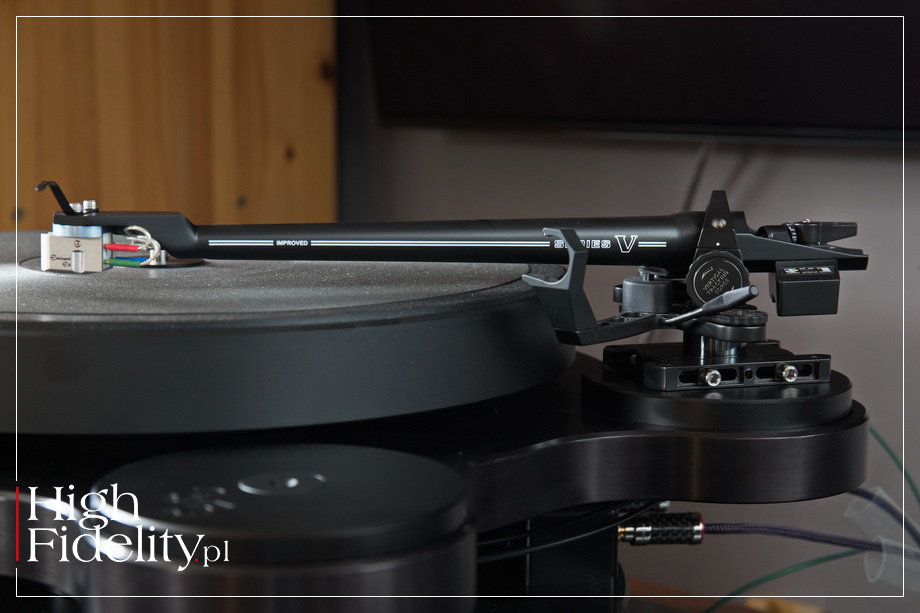
It's an excellent album and a great recording. And yet, the sound intensity of the two records I mentioned was incredible and simply greater. With the new SME, these differences were clear, I didn't have to look for them. However, this is not a turntable focused on precision at all costs. It is a change, even a significant one, compared to the “30”, which characterizes all new designs from this company. Whether it is a change in the suspension, a change in the motor, or a new tonearm tube – I do not know which element influenced this shift the most, probably all of them together. Interestingly, when I listened to ROY HAYNES QUARTET's Out Of The Afternoon right after that, this time in the Test Press version prepared by Impulse! in 2019, on the one hand there was a powerful space again, and on the other hand a less tangible sound than on all previous albums, even though it was recorded by Van Gelder, the same as the Something Else. However, a change did occur – after all, the latter one was created in the Hackensack studio in New Jersey, i.e., in a small room that was also the producer's parents' living room and dining room, with instruments stacked on top of each other, and the other one in a spacious, specially built studio in Englewood Cliffs. Which brings me back to differentiation – it is a turntable that gives the sound its own character, but does not lock it in, allowing changes to manifest themselves. You can hear them in the recording quality too, let's not kid ourselves. When I listened to the reissue of ELVIS PRESLEY's double album Elvis Recorded Live on Stage in Memphis, released in 2014 in both mono and stereo by Music on Vinyl, I could clearly hear that it was a live recording, that it lacked depth, and that the resolution was only decent. On the other hand, everything sounded coherent, dense and deep. It is a turntable that brings everything together into a dense whole, saturates the sound with harmonics, and ensures that the sound is never lean. One could even say that it is moving towards a strong filling. As with the original release of SKALPEL's album Transit. The first track on side A, ˻ A-1 ˺ Siesta was presented in a low, even dense manner. It is an open sound with a multitude of details and nuances, samples and sounds recorded in the present day, which the SME Model 35 combined into a homogeneous, dense whole. As if they were created together, at the same moment. And that's probably what the duo had in mind. ▌ Summary THIS TURNTABLE SOUNDS REALLY GOOD. It is completely non-intrusive in shaping the attack of sounds. That is, it does not attack us with details. It presents the sound as a whole and only differentiates it within large blocks, revealing its sonority, as in the ending of Siesta, with its saturated, golden, heavy cymbals strikes. It is a design that adds weight to the sound. With the My Sonic Lab cartridge, the turntable from England played in a big, expansive way. It was as if it wanted the sound to carry throughout the room, rather than coming only from a narrow strip between the speakers. That is why there are no super-clear, “cut-out” phantom images here, and their bodies are strongly connected with the air, the acoustics, and the reverberations. The latter, let us add, are slightly dampened at the ends. 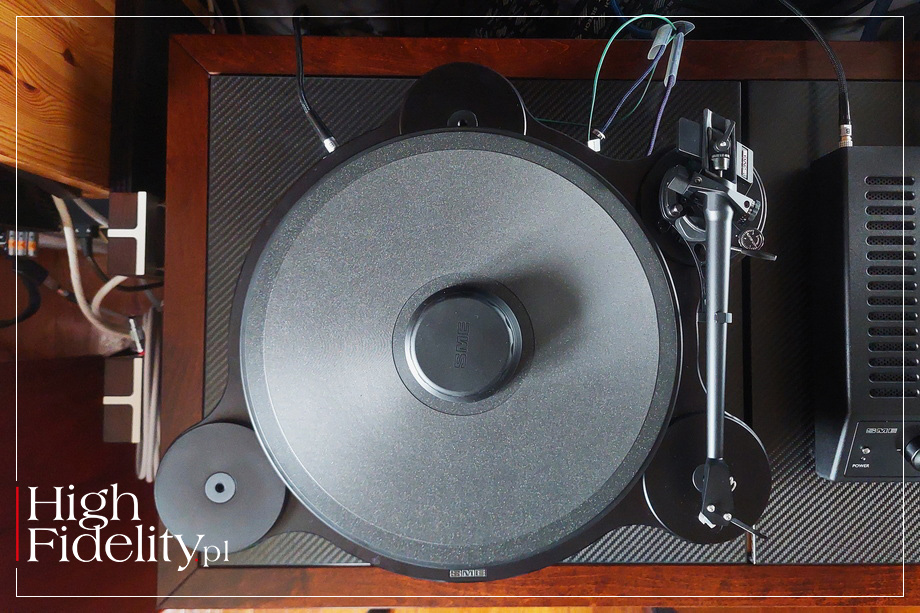
But it's an SME turntable, right? So it's extremely resolving. I wouldn't say detailed, because that's not the point, but rather resolving, i.e. internally complex. And yet we don't pay attention to the details. How is that possible? – Probably because the records are played on it as if, instead of our acoustics, the sound from the studio or stage, along with the “air” from there, “appeared” in our room. That's why the SME 35 sounds so natural and organic. Comparing it with the previous generation of SME turntables, we can immediately see that the perspective from which the designers approached sound has changed. Instead of precision down to the last bit, we get coherence; instead of a multitude of details, we get an organic sound; instead of air, we get a big sound. So, yes, there has been a change, but what a change! ● ▌ Technical specifications (acc. to the manufacturer)
» CHASSIS 
THIS TEST HAS BEEN DESIGNED ACCORDING TO THE GUIDELINES adopted by the Association of International Audiophile Publications, an international audio press association concerned with ethical and professional standards in our industry, of which HIGH FIDELITY is a founding member. More about the association and its constituent titles → HERE. |

 |




|
Reference system 2025 |
|
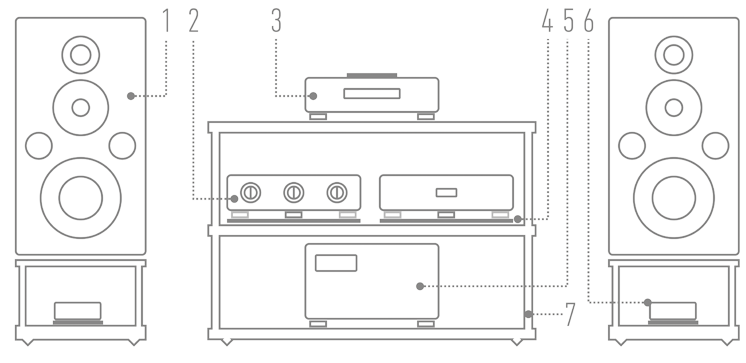 1) Loudspeakers: HARBETH M40.1 |REVIEW| 2) Line preamplifier: AYON AUDIO Spheris III Linestage |REVIEW| 3) Super Audio CD Player: AYON AUDIO CD-35 HF Edition No. 01/50 |REVIEW| 4) Stands (loudspeakers): ACOUSTIC REVIVE (custom) |ABOUT| 5) Power amplifier: SOULUTION 710 6) Loudspeaker filter: SPEC REAL-SOUND PROCESSOR RSP-AZ9EX (prototype) |REVIEW| 7) Hi-Fi rack: Hi-Fi rack: finite elemente MASTER REFERENCE PAGODE EDITION Mk II, more → HERE |
|

|
Cables Analog interconnect SACD Player - Line preamplifier: SILTECH Triple Crown (1 m) |ABOUT|» ANALOG INTERCONNECT Line preamplifier → Power amplifier: Siltech ROYAL SINLGE CROWN RCA; review → HERE Speaker cable: SILTECH Triple Crown (2.5 m) |ABOUT| |

|
AC Power Power cable | Mains Power Distribution Block - SACD Player: SILTECH Triple CrownPower (2 m) |ARTICLE| » POWER CABLE Mains Power Distribution Block → Line preamplifier: Acoustic Revive ABSOLUTE-POWER CORD, review → HERE » POWER CABLE Mains Power Distribution Block → Power amplifier: Acoustic Revive ABSOLUTE-POWER CORD, review → HERE Power cable | Power Receptacle - Mains Power Distribution Block: ACROLINK Mexcel 7N-PC9500 (2 m) |ARTICLE| Power Receptacle: Acoustic Revive RTP-4eu ULTIMATE |REVIEW| » ANTI-VIBRATION PLATFORM under Acoustic Revive RTP-4eu ULTIMATE: Graphite Audio CLASSIC 100 ULTRA, review → HERE Power Supply Conditioner: Acoustic Revive RPC-1 |REVIEW| Power Supply Conditioner: Acoustic Revive RAS-14 Triple-C |REVIEW| Passive filter EMI/RFI: VERICTUM Block |REVIEW| |

|
Anti-vibration Speaker stands: ACOUSTIC REVIVE (custom)Hi-Fi rack: finite elemente MASTER REFERENCE PAGODE EDITION Mk II, more → HERE Anti-vibration platforms: ACOUSTIC REVIVE RAF-48H |ARTICLE| » ANTI-VIBRATIONAL FEET: |

|
Analogue Phono preamplifier: Phono cartridges:
Clamp: PATHE WINGS Titanium PW-Ti 770 | Limited Edition Record mats:
|

|
Headphones » HEADPHONE AMPLIFIER: Leben CS-600X, review → HEREHeadphones: Headphone Cables: Forza AudioWorks NOIR HYBRID HPC |