


|
LOUDSPEAKERS ⸜ floor-standing LUMEN WHITE
Manufacturer: LUMEN WHITE RESEARCH |

 |
 |
 |
|
Review
text by WOJCIECH PACUŁA |

|
No 259 December 1, 2025 |
⌈ LUMEN WHITE is a company that manufactures high-end loudspeakers. It has been operating under the name Lumen White Research Group since 1999, and its debut model, White Light, attracted a lot of attention at the 2001 Consumer Electronics Show. From the very beginning, its designers and owners have been HARTMUT RÖMER and GERHARD HIRT, and production takes place in Austria. ⌋ THE HISTORY OF THE LUMEN WHITE BRAND dates back to the late 1990s. The Lumen White Research Group, established at that time, was described in the trade press as an “Italian-English” company with offices located in London. The speakers were manufactured in Bad Blumau, Austria, by Musiclink Mechantronic. In the following years, it underwent changes, mainly in terms of its headquarters – today it is reg-istered in Lucerne, Switzerland; the place of production and owners remain unchanged. 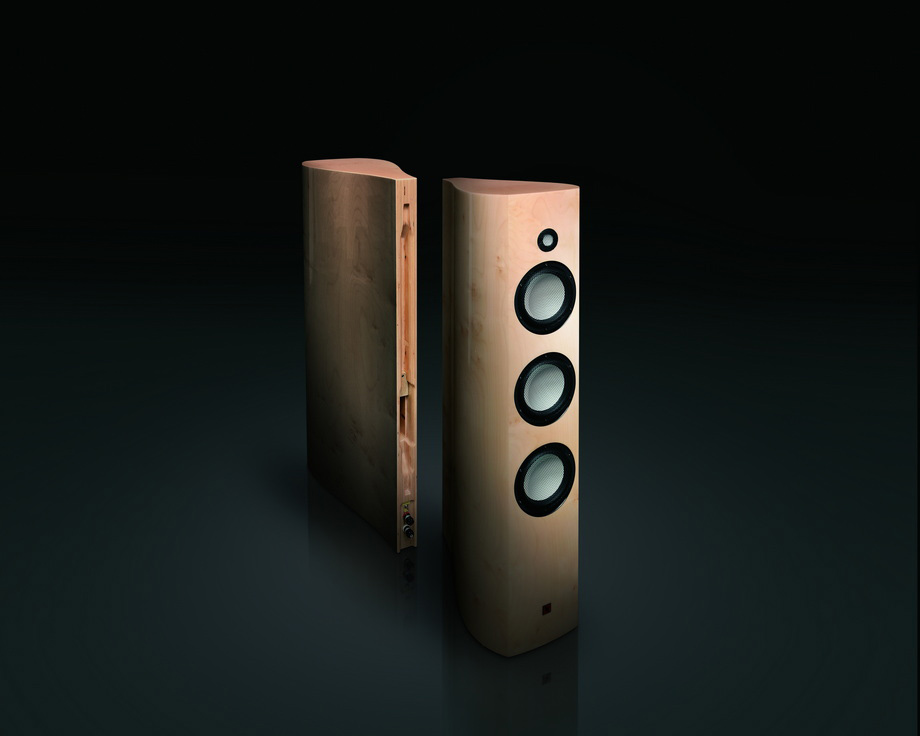
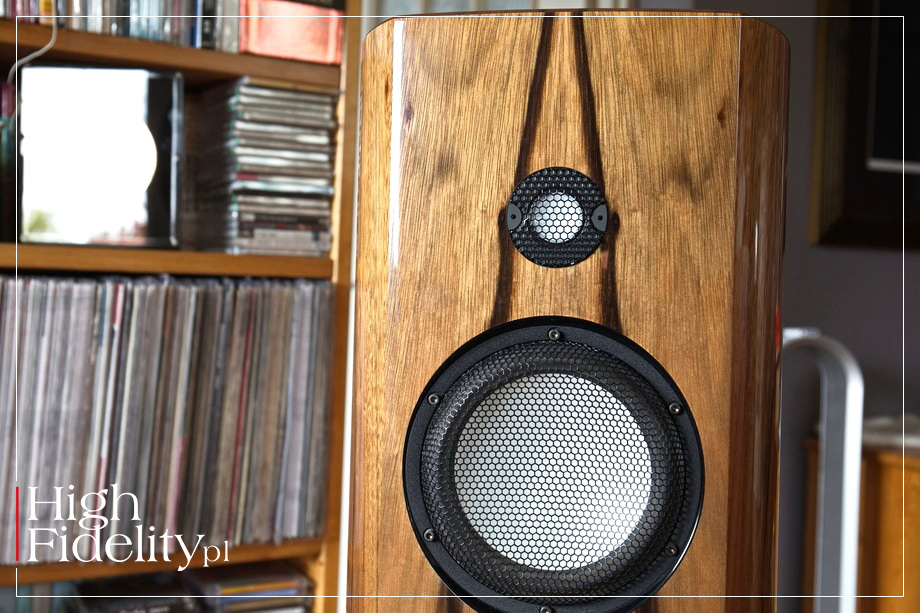
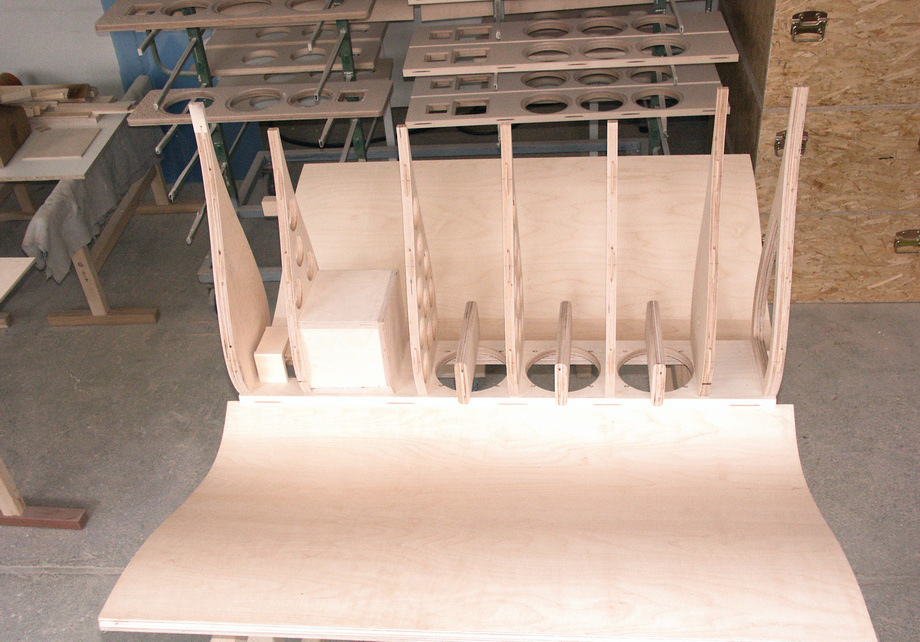
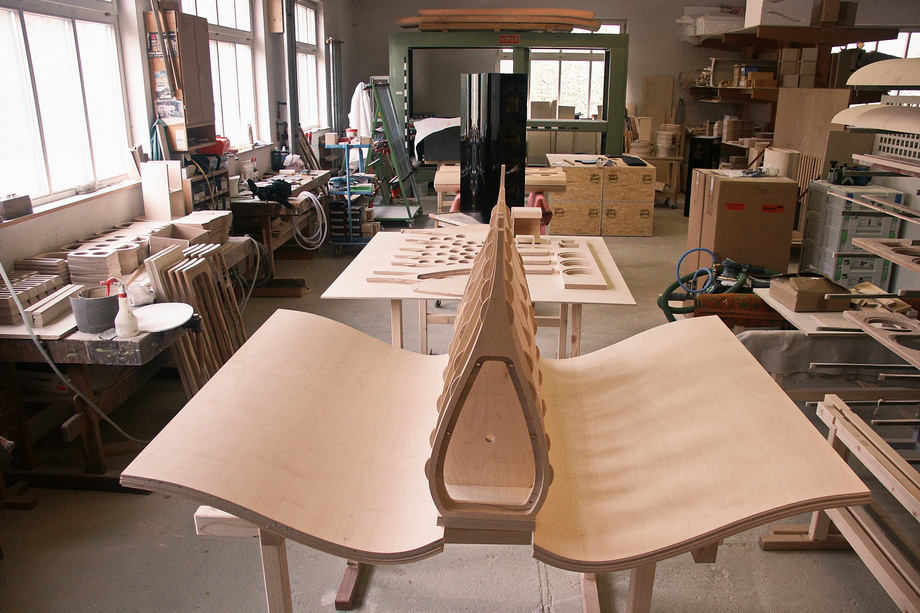
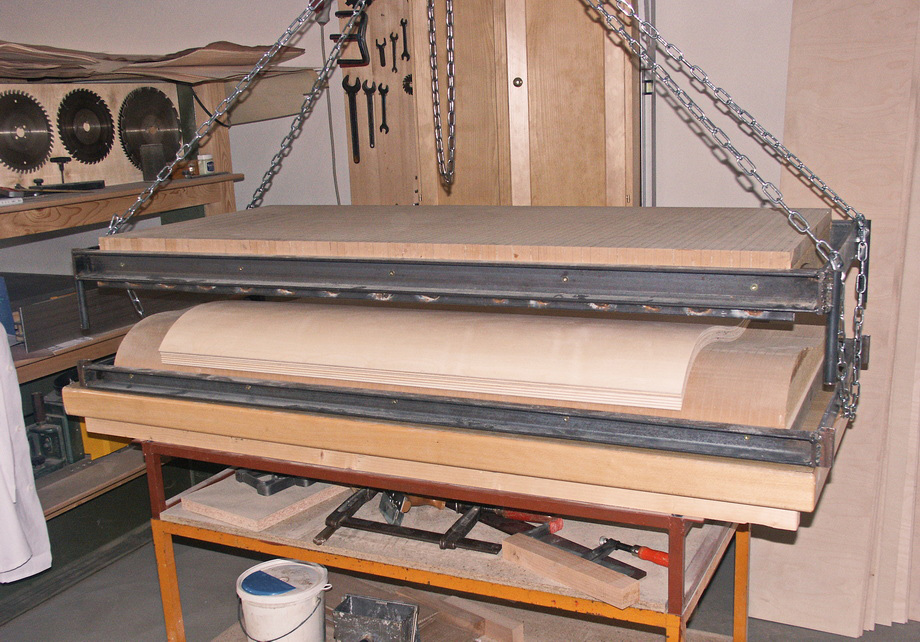
One thing has not changed: the innovative approach to cabinet design. This is evident at first glance – the rounded, gently tapering, deep bodies made of bent plywood. Hartmut, who disliked both closed and bass-reflex enclosures, proposed a design he called “driver-, port-, loading-, and air-damping”. The general idea was for the enclosure to simulate an open baffle, but without its problems, i.e., reducing the energy of low frequen-cies as the scale descends. The open baffle was therefore “rolled” into a shape that generally resembles a lute-type enclosure, and when viewed from above, it looks like a drop of water. In LW designs, the side walls of the speakers converge towards the rear with a bend towards the center, also resembling an engine outlet. As I wrote in my review of the Kyara speakers, acoustically, this design resembles an enclosure with a lossy vent. It seems that the designer has adopted a similar approach in the company's latest model, which we are presenting to you for the first time. ▌ Altai LUMEN WHITE SPEAKERS are usually large structures. Compared to them, the Altai model seems almost small. But “small” in this case does not mean “tiny,” but simply “smaller”. The speakers measure (H x W x D) 1150 x 290 x 575 mm and weigh 50 kg each. Not much, right? That is why the speakers are extremely neat, not only thanks to their shape, but also their dimensions. Their appearance is determined both by the shape and material of the cabinet – plywood – as well as the white membranes of the ceramic speakers. The exterior fea-tures a carefully selected and positioned veneer. It is available in several forms. The base price includes French Nut, Tineo, and Maple veneers, and for an additional €1,500, you can get Bird's Eye Mango, Mango, and Pal-dao – all finished in a transparent high-gloss lacquer. Altai are floor-standing, two-and-a-half-way speakers, but with as many as four drivers. They feature a tweeter, a low-midrange driver, and two drivers that look identical to the one above, but only handle low fre-quencies. The manufacturer refers to its speakers as “reference-class monitors”. They feature patented technol-ogies for vibration damping, ports, drivers loads, and air vents. From the very beginning, Lumen White designs were built with tube amplifiers in mind. The first demonstration in Las Vegas in 2001 was conducted with equipment from the Italian brand Vaic. And, let me remind you, this was Gerhard Hirt's first brand (1994), which changed its name to Ayon Audio in 1999. The test-ed speakers therefore have a high nominal impedance of 6 Ω and an efficiency of 91 dB. The company's mate-rials state:
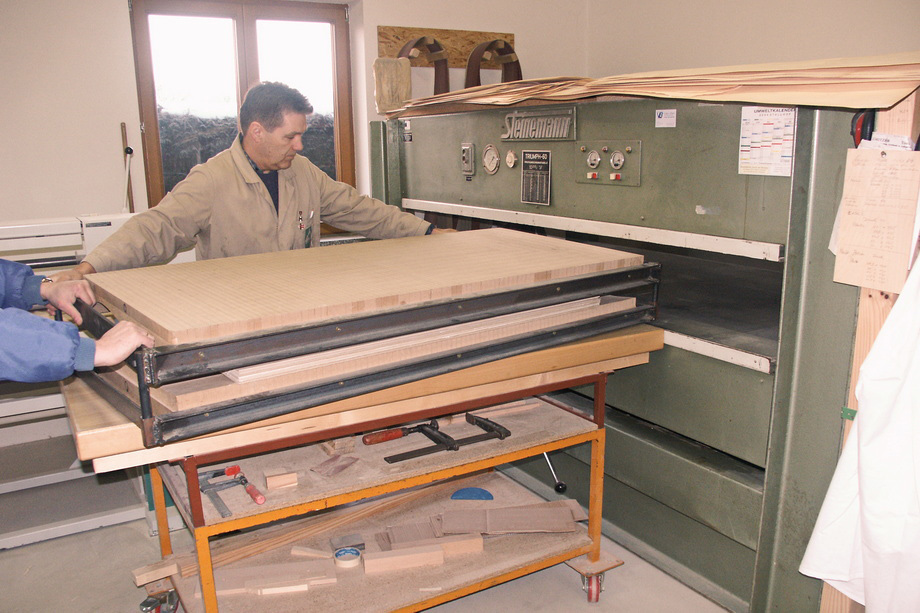
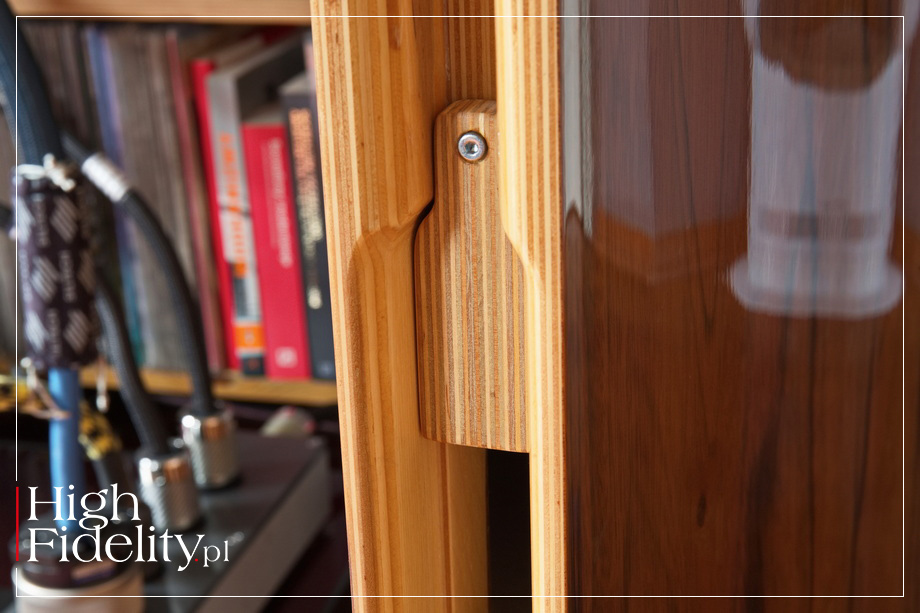
CABINET • The Lumen White speaker cabinet is made of custom plywood with variable density, designed for a “balanced resonance distribution”. According to Gerhard Hirt, it is made especially for LW and uses natural bone glue instead of commonly used synthetic adhesives. For many years, the company did not boast about this fact, as there were no other commercially available speakers with plywood enclosures of this type on the market – it was the first time they told us this, during the testing of the Kyara models. Since the plywood is made specifically for the Lumen White speakers, it also has a different structure than commercially available materials. The individual layers of wood, selected for their mechanical properties, vary in thickness. During testing, the optimal pattern of interweaving thick, thinner, and even thinner layers of different types of wood was determined. The wood is processed so as not to cut its fibers, which proved to be as important as their arrangement and gluing. When designing the shape of the cabinets, Lumen White applied research and calculations used in fluid flow studies. As Hartmut Römer, chief designer, once said, air is a kind of “fluid”, but under low pressure. Importantly, the research showed that the speakers needed to be dampened by the appropriate profile of the side walls, rather than by filling them with lossy materials. The company's speakers are therefore hollow inside and only reinforced with ribs. The outlet of the driver-, port-, loading-, and air-damping system takes the form of a longitudinal, vertical slit running the entire height of the speakers. Only here can you see that it is a plywood enclosure. The outlet is partially blocked by a screw-on element that determines the amount of air flow and, consequently, the load on the woofers. DRIVERS • The second characteristic feature of this brand is the use of drivers with super-rigid and lightweight ceramic diaphragms. The history of these diaphragms dates back to before the creation of the Lumen White brand, when Hartmut used speakers from the American brand Avalon Acoustics. It was one of the pioneers in the application of this type of driver, highly valued around the world for its sound. ▲ Accuton THE HISTORY of Accuton drivers dates back to 1984, when Bernhard Thiel developed a process for producing very thin sheets of an extremely hard material called corundum. This mineral, a variety of aluminum oxide (Al2O3), is known for its exceptional hardness (9 on the Mohs scale) and stability. It comes in different colors depending on the impurities, e.g., red corundum is ruby, and all other color varieties are sapphires. 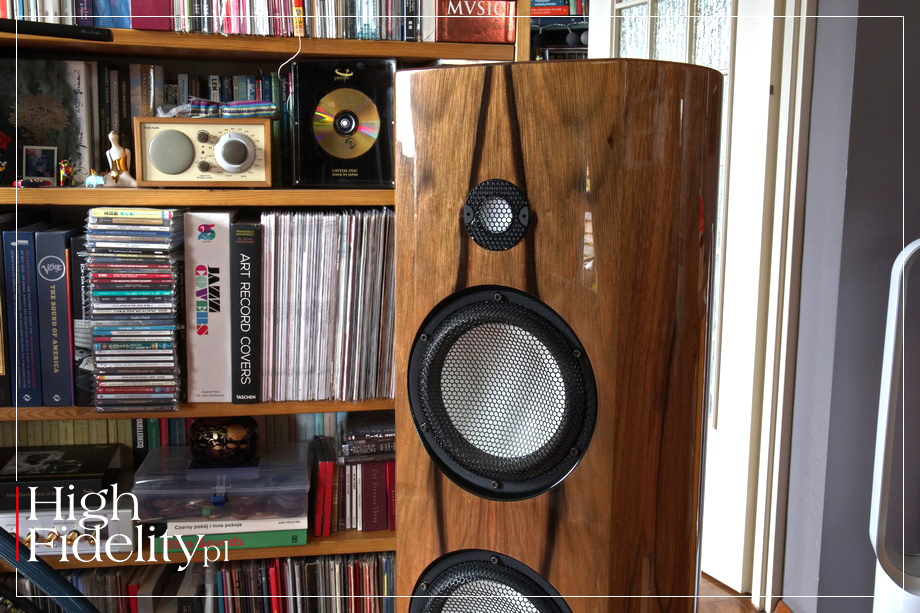
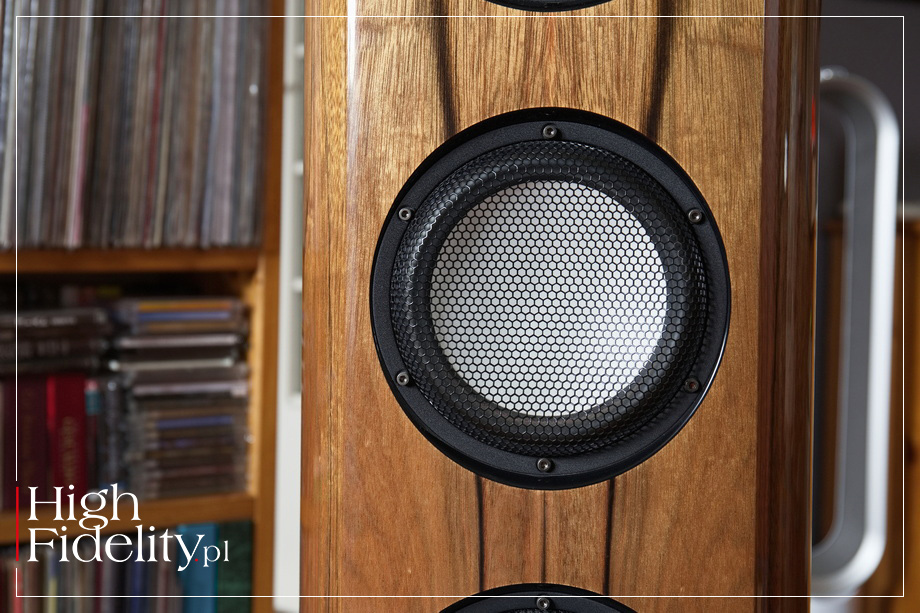
Thiel developed the manufacturing process, and production was handled by the German company Backes & Müller. In 1992, the company closed down, forcing Thiel to take action. He joined forces with Adrian Bankewitz and in 1994 they founded Thiel & Partner GmbH, which began manufacturing ceramic mem-brane drivers under the Accuton brand. In 1999, the company began working with the Fraunhofer Institute to create the first tweeter with a pure diamond diaphragm. The most famous company using their drivers is Avalon, as mentioned above. But apart from Avalon, drivers of this type are used by Estelon, Von Schweikert Audio, Tidal, Vimberg, Marten, Mesa Boogie, Albedo, Gauder Akustik, Lumen White, and others. AudiaZ was the first German loudspeaker manufacturer to use Accuton's 90 mm diamond midrange driver in its designs; Kharma also uses them. » More about Accuton history: JONATHAN VALIN, Ceramic Drivers in: The Absolute Sound’s Illustrated History of High-End Audio. Volume One: Loudspeakers, ed. Robert Harley. ● THE ALTAI MODEL FEATURES as many as four drivers from this German company. As Gerhard writes, “these are the latest generation transducers, specially redesigned for Lumen White: a ø 30 mm ceramic tweeter with a ”custom design,“ one patented 173 mm ceramic low-midrange transducer, and two patented ce-ramic transducers of the same diameter designed for bass.” 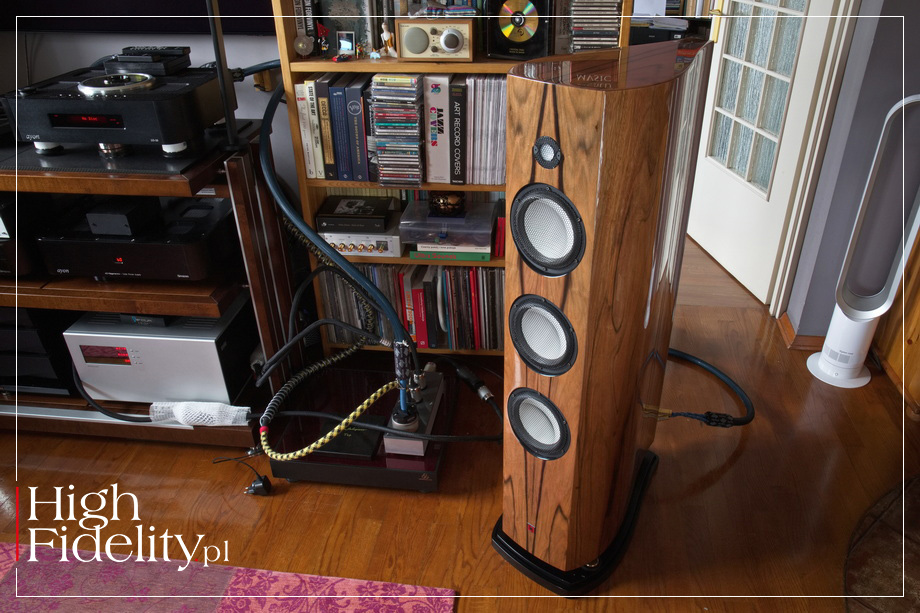
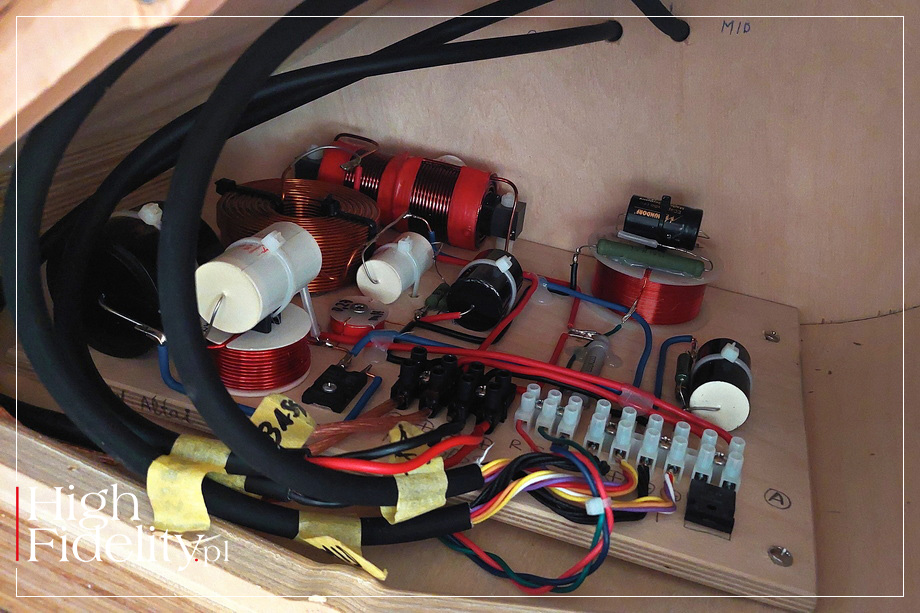
Their new version is characterized by a gentle slope of the frequency response without any noticeable resonanc-es outside the passband. Traditionally, Accutone drivers diaphragms were stiffened with honeycomb-shaped embossing and were convex (except for the tweeter, which, for a change, was and still is concave). However, the Altai speakers feature a version with a concave profile diaphragm, but still with a mesh protecting the driver from damage. Although Altai speakers are large structures, their concept is similar to that of small bookshelf speak-ers. In short, the two-and-a-half-way design means that we are dealing with a two-way bookshelf speaker integrated with a passive subwoofer; the “monitor” processes the full band, and from a selected frequency it is supported by a system of woofers. The “monitor” section is enclosed in the upper part of the cabinet, and the woofer section is vented. And all this in a single cabinet. The band for individual drivers is divided in a crossover with a “patented design”, as stated in press materials. According to the head of Ayon, it is supposed to be a “purist, minimalist design optimized for time, impulse, and magnetic field interactions.” The internal connections are made with custom-made cables, which are al-so used by Ayon Audio. The signal is fed to the speakers via individual speaker terminals. These are WBT Nextgen series sockets with gold-plated contacts. Unusually, they are positioned vertically rather than horizontally, but this ar-rangement makes it easier to connect rigid cables such as Siltech Triple Crown. Above the terminals, there is a small switch that can be used to boost some of the bass or leave the frequency response flat; we will try this op-tion. 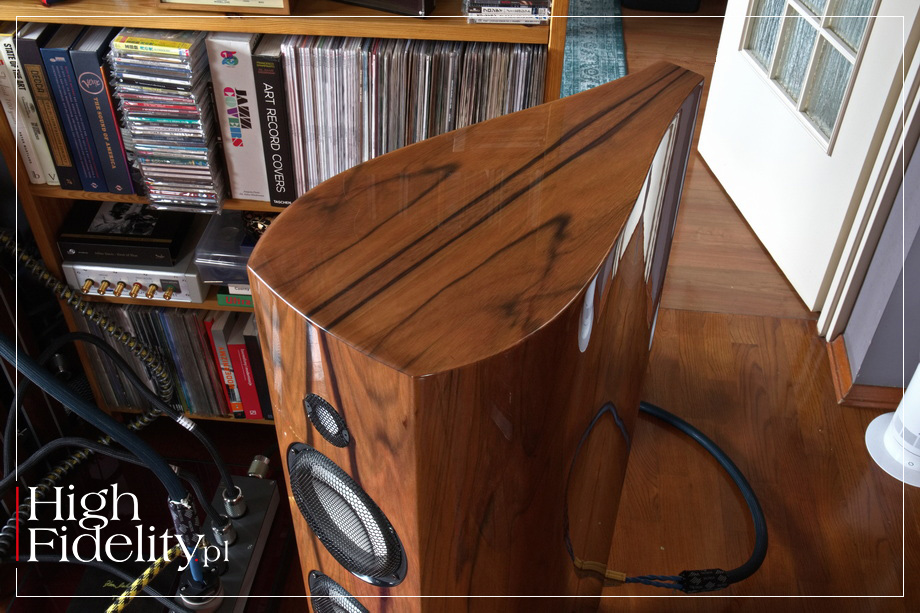
The speakers stand on three spikes, and this is the only element in these majestic, yet very attractive and per-fectly crafted designs that irritated me a little. I would prefer to see anti-vibration feet there, for ex-ample from Divine Acoustics. Anyway, the Polish distributor seems to see it too, which is why the set includes anti-vibration platforms made by them, shaped à la Acoustic Revive, with quartz discs and SPU-8 pads included. And what does Altai mean? Gerhard says: "Altai means ‘golden mountain’ and the name is highly respected in Asia, especially in Japan, where the Lumen White brand has almost become a religion... ▌ SOUND HOW WE LISTENED • The Lumen White Altai speakers were placed in the near field, in the spot where the Harbeth M40.1 speakers usually stand, and where the YG Acoustics Vantage 3 speakers once stood. The distance between them was 230 cm (measured from the center of the front panel), and the front was 242 cm from my ears. They were 56 cm from the rear wall, measured from the center of their rear panel. During the test, the speakers were toed-in so that the axes of the drivers crossed slightly in front of my head. 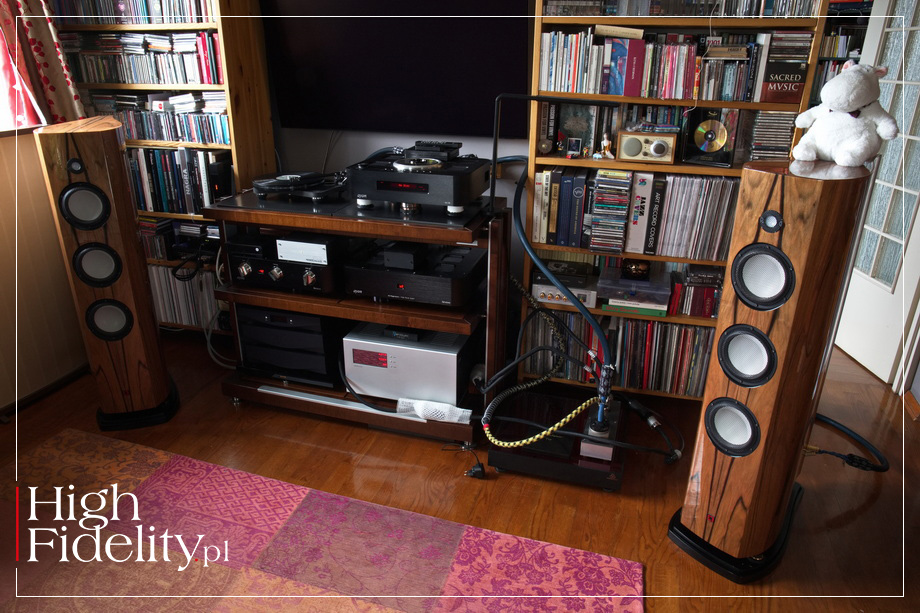
I determined the distance between the speakers and their leveling using a Bosch PLR 50 C device. For more in-formation on setting up speakers, see the article Micro-tuning, or setting up speakers, → HIGHFIDEL-ITY.pl. For more information on the acoustics of the HF listen-ing room, see the article The “High Fidelity” listening room through the eyes of Mariusz Zielmachowicz, → HIGHFIDELITY.pl. 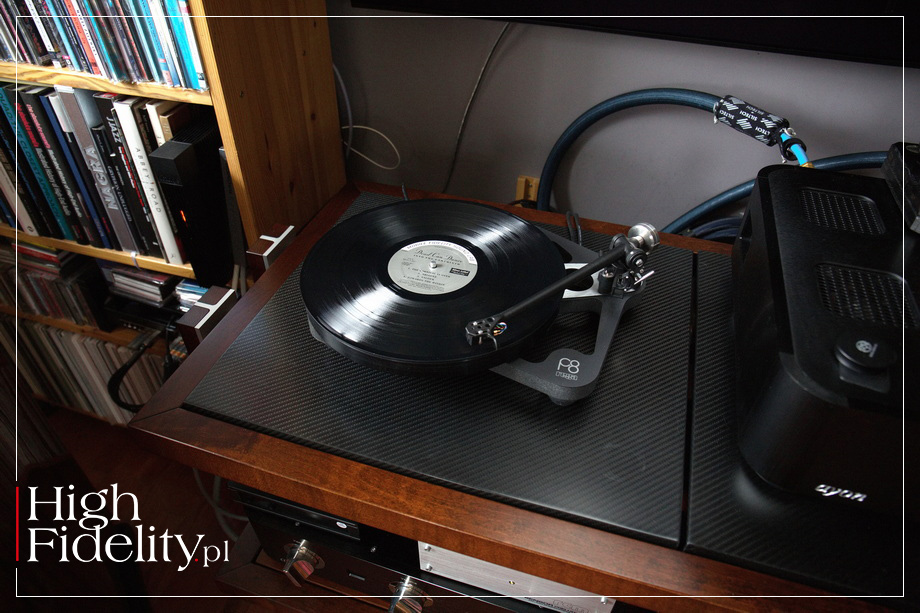
The speakers were driven using Soulution 710 power amplifier with an Ayon Audio Spheris Evo pre-amplifier, and the signal was transmitted via Siltech Triple Crown speaker cables. Harbeth M40.1 speakers were used as a reference point. The music was played using Ayon Audio CD-35 HF SACD player and a PMC-05 EX Sforzato file player with a DSP-05 EX clock. I devoted a separate listening session to LPs, played on a Rega P8 turntable with a Denon DL-103R cartridge. |
» ALBUMS USED FOR THE TEST ⸜ a selection
⸜ KENNY BURRELL, On View At The Five Spot Cafe: The Complete Masters, Blue Note/Universal Music LLC UCGQ-9098, SHM-SACD ⸜ (1960) 2025. WHEN A MANUFACTURER uses the term “monitor” in its press materials, it can mean many different things. Most often, it is synonymous with “bookshelf speakers”. In the case of Lumen White speakers, however, it means something else, and not just because they are large floor-standing speakers. It refers to the practice of re-cording studios, where precision is valued above all else and the truth and only the truth matters, even if it is uncomfortable or even ugly. 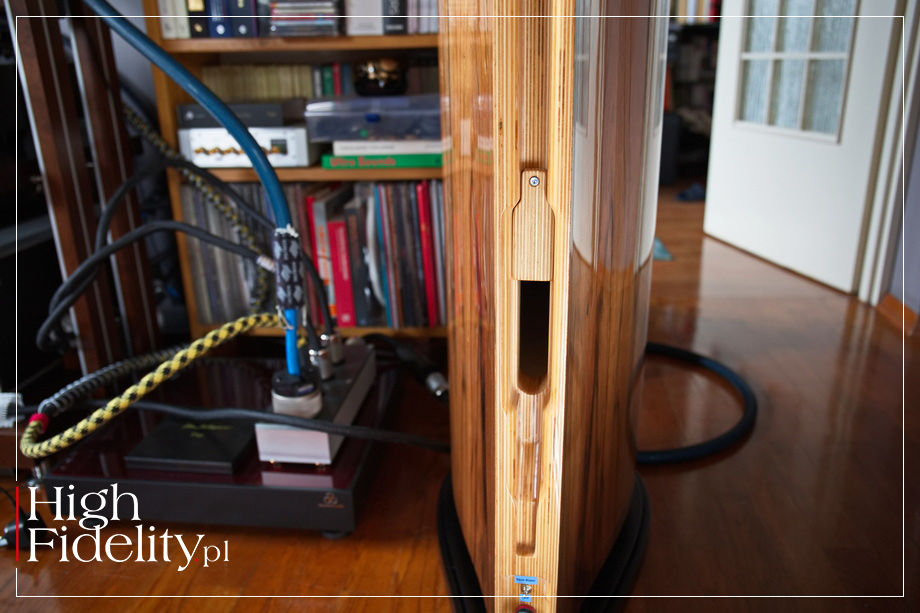
Altai speakers sound like huge headphones. In the sense that the distance between us and the trans-ducers disappears, and all that air is compressed into sound. We find ourselves in a bubble of air that constantly vibrates, constantly transferring energy, i.e. information. The sound is extremely direct and accurate at the same time. This is because its attack is remarkably fast, similar to that of the metal transducers in YG Acoustics speakers. Here, it is warmer, which does not mean that it is warm, oh no! The Lumen White speakers produce an exceptionally open sound that does not obscure anything, nei-ther the quality of the recordings nor the quality of the components in the setup feeding them. And it's not that the recordings and equipment have to be absolutely top-notch. It helps, let's not kid ourselves, but that's not the point. The point is that everything in front of the Altai speakers must be “internally consistent”. Then, even if the recording is quite light, let it be Punkrocker by TEDDYBEARS with IGGY POP on vocals, it is thrilling in itself. In this type of recording, we hear powerful vocals, but not pushed forward by the speakers, rather powerful with energy. In fact, most voices are mixed quite far back in the soundstage, which we can hear immedi-ately with the Altai. Their tone is more open around 5 kHz, where the higher part of the vocals is, and this is what gives them the “tangibility” and directness I mentioned. This will not work with every recording, only with those that are not exaggerated or “overdone”. Top productions and releases will sound – quite simply – top-notch. Let me take this opportunity to mention the Japanese band R-MEN with their album I thought about you, released on Master CD-R, or MILES DA-VIS's Kind of Blue, presented last year by the Italian label AudioNautes Recordings on Crystal Disc. However, when we longer listen to music with these speakers we come to the conclusion that it doesn't really matter, because what these designs convey is not just sound, but music. It's a cliché, but in this case, how true. The thing is, the precision with which speakers transform electrical energy into mechanical energy is so high that what matters more than sound quality is whether we like the music and whether it moves us. Once again, I am slipping into cheap pseudo-psychological nonsense, but I would like to take advantage of how deep-ly rooted it is in our consciousness and what it evokes in our first association. For me, it is closing my eyes and sinking into myself, without the feeling that there is any barrier in the transformation of electrical impulses in the equipment into electrical impulses in the brain, with the feeling that these are actually the same. The tested speakers are extremely direct in their sound reproduction. Harbeth speakers and the entire “BBC school” present a pleasant, soft world with an incredibly black “background”. Harbeths and Spendors, for example, are also studio monitors (by definition), yet they interpret their “studio-ness” differently. They are also precise, dynamic, and differentiating. The black background is really black with them and is even emphasized. Lumen Whites offer a more accurate image, a clearer transition between sound sources, and are also more ener-getic. The black background is therefore minimized in them – there is more “here and now” sound than some-thing “behind” the instruments. These are speakers with which different reverberations on instruments, in terms of tone, intensity, and character, will cause the sounds to be not one large picture, but many elements that together create something more. That is why, in my opinion, Altai should be played in large rooms, when we sit three, four, maybe five me-ters away from them. Then, as in impressionist painting, this wealth of detail will converge into an internally rich image that we cannot get with any other style. In my room, listening to them in a semi-close field, I simply heard more details and nuances than usu-al. It was revealing, it was refreshing, but – generally speaking – it's better to sit further away from these speak-ers. Then everything I'm talking about will be revealed in an incredibly, even unbelievably natural way. Like when I listened to the single from the upcoming album by JOHN SCOFIELD and DAVE HOLLAND, Memories of Home. Scofield's warm guitar was complemented by the powerful, “wooden” sound of Hol-land's instrument. I got a big, incredibly deep sound with flawless panorama. Because Altai speakers are masters at creating a soundstage. Both in front of us, behind us, and around us, if that's what the sound engineer has in mind. But always in a natural way. It is a space built on both high and low frequencies. And each of these ranges is responsible for something different in the space, and they cannot be separated from each other. The former give it a sparkling, rich aura. The drum beats that start October, a track from JAKOB BRO's album Returnings, were not only in front of me, but I could also hear their reflections from the sides and behind me. The low tones, in turn, build the scale. And with the tested speakers, it is powerful. This is another thing that allows them to play even in very large rooms without compression and effortlessly. The bass of the speakers is not “pumped up”, yet it is clear and contoured. It goes very low and fills the space. However, it fills it not with blurred, but precise tones. 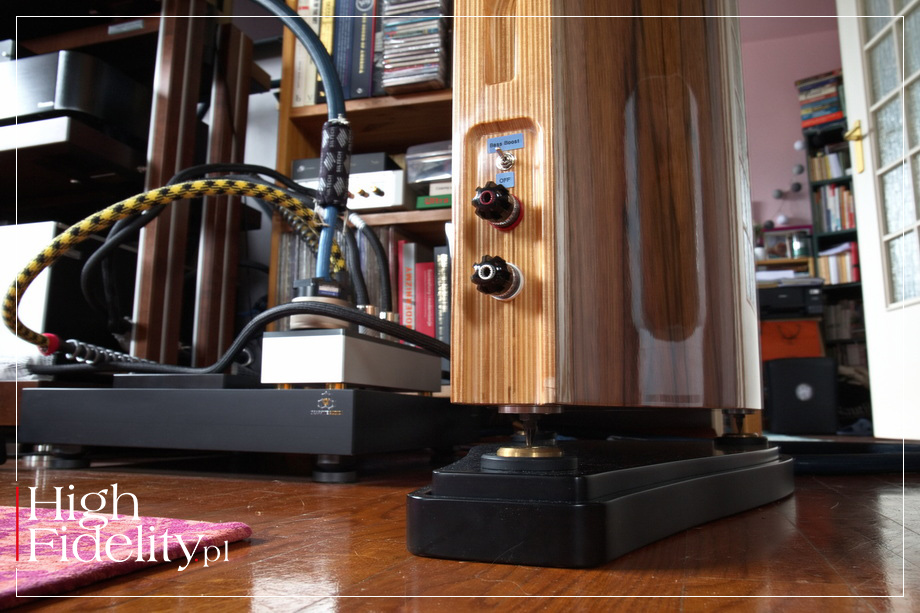
But it is thanks to it that the speakers generate a soundstage that is difficult to create, perhaps it would be possi-ble with large horn speakers. And that would be, I think, a good lead. The low frequencies here are ac-curate, precise, and saturated, but they do not give the impression of “presence”. They are simply generated and then disappear. Harbeths, for example, sustain them longer and saturate the space with their “presence”. YG Acoustics, on the other hand, are more focused. Lumen Whites fall somewhere between these two approaches, with the saturation of Harbeths and the speed of YG. However, along with scale, we also get resolution. This has already been mentioned in the description of the Al-tai sound, intertwined with other elements, but it is probably, alongside energy, the key to understanding the sound of these speakers. When we play good music on them, well-produced and well-released, a “window of opportunity” opens up before us. That is, a new world where anything can happen. And with each al-bum it is something else presented in a different way. Like the vinyl reissue of WES MONTGOMERY & WYNTON KELLY TRIO's Smokin’ At The Half Note, released in Japan in 2007 on 200-gram vinyl. One might expect that such open speakers would reveal tracking noise and pops&cracks more than the creamier Harbeths, but this was not the case. I would say that they were even more conservative in this respect. It was the dynamics and expression of the instruments, includ-ing sounds far from the front of the stage – in this case, the people in the club – that were most important. It wasn't warm sound, but somehow, internally, it was “analog”. That is, dense and multifaceted, di-verse. And it doesn't have to be a purely analog remaster, because I had a similar impression of the digital re-master of DEAD CAN DANCE's Into The Labyrinth from 2010, prepared by Mobile Fidelity Sound Lab. The vocals were powerful, strong, dense, but not intrusive. The instruments characteristic of a particular track were strongly in the foreground. Because it is powerful sound, rendered close to us. Not by throwing sounds in front of the line connect-ing the speakers, but due to its energy and powerful imaging. Thanks to this feature, it was with this album that I heard best what bass is all about. It is very deep and excellently differentiated. But it also doesn't have great mass. “Power” and “weight” are not the same thing, because the first term refers to the ability to quickly deliver an impulse, and the second to its fullness. Altai does primarily the former. Using the “Bass Boost” switch on the rear panel changes not so much the mass as the “presence” of low fre-quencies. I conducted all my listening tests with it, but this is not necessary; it just provided a more engaging sound for me. Even though – paradoxically – it was slightly colored. In the “Flat” position, the sound of these speakers is best balanced. And yet... ▌ Summary ALTAI SPEAKERS ARE POSITIONED at the beginning of the Lumen White catalog. When listening to them, it is impossible to tell. They deliver pure, high-end sound with extraordinary resolution and energy. It is open, direct, and large in terms of scale. It is also incredibly colorful and well-differentiated. The soundstage and stereoscopy are comparable to what we know from headphones, as if the speaker drivers were right next to our ears. These are not creamy-sounding speakers, nor are they warm, although they seem darker than the Kyara speakers I’d listen to some time ago. The background is rendered with remarkable honesty and commit-ment, and that is where this “darkness” comes from, or rather, the highly resolving sounds. And they are ren-dered with exceptional speed and energy. The sound is built in them in such a way independently for each source, each reverberation, effect, and layer. They are not stuck together, as with most other designs. 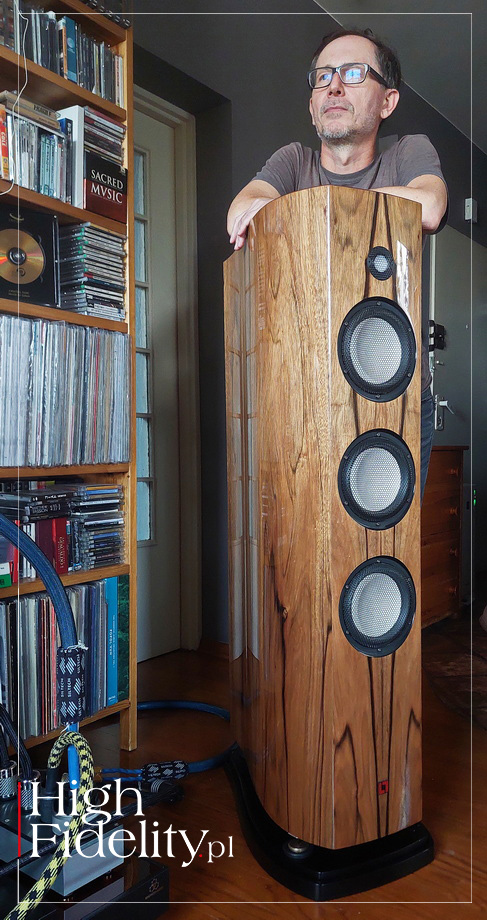
Altai will perform best when placed at a distance of three meters or more from the listener, because that is where everything comes together as a coherent whole. Support them with a high-quality setup, although it does not have to be expensive, and you will see how wonderfully ceramic drivers can be implemented. These are great speakers! That's why we award them with the: ˻ RED FINGERPRINT ˺. ● ▌ Technical specifications (according to the manufacturer)
Drivers: 
THIS TEST HAS BEEN DESIGNED ACCORDING TO THE GUIDELINES adopted by the Association of International Audiophile Publications, an international audio press association concerned with ethical and professional standards in our industry, of which HIGH FIDELITY is a founding member. More about the association and its constituent titles → HERE. |

 |




|
Reference system 2025 |
|
 1) Loudspeakers: HARBETH M40.1 |REVIEW| 2) Line preamplifier: AYON AUDIO Spheris III Linestage |REVIEW| 3) Super Audio CD Player: AYON AUDIO CD-35 HF Edition No. 01/50 |REVIEW| 4) Stands (loudspeakers): ACOUSTIC REVIVE (custom) |ABOUT| 5) Power amplifier: SOULUTION 710 6) Loudspeaker filter: SPEC REAL-SOUND PROCESSOR RSP-AZ9EX (prototype) |REVIEW| 7) Hi-Fi rack: Hi-Fi rack: finite elemente MASTER REFERENCE PAGODE EDITION Mk II, more → HERE |
|

|
Cables Analog interconnect SACD Player - Line preamplifier: SILTECH Triple Crown (1 m) |ABOUT|» ANALOG INTERCONNECT Line preamplifier → Power amplifier: Siltech ROYAL SINLGE CROWN RCA; review → HERE Speaker cable: SILTECH Triple Crown (2.5 m) |ABOUT| |

|
AC Power Power cable | Mains Power Distribution Block - SACD Player: SILTECH Triple CrownPower (2 m) |ARTICLE| » POWER CABLE Mains Power Distribution Block → Line preamplifier: Acoustic Revive ABSOLUTE-POWER CORD, review → HERE » POWER CABLE Mains Power Distribution Block → Power amplifier: Acoustic Revive ABSOLUTE-POWER CORD, review → HERE Power cable | Power Receptacle - Mains Power Distribution Block: ACROLINK Mexcel 7N-PC9500 (2 m) |ARTICLE| Power Receptacle: Acoustic Revive RTP-4eu ULTIMATE |REVIEW| » ANTI-VIBRATION PLATFORM under Acoustic Revive RTP-4eu ULTIMATE: Graphite Audio CLASSIC 100 ULTRA, review → HERE Power Supply Conditioner: Acoustic Revive RPC-1 |REVIEW| Power Supply Conditioner: Acoustic Revive RAS-14 Triple-C |REVIEW| Passive filter EMI/RFI: VERICTUM Block |REVIEW| |

|
Anti-vibration Speaker stands: ACOUSTIC REVIVE (custom)Hi-Fi rack: finite elemente MASTER REFERENCE PAGODE EDITION Mk II, more → HERE Anti-vibration platforms: ACOUSTIC REVIVE RAF-48H |ARTICLE| » ANTI-VIBRATIONAL FEET: |

|
Analogue Phono preamplifier: Phono cartridges:
Clamp: PATHE WINGS Titanium PW-Ti 770 | Limited Edition Record mats:
|

|
Headphones » HEADPHONE AMPLIFIER: Leben CS-600X, review → HEREHeadphones: Headphone Cables: Forza AudioWorks NOIR HYBRID HPC |